Category: Marine Protection

  • Petition for Minister McConalogue to oppose an increase to the margin of tolerance for fisheries

    Petition for Minister McConalogue to oppose an increase to the margin of tolerance for fisheries

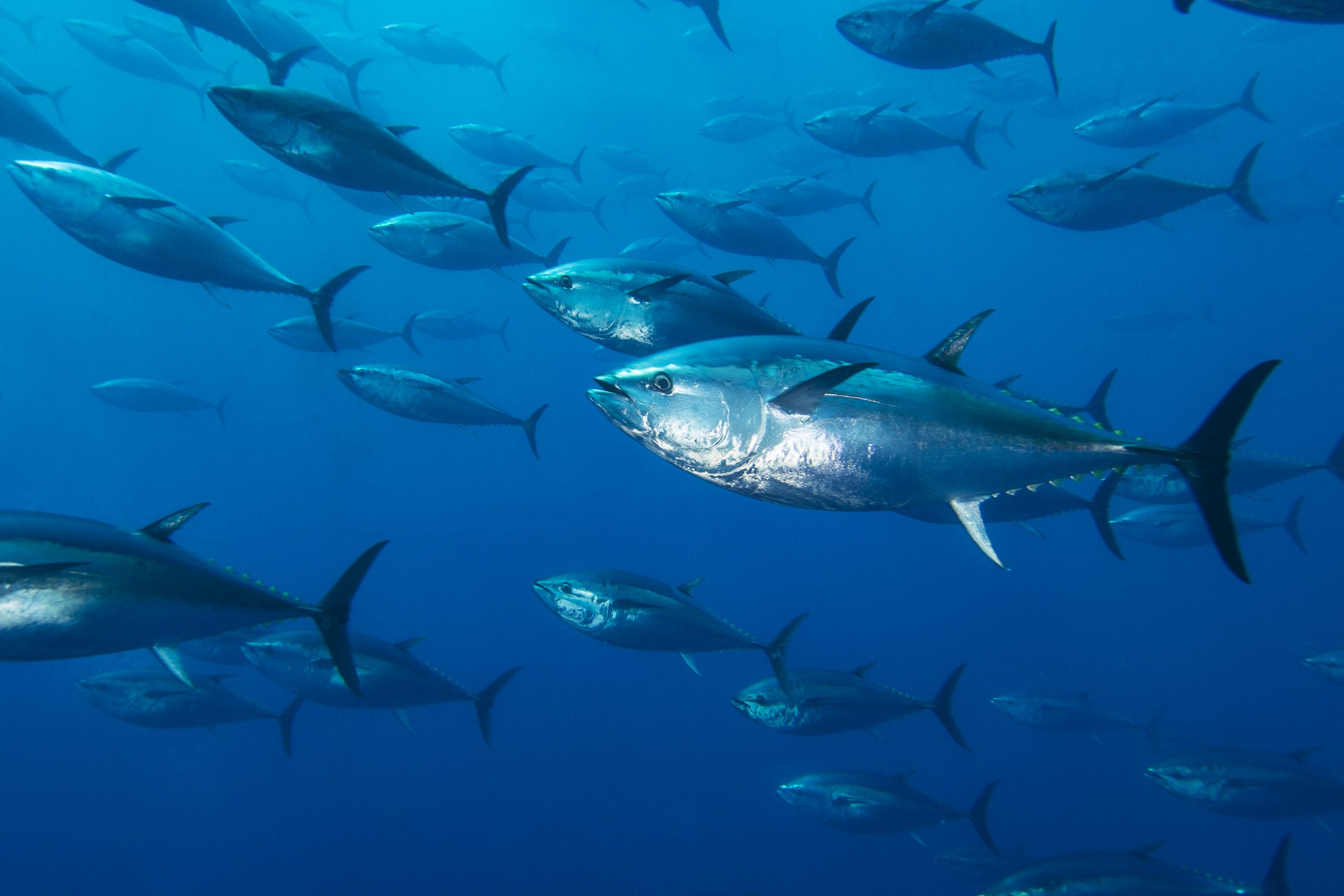
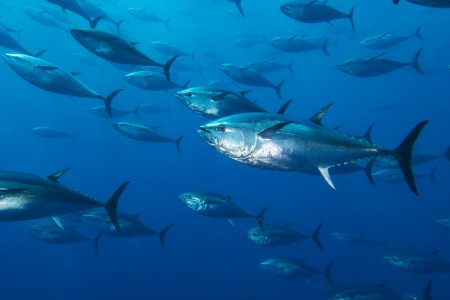
    Photo: Alexander Mustard

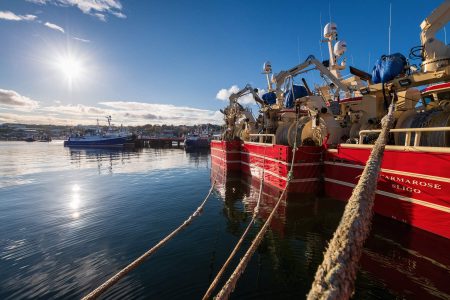
    Birdwatch Ireland in collaboration with the IWT has created a petition calling on the Minister for agriculture, food and the marine, Charlie Mc Conalogue to block a new dangerous proposal which could have devastating effects on fish stocks and incentivise overfishing and underreporting. It has been proposed that the 10% Margin of Tolerance (MoT) should be increased, which allows discrepancy for fishing vessels when reporting their catch. The sustainability of EU fisheries can only happen if scientists and decision makers know what has been caught accurately. 

    Read below for more information and Sign the petition now.


    In February the European Commission released four documents on how to improve EU fisheries (1). Many of these documents reference the Control Regulation, the draft of which was published in February 2020. There are many aspects to the Control Regulation aimed at improving the sustainability of EU fisheries.

    •   All fishing vessels must complete an electronic logbook containing information on all catches. Landings and transshipment declarations should be recorded.
    •   To help with the traceability of seafood, operations at all stages of production, processing and distribution should be recorded electronically and linked with a unique fishing trip number of a particular vessel.
    •   To help assist with the landing obligation, CCTV should be continuously-recording on a minimum % of vessels.

    These are just a few of the proposals and there are many aspects to this regulation, which, if they were taken on board and made mandatory, would be a huge step in the right direction for proper implementation of the Common Fisheries Policy and restoration and conservation targets of the marine environment.

    However, there are some aspects to the Control Regulation which would cause ecological destruction. A proposal on increasing the Margin of Tolerance (MoT) was suggested which would backtrack on current fisheries control regulations in place to support the accuracy of catch reporting. The current MoT allows for a 10% discrepancy in reported catches per species. This means vessels can misreport up to 10% of the weight per species which was caught and this is to allow for genuine mistakes to occur without fines and prosecutions coming down on the vessel and its crew. However, previously the EU parliament proposed to increase this margin to 20% for some small pelagic and mixed fisheries and 25% for tuna species which would have had devastating effects. It has also been proposed by member states that the MoT percentage should account for the entire catch and not on a per species basis. This would allow for the huge underreporting of overfished species and overreporting of fish species that are in favourable conservation condition. This has happened before as the MoT was weakened in the Baltic Sea and this contributed to fish populations collapsing and ‘incentivised’ hidden overfishing (2). The European Commission has even stated ‘this relaxation played a major role in facilitating misreporting of the species…and therefore contributing to the very bad state of the stocks in the (Baltic) region’.

    If Member States do not show support to keep the MoT at 10% per species then there is a very real risk that the Commission could withdraw the entire proposal. This would mean that the positive amendments which would help transform EU fisheries and reduce the overfishing which is destroying the oceans ecosystems would also be taken off the table.

    This is a huge opportunity for the EU to make positive change and if it is taken away due to member states’ silence over the proposed increase to the MoT it would be a devastating shame. The Common Fisheries Policy, which is supposed to keep fisheries sustainable and prevent overfishing, needs to be properly implemented to ensure the EU meets its international ocean and biodiversity protection and restoration commitments. Seas at Risk states in a joint NGO paper on the Nature Restoration Law that proper restoration of the ocean cannot happen without the CFP actually being put to work. The collapse of fish stocks has knock on effects to the entire marine ecosystem.

    Birdwatch Ireland in collaboration with the IWT has created a petition calling on the Minister for agriculture, food and the marine, Charlie Mc Conalogue to block this proposal before the May 30th meeting. Please sign now and share wide so the Irish Minister knows that the Irish people do not want an increase to the MoT. This is a vital time for ocean restoration and we must ensure this dangerous proposal is blocked.

    Sign the petition now.


    Grace Carr Marine Advocacy and Policy Officer

    1.   https://oceans-and-fisheries.ec.europa.eu/policy/common-fisheries-policy-cfp/action-plan-protecting-and-restoring-marine-ecosystems-sustainable-and-resilient-fisheries_en, https://ec.europa.eu/commission/presscorner/detail/en/ip_23_828
    2.   https://ejfoundation.org/resources/downloads/Baltic-study.docx.pdf
  • Northern Ireland miles ahead of Republic in protecting inshore waters.

    Northern Ireland miles ahead of Republic in protecting inshore waters.

    Northern Ireland miles ahead of Republic in protecting inshore waters

    by Grace Carr March 30th 2023

    New fisheries management measures were enacted this year in Northern Ireland which will prohibit bottom trawling in nine inshore Marine Protected Areas (MPAs). There will also be measures put in place in these MPAs for static gear such as pot fishing. This is in stark contrast to the overturned ban on boats over 18m trawling inshore waters in the Republic.


    The Northern Ireland Marine Task Force (NIMTF) along with other stakeholders including members of the fishing industry, have formed a new coalition called ‘Co-Fish: NI Fisheries and Conservation Partnership’. They will work on ensuring that these management measures will deliver benefits for the marine environment through restoration and conservation while ensuring livelihoods of the fishing industry are also protected. A press release on the new welcomed measures can be viewed here.  They also plan to ensure communication between government departments and stakeholders so their MPA network can be improved and managed as effectively as possible. Ensuring engagement from stakeholders such as the fishing community is essential in achieving and managing a strong effective network of MPAs. This is something many eNGOSs including the Irish Wildlife Trust  and Fair Seas  have called for in the new Irish MPA bill. 

    The nine areas where bottom trawling is banned will include Marine Conservation Zones, Special Areas of Conservation (SAC) and Special Protection Areas (SPA). Unfortunately things aren’t looking so optimistic in the waters around the rest of the island of Ireland. The Republic of Ireland is currently being taken to the EU Court of Justice over its failure to implement site specific management plans to protect their SACs. For some sites the deadline for enacting management measures expired well over a decade ago..

    Another devastating blow for marine ecosystems in the Republic is the overturn of the bottom trawling ban within six nautical miles of the coast by vessels over 18 metres. Two Munster based fishermen appealed this ban which came into effect in January 2020. It was overturned in October 2020 although an appeal was lodged by Minister Charlie McConalogue and the ban was reinstated in 2021. After more legal action was taken, it has now been overturned again on a technicality that Ireland had failed to notify the UK and EU of these conservation and management measures as they would affect non-Irish vessels.

    The Irish South and West Fish Producers Organisation (IS&WFPO) welcomes the lift of the trawling ban and has also called for no policy directives to be set until greater scientific evidence on the status of the fish stocks within the six nautical mile zone is gathered. The Marine Strategy Framework Directive  (MSFD) has 11 indicators which must achieve Good Environmental Status (GES). Two of the indicators are: Commercial Fish and Shellfish, and Sea-floor Integrity which Ireland has failed to fully achieve GES for. 22% of commercial fish stocks have failed to achieve GES and 60% are unknown. In the face of these unknowns the precautionary principle needs to be applied and measures should be taken to protect and prevent further damage to marine ecosystems. With the overturn of the trawling ban, this doesn’t appear to be Ireland’s plan. 

    We are delighted to see these measures put in place in MPAs in the North of Ireland and hope that the Irish government will see that this is the level of management needed to restore and protect biodiversity in Irish waters.

    See here Irish Wildlife Trusts recent press release and call for urgent action on the issue.

  • IWT response to MSFD Programme of Measures

    IWT response to MSFD Programme of Measures

    IWT response to MSFD Programme of Measures

    March 7th 2023

    New measures for the Marine Strategy Framework Directive are  welcome and needed if we are to achieve Good Environmental Status in all descriptors. It is therefore disappointing to see that some new measures are vague, non-committal and are inadequate for reaching Good Environmental Status. 


    ©Grainne Toomey ©Grainne Toomey


    The IWT welcomes many of the new measures in the updated Programme of Measures  (PoM) for the Marine Strategy Framework Directive  (MSFD). The MSFD is an EU directive that aims to achieve Good Environmental Status (GES) in 11 different marine indicators. The plan was to achieve this goal by 2020 for EU waters, but that target was not met and so a new Programme of Measures must be undertaken to hit these goals. There were 12 new measures added to the PoM, 4 measures which existed but were not mentioned in the last report and 28 measures modified.  Ireland failed to achieve full GES for 6 of the 11 descriptors in the MSFD.

    • Biological diversity
    • Commercial fish and shellfish (D3)
    • Foodwebs (D4)
    • Sea-floor integrity (D6)
    • Marine litter (D10)
    • Energy including underwater noise (D11)


    The IWT highlighted in the last public consultation  that new Marine Protected Area (MPA) legislation was of utmost importance, and this has made good progress since then. We also stated that site specific action plans were needed for current Natura 2000 sites and a legal review was taken of the current 15% disturbance threshold policy for activities within Special Areas of Conservation’s (SAC’s). This 15% threshold is applied in all risk assessments/appropriate assessments and is usually used to justify the continuance of a damaging activity as long as the activity disturbs less then 15% of the habitat. This has directly led to the deterioration of protected habitats (e.g. Roaringwater Bay).

    The Common Fishery Policy (CFP) must also be implemented fully, and a transition to low impact  fishing practices must begin while remote electronic monitoring devices should be on all vessels to record catches of target and non-target species. While we are happy to say some of these have been addressed, the full PoM falls short of what is required. 

    One of the measures in place since 2015 but not mentioned as it did not make the deadline for the report, is the support of the CFP by continuing to conduct research to ensure sustainable fisheries in Irish waters.

    M228 states: Support Common Fisheries Policy in Ireland through Scientific Evidence and Advice. On an ongoing basis, continue to conduct research and produce scientific evidence and advice, both on a national basis and through work with ICES, in support of the CFP and related regulations to ensure sustainable fisheries in Irish waters and throughout the EU.

    This obligation has not been fulfilled as it shows that only 18% of commercial fish stocks have achieved Good Environmental Status (GES), 22% have failed to achieve GES and for the remaining 60%, it is unknown what their environmental status is. 

    The national CFP Review Group reported in July 2022 and acknowledged that an ecosystem based approach is needed, taking into account socio-economic and conservation objectives while fishing at the maximum sustainable yield. It needs to be remembered that while taking into account socio-economic factors is extremely important, a more sustainable approach to fishing is the main objective. The measure in the PoM needs to be more specific and tackle the issue of phasing out indiscriminate and destructive fishing practices as well as having remote electronic monitoring systems onboard vessels so that catches and bycatch can be recorded correctly. This is essential to monitoring and enforcement so we can create appropriate conservation actions. 

    M229 states: Interactions Between Aquaculture & Fishing Activities and Natura 2000 Sites. Continue to investigate and manage the interactions between aquaculture and fishing activities and Natura 2000 sites and their qualifying interests (i.e. listed species/habitats); incorporating the development and use of scientific advisory products as they relate to appropriate licensing and management actions for such sites.

    Managing Natura 2000 sites is something Ireland has consistently failed to do and while this measure has been in place since 2015, much more needs to be done. Assessing and updating the current 15% disturbance threshold policy in Natura 2000 sites should be specifically mentioned. This threshold is the reason many damaging activities still occur within sites, causing site deterioration and preventing conservation objectives being met. The proper implementation of the CFP policy is also a major factor in this.

    For these PoMs to make a difference in GES of the indicators, full adherence to current EU and national directives and legislation is needed. Ireland has consistently failed to do this and we hope that with new MPA legislation coming into law this year, that a whole site, ecosystem-based approach is taken with the precautionary principle applied. Protected areas also need to undergo regular evaluation and have consistent management practices in place to ensure success. Only then can we hope for greater progress towards GES in many of the indicators.

    Grace Carr
  • New Irish Fishing Quota for Vulnerable Spurdog

    New Irish Fishing Quota for Vulnerable Spurdog

    New Irish Fishing Quota for Vulnerable Spurdog

    23rd February 2023

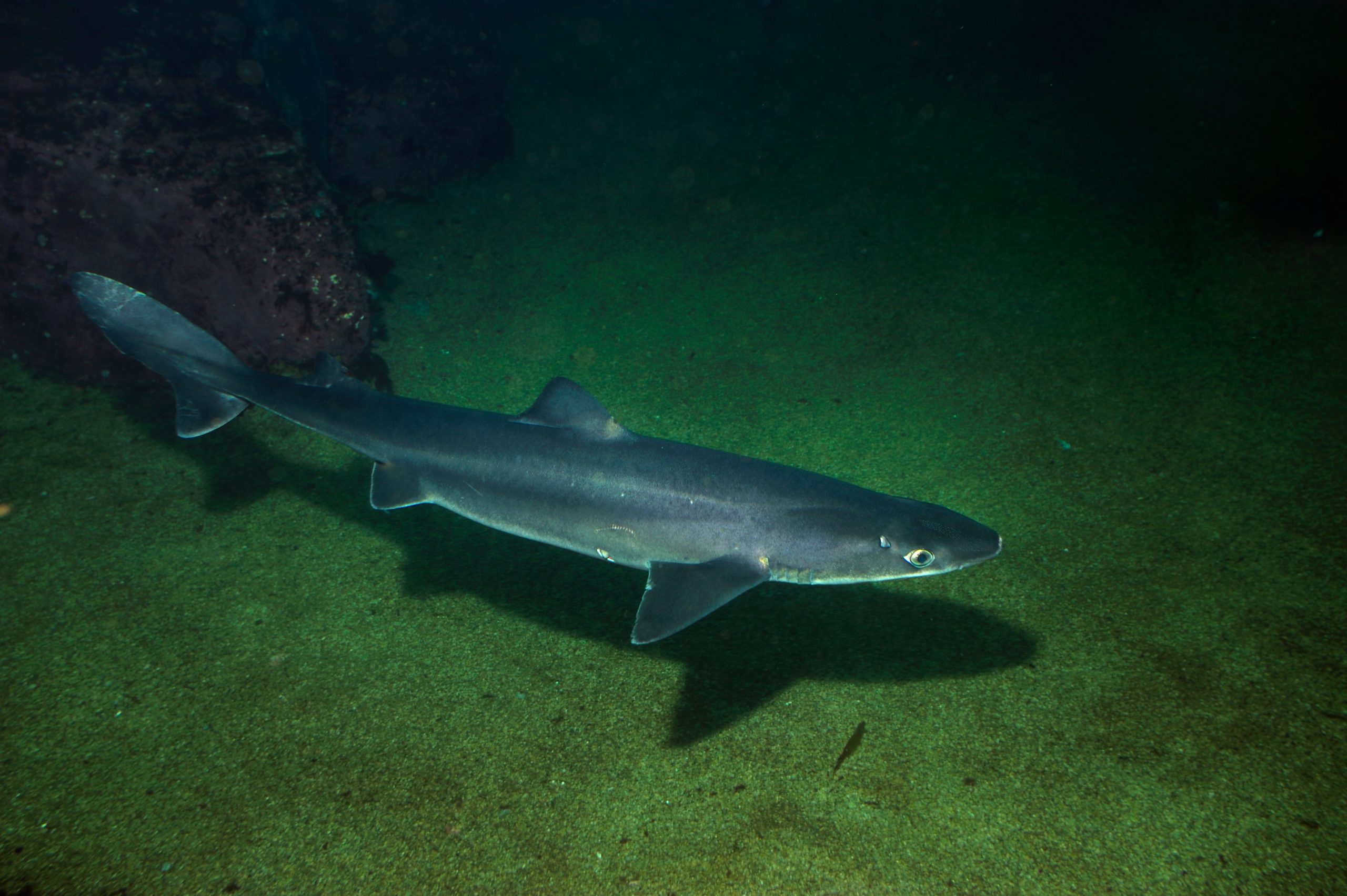
    A new Irish quota for the IUCN listed vulnerable spurdog (Squalus acanthias) for 1,874 tonnes was announced for 2023. Minister McConalogue stated that “When we reopen the fishery, measures will be put in place to require that larger spurdog are avoided to allow them to breed and reproduce.” This will be difficult to enact due to the fact spurdogs aggregate in shoals  and fishing methods to target this species will be indiscriminate. How will it be possible to ensure that fully mature, sexually reproductive individuals will not be caught in the crossfire?

    The spurdog (listed as Endangered in the 2016 Irish Red List for Cartilaginous Fish) gets its name due to having spines at the base of its dorsal fins. It is a slender, streamlined shark which can live for up to 75 years. They are typically small with females reaching up to 122cm and males reaching 95cm. They are predominately found in coastal waters but can also be found in deep waters and are widely distributed from as far north as Iceland down to North-west Africa. It takes 10-15 years for them to reach sexual maturity and spurdogs give birth to live young. They have one of the longest gestation periods in the animal kingdom and carry their young for somewhere between 18 and 22 months. They typically have one litter every two years and the larger the female, the greater the number of pups (between 10 and 21 young). Like most other shark and ray species, the spurdog is slow growing, long lived and late to sexually mature. These are some of the reasons they are vulnerable to the pressures of fishing activity.

    Mark Conlin

    While according to ICES there has been an increase in spurdog numbers since the fishery was closed in 2011, this success story could easily be reversed with the reopening of the fishery. Spurdogs are a common victim of bycatch in many fisheries due to their shoaling nature, and bycatch from gill net and trawl fisheries usually results in the death of the animal. Careful consideration into the fishing methods allowed for the target of this species should be looked into to avoid entire shoals of mature individuals being killed.

    In the EU they have been listed as a prohibited species  which results in the species falling through a loophole in the Common Fisheries Policy Landing Obligation. This means that bycatch of spurdog does not have to be landed and reported and could be discarded at sea. This resulted in fishing pressure that was not reduced for this species and insufficient data on population numbers. We believe that because of this and the shoaling nature of these animals, the reopening of this fishery is premature and could be disastrous for this species. More data are needed to determine the status of this species before allowing commercial fishing to begin.

    Grace Carr

  • EU Nature Restoration Law – What does it mean for marine conservation?

    EU Nature Restoration Law – What does it mean for marine conservation?

    EU Nature Restoration Law – What does it mean for marine conservation?

    What’s happening?

    In June 2022 the European Commission proposed the Nature Restoration Law (NRL) to bring nature back to Europe. This law has legally binding restoration targets for marine, freshwater and terrestrial ecosystems. The goal is to have 20% of land and sea ecosystems restored in Europe by 2030, and once the law is in place member states are expected to submit National Restoration Plans to the commission within 2 years. Over 80% of EU habitats have poor or bad conservation status and are in decline, so Europe can no longer afford to sit back and allow the degradation of its ecosystems by destructive practices.

    Why is it important?

    Habitats and species are subject to devastating biodiversity loss for a myriad of reasons including agriculture, overfishing and pollution. Restoring biodiversity is a major action which can be taken to mitigate climate change and the devastating consequences it will bring on, such as increased extreme weather events. Just some of the benefits that healthy ecosystems provide include clean air and water, as well as crop pollination, and these ‘ecosystem services’ will no longer occur if nature is not protected and restored from damaging human activities and behaviour. Restoring nature will also benefit the economy. Every €1 which is invested into nature restoration will bring about €8 – €38 in socio-economic benefits.

    What’s next?

    On the 20th December, ministers of the EU’s Environmental Council had their first chance to discuss the proposal for the EU Nature Restoration Law. The tone of these initial talks paved the way for the upcoming negotiations in 2023. Support from member states for a robust and timely Nature Restoration Law is crucial. Several member states reacted positively to the proposed law with some even calling for more ambitious targets to restore nature.

    However, Ireland’s reaction was not so positive. Ireland stated a lack of data for certain ecosystems and species which will constrain the ability to set restoration targets, and noted a lack of funding to conduct research in these areas.
    Another issue raised was the need to produce food that will be affordable to consumers. It also called for more flexibility given the different member states circumstances, which will weaken the robustness needed for a successful NRL at a pan European level.
    Some of these points raised are notable, but worrying about financial impacts and wanting flexibility seems redundant when there will be intense negative financial and human impacts if inadequate action is taken.
    These comments also directly conflict with the positive responses at COP15 to restore 30% of degraded habitats by 2030. A robust and ambitious NRL is a key element in starting action towards this and would be an important component to the EU Biodiversity Strategy. The ENVI committee (which is made up of Members of the European Parliament from member states) is meeting today, on the 12th of January, to present the draft report. We hope they will have acknowledged and taken into account some key asks from Marine NGO’s joint position paper.

    What Marine NGO’s are calling for

    It is key that Member States agree to the overarching target of restoring at least 20% of the land, and at least 20% of the seas in the EU by 2030.

    • Protecting nature is no longer enough, large-scale areas of restoration and effective protection are needed to ensure a halt to biodiversity loss and will result in a world that is more resilient to the effects of climate change.
    • The relationship between the Common Fisheries Policy and the NRL needs to be clarified to ensure that areas are managed and protected after they are restored. The NRL must not end up powerless to prevent destructive industrial fishing activities within the boundaries of restored areas. This will be difficult due to member states sharing fishing rights in waters but it is imperative for the success of the NRL in marine areas. Member states should be able to regulate any destructive fishing practices in its waters without a blockage from other member states who have a short term economic interest in the area but no long term social and environmental interests.
    • The involvement of EU citizens is crucial for each member state creating its restoration plans. Transparency of these plans and effective stakeholder engagement is necessary to give the best possible chance of success to restoration areas.
    • There must also be solid financing available for the NRL and the following monitoring and enforcement needed. Member states should assess the budgets needed for restoration plans and there should be an obligation for the Commission to also assess any existing EU funding support.


    What are the benefits of a robust Nature Restoration Law?

    Seas at Risk, a coalition of European marine NGO’s, state in a report that ‘Restoring EU seas can bring back the sea’s abundant web of life, allowing marine and coastal ecosystems to perform their natural functions and support life on Earth.’ The benefits of nature restoration take time to show so it must be agreed that these targets will be met in a timely manner. Restoring habitats and nature will not only benefit biodiversity, it will also benefit the EU’s contribution to the 2050 climate neutrality target. Science shows that we need to tackle the biodiversity crisis now before it is too late.

    Fair Seas are working to create an ecologically coherent network of Marine Protected Areas (MPA’s) in Ireland which ties in with the goals of the NRL and the work of several European Marine NGO’s. A main goal is to get a legal definition of a ‘Marine Protected Area’ into Irish law as there is currently none. The Irish government published the general scheme of the MPA legislation in December 2022 and Fair Seas has produced a white paper outlining the asks of the campaign to ensure this new legislation provides effective marine protection.
    Many of the areas of interest in Irish waters noted in the recent report Revitalising Our Seas , have ecosystems which will directly impact climate change positively if they are protected. Many of these areas are also home to several species which fall under Annex IV of the Habitats Directive and are meant to be protected in their natural ranges. Restoring and protecting these areas through a NRL would get Ireland well on the way to hitting the biodiversity targets which they have promised to meet.

    By Grace Carr