Places to Connect: Dartrey Forest, Co Monaghan
By Brian Mac Domhnaill, IWT Monaghan Branch
First published online: 24 September 2026. Originally published in the Spring 2026 edition of Irish Wildlife, our members-only magazine.
Spending time outdoors in nature can benefit your wellbeing and develop your understanding of your local environment. In this new series of articles, we share recommendations of nature reserves and wild areas where you can go to encounter biodiverse ecosystems. At the IWT we want to support our community to reconnect with nature and we hope this series of articles will inspire you to get out and explore. In this post Brian Mac Domhnaill from our Monaghan Branch explores Dartrey Forest in Co. Monaghan.
A walk of the wild side
Only an editorial deadline (and badgering from my son) could have persuaded me to venture out on what was a damp, grey morning in February for a tramp in Dartrey forest.
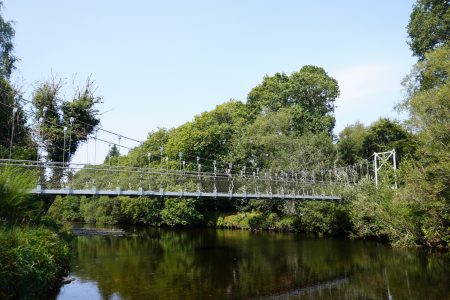
Named for the pre-Christian Dartraige tribe, the estate is bounded to the north by the road from Rockcorry, County Monaghan to Cootehill, County Cavan (10-kilometres approx.). The Dromore river system forms its southern boundary, flowing gently towards its confluence with the Annalee and the wider Erne catchment.
As with virtually all Coillte-owned properties, Dartrey is more Sitka-spruce plantation than actual forest, but it has its charms. Recently-improved pathways take you past four loughs, all of which feature large stands of Alder, Hazel, Downy Birch and Willow.
“Left to nature, Alder would dominate the treescape, as this is part of the Fearn mhaigh (Alder plain) of south Ulster.”
Left to nature, Alder would dominate the treescape, as this is part of the Fearn mhaigh (Alder plain) of south Ulster. No tree is better suited to life in the floodplains of the Dromore. My favourite parts of Dartrey are those where lichen-coated native trees predominate.
There are stands of Pendunculate Oak and the occasional massive Beech also, a legacy of the 17th and 18th centuries when this area comprised two large post-Cromwellian demesnes; the Corry estate of Fairfield and the Dawson estate of Dartrey. These amalgamated in the early 19th century when the Dawsons purchased the Corry lands.
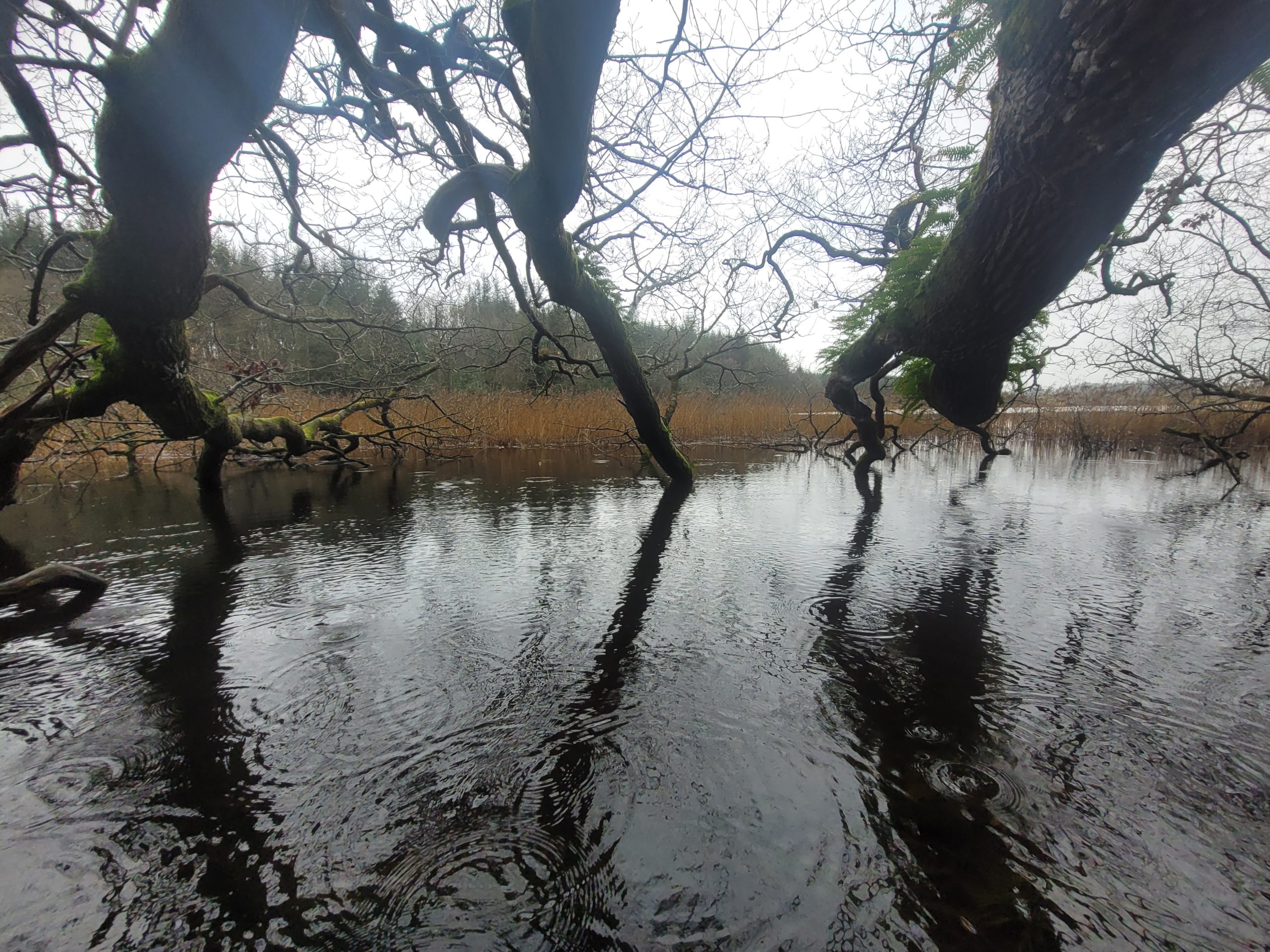
Close to where the two former estates merge [54°05’55.2″N 7°03’13.1″W] is my destination tree; what I call Bile Dartraighe. Bile is the Irish word that describes an outstanding and, perhaps, sacred tree in the druidical tradition. An ancient oak, one side of which has lost virtually all of its branches over the centuries, the other side of the Dartrey bile appears to be supported by long fingers, branches that reach down into the water of the Inner (Dartrey) lough. Hart’s Tongue, ferns, mosses and lichens have colonised each finger.
“Bile is the Irish word that describes an outstanding and, perhaps, sacred tree in the druidical tradition.”
For those with an interest in lichens and fungi, Dartrey is well worth a visit. Come autumn, our East European friends converge on the area to harvest what we fear to touch.
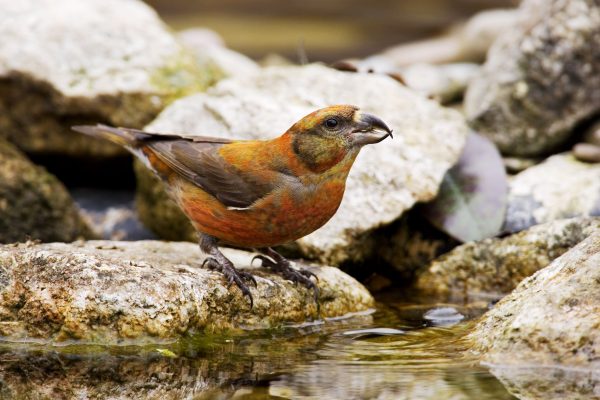
For birders, Dartrey has plenty to offer. On my tramp, I encountered, amongst others, the shy Goldcrest, Common Crossbill, Goldfinch, Little Grebe, Treecreepers, Moorhens, Long-tailed tits, Mistle Thrush, and the Great Spotted Woodpecker. On other days I’ve seen Jays, Common Buzzards, and Cormorants, but ongoing clear-felling operations by Coillte – following the destruction of huge swathes of Sitka Spruce in the storms of last year – may have persuaded these species to find temporary homes elsewhere.
If it is bad news for some species, the leveling of the Sitka Spruce has opened up large parts of Dartrey for the first time in 25 years and I can’t wait to see the explosion of wildflowers and insects that inevitably follows forest clearing.
The population of Fallow and Sika Deer has greatly declined in recent years, but there are still a fair few of the former. Red Squirrels have recolonized Dartrey, which suggests that the Pinemartin is active in the area, as are other mammals that stay hidden amongst the trees and increasingly dense stands of Rhododendron.
Sadly, the Cuckoo that was common in this area when I moved here in 1998 is heard no more.
Approaching the County Cavan boundary at Cootehill, a few acres of the woodland has been reconfigured as a magical space for children, a memorial to Erika, a wee girl who tragically died from cancer in 2016. In life she adored this woodland as it fired her imagination. Today her legacy fairy forest is amongst the most visited sites in the region as tens of thousands of children, their parents, grandparents, aunts and uncles experience the beauty and the wonder of our natural environment.
If you value our work, please consider supporting us by becoming a member or join our mailing list to receive regular updates from the Irish Wildlife Trust.
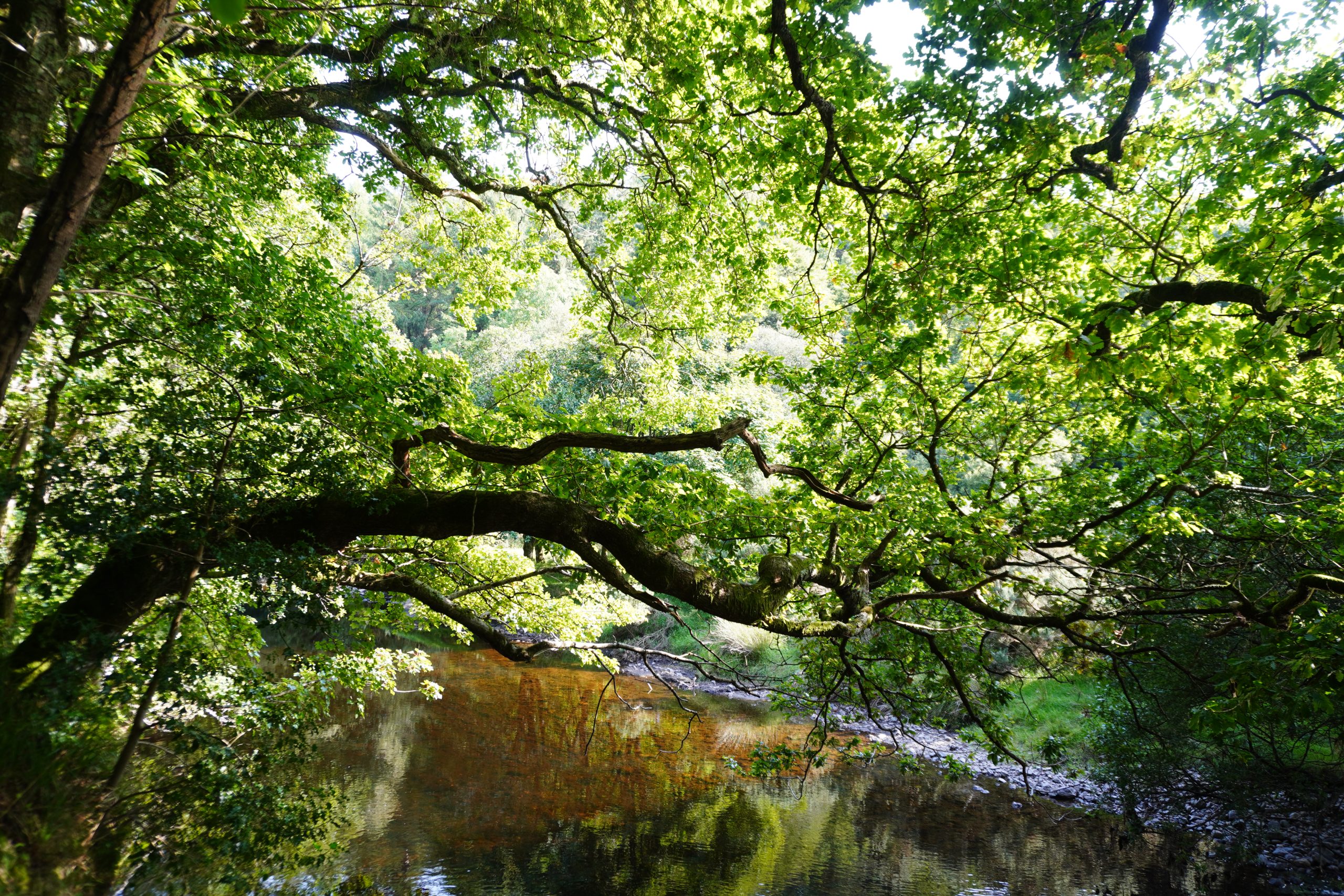
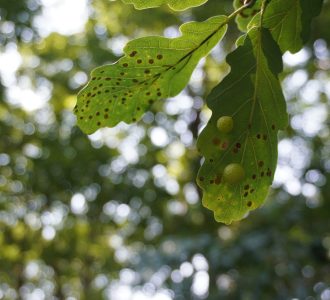 Fraocháns, oak galls and fungi are all easily visible here. Fraocháns are wild blueberries that often grow in the understory of oak woodlands on the east coast. Oak galls are growths found on oak leaves and are the product of gall wasps that rely on oak trees to complete their lifecycle. The gall wasp larvae live inside the gall protected by its growth. Fungi, found through the woods, feed on and break down deadwood, releasing its nutrients and allowing for new plant growth.