Menu
by Oisín Ó Néill, IWT Nature Advocacy Officer
First published online: 12 August 2026
A newly published risk assessment of Cherry Laurel (Prunus laurocerasus) has confirmed what ecologists, conservationists, and community groups on the ground have been warning about for years: Cherry Laurel is extremely invasive and is extremely damaging to Irish ecosystems. The assessment has conclusively found that this widely sold hedging plant poses an overall High risk to Ireland’s biodiversity, with High confidence.
In response, the Irish Wildlife Trust (IWT) and the Gaelic Woodland Project are calling on the Government to commit to a clear, published timeline for a nationwide ban on the sale of Cherry Laurel.
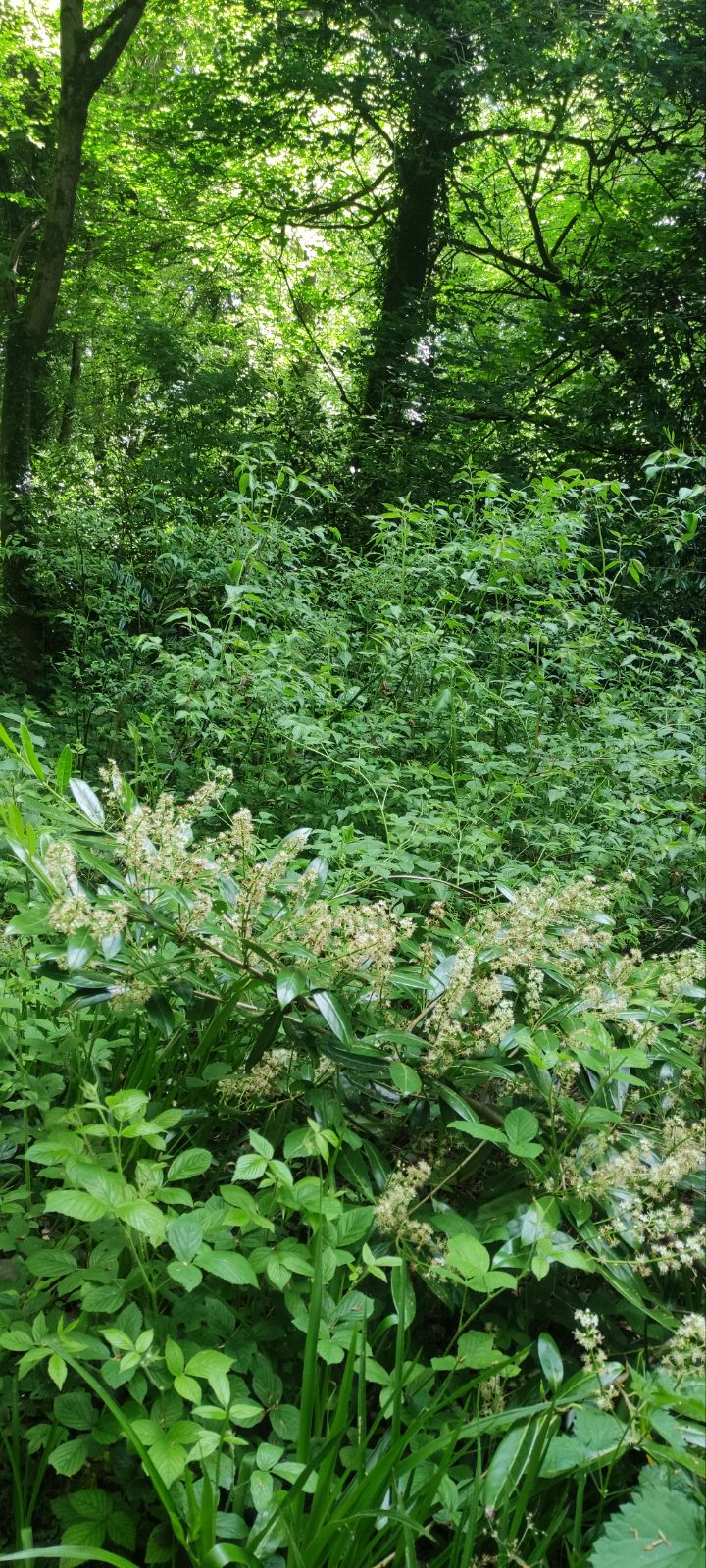
Cherry Laurel spreading in broadleaf woodland
Cherry Laurel is extremely invasive and causes serious harm to Ireland’s native woodlands, it fundamentally alters the conditions needed for a healthy ecosystem. Its dense evergreen canopy blocks light from reaching the forest floor, preventing native trees and woodland plants from regenerating. Over time, it can transform diverse woodland ecosystems into monoculture stands dominated by a single invasive species. Significant effort and public money has already been spent tackling and attempting to remove Cherry Laurel infestations from areas of high value nature including Glen of the Downs, Hazelwood and the Coole-Garryland Special Areas of Conservation.
About the assessment
The assessment was produced by the National Biodiversity Data Centre at the request of the National Parks and Wildlife Service (NPWS), and is now open for stakeholder and public consultation via invasives.ie.
It follows years of campaigning, political pressure, and evidence-gathering by small environmental organisations, ecologists, community groups, and volunteers who refused to let the issue be ignored. Ireland’s Citizens’ Assembly on Biodiversity Loss specifically named Cherry Laurel when it recommended that the State “act immediately to put a timeline on the phasing out of, and eventual ban of, the sale of invasive species.”
The Independent Advisory Committee on Nature Restoration has separately recommended that Cherry Laurel be added to Ireland’s List of Invasive Species of National Concern, and that Ireland seek its inclusion on the EU List of Invasive Alien Species.
What the risk assessment found
The findings are unequivocal. Every pathway by which Cherry Laurel spreads in Ireland — including nursery sales, contaminated soil, garden escape, and intentional planting for hedging — is rated likely to very likely.
Once established, Cherry Laurel spreads rapidly and can form dense stands that prevent native woodland regeneration and reduce the ability of ecosystems to recover naturally.
The assessment found:
Existing measures are not working
Ireland already has phytosanitary regulations, green waste guidance, and prohibitions on planting non-native species in the wild. However, the assessment shows these measures have not been sufficient to prevent the spread of Cherry Laurel.
The continued and accelerating spread of this species demonstrates the limits of existing control attempts. Once invasive species become widely established, eradication becomes increasingly difficult and expensive. Prevention and early intervention are far more effective — yet currently Ireland is continuing to allow the commercial sale of a plant that has now been assessed as posing a High risk to biodiversity.
— Eoghan Connaughton, Ecologist and Founder, Gaelic Woodland Project
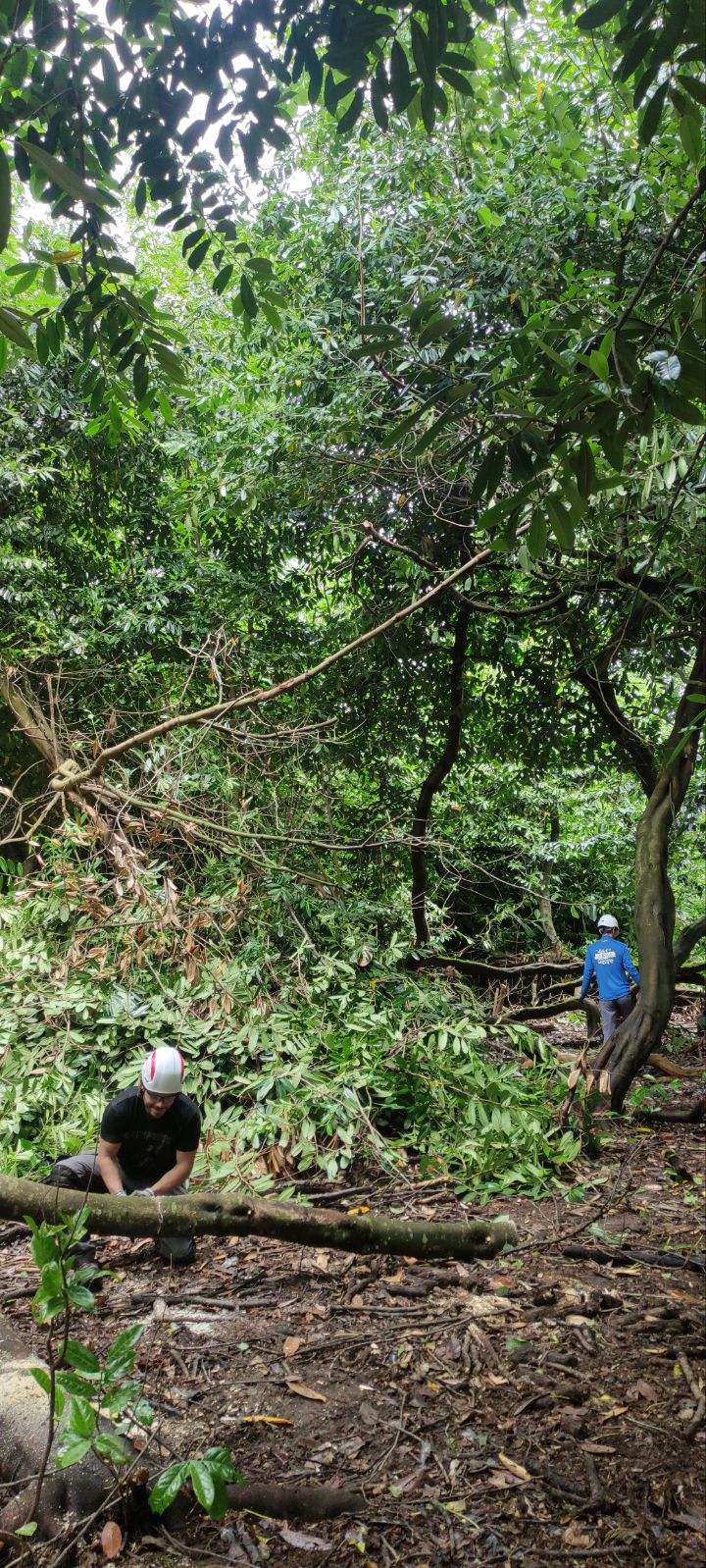
Gaelic Woodland Project at work removing invasive Cherry Laurel from woodland
Weighing the economic cost against the ecological one
The assessment recognises the economic dimension of Cherry Laurel. The species supports a cut foliage industry worth an estimated €7 million annually, with around 100 hectares under cultivation and close to 400 registered nurseries selling it for hedging.
However, that economic value must be weighed against the ecological cost. Ireland ranks among the bottom 10% of countries globally for Biodiversity Intactness, invasive species are among the greatest pressures on native biodiversity, and Ireland is legally obliged to restore degraded ecosystems under the EU Nature Restoration Regulation. These challenges exist within the wider context of a global biodiversity crisis, where the continued loss and degradation of ecosystems demands urgent action.
The protection of native habitats and species must come before short-term economic interests. Protecting our ecosystems and native species must take precedence over short-term economic gain. Every year, month, and week of delayed regulation allows Cherry Laurel to become more deeply entrenched, intensifies the damage to native habitats, and increases the cost of control. The Government must now commit to a full ban on the sale of Cherry Laurel.
A mandate that already exists
The call for action is not new. The Citizens’ Assembly on Biodiversity Loss has already recommended immediate State action on this issue. The Independent Advisory Committee on Nature Restoration recommended formal national listing and an EU-level proposal.
The risk assessment provides clear evidence that Cherry Laurel is a highly invasive species causing serious ecological damage and placing immense pressure on ecosystems across Ireland. In the midst of a biodiversity crisis, anything short of a full ban on the sale of Cherry Laurel would be irresponsible governance.
This risk assessment is also a testament to the persistence of the ecologists, community groups, and volunteers who continued to raise the alarm despite repeated delays. The science has now confirmed what many working on the ground have witnessed for years.
The evidence is overwhelming. The government must act on it.
Ask:
The Irish Wildlife Trust and the Gaelic Woodland Project are calling on the Government to:
Have your say
The public and stakeholder comment period on the risk assessment is open now via invasives.ie.
Members of the public, environmental organisations, and industry stakeholders are encouraged to review the assessment and submit their views.
If you value our work, please consider supporting us by becoming a member or join our mailing list to receive regular updates from the Irish Wildlife Trust.