Menu
by Oisín Ó Néill, IWT Nature Advocacy Officer
First published online: 30 September 2026
“In the elusive grace of the wolf, we find a reflection of our primordial fears. Few creatures lead our minds along such untrodden paths, showing us that there are multiple truths, multiple realities.” — The Wolf Within
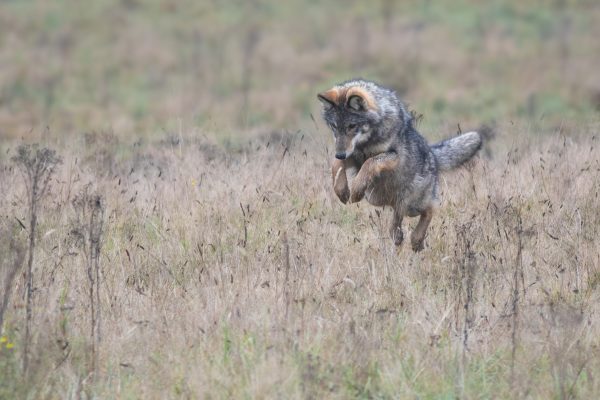
Wolf in Netherlands. Photo: Jefta Leeuwis.
Last week I joined European colleagues in Strasbourg for the Council of Europe’s study session on Empowering Youth Participation through the Bern Convention on the Conservation of European Wildlife and Natural Habitats. Among many species discussed unsurprisingly one species dominated the discussions: the Eurasian Wolf (Canis lupus lupus). In 2024, in a politically and seemingly personally motivated campaign, the European Union voted to downgrade the Wolf’s protection under the Bern Convention. This led to a vote in the European Parliament last year, which resulted in the Wolf’s strictly protected status being downgraded at EU level, opening the door to the culling and hunting of this iconic species. This decision opened up a new and dangerous precedent for species protection in Europe. The Eurasian Brown Bear, the Lynx and the Cormorant are among the species now in the crosshairs, facing growing political pressure to weaken their protection.
The Convention on the Conservation of European Wildlife and Natural Habitats (the Bern Convention) was established in 1979 to protect European wildlife and habitats and promote cooperation between its contracting parties. The Bern Convention is an international treaty adopted under the Council of Europe. The Council of Europe is distinct from the European Union, therefore countries such as Azerbaijan, Armenia, and the United Kingdom are contracting parties to the Bern Convention. The European Union is itself a contracting party to the Bern Convention and the Bern Convention is primarily implemented and enforced in Ireland through EU law, mainly the Birds and Habitats Directives.
The Eurasian Wolf has been persecuted for centuries. The last Irish Wolf was shot in Carlow in 1786. The English Colonial Administration at the time had placed bounties on Wolves in their efforts to bring “wolf and woodkerne” to heel. Across Europe the Wolf suffered heavy persecution and struggled to escape the undeserved negative reputation attached to it. Its appearance as the villain in folk tales such as Little Red Riding Hood and The Three Little Pigs helped sear this negative image into the European psyche for generations.
In reality, the Wolf is a keystone species trying to survive in a human-dominated world, carrying out a vitally important role as an apex predator in its ecosystem. Without apex predators, ecosystems fall out of balance, herbivore numbers proliferate placing greater pressure on the herbaceous layer and stunting forest regeneration, while increases in mesopredators such as Crows, Foxes and Martens place greater pressure on ground-nesting birds. The web of life is interconnected, and once one piece is removed, the effects ripple through the rest, creating a domino effect across the ecosystem.
Wolf attacks on humans in Europe are extremely rare, with no conclusive fatal attacks recorded in Europe in the last 40 years. Wolves have co-existed with humans successfully in the past, and are now re-colonising parts of Europe, including very densely populated countries such as the Netherlands. However, conflict between Wolves and farmers does occur as humans often struggle to share landscapes with animals that do not fit our ideal of nature. In areas of Italy where Wolves are common, shepherds and livestock-guarding dogs are used to protect sheep, yet persecution remains a problem.
Since 2022 the Wolf has been subjected to a relentless political campaign to downgrade its protection status. This campaign stemmed from an unfortunate incident in Germany, when a Wolf killed a pony belonging to European Commission President Ursula von der Leyen. The incident triggered a major political push by von der Leyen and the European Commission to reconsider and ultimately weaken the legal protection afforded to Wolves across the European Union.
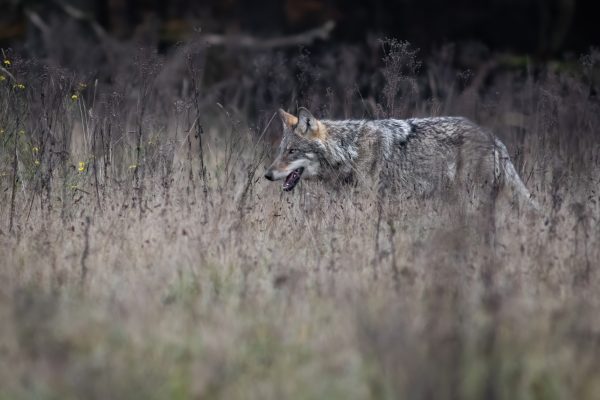
Wolf in Netherlands by Jefta Leeuwis
Ireland played a role in this process. In December 2023, the European Commission proposed reducing the wolf’s protection status under the Bern Convention (just one year earlier, the EU had rejected the same proposal by Switzerland, citing a lack of a sufficient scientific basis for doing so). Despite initially opposing the EU proposal, Ireland subsequently joined the majority in voting to weaken the species’ protection and in December 2024 the Standing Committee of the Bern Convention voted in favour of the EU proposal to downgrade the protection status of the Wolf from ‘strictly protected’ to ‘protected’. Five countries voted against the proposal, including the United Kingdom. By voting to weaken Wolf protections under the Bern Convention, EU Member States ignored the scientific evidence submitted, appeals of over 300 civil society organisations, and hundreds of thousands of citizens urging science-based action to promote coexistence with large carnivores.
Following the decision under the Bern Convention, on 8 May 2025 the European Parliament approved the European Commission’s proposal to weaken the Wolf’s strict protection under the EU Habitats Directive (with 371 votes for, 162 against, and 37 abstentions). Irish MEPs from Fianna Fáil, Fine Gael, and Independent Ireland including Nina Carberry (FG) Regina Doherty (FG) Seán Kelly (FG) Maria Walsh (FG) Barry Andrews (FF) Barry Cowen (FF) Billy Kelleher (FF) Cynthia Ní Mhurchú (FF) Ciaran Mulooly (II) aligned themselves with the European Commission’s proposal to downgrade the species from strictly protected to protected. Irish politicians voted against the Wolf, delivering a decision that has weakened one of Europe’s most important legal protections for wildlife.
The Wolf is already feeling the brunt of this decision with Germany establishing a hunting season and France and Austria swiftly increasing the number of Wolves that can be killed annually. More worryingly still is the precedent this decision sets for European nature conservation. Despite the fact that wolf populations were recovering thanks to their strict protection, the species continues to be in an unfavourable conservation status in six out of seven EU biogeographical regions. The decision undermined decades of conservation efforts and dealt a significant blow to what has been recognised as one of the European Union’s notable wildlife conservation successes. The decision was politically motivated, with the Wolf becoming low-hanging fruit for politicians seeking to appease the farming lobby, favouring the short-sighted one solution of lethal control rather than investing in long-term solutions that promote coexistence between humans and large carnivores. Irish MEPs, no strangers to appeasing the farming lobby, fell in line. With Wolf population recovery still ongoing the goals of both the Bern Convention and Habitats Directive, that of restoring endangered species, had not been achieved. Deeply concerning too was the use of an emergency procedure by the European Parliament to fast-track the proposal, as though changing the legal protection of the wolf was a matter of exceptional urgency. This trend of speeding up the weakening of nature laws limits democratic debate and threatens the future of environmental protection in Europe. Ultimately the EU decision undermined the credibility of EU nature laws and threatened the recovery of wolves, a keystone species, across Europe.
Europeans have a moral obligation to hand down stable, biodiverse, and ecologically viable ecosystems to future generations. This decision dealt a blow to that future and won’t easily be undone. Europeans are facing the inescapable reality of the biodiversity crisis. Nature is under immense pressure from efforts to weaken environmental protections, intense lobbying from environmentally damaging industries, and growing political conflict over the direction of the nature restoration movement. Collectively, we suffer from shifting baseline syndrome, as over time each generation accepts more diminished wildlife, and that degraded state becomes accepted as the norm. Downgrading protections normalises a lower standard of biodiversity, shrinking the ecological imagination and ambition of future generations, and running counter to the nature restoration movement.
In Ireland, shifting baselines have contributed to a situation where Wolves do not even make it onto the nature restoration agenda. This is a mistake. Protection of Wolves should be the bare minimum, the return of Wolf populations across Europe, including to Ireland and the UK should be the aim. We must reverse the trend of shifting baselines and learn to imagine what genuinely restored ecosystems could look like. The extermination of the Wolf in 1786 marked the loss of Ireland’s last native apex predator and, with it, an important component of Irish ecosystems.
An ambitious approach to the Bern Convention and the Nature Restoration Law should therefore ask not only how we prevent species from disappearing, but how we restore the functioning ecosystems from which those species have been removed. We must not only rewild Europe; we must rewild our ambitions. We must imagine, and ultimately work towards, a Europe where wildlife, ecosystems, and the species that shape them can once again thrive.
The downgrading of the Wolf has created a dangerous precedent and attempts to weaken protections won’t stop at the Wolf. Calls are already mounting for further species to be downgraded, with the Eurasian Brown Bear (Ursus arctos arctos) and the Eurasian Lynx (Lynx lynx) being targeted. Again, Ireland will have a role to play. Despite having no Bears and most Irish people having never seen a Bear, Irish politicians will have vote on whether Bears deserve protection. When that time comes it’s important that we stand with our European nature allies in defending the protection of species across the continent. Sooner or later, downgrading decisions will affect species closer to home. There are already growing calls to downgrade the protection of the Cormorant (Phalacrocorax carbo). When we accept the weakening of protection for one species for political reasons, we normalise and create a precedent for a process in which legal protection becomes increasingly vulnerable to political pressure.
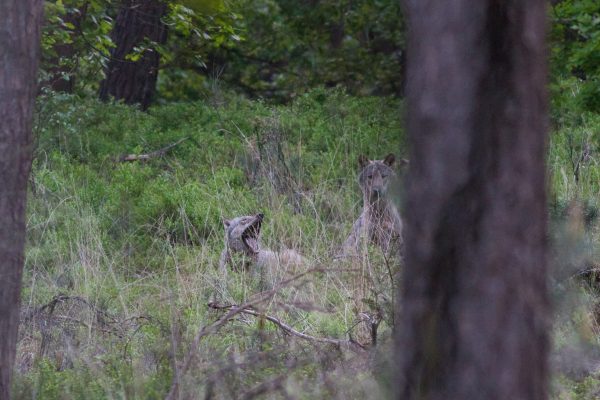
Wolves in Netherlands by Jefta Leeuwis
In an increasingly multipolar world, where international cooperation is under growing pressure, study sessions such as the one I attended in Strasbourg are vitally important. They bring together conservationists, campaigners, nature advocates, and communicators from across Europe to share experiences, build relationships, and think collectively about the challenges facing nature. At a time when protections are coming under increasing pressure, we need spaces where people can collaborate and plan how we can respond collectively. Pan-European cooperation on species protection needs to be built in advance, through relationships, shared knowledge and a sense of common responsibility for European nature.
Ireland should be an advocate for the protection of Wolves, Bears, and other species across our European community. Nature has no borders. Neither should our efforts to protect it. Across Europe, we must stand together to defend wildlife, restore our ecosystems, and move towards a future in which wild nature thrives.
If you value our work, please consider supporting us by becoming a member or join our mailing list to receive regular updates from the Irish Wildlife Trust.