
Menu
By Charlotte Salter-Townshend, IWT Communications & Network Officer
First published online: 04 December 2025
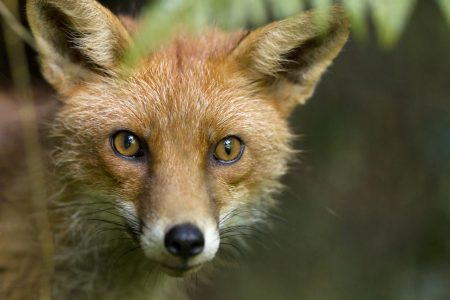
Red Fox (Vulpes vulpes). Image credit: Andrew Kelly
Background and Timeline
Fox hunting emerged as a topic during the presidential election debates. Most people were aghast at the description of this brutality as a “rural pursuit”. Ireland is now an outlier on this issue as it has been banned in the UK for twenty years.
This month, People Before Profit-Solidarity TD Ruth Coppinger is seeking to amend the Animal Health and Welfare Act (2013), which currently contains an exemption that allows fox hunting. The amendment to the Act would make fox hunting an illegal and unlawful activity. The bill would also ban trail hunting and the snaring and trapping of foxes.
Coppinger first introduced the Bill on 27 May 2025. Independent Ireland and Sinn Féin opposed this initial step. Fortunately, the Bill passed its First Stage vote the next day, and a Second Stage debate – a final vote – is now scheduled for Wednesday 17 December.
Last month, Ireland Thinks carried out an opinion poll across a sampling of 1,000 people. It found 72% believe foxhunting as a sport should be banned in Ireland, with 17% against the Bill and 11% unsure. This public support for the Bill is not reflected in the Dáil. At the time of writing, Fine Gael, Fianna Fáil and Sinn Féin TDs are set to vote against the Bill.
Although communications from individual Sinn Féin, Fine Gael and Fianna Fáil TDs have expressed some diverging views, at the moment it looks like the party whip will ensure members toe the party line when it reaches the next stage. TDs who would be in favour of the Bill to Ban Fox Hunting have to follow their party leadership and vote against it or risk being ejected from their party. Hence the campaigners in favour of the Bill are calling for a free vote on the Bill on 17 December.
Take Action for Foxes
One action you can take is to email your local TDs and show your support for the Bill. If the parties and TDs opposing the Bill feel enough public pressure, they may relax the whip. Below you will find a sample template that you can use to email TDs. You can find a list of contact details for all TDs on this website. You can also follow the Rural Ireland Against Fox Hunting campaign on Instagram and lend your support there.
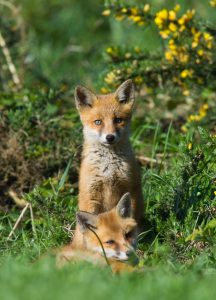
Young foxes. Image credit: Mike Brown
Does fox hunting still happen in Ireland?
Fox hunting happens regularly in Ireland during the hunting season, which runs from November to April, with 42 registered packs often meeting two or three times a week. Hunts often start around 11.00am and follow a specific route through areas where foxes have been previously identified.
Established in 1845, the Irish Masters of Foxhounds Association (IMFHA) “represents the interests of foxhunting packs in Ireland.” Each Hunt Club has its own constitution and rules. Hunt Club committees have the power to appoint a Master or Joint-Masters. The function of a Master or Joint-Masters is to organise and run the Hunt and to part-finance the activities of the Hunt Club.
The IMFHA Code of Conduct focuses on care of foxhounds and horses, neat appearance, and not obstructing passage of motorists. “Accidental trespass cannot always be avoided but the wishes for all landowners, no matter how small, must be respected. Every effort must be made to prevent hounds and followers from hunting a fox into a “built-up” area or straying onto places where they are not welcome. Animal rights activists can be extremely irritating and may even break the law. Hunt followers must resist the temptation to retaliate in kind no matter what the provocation.”
The Irish Council Against Bloodsports provides this description of a fox hunt:
“The dogs are sent into an area to scent out a fox and force it to break cover. With the fox in the open, the chase begins and can continue for an hour or more. This part of the hunt provides the “field” (i.e. the riders) with the excitement they crave as they hurdle fences, ditches and walls in pursuit of the fox. The fox will go anywhere to escape the hounds. He will try to go to earth down a fox-hole, drain or badger sett, but these escapes are likely to have been blocked the night before by hunt supporters. The fox will run among sheep and other livestock, the hounds following in pursuit, resulting in the livestock being scattered and put under stress. If he cannot escape, the fox is chased to exhaustion at which point he will be caught and savaged to death by the hounds. Foxhounds are bred for stamina, not speed, otherwise the fox would be caught too soon and spoil the hunters’ fun. Often a fox will succeed in finding an unblocked refuge. The hunt has several options; they can leave the fox if they are confident of finding others, they can dig him out with shovels, or they can send for the terrierman, who will either send down a terrier to bolt the fox, allowing the chase to continue, or they will dig the fox out later when the “field” has gone.”
Research on the effect of fox hunting
The pro-hunting lobby’s key argument is that foxes reduce livestock and have a negative impact on the livelihood of farmers. They also point to how fox control benefits ground-nesting birds. But habitat restoration should be the focus, not containment of natural predators. As with livestock, there are other measures, e.g. fencing, as used by RSPB NI and Breeding Waders EIP.
The Hunt is an ineffectual form of control of fox numbers. While there is a lack of research on this topic in Ireland, a case-study on the foxes and foxhunting on farms in the UK (Baker and McDonald, 2000) discredits the “pest-control” argument, with “…hunting being more likely to occur on farms reporting fewer foxes, less livestock farming and fewer fox pest problems. It is likely that these farms presented fewer incompatibilities with, or physical access problems for, the Hunt. Most farmers, even on farms where foxes were considered a pest, tolerated, rather than encouraged, hunting on their land. Evidence from hunting farmers suggests that hunting is considered primarily as recreation, and secondarily as a method of controlling foxes.”
Reasons to effect a Ban on Fox Hunting
It is a cruel blood-sport. The purpose of fox hunting is to chase the fox to exhaustion for an hour or more before the animal is torn to pieces by the hounds. Harrowing evidence that foxes and hares killed by dogs suffer painful deaths formed evidence during the debate leading to the banning of fox hunting in the UK.
Fox hunting with dogs was introduced to Ireland from the UK, where it has since been banned. It was banned in England and Wales in February 2005 following the passing of the Hunting Act 2004. A separate ban had already been implemented in Scotland in 2002.
Illegal hunting is still taking place in the UK, so some argue it will keep happening. However, the continuation in the UK is mostly down to loopholes: trail hunting is allowed (a controversial activity where hounds follow a man-made scent trail, typically made from fox urine, instead of a live fox). The Bill being proposed here in Ireland avoids this pitfall as it also bans trail hunting.
The majority of Ireland (urban and rural) support the ban of fox hunting. A Red C poll conducted in September 2019 indicated that 74% of rural dwellers oppose fox hunting (77% nationally). Many farmers are frustrated by the Hunt passing through their land without permission, sometimes causing damage to the fields and livestock. Pets have also been killed by hounds and members of the public have been left distressed by the Hunt.
The Red Fox in Ireland
Foxes play an important part in our ecology as both omnivores and scavengers. As a predator, they help control numbers of rabbits and rodents. They also disperse seeds and remove carrion.
They are social and live in family units. They communicate with a range of sounds, including a high-pitched bark from males and a high-pitched scream from vixens during the mating season. They have whiskers not just on their face, but also on their legs to help them navigate in the dark. They are nocturnal but can also be active during the day and enjoy sunbathing.
The intellect and patience of the fox are recurring themes in Irish folklore. They are also said to be able to foresee events including the weather and the bark of a fox is said to be a sure sign of rain.
Previously it was believed that foxes were introduced by Neolithic people for their fur, but a recent genomic study shows that they naturally colonised Ireland in the early post-glacial period. They are a prime example of a highly-adaptable species responding to a rapidly changing environment. For thousands of years we have lived alongside these charismatic canines. If you would like to find out more about foxes visiting your garden, check out this blog post.
Sample Email to TDs
Re. The Animal Health and Welfare (Ban on Fox Hunting) Bill 2025
Dear Deputy,
I am asking you for your view on fox hunting and whether you will support the Bill to ban fox hunting, expected to be moved at second stage on 17 December by Deputy Ruth Coppinger.
Fox hunting emerged as an important issue during the presidential election debates. Most people were aghast at the description of this brutality as a rural pursuit. Ireland is now an outlier on this issue.
I call on all parties to remove the whip on this issue and allow a free vote. This will allow TDs to search their conscience and reflect on how best to represent their constituents. Polls show 77% want fox hunting banned, including a majority in rural and urban areas.
A fox getting chased by a pack of dogs and horses and torn limb from limb is not a rural pursuit or method of control on farms.
Please let me know your stance.
Yours sincerely,
[Name/Address]