Press Release: Irish Wildlife Trust welcomes moves to better protect the marine environment
14th December 2022
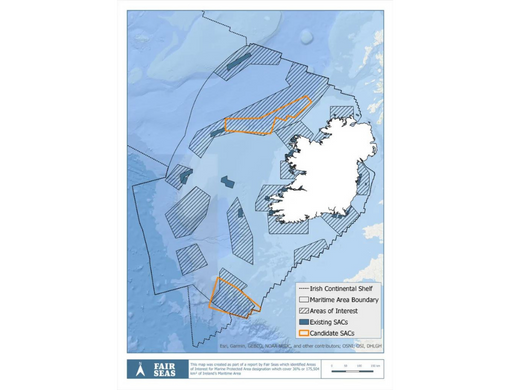
The Irish Wildlife Trust (IWT) warmly welcomes the announcement yesterday (December 13th) from Minister of State Malcolm Noonan that there will be new designations of Special Areas of Conservation (SAC) in the waters off Ireland as well as the approval by cabinet of draft legislation for the creation of Marine Protected Areas (MPAs). These are significant steps forward to meeting our national and international obligations (from covering 2.3% of sea area to 8.3%) and, more importantly, restoring abundance and diversity to our seas.
However, designations do not mean actual protection measures so, important as these steps are, we must maintain momentum so that we see real effects where it matters.
Speaking from the COP15 conference in Montreal, Canada, where negotiations for a ‘Paris Agreement’ for nature are underway, IWT campaign officer, Pádraic Fogarty says “This is a very important announcement that signals that we are starting to get serious about restoring the life in our seas and congratulations to the minister and his team for getting this far. But this is only the start of a process. We know that marine ecosystems are under threat of collapse, with grave consequences for all life on earth. The principal pressure on the ocean is fishing, with pollution and climate change also posing important threats. We need to be using these designations to drastically curtail the footprint of industrial fishing that would in turn restore the bounty of life for people and nature. “
Ireland has a long way to go to reach the goal agreed in the Programme for Government of protecting 30% of seas by 2030. Many scientists believe this figure needs to be closer to 50%. But unless these areas are managed, particularly to exclude industrial fishing and other extractive activities such as mining, they won’t deliver for biodiversity. While SAC designations are a step forward, they are limited to protecting narrowly defined features rather than the whole ecosystem. This is why MPA legislation is vitally important so we can take a “whole site approach”.
The announcement of forthcoming Special Protection Areas (for birds) along the east coast is significant for the development of offshore wind energy developments. The IWT and our partners have long campaigned for a planned approach to offshore wind development that would allow for decarbonisation of our energy grid without harming biodiversity.
CONTACT: Padraic Fogarty IWT Campaigns Officer irishwildlife@iwt.ie