Menu
First published: 05 August 2026
by Oisín Ó Néill, IWT Nature Advocacy Officer
Wildlife crime is a serious, persistent, and growing problem in Ireland. Many protected species are used for illegal sporting activities, birds of prey are poisoned, and protected habitats and species destroyed when they stand in the way of profit. Far too often, wildlife in Ireland is treated as expendable.
When we look at incidents of wildlife crime, fingers are often pointed at certain segments of Irish society, and much remains to be done to improve public attitudes towards the persecution of wildlife. While it is easy to point to individual wrongdoers, we must begin to ask what message the State itself sends about the value it places on wildlife. Governments play a role in shaping public attitudes. Laws communicate what society considers acceptable. When we have a State that permits and licences persecution of wildlife, we should not be surprised when parts of wider society follow suit.
In 2022, the Irish Government convened the Citizens’ Assembly on Biodiversity Loss in response to growing awareness of the biodiversity crisis, both in Ireland and globally. That crisis has not gone away and if anything, it has become more critical, compounded by the increasing frequency of extreme weather events driven by climate change. Across Ireland, communities, conservation groups, and individuals are taking action to restore habitats, protect species, and rebuild connections with nature. This growing public desire to protect our natural heritage demonstrates that a different relationship with wildlife is possible.
The European Union has recognised that protecting what remains is no longer enough. It has acknowledged the need to actively restore nature through the Nature Restoration Regulation, which has been adopted in Ireland with a draft plan on what this will look like in progress.
Yet despite this growing recognition of the urgency of the biodiversity crisis, a contradiction persists in that the State tells the public that biodiversity is in crisis and that it values nature which must be restored and protected but at the same time it continues to permit activities that involve the persecution of wildlife. If Ireland is serious about restoring nature, this requires more than habitat targets and restoration plans. It requires a fundamental reassessment of the laws, policies, and cultural attitudes that determine how wildlife is treated.
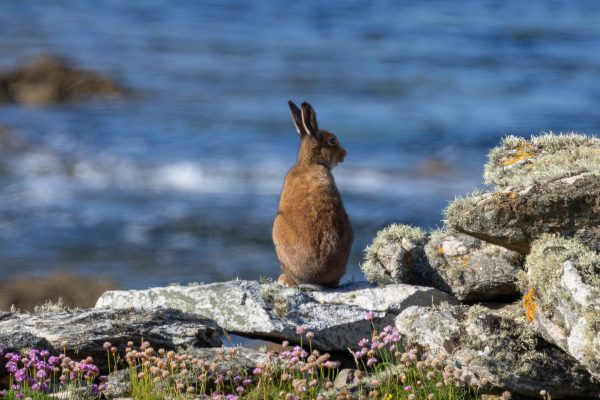
Irish Hare by Aaron O’Hara
In July 2026, the Irish Government voted to retain hare coursing (a sport where dogs pursue hares in an open field). This means that the native Irish Hare, an endemic subspecies found only on the island of Ireland which has been legally protected since 1930 in the Republic of Ireland, can continue to be plucked from the wild and used in this cruel activity under licence.
The decision is extremely difficult to reconcile with the claim that the State is taking the biodiversity crisis seriously. The Irish Hare faces pressures from habitat loss, illegal poaching, and the spread of the fatal RHD2 virus, a disease linked to the movement and confinement of hares associated with coursing. It is a species that should be protected and celebrated, not captured and exploited for sport.
Approximately one-fifth to one-sixth of all submissions to the Citizens’ Assembly on Biodiversity Loss explicitly called for a ban on live hare coursing and those calls have not gone away, yet neither has the State’s willingness to permit the practice. Hare coursing was made illegal in the United Kingdom including Northern Ireland in 2004. Today, Ireland is one of just three countries in the European Union where hare coursing remains legal, alongside Portugal and Spain—two countries that also continue to permit the archaic practice of bullfighting.
The Government has acknowledged the biodiversity crisis and the need to restore nature, has adopted the Nature Restoration Regulation. Yet it continues to permit the capture and use of this protected wild species for sport.
It must therefore be assumed that, despite the biodiversity crisis and the Government’s stated commitment to nature restoration, it has concluded that subjecting protected wild hares to this activity is compatible with wildlife and nature restoration. That is a conclusion that many people will struggle to understand. It also raises broader questions about political leadership during a worsening biodiversity crisis. The Irish Hare is part of Ireland’s living heritage, part of our landscapes, folklore, and relationship with the countryside. Protecting nature requires recognising wildlife not merely for its ecological role, but for its intrinsic value and place within our shared society.
Illegal hare coursing continues in the murky underworld of wildlife crime in Ireland, involving the illegal capture and trafficking of wild hares for sport. While this activity is clearly separate to regulated legal hare coursing, both activities are rooted in the same underlying outlook: that it is acceptable to take wild hares from the countryside and use them for human recreation. This is the message that legal hare coursing sends. It tells the public that the capture and use of a protected wild species for sport remains acceptable under certain circumstances.
Another heavily persecuted native and protected species is the badger. Since 2014, the Irish State has authorised the killing of 66,475 protected badgers under its bovine TB eradication programme. Shockingly, more than 80% of badgers tested after being culled since 2020 were free of bovine TB, meaning the overwhelming majority of animals killed were not carrying the disease. In 2024 alone, 7,319 badgers were culled, the highest annual total since 2014 showing the State has no intention of slowing down this brutal and inefficient TB eradication programme.

Badger by Mike Brown
The burden of Ireland’s TB strategy continues to fall disproportionately on a species that should be protected. Ireland’s cattle industry is vast, and the badger has become another obstacle to profit. Joining our rivers, which continue to suffer from nutrient pollution, as another casualty of an agricultural system that too places production ahead of nature. The approach is also increasingly out of step internationally. In England, after the killing of more than 270,000 badgers over the past decade, the government has confirmed that badger culling has effectively ended and is moving towards vaccination as part of its TB control strategy.
A disease-control model that accepts this level of wildlife persecution is impossible to justify. It is a blunt, outdated approach that has no place in an Ireland that has legal obligations to protect its native wildlife and has repeatedly committed to halting biodiversity loss.
In December 2025, the Government also voted to retain the sport of fox hunting. Fox hunting, a pastime introduced to Ireland during British rule, has since been banned in England, Scotland, and Wales, yet it continues to be legally practised here.
The Wildlife Act provides that foxes may only be hunted as a form of pest control and that no unnecessary suffering should be caused to the animal. As anyone who has been relentlessly chased down by a pack of howling dogs will tell you, this activity involves a lot of suffering. Because foxes are not a protected species, the National Parks and Wildlife Service has no licensing or regulatory role in relation to fox hunting.
If foxes can legally be pursued by packs of hounds as part of recognised sporting activities, is it surprising that some people come to regard foxes not as wildlife deserving protection but as vermin or sporting targets? The Journal’s Wild Not Free investigation uncovered an underground trade in which live foxes were captured, confined, and sold for around €100 to be used as bait in illegal hunting activities, with requests for fox cubs also appearing in private social media groups.
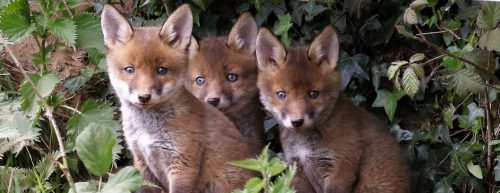
Fox cubs by Pat Quinlan
There is, of course, a clear legal distinction between licensed hunting and organised wildlife crime. But both exist within a society where the fox continues to be viewed as an animal whose persecution is acceptable under certain circumstances. If the State wishes the public to foster greater respect for wildlife, it must consider the message its own laws and policies send.
Wildlife Crime is rising in Ireland and the government should be concerned. A government cannot expect society to respect wildlife while simultaneously permitting its persecution, treating serious wildlife offences leniently, or defending practices that would be unacceptable if directed at many other animals. Leadership begins with example.
Wildlife crime carries penalties of up to €100,000 in fines and prison sentences under the Wildlife Act. On paper, these offences are treated as serious crimes. In practice, however, the outcome is often very different. Even where wildlife crime reaches the courts, sanctions often fail to reflect the seriousness of the offence. If offenders can avoid criminal conviction through application of the Probation Act after making payments to charities directed by the court, to many this sends the message that wildlife crime is viewed as a lesser offence.
A recent case involving the destruction of House Martin nests once again resulted in the application of the Probation Act. Each case turns on its own facts and sentencing is rightly a matter for the courts. Nevertheless, the case reflects a wider pattern. In that case, an estate agent deliberately destroyed 57 house martin nests, resulting in the deaths of an estimated 205 amber-listed birds. The judge himself described the offence as “appalling” and accepted that it had been committed for profit. Yet despite the scale and seriousness of the offence, the matter concluded with the application of the Probation Act, with €10,000 directed to be paid to wildlife charities and no recorded criminal conviction.
A similar issue arose in the case of Dublin developer Con McCarthy, who was convicted under the Wildlife Act after burying an active badger sett under tonnes of clay and soil. The destruction of the sett likely resulted in the suffocation of a breeding family of badgers. However, following an appeal to the Circuit Court in March 2024, the conviction was overturned through the application of the Probation Act, with McCarthy instead directed to pay €15,000 to animal charities. The Irish Wildlife Trust rejected these funds, and stands firmly by its position that allowing offenders to avoid a criminal conviction through charitable payments risks weakening the deterrent effect of wildlife protection laws.
The criminal justice system does more than punish wrongdoing, it shares a society’s values. When offences against protected wildlife repeatedly end without a recorded conviction, the public is left to wonder whether these crimes are truly regarded as serious.
The government on one hand speaks about the biodiversity crisis and the urgent need to protect nature. Yet the laws relating to permitted activities to the sentencing outcomes relating to wildlife crime cases, send a very different message.
Wildlife crime does not occur in a cultural vacuum. Laws, institutions, and public policy all help shape the way society values, or fails to value, the natural world. They are products of a culture. And culture is shaped, in part, by the government and what the government is seen to deem acceptable. When the Government licenses the capture of wild hares for coursing, permits organised fox hunting, and repeatedly sees wildlife offences conclude without recorded convictions, it sends a message about the value of wildlife. Conservation is not only about restoring habitats and species, it is also about defining our relationship with nature. Ireland has shown before that it can change its relationship with our natural heritage. The growth of community conservation projects, habitat restoration initiatives, and public engagement with biodiversity shows that there is a strong desire for a future where wildlife is respected and protected. However, if our government continues to treat some forms of wildlife persecution as acceptable, it is hardly surprising that some segments of society will continue to do the same.
If you value our work, please consider supporting us by becoming a member or join our mailing list to receive regular updates from the Irish Wildlife Trust.