Category: * Advocacy For Nature

  • Strengthening Hedgerow Protection 

    Strengthening Hedgerow Protection 

    Citizens’ Assembly Ideas

    2023 saw the publication of the “Report of the Citizens’ Assembly on Biodiversity Loss”. Many impactful solutions to biodiversity loss are found within the recommendations of the Citizens’ Assembly. It is vital that the Government of Ireland act on these recommendations. This series of articles explores ideas found within the Citizens’ Assembly recommendations. This article first appeared in 2024 Irish Wildlife magazine spring issue. Get your copy of the latest Irish Wildlife magazine by joining the IWT today.

    Here Katie Smirnova of Hedgerows Ireland explores the need to reviewing, strengthening and improved enforcement of legislation protectine hedgerows in Ireland. The opinions expressed in this article represent those of the author and do not neccessarily represent the views of the Irish Wildlife Trust.

    Strengthening Hedgerow Protection 

    Written by Katie Smirnova

    Published online October 23rd 2024

    If asked to imagine the Irish landscape, we might picture our rugged coastline, hills painted purple with heather, or a countryside criss-crossed with trees and shrubs. Ireland’s distinctive countryside mosaic is shaped by hedgerows; they capture carbon, slow the flow of water over land, buffer pollution, and help wildlife. The predator protection, nest sites, and food that hedgerows offer to wildlife is vital during the breeding season, when they are used by 55 of the 110 bird species regularly recorded in our Countryside Bird Survey. Healthy hedgerows also speed up water infiltration into the soil, trap pollutants from surface runoff, and are a barrier against strong wind, rain, and sun.
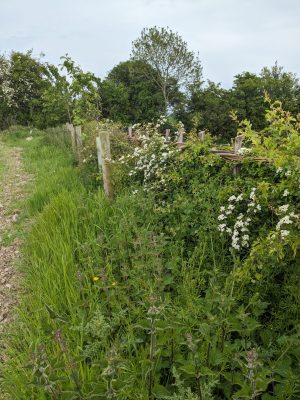
     

    Unfortunately, it’s not all good news. Hedgerows are being mismanaged and removed for reasons such as convenience, construction, agricultural intensification, and aesthetic values. We can protect our hedgerows with nature-friendly management such as lighter A-shape trimming and rejuvenation through hedge laying. To prevent their removal, we could identify existing hedgerows in Local Area Plans so they are considered as part of the green space in developments. We could also enforce a mitigation hierarchy which emphasises opportunities for translocation where keeping hedgerows in-situ is not possible. To do this, we must change attitudes and strengthen policy and legislation. The latter point was recommended by the Citizens’ Assembly on Biodiversity Loss, which noted that “Existing legislation and regulations regarding hedgerows must be reviewed, strengthened and fully enforced, with due regard to public safety.” These may include the Wildlife Acts, 1976 and 2000, EU Habitats Directive 92/43/EEC, Common Agricultural Policy Conditionality, Environmental Impact Assessment (EIA) (Agriculture) Regulations 2011, and more recently, the Nature Restoration Law 2024 and proposed Protection of Hedgerows Bill 2024.

    The Wildlife Acts, 1976 and 2000, and EU Habitats Directive 92/43/EEC legally protect hedgerows if they contain a bat roost, meaning that a licence from the National Parks & Wildlife Service (NPWS) is required for any disturbance. Section 40 of the Wildlife Act 1976 should also be familiar to anyone managing hedgerows as it prohibits cutting, burning, or otherwise destroying vegetation between 1st March to 31st August to protect nesting birds. However, work is exempt if carried out in the “ordinary course of agriculture or forestry”, which includes horticulture and garden hedges. Exemptions also apply to construction or road safety, based on Section 70 of the Roads Act 1993. Hedgerows are a human-made habitat planted to delineate field boundaries, as a physical barrier, and for aesthetic or biodiversity purposes. By this logic, all hedgerows fall under the agricultural and horticultural exemption. There needs to be greater clarity on which hedgerows are actually protected outside of the exemptions. The NPWS is currently reviewing Ireland’s wildlife legislation and must address these faults to adequately protect hedgerows and nesting birds. Maintaining safe sightlines on roadside hedgerows is necessary, but we must cease the out-of-season cutting of internal hedgerows in gardens, parks, and farms.
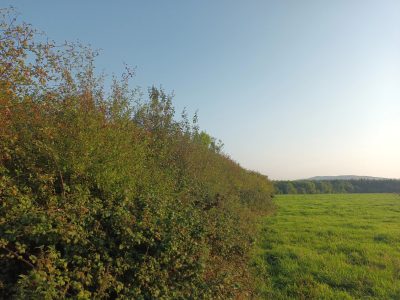
    Speaking of farms, a positive development under the Common Agricultural Policy 2023-2027 is that at least 4% of eligible land must be devoted to biodiversity in order to receive the single farm payment. The ‘Space for Nature’ requirement falls under Conditionality and the Good Agricultural and Environmental Condition (GAEC) 8. The direct financial value placed on hedgerows is positive because farmers were previously penalised for these non-productive areas. As a result, hedgerows were removed or managed more int

    ensively to maximise the area eligible for payments. Farm hedgerows can still be removed under exceptional circumstances for building work or safety issues; though this does not include removing boundaries dividing two fields. Under GAEC 8, hedgerow removal falls under the EIA (Agriculture) Regulations 2011 and requires replanting with double the original length. However, this does not offer sufficient protection as the Regulations’ screening thresholds are too high and a newly planted hedgerow will take many years to become a functioning habitat.

    The Regulations apply to farmers and involve an initial screening process followed by an EIA if deemed necessary. The mandatory thresholds for screening are either 500m of hedgerow or the restructuring of 5ha of land. For EIA, these increase to 4km or 50ha, respectively. The Regulations Guide to Farmers specifies that sub-threshold works must still go through screening if they “may have a significant effect on the environment” or if the hedgerows are “important commuting routes or feeding habitats for bat species”. Since all hedgerows are vital for bats, it would seem that any work should be screened by default. However, the thresholds mean that a lot of removal is not screened, and if it is, the applications are usually approved. Fortunately, the Depart

    ment of Agriculture, Food and the Marine is currently reviewing the EIA (Agriculture) Regulations 2011. Hopefully, they will integrate recommendations from the consultation and reduce these exceedingly high thresholds. Submissions also requested a clear, standard methodology for assessing applications and more reviews of approved works to improve the system’s credibility.

    A positive development in legislation affecting hedgerows was the adoption of the EU Nature Restoration Law in June 2024. Article 11 sets out targets for Member States to achieve increasing trends in the grassland butterfly index, stock of organic carbon in cropland mineral soils, and share of agricultural land with high-diversity landscape features, such as hedgerows. There are other targets for forestry, aquatic ecosystems, and urban areas. Measures for individual landowners will be voluntary and financially incentivised through various schemes. However, the new law is mandatory for Ireland as an EU Member State, meaning that as a country we have a legal obligation to meet the targets for nature restoration.
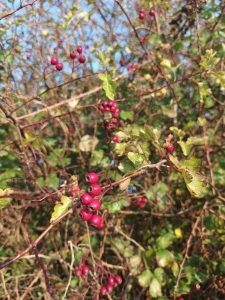
    Another new initiative is the Protection of Hedgerows Bill 2024, brought before the Dáil by members of the Climate Bar Association in collaboration with Dr Alan Moore and other hedgerow advocates in Co. Tipperary. The Bill proposes additional restrictions on the removal of significant hedgerows, guided by factors from the Hedgerow Appraisal System 2013. For example, historical and cultural elements, species diversity, structural features, habitat connectivity, and ecosystem services. The Bill is currently before Dáil Éireann at the Second Stage, so stay tuned!

    As it currently stands, the extent of hedgerow mismanagement and removal is failing both people and our nature. Nevertheless, reviews of the wildlife legislation and EIA (Agriculture) Regulations 2011 indicate that there is an openness to change. It is vital that we all respond to consultations and play our part in strengthening the legislation and regulations that protect hedgerows. By promoting nature-friendly hedgerow management, we can also shift societal norms and people’s attitudes towards this integral part of our landscape, which will eventually reduce the underlying need for enforcement of legislation.


  • Press Release:  86% of Irish people support stricter protection of Marine Protected Areas

    Press Release: 86% of Irish people support stricter protection of Marine Protected Areas

    86% of Irish people support stricter protection of Marine Protected Areas

    Press Release

    25 June 2024


    New polls released today show that 86% of citizens across 7 EU countries expect their political leaders to prioritise the protection of marine biodiversity.

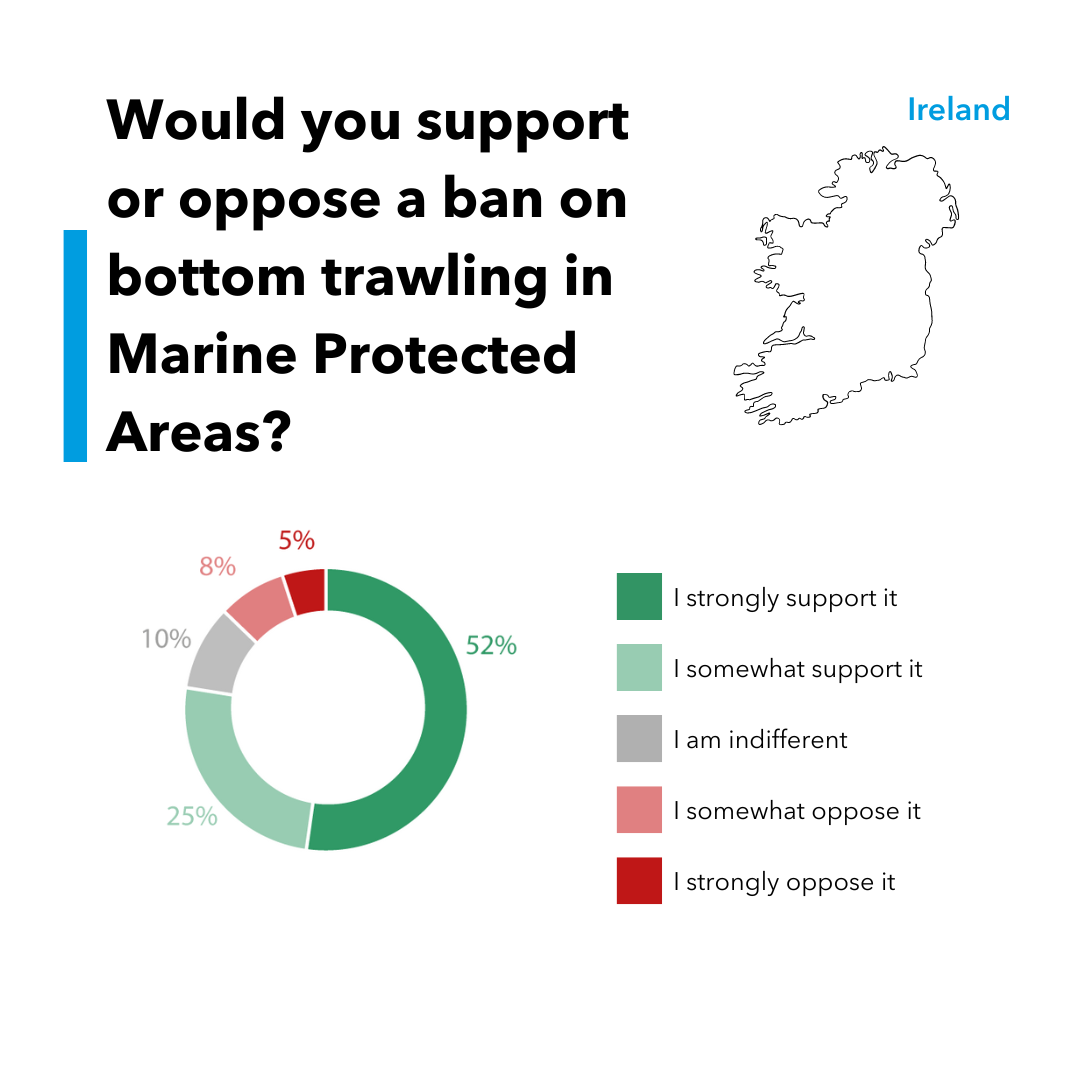
    An independent polling company interviewed approximately 1000 people in each of the 7 EU countries asking questions about marine conservation. Irelands results show a higher than average public attitude to see our waters effectively protected. 86% out of 1,001 Irish citizens surveyed said they would support stricter legislation to protect Marine Protected Areas and 78% would support a ban on bottom trawling within these areas. Bottom trawling is a fishing method that involves one or more boats pulling heavy fishing nets along the ocean floor in an effort to catch fish and other marine species. It is one of the most destructive and indiscriminate fishing methods, resulting in ecosystem loss, the release of carbon stored in the seabed, and high levels of bycatch and fish discards. Only 31% of Irish people believe that the current legislation effectively protects the oceans with 88% saying that politicians should give higher priority to marine biodiversity.

    Some other key insights across the EU show that 90% of people believe MPAs are essential for preserving marine biodiversity and 73% would support a ban on bottom trawling in MPAs. Post EU elections, this is a clear message to the new European Commission and to new Members of the European Parliament, to put ocean issues at the heart of their mandates.


    Grace Carr, Marine Advocacy officer with The Irish Wildlife Trust, said: “Bottom trawling is one of the most destructive human activities in the ocean. If we were to bulldoze through forests completely destroying and killing everything in our path, people would not put up with it. Because this happens under water, where it is out of sight and out of mind, it often gets overlooked. These polls show that Irish citizens care about our waters and want to see them effectively protected and Irish politicians at home and at EU level should take heed of this real concern.

    EU polls were conducted in April 2024 by independent polling agency Sapience [1], who polled approximately 1000 people each in Denmark, Germany, Ireland, Portugal, Spain, Sweden and The Netherlands, representative of national populations. 

    Contact: Grace Carr, Marine Advocacy Officer, grace@iwt.ie


    Read more about this campaign: https://iwt.ie/destructive-bottom-trawling-in-protected-areas/

  • Press Release: A Historic Day for Europe and Nature

    Press Release: A Historic Day for Europe and Nature

    A Historic Day for Europe and Nature

    Press Release

    17th June 2024


    The EU Nature Restoration Law is finally passed by the EU Council of Environmental Minister’s after several years of negotiations


    The EU Nature restoration Law which aims to restore 20% of EU land and 20% of EU seas was finally passed into law today by the EU Council of Environmental Ministers. This is a monumental moment for nature as this law is one of the most important pieces of environmental legislation in 30 years and has legally binding targets for effective restoration of EU ecosystems.


    Kieran Flood, General Manager at the Irish Wildlife Trust welcomed the news saying ‘This is a huge win for nature. People have been calling for immediate action to help protect and restore nature in Ireland and this law will finally put in concrete measures to achieve this.’


    This law had gone through trilogue negotiations between the EU Council, the Parliament and the Commission and a final text was agreed upon by all three institutions at the end of 2023. It was thought that the biggest hurdle would be achieving a majority of MEPs vote to approve the law but in February of this year, MEP’s voted in favour. In March it should have been a final stamp of approval from the Council to make the law official but in a last minute turn of events, Hungary decided to change its position and reject the law. This meant that there was no longer a qualified majority of EU citizens by Member State supporting the law. A qualified majority means 65% of the EU population is in favour.


    NGO’s, citizens, businesses, scientists and supportive politicians from all across Europe have worked tirelessly since then to get this law over the line before the new EU Parliament comes into force.These multiple initiatives to rally support for the delayed law have worked and today the law was officially approved.


    Grace Carr, Marine Advocacy Officer for The Irish Wildlife Trust said, ‘This is the moment we have been working on and waiting for for years now. It’s extremely encouraging that the Council have kept their word and finally voted to approve the law. Now the work starts on creating National Restoration Plans and effectively implementing the law. This will bring nature back to the EU and protect ecosystems and people from the damaging effects of climate change and biodiversity loss. Today is a day to celebrate this win for nature and for our future.’


    Member states gave statements before they voted this morning with many Member States voicing strong support and acknowledgement that this law is desperately needed if we are to restore degraded ecosystems, ensure food security and fair payments for farmers and fight against the more extreme results of climate change. Eamon Ryan highlighted that farmers need a fair income and the Nature Restoration Law can provide measures to ensure that. The countries to vote against the law were Italy, the Netherlands, Poland, Finland, Sweden and Hungary with Belgium abstaining. 20 countries, representing 66.07% of the population voted in favour of the law. We would like to thank our members and everyone else who showed their support through this lengthy process and helped to get this law over the line.


    END

    Media contact – Grace Carr, grace@iwt.ie

  • Press Release:  IWT welcomes government support for Nature Restoration Law and calls on other states to step up for nature.

    Press Release: IWT welcomes government support for Nature Restoration Law and calls on other states to step up for nature.

    IWT welcomes government support for Nature Restoration Law and calls on other states to step up for nature. 

    Press Release

    14/6/2023


    The Nature Restoration Law is officially on the agenda for debate and a potential vote in the upcoming EU Environment Council meeting on the 17th June. 


    This is the final meeting of the EU Environment Council under Belgium’s presidency, after which Hungary will take on the role. The Irish government is showing strong support for the law and Minister Malcom Noonan has confirmed that he will attend the meeting on Monday along with Minister Ryan. The Irish Wildlife Trust has welcomed the Irish government’s support for the Nature Restoration Law and calls on other states to step up for nature. The Irish Wildlife Trust and a coalition of European NGOs are urging opposing Member States to back this vital law now and help save nature in Europe. 


    Grace Carr, IWT Marine Advocacy Officer stated, ‘The NRL was the EU’s chance to show real action behind their promises to protect nature which have been made at a global level. This law could help restore our natural ecosystems, help fight against the ever increasing impacts of climate change, and offer up new funding mechanisms for farmers and fishing communities to engage with environmental friendly practices. If this law is not passed on Monday, we will have missed out on a huge opportunity for nature and people.’


    How did we get here?


    The Nature Restoration Law (NRL) passed through the European Parliament in February of this year after it had already received approval from the EU Council. In March a final ‘rubber stamp’ from the Council should have taken place but due to political games being played, this did not happen. At the final moment Hungary withdrew its support for the law meaning it no longer had a qualified majority of Member States supporting it. Currently Sweden, Poland, Finland, the Netherlands, Belgium, Hungary and Austria are abstaining or opposing the law despite huge public support from citizens, scientists, businesses and Environment Ministers. A qualified majority occurs whenever at least 55% of Member States vote in favour and at least 65% of the total EU population by Member State supports the proposal. At the moment the NRL has just under the 65% threshold needed and doesn’t fulfil the second criteria.


    Overriding Public Support


    Ireland and Germany, along with 9 other Environment Ministers, penned a letter to the unsupportive Member States urging them to rethink their position. At the same time, an independent poll was released which shows that 75% of citizens from Finland, Hungary, Italy, Poland, the Netherlands and Sweden want to see the Nature Restoration Law supported. Currently their Governments are clearly going against this and are at odds with the public opinion. 


    The Council took part in the trilogue negotiations for this law and voted to approve the final text. The IWT urges Member States to stick with their original positions and not allow underhanded political games to overthrow a law which is vital for the future of EU ecosystems.


    END 

    Media Contact: Grace Carr, grace@iwt.i,

  • It’s Time Public Land Was Managed In The Public Interest

    It’s Time Public Land Was Managed In The Public Interest

    Citizens’ Assembly Ideas

    2023 saw the publication of the “Report of the Citizens’ Assembly on Biodiversity Loss”. Many impactful solutions to biodiversity loss are found within the recommendations of the Citizens’ Assembly. It is vital that the Government of Ireland act on these recommendations. This series of articles explores ideas found within the Citizens’ Assembly recommendations. This article first appeared in 2024 Irish Wildlife magazine spring issue. Get your copy of the latest Irish Wildlife magazine by joining the IWT today.

    Here Fintan Kelly, of the Irish Environmental Network, explores the idea of reforming the legal mandates of Coillte and Bord Na Móna. The opinions expressed in this blog are those of the author and do not necessarily represent the position of the Irish Wildlife Trust.

    It’s Time Public Land Was Managed In The Public Interest

    Written by Fintan Kelly

    The Environmental Pillar, the Citizens Assembly on Biodiversity Loss and the Joint Committee on Environment and Climate Action, have all called for reform in the legal mandates of Coillte and Bord Na Móna. The government’s failure to do so requires justification. 

    The hastening pace of biodiversity collapse and climate breakdown and the sheer scale and complexity of the challenge can sometimes feel like we are standing still facing an oncoming tsunami, bracing ourselves for impact. The challenge of revolutionising our economies and societies and reimagining our relationship with nature is immense. Why then do we constantly find ways to compound our labours by hindering nature’s ability to heal itself and in the process restore balance to this creaking ship we call home? Nature doesn’t need a saviour, it just needs a ceasefire. 

    Derrycarne Woods, Co Leitrim (Image credit: John Tecuceanu via Unsplash)

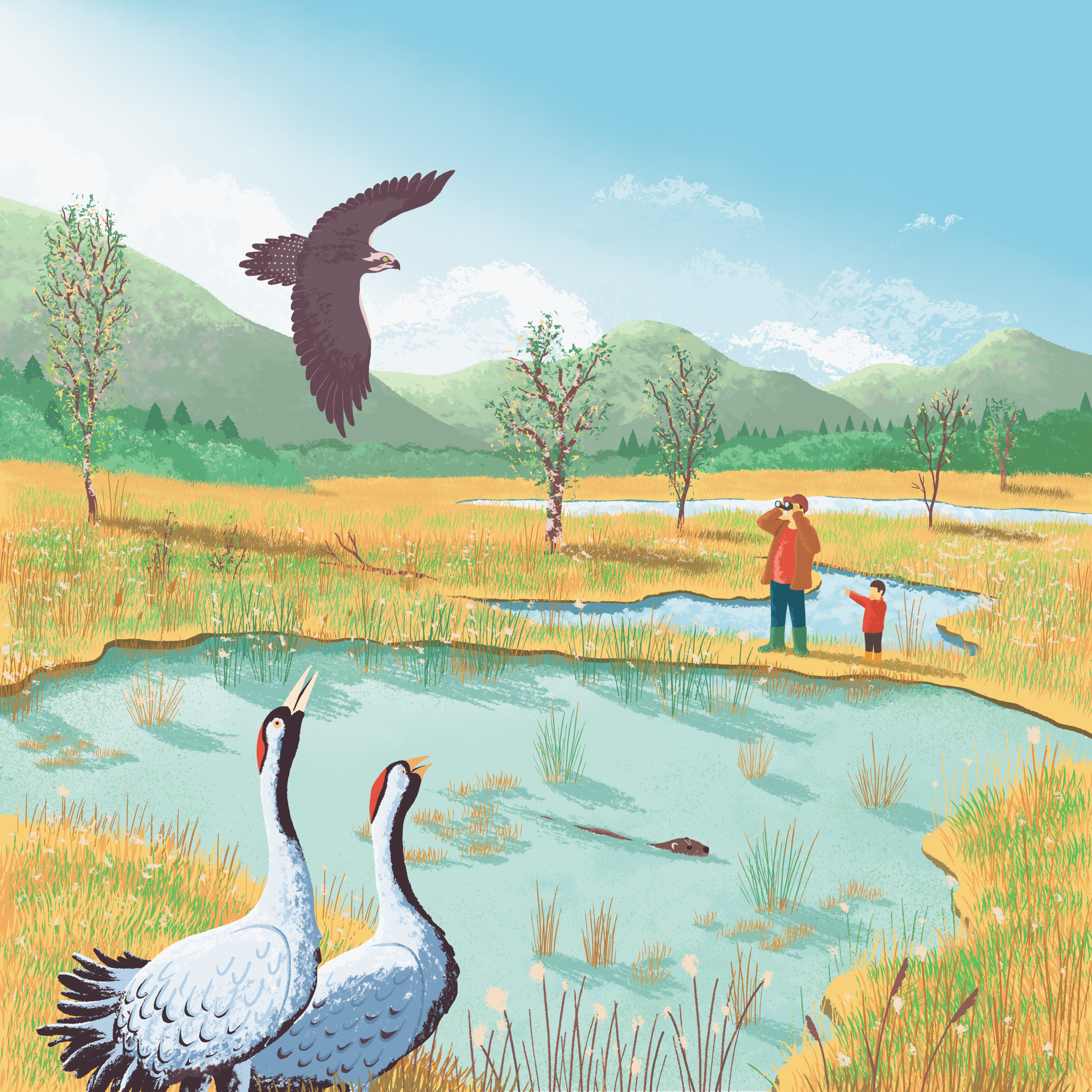
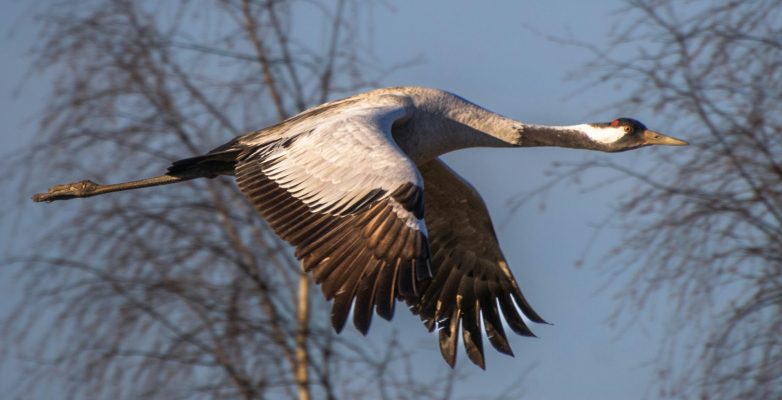
    One of the most evocative illustrations of this is the fledging of Common Cranes chicks in Offaly over the last two summers, after an absence from our shores of over 300 years. Like the return of the Common Buzzard, the Great Spotted Woodpecker, Marsh Harrier and Osprey, this conservation marvel demonstrates that given a sliver of an opportunity and sometimes a helping hand, life will find a way. Our raised bogs had been a tapestry of life at the heart of our island, slowly growing in size, complexity and bio-abundance since the end of the ice age. We fell upon them with all our energy and industry, draining, digging and burning them, and when there was nothing left worth taking we withdrew. Nature needing no invitation has begun the salvage operation on some bogs, reforming habitat mosaics of wetlands, bogs and woodland and by doing so halting the degradation of peat, preventing the emission of vast amounts of greenhouse gases and water pollution. This spring pairs of Common Cranes again danced, throwing their heads back and trumpeting in synchrony on what had been the post-industrial wasteland of a Bord Na Móna cutaway bog. The Common Crane is just one thread in this reweaving tapestry of life. This is a powerful lesson if we have the wisdom to learn from it. 

    Common Crane (credit: Juho Luomala via unsplash)

    When challenged to answer the question of “where should we make space for Nature in Ireland?”, the Environmental Pillar, the Citizens Assembly on Biodiversity Loss, and the Joint Committee on Environment and Climate Action have come to the same conclusion.

    Public Land covers around 11% of the land owned in the State. This is mostly made up of 1% owned by Bord Na Móna and 9% public forestry, mainly owned by Coillte. The untapped potential of Bord Na Móna and Coillte’s land holdings presents an unprecedented opportunity to restore nature at scale, delivering essential ecosystem services to society such as biodiversity restoration, climate change adaptation and mitigation, as well as employment and public amenity. At a time when we are asking more and more of private landowners it is critically important that the State is seen to lead from the front. Public land must be utilised in the public interest and the Irish people should have a greater say in how that is achieved. Reforming land use on public land managed by Coillte and Bord Na Móna is not only desirable but necessary to achieve international targets to reduce green-house gas emissions and to restore nature. 

    Bord Na Móna

    Bord na Móna’s landholding is constituted of a network of 130 bogs covering around 80,000 ha. Only a small percentage of this is composed of semi-intact bogland with the rest being active industrial or post-industrial cutover bog. Natural and cutover peatlands together contain just under half of the national peatland carbon stock. Degraded peatlands are a significant source of emission nationally estimated at around 860,000 tonnes of carbon per year. Restoration of peatlands and organic soils has the potential to reduce carbon losses in a relatively short time following rewetting; while rewetting and restoring peatlands can deliver carbon storage and sequestration and co-benefits such as biodiversity, improved water quality and water regulation. Rewetting and rehabilitation targets for industrial peatlands therefore play an important role in Irish climate policy. Bord Na Móna are obliged by EPA licensing to rehabilitate sites post production and under Ireland’s Climate Action Plan they are committed to the enhanced rehabilitation of 33,000 ha of peatlands. However, this is well shy of the 70,000 ha of exploited peatlands that the EPA say need to be rehabilitated if Ireland is to achieve net-zero across the agriculture and land use sectors by 2050. When it comes to peatland conservation, protection is always better than restoration and more clearly needs to be done to halt domestic and industrial peat extraction on public land, needless to say working in collaboration with communities. 

    Coillte 

    Coillte is the largest landowner in the State, managing a landholding of 440,000 ha, 84% of which is forested. Ireland’s unnatural and industrial model of forestry is arguably the least sustainable in Europe. For example, within the EU Ireland has the highest share of forest area dominated by introduced tree species and the highest level of plantation forestry. This is in stark contrast to Europe as a whole where 87% of forest area is semi-natural. Coillte developed this blueprint for Irish forestry and drove national afforestation up until the mid-1980’s. Coillte landholding remains dominated by low diversity non-native plantations which are clear-cut, with many being replanted on peatlands despite new rules banning the afforestation of deep peat. This is a serious issue considering Coillte are also the largest peatland owner in Ireland. Coillte report that they have 137,000 ha of afforested peatlands and at least 30,000 ha on deep peat, which they admit “present a carbon emission risk, that should be redesigned by either rewetting or rewilding”. The legacy issues associated with the afforestation of peatlands have been largely ignored until recently when the Climate Change Advisory Council called for the rewetting and rehabilitation of afforested peatlands and the revision of relevant legislation. 
    Coillte also own internationally important sites for biodiversity. These include approx. 96,000 ha of protected sites, including Special Protection Areas (SPA) and Special Areas of Conservation (SAC). According to Coillte’s own assessment, their landholdings support a number of rare, threatened or endangered ecosystems. This includes a large proportion of the six SPA that were designated for the protection of breeding Hen harrier (Circus cyaneus). This species is at crisis point as breeding numbers have declined by a third since 2015 and 59% since the first national survey 1998/2000. A key driver of this collapse has been the loss of upland peatland and grassland habitats with afforestation being the primary driver of habitat loss. Coillte’s land holdings also encompasses many nationally important high-status water bodies which support Atlantic Salmon (Salmo salar) and Freshwater Pearl Mussel (Margaritifera margaritifera). The prospects for many of these populations are in doubt as plantations approach the point where many are due to be clear-felled, which will result in a potentially terminal spike in pollution without intervention. 

    While Coillte have committed to increasing the area of their estate managed primarily for nature to 30% by 2025, this commitment is scarcely credible given that they claim that protected sites which are currently managed primarily for commercial timber production already fall within the 20% of their estate being ‘managed primarily for biodiversity’. While Coillte Nature are driving welcome restoration projects, the scale of these projects and the questionable prioritisation of restoration sites means the level of ambition falls well short of addressing the systemic issues previously outlined. Coillte have no targets or timelines to restore afforested peatlands and up until relatively recently they advocated for further afforestation within Hen harrier SPA sites. 

    A New Mandate For Public Land

    Given the high biodiversity value and restoration potential of Bord na Móna and Coillte landholdings and the importance of peatlands, wetlands and woodlands in Ireland’s efforts to tackle climate change, both public bodies must play a leading role in restoring nature. Both bodies have significant expertise when it comes to restoration having been involved in numerous EU LIFE projects. While the value of these public lands is obvious there is no clear framework in place to identify which sites should be prioritised for nature restoration. This has led to a situation where key sites such as Derryadd Bog in Longford and the Common Crane supporting bogs in Offaly, are threatened by renewable energy developments. Contrary to the rebranding and public communications campaigns, the use of public land continues to be driven by commercial interests while affected communities remain peripheral figures in an opaque decision-making process. A pivotal contributing factor to this is that the operation of both semi-states remains underpinned by outdated commercial mandates, which in turn informs everything from the composition of their boards to how they operate on the ground. 

    The Environmental Pillar is strongly of the view that these legal mandates must be brought in line with societal expectations and the stark realities of the States declared biodiversity and climate emergency. The review should be informed by the relevant recommendations of the Citizens Assembly on Biodiversity Loss. Such a review is already long overdue considering the Programme for Government already committed to review the remits of both bodies. This is a rational first step to reform the narrow economic focus that has directed the mis-management and governance of public lands. To paraphrase Rachel Carson, we are a part of nature, and our war against nature is inevitably a war against ourselves. Let’s choose to end the war within and the war without, public lands are a good place to start. 


    About the Author: Fintan is Agriculture Policy Officer at the Irish Environmental Network (IEN). Fintan has a MSc in Environmental Biology from Utrecht University and a BSc in Environmental Science from NUI Galway. He specialises in Environmental Policy, Advocacy and Planning and has been working within the Irish eNGO sector since 2012, having previously worked for BirdWatch Ireland, An Taisce, SWAN and the Irish Wildlife Trust.


  • Nature Can’t Vote – You Can

    Nature Can’t Vote – You Can

    Nature Can’t Vote but You Can. 

    Published 28th May 2024


    The European and Local elections are coming up on June 7th and we are encouraging everyone to get out and vote. Nature cannot vote but you can, so why not use your vote to help protect and restore nature.  

     Sometimes the EU can seem far removed from what happens here at home, but it’s important we get good representatives elected onto an EU stage because what happens in politics there can drastically affect us here at home. For example, we are still without national Marine Protected Area legislation and all of our current MPA’s are designated and managed under EU law (the Birds and Habitats Directives). Ambitious nature laws like the Nature Restoration Law can be founded at EU level. If enacted the Nature Restoration Law will have important impacts on the Irish environment but some politicians at EU level were actively campaigning to kill off this law. A clear sign that the people we send to Brussels can make a real difference for nature – for good or for bad. 

     EU laws and local council decisions have a real effect on nature protection, so it’s important to ensure that who we vote for, at local and EU level, has the environment high on their list of priorities. If you want to have a positive impact on nature in Ireland please get out and vote on June 7th. Read on for some information on the elections, the EU parliament and the political grouping at work there. 


    ————————————————————————————————————————-

    What does the EU do for nature?

    Funding from the EU helps with projects across different sectors in Ireland from tourism, farming, sustainable infrastructure and conservation. In February this year Ireland received 15 million from the EU to help establish Marine Protected Areas in Irish waters. Below are a few other projects which have taken place.

    Avonmore River in Wicklow

    2021-2027 – The Avonmore River in Wicklow is one of six catchments in Ireland selected to receive €9.5 million from the EU-funded Waters of LIFE project. The project will address the significant pressures in the catchment from forestry and agriculture. The aim is to ensure the river system achieves and maintains high ecological conditions with support from the EU’s LIFE programme. 

    Danú Farming group

    Running from 2018 – 2023, Danú Farming Group, led by a farmer in Mountrath, runs a project for biological farming transition, with the aid of €400,000 from the Agricultural European Innovation Partnership (EIG-AGRI). This project aims to educate farmers how to implement biological farming principles and practices, which take a holistic approach to soil, crop and pasture management. 

    Protecting Farmland Pollinators

    2018-2022. With EU funding, the National Biodiversity Data Centre plays a central role in a project that aims to protect pollinators. The Protecting Farmland Pollinators project aims to identify pollinator conservation measures that have the most impact and that are most cost-effective in order to encourage farmers to make their farm more pollinator friendly in a way that will not impact on productivity.


    EU elections & European Parliament Groupings

    We’ve put together some information to help you learn a bit more about our MEPs and the EU parliament political groupings. 

    There are 74 MEP candidates contending for Ireland’s 14 seats in the European Parliament (1 more than last time).

    There are 3 constituencies in Ireland for MEPs

    • Dublin – 4 seats available – 23 candidates running
    • Midlands NW – 5 seats available (2 new seats) – 28 candidates running
    • South – 5 seats available – 23 candidates running


    For more detailed information on each candidate click here 


    Political Groupings: What are they and which Irish party belongs to them?

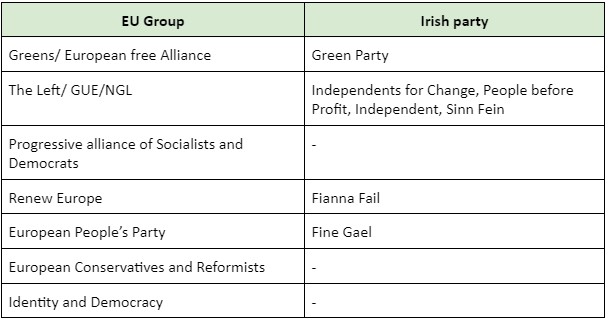
    The Members of the European Parliament sit in political groups – they are not organised by nationality, but by political affiliation. There are currently 7 political groups in the European Parliament. Some Members do not belong to any political group and are known as non-attached Members. Below is a table showing what parties our current MEPs belong to in Ireland and what EU political Group they are in.


    3 of our current MEPs are not re-running. Colm Markey, Francis Fitzgerald, Deirdre Clune (all part of the European People’s Party/ Fine Gael) are stepping down. Below are the MEPs that are re-running


    Dublin – Barry Andrews (Renew/Fianna Fail), Ciaran Cuffe (Greens/ Green party), Clare Daley (The Left/ Independents for change)

    Midlands NW – Luke Ming Flanagan (The Left/ Independent), Chris MacManus (The Left/Sinn Fein), Maria Walsh (EPP/ Fine Gael)

    South – Billy Kelleher (Renew/ Fianna Fail), Sean Kelly (EPP/ Fine Gael), Grace O’Sullivan (Greens/ Green Party), Mick Wallace (The Left/ Independents for Change)


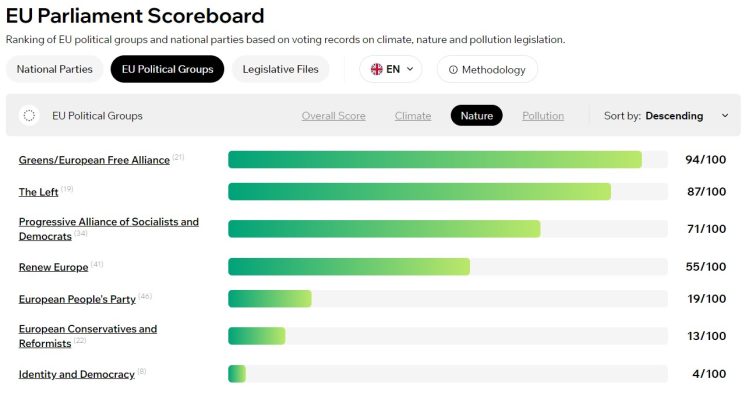
    Which groups in the EU have a track record of supporting nature restoration & protection?

    The different EU groups have very different approaches to nature protection and restoration. Birdlife International, Climate Action Network Europe, European Environmental Bureau, Transport and Environment and WWF have compiled a scorecard for each EU group. Use the links below to browse the scorecards to look at the groups overall performance and see how they voted on files relating to nature, climate and pollution.

    You can also click into national parties and see the parties in Ireland. By clicking on each of these parties you can see their score on different EU legislative files (again relating to climate, nature, pollution). Within political groups and national parties there will be diversity in how they vote so do take the time to look through the breakdown which has been put together.


    The virtual scoreboard can be found here – https://caneurope.org/eu-parliament-scoreboard-2024/


    —————————————————————————————————————————

    Asks for nature 

    What should I ask my local and EU candidates?

    It’s important that we ask all our candidates if nature and the environment is high on their agenda. The climate and biodiversity crisis are inextricably linked and there is no time to waste. 

    For our EU candidates, some Irish parties have never had candidates elected as MEPs and it is still to be confirmed what political group they will join in the European Parliament, so this is also an important question to ask them.

    Asks for Nature

    1. Wildlife Law: The enforcement of current nature protection law. For example the protection of peatland and hedgerows and proper management of protected areas [Wildlife Act & Birds and Habitats Directives].
    2. Nature Restoration: The creation and implementation of a National Restoration Plan for Ireland.
    3. Rewilding: The use of rewilding and nature based solutions to tackle climate change. Ensure renewable energy developments are situated in the right areas where the least damage to biodiversity will occur.
    4. Forest & Woodland: Irish woodland policy and subsidies should promote the creation of native woodland, using natural regeneration where possible, which will be set aside predominantly for nature. Future commercial forestry should be ‘close to nature’ with ‘continuous cover’ forestry practice.
    5. Marine Life: Ensure we reach 30% marine protected areas by 2030 with 10% of our MPAs strictly protected. This must be done with inclusive stakeholder engagement and ensure effective site specific management plans and monitoring.
    6. Peatlands: All our state owned bogs should be rewetted and rewilded.
    7. Freshwater: Protect our freshwater by reducing nutrient pollution and repealing the Arterial Drainage Act.
    8. Just Transition: Ensure measures are taken for a just transition for farmers and fishers so that people are supported to protect and restore nature. 


    Questions for MEP candidates

    1. How will you support and strengthen the EU Green Deal? For example, the Nature Restoration Law and Common Agriculture Policy
    2. Will you support a ban on bottom trawling at an EU level and measures to protect seabed, eliminate bycatch?
    3. Will you ensure the next multiannual financial framework has sufficient funds allocated for nature and climate?


    Hustings & Voting  

    Online and in person hustings

    You can attend hustings where EU candidates will be able to answer any questions you have and you can also hear them make statements which will give you an idea of their top priorities. If you search for your area you should be able to find some hustings which you could attend. Different organisations with different political agendas will hold these events so make sure you find one that aligns with what you care about.

    Info on voting 

    This page will give you information on voting in the EU elections

    https://www.citizensinformation.ie/en/government-in-ireland/elections-and-referenda/voting/voting-procedure-in-a-european-election/

  • Ireland’s first Marine National Park – what does it mean for nature?

    Ireland’s first Marine National Park – what does it mean for nature?

    Ireland’s first Marine National Park – what does it mean for nature?


    Published: April 25th 2024


    On the 22nd of April, Irish Ministers announced Ireland’s first Marine National Park, Páirc Náisiúnta na Mara. This will be Ireland’s largest National Park covering more than 70,000 acres of land and sea. This is an inspiring vision and it is encouraging to see public money being used to acquire land for nature; however the National Park designation itself doesn’t enhance the environmental protection of these areas. As always, management and resourcing is the key.


    What does it cover?


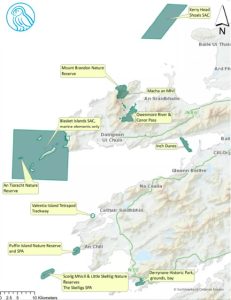
    The National Park is situated in Co.Kerry and the newly acquired sites include the Conor Pass, the Owenmore River, Mount Brandon and sand dune sites at Inch Peninsula. Other sites within the park include Little Skellig and Puffin Island, both managed by BirdWatch Ireland as well as several areas managed by the Office of Public Works (OPW) such as Derrynane House, historic park and beach, Sceilig Michíl and land on Great Blasket Island. An Tiaracht Nature reserve, managed by the Commissioners of Irish Lights is also within the park as well as Valentia Tetrapod Trackway. The marine aspects of the park include the waters around the Blasket Islands and Kerry Head Shoals which host ecologically important limestone reefs. 


    Does this mean more protection?


    There are no additional regulations or restrictions being added to these sites now that they are under National Park status. Some of the sites already have some management plans in place with sites like Puffin Island and little Skellig being monitored by BirdWatch Ireland. While it is encouraging to see these ecologically important areas being recognised as a National Park, without setting aside money and resources to appropriately manage these areas, the title doesn’t mean a lot in regards to protecting biodiversity. Some of the areas within the new National Park are already designated under other forms of environmental legislation but still fail to have appropriate management in place to protect biodiversity. 


    One of our other National Parks in Killarney is facing ecological threats from overgrazing as well as invasive plant species spreading through the park. One could argue that some of the money that was spent purchasing new land could have been put to better use through allocating more resources to protecting the biodiversity in existing National Parks and protected areas.


    Worryingly for nature, Ministers reassured farmers that no changes to their farming practices would be required in the new National Park. If this is the case for farmers on land then it will likely be the case for fishers working in the marine sites of this park. If no regulations are in place and it is business as usual, then the announcement and National Park designation seems slightly redundant.


    In regards to the marine aspects of the National park, enacting strong and ambitious marine protected area legislation will go a lot further when it comes to conserving and restoring these areas into the future. We are currently still waiting on the government to release MPA legislation and we hope that it will include Fair Seas key asks as this will ensure the legislation is fit for purpose and will benefit marine ecosystems, coastal communities and other stakeholders.


    It is very positive that the State has recognised the important ecological value of these sites with this designation. For it to be worthwhile for nature it’s vital that there is engagement across government sectors and stakeholders and that money is now spent on proactively managing the areas.

    Map of Ireland’s first National Marine Park


    Author: Grace Carr – Marine Advocacy Officer

  • EU wide campaign launched to end destructive bottom trawling in protected areas

    EU wide campaign launched to end destructive bottom trawling in protected areas

    EU wide campaign launched to end destructive bottom trawling in protected areas

    Press Release

    April 24th 2024


    A new report, co-authored by Marine Conservation Society, Seas at Risk and Oceana looks at destructive bottom trawling in 7 EU Member States’ marine Special Areas of Conservation (SACs) and urges the European Commission to ban bottom trawling in Marine Protected Areas.

    This report uses Global Fishing Watch data which pulls the information from vessels Automated Identification Systems (AIS) systems to see how much fishing is happening within protected areas. AIS is only required in vessels over 15m in length and this system can also be turned off. With these data it’s been found that 4.4 million hours of apparent bottom trawling has occurred in SACs in these 7 Member States between 2015 – 2023 and damaging fishing is still taking place in 90% of offshore EU SAC’s.

    Bottom trawling is a fishing method that involves one or more boats pulling heavy fishing nets along the ocean floor in an effort to catch fish and other marine species. It is one of the most destructive fishing methods, resulting in ecosystem loss, the release of carbon stored in the seabed, and high levels of bycatch and fish discards (92% of all EU fish discards come from bottom trawled catches). This negatively impacts both the sustainability of fish populations and the fishing industry itself, especially small-scale and low-impact fishers that account for 80% of the active European fleet and 50% of jobs in the sector.

    Ireland’s Results

    Ireland’s results don’t paint a pretty picture for the management of our protected areas as bottom towed fishing overlapped with over 4,000km2 of ‘protected’ Irish seabed. While the report only looks at 144 marine SAC’s (Ireland has 112 marine Special Protection Areas (SPAs) which were not looked at in the analysis) it was shown that over 19,000 hours of destructive fishing has occurred within these areas between 2015-2023.

    135 (94%) of these areas are inshore areas and the analysis doesn’t take into account smaller vessels which are also bottom trawling (including dredging which is a practice used in different forms of aquaculture such as razor clams). So the amount of destructive trawling within these areas is vastly underrepresented. Saying this, it still still shows that there is a clear lack of management within our protected areas.

    EU Fisheries Action Plan

    The EU Marine Action Plan asks countries to set out national roadmaps to ban bottom trawling in MPAs, starting with those with ecologically important seabed features by the end of 2024, and across all MPAs by 2030. Last week Greece announced that it will ban bottom trawling in all it’s national parks and marine protected areas. Member states were due to submit their EU Action Plan roadmaps by the 31st of March 2024. Ireland has not submitted their roadmap and they have not replied to any correspondence from the IWT asking for information on the progress and content of these roadmaps. While these roadmaps are not legally binding, the failure to provide them to the European Commission shows a lack of ambition at effectively protecting our MPAs.

    Grace Carr, Marine Advocacy Officer said, ‘Bottom trawling is the most destructive form of fishing. It destroys the seabed, is completely indiscriminate in what it catches and the levels of bycatch are staggering. We only have 9.4% of Irish waters designated as ‘protected’ and yet destructive fishing still occurs within these areas. Bottom trawling should be banned within all MPAs and the IWT stands behind the call to EU leaders to take tougher action against EU countries that still allow bottom trawling in their protected areas. We are asking Irish leaders to start putting better management plans in place for inshore fisheries so that small scale fishers can make a sustainable living and we can see the end of this outdated damaging practice.’

    Ireland has a rich culture of fishing which spans generations. If we want this aspect of Irish life to continue, we need to start looking after the waters around us and the species within it. Bottom trawling destroys ecosystems, ruining opportunities for biodiversity to thrive and for the fishing communitie to make a living. It has no place in any Marine Protected Area.


    CONTACT:
    Grace Carr, IWT Marine Advocacy Officer, grace@iwt.ie

  • Call to Action: Consultation on Trawling Activity in 6 Nautical Mile Zone

    Call to Action: Consultation on Trawling Activity in 6 Nautical Mile Zone

    Call to Action: Consultation on Trawling Activity in 6 Nautical Mile Zone

    Published April 05th 2024


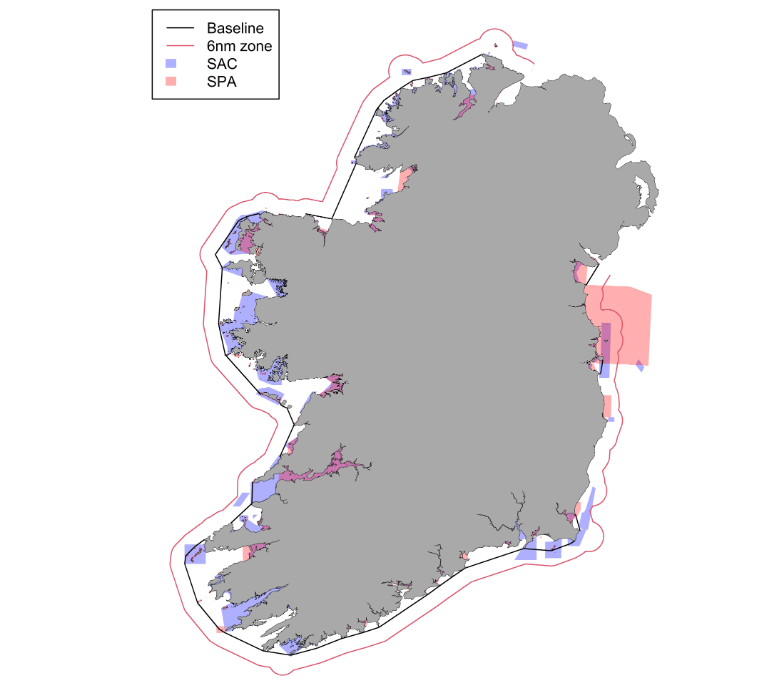
    The Department of Agriculture, Food and the Marine wants to hear your views on vessels trawling within the 6 nautical mile (6nm) zone around Ireland’s coastlines and we are encouraging everyone to take the time to submit a quick response. The 6nm zone is the area reaching out 6nm from the baselines around our coast (see Fig.1). This area is rich in biodiversity and has important spawning grounds for fish as well as nursery areas for all manner of marine life. This is one of the most important actions we can take right now to help conserve and protect Irish marine life.


    Fig 1. Marine Special Areas of Conservation (SAC) and Special Protection Areas (SPAs) around Ireland (source: https://www.npws.ie/protected-sites ). The map also shows the baselines and bay closing lines defined in Statutory Instruments No 22/2016 and 155/2019. The 6nm zone extends 6nm from the coast (including small islands and exposed banks) or from the baselines/bay closing lines (whichever is further). IMAGE SOURCE: Fisheries inside Ireland’s 6nm zone. Hans Gerritsen, Guillermo Martin, Oliver Tully, Colm Lordan – Marine Institute – Version 3, 19/10/23.


    We have put together a few key points for you to include within your submission and the reasoning behind this. The Irish Wildlife trust has also submitted to this consultation and we have included a link to our full submission for anyone who would like more information. 


    Background


    Currently there are no restrictions on vessels trawling within the 6nm zone. This is after a ban on vessels over 18m trawling was overturned last year on a legal technicality. The consultation offers 4 options to choose from. They are – 


    1. No change to the status quo
    2. All sea-fishing boats excluded from pair trawling inside the 6nm zone and baselines
    3. All sea-fishing boats over 18m in length overall excluded from trawling inside the 6nm zone and baselines
    4. All sea-fishing boats over 15m in length overall excluded from trawling inside the 6nm zone and baselines


    We are calling on people to choose option 3 and for vessels over 18m in length to be excluded from trawling across the entire 6nm zone immediately.


    Main reasoning and points to include


    • Small scale vessels take less than 30% of the annual total landings from the 6nm zone. Larger vessels have the ability to fish further out to sea, yet they still take the majority of fish from the inshore area. 


    • Having a ban on these large vessels will have the greatest positive impact for the inshore marine environment and the coastal economy.


    • Sprat is a forage fish which is extremely important for marine food webs. Marine mammals, fish and seabirds all rely heavily on this species for their survival and yet there are no regulations in place on fishing for this species. Large scale vessels are decimating sprat populations and the knock on ecological effects are devastating.


    Another key point to include would be that there needs to be better management of fisheries within the inshore area. Currently many species have no quota or management plans and so it is easy for these species to be overfished.


    IWT submission


    The Irish Wildlife Trust’s submission to this consultation goes into further detail on the different issues around trawling and the lack of management of fish species in the inshore area. We make further recommendations for the department to consider in regards to destructive fishing but for this consultation our main point is to reinstate the ban on vessels over 18m trawling in the 6nm zone immediately. 


    Full IWT Submission


    If you would like further information, the Department has provided several documents going into detail on fishing activity and socio economic impacts on trawling within the 6nm zone which can be viewed here.


    How to submit


    There are two ways to submit. You can either fill out the survey linked below and be sure to include that you want the ban reinstated immediately and at national level. You can also send a direct email to the department or send your submission by post. The deadline for this consultation is 1pm on the 12/04/2024


    Online survey :

    https://ec.europa.eu/eusurvey/runner/TrawlingConsultation 

    or

    Email: TrawlingConsultation@agriculture.gov.ie (Quoting

     “Inside 6 Trawling Consultation” addressed to the Minister for Agriculture, Food and the Marine) 

    or Post: Public Consultation on Trawling Activity Inside 6nm, Sea Fisheries Policy and Management Division,

     Department of Agriculture, Food and the Marine, National Seafood Centre, Clonakilty, Co. Cork , P85 TX47 

  • EU Member States Backtracking On Nature Restoration Law Undermines Democratic Process

    EU Member States Backtracking On Nature Restoration Law Undermines Democratic Process

    EU Member States Backtracking On Nature Restoration Law Undermines Democratic Process

    By Grace Carr

    Published March 28th 2024

    A very disappointing turn of events has happened over the past week in regards to the NRL. The Council should have completed the final rubber stamp of the law on Monday. This is usually just a formality as intense negotiations had already taken place and an agreement reached with the Council being a negotiating partner on the final text. However, this didn’t go ahead.

    A last minute U-turn by Hungary deciding that they no longer accepted the law meant that the number of Member States approving the text totalled 64.05% of the total EU population. A law needs 65% of the EU population at Council level to pass. Many Hungarian MEPs voted in favour of the law in the final Parliament vote at the end of February and so this change of heart from the Hungarian representatives in the Council is a political move looking towards the EU elections approaching and the projected wins for right leaning parties.

    Other Member States opposing the law are Sweden, the Netherlands and Italy with Finland, Austria, Belgium and Poland all abstaining.

    Cesar Luena the rapporteur on the NRL has stated that failing to respect institutional negotiations and agreements will lead us down a bad path and the EU Environment Commissioner Virginijus Sinkevicius has stated that this will undermine the EU’s international credibility and that the current stalemate raises serious questions about the coherence and stability of EU decision making.

    NGOs are calling on the Belgium presidency of the Council (they are in this role until June 2024 when Hungary will then take over) to get the file back on the agenda and ensure its adoption. While this isn’t the end yet, things are not looking good for the Nature Restoration Law. We must continue to make noise about this and not allow it to die a silent death by political games and backroom politics.


  • EU Nature Restoration Law – A Deep Dive

    EU Nature Restoration Law – A Deep Dive

    EU Nature Restoration Law – A Deep Dive

    Published: March 14th 2024

    Author: Grace Carr, IWT Marine Advocacy Officer.

    First Published by Fair Seas.

    Here we look at the recently passed EU Nature Restoration Law (NRL) and what it means for life in the ocean. In this blog we look at the marine targets within the NRL. A hard campaign was fought to ensure the NRL was passed however, some elements have become watered down by those in opposition to it. Below we analyse whether those elements that made it into the final law are a good or bad result overall.

    On the 27th February 2024 the EU Nature Restoration Law was passed by the EU Parliament. This law was first proposed by the European Commission in 2022 to restore 20% of EU land and 20% of EU seas by 2030. The Birds and Habitats Directives came into place around 30 years ago to protect vulnerable ecosystems and species but with over 80% of EU habitats in bad ecological condition, unfortunately what we’ve been doing so far hasn’t worked. It is now not enough to simply protect areas, we must also put in place measures to restore ecosystems back to their natural state.


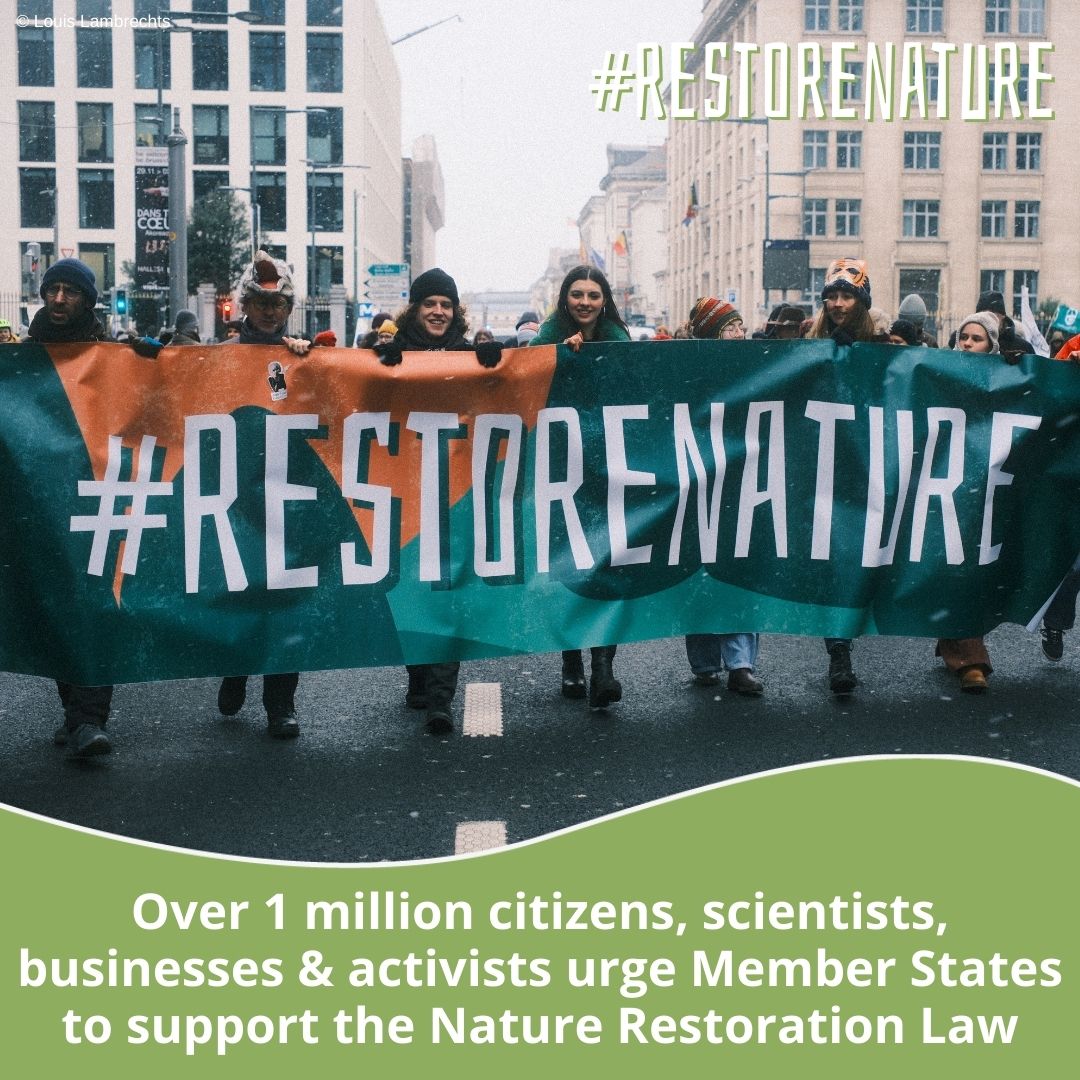
    The law has been extremely contentious since it was first proposed. There has been a great deal of misinformation spread on the law with the goal of scaremongering the public, particularly farmers and land owners. However, even with a targeted attempt to derail the law, over 1.1 million EU citizens signed a petition supporting the law and sent letters to their representatives. Ireland had the 3rd highest number of signatures per capita within the EU and we’d like to thank everyone who took the time to support the #RestoreNature campaign.

    Agricultural targets are what the majority of the debate was over, but not much has been said about the marine and freshwater targets. Some very exciting and ambitious amendments made it through for the marine space. These provisions are going to be very important when it comes to managing Marine Protected Areas.

    Marine Targets in the NRL

    The NRL splits marine habitats into seven groups. Areas that are within Natura 2000 sites,Special Areas of Conservation (SACs) and Special Protection Areas (SPAs) will be prioritised up until 2030.

    These seven marine habitat groups are;
    Seagrass beds
    Macroalgal forests
    Shellfish beds
    Maerl beds
    Sponge, coral and coralligenous beds
    Vents and seeps
    Soft sediments (above 1000m of depth)

    For groups 1 – 6, restoration measures must be in place on at least 30% of the areas not in good condition by 2030. This will increase to at least 60% by 2040 and at least 90% by 2050 of the area of each group.

    Group 7, Soft sediments (above 1000m of depth), is considered a widespread ecosystem as it covers more than 3% of a Member States territory and therefore it will be subject to a lower threshold to be determined.

    Member states have two years to draft their national restoration plans and within these they must quantify what percentage of soft sediments above 1000m are not in good condition.


    Member states must also put in place measures to re-establish the habitat types (1-6) in areas where they have been lost. This is with the aim to reach their favourable reference area which must take into account records of historical distribution of the habitats and the projected changes which are expected due to the changes in environmental conditions due to climate change.

    There is also a list of species included in the law and member states must put restoration measures in place to ensure the habitats these species are found in are improved, in addition to the previously mentioned thresholds. This includes reestablishing them and enhancing connectivity. The text states that restoration measures must have ecological coherence between habitat types and take into account the specific ecological requirements of the species that occur within them.

    Good or Bad result?

    Many of these points are a good result for marine ecosystems. Ensuring that Member States quantify the percentage of soft sediments above 1000m which are not in good condition within their national restoration plans is a good result. However, these habitats having a lower restoration threshold then others is not as ambitious as we would have liked.

    Data Collection

    Member states must ensure that by 2030 the latest, the condition is known for at least 50% of the area of habitat types 1-6. By 2040, 100% should be known. For group 7, 50% should be known by 2040 and 100% by 2050.

    Good or Bad result?

    A problem which is faced not only in the EU, but worldwide, is the lack of scientific data on natural ecosystems. This lack of data has allowed for the degradation of our natural world to occur with the reasoning being, well we don’t know if it will cause any damage, so let’s carry on with business as usual.

    While the precautionary principle should be applied to these situations, it is more often than not ignored. Having it written within the law that data collection on habitats must be conducted and included within Member States national restoration plans is a good result for nature. It will help ensure further progression in conservation, not only through the NRL, but through other environmental and climate legislation.
    Deterioration of restored areas

    Many Non-Governmental organisations (NGOs), including Fair Seas partner the Irish Wildlife Trust, fought hard to ensure that a provision stating that restored areas must remain in good ecological condition and not deteriorate was included.

    In the end, this was included in the final text, however, the language used was watered down. The final wording states that ‘Member States shall put in measures which shall aim to ensure that areas which have reached good environmental condition, do not significantly deteriorate’. This watered-down wording allows for some deterioration to occur within areas and also allows for the success of measures to be more effort based rather than results based.

    Another important point to make is that the non fulfilment of restoration targets is justified if it is caused by a plan or project which has overriding public interest or is authorised within the habitats directives. This means that plans such as renewable energy developments can still occur within protected areas and restored areas, thereby disturbing the habitats found there. It also states that Member States may exclude areas for restoration which are used for activities with the sole purpose of national defence.

    Good or bad result?

    Ensuring that once an area is restored that it remains in good ecological condition is not only best for the environment, but also best for the economy. Investing in restoration measures in areas and then allowing those areas to deteriorate over time doesn’t make a lot of sense.

    We hope that Member States will ensure that this doesn’t happen even though the law allows for some deterioration. We would also have preferred the law to ensure that results were more important than just efforts as this can leave loopholes for Member States to pass on accountability.

    Offshore Renewable Energy (ORE) developments are also exempt from adhering to measures within areas of restoration. We hope that Member States will take into account the importance of biodiversity in the fight against climate change and only have co-location of ORE developments and ecologically important restoration areas as a very last resort.

    National Restoration Plans

    Member states will have 2 years to put together their national restoration plans. Within these two years they must carry out the necessary preparatory monitoring and research needed to identify measures that are needed to meet the targets.They must also make sure to take into account the latest scientific evidence and decide on areas which are most suitable for the reestablishing habitats in view of the projected environmental changes due to climate change.

    Plans for member states to reach their 2030 renewable energy targets should be mapped in coordination with nature restoration plans, as to avoid conflict between the two objectives.

    Public participation will be a very necessary component while drafting the national restoration plans. Member states should promote a fair and cross- society approach in the preparation of their national plans. We plan to work closely with Government and civil servants to ensure a strong and ambitious plan is achieved. We need a plan which will not only restore our marine ecosystems but also ensure an inclusive and just transition for all involved.

    Funding

    The NRL does not make it an obligation for Member States to redirect funding under the Common Fisheries Policy or other fisheries funding programmes under the multiannual financial framework 2021-2027.

    Private and public schemes to support implementation of restoration measures should be included within the national restoration plans. The Commission will have 12 months to present a report assessing funding gaps and where appropriate have proposals for adequate measures, including financial measures to address the gaps identified without prejudging what will be included in the next multiannual financial framework after 2027. Advocating for appropriate funding for restoration measures as well as a just transition will be vital for the success of the Nature Restoration Law.


    Fisheries

    There is a specific article within the law which is aimed at the coordination of restoration measures across Member States by utilising the tools provided in the Common Fisheries Policy.

    EU vessels have the right to fish in other EU members’ marine areas, however, if this area is important ecologically then conservation measures should be put in place. These measures are called Joint Recommendations under the COmmon Fisheries Policy and they are decided between the Member States involved.

    In the past decade there have been very few Joint Recommendations submitted by Member States. The NRL asks that estimated timelines for consultation and submission of Joint Recommendations are included within their National Restoration Plans. They must take into account the deadlines for the restoration thresholds and be submitted no later than 18 months before the respective target date. If this date is not reached then the Commission may step in using the tools provided within the Common FIsheries Policy.

    Good or bad result?

    This is a big win for marine conservation. Coordination across Member States in marine conservation has been poor in the previous decades, but this law now sets in place timelines for conservation measures to be put in place in shared waters. It’s important to acknowledge that industries which have no emotional or cultural connection to an area and are there purely for short sighted economic gain, should not obstruct a nation’s efforts to protect and restore their marine environment. We have high hopes that this part of the NRL will create better management across our fisheries sector.

    So what next?

    One final step must happen where the EU Council signs off on the law. This should happen in April and is usually just a formality. Once this happens the drafting of restoration plans can begin. So while the Nature Restoration Law is not as ambitious as the initial proposal back in 2022, it is still a significant step forward in conservation. There are parts which we wish were stronger but throughout the negotiations compromises had to be made to get the law over the line.

    This is a law which will not only help nature, but also help in the fight against climate change. These twin crises are two sides of the same coin and must be acknowledged and worked on together. The socioeconomic benefits for people will also carry on for generations. Ensuring healthy seas helps ensure sustainable jobs and vibrant local communities far into the future.

    With this new EU legislation passed, it is time that our government puts in place our National Marine Protected Area (MPA) legislation. Both laws will complement each other and ensure better management of our protected areas.
    There is no time to lose. Work must begin on Ireland’s National Restoration Plans and strong MPA legislation needs to be published by government so that new MPAs can be taken into account while drafting the plan.

  • How Changing our Economic Goals Could Help to Restore Nature

    How Changing our Economic Goals Could Help to Restore Nature

    Citizens’ Assembly Ideas

    2023 saw the publication of the “Report of the Citizens’ Assembly on Biodiversity Loss”. Many impactful solutions to biodiversity loss are found within the recommendations of the Citizens’ Assembly. It is vital that the Government of Ireland act on these recommendations. This series of articles explores ideas found within the Citizens’ Assembly recommendations. This article first appeared in 2024 Irish Wildlife magazine spring issue. Get your copy of the latest Irish Wildlife magazine by joining the IWT today.

    Here Caroline Whyte, of Feasta, the Foundation for the Economics of Sustainability, explores the idea of how we measure societal success in Ireland and the link with nature protection and restoration. The opinions expressed in this blog are those of the author and do not necessarily represent the position of the Irish Wildlife Trust.

    How Changing our Economic Goals Could Help to Restore Nature

    Written by Caroline Whyte

    Readers of this magazine are probably aware that the richness and variety of our biodiversity is being severely depleted and undermined in Ireland and around the world. The biggest culprit in this, as the Intergovernmental Science-Policy Platform on Biodiversity and Ecosystem Services (IPBES) describes it, is land use change, including “the conversion of land cover (e.g. deforestation or mining), changes in the management of the ecosystem or agro-ecosystem (e.g. through the intensification of agricultural management or forest harvesting) or changes in the spatial configuration of the landscape (e.g. fragmentation of habitats).”

    Many experts argue that in order for biodiversity to be able to regenerate, we will need to impose binding limits on the consumption of certain resources, such as fossil fuels and mined minerals, and to extend the number of ‘no-go’ areas where resource extraction is not allowed at all. According to a 2020 academic article on biodiversity policy, ’the establishment—via multilevel governance—of absolute caps [limits] on the amount of resources embedded in imported goods and services is crucial’. It also proposes that there should be more “resource sanctuaries” where no extraction of resources is ever permitted, and that large infrastructure projects need to be scaled back in order to give nature enough space to thrive.

    In a similar vein, the 2021 Dasgupta Review on the economics of biodiversity asserts that ‘in the face of significant risk and uncertainty about the consequences of degrading ecosystems, in many cases there is a strong economic rationale for quantity restrictions [e.g. absolute limits on resource use, and resource sanctuaries] over pricing mechanisms.’

    There is a catch to these approaches, however: they will make some types of economic activity much harder to carry out, if not impossible. As a result, the overall level of national (and global) economic activity may well decline. In other words, we may no longer have economic growth – and indeed, we may even have an economic contraction.

    Economic contraction is often assumed to be a terrible problem to be avoided at all costs, for reasons that I’ll describe below. The ‘solution’ to it that is routinely proposed by people in political circles and the media is that we should figure out how to decouple economic growth from environmental damage. In other words, we should transform our economic activity in such a way that we can continue to increase the Gross Domestic Product (GDP) while no longer disrupting ecosystems. This is frequently described as ‘green growth’. However, there is no convincing evidence that green growth would actually be possible at the scale, speed and definitiveness required to reverse biodiversity loss (or indeed, for that matter, climate disruption).

    Both the Citizens’ Assembly and the Joint Oireachtas Committee’s (JOC) Report on Biodiversity Loss include some fairly strong language on economic growth. The Citizens’ Assembly has called for a move away from GDP growth as a goal in itself, and the JOC has stated that ‘our country’s progress should not be based solely on the narrow lens of economic growth, but instead should capture overall quality of life across health, environmental, social and economic areas.’

    The European Environment Agency comments that “it is unlikely that a long-lasting, absolute decoupling of economic growth from environmental pressures and impacts can be achieved at the global scale; therefore, societies need to rethink what is meant by growth and progress and their meaning for global sustainability.” And the IPBES has also weighed in on this, implying that we should be “steering away from the current limited paradigm of economic growth.”

    Indeed, two arguments can be made for such a steer. The first one, already described, is economic growth’s close connection with dangerous environmental impacts. The other argument is more about a lack of connection.

    Can we have progress without growth?

    It’s probably a good idea, at this point, to clarify exactly what is being referred to when we talk about ‘economic growth’. The term is often used interchangeably with ‘GDP growth’. GDP is the sum of all of the monetised economic activity in a country, and the GDP measurement is, in turn, closely related to Gross National Product (GNP), which was first devised by the economist Simon Kuznets in the mid-20th century. Kuznets also gave clear warnings about its limitations. He would surely turn in his grave if he saw how blithely it tends to be conflated with progress now.

    A famous speech by Robert F Kennedy in 1968 sums up many of the problems with economic growth as a measure of success:

    “Too much and for too long, we seemed to have surrendered personal excellence and community values in the mere accumulation of material things. Our Gross National Product, now, is over $800 billion dollars a year, but that Gross National Product….counts air pollution…and ambulances to clear our highways of carnage. It counts special locks for our doors and the jails for the people who break them. It counts the destruction of the redwood and the loss of our natural wonder in chaotic sprawl. It counts napalm and counts nuclear warheads and armored cars for the police to fight the riots in our cities. … it measures everything in short, except that which makes life worthwhile.”

    74% of people in the G20 group of nations – which includes the US, Russia, China and India – support the idea that their country’s economic priorities should move beyond profit and increasing wealth, and focus more on human wellbeing and ecological protection. Research endorses this view, indicating that beyond a certain minimum income that is needed to meet our basic needs, wealth’s correlation with happiness breaks down.

    In spite of this, many influential economists, politicians and civil servants continue to have serious misperceptions about growth. For example, growth is often assumed to be necessary to achieve healthy levels of employment, and to sustain social spending and a welfare state. Indeed, the relationship between growth and abundant state coffers is frequently described as though it is an ironclad law of physics. And yet, where such a relationship does exist (which is not everywhere), the reasons for it are entirely political and cultural. It’s possible that a taxation system that targeted wealth and environmental impacts more than labour, along with a more diverse, balanced approach to economic production – especially in key sectors such as agriculture and transport – could achieve those same employment and welfare goals, and rather more efficiently than at present.

    Examples of countries that are using measures of success other than GDP to help nature are Bhutan and Costa Rica. Conservation of the environment is one of the four pillars of Bhutan’s Gross National Happiness philosophy. As mandated in its constitution, Bhutan preserves (at all times) 60 percent of its land under forest cover and more than 51% of the country is protected—the largest percentage of any Asian country.

    Ways to help enable a shift to a growth-independent national and global economy are being researched by Feasta alongside a rapidly-expanding group of organisations around the world; ironically, our area of work is on a strong growth trajectory! If you’re interested in learning more and joining the vibrant discussion on moving towards a wellbeing, ‘post-growth’ economy that enables both humans and nature to flourish, please save the date for our ‘Rethinking Growth’ conference in Dublin on June 25 and 26 2024, which Feasta is co-hosting along with our colleagues in the Wellbeing Economy Ireland Hub. You can find more at https://www.rethinking-growth.ie.


    About the author

    Caroline Whyte has a background in ecological economics, and does research and advocacy for Feasta, the Foundation for the Economics of Sustainability. She is an Environmental Pillar representative on the National Economic and Social Council, and is on the steering committees of Stop Climate Chaos and the Environmental Pillar. She is the author of a range of Feasta submissions to Irish and European official institutions and is a core member of the Wellbeing Economy Ireland Hub, in which Feasta takes a secretariat role. 


    References:

    https://www.ipbes.net/models-drivers-biodiversity-ecosystem-change

    https://conbio.onlinelibrary.wiley.com/doi/10.1111/conl.12713

    Dasgupta Review Headline Messages, p3: https://www.gov.uk/government/publications/final-report-the-economics- 3 of-biodiversity-the-dasgupta-review

    https://conbio.onlinelibrary.wiley.com/doi/10.1111/conl.12713

    https://www.thelancet.com/journals/lanplh/article/PIIS2542-5196(23)00174-2/fulltext

    https://www.eea.europa.eu/publications/growth-without-economic-growth

    https://www.ipbes.net/news/Media-Release-Global-Assessment

    An explanation of the difference between GNP, GDP and GNI (a related metric which is often used in Irish economic statistics) can be found at: https://www.cso.ie/en/interactivezone/statisticsexplained/nationalaccountsexplained/grossnationalproductgnpandgrossnationalincomegni/

    https://globalcommonsalliance.org/wp-content/uploads/2024/01/Global-Commons-G20-Survey-full-report.pdf

    https://www.pnas.org/doi/full/10.1073/pnas.1015962107

    https://www.etui.org/publications/welfare-farewell

    http://www.weall.org/ireland


  • Nature Restoration Law passed by European Parliament

    Nature Restoration Law passed by European Parliament

    Nature Restoration Law passed by European Parliament

    Press Release

    27th February 2024


    The Irish Wildlife Trust welcomes the passing of the Nature Restoration Law and believes this is a substantial step forward on the way to restoring our degraded ecosystems. While the law has been weakened since the Commission’s original proposal back in 2022, it still sets in stone timelines and targets for bringing back nature on land and sea.


    Today Members of the European Parliament voted to pass the long anticipated Nature Restoration Law which will be a cornerstone law for the protection of biodiversity, food security and human health in Europe. All Irish MEPs voted to accept the law except for Luke Ming Flanagan and Chris MacManus from the Left group.


    After a final sign off by the European Council in March (TBC), Member states will have two years in which to draft their national restoration plans and lay out how they reach the targets proposed in the law.

    Grace Carr, IWT Marine Advocacy officer said, ‘We are happy and relieved to see MEPs vote to accept the Nature Restoration Law. The European Parliament was part of the negotiations on this final text and it’s good to see that they stuck by it even with last ditch efforts to derail the law. We are extremely happy to see many ambitious marine outcomes in this law, including better management of EU fishing vessels in national waters. Many of the marine targets complement the asks for Ireland’s new national MPA legislation, and with both these laws in place, we may have a chance at effectively protecting and restoring our marine life.”

    This law is an opportunity to empower communities to lead in nature restoration and for all stakeholders to work together to identify ways in which to save nature and create schemes which can help incentivise farmers and landowners to voluntarily take part.

    ENDS 

    Media Contact:  Grace Carr, IWT Marine Advocacy Officer, grace@iwt.ie


  • The Irish Sea Network (ISN) releases its new report ‘Ecological Considerations for Marine Spatial Planning in the Irish Sea’.

    The Irish Sea Network (ISN) releases its new report ‘Ecological Considerations for Marine Spatial Planning in the Irish Sea’.


    The Irish Sea Network (ISN) releases its new report ‘Ecological Considerations for Marine Spatial Planning in the Irish Sea’.

    Published: February 9th, 2024


    The Irish Wildlife Trust, SWAN and 11 other environmental organisations across Ireland and the UK are urging their governments to take a collaborative and ecosystem based approach to marine spatial planning in the Irish Sea.


    Fig. 1 Activities occurring in the Irish Sea. For data sources and more detail, see the ISN report linked at the end of this blog.

    The Irish sea is bordered by 6 nations each with different focus and legislation when it comes to marine protected areas and marine spatial planning. Pressures such as industrial fishing, aquaculture, offshore renewables, shipping, pollution as well as military and recreational activity are all taking their toll on the vulnerable ecosystems which are found there (see fig. 1)

    Each nation has committed to protecting 30% of its waters as Marine Protected Areas by 2030 and the ISN is calling on their governments to ensure that there is effective coverage within the Irish sea as part of this target. Over a third of the Irish Sea has been designated as Marine Protected Areas, however only around 5% is actually effectively managed and less than 0.01% is strictly protected. Each Irish sea nation is producing separate marine spatial planning documents covering a huge range of uses. The Irish Sea Network says all planners and decision-makers must collaborate and cooperate better and with urgency, to consider the Irish Sea as a whole, and ensure that the nature and climate crises are at the forefront during this process. Grace Carr, Irish Wildlife Trust Marine Advocacy Officer said:

    “As we all know, nature does not recognise borders and so it’s imperative we take a cross-border approach when designating areas for protection, fishing and industry in this biodiverse area. With the new Irish MPA bill due to be released early this year, the knowledge sharing and collaboration within this report will make it an important tool when advocating for nature and ecosystem-focused Marine Spatial Planning in the Irish Sea.”

    Read the full ISN report here.

  • Reflecting on 2023: Highlights and Challenges for Marine Conservation

    Reflecting on 2023: Highlights and Challenges for Marine Conservation


    This year, marine policy has been at forefront of the Irish Wildlife Trust’s advocacy efforts, as we collaborated with multiple NGOs to lobby for enhanced marine protection. Read the following sections for an in-depth look at some of the highs and lows of marine conservation in 2023.


    Marine Protected Area Bill

    In January, pre-legislative scrutiny was undertaken by the Joint Oireachtas Committee on the new Marine Protected Areas Bill. The Irish Wildlife Trust, along with colleagues from Fair Seas, Birdwatch Ireland and the Irish Whale and Dolphin Group, submitted written and aural evidence and recommendations during this process. We were happy to see that all of our recommendations were taken on board by the JOC in their report.


    Our partners Fair Seas held 2 events in the AV room in the Dáil this year addressing politicians and highlighting the importance of this bill.


    We presented nearly 12,000 signatures (collected in only 4 weeks) to the government calling for the implementation of new MPA legislation.


    Fair Seas also held a World Ocean Day Conference, with global experts and national stakeholders joining together to discuss the need for MPAs in Irish waters and learning from best practice in MPA management around the world. Several important documents were published throughout the year including a sustainable financing report documenting how much it would cost to designate and protect 30% of Irish seas by 2030. Unfortunately despite there being promises made by the government that we would have this bill before the end of 2023, we have now been told that it will be next year before it is released.


    There is no time to waste in protecting our waters and we hope that this bill is progressed without delay and doesn’t fall alongside the current government


    A new protected area was designated in July of this year, The North West Irish Sea SPA. While it is always good to see new designations, without site specific management plans in place and enough resources allocated to effectively enact these management plans, these designations are little more than paper parks. One of Fair Seas key asks for the new bill is to ensure effective management of our marine protected areas.


    Image courtesy of Fair Seas

    Trawling ban for inshore waters overturned and quota for spurdog announced

    Two new revelations by government early this year ensured that we took several steps backwards in protecting our marine environment. A quota for the IUCN listed vulnerable spurdog was announced for 2023. This fishery has been closed since 2011 and spurdog is also listed as a prohibited species in the EU (which means we have no real data on numbers of bycatch for this species). Reopening this fishery could mean disaster for their numbers as they tend to shoal together and entire groups of pregnant females could be taken from the water in one go.


    Image courtesy of Mark Conlin


    In a devastating turn of events the trawling ban on vessels over 18m within the 6 nautical miles around the coast was overturned in March this year. The ban, which was originally brought into force in January 2020, was supported by not only environmentalists but also fishermen and anglers. Trawling has wide ranging negative impacts on the marine environment and pair trawling for small forage fish such as sprat in inshore waters has a knock on effect for the entire marine food web. In better news, Northern Ireland enacted management measures to prohibit bottom trawling in 9 of their inshore Marine Protected Areas which shows a stark contrast to the protection of the inshore waters in the Republic. On December 14th, Minister McConalogue announced plans to initiate a new public consultation regarding the reinstatement of the trawling ban in inshore waters. This will follow the collection of current scientific and economic data. It’s important to note that the reversal of the ban was not a reflection of its ineffectiveness in safeguarding the inshore marine environment, but rather due to legal technicalities. There is no time to waste in reinstating this ban.


    The EU Fisheries Action Plan and reform of the Control Regulations

    The EU released their Action Plan for Protecting and Restoring Marine Ecosystems for Sustainable and Resilient Fisheries. This Action Plan has asked Member States to put together a roadmap by March 2024 on how they can move away from destructive fishing practices such as bottom trawling and ensure a just transition for all.


    Five years after initial discussions began to reform the EU Fisheries Control Regulation, trilogues came to a close. There were many wins for marine conservation, notably, the requirement for vessels to maintain electronic logbooks to enhance the accuracy and transparency of fish traceability. Additionally, the installation of CCTV on high-risk vessels aims to curb quota violations and bycatch issues, while real-time tracking systems on all vessels will show locations in real time. However, a concerning change has been the shift to applying the margin of tolerance for tropical tuna to the entire catch, rather than on a per-species basis. This will need to be increased investigations and heightened enforcement at ports to prevent potential misuse and underreporting for higher-value, vulnerable tuna species. Protected areas alone are insufficient; it is crucial that fishery conservation measures are strictly enforced.


    Water quality EPA report and the MSFD

    The Environmental Protection Agency’s 2022 report on Ireland’s water quality revealed a continued lack of improvement following a decade of decline.


    Agriculture and wastewater treatment are the main causes of nutrient pollution with intensive agriculture releasing high levels of nitrogen into water bodies.


    Presently, legal proceedings are underway concerning the Nitrates Action Programme, due to the fact that the independent environmental assessment acknowledged an uncertainty as to whether the main measures relied upon to prevent water pollution would sufficiently work. There was a revision to the nitrates derogation under the EU Nitrates Directive. This caused outrage among farming organisations even though clear links between intensive agriculture and environmental decline have been shown and Ireland has consistently failed to meet EU water quality targets. Farmers need to be incentivised and rewarded for making changes to more sustainable environmentally friendly practices otherwise there will continue to be clashes.


    The new programme of measures (PoM) was announced for the Marine Strategy Framework Directive where Ireland failed to achieve good environmental status for 6 of the 11 indicators. There were 12 new measures added to the PoM, 4 measures which existed but were not mentioned in the last report and 28 measures modified to attempt to rectify where we have failed to hit our conservation targets.


    High Seas treaty

    A treaty to protect Biodiversity Beyond National Jurisdiction (BBNJ) for the high seas was signed this year. This treaty will allow for the establishment of large scale MPAs in areas which up until now had no real management of activities occurring there. There will also be environmental impact assessments conducted and measures put in place for illegal, unreported and unregulated fishing. This new global agreement will help deliver on marine conservation for the global ocean.

    There have been many ups and downs this year and it is disappointing that we still don’t have the much needed MPA legislation. With a promise that this will be released in the first quarter of 2024, we have high hopes that with persistence and continued public pressure, 2024 will be a good year for marine conservation.
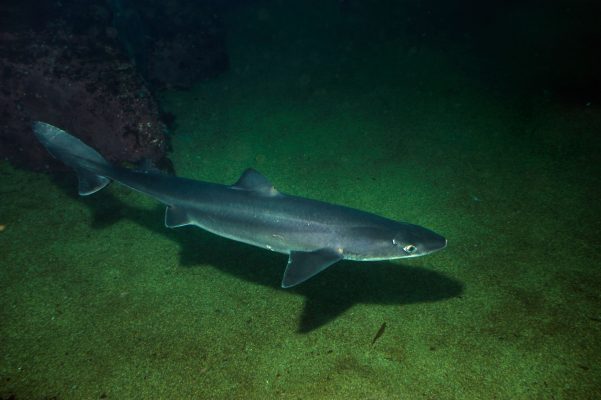
  • Reflecting on 2023: Highlights and Challenges for Nature Conservation

    Reflecting on 2023: Highlights and Challenges for Nature Conservation

    2023 has been filled with many ups and downs when it comes to biodiversity and conservation measures for nature in Ireland, read on for some of the most important developments of the year.

    Citizens Assembly on Biodiversity Loss and EU Biodiversity Strategy

    One of the best news stories for nature conservation this year was the release of the Citizens Assembly report on Biodiversity loss . Some of the key recommendations for this report include:

    • the creation of ‘no fishing zones’,
    • greater transparency in planning,
    • a review of the legislation around the protection of hedgerows,
    • support for the EU Nature Restoration Law,
    • a change in the Constitution to provide rights to nature and to people to a healthy environment,
    • a call for a change of the remit of Coillte and Bord na Mona,
    • and the implementation of nature based solutions for flood management.


    The IWT stated the importance that the government must rapidly implement these recommendations and this should not be another report to sit and gather dust. We were glad to see that the Joint Oireachtas Committee released its own recommendations this month.


    Irish citizens have made it clear that reversing biodiversity loss and protecting nature is a key issue.  The government must listen and take direct action in the coming months.


    The pledges for the EU Biodiversity Strategy were due by March of this year and countries are expected to submit these pledges showing their commitment and plans to reverse the extreme biodiversity loss in Europe by 2030. Ireland has not submitted their pledge yet along with several other member states. We keenly await details on the commitments from the Irish government and hope that this includes having 10% strictly protected marine areas..


    EU Nature Restoration Law

    The Nature Restoration Law (which aims to restore 20% of EU seas and 20% of EU land) progressed through the EU legislative process and is nearly over the line, with a final vote scheduled for February.

    The Irish Government supported the NRL in the EU Council and all 13 Irish MEPs voted not to reject the law in July’s plenary vote. The conservative EPP group in the EU Parliament spearheaded a misinformation campaign attempting to derail the law with unfounded claims that it would ruin the livelihoods of EU farmers and impact food security. This is not the reality of this law and over 100 businesses and 6000 scientists signed letters urging the EU parliament to pass this vital legislation.

     

    Over 1 million EU citizens signed the Restore Nature petition and Ireland had the third highest uptake per capita in the EU.


    The IWT would like to take this opportunity to thank everyone who signed this petition, shared social posts and turned up to rallies in support of this law. Without the public pressure you put onto the Irish government and Irish representatives in the EU, we would not be where we are today. We will continue to advocate and lobby for this law and update you about future events in the New Year.


    Image courtesy of BirdLife International

    Ireland held accountable by European Commission over its failure to protect nature

    After a drawn out court case , Ireland was found guilty of failing to implement conservation objectives under the Habitats Directives. After the verdict, the Irish government stated that the Courts findings refer up to 2019 and since then the government has made considerable progress in rectifying these issues. We hope to see progression amplified in the new year through:

    • new legislation,
    • stronger management of protected areas,
    • increased stakeholder engagement,
    • and adherence to commitments already made at national, EU and international levels.


    IPCC report on Climate Change, COP28 and Offshore Renewable Energy

    The report on climate change was released after an 8 year analysis concluded. Hundreds of scientists came together to put forward the most comprehensive global assessment on climate change and it doesn’t make for a happy read.

    We need to reduce emissions by 43% by 2030 if we are to stay on track to limit warming to 1.5 degrees. To achieve this we must phase out fossil fuels and use nature based solutions to limit our climate footprint.

    Nature has already been our greatest ally in the fight against climate change and if we are to tackle this we must simultaneously tackle the biodiversity crisis. COP28 was a controversial event this year with the president being the CEO of an Abu Dhabi Oil company. While there was no agreement to phase out fossil fuels, the Dubai Ocean Declaration calls on leaders to increase actions to protect the marine environment, the world’s largest carbon sink. Progress on Offshore Renewable Energy in Ireland has been steaming ahead this year with several consultations on the Offshore Renewable Energy Plan II and suggested areas for development. Switching to renewables is vital for our future but this mustn’t be done at the expense of the environment and careful marine spatial planning with nature at the forefront must be undertaken. In some good news the Department of the Environment, Climate and Communications have announced an extra fund of 1.1 million euros to enable environmental NGO’s to increase their resources for offshore wind research and engagement.


    Image courtesy of UNFCC via Flickr

    Coillte and Bord na Móna mandates for nature

    Senator Alice Mary Higgins submitted a bill to change the outdated mandates of Coillte and Bord na Móna and include a mandate for nature with better language addressing climate change and biodiversity. Bord na Móna’s primary duty is still to “produce and market turf and turf products” while Coillte’s primary legal duty remains to “carry on the business of forestry and relative activities on a commercial basis”. The new bill proposes that Coillte’s principal objective should be “to carry on the business of forestry and other activities on an economically, socially and environmentally sustainable basis” and Bord na Móna’s primary duty should be “to manage, protect, rehabilitate and restore bogs in the State”


    €3 billion budget for climate and nature

    A commitment from Government to allocate €3 billion for climate and nature was a welcome development this year. The funds which will be made available between 2026 and 2030 are in addition to funds from the National Development Plan.


    Green party introduces bill to protect urban trees and nature

    The goal of this bill is to protect more of the spaces and features which are important to people and nature without hindering development of local housing. It will allow communities to designate ‘Sites Locally Important for Ecology’ to protect important natural areas. It will also prioritise managing trees over felling and includes a duty to replant any trees which must be cut down.


    The Wildlife Amendment Bill and Land Use Review

    The Wildlife Amendment Bill came before the Dáil with some good and bad news. The National Biodiversity Action Plan is on a statutory footing and public bodies must now integrate nature into their plans, policies and strategies. The bad news is that it will allow for some de-designation of certain areas which have been protected for their raised bog habitats and will allow turf cutting. This contradicts previous legislation such as the Climate Action Plan which was published in 2022. The land use review which took place this year comes at a valuable time when biodiversity loss is at the forefront of the political and public minds more than ever before.


    The Land Use Review showed that 68% of Irish land is being used for agriculture and shows that 20% of wetlands, mainly peatlands and fens, have been lost since 1990.

    Review of EIA

    A review of the Environmental Impact Assessment (EIA) Agriculture regulation was announced this year which was welcomed by environmental NGOs to address the inadequacy of the current regulations for environmental protection. Some of the issues will look at the restructuring of the land by hedge removal which fragments habitats and reduces natural connectivity for wildlife as well as the widespread drainage of wetlands.

    Overall, this year has presented a varied landscape for conservation legislation, and this blog captures just a fraction of the events that have unfolded. With many EU governments making a worrying move towards more right wing politics it’s hard to know what the next year will bring.  Let’s hope that some of the positive progress made this year and the public pressure to protect our ecosystems on land and sea continues into 2024 and beyond.

  • Press Release: Essential Nature Restoration Law Survives EU Negotiations

    Press Release: Essential Nature Restoration Law Survives EU Negotiations

    Press Release

    Essential Nature Restoration Law Survives EU Negotiations

    Published 10th November 2023


    EU Trilogue Negotiations have concluded on the Nature Restoration Law. Although ambition has been weakened from the original vision for this law, it is now a step closer to becoming a reality and supporting Ireland’s efforts to save nature. The Irish Wildlife Trust has called for Member States, MEPs and the public to continue supporting this law in its final stages.

    Negotiations between the EU Parliament, EU Commission and the Council concluded late last night in Brussels. The three institutions came to an agreement on the text of the Nature Restoration Law. The text is not as strong as the Commission’s original proposal, however all ecosystems (including agriculture which was previously deleted from the Parliaments text) have been included, albeit with many loopholes.

    Some initial points from the text – 

    • Restoration of terrestrial (land based) ecosystems is not restricted to just existing protected sites (sites already designated as protected under the EU Birds and Habitats Directive). This will allow member states to act with more ambition however loopholes were added which can be used to decrease the total area to be restored.  
    • While agricultural ecosystems were added back into the text, there has also been the addition of an ‘emergency break’. This means restoration efforts can be stopped in the event of unforeseeable and exceptional events outside the EU’s control. Rewetting targets have been reduced but included in the text. These targets will be voluntary to farmers and private landowners and there has been an improvement in the language stating that Member States must make rewetting an attractive option for them.
    • The non-deterioration requirement (which is to ensure that once an ecosystem is restored, it is kept in favourable environmental condition) has also been weakened by making it effort based rather than results based. Hence it is no longer linked to results being achieved for nature on the ground.
    • A finance mechanism is in place for funding restoration in Member states. The Commission must present a proposal on adequate financial measures one year after the NRL comes into force.


    The final text has not yet been released and so we do not know the full outcome as of yet. The next steps for this law will be an EU Parliament Environment Committee (ENVI committee) vote at the end of November after which the law must be passed by a majority of MEPs in the full sitting of the European Parliament.

    While the text will not be as strong as the original proposal, this is still the first ever binding EU law to restore 20% of European land and seas by 2030. Restoration of our damaged and degraded habitats is essential if we are to save nature within Ireland and Europe and secure the many direct benefits nature provides society such as crop pollination, flood prevention and soil health. The Irish Wildlife Trust is calling on Member States, MEPs and the public to continue supporting this law in its final stages.

    Grace Carr, Marine Advocacy Officer at the Irish Wildlife Trust said ‘It is a relief to know that a deal has been struck, although a much weakened version will not be enough to combat the biodiversity and climate crisis we are facing. It is important that there will be timelines in place to restrict destructive fishing practices in the EU and that Member States show the ambition and resolution needed to ensure targets are met on land and sea.’

    Media Contact: 

    Grace Carr, IWT Marine Advocacy Officer, grace@iwt.ie


  • Environmental NGOs Rebukes Government For Slow Progress On Key Ocean Protection Legislation

    Environmental NGOs Rebukes Government For Slow Progress On Key Ocean Protection Legislation

    Press Release

    Environmental NGOs Rebukes Government For Slow Progress On Key Ocean Protection Legislation

    Published: 25 October 2023

    Fair Seas Coalition deliver 11,758 signature petition calling for urgent legislation
    A coalition of Ireland’s leading environmental NGOs has strongly criticised the
    government for failing to publish key legislation that would protect Irish seas and help
    tackle the twin climate and biodiversity crises.

    Presenting a petition of 11,758 signatures from Ireland to Minister of State for
    Nature, Heritage and Electoral Reform, Malcolm Noonan TD, the Fair Seas coalition
    has called for the government to respect the voices of the public, who are
    demanding the urgent introduction of strong legislation to protect Ireland’s oceans.
    The petition, launched at the end of September, calls for legislation that will protect Irish waters by designating 30% of Irish oceans as Marine Protected Areas (MPA), including 10% as strictly protected areas.

    The petition comes just weeks after a Fair Seas survey highlighted that 76% of
    people believe that a lack of political will is the main obstacle to the introduction of
    legislation that would protect Irish oceans and its rich marine life.

    Fair Seas Campaign Manager Aoife O’Mahony said, “The petition and survey results
    are further evidence that the government is out of step with the importance the public
    attach to protecting the ocean. Not only do people want legislation they want
    legislation that will be capable of doing the job it sets out to do. We have been very
    clear with the government as to what needs to be included in the Bill if it is to be
    effective. The government now needs to move quickly to bring forward the strongest
    possible legislation before the end of this year with a view to having this Bill enacted
    early in 2024.”

    Oonagh Duggan, Head of Advocacy at BirdWatch Ireland added, “The Bill has
    already been through a rigorous process of pre legislative scrutiny in the Oireachtas
    committee. We are calling on Ministers O’Brien, Noonan and their Cabinet
    colleagues to recognise the importance of this Bill in protecting our oceans. This is
    not a Bill that can be delayed any further. We need to see action now.”

    In advance of meeting Oireachtas members as part of a Fair Seas delegation
    meeting in Leinster House, internationally renowned marine ecologist Prof. Mark
    Costello of Nord university said. “The ocean is the world’s largest ecosystem and
    absorbs around a quarter of global annual CO 2 emissions, however in many respects
    its health is in steep decline. All evidence around the world shows that MPA actually
    benefit fisheries. It might seem contradictory, but MPA where no fishing is allowed show the greatest fishery and ecological benefits, and have the lowest management costs because their rules are simple. There is not one published example of any MPA anywhere that has resulted in any decrease in fishing catch.”

    As part of the Oireachtas meeting, the group’s experts delivered a presentation on
    Ireland’s Marine Protected Areas (MPA) journey to date highlighting the biodiversity,
    social and economic opportunities of well-managed MPAs.

    Dr Stephen Comerford, Marine Policy Officer at the Irish Whale and Dolphin Group,
    urged Minister O’Brien to bring the new MPA Bill forward as soon as possible. He
    went on to say, “The Government needs to engage with this key legislation as a
    priority. The designation of MPAs within a well-defined legislative framework, and
    following meaningful participation of all stakeholders, will be a vital step in tackling
    the twin crises of climate and biodiversity”.

    Fair Seas wants to see binding targets committing to effectively protecting 30% of
    the seas around Ireland by 2030, including 10% strictly protected. The group is
    calling for stakeholder engagement at every stage, clear delivery timeframes and a
    robust management framework, with targeted, site-specific measures to ensure
    MPAs deliver for nature.

    The IWT are proud partners of Fair Seas, a coalition of leading Irish eNGO’s advocating for strong MPA legislation.
    For more information about Fair Seas visit https://fairseas.ie/ and to view the petition
    visit https://only.one/act/30×30-ireland

  • EU Nature Restoration Law cannot restore marine ecosystems without addressing Fisheries Impacts

    EU Nature Restoration Law cannot restore marine ecosystems without addressing Fisheries Impacts

    Press Release

    EU Nature Restoration Law cannot restore marine ecosystems without addressing Fisheries Impacts

    28th September 2023


    After the Summer recess in the EU Parliament, final trilogue negotiations have begun on the Nature Restoration Law (NRL) and will determine how ambitious and effective this law will be.

    The negotiations will take place between the Council and the Parliament and while the Councils position is somewhat more ambitious, there are certain amendments brought forward by the Parliament which are essential for effective marine restoration.
    One article in the European Parliament’s position (article 14a)  states that Member States will have to jointly adopt fisheries management measures and adhere to these processes under the Common Fisheries Policy (CFP). These Joint Recommendations would aim to protect marine protected areas from damaging fishing activities and these processes have barely been implemented by Member States since the reform of the CFP a decade ago. The article includes ambitious wording and timelines and this addition to the NRL will help ensure the timely implementation of management measures and intervention if not done so. Unfortunately, the Council is showing a lack of ambition when it comes to including this article in the final agreed text.

    Nature restoration at sea is impossible without effective management of fishing activities and we call on the Ministers of the Irish government to support article 14a of the Parliament position.


    Grace Carr, Marine Advocacy Officer with the Irish Wildlife Trust, said:

    “We really don’t need another piece of legislation which is full of loopholes and lacks any real meaning when it comes to the implementation of effective management in our marine protected areas. Allowing destructive fishing practices in areas we are trying to restore and protect is pointless and it is vital that we have strong laws in place so we can finally stop this happening. With new Irish Marine Protected Area legislation to be released soon, we hope Irish members of the European Council will be supportive of this key article for marine restoration.”


    Contact – Grace Carr, Marine Advocacy Officer, grace@iwt.ie


    Image: © Chris Hill Photographic

  • The Nature Restoration Law – Who voted for what and what happens next?

    The Nature Restoration Law – Who voted for what and what happens next?

    The Nature Restoration Law was proposed by the European Commission in June 2022. This law is part of the EU Biodiversity Strategy which is a key element to the European Green Deal. It aims to help recover Europe’s extreme biodiversity loss by 2030.


    The original text which was proposed had restoration targets to cover at least 20% of land and sea by 2030 and all areas in need of restoration by 2050. There were targets on peatlands, forests, freshwater ecosystems, marine ecosystems and other agricultural and urban land.

    Three EU parliamentary committees voted on this law (AGRI, PECH and ENVI) as well as the European Council which is made up of representatives from each member state. The AGRI and PECH  committee voted to reject the law while the lead committee (ENVI)  opposed an outright rejection of the law but the final vote ended in a tie which means the law could not be formally adopted. The Council  produced its own version of the law’s text (the General Approach) which a majority of Member States approved. This General Approach was not as strong as the original text proposed by the Commission but still had some ambitious restoration targets within it.


    How did Irish MEPs Vote?


    On the 12th July the Plenary vote took place which allowed every member of the European parliament to vote on the law. This was the last vote on this law and determined whether it would be rejected completely or move on to trilogue negotiations.13 Irish MEPs voted on the NRL and the tabled amendments during the plenary vote. They are,


    Deirdre Clune – (EU group) European People’s Party (EPP) – (Irish party) Fine Gael

    Sean Kelly – EPP – Fine Gael

    Francis Fitzgerald – EPP – FIne Gael

    Colm Markey – EPP – Fine Gael

    Maria Walsh – EPP – Fine Gael

    Billy Kelleher – Renew Group – Fianna Fail

    Barry Andrews – Renew Group – Fianna Fail

    Clare Daly – Left Group – Independents for Change

    Luke Ming Flanaghan – Left Group – Independent

    Chris MacManus – Left Group – Sinn Fein

    Mick Wallace – Left Group – Independents for Change

    Ciaran Cuffe –  Greens/ European Free Alliance (EFA) – Green Party

    Grace O Sullivan – Greens/ EFA – Green Party


    The first vote was the outright rejection of the law. The law was not rejected by a margin of 12 votes (324 to 312 with 12 abstentions). All 13 of Ireland’s MEP’s voted not to reject the law including the 5 Fine Gael MEPs who are within the European People’s Party (EPP) group. The EPP group was actively trying to stop the NRL from progressing through a disinformation campaign. MEPs then proceeded to vote on 134 amendments. Some of the votes were recorded via role call and we went through these votes to see how our Irish representatives voted on each amendment.


    Definitions, Targets, Timelines and Impacts


    Positive results for nature

    An amendment that increased the percentage of area to be restored but weakened the language to only include degraded ecosystems was opposed by all Irish MEPs (Sean Kelly from the EPP group/Fine Gael, opposed this even though he was one of the politicians who tabled it). This amendment did not go through, which was a positive result as only restoring degraded ecosystems would lower the overall targets of the entire law.

    An amendment to accept the Council’s proposal on the NRL was tabled which is an unusual move but after so much pushback to the NRL this was one of the best outcomes for nature restoration. This was accepted and all Irish MEPs voted to pass this amendment except for Luke MIng Flannaghan (The Left/Independent) and Francis Fitzgerald (EPP/Fine Gael). The Council proposal was supported by a majority of Member States including Ireland.


    Negative results for nature

    An amendment which stated that the NRL must also create synergies and be coherent with ongoing legislation (such as renewable energies, plant protection products, critical raw materials, agriculture and forestry) was passed. All Fine Gael MEPs and MacManus of Sinn Fein voted for this amendment. Luke Flannaghan (Independent) abstained while members from Fianna Fail, Independents for Change, Independents and the Green Party all opposed. This amendment weakens the NRL as existing regulations do not have nature restoration or conservation as their main objective, with some legislation actively going against restoration.
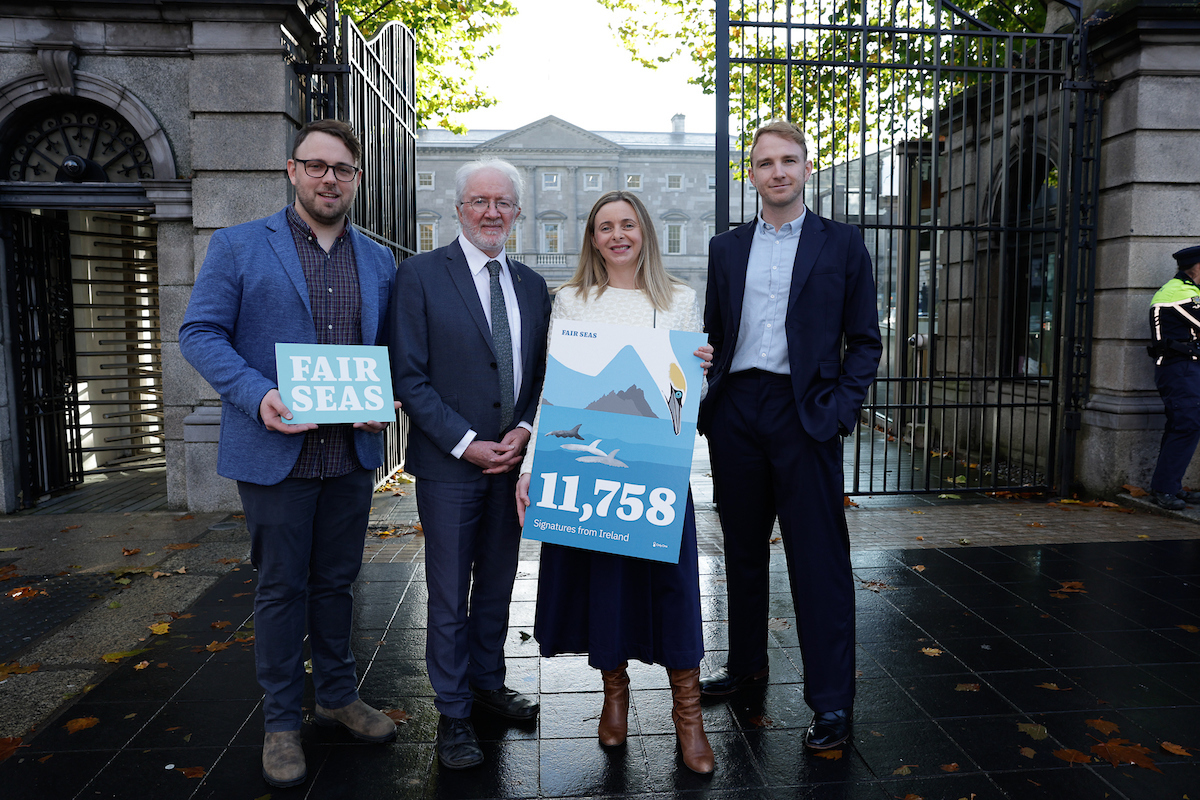
    An amendment which weakened the definition of ‘deterioration’ was passed and Irish MEPS Clune, Kelly, Fitzgerald, Markey and Walsh (all Fine Gael MEPs) voted for this as well as Flanaghan and MacManus

    An amendment which allows the suspension of the NRL targets under exceptional socioeconomic circumstances was tabled by the EPP group (including Sean Kelly) and this was passed. Clune, Kelly, Fitzgerald and Walsh all from the EPP group (Fine Gael) abstained while Colm Markey (also EPP, Fine Gael) voted for this. The rest of the Irish MEPs voted against this amendment which will open loopholes to stall restoration. Examples of exceptional socioeconomic circumstances include food prices increasing by 10%, food production declining by 5% over a period of 1 year, building and transforming of houses particularly in the social housing sector and the rollout of renewable energy projects to achieve the objectives in European Climate Law.
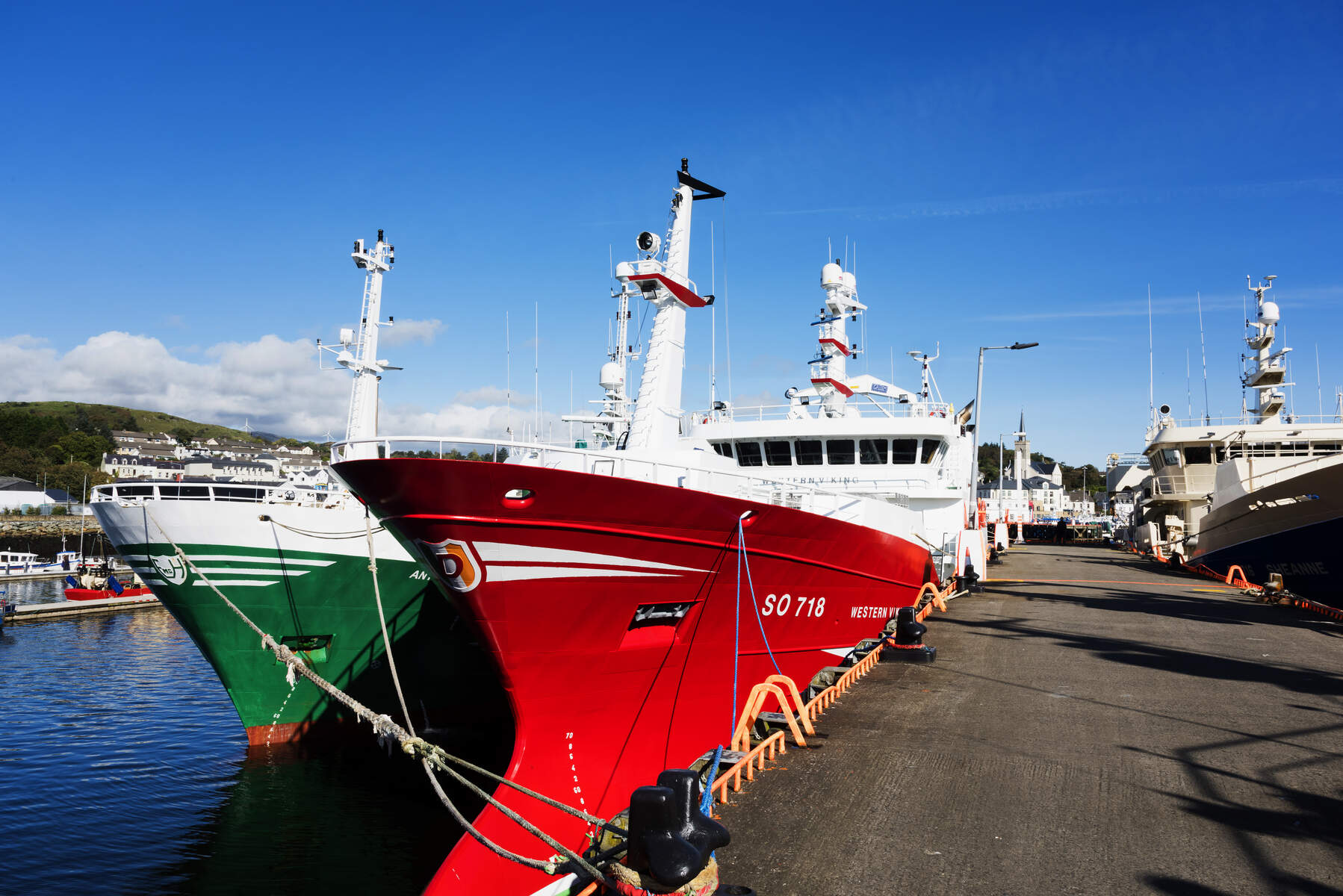
     

    An amendment which states that robust scientific data be provided by the Commission on the necessary conditions to guarantee long term food security before the NRL comes into force was also passed. Every Irish MEP voted against this amendment (including Sean Kelly, although he was included in the EPP members who tabled this amendment).


    Terrestrial ecosystems


    Negative results for nature

    A very worrying amendment was passed which significantly weakens the language used for terrestrial ecosystems. It states that Member States shall ‘aim’ to put in place restoration measures and also restricts it to existing Natura 2000 sites. This restricts conservation measures to habitats which are listed on the Annex I that are not in good condition. Time bound percentage targets were also deleted. All Irish MEPs voted against this amendment apart from MacManus of Sinn Fein who abstained. This is a very damaging amendment for nature restoration on land as the weakened language allows Member States the leeway to not actually put any effective restoration measures in place as long as they show some evidence of trying. A law needs to have strong definitive language which cannot be twisted and interpreted to suit opposing agendas and nature restoration needs outcome based targets rather than effort based targets. Limiting the scope to existing protected areas is also very damaging as there are many ecosystems across Europe which are in need of restoration and are not part of the Birds and Habitats Directives protected sites. Deleting the time constraints also means that Member States do not have a deadline to show that they have ‘aimed to put restoration measures in place’. This will allow the law to basically be ignored and for time to go by without any incentives to restore nature. 


    An amendment which was proposed by Luke Ming Flanaghan was opposed by a majority of MEPs but every Irish MEP voted to support it which is encouraging to see. This amendment would have taken into account existing High Nature Value farmland and maintained these low intensity farming systems when establishing restoration measures. This amendment was a very positive one which would have taken into account the efforts which are already being done by farmers but unfortunately did not go through.


    An amendment which deleted the entire article 9 on agricultural land and peatlands was passed. This removed all targets and timelines for restoration of these areas and is one of the most damaging amendments to go through. All Irish MEPS voted against this amendment apart from Chris MacManus who abstained.


    Damaging amendments to forestry on standing and lying deadwood were passed with all Fine Gael MEPs voting for this and the rest of the Irish MEPs voting against.


    Positive results for nature


    Amendments strengthening the text on pollinators were passed with all Irish MEPs voting positively


    Marine Ecosystems


    Positive results for nature

    Another two amendments were put forward for marine ecosystems which would have weakened the language and timelines as well as limiting the marine scope of the law to only Natura 2000 sites. This amendment was opposed. Every Irish MEP voted against these amendments which again is encouraging to see.


    Financing


    An amendment on funding was passed with all Fine Gael MEPs voting for it as well as Luke Ming Flannaghan. All other Irish MEPs voted against it. This amendment stated that no funding from the CAP, the CFP or other agricultural and fisheries funding systems will be used to fund nature restoration.


    What happens next?

    The next stage will be the trilogue negotiations between the Parliament and the Council with the Commission mediating (although the Commission has little to do at this stage). In previous trilogue negotiations the Council position has generally been found to be stronger. Although the NRL has gone against many of the norms of previous EU files so it is hard to know whether this will be the case. The Council’s position is more environmentally ambitious than the final agreed Parliament position although the Parliament has some strong amendments as well which were not included in the Council position. Cesar Luena is the rapporteur on the ENVI committee and the lead on the NRL. He will be representing the Parliament in the negotiations and he has been a champion for nature throughout this entire process. However, because he is representing the Parliament he must tow the line between the Parliament position and the ambitious text which he would have liked to have seen from the beginning. Nature has a good ally to have him on side negotiating this text.


    The NRL has been severely weakened but this is not the final position. There is still time for negotiations to improve on some of the most damaging amendments and hopefully we will end up with a stronger text than the current Parliament position.


    The IWT would like to thank every citizen who took the time to sign up to the RestoreNature campaign, attend one of the Irish rallys or shared eNGO articles and posts on the NRL. There was huge public support for the NRL and this support played a huge role in motivating MEPs to vote positively for nature.


    Grace Carr

    Marine Advocacy Officer

  • Irish Wildlife Trust welcomes new marine designations but warns that fisheries must be controlled if they are to be effective.

    Irish Wildlife Trust welcomes new marine designations but warns that fisheries must be controlled if they are to be effective.

    Press Release 

    Irish Wildlife Trust welcomes new marine designations but warns that fisheries must be controlled if they are to be effective.

    14th July 2023


    The Irish Wildlife Trust (IWT) welcomes the latest announcement of a large new Special Protection Area (SPA) in the north-west Irish Sea. SPAs are designated under existing legislation for the protection of birds and are a form of Marine Protected Area (MPA). The announcement brings the coverage of our marine environment falling within designated areas for nature to nearly 10%.

    The new designation, along with other recent announcements are vitally important in ensuring that future developments do not result in harm to these sensitive places. However, in nearly all instances, harmful activities, particularly from fishing, are already underway. If MPAs are to be effective, they must control the fishing.

    The IWT is therefore calling on the Minister for Agriculture, Food and the Marine, Charlie McConalogue, to accelerate the process of carrying out fisheries assessments in existing MPAs in line with goals to protect and restore biodiversity.

    In particular, this means removing particularly harmful activities such as dredging, bottom trawling or mid-water trawling from these areas. Earlier this year, the European Commission called for the removal of bottom-towed fishing gear from all MPAs and asked that member states, including Ireland, produce a plan for the ending of these practices in existing MPAs by next March.


    IWT campaign officer Pádraic Fogarty says “creating new MPAs is a critical step in the protection of our seas. They are the foundations for long-term management, but without the management and especially the removal of particularly harmful fishing practices, the designations are meaningless.”


    The IWT also wants to highlight the fact that many areas with sensitive habitats and species, such as the Kish Bank off the coast of Dublin and Wicklow, remain without any protections. Promised legislation for the creation of MPAs in Irish law (beyond the relatively limited scope of existing legislation) has yet to appear. Therefore, despite the welcome expansion of MPAs we are still trailing far behind in the stated aim of protecting 30% of our seas by 2030


    CONTACT:


    Pádraic Fogarty IWT Campaigns Officer, irishwildlife@iwt.ie

  • Nature thrown a lifeline as motion to reject Nature Restoration Law is defeated

    Nature thrown a lifeline as motion to reject Nature Restoration Law is defeated

    Press Release

    12th July 2023

    Nature thrown a lifeline as motion to reject Nature Restoration Law is defeated

    The Irish Wildlife Trust (IWT) is delighted that MEPs today (12th July) voted to pass the Nature Restoration Law (NRL). This is a substantial step forward for the European Green Deal and while it could be more ambitious, the law has not been stopped at this critical stage in the biodiversity crisis.

    The IWT laments the fact that this law has been so controversial over the past months, and that opponents resorted to such extraordinary levels of disinformation, particularly from the European People’s Party (EPP) and Fine Gael.

    The vote to outright reject the law was opposed by 324 votes to 312 and there were 12 MEPs who also abstained. It comes a week after the Dáil overwhelmingly voted to support the NRL.

    All Irish MEP’s voted not to reject the law.

    Unfortunately, the EPP group, along with other conservative MEPs voted on several amendments which aim to significantly weaken the regulations. An amendment which dealt with conservation measures on agricultural lands was completely deleted from the proposal. The amendment stating that once an area is restored it needs to be kept in a favourable condition (non deterioration principle) was also deleted which allows for the degradation of restored habitats to occur which would result in a waste of money and effort.

    However, there was an amendment on the Common Fisheries Policy which will ensure member states can put conservation measures in place to protect ecosystems in their waters, something we particularly welcome.

    Grace Carr, Marine Advocacy Officer for the Irish Wildlife Trust said, “We are happy that the dangerous political games which were played by the EPP over the past few months failed and that the law was not rejected by a majority of MEPs. The amendments involving the Common Fisheries Policy are a step forward for marine restoration and biodiversity but there is still work to be done in negotiations to make the law more ambitious than it currently is.”

    ENDS

    CONTACT:
    Grace Carr, IWT Marine Advocacy Officer, grace@iwt.ie
    Pádraic Fogarty IWT Campaigns Officer, irishwildlife@iwt.ie

  • Irish MEPs must support a strong Nature Restoration Law at the European Parliament meeting in July  

    Irish MEPs must support a strong Nature Restoration Law at the European Parliament meeting in July  

    Press Release

    Irish MEPs must support a strong Nature Restoration Law at the European Parliament meeting in July  

    27th June 2023


    Today, MEPs in the European Parliament committee for Environment, Public Health and Food Safety (ENVI) concluded their voting on the Nature Restoration Law (NRL). The final vote was tied 44-44 which means the report was not adopted.


    The ENVI committee began voting on the NRL on the 15th June and it was voted then that the law would not be rejected. This was a positive result as members of the EPP group (of which Fine Gael is a part of) had been engaged in a campaign spreading misinformation about the law and the fact that it was not outright rejected shows that this campaign did not work. Any member of the EPP group which spoke out against the official EPP stance and showed support for the NRL were swiftly substituted out of the committee so that they would not be able to vote.


    Since the law was not rejected, MEPs then began voting on the proposed amendments with EPP and other conservative MEPs doing their best to weaken the law as much as possible. Members of the EPP even voted against there being a specific nature restoration fund available for farmers to make the just transition to more sustainable ways of farming. This resulted in a watered down version of the law and this was what members voted on today resulting in the tie and the report not being formally adopted.


    The law will now go to plenary in July where MEPs across the entire EU parliament will have the chance to vote on it. This crucial vote will give MEPs the chance to show they want a strong and ambitious NRL, that they care about the climate and biodiversity crisis and that they want to restore nature to help ensure food security, protect jobs and protect the habitats and species we rely on.


    “This piece of legislation is the most important piece of legislation for nature since the Birds and Habitats Directive 30 years ago. Over 80% of EU habitats are in bad ecological status so this shows that what we have been doing so far hasn’t been enough. We desperately need this law to tackle the mass extinction we find ourselves in. All Irish members of the EU parliament must now do what is right by their citizens and nature and make sure we get the strongest version of this law through in plenary” – Grace Carr, Marine Advocacy Officer, Irish Wildlife Trust

    ENDS 


    CONTACT: Grace Carr IWT Marine Advocacy Officer, grace@iwt.ie

  • MEPs have voted to keep the Nature Restoration Law alive and fought off attempts to quash it by the European People’s Party (Fine Geal’s European group).

    MEPs have voted to keep the Nature Restoration Law alive and fought off attempts to quash it by the European People’s Party (Fine Geal’s European group).

    Press Release

    MEPs have voted to keep the Nature Restoration Law alive and fought off attempts to quash it by the European People’s Party (Fine Geal’s European group)

    15th June  2023


    A key vote in Strasbourg has kept hopes alive for the livelihoods of millions of workers and the wellbeing of the planet. Voting today on the draft Nature Restoration Law, Members of the European Parliament (MEPs) in the Environment, Public Health and Food Safety (ENVI) committee voted down, with a rare tied vote, an attempt by conservative, far right and some liberal MEPs to reject the law.


    Led primarily by the European People’s Party (EPP of which Fine Gael are a part of) and its chair, German MEP Manfred Weber, conservatives launched a misinformation crusade against the law and new environmental rules in general. The populist arguments they have been using have been widely criticised by experts from across a broad spectrum, including businesses, scientists, civil society organisations and the public. The evidence shows that nature restoration is vital if the EU is to protect the livelihoods of fishers and farmers, create sustainable tourism and coastal economies, preserve food systems, and fight climate change. 

    There were two Irish MEPs voting in the ENVI committee, Grace O’Sullivan (Green Party) and Mick Wallace (Independents for Change), both of whom supported nature by voting not to reject the law. They, along with 42 other MEP’s took the first steps towards restoring nature in Europe. MEPs then started the arduous process of voting on the over-200 pages of amendments to the law, but scheduling in Strasbourg means that multiple amendments plus the final vote on the law as a whole have been postponed until 27 June in Brussels. So far many compromise amendments that were negotiated were not supported and so the law has been weakened. The majority of votes were tied 44-44, so every vote will count to get a strong Nature Restoration Law over the line.


    Grace Carr, Marine Advocacy Officer at the Irish Wildlife Trust, said: 

    “Even though some of the amendments which may be adopted could weaken the Nature Restoration Law, the fact that the EPP (and other conservative parties) did not succeed in killing the NRL outright is a win. It is positive to see that progressive MEPs voted to protect the law and the fight is still on to restore nature. It is crucial now for these MEPs to speak up and continue voting for a strong NRL when the vote continues at the end of the month.”


    ENDS

    CONTACT: Grace Carr, Marine Advocacy Officer, grace@iwt.ie

    Image ©Failte Ireland Courtesy Christian McLeod

  • Discussions on Control Measures for Fisheries reach a conclusion

    Discussions on Control Measures for Fisheries reach a conclusion

    Five years after the initial proposal to reform the EU Fisheries Control Regulation, the EU Council and Parliament have finally come to an agreement in trilogue negotiations on the European Commissions proposal. The EU Fisheries Control Regulation helps to ensure that the rules of the Common Fisheries Policy (CFP) are followed by all those fishing in EU waters and these new reforms modernise the way fishing activities are monitored. The goal of the CFP is to ensure that the EU maintains healthy fish stocks and that fisheries are ecologically and economically sustainable.

    Existing measures in the Fisheries Control Regulation include the monitoring and registration of catches, controls on access to waters (such as fishing licences) and rules on fishing gears and fishing effort (including engine size and quotas). 70% of the existing measures will be updated which will improve accuracy in monitoring and help reduce overfishing. Some of the main changes include the following.

    • Vessels will be required to have a new electronic logbook system for greater accuracy in reporting and more transparency in the traceability of fisheries products (people should be able to trace fish which they are buying to a particular vessel number and each trip will have its own ID.) 
    • There will also be CCTV on vessels of 18m or more that are at a risk of non-compliance so that the landing obligation is adhered to. 
    • All vessels will now be required to have tracking systems onboard to show their location in real time however some small scale vessels can apply to be exempt from this until 2030 if they have justifiable reasons. 
    • A new reporting system will also be in place for recreational fisheries and those caught selling a catch which is worth more than 50 euro will face charges.
    • New rules on sanctions were also decided. The value of the products seized will determine the minimum fine. If there are repeated infringements then the fine will be at least twice the value of the products. This is to overcome the differences between member states when issuing fines to vessels caught engaging in illegal activity. 


    Unfortunately, there are some worrying developments with the measures. The Margin of Tolerance (MoT) is the difference which is allowed between the estimated report of the catch and the actual weight of the catch at port. This is to allow for genuine mistakes to occur and the MoT has been 10% per species up until now. This has now been increased to 20% for small scale fishers due to it being more difficult to estimate a smaller catch and 20% for any species on board that does not exceed 100 kg.

    However, the most worrying development is a change to the MoT for small pelagic, industrial fisheries and tropical tuna species. There are three species of tropical tuna fished in EU waters including skipjack, yellowfin and bigeye tuna. Yellow and bigeye tuna are recorded as being overfished and/or subject to overfishing according to a 2022 stock assessment of the Indian Ocean. The new changes mean that the MoT will be for the entire quantity of the catch landed and not per species. There have been rules put in place along with the increase of the MoT. Vessels must land at specific ports which will be subject to higher investigations of the catch. However, the EU does not have a great track record of inspections which can be seen by an open infringement case on this matter. 

    This change to the MoT will allow for dramatic underreporting of the overfished species of yellowfin tuna and bigeye tuna alongside overreporting of skipjack tuna. The MoT was changed to show the total catch instead of per species in the Baltic Sea and this was the reason for a decline in ecological health of this area. An example below shows how a vessel could hypothetically legally misreport their catches.

    While we welcome the majority of these changes to the control regulations, there is a very considerable worry that this change to the tropical tuna fleet will have devastating consequences.

    Grace Carr

  • Big parties are failing to lead

    Big parties are failing to lead

    Big parties are failing to lead

    Pádraic Fogarty June 3rd 2023

    Biodiversity week came to a close last week with dozens of events around the country celebrating our natural heritage. It’s hard to know if the irony was lost on some politicians that instead of spending time reflecting on our connection with nature they joined the most concerted attack on efforts to address the biodiversity crisis we have seen in a generation.

    Fine Gael MEP Colm Markey and his Sinn Féin colleague Chris MacManus formed a strange alliance on the EU agriculture (AGRI) committee in choosing to vote down the EU’s proposed Nature Restoration Law (NRL) in its entirety rather than proposing any amendments that might have alleviated farmers’ concerns.

    Fianna Fáíl’s (FF) Billy Kelleher, also an MEP but without a vote on the AGRI committee, was also all over the media describing the proposals to reduce emissions from drained peatlands as “extreme”. At home his FF colleague Barry Cowen condemned the NRL as “cultural imperialism”.

    All of these political parties voted for the Climate Act in 2021 that mandated the reduction in emissions of 51% by the end of this decade. Yet, taoiseach Leo Varadkar said that elements of the proposed law “went too far”.

    Each of these politicians squirmed in their insistence that they want to see nature restoration while also pressing the nuclear destruct button.

    The NRL is under serious threat, but it has not been killed off. Despite the negative vote in the AGRI committee, followed a day later by a similar motion in the fishing (PECH) committee, these votes are not binding. The file belongs to the environmental committee (ENVI) and the outright rejection by the other committees in fact makes their job easier. Since there were no amendments, there is little to negotiate.

    The ENVI committee itself votes on June 15th and a rejection here would indeed kill off the proposal. Ireland’s two full members of this committee, the Green Party’s Grace O’Sullivan and independent Mick Wallace, are both strong supporters of the law. The aforementioned Billy Kelleher and Fine Gael’s Deirdre Clune are substitutes… can either be persuaded to vote in favour if they are called on to vote?

    While a negative vote in ENVI will bring a hard stop to the process a positive one means the proposal will then go to a full session of the European Parliament, scheduled to be held in July. Here again a negative vote would be fatal, an approval would be much more positive, meaning the Parliament would then enter ‘triologue’ with the Commission and the Council (representing member state governments).

    In such an event, a final regulation could be approved by the end of this year.

    In the Dáil over the past two weeks Green Party TDs launched a stout defence of the NRL while the minister in charge of the National Parks and Wildlife Service, Malcolm Noonan, said that even if it was rejected Ireland should press on with its own restoration plan.

    Minister for the Environment Eamon Ryan is believed to be looking for Ireland’s impressive budget surplus to be used for a dedicated nature restoration fund, outside of the Common Agriculture Policy, that would put money on the table for farmers.

    The IWT at the Dáil protesting for nature restoration

    This week highlighted the inconsistencies within the three large political parties on climate and nature action. Tánaiste Micheál Martin is outwardly receptive to action, recently visiting Cavan to announce a big land purchase by the State for reaching biodiversity goals. But where is the leadership when so many in his own party are vocally scaremongering and spreading misinformation about the Nature Restoration Law?

    Agriculture minister, Charlie McConalogue, made soothing noises this week, stating that “I now expect our MEPs to work hard to bring the European Parliament position much closer to that of the Council”. Let’s hope he’s right, as government support will mean little if the whole thing is thrown out by the parliament.

    Sinn Fein’s climate spokesperson, Darren O’Rourke, told the Dáil that the NRL “has the potential to be an important tool” in addressing the biodiversity emergency, and insisting that his party was in favour of “urgent action”. But these words are unconvincing while Mary Lou McDonald has so little to say herself on the subject and when the party’s only MEP is siding with the right wing in rejecting the law.

    Varadkar and Fine Gael are at least consistent in opposing any meaningful efforts to address climate and biodiversity collapse. Should we be surprised that the Taoiseach has joined a campaign of misinformation that seeks to steal votes from the far right in next year’s local and European elections?

    This lack of leadership leaves a vacuum that is filled with the hysteria, the scaremongering and even blatant lies about what the NRL is, and clearly isn’t about. “The rhetoric on rewetting from Fine Gael, Fianna Fáil and the rural Independents does not seem to be matched by the facts” said Harry McGee in the Irish Times while Daniel Murrey, writing in the Business Post, noted how “facts are increasingly taking a back seat to feverish rhetoric”.

    Were the NRL to be defeated, the consequences would travel far beyond the EU’s borders. It would threaten the entire ‘Green New Deal’ that has been a signature of Ursula von der Leyen’s Commission. The EU likes to see itself as a leader on climate and biodiversity. Its rules can have global reach, e.g. in the fight against deforestation, a carbon border tax, pesticides, single use plastics and more. The threat to the Nature Restoration Law is international news and its fall would undermine efforts to curb tropical deforestation, climate action and ocean protection.

    People like Colm Markey, Chris MacManus and Billy Kelleher, with an eye on re-election in 2024, may not care much for these things but their political masters at home should. A weaker EU plays into the hands of its enemies from China and Russia to the American Far Right.

    The leaders of the three big parties would prefer not to be talking about nature and climate. But room on the fence is getting tighter and the only way they’ll get off it entirely is through public pressure. This is why the coming weeks are critical not only for nature but our broader approach to the climate and biodiversity crisis. Time is running out.

    We need as many people as possible to visit our website before June 15th to demand that MEPs vote for a strong and ambitious programme for nature restoration. Please visit https://iwt.ie/what-we-do/campaigns/nature-restoration-law/

  • Irish political leaders must support Nature Restoration in the European Parliament

    Irish political leaders must support Nature Restoration in the European Parliament

    Press Release

    Irish political leaders must support Nature Restoration in the European Parliament

    May 25th 2023


    The Irish Wildlife Trust is calling on all political leaders in Ireland to ensure that their MEPs support the Nature Restoration Law in the European Parliament

    This week the European Parliament’s Committee on Fisheries (PECH) and Agriculture and Rural Development (AGRI), both rejected the Nature Restoration Law (NRL). The vote to reject the NRL without amendments was supported by MEPs from the government and main opposition party in Ireland.

    This rejection of the NRL by these committees  poses a direct threat to the objectives of the European Green Deal, which aims to steer the EU towards a just transition to sustainable and equitable practices. It also goes against several of the recommendations of the Citizens’ Assembly on Biodiversity.

    The NRL has the potential to be the EU’s most significant legislation for tackling the biodiversity and climate crisis. For EU decision makers this represents a pivotal moment to leave a positive legacy and securing support from each Member State is crucial. The landmark NRL will only pass if decision makers show a level of political will to match the level of urgency imposed by the environmental crises we are facing. Due to poor communication by the Government, there has been a lot of misinformation spread on the NRL, stating that it will undermine food security and stop all economic development. This is simply not true and member’s of the AGRI and PECH committees rejecting the NRL is a short-sighted decision which will threaten farmer’s livelihoods and food security in the long run.

    The PECH committee rejecting the law also disregards all scientific evidence showing that the health of the marine environment is in severe decline and the effects this will have on small scale fishermen and women along with coastal communities.

    NGO’s, including the Irish Wildlife Trust are now urging Members of the European Parliament (MEPs) in the lead committee on this file – the Committee on Environment, Public Health and Food Safety (ENVI) – to listen to the science and uphold the NRL in their vote on June 15th.

    Irish MEPs must listen to what the Irish people are calling for in the Citizens’ Assembly last month for:

    ‘The State [to]  renew and stand by its commitment to implement the objectives and targets of the EU 2030 Biodiversity Strategy and play a leading and supportive role in the adoption and implementation of a new EU Nature Restoration Regulation.’

    Member’s of conservative and liberal groups in the European Parliament including the European People’s Party, the European Conservative and Reformists (ECR) and Renew Europe, along with the far right, have voted against restoring 20% of the land and ocean and this shows a blatant disregard for people and to nature.

    Grace Carr, Marine Advocacy Officer at The Irish Wildlife Trust, said “The results this week are very disappointing for nature restoration. The recommendations in the Citizen’s Assembly also clearly call for greater restoration targets on land and sea. With the new Irish Marine Protected Area legislation in the process of becoming a bill, we hope that Irish TD’s will show more support for marine conservation and restoration then the MEPs in Brussels”.

    It is time for the leader’s of Irish political parties to stand up for the Irish people and request their MEPs support a strong Nature Restoration Law.
  • EU Fisheries Committee (PECH) try to weaken landmark Nature Restoration Law

    EU Fisheries Committee (PECH) try to weaken landmark Nature Restoration Law

    The European Nature Restoration Law (NRL) is the first continent-wide comprehensive law to restore Europe’s degraded ecosystems on land and sea. The climate and biodiversity crisis are two sides of the same coin and we must tackle them simultaneously. Having healthy ecosystems will not only help to mitigate climate change it will also offer natural solutions to disasters such as flooding. We are now reaching a crucial stage in the NRL process, with votes happening soon from the PECH committee (on fisheries) and ENVI committee (environmental ). We will then have a plenary vote on the law which will take into account the votes and amendments from the committees involved.

    There has been a lot of discussion in Ireland about the land-based targets and push back from different groups on the peat rewetting goals. There has not been as much coverage on the fisheries and marine side of the NRL, although the situation with the PECH committee is not looking very positive from a conservation outlook. Click here  and scroll down to files uploaded in January to view the full PECH amendment documents.

    Some of the amendments which the PECH committee have proposed significantly weaken the restoration and conservation targets originally proposed for the NRL. They suggest that the 20% restoration target for land and the 20% target for sea be scrapped and that a new 20% target be set for land and sea jointly. They also want to delay marine restoration deadlines until 2035 instead of 2030. The time to act is now and delaying goals will only ensure greater destruction of marine ecosystems.

    It has also been stated that there is already enough legislation in place and there is no need for the NRL. They want to change the law to a directive so that it is not binding and member states can decide how, and whether, they want to hit the targets. This is especially worrying as Ireland’s track record of voluntarily protecting its land and sea is dismal to say the least. Ireland currently only has 8.3% of its maritime area designated as marine protected areas and these areas are not truly protected, with little to no management measures in place. The EU is currently taking Ireland to the High Court over its consistent failure at setting and hitting conservation targets.

    There is a non-deterioration principle within the NRL. This means that once an area is restored, it needs to be kept in this favourable condition. Restoration of severely degraded habitats can take a lot of time and money, and it would make sense for member states to then keep that area like that instead of wasting people’s money and effort. However, one of the amendments from the PECH committee calls for the non-deterioration principle to be watered down or removed completely. The reason they have given is that a member state cannot be held accountable if climate change negatively impacts a restored area. If restoration of an area is done right and the correct management plans are put in place to ensure the area is kept in good environmental condition, then keeping it like that should not be an issue.

    One good agreement coming from the PECH committee is that better implementation of the Common Fisheries Policy should be obtained. If ocean restoration is to succeed then correct management of fisheries is vital or restoration impacts will be minimal.

    If the PECH committee rejects the NRL in full this would be a disaster, not only for nature but for fishing communities and coastal businesses. It will also send a negative message to the world on what the EU’s political stance is towards ocean restoration. 

    Take action today and sign up to the RestoreNature campaign! 

    This campaign will send a common letter to decision makers (which you can read before it is sent) stating that you want a strong nature restoration law. All you have to do is fill in your name and email and we will do the rest.   

    https://iwt.ie/what-we-do/campaigns/nature-restoration-law/


    Grace Carr

  • Petition for Minister McConalogue to oppose an increase to the margin of tolerance for fisheries

    Petition for Minister McConalogue to oppose an increase to the margin of tolerance for fisheries

    Photo: Alexander Mustard

    Birdwatch Ireland in collaboration with the IWT has created a petition calling on the Minister for agriculture, food and the marine, Charlie Mc Conalogue to block a new dangerous proposal which could have devastating effects on fish stocks and incentivise overfishing and underreporting. It has been proposed that the 10% Margin of Tolerance (MoT) should be increased, which allows discrepancy for fishing vessels when reporting their catch. The sustainability of EU fisheries can only happen if scientists and decision makers know what has been caught accurately. 

    Read below for more information and Sign the petition now.


    In February the European Commission released four documents on how to improve EU fisheries (1). Many of these documents reference the Control Regulation, the draft of which was published in February 2020. There are many aspects to the Control Regulation aimed at improving the sustainability of EU fisheries.

    •   All fishing vessels must complete an electronic logbook containing information on all catches. Landings and transshipment declarations should be recorded.
    •   To help with the traceability of seafood, operations at all stages of production, processing and distribution should be recorded electronically and linked with a unique fishing trip number of a particular vessel.
    •   To help assist with the landing obligation, CCTV should be continuously-recording on a minimum % of vessels.

    These are just a few of the proposals and there are many aspects to this regulation, which, if they were taken on board and made mandatory, would be a huge step in the right direction for proper implementation of the Common Fisheries Policy and restoration and conservation targets of the marine environment.

    However, there are some aspects to the Control Regulation which would cause ecological destruction. A proposal on increasing the Margin of Tolerance (MoT) was suggested which would backtrack on current fisheries control regulations in place to support the accuracy of catch reporting. The current MoT allows for a 10% discrepancy in reported catches per species. This means vessels can misreport up to 10% of the weight per species which was caught and this is to allow for genuine mistakes to occur without fines and prosecutions coming down on the vessel and its crew. However, previously the EU parliament proposed to increase this margin to 20% for some small pelagic and mixed fisheries and 25% for tuna species which would have had devastating effects. It has also been proposed by member states that the MoT percentage should account for the entire catch and not on a per species basis. This would allow for the huge underreporting of overfished species and overreporting of fish species that are in favourable conservation condition. This has happened before as the MoT was weakened in the Baltic Sea and this contributed to fish populations collapsing and ‘incentivised’ hidden overfishing (2). The European Commission has even stated ‘this relaxation played a major role in facilitating misreporting of the species…and therefore contributing to the very bad state of the stocks in the (Baltic) region’.

    If Member States do not show support to keep the MoT at 10% per species then there is a very real risk that the Commission could withdraw the entire proposal. This would mean that the positive amendments which would help transform EU fisheries and reduce the overfishing which is destroying the oceans ecosystems would also be taken off the table.

    This is a huge opportunity for the EU to make positive change and if it is taken away due to member states’ silence over the proposed increase to the MoT it would be a devastating shame. The Common Fisheries Policy, which is supposed to keep fisheries sustainable and prevent overfishing, needs to be properly implemented to ensure the EU meets its international ocean and biodiversity protection and restoration commitments. Seas at Risk states in a joint NGO paper on the Nature Restoration Law that proper restoration of the ocean cannot happen without the CFP actually being put to work. The collapse of fish stocks has knock on effects to the entire marine ecosystem.

    Birdwatch Ireland in collaboration with the IWT has created a petition calling on the Minister for agriculture, food and the marine, Charlie Mc Conalogue to block this proposal before the May 30th meeting. Please sign now and share wide so the Irish Minister knows that the Irish people do not want an increase to the MoT. This is a vital time for ocean restoration and we must ensure this dangerous proposal is blocked.

    Sign the petition now.


    Grace Carr Marine Advocacy and Policy Officer

    1.   https://oceans-and-fisheries.ec.europa.eu/policy/common-fisheries-policy-cfp/action-plan-protecting-and-restoring-marine-ecosystems-sustainable-and-resilient-fisheries_en, https://ec.europa.eu/commission/presscorner/detail/en/ip_23_828
    2.   https://ejfoundation.org/resources/downloads/Baltic-study.docx.pdf
  • Northern Ireland miles ahead of Republic in protecting inshore waters.

    Northern Ireland miles ahead of Republic in protecting inshore waters.

    Northern Ireland miles ahead of Republic in protecting inshore waters

    by Grace Carr March 30th 2023

    New fisheries management measures were enacted this year in Northern Ireland which will prohibit bottom trawling in nine inshore Marine Protected Areas (MPAs). There will also be measures put in place in these MPAs for static gear such as pot fishing. This is in stark contrast to the overturned ban on boats over 18m trawling inshore waters in the Republic.


    The Northern Ireland Marine Task Force (NIMTF) along with other stakeholders including members of the fishing industry, have formed a new coalition called ‘Co-Fish: NI Fisheries and Conservation Partnership’. They will work on ensuring that these management measures will deliver benefits for the marine environment through restoration and conservation while ensuring livelihoods of the fishing industry are also protected. A press release on the new welcomed measures can be viewed here.  They also plan to ensure communication between government departments and stakeholders so their MPA network can be improved and managed as effectively as possible. Ensuring engagement from stakeholders such as the fishing community is essential in achieving and managing a strong effective network of MPAs. This is something many eNGOSs including the Irish Wildlife Trust  and Fair Seas  have called for in the new Irish MPA bill. 

    The nine areas where bottom trawling is banned will include Marine Conservation Zones, Special Areas of Conservation (SAC) and Special Protection Areas (SPA). Unfortunately things aren’t looking so optimistic in the waters around the rest of the island of Ireland. The Republic of Ireland is currently being taken to the EU Court of Justice over its failure to implement site specific management plans to protect their SACs. For some sites the deadline for enacting management measures expired well over a decade ago..

    Another devastating blow for marine ecosystems in the Republic is the overturn of the bottom trawling ban within six nautical miles of the coast by vessels over 18 metres. Two Munster based fishermen appealed this ban which came into effect in January 2020. It was overturned in October 2020 although an appeal was lodged by Minister Charlie McConalogue and the ban was reinstated in 2021. After more legal action was taken, it has now been overturned again on a technicality that Ireland had failed to notify the UK and EU of these conservation and management measures as they would affect non-Irish vessels.

    The Irish South and West Fish Producers Organisation (IS&WFPO) welcomes the lift of the trawling ban and has also called for no policy directives to be set until greater scientific evidence on the status of the fish stocks within the six nautical mile zone is gathered. The Marine Strategy Framework Directive  (MSFD) has 11 indicators which must achieve Good Environmental Status (GES). Two of the indicators are: Commercial Fish and Shellfish, and Sea-floor Integrity which Ireland has failed to fully achieve GES for. 22% of commercial fish stocks have failed to achieve GES and 60% are unknown. In the face of these unknowns the precautionary principle needs to be applied and measures should be taken to protect and prevent further damage to marine ecosystems. With the overturn of the trawling ban, this doesn’t appear to be Ireland’s plan. 

    We are delighted to see these measures put in place in MPAs in the North of Ireland and hope that the Irish government will see that this is the level of management needed to restore and protect biodiversity in Irish waters.

    See here Irish Wildlife Trusts recent press release and call for urgent action on the issue.