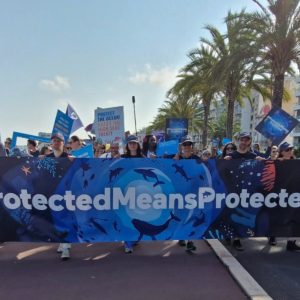
Urgent: European Parliament vote tomorrow (25/11) on EU law which could open up vital nature protection law and allow for the killing and destruction of protected species and habitats.
First published online: 24 November 2026
MEPs are currently in Strasbourg to vote on the Regulation for Speeding up Environmental Assessments. This is an extremely problematic file which contains articles within it that would allow for the disturbance and killing of protected species (Article 8) and a non exhaustive list of ‘strategic’ sectors that would be fast tracked through the permitting system and allowed to cause increased harm to protected species and habitats (Article 14).
A new amendment (no.103) was tabled yesterday by the European Conservatives and Reformers (ECR) group to reopen the Birds and Habitats Directives (the EU’s primary legislation for protecting nature). This goes against the very basis of democracy as the European Commission’s own ‘stress test’ on the Birds and Habitats Directives is currently underway and no decision has been made on whether to reopen it. ECR, with support from the European People’s Party (EPP) are trying to undermine this entire process and push through their own agenda to open these laws and weaken the environmental protections within them.
Ireland has four Fine Gael MEPs that are part of the EPP group. We are calling for the public to send an email to all Irish MEPs asking them to defend Europe’s nature and not side with those trying to remove its legal protection. MEPs must not give in to this pressure. They must reject Amendment 103, refuse any further weakening of the agreed compromises and ultimately reject the Commission’s flawed proposal altogether. They must listen to the 1.25 million citizens who have called on them to protect, not weaken, our EU nature laws. Elected representatives must put the public interest ahead of political deals and defend the laws that safeguard Europe’s nature, health and people.
Here is an email tool you can use to speed up the process of contacting Irish MEPs.
‘We were in Brussels last week to lobby Irish MEPs ahead of this critical vote which will determine whether or not it will be legal to kill and destroy protected wildlife and habitats.
While many Irish MEPs stated that they would vote against the most harmful aspects of this law, it is clear that in the EU, many of those in high power positions, do not see ‘competitiveness’ being compatible with nature protection. They believe that we must reduce the few protections we currently have if we want to fast track infrastructure and industry. The Commission’s own 2024 Environmental Impact Assessment Implementation study, which was based on surveys from Member States, found that ‘the lack of expertise, staff, and/or resources were the most common reasons for delays’ not environmental impact assessments or current environmental protections.
90% of protected habitats in Ireland are not in good condition and this is a trend across the EU. Competitiveness will not matter when devastating floods and fires are increasing, the soil will no longer grow food and every river and water body is polluted.’ – Grace Carr, Marine Advocacy Officer, Irish Wildlife Trust
The law was due to be voted on today, the 24th of November but has been postponed until tomorrow by request from the European People’s Party (EPP). This raises serious concerns that further attempts will be made to renegotiate and weaken an already problematic compromise, including its insufficient safeguards for protected species under Article 8.
By keeping its support for Amendment 103 on the table, the EPP is using political manoeuvring to roll back decades of nature protection, including reopening the EU’s cornerstone Birds and Habitats Directives before the Commission has even completed its assessment.
Media Contact: Grace Carr, Marine Advocacy Officer, grace@iwt.ie
The Irish Wildlife Trust (IWT) is a non-governmental organisation and charity founded in 1979. Our vision is an Ireland where wild nature thrives, and society enjoys the benefits of coexisting with diverse, functioning ecosystems. Our mission is to protect and restore biodiversity in Ireland by motivating and supporting people to take action for nature. We achieve this through assertive advocacy, inspirational rewilding, and building empowered communities for nature. We have a small staff team and a network of volunteer run branches who engage IWT members at a county level. https://iwt.ie/about-us/
Rewilding Network Officer Role
Rewilding is one of the key pillars in the Irish Wildlife Trust’s vision of an Ireland where wild nature thrives, and society enjoys the benefits of coexisting with diverse, functioning ecosystems. The Irish Wildlife Trust does not aspire to being a large landowner in itself, instead we aim to support existing landowners and communities to rewild their own land. The Rewilding Network Officer will be responsible for driving IWT’s rewilding work over the coming years with a particular focus on running the Rewild Your Land network. In 2025 Pádraic Fogarty launched Rewild Your Land, a project that aims to work with landowners interested in rewilding. It gives one-to-one advice on land management, including visiting the site with the owner to discuss conservation issues. The landowners are then presented with a brief plan which includes a survey map.
Rewilding is more popular and more important than ever and there is growing demand for rewilding support and an Irish rewilding network. In order to further develop the Rewild Your Land project to meet this demand, the Irish Wildlife Trust is delighted to now be a key partner in Rewild Your Land, taking responsibility for its day-to-day delivery and employing a full-time rewilding specialist to support this network throughout Ireland.
With support of the IWT staff team and project steering committee, the IWT Rewilding Network Officer will be responsible for managing and developing the Rewild Your Land network as well as supporting IWT’s work to promote rewilding in Ireland through our communications and advocacy.
Goals of the Rewilding Network project
To develop Rewild Your Land into a national rewilding network for Ireland.
To see Rewild Your Land become the leading umbrella for landowners and land managers who are rewilding in Ireland.
For Rewild Your Land to be part of wider European and international rewilding networks.
To promote the practice and policy of rewilding in Ireland.
To maintain and grow a network of people engaged in the practice of rewilding.
Duties of the Role
The IWT Rewilding Network Officer will report directly to the IWT Chief Executive Officer and be guided by the IWT Rewilding Steering Committee. Duties will include:
Lead the management and delivery of the Rewild Your Land project, with support from IWT administration and financial staff.
Provide ecological advice and support to the Rewild Your Land network members throughout the island of Ireland, including through site visits, surveys and written reports.
Identify and onboard new rewilding network members (as capacity allows).
Organise online and occasional in-person network meet-ups.
Provide content for the rewilding network newsletter.
Liaise with IWT advocacy and communications staff on rewilding advocacy and communication to the IWT audience.
Research and write online articles on rewilding for use on the IWT website.
Support management of the current IWT nature reserve network. We currently have three small nature reserves.
Support fundraising for the Rewild Your Land network.
Skills, Experience & Attributes
Essential:
A passion for environmental protection, rewilding and the IWT mission and vision.
Strong interpersonal skills. The role requires effective face-to-face engagement with a diverse range of landowners across Ireland. The successful candidate will be comfortable meeting new people and assessing potential network members’ understanding of rewilding.
Specialist knowledge of rewilding and Ireland’s ecosystems and species.
Specialist knowledge of ecological systems and processes.
Knowledge of the land use and rewilding policy framework in Ireland and the EU.
An understanding of the stakeholders involved in rewilding and nature restoration in Ireland.
Full clean driving licence and access to own vehicle.
Experience working as part of a busy team.
Demonstrable organisational, time management and workload prioritisation skills.
An ability to communicate effectively, both written and verbally.
A relevant third level qualification e.g. natural science, ecology etc.
Desirable:
Experience working for a rewilding organisation.
Experience running a nationwide network.
Experience engaging directly with landowner and or communities.
Knowledge of the Irish grants and schemes relevant to rewilding and land use.
Conditions of Employment & Hybrid Working
The successful candidate is required to be resident in Ireland and eligible to work in Ireland.
This role allows for hybrid working. The post-holder will be expected to attend in-person internal meetings at our office on a minimum of one day a month as well as attendance of external events in-person around Ireland.
The IWT office is located in the bustling neighbourhood of Smithfield in Dublin City. It is five minutes walk from the LUAS Green and Red line and close to Heuston train station.
The role requires travel within Ireland and occasional weekend or evening work. All necessary expenses for work-related travel and subsistence are reimbursed by IWT.
IWT offers generous annual leave and employee training opportunities.
The IWT is an equal opportunities employer. We are committed to building an inclusive and supportive environment for all employees.
A complete list of all terms and conditions and IWT internal policies will be made available to all staff members. For queries about this position or terms of employment email jobs@iwt.ie
Email your CV and a Cover Letter in pdf format to jobs@iwt.ie
Please put “Rewilding Network Officer” in the email subject line.
Your cover letter should be a maximum of one page in length.
In your letter please outline your motivation for this position and why you feel you have the skills and experience to deliver on the responsibilities and duties of this role.
Applications for this position must be received by midnight Irish time on 13th December 2026.
“In the elusive grace of the wolf, we find a reflection of our primordial fears. Few creatures lead our minds along such untrodden paths, showing us that there are multiple truths, multiple realities.” — The Wolf Within
Wolf in Netherlands. Photo: Jefta Leeuwis.
Last week I joined European colleagues in Strasbourg for the Council of Europe’s study session on Empowering Youth Participation through the Bern Convention on the Conservation of European Wildlife and Natural Habitats.Among many species discussed unsurprisingly one species dominated the discussions: the Eurasian Wolf (Canis lupus lupus). In 2024, in a politically and seemingly personally motivated campaign, the European Union voted to downgrade the Wolf’s protection under the Bern Convention. This led to a vote in the European Parliament last year, which resulted in the Wolf’s strictly protected status being downgraded at EU level, opening the door to the culling and hunting of this iconic species. This decision opened up a new and dangerous precedent for species protection in Europe. The Eurasian Brown Bear, the Lynx and the Cormorant are among the species now in the crosshairs, facing growing political pressure to weaken their protection.
This decision opened up a new and dangerous precedent for species protection in Europe. The Eurasian Brown Bear, the Lynx and the Cormorant are among the species now in the crosshairs, facing growing political pressure to weaken their protection.
The Convention on the Conservation of European Wildlife and Natural Habitats (the Bern Convention) was established in 1979 to protect European wildlife and habitats and promote cooperation between its contracting parties. The Bern Convention is an international treaty adopted under the Council of Europe. The Council of Europe is distinct from the European Union, therefore countries such as Azerbaijan, Armenia, and the United Kingdom are contracting parties to the Bern Convention. The European Union is itself a contracting party to the Bern Convention and the Bern Convention is primarily implemented and enforced in Ireland through EU law, mainly the Birds and Habitats Directives.
The Eurasian Wolf has been persecuted for centuries. The last Irish Wolf was shot in Carlow in 1786. The English Colonial Administration at the time had placed bounties on Wolves in their efforts to bring “wolf and woodkerne” to heel. Across Europe the Wolf suffered heavy persecution and struggled to escape the undeserved negative reputation attached to it. Its appearance as the villain in folk tales such as Little Red Riding Hood and The Three Little Pigs helped sear this negative image into the European psyche for generations.
In reality, the Wolf is a keystone species trying to survive in a human-dominated world, carrying out a vitally important role as an apex predator in its ecosystem. Without apex predators, ecosystems fall out of balance, herbivore numbers proliferate placing greater pressure on the herbaceous layer and stunting forest regeneration, while increases in mesopredators such as Crows, Foxes and Martens place greater pressure on ground-nesting birds. The web of life is interconnected, and once one piece is removed, the effects ripple through the rest, creating a domino effect across the ecosystem.
Wolf attacks on humans in Europe are extremely rare, with no conclusive fatal attacks recorded in Europe in the last 40 years. Wolves have co-existed with humans successfully in the past, and are now re-colonising parts of Europe, including very densely populated countries such as the Netherlands. However, conflict between Wolves and farmers does occur as humans often struggle to share landscapes with animals that do not fit our ideal of nature. In areas of Italy where Wolves are common, shepherds and livestock-guarding dogs are used to protect sheep, yet persecution remains a problem.
Since 2022 the Wolf has been subjected to a relentless political campaign to downgrade its protection status. This campaign stemmed from an unfortunate incident in Germany, when a Wolf killed a pony belonging to European Commission President Ursula von der Leyen. The incident triggered a major political push by von der Leyen and the European Commission to reconsider and ultimately weaken the legal protection afforded to Wolves across the European Union.
Following the decision under the Bern Convention, on 8 May 2025 the European Parliament approved the European Commission’s proposal to weaken the Wolf’s strict protection under the EU Habitats Directive (with 371 votes for, 162 against, and 37 abstentions). Irish MEPs from Fianna Fáil, Fine Gael, and Independent Ireland including Nina Carberry (FG) Regina Doherty (FG) Seán Kelly (FG) Maria Walsh (FG) Barry Andrews (FF) Barry Cowen (FF) Billy Kelleher (FF) Cynthia Ní Mhurchú (FF) Ciaran Mulooly (II) aligned themselves with the European Commission’s proposal to downgrade the species from strictly protected to protected. Irish politicians voted against the Wolf, delivering a decision that has weakened one of Europe’s most important legal protections for wildlife.
Irish politicians voted against the Wolf, delivering a decision that has weakened one of Europe’s most important legal protections for wildlife.
Europeans have a moral obligation to hand down stable, biodiverse, and ecologically viable ecosystems to future generations. This decision dealt a blow to that future and won’t easily be undone. Europeans are facing the inescapable reality of the biodiversity crisis. Nature is under immense pressure from efforts to weaken environmental protections, intense lobbying from environmentally damaging industries, and growing political conflict over the direction of the nature restoration movement. Collectively, we suffer from shifting baseline syndrome, as over time each generation accepts more diminished wildlife, and that degraded state becomes accepted as the norm. Downgrading protections normalises a lower standard of biodiversity, shrinking the ecological imagination and ambition of future generations, and running counter to the nature restoration movement.
Collectively, we suffer from shifting baseline syndrome, as over time each generation accepts more diminished wildlife, and that degraded state becomes accepted as the norm.
In Ireland, shifting baselines have contributed to a situation where Wolves do not even make it onto the nature restoration agenda. This is a mistake. Protection of Wolves should be the bare minimum, the return of Wolf populations across Europe, including to Ireland and the UK should be the aim. We must reverse the trend of shifting baselines and learn to imagine what genuinely restored ecosystems could look like. The extermination of the Wolf in 1786 marked the loss of Ireland’s last native apex predator and, with it, an important component of Irish ecosystems.
An ambitious approach to the Bern Convention and the Nature Restoration Law should therefore ask not only how we prevent species from disappearing, but how we restore the functioning ecosystems from which those species have been removed. We must not only rewild Europe; we must rewild our ambitions. We must imagine, and ultimately work towards, a Europe where wildlife, ecosystems, and the species that shape them can once again thrive.
The downgrading of the Wolf has created a dangerous precedent and attempts to weaken protections won’t stop at the Wolf. Calls are already mounting for further species to be downgraded, with the Eurasian Brown Bear (Ursus arctos arctos) and the Eurasian Lynx (Lynx lynx) being targeted. Again, Ireland will have a role to play. Despite having no Bears and most Irish people having never seen a Bear, Irish politicians will have vote on whether Bears deserve protection. When that time comes it’s important that we stand with our European nature allies in defending the protection of species across the continent. Sooner or later, downgrading decisions will affect species closer to home. There are already growing calls to downgrade the protection of the Cormorant (Phalacrocorax carbo). When we accept the weakening of protection for one species for political reasons, we normalise and create a precedent for a process in which legal protection becomes increasingly vulnerable to political pressure.
Wolves in Netherlands by Jefta Leeuwis
In an increasingly multipolar world, where international cooperation is under growing pressure, study sessions such as the one I attended in Strasbourg are vitally important. They bring together conservationists, campaigners, nature advocates, and communicators from across Europe to share experiences, build relationships, and think collectively about the challenges facing nature. At a time when protections are coming under increasing pressure, we need spaces where people can collaborate and plan how we can respond collectively. Pan-European cooperation on species protection needs to be built in advance, through relationships, shared knowledge and a sense of common responsibility for European nature.
Ireland should be an advocate for the protection of Wolves, Bears, and other species across our European community. Nature has no borders. Neither should our efforts to protect it. Across Europe, we must stand together to defend wildlife, restore our ecosystems, and move towards a future in which wild nature thrives.
First published online: 24 September 2026. Originally published in the Spring 2026 edition of Irish Wildlife, our members-only magazine.
Bile Dartraighe
Spending time outdoors in nature can benefit your wellbeing and develop your understanding of your local environment. In this new series of articles, we share recommendations of nature reserves and wild areas where you can go to encounter biodiverse ecosystems. At the IWT we want to support our community to reconnect with nature and we hope this series of articles will inspire you to get out and explore. In this post Brian Mac Domhnaill from our Monaghan Branch explores Dartrey Forest in Co. Monaghan.
A walk of the wild side
Only an editorial deadline (and badgering from my son) could have persuaded me to venture out on what was a damp, grey morning in February for a tramp in Dartrey forest.
Named for the pre-Christian Dartraige tribe, the estate is bounded to the north by the road from Rockcorry, County Monaghan to Cootehill, County Cavan (10-kilometres approx.). The Dromore river system forms its southern boundary, flowing gently towards its confluence with the Annalee and the wider Erne catchment.
As with virtually all Coillte-owned properties, Dartrey is more Sitka-spruce plantation than actual forest, but it has its charms. Recently-improved pathways take you past four loughs, all of which feature large stands of Alder, Hazel, Downy Birch and Willow.
“Left to nature, Alder would dominate the treescape, as this is part of the Fearn mhaigh (Alder plain) of south Ulster.”
Left to nature, Alder would dominate the treescape, as this is part of the Fearn mhaigh (Alder plain) of south Ulster. No tree is better suited to life in the floodplains of the Dromore. My favourite parts of Dartrey are those where lichen-coated native trees predominate.
There are stands of Pendunculate Oak and the occasional massive Beech also, a legacy of the 17th and 18th centuries when this area comprised two large post-Cromwellian demesnes; the Corry estate of Fairfield and the Dawson estate of Dartrey. These amalgamated in the early 19th century when the Dawsons purchased the Corry lands.
Close to where the two former estates merge [54°05’55.2″N 7°03’13.1″W] is my destination tree; what I call Bile Dartraighe. Bile is the Irish word that describes an outstanding and, perhaps, sacred tree in the druidical tradition. An ancient oak, one side of which has lost virtually all of its branches over the centuries, the other side of the Dartrey bile appears to be supported by long fingers, branches that reach down into the water of the Inner (Dartrey) lough. Hart’s Tongue, ferns, mosses and lichens have colonised each finger.
“Bile is the Irish word that describes an outstanding and, perhaps, sacred tree in the druidical tradition.”
For those with an interest in lichens and fungi, Dartrey is well worth a visit. Come autumn, our East European friends converge on the area to harvest what we fear to touch.
For birders, Dartrey has plenty to offer. On my tramp, I encountered, amongst others, the shy Goldcrest, Common Crossbill, Goldfinch, Little Grebe, Treecreepers, Moorhens, Long-tailed tits, Mistle Thrush, and the Great Spotted Woodpecker. On other days I’ve seen Jays, Common Buzzards, and Cormorants, but ongoing clear-felling operations by Coillte – following the destruction of huge swathes of Sitka Spruce in the storms of last year – may have persuaded these species to find temporary homes elsewhere.
Crossbill by Mike Brown
If it is bad news for some species, the leveling of the Sitka Spruce has opened up large parts of Dartrey for the first time in 25 years and I can’t wait to see the explosion of wildflowers and insects that inevitably follows forest clearing.
The population of Fallow and Sika Deer has greatly declined in recent years, but there are still a fair few of the former. Red Squirrels have recolonized Dartrey, which suggests that the Pinemartin is active in the area, as are other mammals that stay hidden amongst the trees and increasingly dense stands of Rhododendron.
Sadly, the Cuckoo that was common in this area when I moved here in 1998 is heard no more.
Approaching the County Cavan boundary at Cootehill, a few acres of the woodland has been reconfigured as a magical space for children, a memorial to Erika, a wee girl who tragically died from cancer in 2016. In life she adored this woodland as it fired her imagination. Today her legacy fairy forest is amongst the most visited sites in the region as tens of thousands of children, their parents, grandparents, aunts and uncles experience the beauty and the wonder of our natural environment.
If you value our work, please consider supporting us by becoming a member or join our mailing list to receive regular updates from the Irish Wildlife Trust.
Heritage at Risk: A look back at National Heritage Week 2026
First published: 05 August 2026
by Charlotte Salter-Townshend, IWT Communications & Network Officer
The theme for National Heritage Week this year was “Heritage at Risk”. At a time of accelerating environmental change, social transformation, and technological shift, the theme invites us to reflect on what is putting our heritage at risk — and how we can respond with care, creativity, and collective responsibility.
While raising awareness of the irreplaceable cultural, built, and natural heritage we are in danger of losing, Heritage Week is also a celebration. It brings together volunteers, community groups, and enthusiasts to share their experience, knowledge, culture, and practices. This aligns with our IWT pillar of Building Communities for Nature and our core value of Hope Through Action.
People for Bees workshop at Kenmare Community Gardens
On a Sunday afternoon, the IWT Limerick Branch set out from Ringmoylan Pier at the Shannon Estuary to explore the specialised plants of the salt marsh and river bank. Two experts, Tom Harrington, Emeritus Lecturer in plant science, ecology, and genetics University of Limerick, and Olly Lynch, Vice-County Recorder for the Botanical Society of Britain & Ireland, led the excursion.
Over in Kerry, IWT CEO Kieran Flood led a People for Bees workshop at the Kenmare Community Garden. The event was run with the support of Kenmare Tidy Towns and Kenmare Community Care. Attendees learned about the life cycles of Ireland’s wild bees, how to identify some common species, and what you can do to help protect them. More than half of Ireland’s bee species have undergone substantial declines in their numbers since 1980 and many are threatened with extinction. This is a prime example of Ireland’s heritage at risk but it is not too late to take action to save Ireland’s bees. The latest phase of the All-Ireland Pollinator Plan aims to create ‘pockets for nature every 200 metres’ across the island of Ireland. We are a proud partner in the Buzzing Communities category, where we work to help communities take action. Our People for Bees workshops focus on actions people can take to help protect and restore our wild bee populations.
Natural Heritage in Ireland: Reverence, Ruin, Restoration, and Rights with IWT Nature Advocacy Officer Oisín Ó Néill at the Pearse Centre
Our lecture for Heritage Week was delivered by IWT Nature Advocacy Officer, Oisín Ó Néill, at the Pearse Centre in Dublin. In an expansive talk traversing history, culture, language, and ecology, he explored Ireland’s changing relationship with the natural world, from a time when nature was revered, feared, and culturally protected through myth, folklore, and tradition, to an era where it became increasingly managed, exploited, and separated from human identity. Tracing the emergence of conservation through the development of the Irish State, he explored the tensions between economic expansion and the protection of nature, before looking at today’s shift from conservation to restoration, repairing ecosystems, restoring habitats, and rebuilding our relationship with the natural world. The talk concluded by exploring the emerging concept of Rights of Nature, a legal and cultural approach that recognises nature’s inherent value and right to exist, flourish and regenerate, reflecting an older understanding that humans are part of, rather than separate from, the living world.
IWT Communications & Network Officer Charlotte Salter-Townshend joined the Dublin 8 Green Bridge Forum and Inchicore Environmental Group for a Heritage Week nature walk in Lansdowne Valley Park. Dublin 8 Green Bridge Forum is a community-led voluntary group focusing on blue & green spaces, under the umbrella of the Inchicore Environmental Group. They do regular clean-ups and meet ups in the area. Lansdowne Valley Park is full of wild corners thanks to the maintenance and stewardship of Dave Moore of Dublin City Council. Tracing the banks of the River Camac, we took a closer look at plants and insects that indicate the heritage of the area, such as Mugwort ( Artemisia vulgaris) and gall wasps, and discussed why spaces like this linear park are so important for urban biodiversity. We also touched upon local history and heritage of the river, exploring the myriad ways in which it connects people and nature in the city.
Down the Crooked Glen: A walk along the River Camac at Lansdowne Valley Park, Inchicore.
Finally, as dusk descended, IWT Dublin Branch and Kieran Flood led a very popular Bat Walk at St Anne’s Park in Raheny. Using bat detectors, we heard and identified calls of species including Common Pipistrelle and Leisler’s Bat and discussed their vital role in our ecosystem. Despite their tiny size, one little bat can eat up to 3,000 midges and small bugs in a single night!
Thanks to the Heritage Council for their generous funding through the Heritage Organisation Support Fund and to our collaborators and hosts this Heritage Week. We look forward to continuing to forge these connections between local communities and between culture and nature.
IWT Statement on media misrepresentation of incident involving Blue Shark fishing
First published online: 13 August 2026
The IWT is disappointed to see the number of newspaper articles reporting on this accident without giving the details of what happened or any information about Ireland’s sensitive shark species.
Some of the headlines and articles on 12 August 2026 following the incident
The boat involved had several anglers on board who were shark fishing for recreation. A 1.4m Blue shark was caught and brought on board. As the man was taking the hook out of the shark’s mouth, the shark bit his leg. Shark bites are a rare and unusual occurrence, but a perfectly natural response from an animal that has been captured and is in a stressful situation. We are very glad that the emergency services reacted quickly and the man is recovering well in hospital.
Unfortunately, many articles have sensationalised this incident. The writing has failed to accurately describe what happened and gives the impression that someone was attacked by a shark unprovoked. Sharks are wild animals and like any wild animal, the utmost care must be taken if you are planning to have any interactions with them. People should undergo the appropriate training and have the experience and knowledge needed if they plan to interact with any wild animal.
Globally sharks have gained a bad reputation for being ‘man eaters’ due to the media not accurately reporting on situations and writing for dramatic effect. This has resulted in the deliberate culling of sharks across the globe. Sharks are a vital part of many marine ecosystems but unfortunately pelagic shark populations around the world have declined by over 70% since 1970. Blue sharks are a migratory fish and they are common in Irish offshore waters. Although they are common, their populations have drastically declined due to being one of the species most frequently caught as bycatch by commercial fisheries. Bycatch is a term used when a species is caught accidentally by fishing boats targeting another species and blue sharks are regularly caught by boats targeting species of tuna. The global decline in shark numbers is due to many factors, including animals being caught as bycatch as well as being targeted for the fin and meat trade. Europe is one of the largest exporters of shark fins to the Asian market and there is currently ongoing campaigns such as stop finning EU to ban the import, export and transit of fins throughout the EU. Unfortunately many people don’t realise or care how devastating the decline of shark populations is for the entire health of the marine environment as for many people, sharks are just seen as ‘man eaters’. It is the responsibility of journalists to ensure that they report accurately on any incidents involving wildlife to prevent the negative consequences that could arise from this.
Cherry Laurel Assessed as High Risk Invasive: The Science is Clear. Ireland Must Now Ban Its Sale.
by Oisín Ó Néill, IWT Nature Advocacy Officer
First published online: 12 August 2026
A newly published risk assessment of Cherry Laurel (Prunus laurocerasus) has confirmed what ecologists, conservationists, and community groups on the ground have been warning about for years: Cherry Laurel is extremely invasive and is extremely damaging to Irish ecosystems. The assessment has conclusively found that this widely sold hedging plant poses an overall High risk to Ireland’s biodiversity, with High confidence.
In response, the Irish Wildlife Trust (IWT) and the Gaelic Woodland Project are calling on the Government to commit to a clear, published timeline for a nationwide ban on the sale of Cherry Laurel.
Cherry Laurel spreading in broadleaf woodland
Cherry Laurel is extremely invasive and causes serious harm to Ireland’s native woodlands, it fundamentally alters the conditions needed for a healthy ecosystem. Its dense evergreen canopy blocks light from reaching the forest floor, preventing native trees and woodland plants from regenerating. Over time, it can transform diverse woodland ecosystems into monoculture stands dominated by a single invasive species. Significant effort and public money has already been spent tackling and attempting to remove Cherry Laurel infestations from areas of high value nature including Glen of the Downs, Hazelwood and the Coole-Garryland Special Areas of Conservation.
About the assessment
The assessment was produced by the National Biodiversity Data Centre at the request of the National Parks and Wildlife Service (NPWS), and is now open for stakeholder and public consultation via invasives.ie.
It follows years of campaigning, political pressure, and evidence-gathering by small environmental organisations, ecologists, community groups, and volunteers who refused to let the issue be ignored. Ireland’s Citizens’ Assembly on Biodiversity Loss specifically named Cherry Laurel when it recommended that the State “act immediately to put a timeline on the phasing out of, and eventual ban of, the sale of invasive species.”
The Independent Advisory Committee on Nature Restoration has separately recommended that Cherry Laurel be added to Ireland’s List of Invasive Species of National Concern, and that Ireland seek its inclusion on the EU List of Invasive Alien Species.
What the risk assessment found
The findings are unequivocal. Every pathway by which Cherry Laurel spreads in Ireland — including nursery sales, contaminated soil, garden escape, and intentional planting for hedging — is rated likely to very likely.
Once established, Cherry Laurel spreads rapidly and can form dense stands that prevent native woodland regeneration and reduce the ability of ecosystems to recover naturally.
The assessment found:
Overall risk: High. Confidence: High.
Spread: Recorded in 63% of Ireland’s 10km grid squares, up from just 4% before 1970.
Impact: Rated major with high confidence. Cherry Laurel is a documented driver of biodiversity loss, damaging EU-protected Annex I habitats, impacting multiple Special Areas of Conservation, and threatening species including the Killarney Fern.
Control costs: Can exceed €10,000 per hectare over time — comparable to Rhododendron ponticum, one of Ireland’s most damaging and costly invasive species.
International precedent: Switzerland has already banned its sale for cultivation, while Belgium and Slovenia have placed it on watch and early-warning lists.
Existing measures are not working
Ireland already has phytosanitary regulations, green waste guidance, and prohibitions on planting non-native species in the wild. However, the assessment shows these measures have not been sufficient to prevent the spread of Cherry Laurel.
The continued and accelerating spread of this species demonstrates the limits of existing control attempts. Once invasive species become widely established, eradication becomes increasingly difficult and expensive. Prevention and early intervention are far more effective — yet currently Ireland is continuing to allow the commercial sale of a plant that has now been assessed as posing a High risk to biodiversity.
“Over six years facilitating volunteer removal efforts, we have met hundreds of people giving their weekends to tackling local Cherry Laurel infestations. This report from the NBDC confirms the national situation is actually worse than we thought. This has been an under-appreciated ecological crisis and a serious threat to our native woodlands. We hope the Minister will heed the warning of this report and honour the efforts of communities by prohibiting the sale of Cherry Laurel. Government action here would demonstrate a unified commitment to protecting our natural heritage.”
— Eoghan Connaughton, Ecologist and Founder, Gaelic Woodland Project
Gaelic Woodland Project at work removing invasive Cherry Laurel from woodland
Weighing the economic cost against the ecological one
The assessment recognises the economic dimension of Cherry Laurel. The species supports a cut foliage industry worth an estimated €7 million annually, with around 100 hectares under cultivation and close to 400 registered nurseries selling it for hedging.
However, that economic value must be weighed against the ecological cost. Ireland ranks among the bottom 10% of countries globally for Biodiversity Intactness, invasive species are among the greatest pressures on native biodiversity, and Ireland is legally obliged to restore degraded ecosystems under the EU Nature Restoration Regulation. These challenges exist within the wider context of a global biodiversity crisis, where the continued loss and degradation of ecosystems demands urgent action.
The protection of native habitats and species must come before short-term economic interests. Protecting our ecosystems and native species must take precedence over short-term economic gain. Every year, month, and week of delayed regulation allows Cherry Laurel to become more deeply entrenched, intensifies the damage to native habitats, and increases the cost of control. The Government must now commit to a full ban on the sale of Cherry Laurel.
Protecting our ecosystems and native species must take precedence over short-term economic gain. Every year, month, and week of delayed regulation allows Cherry Laurel to become more deeply entrenched, intensifies the damage to native habitats, and increases the cost of control. The Government must now commit to a full ban on the sale of Cherry Laurel.
A mandate that already exists
The call for action is not new. The Citizens’ Assembly on Biodiversity Loss has already recommended immediate State action on this issue. The Independent Advisory Committee on Nature Restoration recommended formal national listing and an EU-level proposal.
The risk assessment provides clear evidence that Cherry Laurel is a highly invasive species causing serious ecological damage and placing immense pressure on ecosystems across Ireland. In the midst of a biodiversity crisis, anything short of a full ban on the sale of Cherry Laurel would be irresponsible governance.
This risk assessment is also a testament to the persistence of the ecologists, community groups, and volunteers who continued to raise the alarm despite repeated delays. The science has now confirmed what many working on the ground have witnessed for years.
The evidence is overwhelming. The government must act on it.
Ask:
The Irish Wildlife Trust and the Gaelic Woodland Project are calling on the Government to:
Commit to a clear, published timeline for phasing out and banning the sale of Cherry Laurel nationally.
Formally list Cherry Laurel as a Species of National Concern.
Submit a proposal to the European Commission to add Cherry Laurel to the EU Alien Invasive Species List.
Have your say
The public and stakeholder comment period on the risk assessment is open now via invasives.ie.
Members of the public, environmental organisations, and industry stakeholders are encouraged to review the assessment and submit their views.
Press Release: Irish Wildlife Trust and Gaelic Woodland Project Call for Nationwide Cherry Laurel Sales Ban
12 August 2026
New Government-commissioned risk assessment finds invasive Cherry Laurel poses a High risk to Ireland’s biodiversity, with High confidence.
A newly published risk assessment of Cherry Laurel (Prunus laurocerasus) has found the invasive plant poses an overall High risk to Ireland’s biodiversity, with High confidence. In response, the Irish Wildlife Trust (IWT) and the Gaelic Woodland Project are calling on the Government to commit to a clear timeline for a nationwide ban on its sale.
The assessment, produced by the National Biodiversity Data Centre at the request of the National Parks and Wildlife Service (NPWS), is now open for stakeholder and public consultation. Every pathway by which Cherry Laurel spreads in Ireland — nursery sales, contaminated soil, garden escape, and intentional planting for hedging — is rated likely to very likely, and it is already causing significant ecological harm.
“This risk assessment gives us total clarity on Cherry Laurel, it is a highly invasive species that is spreading extremely quickly. It is suffocating our native woodlands, outcompeting native flora and putting immense pressure on fragile ecosystems across Ireland. Anything short of a full ban on the sale of Cherry Laurel is irresponsible governance in the midst of a biodiversity crisis.” — Oisín Ó Néill, Nature Advocacy Officer, Irish Wildlife Trust
Key findings
Overall risk: High. Confidence: High.
Spread: recorded in 63% of Ireland’s 10km grid squares, up from just 4% before 1970.
Impact: rated “major” with high confidence — damaging EU-protected Annex I habitats, pressuring Special Areas of Conservation, and threatening protected species including the Killarney Fern.
Control cost: exceeds €10,000 per hectare — comparable to Rhododendron ponticum.
International precedent: already banned for sale in Switzerland; watch-listed in Belgium and Slovenia.
Ireland already has some measures in place but the assessment shows these are not working. Cherry Laurel supports a cut foliage industry worth an estimated €7 million annually and close to 400 registered nurseries are selling it for hedging, but the IWT and Gaelic Woodland Project argue that economic value must be weighed against the damaging ecological cost, with Ireland already ranking among the bottom 10% of countries globally for Biodiversity Intactness and invasive species recognised as a significant driver of Biodiversity loss. Significant effort and public money has been spent tackling and attempting to remove Cherry Laurel infestations from areas of high value nature including Glen of the Downs, Hazelwood and the Coole-Garryland Special Areas of Conservation.
“Over six years facilitating volunteer removal efforts, we have met hundreds of people giving their weekends to tackling local Cherry Laurel infestations. This report from the NBDC confirms the national situation is actually worse than we thought. This has been an under-appreciated ecological crisis and a serious threat to our native woodlands. We hope the Minister will heed the warning of this report and honour the efforts of communities by prohibiting the sale of Cherry Laurel. Government action here would demonstrate a unified commitment to protecting our natural heritage.” — Eoghan Connaughton, Ecologist and Founder, Gaelic Woodland Project
The Ask. The IWT and GWP are calling on the Irish Government to:
Commit to a clear, published timeline for phasing out and banning the sale of Cherry Laurel nationally.
Formally list Cherry Laurel as a Species of National Concern, as recommended by the Independent Advisory Committee on Nature Restoration.
Submit a proposal to the European Commission to add Cherry Laurel to the EU Alien Invasive Species List.
Press Release: Over 600,000 call on EU to defend nature laws as wildfires sweep across Europe
10 August 2026
As the European Commission’s public consultation on the future of the Birds and Habitats Directives closes today, more than 600,000 people have signed a petition calling on the EU to defend its nature laws.
Devastating fires have swept across Ireland and the rest of the EU highlighting the urgency of protecting nature. The Irish Wildlife Trust, alongside several other Irish environmental NGOs, have submitted to the Birds and Habitats consultation urging the European Commission not to weaken environmental regulations [1]. Organisation across the EU including the #HandsOffNature campaign coalition (consisting of BirdLife Europe, ClientEarth, the European Environmental Bureau, and WWF EU) are also urging the European Commission to use its review of the EU’s nature laws to fully enforce and fund the existing legislation, rather than weaken it. [2]
“The Birds and Habitats Directives are two of the most important laws for protecting nature in Ireland and the rest of the EU. Weakening these laws would have hugely negative impacts on the natural environment which is already struggling. Most marine habitats in Ireland are considered to not be in good environmental condition and water quality is at an all time low. Wildfires are spreading due to a lack of biodiverse native woodland and the ongoing drainage of land. The last thing we should be doing right now is reducing the protections we have in place. The focus must be placed on fully implementing these laws and ensuring there is enough funding and resources to do that. If we don’t there will be a much higher price to pay going into a future of climate uncertainty.” Grace Carr, Marine Advocacy Officer
While the Commission stated that the ‘stress test’ of the EU’s nature laws, namely the Birds and Habitats Directives, aims to “reduce administrative burdens,” Environmental NGOs warn against framing environmental protections as ‘red tape’ to be cut. We do not want to move in the same direction as the United States where laws protecting people and nature have been weakened or removed to help boost private profits.
These laws were already assessed as “fit for purpose” in the European Commission’s 2016 ‘Fitness Check’. [3] They help protect the forests, wetlands, rivers, and habitats that provide clean water, healthy soils, and resilience against climate-related risks such as wildfires, floods, and droughts. As we have seen in recent wildfires in Ireland, healthy native woodland is not as vulnerable to wildfires as degraded, overgrazed habitats.
As the climate crisis shows, these are essential protections for people and nature – helping to maintain the healthy ecosystems that underpin Europe’s long-term resilience, safety, and prosperity.
European citizens are also clear that they want stronger action to protect nature. The latest Eurobarometer survey found that almost all Europeans consider it important to halt biodiversity loss, while 94% say that protecting nature is important for our long-term economic prosperity. [4]
In a separate petition led by the #HandsOffNature coalition, more than 600,000 people have called on EU decision-makers to defend the laws that protect Europe’s nature and wildlife. [5]. Environmental NGOs in Ireland, including the Irish Wildlife Trust have been supporting and promoting this petition.
[4] The full Eurobarometer survey is available here:Special Eurobarometer 571: Attitudes of Europeans towards biodiversity. Almost all Europeans (96%) believe halting biodiversity loss is important because we have a moral responsibility to protect nature, while 95% recognise that human health and well-being depend on healthy ecosystems.
[5] The European Commission will now assess the feedback received through the consultation as part of its ‘stress test’ of the Birds and Habitats Directives. The #HandsOffNature coalition is calling on the Commission to listen to the hundreds of thousands of citizens who have spoken out and use the process to strengthen implementation, enforcement and funding: https://iwt.ie/what-we-do/hands-off-nature/
Leading by Example? The State’s Role in Wildlife Persecution
First published: 05 August 2026
by Oisín Ó Néill, IWT Nature Advocacy Officer
Wildlife crime is a serious, persistent, and growing problem in Ireland. Many protected species are used for illegal sporting activities, birds of prey are poisoned, and protected habitats and species destroyed when they stand in the way of profit. Far too often, wildlife in Ireland is treated as expendable.
When we look at incidents of wildlife crime, fingers are often pointed at certain segments of Irish society, and much remains to be done to improve public attitudes towards the persecution of wildlife. While it is easy to point to individual wrongdoers, we must begin to ask what message the State itself sends about the value it places on wildlife. Governments play a role in shaping public attitudes. Laws communicate what society considers acceptable. When we have a State that permits and licences persecution of wildlife, we should not be surprised when parts of wider society follow suit.
Governments play a role in shaping public attitudes. Laws communicate what society considers acceptable. When we have a State that permits and licences persecution of wildlife, we should not be surprised when parts of wider society follow suit.
In 2022, the Irish Government convened the Citizens’ Assembly on Biodiversity Loss in response to growing awareness of the biodiversity crisis, both in Ireland and globally. That crisis has not gone away and if anything, it has become more critical, compounded by the increasing frequency of extreme weather events driven by climate change. Across Ireland, communities, conservation groups, and individuals are taking action to restore habitats, protect species, and rebuild connections with nature. This growing public desire to protect our natural heritage demonstrates that a different relationship with wildlife is possible.
The European Union has recognised that protecting what remains is no longer enough. It has acknowledged the need to actively restore nature through the Nature Restoration Regulation, which has been adopted in Ireland with a draft plan on what this will look like in progress.
Yet despite this growing recognition of the urgency of the biodiversity crisis, a contradiction persists in that the State tells the public that biodiversity is in crisis and that it values nature which must be restored and protected but at the same time it continues to permit activities that involve the persecution of wildlife. If Ireland is serious about restoring nature, this requires more than habitat targets and restoration plans. It requires a fundamental reassessment of the laws, policies, and cultural attitudes that determine how wildlife is treated.
The decision is extremely difficult to reconcile with the claim that the State is taking the biodiversity crisis seriously. The Irish Hare faces pressures from habitat loss, illegal poaching, and the spread of the fatal RHD2 virus, a disease linked to the movement and confinement of hares associated with coursing. It is a species that should be protected and celebrated, not captured and exploited for sport.
Approximately one-fifth to one-sixth of all submissions to the Citizens’ Assembly on Biodiversity Loss explicitly called for a ban on live hare coursing and those calls have not gone away, yet neither has the State’s willingness to permit the practice. Hare coursing was made illegal in the United Kingdom including Northern Ireland in 2004. Today, Ireland is one of just three countries in the European Union where hare coursing remains legal, alongside Portugal and Spain—two countries that also continue to permit the archaic practice of bullfighting.
The Government has acknowledged the biodiversity crisis and the need to restore nature, has adopted the Nature Restoration Regulation. Yet it continues to permit the capture and use of this protected wild species for sport.
It must therefore be assumed that, despite the biodiversity crisis and the Government’s stated commitment to nature restoration, it has concluded that subjecting protected wild hares to this activity is compatible with wildlife and nature restoration. That is a conclusion that many people will struggle to understand. It also raises broader questions about political leadership during a worsening biodiversity crisis. The Irish Hare is part of Ireland’s living heritage, part of our landscapes, folklore, and relationship with the countryside. Protecting nature requires recognising wildlife not merely for its ecological role, but for its intrinsic value and place within our shared society.
Illegal hare coursing continues in the murky underworld of wildlife crime in Ireland, involving the illegal capture and trafficking of wild hares for sport. While this activity is clearly separate to regulated legal hare coursing, both activities are rooted in the same underlying outlook: that it is acceptable to take wild hares from the countryside and use them for human recreation. This is the message that legal hare coursing sends. It tells the public that the capture and use of a protected wild species for sport remains acceptable under certain circumstances.
A disease-control model that accepts this level of wildlife persecution is impossible to justify. It is a blunt, outdated approach that has no place in an Ireland that has legal obligations to protect its native wildlife and has repeatedly committed to halting biodiversity loss.
In December 2025, the Government also voted to retain the sport of fox hunting. Fox hunting, a pastime introduced to Ireland during British rule, has since been banned in England, Scotland, and Wales, yet it continues to be legally practised here.
The Wildlife Act provides that foxes may only be hunted as a form of pest control and that no unnecessary suffering should be caused to the animal. As anyone who has been relentlessly chased down by a pack of howling dogs will tell you, this activity involves a lot of suffering. Because foxes are not a protected species, the National Parks and Wildlife Service has no licensing or regulatory role in relation to fox hunting.
If foxes can legally be pursued by packs of hounds as part of recognised sporting activities, is it surprising that some people come to regard foxes not as wildlife deserving protection but as vermin or sporting targets? The Journal’s Wild Not Free investigation uncovered an underground trade in which live foxes were captured, confined, and sold for around €100 to be used as bait in illegal hunting activities, with requests for fox cubs also appearing in private social media groups.
Fox cubs by Pat Quinlan
There is, of course, a clear legal distinction between licensed hunting and organised wildlife crime. But both exist within a society where the fox continues to be viewed as an animal whose persecution is acceptable under certain circumstances. If the State wishes the public to foster greater respect for wildlife, it must consider the message its own laws and policies send.
Wildlife Crime is rising in Ireland and the government should be concerned. A government cannot expect society to respect wildlife while simultaneously permitting its persecution, treating serious wildlife offences leniently, or defending practices that would be unacceptable if directed at many other animals. Leadership begins with example.
A government cannot expect society to respect wildlife while simultaneously permitting its persecution, treating serious wildlife offences leniently, or defending practices that would be unacceptable if directed at many other animals. Leadership begins with example.
Wildlife crime carries penalties of up to €100,000 in fines and prison sentences under the Wildlife Act. On paper, these offences are treated as serious crimes. In practice, however, the outcome is often very different. Even where wildlife crime reaches the courts, sanctions often fail to reflect the seriousness of the offence. If offenders can avoid criminal conviction through application of the Probation Act after making payments to charities directed by the court, to many this sends the message that wildlife crime is viewed as a lesser offence.
A recent case involving the destruction of House Martin nests once again resulted in the application of the Probation Act. Each case turns on its own facts and sentencing is rightly a matter for the courts. Nevertheless, the case reflects a wider pattern. In that case, an estate agent deliberately destroyed 57 house martin nests, resulting in the deaths of an estimated 205 amber-listed birds. The judge himself described the offence as “appalling” and accepted that it had been committed for profit. Yet despite the scale and seriousness of the offence, the matter concluded with the application of the Probation Act, with €10,000 directed to be paid to wildlife charities and no recorded criminal conviction.
A similar issue arose in the case of Dublin developer Con McCarthy, who was convicted under the Wildlife Act after burying an active badger sett under tonnes of clay and soil. The destruction of the sett likely resulted in the suffocation of a breeding family of badgers. However, following an appeal to the Circuit Court in March 2024, the conviction was overturned through the application of the Probation Act, with McCarthy instead directed to pay €15,000 to animal charities. The Irish Wildlife Trust rejected these funds, and stands firmly by its position that allowing offenders to avoid a criminal conviction through charitable payments risks weakening the deterrent effect of wildlife protection laws.
The criminal justice system does more than punish wrongdoing, it shares a society’s values. When offences against protected wildlife repeatedly end without a recorded conviction, the public is left to wonder whether these crimes are truly regarded as serious.
The government on one hand speaks about the biodiversity crisis and the urgent need to protect nature. Yet the laws relating to permitted activities to the sentencing outcomes relating to wildlife crime cases, send a very different message.
Wildlife crime does not occur in a cultural vacuum. Laws, institutions, and public policy all help shape the way society values, or fails to value, the natural world. They are products of a culture. And culture is shaped, in part, by the government and what the government is seen to deem acceptable. When the Government licenses the capture of wild hares for coursing, permits organised fox hunting, and repeatedly sees wildlife offences conclude without recorded convictions, it sends a message about the value of wildlife. Conservation is not only about restoring habitats and species, it is also about defining our relationship with nature. Ireland has shown before that it can change its relationship with our natural heritage. The growth of community conservation projects, habitat restoration initiatives, and public engagement with biodiversity shows that there is a strong desire for a future where wildlife is respected and protected. However, if our government continues to treat some forms of wildlife persecution as acceptable, it is hardly surprising that some segments of society will continue to do the same.
Salmon aquaculture in Ireland is polluting coastal waters, contributing to the collapse of wild salmon and driving overfishing for its feed – all despite organic labelling. Phasing out these open-net farms from our ocean is essential for healthy seas and rivers, wildlife, and coastal communities.
We are calling on the Irish government to follow in the lead of other governments around the world and ban the destructive and cruel practice of open-net fish farming in Ireland.
5 Reasons to sign:
Protect wild salmon and trout Wild salmon returning to Irish rivers declined 90% between 1975 and 2022. Sea lice from open-net salmon farms are a major source of infection for wild salmon and sea trout, cutting wild salmon returns dramatically in some Irish rivers and pushing already struggling stocks closer to collapse. Open cages allow diseases and parasites to spread freely between farmed and wild fish.
Stop escapees threatening wild salmon When cages fail, farmed salmon escape into rivers and bays, where they can breed with wild fish, weaken their genetics and compete for food and spawning grounds. Inland Fisheries Ireland has called farmed escapees a “significant threat” to the future of wild salmon.
Ensure clean water Open-net farms discharge faeces, uneaten feed, pesticides and antibiotics straight into bays, loading them with pollution and damaging seafloor habitats under the cages.
Make “organic” have meaning Ireland’s farmed salmon is labelled 100% organic, yet organic standards still allow the use of pesticides, antibiotics and powerful disinfectants in open cages for them to be viable, with waste and residues entering the marine environment.
Keep salmon feed for wildlife Salmon in open-net farms are fed using wild-caught fish, including sprat, taking key food sources from seabirds, dolphins and whales and undermining marine food webs, for what amounts to much less food for people.
The Sustainable Water Network (SWAN) is an umbrella network of 25 of Ireland’s leading environmental NGOs, national and regional, working together to protect and enhance Ireland’s water environment.
You can learn more about why we need a ban on open-net fish farms and other recommendations that we have for aquaculture in Ireland in the Sustainable Water Network policy brief.
Last week the Government published A Living Land (Phase 2 of Ireland’s Land Use Review). The report contains a number of recommendations and ambitious modelled pathways for how Ireland could use its land over the coming decades. The Department has explicitly stated the report “is not an articulation of government policy or a new strategy in relation to land use, nor has it been adopted by the Government.” It’s important to bear in mind that the figures and scenarios it contains are therefore possible future pathways rather than Government commitments.
Nature must be at the heart of Land Use
The report’s main recommendation is the creation of a national land use governance framework through a Land Use Taskforce, co-chaired by the Department of Climate, Energy and the Environment and the Department of Agriculture, Food and the Marine, with senior representatives from Housing and other relevant departments and agencies. The Taskforce would be responsible for balancing food production with restoring nature, improving water quality, and climate adaptation and mitigation.
Those familiar with Ireland’s draft Nature Restoration Plan will rightly ask whether the EU Nature Restoration Regulation was fully considered during the preparation of this report. If a Land Use Taskforce is established, it should have shared responsibility for overseeing nature restoration. Policies on restoring nature need to be embedded within every future decision about how Ireland’s land is managed.
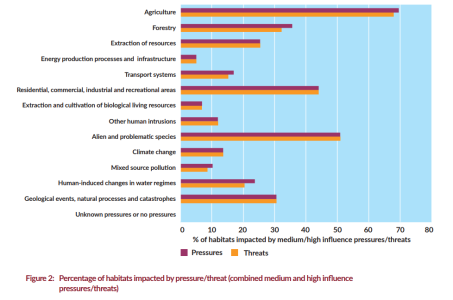
The report lays out the scale of Ireland’s biodiversity crisis. Around 85% of Ireland’s EU-protected habitats are in unfavourable condition. Agricultural land use is identified as the most prevalent pressure, affecting more than 70% of protected habitats, while forestry impacts around 35%. Despite the EU target to protect 30% of land for biodiversity, only 13% of Ireland’s land currently has protected status.
The report also calls for policies that “drive extensive peat soil rehabilitation and restoration to achieve long-term climate and biodiversity objectives”. Bord na Móna has rehabilitated approximately 24,500 hectares of peatlands yet only around one-quarter of Ireland’s peatlands are currently considered healthy enough to provide essential ecosystem services such as carbon storage, water filtration, and flood regulation. Unauthorised industrial-scale peat extraction has also been identified by the 2026 UN Special Rapporteur report as a significant driver of habitat loss and biodiversity decline. Ireland has also faced legal action before the European Court of Justice over failures to adequately protect peatland habitats under EU environmental law.
Forestry needs to be Nature Friendly
Afforestation is one of the report’s most ambitious sections. Ireland is currently planting only around 1,700-2,000 hectares of forest annually, well below the Government’s existing target of 8,000 hectares each year. Under the report’s “high ambition” pathway, planting would increase to 16,000 hectares annually until 2030 before rising to 25,000 hectares every year between 2031 and 2080. If achieved, this would result in approximately 2.3 million hectares of forestry by 2100, covering around 30% of Ireland’s land area.
To put that into perspective, planting 25,000 hectares annually would be roughly equivalent to repeating the total amount of afforestation achieved over the past nine years every single year.
Importantly, the report states that “productive conifer forests could deliver stronger climate mitigation out to 2050 compared with broadleaf forests but would deliver lower biodiversity benefits.” Ireland has historically lost much of its native woodland, and we continue to have one of the lowest levels of forest cover in Europe. The current forestry model dominated by non- native conifers places significant pressure on ecosystems and biodiversity. The coniferous forestry model has been identified as the leading pressure on Blue Dot catchments (Ireland’s most pristine waterways)-, sedimentation and acidification associated with plantation forestry can severely damage river systems. With Irish rivers already under serious pressure, and species such as Atlantic Salmon and Freshwater Pearl Mussels facing severe decline, any expansion of afforestation should prioritise native broadleaf woodland and diverse mixed-species forests, which provide significantly greater biodiversity benefits than commercial monoculture conifer plantations. Future forestry policy must also move away from continued reliance on large-scale commercial conifer plantations, given their well-documented impacts on biodiversity, water quality, and soil health.
Farming for Nature needs to be Incentivised and Rewarded
Several of the report’s modelled pathways also envisage a shift towards alternative land uses, including increased tillage, plant protein production, forestry, and bioenergy. Such changes could create more diverse landscapes and improve habitat connectivity, although they are likely to prove politically contentious as we can expect opposition centred on concerns about farm incomes, rural communities, and food security, despite the fact that around 90% of Ireland’s dairy production and approximately 90% of its beef production is exported. Reducing reliance on intensive livestock production would represent a positive shift for biodiversity, as intensive dairy farming remains one of the greatest pressures on Ireland’s rivers and freshwater ecosystems through nutrient pollution and agricultural runoff.
One possible pathway is described as “multifunctional land use based on extensive cattle systems”. It envisages lower stocking rates alongside payments to farmers for delivering ecosystem services. Significantly, it is also the only one of the five pathways that the report concludes would have a negative economic impact under current market conditions. At the same time, this pathway would deliver the greatest increase in High Nature Value farmland and ecosystem services. The report notes that these services “could become marketable in future, generating significant (diversified) income.” In other words, the biodiversity benefits are clear, but current markets and support schemes do not adequately reward them.
This reflects one of our key recommendations during the public consultation on Ireland’s draft Nature Restoration Plan: farmers must be properly incentivised and fairly rewarded for restoring nature on their land. Voluntary participation will only succeed if restoring habitats is economically viable. Existing agri-environment and eco-schemes remain underfunded and, as a result, are often underutilised. If Ireland is serious about delivering large-scale nature restoration on privately owned land, payments for ecosystem services and long-term financial support will need to become a central pillar of future land-use policy.
If Ireland is serious about delivering large-scale nature restoration on privately owned land, payments for ecosystem services and long-term financial support will need to become a central pillar of future land-use policy.
Water Quality and River Health needs to be urgently addressed
Water quality remains another major challenge. Around 46% of Ireland’s surface waters are in unfavourable ecological condition, while the Water Action Plan 2024 identifies agriculture as the most common and significant pressure, affecting more than 1,000 water bodies.
The report recognises that some of its more “efficient” pathways could reduce overall nutrient losses while maintaining agricultural output. However, it also warns that they could exacerbate localised water quality pressures through high stocking rates on dairy land. National averages may improve, but individual catchments could still face severe environmental pressures.
With yet another fish kill reported last week, it is more important than ever that the pressures facing our rivers, chief among them agricultural pollution, are addressed.
The State needs to lead by example on Public Land
Ultimately, around 80% of Ireland’s land is privately owned, and the report repeatedly identifies farmers and landowners as the “ultimate decision-makers”. Any large-scale transition towards nature-positive land use will therefore depend on incentives, agri-environment schemes, payments for ecosystem services, and long-term financial certainty, rather than regulation alone.
This was also one of the recurring themes during consultation on Ireland’s draft Nature Restoration Plan, where the State placed significant emphasis on voluntary participation while showing comparatively little ambition for restoring nature on publicly owned land.
Nature restoration anywhere is welcome. But one of the clearest messages from both the Nature Restoration Plan process and A Living Land remains unchanged: the State must lead by example. This was one of our key asks throughout the Nature Restoration Plan consultation. Public bodies, including Coillte and Bord na Móna, need refreshed mandates that prioritise nature restoration alongside sustainable production rather than commercial extraction. While private landowners require long-term financial certainty and stronger incentives to restore nature on their own land, the State should lead by example and demonstrate what ambitious restoration looks like on the land it already owns and manages.
Ambition to Action
A Living Land sets out ambitious possibilities for how Ireland could transform its landscapes over the coming decades. The real question is whether these possibilities can be converted into legislation, funding and binding policy. Given the report’s own disclaimer that none of its pathways have been adopted as Government policy, and the lack of ambition shown in Ireland’s draft Nature Restoration Plan, that remains very much an open question.
Nature & Society Need More Ambitious Nature Restoration
First published online: 10 July 2026
The National Restoration Plan represents a historic opportunity, as arguably the most significant piece of biodiversity legislation to bind Ireland in a generation. The destruction and degradation of the ecosystems around us threatens not just our beautiful wild species but our way of life. Ireland needs a National Restoration Plan that reflects the scale of that opportunity and the scale of the environmental crisis we face. At present, this draft doesn’t do that. We welcomed the opportunity to submit to the public consultation on Ireland’s draft National Restoration Plan, but we were disappointed by the contents and lack of ambition highlighted in the plan and we believe it risks falling short of what is legally required and ecologically necessary.
The section on marine life is hugely underdeveloped. No new measures to help with the restoration of marine ecosystems were highlighted and the measures that were listed are ones that are already occurring and have so far failed to effectively protect, let alone restore, marine ecosystems. Many of the schemes mentioned in the plan also end in a few years and there doesn’t appear to be any long term vision for the restoration of marine ecosystems, even though the legal requirements of the Nature Restoration Law are up to 2050.
While the land sections are more developed than the marine section, it still falls well short of what is needed to meet the ambitions of the Nature Restoration Regulation. Overall, the plan lacks the ambition required to restore nature at the scale of the biodiversity crisis. It fails to demonstrate how the State will lead restoration on public land, despite repeatedly stating that this will be the primary delivery mechanism. There is little detail on the long-term funding needed to restore habitats or to provide meaningful incentives for private landowners to participate. Finally, the plan lacks joined-up thinking across Government, with little integration between the National Restoration Plan and other key initiatives and delivery bodies, such as the proposed National Invasive Species Bureau, whose work will be essential if restoration efforts are to succeed.
Fin Whale. Photo: Mike Brown
The main shortcomings of the marine section of the plan are as follows –
Inaccurate estimation of coverage of marine habitats and lack of ambition for re-establishing habitats
The National Parks and Wildlife Service (NPWS) have grossly underestimated the area coverage of habitats included within the law. Having these low numbers then allows them to set the areas needed for restoration at much lower coverage than what is actually needed. These numbers undermine the entire concept of the Nature Restoration Law and what it is trying to achieve.
Countries are required to re-establish habitats where they have been lost and bring them back to a Favourable Reference Area (FRA). The plan has not set any reestablishment target for marine habitats and has set FRAs as their current (grossly underestimated) coverage. FRA for terrestrial habitats has also been set incredibly low and does not take into account the Commission’s guidance or the legal requirements of the NRR which states that comprehensive evidence from historical datasets, ecological needs, and expert opinion should be taken into account.
No clear pathway on how fisheries will be managed in Irish waters.
The last Article 17 Habitats Directive report listed 12 out of 14 marine habitats to not be in good ecological condition. One of the main pressures listed was fishing. From engaging with fishing communities, we know that many are asking for better (or any) management plans to be put in place for different species. This doesn’t appear to be happening and fishing communities, as well as civil society, know that this will result in a collapse in these species populations.
Currently fisheries are not effectively managed in protected areas. The system that is in place is complicated and it is extremely difficult to get information on how activities are assessed and managed. The plan states that a risk assessment is undertaken of fisheries around protected areas, but the last evidence online of this happening is from 2015. We have asked for clarity on this situation and for the process to be made transparent and available for the public.
No plans for Joint Recommendations in Irish offshore waters
Since Irish offshore waters are shared waters, Joint Recommendations through the Common Fisheries Policy are the only way to manage fishing activity in protected offshore sites. The plan offered an opportunity for the Irish Government to start documenting how they intend to initiate them. They did not do this. They stated that they will wait until they have decided on the percentage coverage of soft sediments that need to be restored before adding any more information on Joint Recommendations. There is no set timeline for when this percentage must be decided and no targets for the restoration of these habitats for 2030, so in essence we feel that this is a way to delay the process.
There are targets in the Nature Restoration Regulation to have restoration measures in place on 30% of reef habitats in bad ecological condition by 2030 and Ireland’s offshore marine space has several cold water coral forests within it. In fact the two largest protected areas designated in Ireland’s offshore areas have reefs as their qualifying interests, and yet the NPWS and the Department of Agriculture, Food and the Marine did not even attempt to document the steps they plan to take to effectively protect these areas. Aside from this being a failure to achieve the legal targets of the Nature Restoration Regulation, it will also stop Ireland from reaching the globally agreed target of having 30% of its waters designated as protected areas by 2030.
The main shortcomings of the land sections of the plan are as follows –
Public Land Contradiction
Throughout the process of preparing for this draft Nature Restoration Plan the government has consistently stated that restoration efforts will be led on public land. Civil society and academics have all agreed that the State must lead by example on the land it already owns and this was the main recommendation of the Independent Advisory Committee on Nature Restoration. In the Irish context, it is the only realistic route to delivering restoration at the pace and scale the law requires. Coillte and Bord na Móna are named in the plan as key delivery partners for restoration. On the surface, that sounds like a sensible idea as between them and other public bodies, the State controls somewhere in the region of 8–11% of the country’s land area, land that could be restored at scale without the years of negotiation that restoration on private land inevitably requires.
The problem is that neither body has actually been given the mandate to do it.
Coillte still manages roughly 73% of its estate as commercial conifer plantation, much of it Sitka Spruce. This model of forestry has consistently been shown to drive biodiversity loss, with sedimentation and acidification impacting rivers and streams, alongside the replacement of native habitats with monocultures. It makes little sense to expect Coillte to lead nature restoration while continuing to operate under a commercial forestry model that actively damages nature. The draft plan itself uses language that commits the company to nothing more than the suggestion that it “can contribute towards” national restoration targets.
Beyond the rehabilitation work Bord na Móna is already legally obliged to undertake under its EPA licence, the plan contains no additional commitment to restoring its land. This is despite EPA assessments indicating that around 70,000 hectares of Bord na Móna land requires rehabilitation if Ireland is to meet its climate targets for agriculture and land use by 2050.
The plan places the State’s two largest landowners, both of whom are still operating under legal mandates centred on commercial extraction, in charge of delivering nature restoration on their land. Under their current economic models, nature restoration will be little more than a side effect of business as usual. That is not a sustainable restoration model.
Private land restoration depends on farmers and landowners voluntarily participating in schemes that have historically been underfunded and poorly subscribed. Payments through ACRES and the Eco-Scheme are welcome, but they remain nowhere near sufficient to drive land-use change at the scale required. The draft NRP fails to identify any credible funding pathway capable of closing that gap.
That leaves public land as the one lever the State can pull without waiting for anyone else’s consent. It is land the State already owns, already controls, and could restore at scale if the political will existed.
Invasive Species are an afterthought
An example of how disconnected this draft is from wider Government policy is its treatment of the issue of invasive alien species.
Invasive species are now recognised as the second greatest pressure on Irish biodiversity, behind agriculture pressures. Ireland’s most recent Article 17 reporting identifies them as a major driver of biodiversity decline across threatened habitats. They are also one of the few pressures capable of actively undoing restoration work after it has already been completed, wasting both time and public money.
The Government has separately announced plans to establish a new National Invasive Species Bureau. You would expect a restoration plan drafted alongside that announcement to embed the Bureau as the operational backbone of Ireland’s invasive species response with clear responsibility, a binding national strategy and landscape-scale delivery programmes. Instead, the Bureau is not mentioned once, highlighting the lack of joint up thinking between departments on the matter of nature restoration and reducing the pressures nature faces.
The plan also misses another crucial opportunity: setting measurable national targets for invasive species control. Without clear objectives, delivery becomes almost impossible to assess. Targets should be established for priority invasive plants such as Rhododendron and Himalayan Balsam, alongside landscape-scale management targets for deer populations. Deer, particularly Sika and expanding hybrid populations, are one of the greatest barriers to woodland regeneration and habitat recovery in Ireland, yet they barely feature in the draft. Restoration cannot succeed if browsing pressure continues unchecked. Deer management needs to sit alongside invasive plant control as a core component of restoration.
Without a properly resourced, legally binding invasive species strategy underpinning restoration, a significant share of the investment made through this plan risks being undone before restored habitats have had the opportunity to establish.
Agricultural Pollution – The Nitrates Derogation
The Nitrates Derogation is a licence to spread more organic nitrogen per hectare on land than is routinely permitted under the Nitrates Directive. Organic Nitrogen is livestock manure applied to the land each year, including by the animals themselves. Under the Nitrates Derogation, roughly 7,500 Irish dairy farms are permitted to spread livestock manure at rates of up to 250 kg of nitrogen per hectare, well above the standard 170 kg limit established under the EU Nitrates Directive.
The consequences are well documented. Agricultural nutrient pollution remains the single biggest reason Irish rivers, lakes, estuaries, and coastal waters fail to achieve good ecological status under the Water Framework Directive. Dairy intensification since the abolition of milk quotas has measurably worsened water quality in catchments containing Special Areas of Conservation and Special Protection Areas designated precisely for the freshwater habitats this plan is supposed to restore.
Elsewhere, the draft NRP acknowledges that Ireland needs to identify and phase out environmentally harmful subsidies, pointing to more than €634 million annually in public expenditure considered likely to damage biodiversity.
The Nitrates Derogation, one of the policies most responsible for the continued decline of Ireland’s freshwater ecosystems, is missing from the Nature Restoration Plan altogether. There is no acknowledgement of the Nitrates Derogation, no commitment to phasing it down, and no indication that Ireland would oppose its renewal when it next comes before the European Commission.
The draft NRP cannot claim to provide a roadmap for freshwater restoration while remaining silent on one of the main causes of freshwater pollution. Ignoring the derogation is one of the clearest examples of the plan’s lack of ambition and its unwillingness to confront the policies driving biodiversity loss.
Lack of Clarity or Ambition
Despite containing more detail than the marine chapter, the terrestrial section still falls well short of the ambition needed to deliver nature recovery at the scale required by the Nature Restoration Regulation. Much of the chapter repackages existing schemes, strategies, and policy commitments rather than setting out genuinely new restoration measures, with many actions focused on developing further plans instead of delivering measurable ecological outcomes.
Ultimately, however, the biggest unanswered question is funding. Throughout the document there are references to existing schemes, future funding opportunities, and mechanisms yet to be developed, but there is no credible explanation of how restoration at the scale required by the Nature Restoration Regulation will actually be paid for. The plan requires long-term, dedicated investment to achieve its commitments. More fundamentally still, the draft lacks ambition and there doesn’t appear to be the cross departmental work and coordination that is needed in order to address the main issues impacting biodiversity.
Conclusion
Ireland is in the midst of a biodiversity crisis. Around 90% of our protected habitats are in unfavourable condition. We rank among the bottom 10% of countries globally for biodiversity intactness. Nature is on its knees. So why then are the NPWS and the Government departments responsible for this continuing to show little to no ambition when it comes to trying to bring back nature?
This should have been the moment for a bold restoration plan that fundamentally changes how the State manages land and invests in nature. Instead, too much of the draft is characterised by cautious language, voluntary measures, and an unwillingness to confront the policies driving biodiversity loss in the first place.
This Invasive Species Week, the Irish Wildlife Trust and Mary Reynolds are asking everyone to welcome native species into the garden instead of planting invasives
by Charlotte Salter-Townshend, IWT Communications & Network Officer
First published online: 25 June 2026
Invasive Species Week is coordinated by the National Biodiversity Data Centre (NBDC). As part of Invasive Species Week (22–28 June 2026), the Irish Wildlife Trust (IWT) is encouraging gardeners, landowners, community groups, and local authorities to take simple but powerful actions to help nature recover.
The message is straightforward:
Stop planting invasive species, including popular garden and hedging plants such as Cherry Laurel, Rhododendron, and Spanish Bluebell.
Be Plant Wise by choosing plants that support biodiversity and do not escape into the wild and harm biodiversity.
Let nature lead by allowing native plants already present in the soil to regenerate naturally.
If you are planting, choose native species and local provenance trees and hedging. IWT Monaghan collaborated with the Monaghan County Council Biodiversity Office to create Seeds of Inspiration, sharing practical expertise on how to collect and propagate local provenance seeds and share trees in your community.
Welcome nature back into your garden and watch wildlife return.
We are highlighting positive, practical actions that anyone can take, whether they have a large garden, a community space, a schoolyard, or even a small patch of lawn. To share this important message, we held a collaborative webinar with landscape designer, environmental activist, and founder of We Are The Ark, Mary Reynolds. Watch the webinar here.
Wild perennial borders with mown path. Photo: Claire Leadbitter
Invasive plants – what’s the damage?
Invasive plant and animal species are the second greatest driver of nature loss both worldwide and in Ireland, after habitat destruction (United Nations Environment Programme, 2023). An invasive species is a plant, animal, or pathogen that is brought into a new environment and which spreads quickly, causing harm to local nature, economy, or human health. They are found in our freshwater, the marine environment, and on land.
Not only do invasive species outcompete native species and displace plant and animal communities, they alter the very function of ecosystems and ecosystem services, with socio-economic ramifications and impacts on human well-being.
Most invasive plant species were first introduced for ornamental or hedging purposes. Now introduced plants outnumber native ones in the wild across Ireland. Of the almost 1,939 flowering plant species recorded in the wild in Ireland, there are more introduced species (987) than there are native species (952) (BSBI Plant Atlas 2020 press release).
What are the effects of this imbalance? The Botanical Society of Britain and Ireland (BSBI) Plant Atlas 2020 found that more than half of Irish native plant species have declined in range and abundance or both. By contrast, 80% of the species introduced into Ireland since 1500 have increased. Some of these are well-known invasive species such as Cherry Laurel (Prunus laurocerasus) and Japanese Knotweed (Reynoutria japonica).
Actions
Plants are both food and habitat for most of our land-based animals. By focusing on native plants and stopping the spread of invasives, we can rebuild habitats and biodiversity from the ground up, with cascade effects on the rest of our wildlife.
Key actions include allowing native plants to naturally regenerate and planting local provenance hedgerows and trees instead of introduced species. Below we share examples from our community and partners, including the IWT Monaghan Branch and Mary Reynolds (activist and founder of We Are The Ark), which can be readily replicated in your local area.
Be Plant Wise
Being plant wise means choosing the right plants for your garden (never purchasing or planting invasive species), keeping your plants in your garden (don’t allow them to disperse into the wild), and disposing of your unwanted plants responsibly (compost with care). See the NBDC Be Plant Wise page for details.
Looking for native substitutes for typical garden plants? Réabhlóid ar Chúl an Tí, a TG4 series hosted by Mary Reynolds and Aedín Ní Thiarnaigh, seeks to change the way we view our gardens by turning gardeners into guardians. The hosts visit a selection of Ireland’s suburban neighbourhoods, community centres, and schools and instigate change by adding in curated pockets of thriving, native plants in order to attract wildlife back into these spaces.
A reformed internationally recognised landscape gardener, Mary Reynolds has first-hand experience of the forces that push for sales of non-native plants when our own wildlife is under immense pressures on several fronts, including the spread of invasive plants.
Photo: Claire Leadbitter’s Irish forest garden
Mary advocates for a grassroots movement to restore our wild habitats.
She said:
“We have ripped nature apart, patch by patch. We have a lot of work to do. Patch by patch is how we stitch it all back together … We are the needle and native plants are the thread”.
On Reabhlóid ar Cúl an TÍ, Mary gives examples of how native plants transform sterile, lifeless lawns and schoolyards into thriving mini-ecosystems. She replaces non-native species with native ones (either from letting nature take the reins or helping along with local provenance seeds). Follow the series on social media for advice on replacing “this for that”.
If you like the feathery leaflets and white flowers of the False Acacia (Robinia pseudoacacia) tree (a popular garden plant from North America), why not try planting the native Rowan (Sorbus aucuparia) instead? It produced beautiful clusters of white flowers which are followed by the iconic red berries in autumn and winter. These berries feed a multitude of birds and mammals including Song and Mistle Thrushes, Blackbirds, and winter visitors like the striking Waxwing. Additionally, if you plant Rowan among your fruit trees it will help keep them free from disease thanks to the fungal community associated with its roots!
Seeds of Inspiration
When planting native species, it is important to source the seed from as close to your locale as possible. Hard lessons have been learnt (we hope) from the importation of plants from overseas. Fireblight, which infects trees and shrubs in the rose family, including Hawthorn (Crataegus monogyna), was introduced to Ireland via imported hedgerow plants. The Ash Dieback disease was introduced to Ireland when Ash trees (Fraxinus excelsior) were imported from the Netherlands. Hawthorn and Ash are both foundational keystone native trees and are present throughout the land. Ash Dieback and Fireblight are just two examples of needless and devastating introductions that will affect us for many years to come (just like the Dutch Elm Disease). But there is hope. Plants have a remarkable capacity to adapt thanks to their very high genetic diversity – for example, the Scot’s Pine (Pinus sylvestris) is eight times the size of the human genome. A small number of Ash have natural resistance to the dieback (Metheringham et al, 2025). This is why we need to protect young Ash trees, any of which may hold resistance in their genetic code.
Well-established, local provenance seed stock has adapted over generations to fit local micro-climates and microbiomes. Hence, plants sourced locally tend to thrive and form better connections with wildlife. When purchasing native trees, always ask if they have been grown locally. Or even better, try propagating your own trees.
Recently, the IWT Monaghan Branch and Monaghan County Council Biodiversity Office launched the Seeds of Inspiration project, sharing the practical expertise of John McKeon, a Castleblayney man who has spent 25 years growing, preserving, and championing Ireland’s native trees. Seeds of Inspiration encompasses several resources available on the IWT website and YouTube. A feature-length film captures John McKeon’s extraordinary work and dedication to preserving trees of Monaghan provenance. This is complemented by a series of short video guides teaching people how to easily propagate and grow individual native tree species from seeds or cuttings. An accompanying book is also available for free download in both English and as Gaeilge.
John McKeon, Seeds of Inspiration
John was an agriculture adviser for most of his career and in his own words he was responsible for advice causing a lot of environmental damage (such as removal of hedgerows to enlarge fields). Since retirement, he has taught himself to save seeds from wild trees around him in Co Monaghan and grow native trees. His life-long experience growing his own fruit and vegetables informed his technique and with some trial and error and a gardener’s patience, he has succeeded in developing remarkably high levels of success in propagating 20 native tree species. This includes classic hedgerow plants like Hawthorn (Crataegus monogyna) and Blackthorn (Prunus spinosa) as well as wonderful rarities such as Purging Buckthorn (Rhamnus cathartica) and Wild Privet (Ligustrum vulgare).
John has been quietly and steadfastly carrying out his work sourcing seeds in woodlands and country laneways, and propagating trees in his own and several borrowed gardens. It turns out a small patch of lawn can be converted into a tree nursery with dozens of saplings. What John has achieved is nothing short of remarkable. He has shown how we can turn around the consumerist mindset to work as a community and share our natural resources. The IWT Monaghan Branch together with the Monaghan County Council Biodiversity Office (with funding from the NPWS) have captured not only John’s practical advice but also a story to inspire us all. His methods of collecting local provenance seeds and saplings could be replicated across the whole island of Ireland. John’s call to action is to create a “land army” of gardeners growing native trees. If you love gardening and nature, what’s stopping you?
A closer look – Why are some plants invasive?
Specific insects, fungi, and herbivores have evolved to feed upon or infect plants within their native range. These are complex, long-established, balanced systems that keep populations in check. When plants are introduced to a new region, these natural controls are left behind, allowing them to grow without interference. Some native Irish plants are invasive elsewhere, e.g. Common Gorse (Ulex europaeus) in New Zealand, Chile, and even as far as the sub-Antarctic Falkland Islands (Islas Malvinas).
Some invasives, most notably Rhododendron ponticum, release toxins into the soil to inhibit the growth and germination of surrounding plants, clearing huge swathes of land for themselves. These toxins suppress competing plants by inhibiting seed germination and preventing the development of crucial mycorrhizal fungi on the roots of other plants (essentially starving them).
Winter Heliotrope (Petasites pyrenaicus), a highly invasive plant which spreads clonally in Ireland.
Invasive plants often produce massive quantities of seeds that are easily spread by the wind, birds, or human activity. A single mature Giant Rhubarb (Gunnera tinctoria) is hugely prolific, producing between 80,000 and 250,000 seeds annually, which are spread by birds. It also spreads rapidly through aggressive root systems (rhizomes), making them incredibly difficult to eradicate. Even tiny broken-off fragments of the rhizomes can sprout and reproduce. Seeds and plant fragments frequently fall into streams and rivers and are carried downstream to establish new colonies. Himalayan Balsam (Impatiens glandulifera) is another example of an invasive plant that spreads downstream along our waterways.
Some invasive plants are clonal and do not reproduce seed in Ireland. For example, all Winter Heliotropes (Petasites pyrenaicus) recorded in Ireland (and UK) are male. It spreads aggressively through a deep network of rhizomes, allowing it to return every year and form dense mats that outcompete other native flora. It is also a frost-tolerant early bloomer, soaking up sun and nutrients before other plants emerge later in spring. Ireland’s mild, wet climate is perfect for many invasive plant species. Our lack of freezing winters and consistent moisture allow these plants to thrive year-round, giving them a competitive edge over native flora that have evolved for distinct seasonal dormancy.
Ongoing research and monitoring of introduced plants in the wild is essential, as both environmental factors and plants themselves are constantly shifting. Climate change and the degradation of native habitats gives highly adaptable and resourceful species the chance to suddenly gain a foothold and become invasive species.
Resources
The National Biodiversity Data Centre (NBDC) coordinates Invasive Species Week. You can learn about invasive species in Ireland and other events happening this week here invasives.ie.
Visit the Irish Wildlife Trust website for practical guidance on native planting, local provenance trees, and the Seeds of Inspiration project – https://iwt.ie/seeds_of_inspiration/
Réabhlóid ar Chúl an Tí, a TG4 series hosted by Mary Reynolds and Aedín Ní Thiarnaigh, seeks to change the way we view our gardens by turning gardeners into guardians.
For information on invasive species including identification guides and other resources, see https://invasives.ie/resources/
Press Release: This Invasive Species Week, the IWT and Mary Reynolds are asking everyone to welcome native species into their gardens instead of planting invasives
Be Plant Wise. Let nature lead. Plant native.
25 June 2026
The National Biodiversity Data Centre (NBDC) coordinates Invasive Species Week. You can learn all about Ireland’s invasive species and events happening this week hereInvasive Species Week. As part of Invasive Species Week (22–28 June 2026), the Irish Wildlife Trust (IWT) is encouraging gardeners, landowners, community groups, and local authorities to take simple but powerful actions to help nature recover.
The message is straightforward:
Stop planting invasive species, including popular garden and hedging plants such as Cherry Laurel, Rhododendron, and Spanish Bluebell.
Be Plant Wise by choosing plants that support biodiversity and do not escape into the wild and harm biodiversity.
Let nature lead by allowing native plants already present in the soil to regenerate naturally.
If you are planting, choose native species and local provenance trees and hedging.
Welcome nature back into your garden and watch wildlife return.
Invasive species are recognised as the second greatest driver of biodiversity loss globally after habitat destruction. In Ireland, invasive plants continue to spread through our woodlands, wetlands, waterways, and countryside, displacing native species and altering entire ecosystems.
Many invasive plants were originally introduced for ornamental or hedging purposes. Today, introduced flowering plants outnumber native flowering plants recorded in the wild across Ireland. At the same time, more than half of Ireland’s native plant species have declined in range, abundance, or both.
Oisín O’Néill the IWT Nature Advocacy Officer explains:
“Plants are the foundation of our ecosystems. They provide food, shelter, and breeding habitat for countless species. By choosing native plants and avoiding invasive species, everyone can play a direct role in restoring biodiversity from the ground up.”
This week, the IWT is highlighting positive, practical actions that anyone can take, whether they have a large garden, a community space, a schoolyard, or even a small patch of lawn. To share this important message the IWT held a collaborative webinar with landscape designer, environmental activist and founder of We Are The Ark, Mary Reynolds. A link to this webinar can be found here.
For many years now Mary has been supporting communities and garden owners to welcome native plants into their garden and public space through the We Are The Ark programme. This work has recently featured through the TG4 programme Réabhlóid ar Chúl an Tí.
Mary added:
“We have ripped nature apart, patch by patch. We have a lot of work to do. Patch by patch is how we stitch it all back together. We are the needle and native plants are the thread.”
The IWT is encouraging people to think carefully about where their plants come from. Locally sourced, native trees and hedging plants are better adapted to local conditions and support stronger ecological connections with wildlife. Projects such as Seeds of Inspiration, led by the IWT Monaghan Branch in partnership with Monaghan County Council Biodiversity Office, are demonstrating how communities can collect, propagate, and share local provenance native trees for future generations. For more information on local tree propagation people can watch the Seeds of Inspiration documentary and short videos on the IWT’s YouTube channel.
This Invasive Species Week, the Irish Wildlife Trust is asking everyone to take a moment before planting and ask: Will this plant help nature, or harm it?
By being plant wise, embracing native species, and allowing nature to recover, every garden can become part of Ireland’s nature restoration movement providing a growing network of habitats for wildlife.
Learn more
The National Biodiversity Data Centre (NBDC) coordinates Invasive Species Week. You can learn about Ireland invasive species and other events happening this week hereInvasive Species Week.
Visit the Irish Wildlife Trust website for practical guidance on native planting, local provenance trees, and the Seeds of Inspiration project – https://iwt.ie/seeds_of_inspiration/
Réabhlóid ar Chúl an Tí, a TG4 series hosted by Mary Reynolds and Aedín Ní Thiarnaigh, seeks to change the way we view our gardens by turning gardeners into guardians.
For information on invasive species including identification guides and other resources, see https://invasives.ie/resources/
Oisín Ó Néill, Irish Wildlife Trust Nature Advocacy Officer, oisin@iwt.ie
About the Irish Wildlife Trust
The Irish Wildlife Trust was founded in 1979 as a charitable conservation body. We provide the public with information about wildlife, run education and training programs, carry out habitat and species surveys, campaign and lobby around biodiversity issues, restore natural habitats, consult with industry, agriculture, and Local Authorities to maintain our natural heritage, and contribute to national and international forums for the protection of biodiversity. The IWT is a nationwide organisation with a strong membership base and branches in Dublin, Kerry, Limerick, Waterford & Monaghan.
If you value our work, please consider supporting us by becoming a member
Ireland’s nature is in crisis and your voice can help change that.
Ireland is at a turning point for nature. Right now, the government is finalising its first-ever National Nature Restoration Plan — a legally binding roadmap that will shape how we restore our landscapes, waters, and wildlife all the way to 2050. This is a once-in-a-generation opportunity, and public submissions genuinely matter.
The consultation is open now. The deadline to have your say is 30 June 2026.
Why this moment is so important
Ireland is facing a nature and biodiversity emergency. 90% of our EU-protected habitats are in unfavourable condition. Half are actively deteriorating right now.
The EU Nature Restoration Law requires Ireland to submit a National Nature Restoration Plan to the European Commission by September 2026, setting out how we will:
Restore at least 30% of degraded habitats by 2030
Restore 60% by 2040
Restore 90% by 2050
The ambition and quality of that plan depends on public pressure. Every submission sent to the government sends a clear message: the people of Ireland expect a bold, properly funded, and fully accountable plan for nature’s recovery.
You are part of nature restoration. Make your voice heard.
Recommendations: what a good Nature Restoration Plan must include
1. An ambitious plan that meets Ireland’s legal obligations
Ireland must produce a plan that fully delivers on the targets set out in the EU Nature Restoration Law — not a minimum-compliance exercise. The plan must be ecologically meaningful, time-bound, and measurable, with clear targets for each ecosystem type.
2. Political leadership and a whole-of-government approach
Ireland will not meet its nature restoration obligations without stronger, coordinated governance at the highest level. The Taoiseach should lead a whole-of-government approach, supported by cabinet oversight, to ensure accountability across all departments, aligned funding, and the elimination of any public spending that actively undermines nature.
3. Sustainable, long-term financing
Restoring nature requires serious investment. Dedicated national funding must be established to deliver the Nature Restoration Plan through to 2050 and beyond. EU funding streams post-2027 must be fully aligned with restoration objectives and must not undermine nature protection. The Independent Advisory Committee on Nature Restoration has recommended a minimum investment of €700 million.
4. Unlocking the potential of public lands
Some of the greatest restoration opportunities in Ireland lie on publicly owned land. National parks, nature reserves, Coillte forests, and Bord na Móna bogs must be prioritised for ambitious restoration action. Many of our designated conservation areas are in poor condition and need urgent investment and management.
5. Empowering civil society
Communities, local groups, volunteers, and individuals must have a meaningful role in the planning and delivery of nature restoration — not just consultation. Civil society brings local knowledge, energy, and deep commitment. A strong plan will harness that.
6. Empowering our custodians — farmers, fishers, and foresters
The people who work our land and seas are essential partners in nature’s recovery. Farmers, fishers, and foresters must be empowered and fairly rewarded to lead from the front on restoration, through voluntary incentives, stable long-term funding, and schemes designed to deliver both environmental outcomes and resilient rural and coastal livelihoods.
7. No backsliding on existing environmental protections
The Nature Restoration Plan must sit within — and strengthen — Ireland’s existing environmental legal framework. Existing national and EU environmental law must be fully implemented. The Nature Restoration Regulation must be recognised as part of a broader framework that safeguards our ecosystems, climate, air, and water. There must be no weakening of existing protections in the name of flexibility.
8. An ecologically coherent network of marine protected areas
Ireland has vast marine territory and a legal obligation to restore our seas. The plan must include a genuinely ecologically coherent network of marine protected areas that covers our most important coastal and offshore habitats and delivers real protection for marine wildlife.
9. Prioritise the most threatened habitats and species
Not all habitats can be restored at once — but those in the steepest decline must be first in line. The plan must prioritise the habitats and species that are most threatened, most ecologically significant, and where restoration action will deliver the greatest benefit for biodiversity and people.
How to make your submission:
Step 1: Submit your views in one of two ways:
Online: Visit the public consultation page at gov.ie to access the submission form.
By email: Send your submission directly to nationalrestorationplan@npws.gov.ie
Step 2: Use the nine recommendations above as the basis for your response. You are welcome to adopt them as your own, add your personal experience of nature in your area, or raise any additional issues that matter to you — there are no restrictions on what you can submit.
Step 3: Submit before 30 June 2026 — then share this page and encourage your friends, family, and community to do the same. The more submissions the government receives, the stronger the signal that people across Ireland want an ambitious, funded, and accountable plan for nature.
All submissions are published and become part of the permanent public record. Your voice will be heard.
Why Ireland’s new Invasive Species Bureau must have teeth to be successful
By Oisín Ó Néill, IWT Nature Advocacy Officer
First published online: 18 June 2026
Over the June bank holiday, I travelled north from Dublin to spend a weekend in Donegal. I spent a misty afternoon hiking in the Bluestack Mountains (na Cruacha Gorma), a spectacular landscape of montane bogs and lakes. At one point I stumbled across and flushed a Snipe sitting on four stone-coloured eggs, moving a short distance away I watched as it eventually returned to its clutch. These glimpses of nature thriving tempered the sense of unease I had felt on the drive up from Dublin. After crossing the border from Fermanagh into Donegal, the road carried me through a landscape completely dominated and seemingly completely surrendered to the invasive plant Rhododendron ponticum.
Early June is when Rhododendron ponticum flowers, producing its bright pink blooms. The flowering made it easier to spot across the landscape as it stood out starkly against the light brown tones of the surrounding hills. As I scanned the horizon, I was completely shocked at the scale of this spread of Rhododendron. I drove through this ocean of pink for over twenty minutes before arriving in Donegal Town.
Rhododendron spread in Dublin Mountains. Photo: Aart Jonkers
In Cork I first heard the term “the green creep”, used to describe the spread of intensive cattle farming and the nitrogen-rich grasslands that accompany it into parts of West Cork that would not traditionally have supported such levels of cattle production. On seeing this spreading Rhododendron ocean, I immediately thought of a different phrase — “the pink creep”.
Isolated houses in this landscape are being encroached upon and surrounded by the advancing Rhododendron infestation. Sheep grazed amongst it, and in the far distance I could see young Rhododendron steadily making their way up mountainsides. As I hiked up to the summit of the Bluestacks, it was quite a foggy day with low visibility. On the descent the fog began to clear and I could see the Rhododendron invasion on all sides of the mountains, spreading out from a nearby nature reserve that appeared to have been surrendered to the alien invader years ago, and spilling from the grounds of Lough Eske Castle, an obvious contender for the local ground zero.
To me, it was like something from a plant-based horror film. Huge swathes of an entire county being swallowed by a monstrous pink plant with an endless appetite for conquest.
The effects of Rhododendron are well documented. Once established, it completely dominates a landscape. Bog, forest, and mountainside are all fair game. It forms dark, dense, impenetrable thickets, devoid of other plant life and entirely unpalatable to grazing animals. Once in place, it shades out everything beneath it, including life itself.
Native to parts of the Iberian Peninsula and the Black Sea region, genetic studies suggest Irish populations are largely derived from a hybrid mix of Iberian and Asian stock introduced through the horticultural trade, with this hybridisation likely contributing to the vigour and invasiveness that have made it such a successful coloniser. The first evidence of the plant becoming naturalised in Ireland dates from 1843, when it was documented in Derrycunnihy Wood, Killarney, Co. Kerry, almost certainly spreading from the gardens of Muckross House. On visiting the woods in August 1911 the International Phytogeographical Excursion noted that Rhododendron ponticum, while not native, “evidently feels quite at home here”. By the 2000s, Rhododendron was recognised as a major issue.
As I looked across the landscape in Donegal, I could not help thinking about the future. What will happen here? There were no visible signs here of any effort to fight back. Incredibly, the number of houses, hotels, and churches with mature flowering Rhododendron plants in their gardens make no secret of where these infestations originate. A single flower can produce as many as 7,000 seeds, while a large specimen can produce over one million seeds in a season, readily carried by the wind.
Rhododendron will not stop of its own accord. It is a greedy plant in the Irish landscape, one that happily dominates and casts out native plants, biodiversity and light. Left unchecked, we are looking at a future where vast swathes of land are surrendered to forests of Rhododendron. Hill farmers, lacking the time, energy or resources to fight its advance, will eventually be forced to forfeit their commonages to the advancing infestation. It is a bleak future, one that makes me shudder.
On the 19th of May 2026, the NPWS (National Parks and Wildlife Service) and the NBDC (National Biodiversity Data Centre) announced the establishment of an Invasive Species Bureau, a collaborative approach to tackling invasive species in Ireland. This is, of course, welcome news. However, the scale of the challenge facing this bureau is immense.
Minister of State for Housing, Local Government and Heritage, Christopher O’Sullivan stated:
“Left unchecked, invasive species are a major threat to nature and a threat to livelihoods. Our response to managing them must be based on early detection, public awareness, and collaboration – and backed by science.”
For landscapes like those I witnessed in Donegal, the response required goes far beyond public awareness and early detection. The infestation is already here and very visible.
What an Effective Bureau Must Look Like
The Bureau has the potential to be transformative — but only if it is built with the right powers and the right resources. A Bureau that functions primarily as a coordination and information body will not be sufficient. Ireland needs a Bureau with genuine operational reach. What is needed is an urgent landscape-scale management plan, with county-level targets set over five, ten, fifteen, and twenty years, dedicated funding streams and a locally based bureau officer overseeing the operation.
“What is needed is an urgent landscape-scale management plan, with county-level targets set over five, ten, fifteen, and twenty years, dedicated funding streams, and a locally based bureau officer overseeing the operation.”
Every county should have a dedicated bureau officer, with local management plans developed, infestations mapped, and funding ring-fenced through multi-year programmes. The Bureau should coordinate surveillance, oversee eradication projects, administer grant schemes for landowners and communities, and where necessary, enforce compliance. It should have the authority to issue remediation notices where invasive species are clearly spreading — from private gardens, hotel grounds, or otherwise. Under current legislation, the release and spread of listed invasive species is already prohibited. These obligations cannot remain merely theoretical.
Invasive species spread indiscriminately across Coillte forests, NPWS lands, private farms, and commonages. Coordinating these landowners and enabling joint action is essential if eradication efforts are to succeed — but coordination alone will not clear a single hectare. The Bureau needs teeth; the alternative is continued ecological decline.
Community-led projects such as Dúlra in Mayo and Galway, Killarney Mountain Meitheal, and the Gaelic Woodland Project along with similar groups in Donegal and Wicklow, show that people are willing to do this work. What they need is sustained support. Having spoken to groups carrying out invasive species removal across Ireland, what strikes me is how precarious many of these operations are. Some of the most effective groups — groups achieving real results on the ground — are relying on private funding simply to provide tools and basic equipment for volunteers. That is not a sustainable model for a national ecological crisis.
Rather than duplicating these local efforts, the Bureau should act as a coordinating and enabling body, providing multi-annual funding agreements, technical expertise, and strategic direction. Long-term funding allows organisations to retain skilled staff and plan landscape-scale projects — something that is simply not possible on short-term or ad hoc grants.
The Funding Gap
Between 2020 and 2024, approximately €2.7 million was spent on Rhododendron management in Killarney National Park alone, with close to 2,000 acres treated — yet there remains no cohesive national strategy for eradication. In 2022, the cost of eradication was estimated at €2,457 per hectare. Scale that across every affected county in Ireland and the figure runs to hundreds of millions.
The NPWS budget last year was approximately €100 million. While that represents significant public investment in nature, it must be seen in the context of what is needed. Invasive species alone — one pressure among many — require sustained, multi-decade intervention at landscape scale. There must be massive and sustained increases in funding if Ireland is to have any realistic chance of turning the tide. A Bureau established on the basis of existing Heritage Council and NPWS funding arrangements, without additional dedicated resourcing, will not be equal to this challenge.
Transparent accountability is also essential. The Bureau should publish annual county-by-county reports detailing infestations mapped, hectares treated, expenditure, and progress against targets. In the case of Rhododendron ponticum, annual maps should show areas cleared and areas of new spread. Without this, it will be impossible for the public, landowners or policymakers to know whether Ireland is winning or losing this battle.
Invasive Species and the Nature Restoration Plan
Invasive alien species now rank as the second most significant pressure on Ireland’s protected habitats, affecting 51% of Annex I habitat types according to the 2025 Article 17 report. Yet Ireland’s Nature Restoration Plan (NRP) so far contains no dedicated invasive species strategy, no binding eradication targets, and no coordinated governance structure to deliver landscape-scale management. This is a critical and legally significant omission.
The Nature Restoration Law requires Member States to actively restore degraded ecosystems across forests, peatlands, rivers, wetlands, grasslands, and marine habitats. Invasive species represent one of the most consistent barriers to that restoration. Attempts to restore native woodland will fail if Rhododendron or Cherry Laurel continue to suppress regeneration. River restoration projects can be undermined by invasive riparian plants. Peatland recovery can be compromised by invasive vegetation. Restoration measures will fail to achieve their objectives where invasive species continue to suppress native habitats and threaten protected species.
Ireland’s Independent Advisory Committee on the Nature Restoration Law was unambiguous on this point: restoring habitats while ignoring invasive species produces poor outcomes. Long-term restoration requires long-term invasive species management, not one-off interventions. And restoration funding must support invasive species control where it contributes to ecological recovery.
The Bureau’s forthcoming National Invasive Species Management Strategy must be fully synchronised with the Nature Restoration Plan. These cannot be treated as separate policy areas. The logic is straightforward: control leads to recovery, and recovery enables restoration. Without addressing invasive species, Ireland’s restoration ambitions will remain only ambitions.
A Call to Action
Ireland’s Nature Restoration Plan is currently open for public consultation. This is a critical opportunity to ensure that invasive species management is treated as the central restoration priority it needs to be. If you are concerned about the scale of the invasive species crisis — whether you have witnessed Rhododendron spreading across Donegal hillsides, seen Japanese Knotweed encroach on a riverbank, or watched Himalayan Balsam take over a wetland — now is the time to say so. Submissions calling for a dedicated invasive species strategy, binding eradication targets and adequate resourcing will send a clear signal to the Government that this issue cannot be left to the margins of the restoration plan. Make your voice heard.
Conclusion
The establishment of an Invasive Species Bureau is a welcome development. The question is no longer whether Ireland should have one — that debate is over. The question now is whether it will have the authority, resources, and operational reach to meet the scale of the challenge.
Minister O’Sullivan has said:
“One of my top priorities for the Bureau will be to develop an Invasive Species Management Strategy and support its implementation. This will provide us with solid data, co-ordinate key agencies and stakeholders, and unlock the power of citizen science so that we can spot these species early and stop them from spreading.”
That strategy must include measurable national targets, annual reporting requirements, and publicly accessible progress metrics. It should set out clearly how Rhododendron ponticum and other invasive species will be systematically reduced and ultimately eradicated across the island over the coming decades. There is no reason for a brand-new bureau to lack ambition.
Unless the State significantly expands its intervention — with dedicated funding, operational powers, and a long-term commitment — invasive species will continue to spread, damage native habitats, undermine restoration efforts, and alter Ireland’s landscapes beyond recognition. The Bureau is a promising start, though it is only one early step in a long journey ahead.
If you value our work, please consider supporting us by becoming a member
Further Reading:
Department of Housing, Local Government and Heritage (2026) Minister O’Sullivan announces new approach to tackling invasive species in Ireland. Published 19 May 2026. Available at:Department of Housing Press Release
Woodworth, P. (2019) ‘Rhododendron: An ecological disaster in Killarney National Park’, The Irish Times, 18 May 2019. Available at:The Irish Times Article
Ryan, R. (2022) ‘Rhododendron removal costs estimated at €2,457 a hectare’, Irish Examiner, 16 March 2022. Available at:Irish Examiner Article
Irish rivers remain at the mercy of the island’s largest source of water pollution and greenhouse gas emissions: the agricultural sector, particularly the intensive dairy industry. In 2023, agricultural interests lobbied aggressively in Europe to retain Ireland’s nitrates derogation — effectively a licence to continue polluting at levels beyond standard EU limits. The EU Nitrates Derogation allows Irish farmers to stock animals at higher densities — up to 250kg of livestock manure nitrogen per hectare, compared with the standard EU limit of 170kg/ha. Ireland now holds the ignominious distinction of being the only EU member state still operating under this exemption. The derogation weakens the intent of the EU Nitrates Directive, a vital measure designed to protect rivers, lakes and groundwater from pollution caused by excessive agricultural nutrients.
The Environmental Protection Agency (EPA) has repeatedly highlighted the deteriorating state of Irish water quality. Recent assessments show that around half of Ireland’s rivers and two-thirds of its estuaries are polluted. Agricultural nitrogen from slurry, manure and chemical fertilisers remains one of the principal causes of this decline. The Irish public overwhelmingly support clean, healthy waterways. Polling by Ireland Thinks at the time found strong public backing for protecting water quality, with most respondents opposed to Ireland seeking a further nitrates derogation. Yet the dairy industry got its way. In exchange, Ireland has received rivers choked by agricultural runoff, waterways rendered unsuitable for swimming or drinking, and landscapes increasingly dominated by nutrient pollution. The beneficiaries are export-driven dairy and beef industries that continue to sacrifice the ecological health of Irish rivers in pursuit of ever-higher yields.
In the 2026 Community Conversations on the Nature Restoration Law, clean water emerged as the primary concern, with communities calling for urgent action to restore Ireland’s rivers, lakes, and coasts. Yet despite these concerns, Irish river quality continues to decline. Many water bodies are in deteriorating ecological condition, with Lady’s Island Lake in Wexford and Lough Neagh among the most visible examples of ecosystems severely damaged by nutrient pollution and agricultural runoff. As for fish kills, what happened on the River Glyde is sadly not unusual. Excessive nitrate pollution drives eutrophication, a process in which nutrient enrichment fuels algal blooms and excessive plant growth. When these blooms die and decompose, oxygen levels collapse, often causing mass fish mortalities.
Five dead brown trout, three dead salmon. Photo: Inland Fisheries Ireland.
In 2025, the Munster Blackwater suffered a major ecological disaster, as many as 40,000 fish were killed in a single pollution event. While 66% of waters within the Blackwater catchment retain High or Good status, nitrate concentrations remain persistently elevated. Long-term nutrient enrichment had already weakened the river system. Whether the final trigger was wastewater, industrial discharge, accidental pollution, or environmental conditions such as warm temperatures and algal die-off, the result was catastrophic. No definitive source was ever identified and no prosecution followed.
A major report by Inland Fisheries Ireland examining fish kills between 1969 and 2022 paints a deeply troubling picture. Fish kills occurred in every county in Ireland during that period. Hotspots were concentrated in the east, south and north midlands, overlapping with areas of intensive agriculture and large urban centres. Most significantly, agriculture was identified as the single largest cause of fish kills, accounting for 23% of all recorded incidents. This was followed by eutrophication (13%), industrial pollution (12%), municipal sources (8%), mining (3%) and construction (2%).
What happened in Louth should be called what it is: ecocide. IFI stated: “The source of the pollution has been identified as an agricultural discharge, and has been stopped.” Prosecution must follow. But accountability for individual incidents is only part of the solution. The deeper problem is systemic. Ireland’s rivers continue to be degraded by a model of agricultural production that places short-term economic output above ecological health. Our rivers are not expendable. They are the lifeblood of our landscapes, ecosystems and communities. How much longer will this continue? How much longer will the Irish public — who consistently express support for clean water and healthy rivers — be forced to watch as powerful agricultural lobby groups travel to Brussels seeking exemptions from environmental protections?
The River Glyde fish kill is not an isolated tragedy. It is another warning.
References
An Taisce (n.d.) EU Nitrate Derogation Decision: A Bad Day for Irish Waterways. Available at:An Taisce
Press Release: River Glyde Fish Kill Exposes Ongoing Failure to Protect Ireland’s Waterways
Irish Wildlife Trust calls for prosecution and urgent action to address agricultural pollution
5 June 2026
The Irish Wildlife Trust has expressed outrage following confirmation of a devastating fish kill in the River Glyde, Co. Louth, where more than 20,000 fish have died, including Minnows, Sticklebacks, Salmon, Eels, Brown Trout, Roach, and Pike. Inland Fisheries Ireland (IFI) has confirmed that the source of the pollution was an agricultural discharge.
Commenting on the incident, Oisín Ó Néill, Nature Advocacy Officer with the Irish Wildlife Trust, said:
“What happened on the River Glyde is an environmental catastrophe and an absolute disgrace. More than 20,000 fish have been killed and a river ecosystem has been devastated. The source has been identified as an agricultural discharge. Those responsible must be held fully accountable and prosecution must follow.”
For anyone concerned with the health of Ireland’s rivers, fisheries, and natural environment, the scale of this incident is appalling. Unfortunately, it is not surprising.
Ireland’s rivers remain under intense pressure from agricultural pollution, particularly nutrient runoff associated with intensive livestock farming. Despite repeated warnings from the Environmental Protection Agency (EPA) about declining water quality, Ireland continues to operate under the EU Nitrates Derogation, allowing significantly higher livestock stocking rates than the standard EU limit.
The consequences are increasingly evident. EPA assessments show that around half of Ireland’s rivers and two-thirds of its estuaries are polluted, with agricultural nitrogen among the principal causes. Communities across Ireland have repeatedly identified clean water as a top environmental priority, yet river quality continues to deteriorate.
The River Glyde disaster is not an isolated incident. A major IFI report on fish kills between 1969 and 2022 found that agriculture was the single largest cause, accounting for 23% of all recorded fish kills nationwide.
What happened on the River Glyde is symptomatic of a wider, systemic failure to protect Ireland’s waterways.
Ó Néill added “This incident is the predictable consequence of a system that continues to place the economic interests of intensive agricultural production ahead of the health of our rivers. Ireland holds the shameful distinction of being the only country in the European Union still operating under a nitrates derogation, permitting higher levels of agricultural pollution than are allowed elsewhere in the EU. The Irish public overwhelmingly support clean water and healthy rivers. Yet they are forced to watch powerful agricultural lobby groups travel to Brussels to demand exemptions from regulations designed to protect our environment. The price is being paid by Ireland’s rivers with worsening water quality, repeated fish kills, and freshwater ecosystems pushed closer to ecological collapse. Unless Ireland takes decisive action to tackle agricultural pollution and restore freshwater ecosystems, incidents like this will continue to happen.”
ENDS
Media Contact: Oisín Ó Néill, IWT Nature Advocacy Officer, oisin@iwt.ie
Image: Deceased salmon recovered from River Glyde by IFI (Inland Fisheries Ireland) staff
If you value our work, please consider supporting us by becoming a member
‘Seeds of Inspiration’ is a feature length documentary and booklet (available in English and Irish) showcasing the extraordinary dedication of Castleblayney man John McKeon, who over the past 25 years has committed himself tirelessly to the growing, preserving, and celebrating of Ireland’s native trees, with particular attention to those of Monaghan provenance.
In addition, John with the support of the Monaghan Branch of IWT has created short videos on how people can easily grow individual native tree species from seed or in some instances, cuttings. These short videos are available on the IWT YouTube channel (playlist link below).
Monaghan is a county whose landscapes and communities are enriched by the quiet presence of woodlands, hedgerows, and solitary trees that have stood for generations.
In the face of a global biodiversity crisis, escalating climate change, widespread habitat destruction and catastrophic plant diseases, the value of our native tree species has never been more important. Each Oak, Birch, Hazel, and Rowan provides food, shelter, and continuity for countless species, forming ecosystems that sustain birds, insects, mammals, fungi, and people alike.
John’s work stands as a testament to what one person’s passion can achieve for the wider community and for the generations yet to come. Every sapling he has nurtured, every seed he has sown, is a gift to our landscapes and to the species that depend on them. His example reminds us that biodiversity is not an abstract concept, but something deeply personal, local, and profoundly connected to our daily lives.
This project was born from the desire of the Monaghan Branch of the Irish Wildlife Trust and the Monaghan Biodiversity Office to preserve John’s legacy. The initiative was made possible through generous funding from National Parks and Wildlife Service under the Local Biodiversity Action Fund, with additional support from Monaghan County Council and the Irish Wildlife Trust.
If you value our work, please consider supporting us by becoming a member
Three actions you can take to save marine life this May
First published: 08 May 2026
The Irish Wildlife Trust is a proud founding partner in the Fair Seas campaign. Our aim is to see Ireland become a world leader in marine protection, giving our species, habitats and coastal communities the opportunity to thrive. Key to this is the creation of a network of ecologically coherent Marine Protected Areas (MPAs). For decades, successive governments committed to having a representative network of MPAs. Unfortunately, we are still waiting. Ireland’s marine wildlife and ecosystems are under increasing pressure. Enough is enough. This May, we are asking you to support the call to protect our seas. Here are three key actions you can take to take action for marine life:
One: On 21 May at 11am, we will hold a Rally For Ireland’s Seas outside Leinster House. This is a chance for our community to come together in person and take action. We’re demanding the urgent publication of long-promised MPA legislation, and real progress on the effective designation and management of protected areas at sea. Come along and make some noise!
Two:Fair Seas launched an online tool that will allow you to write directly to Taoiseach Mícheál Martin and relevant ministers to tell them enough is enough. The seas around Ireland, and the communities that rely on them, can wait no longer. New MPA legislation must be prioritised and progressed urgently.
Three: Join the gathering at the Fair Seas World Ocean Week Conference. Leading scientists, community leaders and advocates will showcase best practice and strong case studies of successful ocean management. Our Marine Advocacy Officer, Grace Carr, is among the speakers. Places are filling up but there are still a few spots available.
If you value our work, please consider supporting us by becoming a member
IWT welcomes Commission action against Ireland over failure to designate protected areas at seas
IWT Press Release
06 May 2026
The European Commission has sent a letter of formal notice to Ireland over its failure to designate protected areas at sea. Ireland has two months to provide a satisfactory response before the Commission decides whether to issue a reasoned opinion.
Grace Carr, Marine Advocacy Officer says,‘Irish peoplehave been fighting for better protections in Ireland’s marine area for decades. Our current MPA network is not sufficient in size and the areas we do have designated are not being effectively managed and so the vast majority is not in good condition. Aside from Ireland’s failure to comply with EU Nature laws, we are also still waiting for national MPA legislation to help us meet the global targets set for marine conservation and finally turn the tide for our struggling seas. We have highlighted these shortcomings with the European Commission on a number of occasions and we are happy to see the Commission taking actions to hold the Government accountable. We are already decades behind in conserving nature, there is no more time to delay.’
Previous cases against Ireland over its failure to protect nature
This isn’t a new issue. The European Commission initiated infringement proceedings to Ireland in 2015 over its failure to designate Special Areas of Conservation under the EU Habitats Directive. The results of this case were finalised in 2023 and Ireland was found guilty of failing to put in place site specific conservation objectives and management measures for protected areas. Without setting these objectives for an area and putting in place measures to reach these objectives, the area is effectively a ‘paper park’. This lack of management and Ireland’s failure to protect nature was confirmed when the latest Article 17 report was released in December 2025. 90% of Ireland’s ‘protected’ habitats were found to be in bad or inadequate condition. It’s more than frustrating that we are in 2026 and Ireland is still failing to protect nature and failing to even designate areas at sea for protection.
Contents of new proceedings against Ireland
This new letter from the Commission highlights that Ireland has failed to propose new marine Sites of Community Importance (SCI) and Special Protection Areas (SPA) in coastal and offshore areas. The Commission had agreed with Member States that an ecologically coherent network of marine protected areas should be in place by 2012. It also states that new SCIs for reefs, sandbanks, bottlenose dolphins and harbour porpoise need to be established. Reefs were classified as being in bad ecological conditions in the latest Article 17 report and sandbanks were classified as being in favourable condition (however, the roll out of offshore renewable energy around Ireland’s coasts is likely to cause significant pressures to this habitat type). SCIs are not fully established protected areas, they are the first step towards designating an area as a Special Area of Conservation (SAC), so this highlights how far behind Ireland is.
The letter also highlights Ireland’s failure to designate SPAs for eight bird species listed in Annex I of the Birds Directive and eleven migratory birds which are regularly found in Ireland.
Over the past decade, monitoring has improved in Ireland’s marine areas, but the delay in taking action with the data available is unacceptable. Ireland is pushing forward with offshore renewable energy and this is something that cannot occur without first designating areas which should be protected for vulnerable marine species and habitats. This is something that Irish citizens, scientistsand industry have been calling for for years and yet the Government continues to drag its heels. National marine protected area legislation is still being prepared and a first draft of the Bill has yet to be released. This new Bill must ensure that an inclusive approach to designating and managing Ireland’s marine space is taken so that we can finally achieve an ecologically coherent network of MPAs that protects and restores marine ecosystems and those who depend on them.
Grace Carr questions, ‘With infringement proceedings happening again so many years after deadlines have passed for designating protecting areas, it makes you question what the Government’s priorities are and if they have any intention of ever effectively protecting the land and sea that protects us.’
ENDS
Media Contact: Grace Carr, IWT Marine Advocacy Officer, grace@iwt.ie
If you value our work, please consider supporting us by becoming a member
Nature Connection: winning entries of the members-only writing competition
First published: 17 February 2026
After the fox hunt, by Enagh Farrell (2025/2026). Watercolour and pencil.
A growing body of scientific studies show that we benefit physically, mentally, and socially from nature connection. Unfortunately, a recent analysis of 61 countries found Ireland to be one of the least nature-connected nations in the world. We must restore not only habitats, but also our relationship with the land and sea.
A powerful way to build communities for nature is through nature writing. At the end of 2025, we invited IWT members to submit their reflections under the theme “Nature Connection” in a short-essay format. We received a wonderful response with a range of interpretations on the theme. The judges enjoyed reading each one and would like to thank every one of our members who submitted a piece. Here follow our top three picks, along with illustrations by Enagh Farrell.
Meeting at the hide, by Anthea Lacchia
At 8pm, a special sense of calm descends upon the hide. Deep in the marsh, where the forest meets the sea, all is quiet, save for the faint rustle of birch and alder branches in the breeze.
As dusk gives way to moonless night, the marsh starts to stir. A flash of red passes through the reeds, and a water rail peers out.
“The coast is clear,” he squeals.
Two moorhen, followed by a coot, waddle across the wet mud, making their way to the hide. Little egrets follow suit, followed by grey herons. Then, songbirds. Long-tailed tits perch on the boardwalk’s edge, waiting for the raven to appear.
“Evening,” he croaks. Unpicking the latch with ease, he nudges the door open with a flick of the beak. The birds enter and proceedings can begin.
“No two ways about it. Too many humans,” grumbles the grey heron.
“Aye. Our usual patch is empty this year. No voles to be had. Another hungry month… How am I to feed my young’ins?” cries the marsh harrier.
The kestrels clamour in assent. The greenfinches start to screech, declaring “too many huuumans” with aplomb, and, soon, the water rails join in, in deafening unison.
“Order! ORDER!” bellows the bittern.
“Shhhhh! Everyone! Who goes there?” hoots the barn owl, as he slowly turns his head to face the hide door.
Suddenly everyone goes quiet. A red paw gingerly opens the door and two yellow eyes stare inside. It is a fox, followed by two badgers, a red squirrel, and a hare.
Fluttering gasps fill the air.
“What are you doing here?” asks the grey heron. “This meeting is for birds only.”
The little egrets start to jitter nervously towards the back of the hide, as the rest of the birds stare warily at the new arrivals.
“Let’s hear what they have to say,” croaks the jay.
All eyes are on the hare, who has stepped forward.
“My friends,” he says, “we may be different, but we are all united by a common purpose – to live in harmony.
“I bring you tidings of hope: we believe humans are finally seeing the light. I come from the north, where new nature reserves are allowing us to move freely. And to the south, our red squirrel comrades tell me that more forests and hedgerows are providing food and shelter.”
“Rewilding is bringing life back to the lands we once roamed. Insects are multiplying, local streams are filling with minnow, and many soils are full of worms.”
The red squirrel smiles and nods. The long-tailed tits start to chatter excitedly.
The kingfisher flies forward with a flash of blue.
“Thank you, dear hare” she says. “It will take time, but, with our help, humans can recover too. Actually, I have a suggestion, non-avian friends: will you join our future meetings? In time, we can invite a human representative too.”
“Now, that is a vision of hope,” croaks the jay.
Twenty-four hours on the bog, by Margaux Pierrel
With a timeless magic, the dewdrop turns the bog alive.
Particles of water, delicately taking shape on a spider web, weaved by ancestral skills. The arachnid approaches, trembling on her frail palace. She drinks and returns to her long wait. As the horizon cloaks itself in a gold-laced cape, the birds awake and the heather shimmers, in an explosion of noise and glitters. The cuckoo, the lark, the stonechat, the curlew. The plover, the warbler. And the most magnificent of all, the hen harrier. A tear drops down my cheek, fusing with the dew, as she rises over the marsh. She prepares for her hunt, eyes of gorse, feathers of heath. Her glide is impeccable, an ephemeral beauty, a reminder of hope for my heavy heart. She dances with her partner for a minute, or a century, agile, acrobatic, astonishing.
Midday comes and with it a new splendour. The zenith sun melts the bog into a glary dream. Perfumes elevate – myrtle, sphagnum, bedstraw. I gaze afar for a while. A graceful hare suddenly materialises himself, wise elegant silhouette of bronze, only two large ears breaking the line of the land. A crack. A twitch. A bolt. Gone forever. The place grows quieter, as if taking an afternoon nap. I lift my head and look up. Imperceptible winds move thin clouds north, outside of view. Tiny passerines crisscross the blue sky at irregular intervals, from invisible perch to invisible perch. Nothing interrupts the silent torpor, except perhaps the buzzing of bees in the nearby woodland, foraging nectar off the willow catkins.
The afternoon stretches, slowly turning into evening. The ground feels colder, and with it I. The dusk chorus eventually starts, gentle, soft, grateful, thanking the day that’s been rather than welcoming it in fanfare. I have always preferred that time of day, when the wind falls, the scents linger and the eyesight looks for familiar shapes in the increasing darkness. The full moon rises as the last lights fade. It shines its gloomy rays on the bog, reflecting on every pond, puddle and droplet. A ghostly shadow hovers the land, talons out, all ears for who may lay under the dry heather branches. I cannot hear a single rustle of its pale cotton wings. Glimpses of swooping bats soon become the only thing I can distinguish against the stellar deep blue. A snipe drums in the distance. Then all is hushed, a peaceful, late-night perfection.
[The dogs’ bites had cut deep in my side and leg. My matted red fur is encrusted with dry blood. Streams of the scarlet liquid, now a dark cobalt under the moonlight, had flowed to a nearby bog pool. As the dewdrop begins to form on my shivering coat, I lay my head on my paws, finally at rest.]
Nature Connection, by Helen Wallace
My Dad is not a very ecological man, but he loves wildlife of all kinds, even if he can’t remember the names. One of his daily joys is to feed the birds, or any visitor to the garden: foxes or stray children. When I was 8 or 9, feeding the birds was added to my list of morning jobs, it was only then I started to note the birds that appeared each day on their own schedule to fill up – and so began my first nature ritual. Slowly the number of birds and feeders grew, then they had to be refilled after lunch. My parents had a fight about the cost of bird food, but as it was “less than the cinema” it could go on. So Dad continued to share with me his ways of caring for nature: buying dog food for a hedgehog and building it a little log pile. Planting nettles in the corner for butterflies. Leaving out dead mice for the kestrels.
A few years later, a pheasant appeared by the feeders, pecking over the leftovers on the ground. The next day a special pile was left for this wild gent. From there the ritual evolved, the pheasant would sit on the ditch and call, Dad would hurry out with a handful of seed to deposit before retreating to watch ‘his friend’. Some weeks into this dance of call and feed. The call went out, the food was deposited, but looking out the window, it was not just Mr. Pheasant in the garden. There perched elegantly on the swing set were 3 fledglings and the father strutting around as if to say “look what you helped rear”. They continued to visit sporadically, before disappearing as most wild animals do. Dad kept the gap in the hedge clear, should they return.
Sometimes the rituals were less happy; when we were driving down a road and a sparrowhawk darted out of the hedge, hitting the car. We stopped, Dad found it lifeless, he tenderly placed it in the ditch. “Didn’t see it coming” and that was it, till Sunday when an extra candle was lit at mass. A year on, in spring, a pond was constructed. At first only birds came. Then a nebula of frogspawn bobbed to the surface. Their progress was monitored and a ramp for safe exit created. As they hopped about perhaps the strangest of Dad’s nature rituals was born: getting my mother to walk in front of the lawn mower brushing the grass with a stick to frighten the froglets away. Now I still have the morning job of feeding the birds. I build the log piles. I notice the fledglings in the spring. For sure there are lots of ways to connect with nature; you can count and list, travel to see rarities. It can be as simple as making your own little caring rituals and nature will slowly grow into your way of going about it all.
Homeless, by Enagh Farrell (2022). Pencil and watercolour.
If you value our work, please consider supporting us by becoming a member
Places to Connect: Vale of Clara Nature Reserve, Co. Wicklow
By Kieran Flood, IWT CEO
First published online: 21 January 2026
Twisted boughs of Oak overhang the Avonmore River.
In this new series of articles, we will share recommendations of nature reserves and wild areas where you can go to connect with nature. Spending time outdoors in wild, functioning ecosystems allows us to strengthen our relationship with the natural world, of which we are part. Modern human lifestyles force us to live disconnected from nature in sterile environments, often spending large amounts of time indoors, interacting with computers and other in-organic devices. Nature is made up of messy and complex systems; by spending time outdoors among the beautifully diverse and inter-related species found in a healthy ecosystem, you may find that you develop a sense of awe and wonder as you tune into the natural world. This reconnecting with nature can benefit your wellbeing and develop your understanding of your local landscape.
At the IWT we want to support our community to spend more time outdoors in nature and we hope this series of articles will inspire you to get out and reconnect.
Our Autumn Recommendation
We’ll cover all four provinces in this series, and we begin with a recommendation of a native woodland on the east coast – the Vale of Clara Nature Reserve, Co Wicklow. Clara Vale is a state-owned nature reserve established in 1983 and is described by the National Parks and Wildlife Service as “a large area of fragmented oak-wood. It contains the largest area of semi-natural woodland in Co. Wicklow and is potentially one of the largest stands of native hardwoods in the country. The area has been at least partially under woodland since the Ice Age. The oak-woods are also of high scenic value.”
“Clara Vale Nature Reserve is nestled in a wooded valley along the banks of the Avonmore River”
Clara Vale nature reserve is nestled in a wooded valley along the banks of the Avonmore River. The woodland stretches from just outside Rathdrum village north-west toward Clara Bridge. Within the nature reserve you can walk along the banks of a flowing river, under giant, awe inspiring oaks that tower above, clad in mosses, ferns and lichen. While some monoculture planting still remains, the site has large areas of old oak woodland, as well as younger emerging woodland and wet woodland. The main path follows the course of the Avonmore, allowing you to take in the sights and sounds of the river as well as the woodland. Species such as Red Squirrel (Sciurus vulgaris) and Jays (Garrulus glandarius) can be seen in the woodlands, Dippers (Cinclus cinclus) forage in the river, while rarer species such as Woodcock (Scolopax rusticola) have been recorded here.
Fraocháns, oak galls and fungi are all easily visible here. Fraocháns are wild blueberries that often grow in the understory of oak woodlands on the east coast. Oak galls are growths found on oak leaves and are the product of gall wasps that rely on oak trees to complete their lifecycle. The gall wasp larvae live inside the gall protected by its growth. Fungi, found through the woods, feed on and break down deadwood, releasing its nutrients and allowing for new plant growth.
“Woodland keystone species, supporting whole networks of life among their towering, twisting boughs.”
To visit the nature reserve in autumn is a beautiful experience – the mix of trees turn warm golds and reds and the smell of fallen leaves fills the air, while mushrooms can be seen popping up as symbols of the dynamic process at play under your feet. On a recent visit I encountered quite a number of oak seedlings pushing through the ground. Hopefully some will evade grazers and saws alike, to become the next generation of this woodland keystone species, supporting whole networks of life among their towering, twisting boughs.
Planning your trip
New footbridge at the southern end of the Nature Reserve
Thanks to a new footbridge on the Avonmore Way, near Ballygannon Woods, the nature reserve can now be easily accessed either by parking at Ballygannon Woods carpark or by walking the Avonmore Way directly from Rathdrum itself. There is also limited parking at the Clara Bridge end of the reserve. The nature reserve has a network of paths throughout. You can walk all the way from the new footbridge to the old Clara Bridge and back (8.5km) or cover more ground by looping up into the higher paths. With a train station in Rathdrum village, this walk is accessible by public transport on the Rosslare-Dublin line.
So, leave the dog at home, turn off the phone and allow yourself time to explore and connect with the natural world.
If you value our work, please consider supporting us by becoming a member
By Charlotte Salter-Townshend, IWT Communications & Network Officer
First published online: 07 January 2026
IWT x BSBI New Year Plant Hunt on North Bull Island, 3 January 2026. Credit: Kim Lake.
Warmer winters may be changing the flowering times of plants, with a domino effect on all forms of wildlife. Since 2011, the Botanical Society of Britain and Ireland (BSBI) have collated data on what’s in bloom at the very end/very beginning of the year. The New Year Plant Hunt is the BSBI’s primary outreach activity, suitable for beginners and experts alike. This remarkable citizen science venture not only unveils winter’s floral secrets and sheds light on climate change, it is also a great opportunity to get out and discover your local flora while getting some (bracing!) fresh air.
This was the first year the IWT organised groups to take part, with outings in Dublin and Kerry. Here’s a summary of how it went, as well as a look at some of the broader results from the BSBI and what it tells us about biodiversity and climate change.
IWT New Year Plant Hunt on Bull Island
For our inaugural IWT New Year Plant Hunt, we explored North Bull Island in Dublin. We met up at the Tree of Life sculpture just outside St Annes Park, where we began recording. We walked down Causeway Road, surveying both sides of the road (without going into the sensitive saltmarshes) and finished up around the back of the Interpretive Centre.
Originating as a by-product of coastal engineering, Bull Island showcases a dynamic interaction between nature and human influence. In 1981 it was designated a UNESCO Biosphere Reserve (now part of Dublin Bay Biosphere) and has multiple other conservation designations. Over just under 15km2, it supports nine habitats and is notable for its uninterrupted sequence of plant communities ranging from intertidal mudflats to salt marshes, to sand dunes. Around 30% of Ireland’s flora may be found here, including flowering plant species protected under Irish law: Lesser Centaury (Centaurium pulchellum), Red Hemp-nettle (Galeopsis angustifolia), and Meadow Saxifrage (Saxifraga granulata). It is also noted for hosting several Orchid species, including the Bee Orchid (Ophrys apifera). None of these particular species were found in bloom in January, but our intrepid IWT group did find 26 species of plants in flower in just under two hours!
Botanists got the identification books out to identify Rapistrum rugosum (Bastard Cabbage)
Bull Island is always full of surprises and Saturday 3 January was no exception. While eight out of the top ten most frequently recorded species were logged, there were also some unusual finds. These include Rapistrum rugosum(known as Bastard Cabbage or Turnipweed). We were the only survey in both Ireland and Britain to record this species. An annual herb, found mainly on waste ground (we found it behind the Interpretive Centre toilets), Bastard Cabbage is now naturalised in a variety of habitats where it is sometimes invasive, such as in open grassland. Native to the Mediterranean region and south-western Asia, it is introduced with grain and birdseed. Though we don’t expect the plant to become widespread on Bull Island, other introduced plants have proven problematic. Both Sea Buckthorn (Hippophae rhamnoides) and Common Cordgrass (Spartina anglica) were introduced in the hopes that they would combat erosion of the dunes, but instead they threaten rare plants by forming dense thickets, altering the habitat. This is a prime example of how difficult it is to engineer ecological balance and the challenges inherent in managing conservation in a novel eco-system such as Bull Island.
We also found many of the usual suspects on the New Year Plant Hunt, including Winter Heliotrope (Petasites pyrenaicus). This plant was introduced to Ireland about 200 years ago (around the same time Bull Island formed) from the Mediterranean region. This winter-flowering plant has become invasive due to its spreading habit where it shades out other species. All of the known naturalised plants in Ireland and the UK are male plants which spread clonally! So the distinctively scented flowers (some say liquorice, others cherry or vanilla) are all male flowers and do not produce seed.
Flowers on the aptly named Winter Heliotrope (Petasites pyrenaicus). The flowers and leaves of this heliotropic plant gradually follow the sun from east to west and during the night turn back to the east to greet the next dawn.
While we didn’t expect Vicia sepium (Bush Vetch) and Smyrnium olusatrum (Alexanders) to be in bloom in January, 18 of the New Year Plant Hunts on the island of Ireland logged Bush Vetch and 7 logged Alexanders this year. Bush Vetch usually blooms April – October and Alexanders February – June.
Alexanders (Smyrnium olusatrum) and Bush Vetch (Vicia sepium) in full bloom (photos taken in April).
The Alexanders plant came to us from the Mediterranean. The name refers to Alexander the Great as the plant is thought to have been used by him and brought to Britain and Ireland by the Romans for use as a potherb. Many of our coastal plants are edible, e.g. Sea Beet (Beta vulgaris subsp. maritima) is the ancestor of beetroot and chard.
We would like to thank the 15 people who joined us on the IWT New Year Plant Hunt on Bull Island, especially Kim Lake (BSBI Botanical Skills Project Manager, Northern Ireland), Maria Long (NPWS Grasslands Ecologist), and Niall Mac Coitir (IWT Dublin Branch) who shared their expertise in plant identification and helped run the event. Keep an eye on our Events page for future outings on Bull Island, including Niall’s summer Wildflower Walks for the IWT Dublin Branch, featuring a few species of Orchids!
Kerry IWT plant hunt
Meanwhile, the IWT Kerry Branch joined forces with Tralee Tidy Towns on the Tralee to Fenit Greenway. They organised seven separate New Year Plant Hunts, with local community groups surveying a section each of the 13km Greenway route. As with on Bull Island, participants enjoyed fine crisp weather. The IWT Kerry Branch, led by Ger Scollard, took part on Friday 2 January. Over three days, a total of 31 people took part in the plant hunts along the Greenway. Almost 40 flowering species were recorded including the commonly recorded Gorse (Ulex europaeus) and Herb Robert (Geranium robertianum) as well as slightly more disconcertingly, Primrose (Primula vulgaris) and Knapweed (Centaurea nigra).
The Greenway New Year Plant Hunts formed part of the Community Foundation Ireland-funded project Dúlra Thrá Lí, a Community Biodiversity Action Plan for the Kingdom of Kerry Greenway – Tralee to Fenit route. The initiative was an opportunity to for community groups on the Greenway including Fenit Town Hall, Kerry FC, Fenit Coast Conservation, Spa Tidy Village, Tralee Bay Swimmers, and of course IWT Kerry Branch to connect with each other while making a valuable contribution to local biodiversity knowledge as well as to the wider BSBI project.
On Saturday 3 January, the industrious IWT Kerry Branch also surveyed Ballyseedy Wood, where they found eight species flowering, including Nipplewort (Lapsana communis) and Holly (Ilex aquifolium).
Getting serious on the plant hunt when the books come out (IWT Kerry Branch at Ballyseedy Woods). Credit: Ger Scollard
The BSBI New Year Plant Hunt and Climate Change
The UK Met Office has evaluated the New Year Plant Hunt data set from the past ten years. Using their detailed climate records, they showed a very strong linear relationship between the average (mean) number of plant species flowering during the new year and the average temperature during the preceding two months. The relationship suggests that for every 1°C warmer average temperature during November and December, there are about 2.5 more species of plants in flower.
Research by the Met Office using BSBI New Year Plant Hunt records shows linear relationship between rise in average temperature and number of plants in flower (UK data). Credit: BSBI LinkedIn
Early flowering plants such as Dandelions and Alexanders have their place as they are vital for pollinators that emerge in early spring (e.g. bumblebee queens). But the trends logged by the BSBI offer a clear indication that more and more plants are blooming out of season and hence out of sync with animal life.
The New Year Plant Hunt outings also show that although climate change is affecting our wildlife, communities can show up and take action. Through the simple act of recording biodiversity, we facilitate connections between communities and between people and nature. This builds awareness and appreciation, and through that, hope through advocacy and action for nature.
If you value our work, please consider supporting us by becoming a member
Two strong themes of our work at IWT are Connection with Nature and Hope through Action. This year we have been busy progressing our strategy in line with these themes through the three interconnected pillars of our work; Advocacy for Nature, Building Communities for Nature, and Rewilding In Ireland.
2025 was a year of intense advocacy and community building for the IWT. By collaborating with other ENGOs, we broadened our impact and empowered our members and followers to take action for nature.
This year, our actions focused on lobbying for marine protection, campaigning against the weakening of environmental laws, community engagement, nature connecting events and policy submissions. We also introduced a more cohesive identity with a visual rebrand and IWT branches all over the country organised a diverse array of events and local actions to enhance biodiversity.
Puffins by James Basset, Photo of the Month shortlist May 2025
Communities for Nature
Through our Communities for Nature pillar we work to build communities that are connected with the natural world and empowered to protect and restore it. These communities include our online followers, our IWT members and our network of IWT volunteers who run our local branches in Monaghan, Dublin, Waterford, Kerry and Limerick. Together we delivered over 50 free and fantastic nature events across Ireland in 2025.
National Biodiversity Week saw an exciting programme of IWT events across Ireland. Highlights included our perennially popular bee workshops and bat walks, a deep dive into the beauty below the surface at Carlingford Lough, a celebration of the Natterjack Toad in Castlegregory in Kerry, workshops on dragonflies, butterflies, and tree identification, and a collaborative exploration of the intertidal area with Coastwatch Ireland and the Environmental Forum.
This year the IWT Monaghan Branch continued their inspiring work empowering local conservation. They have initiated an innovative programme mapping the Dromore River Catchment, using citizen science (geographical mapping, biodiversity recording) to inform future nature restoration actions. In recognition of this, they were a finalist in the 2025 National Lottery Good Causes Awards. You can read more about their latest work in the winter issue of Irish Wildlife, our members’ magazine.
IWT Monaghan Branch Members at the Good Cause Awards
Our Limerick Branch continue to organise a diverse programme of events including a Fungi Foray in Cratloe Woods with expert Tom Harrington and their highly informative lecture series at Mary Immaculate College, featuring an eclectic line-up of speakers. This continues into the spring – check out our Events page for details. Across the county boundary, our Kerry branch works with Tidy Towns groups and the County Council to increase people’s understanding of local biodiversity such as hedgerows, wildflowers and woodlands. Our Waterford Branch runs monthly biodiversity walks to observe local flora and fauna. This may include a spot of stream dipping to look for interesting invertebrates, tree identification, and bat detection.
Meanwhile Green Drinks has returned thanks to the Dublin Branch. To kick off the new series, IWT CEO Kieran Flood discussed the importance of re-establishing our connection to the natural world and our work in this area. Green Drinks is an informal event, where we meet in pubs for casual talks and discussions on wildlife topics, fostering community and shared passion for the environment. We look forward to more in 2026.
Throughout the year, we ran educational webinars to share expertise on topics including hedgerow protection, wildlife photography, and the complex issues regarding inshore trawling. You can watch these back on our YouTube channel.
IWT Waterford Branch November walk in Mountain Grove, Co. Kilkenny
Advocacy for Nature
Having secured the passing of the EU Nature Restoration Law in 2024, the next step in the process is drafting national Nature Restoration Plans (NRP) for each EU country. This year the National Parks and Wildlife Service ran a Leaders Forum on nature restoration to inform this plan. We attended the inaugural Leader Forum on the National Restoration Plan (NRP) in March, with follow up sessions on specific areas later in the year. The Forum gave us an opportunity to speak up as policy makers draft the NRP, due in September 2026. The NRP must detail how Ireland plans to hit the targets within the EU Nature Restoration Law. Farmers, communities, NGOs and experts continue to ask for dedicated funding for the NRP. The results of the NPWS Report on the Status of EU Protected Habitats and Species inform our urgency. The State needs to properly fund and support nature restoration.
Grace Carr joined the Marine Leaders Forum
European Maritime Days took place on 22 and 23 May. This annual event for Europe’s maritime community is held in a different European city each year. This year, it took place in Castletownbere in Cork, offering us the opportunity to meet with Minister of State for Fisheries and the Marine, Timmy Dooley, and EU Commissioner for Fisheries and Oceans, Costas Kadís.It was encouraging that Commissioner Kadis agreed with us that the Common Fisheries Policy has the tools we need to help create healthy marine ecosystems and a sustainable economy. Article 17 (if implemented) should reward sustainable fishing and incentivise the fishing industry to move to less destructive practices. Ireland does not fully implement this article and its enforcement should be a priority. The best and quickest way to see real change on the ground is to effectively enact what we already have, rather than create new papers and reports.
In June, our Marine Advocacy Officer, Grace Carr, represented us at the UN Oceans Conference in Nice, France, with Fair Seas (of which IWT is a founding member). The IWT is also part of an EU wide Marine Protected Area project with Seas at Risk (a Brussels based marine ENGO). At the Conference, Gracespoke about the indiscriminate and unregulated fishing for sprat that has been happening in Irish inshore waters. In July, the government finally reintroduced a ban on larger fishing vessels trawling in our inshore waters. This was a rare win as we had been campaigning for an end to the pair trawling of our bays and estuaries for many years. While we welcome the ban we continue to highlight the issues with unsustainable fisheries in Ireland and the need to support smaller local fishing communities rather than industrial trawlers.
UN Oceans Conference Blue March protest in June 2025
Throughout the summer, we continued our in-depth work on fisheries, building relationships with fishing communities and working more on the issues surrounding marine conservation and fisheries in Ireland. This included the filming of a documentary called Trawling for Answers with Swimming Heads Productions which will be launched early next year – stay tuned for updates on screenings!
In October, we attended EU Ocean Week in Brussels. Grace spoke in the EU Parliament alongside Blue Marine Foundation and FishSec – The Fisheries Secretariat. She highlighted the underlying issues in achieving sustainable inshore fisheries in Irish waters. You can watch her presentation on Small Fish, Big Impact. We also co-organised events including a Focail na Farraige event which highlighted the connection between Ireland’s marine life, coastal communities, and the Irish language.
In November, there was good news for the Glen of the Downs in Wicklow as the NPWS purchased 100 acres of forestry land adjacent to the nature reserve. The IWT have been campaigning for this NPWS purchase as we want to see the state playing a lead role in protecting nature in Ireland for the benefit of all. Nature restoration protects our natural heritage, restores ecosystems and their wildlife, and helps fight climate change. It’s a win for wildlife, people and the planet.
In September, we joined the coalition of European ENGOs in the Hands Off Nature campaign. The European Commission’s proposed “simplification of administrative burdens” was identified as a threat to laws including the Nature Restoration Law and Water Framework Directive. Our coalition secured a massive response in just 10 days, with 200,000 submissions, sending a clear message to decision-makers that citizens demand stronger enforcement of environmental laws rather than dismantling them. However, the EU Commission has continued their plans for deregulation. Alongside the Environmental Pillar and other environmental groups, we will continue to campaign against the “Omnibus” packages and call on our followers to rally with us. Ní neart go cur le chéile. There is no strength without unity.
Rewilding in Ireland
Rewilding is an inspiring concept that is close to our heart at the IWT and with this in mind we organised an autumn seminar series on the topic, in collaboration with the Trinity College Dublin Centre for Environmental Humanities. The series explored rewilding in Ireland, Scotland and continental Europe and each event was very quickly booked out by our newsletter subscribers (who got first notification of the events).
Rewilding in Ireland seminar with Pádraic Fogarty, Mary Reynolds, Eoghan Daltun, and Kieran Flood at Trinity College Dublin in September 2025
We kicked off the series with Rewilding in Ireland where we heard from Eoghan Daltun, Mary Reynolds, and Pádraic Fogarty. Key topics included rewilding as a tool for tackling biodiversity loss, pollution, and climate change, and practical actions from local projects to large-scale habitat restoration.
For Rewilding in Scotland we welcomed experts Peter Cairns and Louise Ramsay (Bamff Estate), who focused on the economic potential of rewilding and challenges around land ownership and ecological blindness. We were treated to some stunning wildlife photography and footage of the incredible effect of beavers on the landscape.
We concluded the series with Rewilding in Europe, featuring a keynote presentation by Professor Jens-Christian Svenning, followed by a panel discussion with Irish ecologists and nature writers Pádraic Fogarty and Anja Murray. Professor Jens shared some fascinating research into the past, present, and future of rewilding on the continental scale before we dove into a bold discussion of what a wilder Ireland might look like.
Professor Jens-Christian Svenning, Anja Murray, and Pádraic Fogarty, panellists at the Rewilding in Europe seminar at Trinity College Dublin in November 2025
Organisational Resilience
Following months of thoughtful planning, we introduced our refreshed lookin April: a new logo and colour palette that better reflect who we are today, the breadth of our work, and our bold vision for nature restoration in Ireland. As our work continues to expand, spanning land and sea, so too has the need for an identity that keeps pace.
In April we also moved to our new office, which is closer to Dublin city centre and therefore easier to access for local and visiting volunteers.
In September Charlotte Salter-Townshend joined us as our Communications and Network Officer.Charlotte now plays a key role growing our community for nature and fostering hope by sharing our work to protect and restore biodiversity.
We’ve added some new columns to our magazine Irish Wildlife (Places to Connect and Inspired by Nature) and freshened our online presence to further connect people with nature and grow the IWT community. If you haven’t yet, consider joining usas a member, subscribing to our newsletter, and following us on Instagram, Facebook, Bluesky, LinkedIn.
IWT Kerry Branch listening for Natterjack toads at Castlegregory in May 2025
We conclude our yearly wrap by thanking our volunteers, members, collaborators, and friends for all your hard work and support! We look forward to a 2026 full of potential as we continue to work for a brighter, wilder future for us all.
2025’s Article 17 report results are as clear as day. Nature is declining in Ireland. The State needs to properly fund and support nature restoration.
Every 6 years countries in the EU have to report on the state of their protected habitats and species under the Habitats Directive. Ireland’s latest report, “The Status of EU Protected Habitats and Species in Ireland 2025” was released yesterday and the results paint a worrying picture for Irish nature.
Protected Habitats
The Article 17 report does not cover every species and habitat in Ireland, rather it focuses on the habitats and species listed for protection under the European Union Habitats Directive. Under the directive every member state is obliged to assess the status of these listed habitats and species and report their findings to the European Commission.
It’s more than disappointing to see the results of the 2025 Article 17 report on the status of Ireland’s protected habitats. Many habitats have declined since the last report in 2019. The report found that 90% of habitats are in unfavourable status, with half showing ongoing declines. This has increased from 85% in the last report. 51% of habitats show ongoing deteriorating trends.
The most frequent pressure recorded in habitats relates to agriculture pressures. 69% of habitats are impacted by agricultural practices, the most common being ‘intensive grazing or overgrazing by livestock’ followed by ‘drainage for use as agricultural land’. Alien and problematic species are recorded as the second most frequent pressure at 51%.
This report will help inform the measures needed in Ireland’s National Restoration Plan to restore 30% of degraded habitats by 2030. Clearly it should also highlight to the Government the drastic need for dedicated funding for nature restoration.Minister for nature, heritage and biodiversity, Christopher O’Sullivan said “We must also redouble our commitment to nature: continuing investment, strengthening collaboration and improving delivery as we strive to stop the loss of biodiversity and move towards a future where it is protected and restored.”
These words are welcome but they will ring false unless the Government follows through on its responsibilities and finally commits to creating a Nature Restoration Fund that can be used to support landowners to take urgent action to reverse these pressures on our habitats. Farmers, communities, NGOs and experts have all been asking for dedicated funding for the National Restoration Plan since before the Nature Restoration Regulation came into force in 2024.
Protected Species
On a slightly more positive note, the report showed that 58% of the protected plant and animal species assessed (excluding birds which are assessed in a separate report not yet released) were in favorable status. However, with ongoing declines in habitats, is it just a matter of time before this number goes down too? It’s worth noting that many endangered and critically endangered fish species are not included in these reports as they are not listed in the Habitats Directive. So while some of these results are promising, it doesn’t give a full picture on the true state of species in Ireland.
Conclusion
Reports come and go as do governments but what is clear is the need for a system change in how we care for nature in Ireland. There are many challenges to effective nature restoration, however people on the ground from farmers to community groups, to NGOs and individuals want to do their bit to save nature. We need to support these groups across Ireland through a state led response, and a Nature Restoration Fund is an essential step.
Appendix 1: Comparisons between the status and trends of habitats from the 2019 and the 2025 reports.
To thank our members (and perhaps attract a few new ones!) we are delighted to announce a members-only Nature Connection writing competition. First Place wins an eco stay at Native Ballydehob, in the wilds of West Cork.
A growing body of scientific studies show that we benefit physically, mentally, and socially from nature connection. Unfortunately, a recent analysis of 61 countries found Ireland to be one of the least nature-connected nations in the world. We must restore not only habitats, but also our relationship with the land and sea.
A powerful way to build communities for nature is through nature writing. We invite our members to submit their reflections under the theme “Nature Connection” in a short-essay format. You may wish to record your observations, reflect on a special moment or a place, or even write some creative prose inspired by the theme. We look forward to your interpretation of the theme and to sharing some of the entries with our community on our website and in the Irish Wildlife magazine early next year.
500 word limit. One entry per person. Only original and unpublished entries will be accepted. Enter by completing this form. Enter by midnight (IST) on Wednesday 7th January. We will short-list entries before a panel picks the winners. The winners will be announced before the end of January 2026. Plagiarised and AI-generated work will not be accepted. We will retain your personal data for a total of 7 years or until you withdraw your consent, whichever occurs first. A selection of entries will be added to iwt.ie
Judges: Anne Hannan (Chair of the Irish Wildlife Trust) and Charlotte Salter-Townshend (Communications & Network Officer for the Irish Wildlife Trust).
Your Rights: You can ask the Irish Wildlife Trust to stop using your writing at any time, in which case it will not be used in future publications. Note: this will not apply to material already published. We cannot control already published material or recall them.
Prizes: 1st prize is a voucher for a two night stay at Native in Ballydehob plus IWT 2026 calendar and a tote bag. 2nd + 3rd place each win a copy of Frog Routes, Polka-Dot Newts And Other Treasures Of Irish Nature by Anja Murray plus IWT 2026 calendar and a tote bag.
By Charlotte Salter-Townshend, IWT Communications & Network Officer
First published online: 04 December 2025
Red Fox (Vulpes vulpes). Image credit: Andrew Kelly
Background and Timeline
Fox hunting emerged as a topic during the presidential election debates. Most people were aghast at the description of this brutality as a “rural pursuit”. Ireland is now an outlier on this issue as it has been banned in the UK for twenty years.
This month, People Before Profit-Solidarity TD Ruth Coppinger isseeking to amend the Animal Health and Welfare Act (2013), which currently contains an exemption that allows fox hunting. The amendment to the Act would make fox hunting an illegal and unlawful activity. The bill would also ban trail hunting and the snaring and trapping of foxes.
Coppinger first introduced the Bill on 27 May 2025. Independent Ireland and Sinn Féin opposed this initial step. Fortunately, the Bill passed its First Stage vote the next day, and a Second Stage debate – a final vote – is now scheduled for Wednesday 17 December.
Last month, Ireland Thinks carried out an opinion poll across a sampling of 1,000 people. It found 72% believe foxhunting as a sport should be banned in Ireland, with 17% against the Bill and 11% unsure. This public support for the Bill is not reflected in the Dáil. At the time of writing, Fine Gael, Fianna Fáil and Sinn Féin TDs are set to vote against the Bill.
Although communications from individual Sinn Féin, Fine Gael and Fianna Fáil TDs have expressed some diverging views, at the moment it looks like the party whip will ensure members toe the party line when it reaches the next stage. TDs who would be in favour of the Bill to Ban Fox Hunting have to follow their party leadership and vote against it or risk being ejected from their party. Hence the campaigners in favour of the Bill are calling for a free vote on the Bill on 17 December.
Take Action for Foxes
One action you can take is to email your local TDs and show your support for the Bill. If the parties and TDs opposing the Bill feel enough public pressure, they may relax the whip. Below you will find a sample template that you can use to email TDs. You can find a list of contact details for all TDs on this website. You can also follow the Rural Ireland Against Fox Hunting campaign on Instagram and lend your support there.
Young foxes. Image credit: Mike Brown
Does fox hunting still happen in Ireland?
Fox hunting happens regularly in Ireland during the hunting season, which runs from November to April, with 42 registered packs often meeting two or three times a week. Hunts often start around 11.00am and follow a specific route through areas where foxes have been previously identified.
Established in 1845, the Irish Masters of Foxhounds Association (IMFHA) “represents the interests of foxhunting packs in Ireland.” Each Hunt Club has its own constitution and rules. Hunt Club committees have the power to appoint a Master or Joint-Masters. The function of a Master or Joint-Masters is to organise and run the Hunt and to part-finance the activities of the Hunt Club.
The IMFHA Code of Conduct focuses on care of foxhounds and horses, neat appearance, and not obstructing passage of motorists. “Accidental trespass cannot always be avoided but the wishes for all landowners, no matter how small, must be respected. Every effort must be made to prevent hounds and followers from hunting a fox into a “built-up” area or straying onto places where they are not welcome. Animal rights activists can be extremely irritating and may even break the law. Hunt followers must resist the temptation to retaliate in kind no matter what the provocation.”
“The dogs are sent into an area to scent out a fox and force it to break cover. With the fox in the open, the chase begins and can continue for an hour or more. This part of the hunt provides the “field” (i.e. the riders) with the excitement they crave as they hurdle fences, ditches and walls in pursuit of the fox. The fox will go anywhere to escape the hounds. He will try to go to earth down a fox-hole, drain or badger sett, but these escapes are likely to have been blocked the night before by hunt supporters. The fox will run among sheep and other livestock, the hounds following in pursuit, resulting in the livestock being scattered and put under stress. If he cannot escape, the fox is chased to exhaustion at which point he will be caught and savaged to death by the hounds. Foxhounds are bred for stamina, not speed, otherwise the fox would be caught too soon and spoil the hunters’ fun. Often a fox will succeed in finding an unblocked refuge. The hunt has several options; they can leave the fox if they are confident of finding others, they can dig him out with shovels, or they can send for the terrierman, who will either send down a terrier to bolt the fox, allowing the chase to continue, or they will dig the fox out later when the “field” has gone.”
Research on the effect of fox hunting
The pro-hunting lobby’s key argument is that foxes reduce livestock and have a negative impact on the livelihood of farmers. They also point to how fox control benefits ground-nesting birds. But habitat restoration should be the focus, not containment of natural predators. As with livestock, there are other measures, e.g. fencing, as used by RSPB NI and Breeding Waders EIP.
The Hunt is an ineffectual form of control of fox numbers. While there is a lack of research on this topic in Ireland, a case-study on the foxes and foxhunting on farms in the UK (Baker and McDonald, 2000) discredits the “pest-control” argument, with “…hunting being more likely to occur on farms reporting fewer foxes, less livestock farming and fewer fox pest problems. It is likely that these farms presented fewer incompatibilities with, or physical access problems for, the Hunt. Most farmers, even on farms where foxes were considered a pest, tolerated, rather than encouraged, hunting on their land. Evidence from hunting farmers suggests that hunting is considered primarily as recreation, and secondarily as a method of controlling foxes.”
Reasons to effect a Ban on Fox Hunting
It is a cruel blood-sport. The purpose of fox hunting is to chase the fox to exhaustion for an hour or more before the animal is torn to pieces by the hounds. Harrowing evidence that foxes and hares killed by dogs suffer painful deaths formed evidence during the debate leading to the banning of fox hunting in the UK.
Fox hunting with dogs was introduced to Ireland from the UK, where it has since been banned. It was banned in England and Wales in February 2005 following the passing of the Hunting Act 2004. A separate ban had already been implemented in Scotland in 2002.
Illegal hunting is still taking place in the UK, so some argue it will keep happening. However, the continuation in the UK is mostly down to loopholes: trail hunting is allowed (a controversial activity where hounds follow a man-made scent trail, typically made from fox urine, instead of a live fox). The Bill being proposed here in Ireland avoids this pitfall as it also bans trail hunting.
Foxes play an important part in our ecology as both omnivores and scavengers. As a predator, they help control numbers of rabbits and rodents. They also disperse seeds and remove carrion.
They are social and live in family units. They communicate with a range of sounds, including a high-pitched bark from males and a high-pitched scream from vixens during the mating season. They have whiskers not just on their face, but also on their legs to help them navigate in the dark. They are nocturnal but can also be active during the day and enjoy sunbathing.
The intellect and patience of the fox are recurring themes in Irish folklore. They are also said to be able to foresee events including the weather and the bark of a fox is said to be a sure sign of rain.
Previously it was believed that foxes were introduced by Neolithic people for their fur, but a recent genomic study shows that they naturally colonised Ireland in the early post-glacial period. They are a prime example of a highly-adaptable species responding to a rapidly changing environment. For thousands of years we have lived alongside these charismatic canines. If you would like to find out more about foxes visiting your garden, check out this blog post.
Sample Email to TDs
Re. The Animal Health and Welfare (Ban on Fox Hunting) Bill 2025
Dear Deputy,
I am asking you for your view on fox hunting and whether you will support the Bill to ban fox hunting, expected to be moved at second stage on 17 December by Deputy Ruth Coppinger.
Fox hunting emerged as an important issue during the presidential election debates. Most people were aghast at the description of this brutality as a rural pursuit. Ireland is now an outlier on this issue.
I call on all parties to remove the whip on this issue and allow a free vote. This will allow TDs to search their conscience and reflect on how best to represent their constituents. Polls show 77% want fox hunting banned, including a majority in rural and urban areas.
A fox getting chased by a pack of dogs and horses and torn limb from limb is not a rural pursuit or method of control on farms.
We use cookies to ensure that we give you the best experience on our website. If you continue to use this site we will assume that you are happy with it.
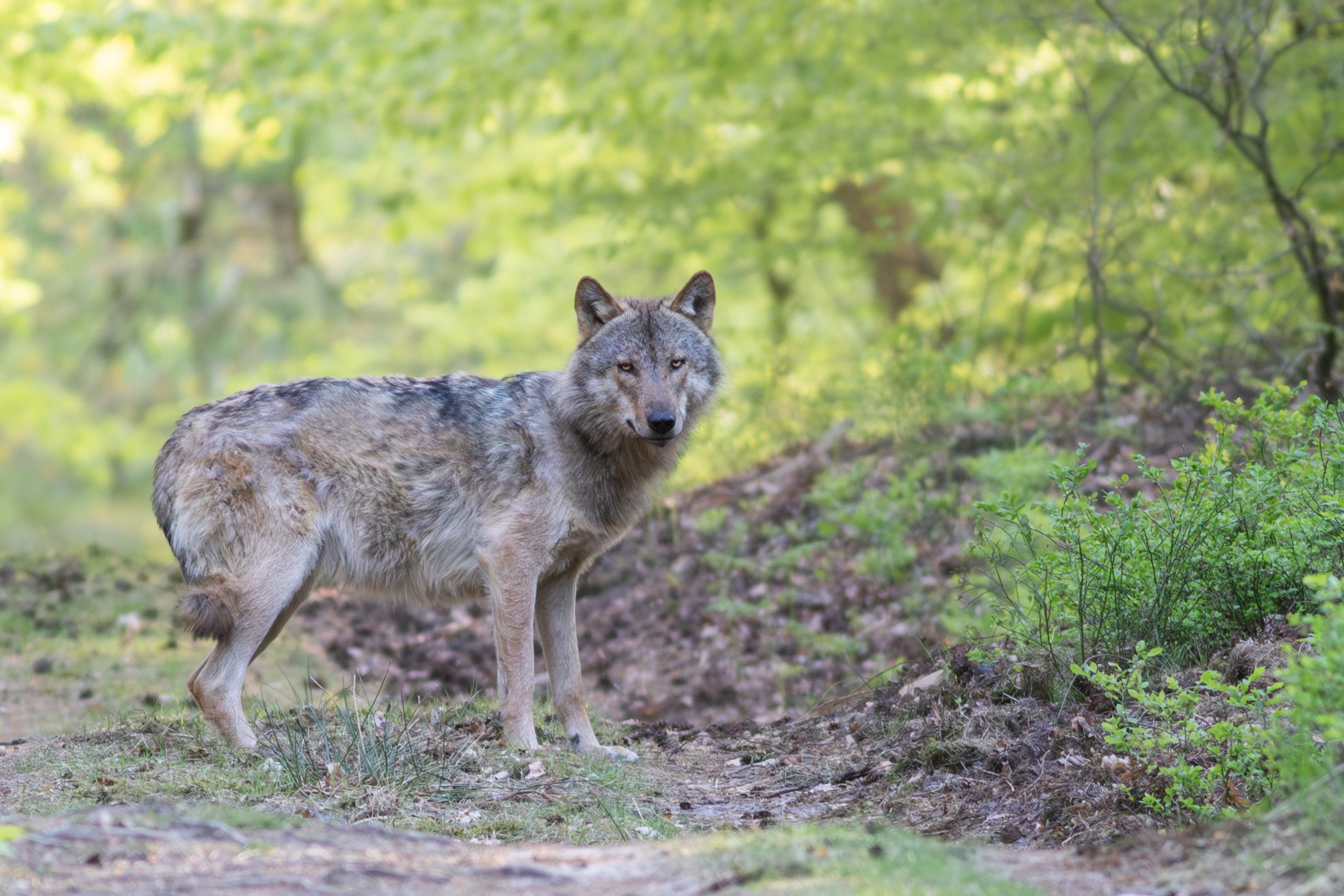
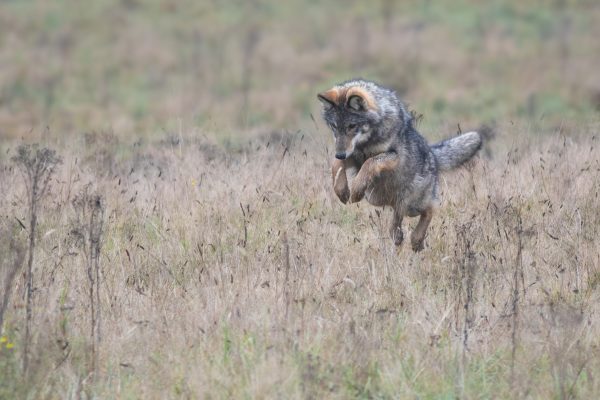
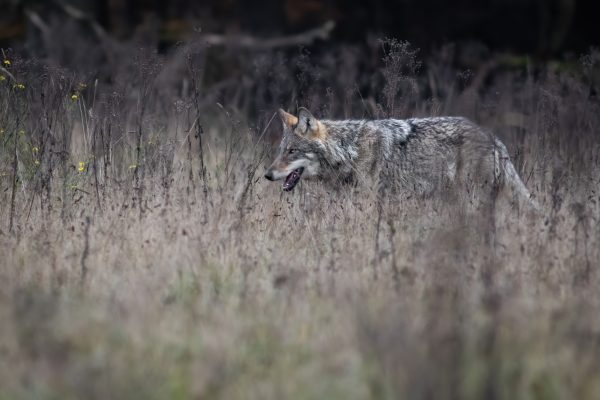
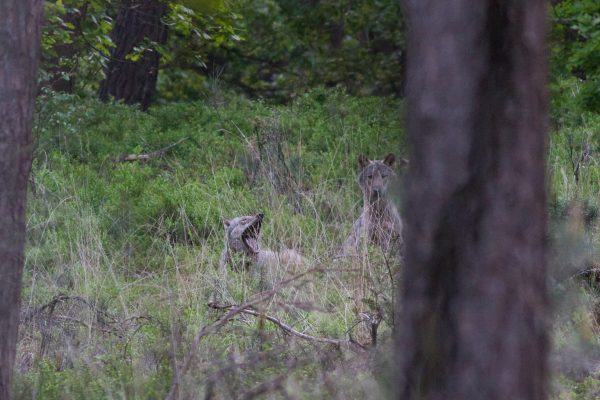
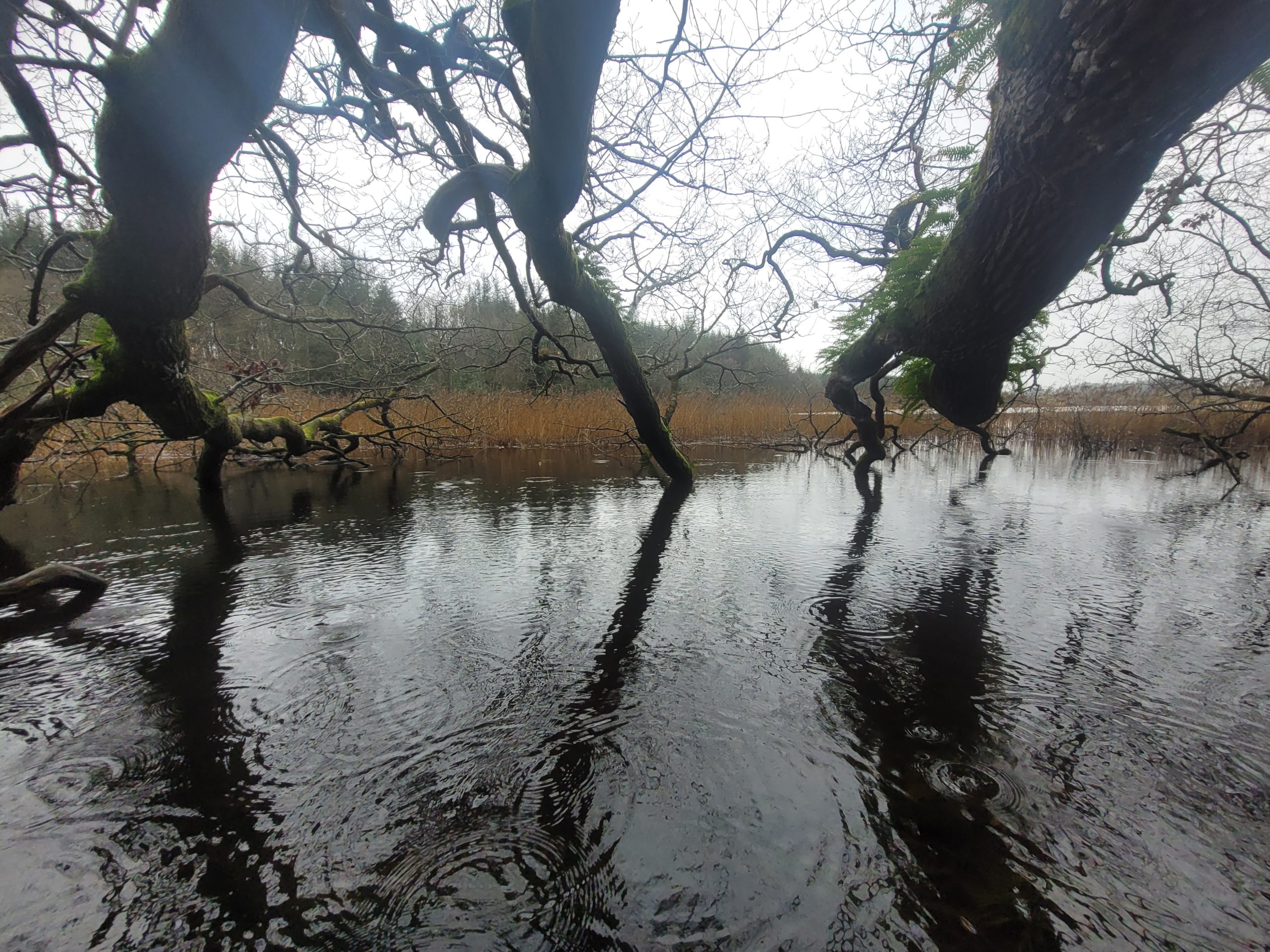
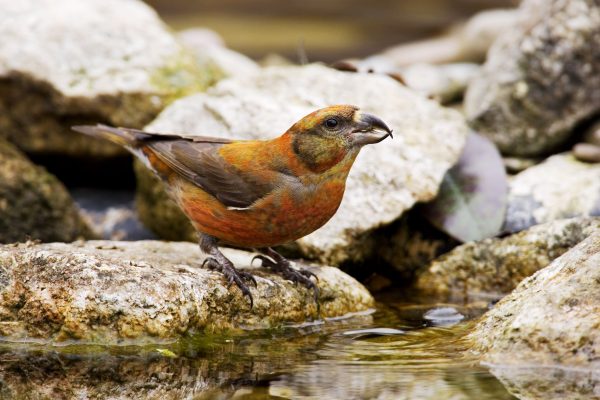
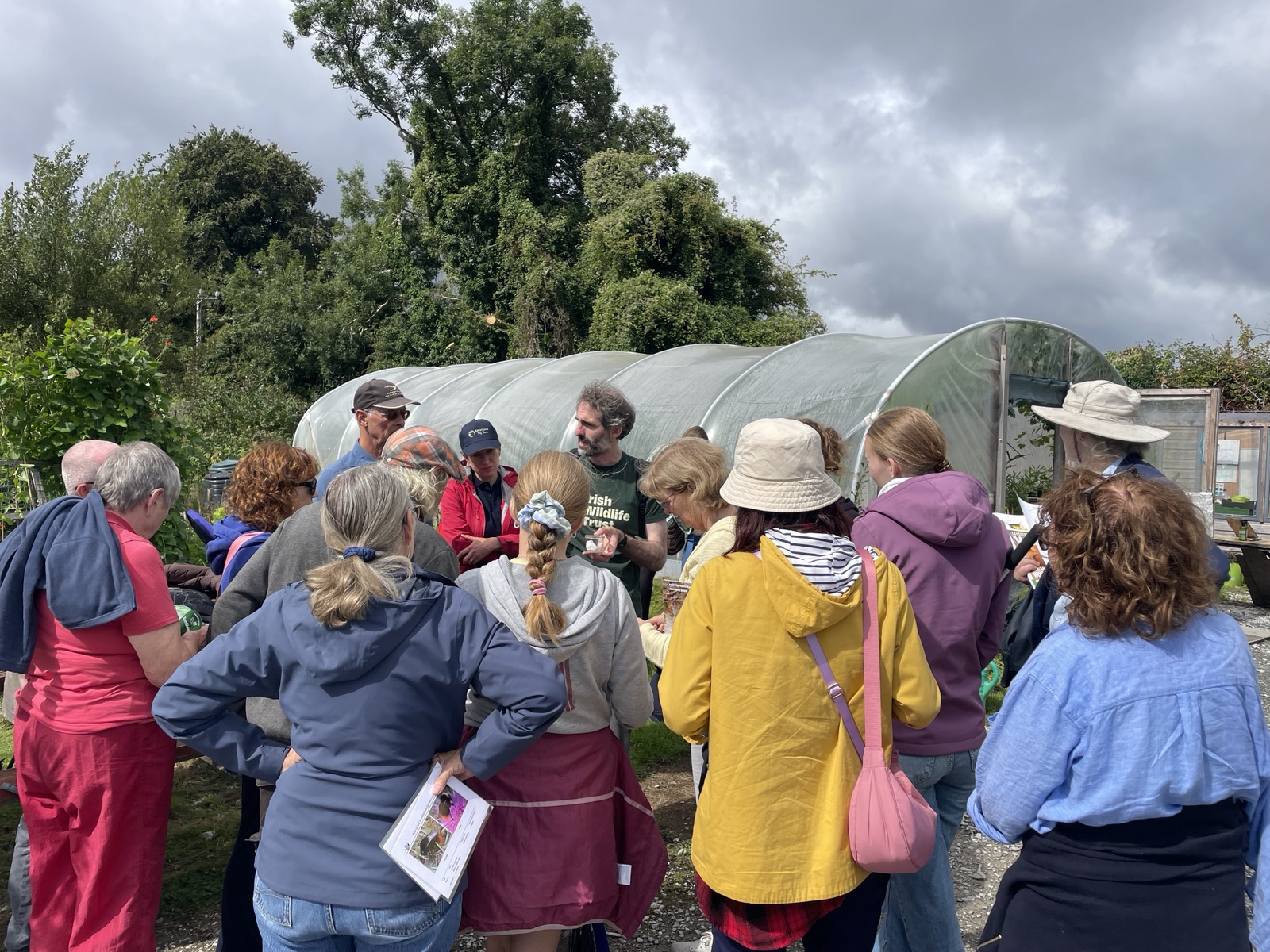
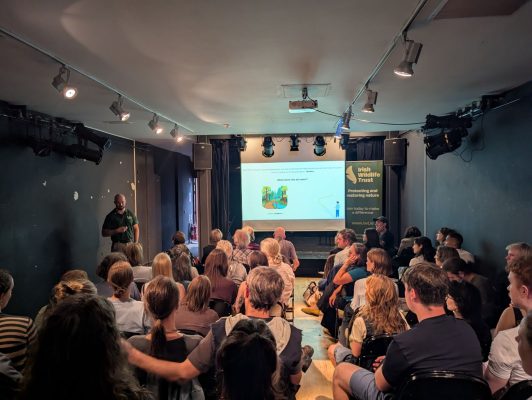
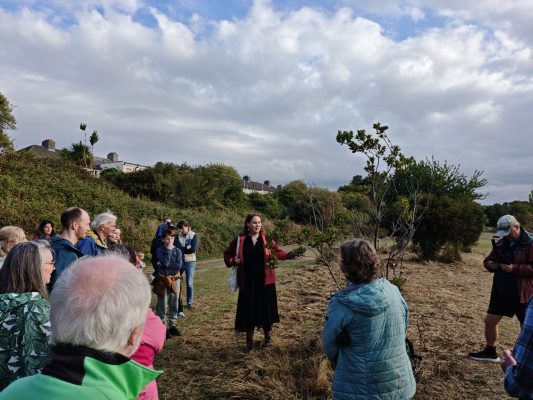

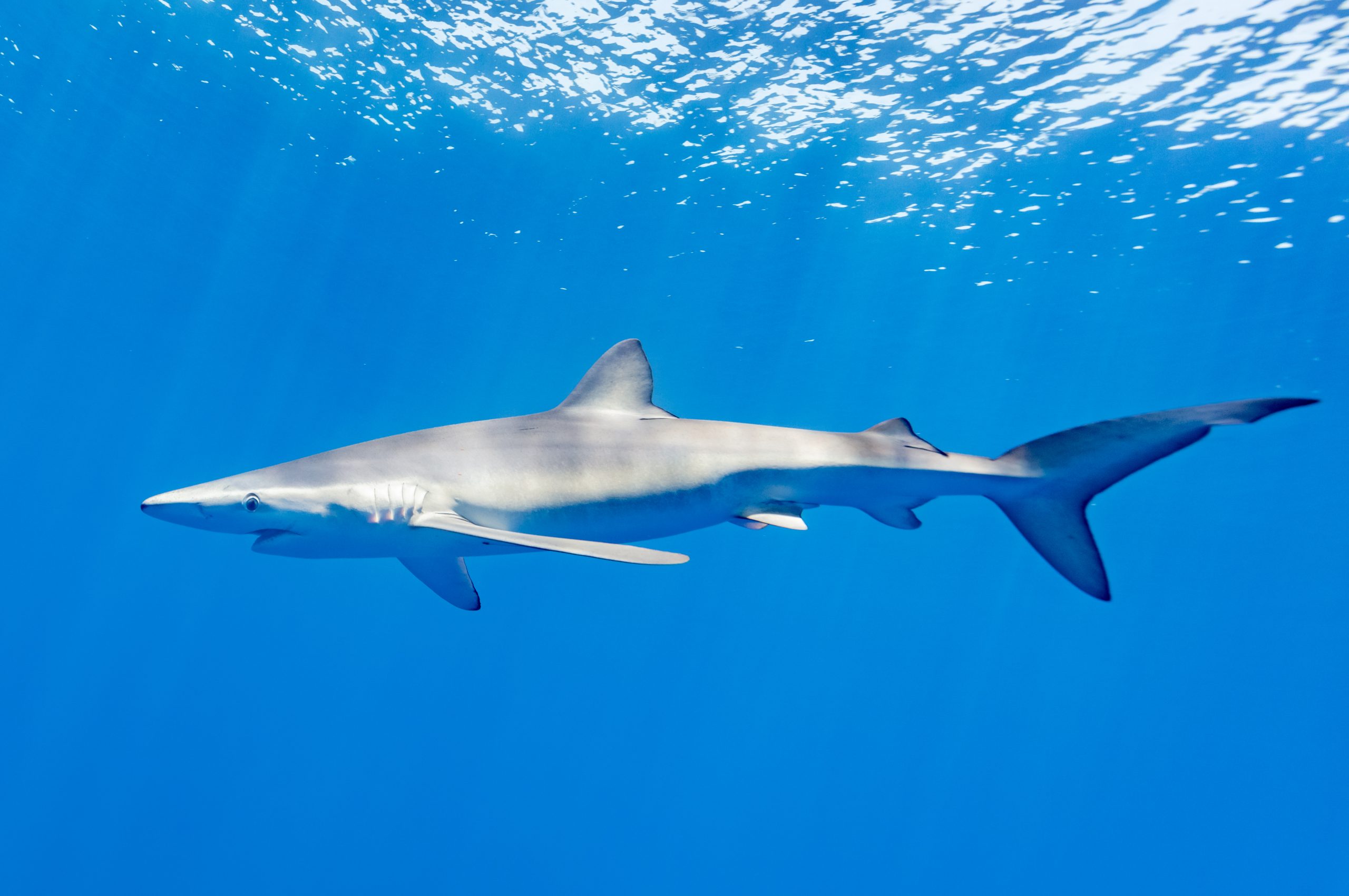
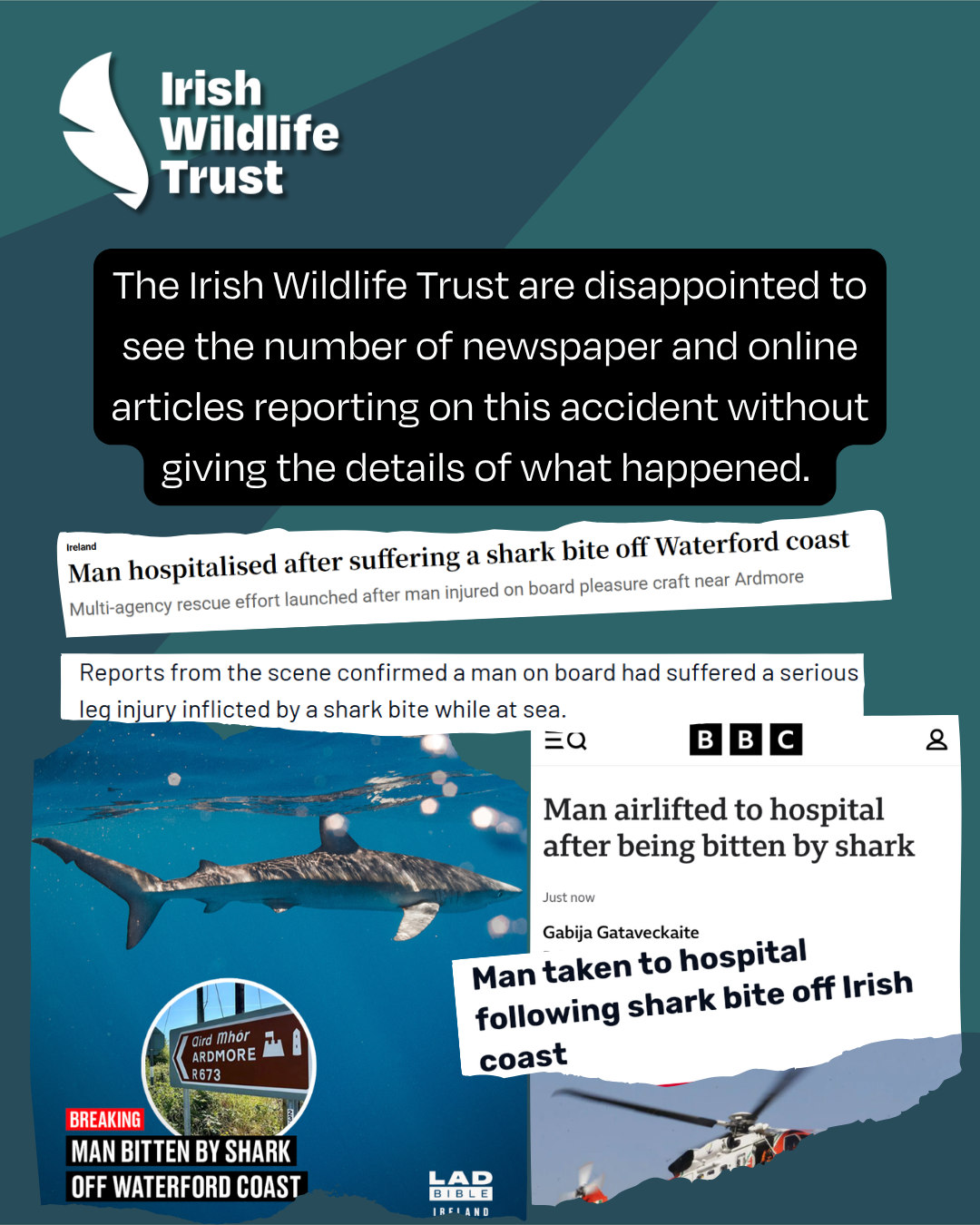
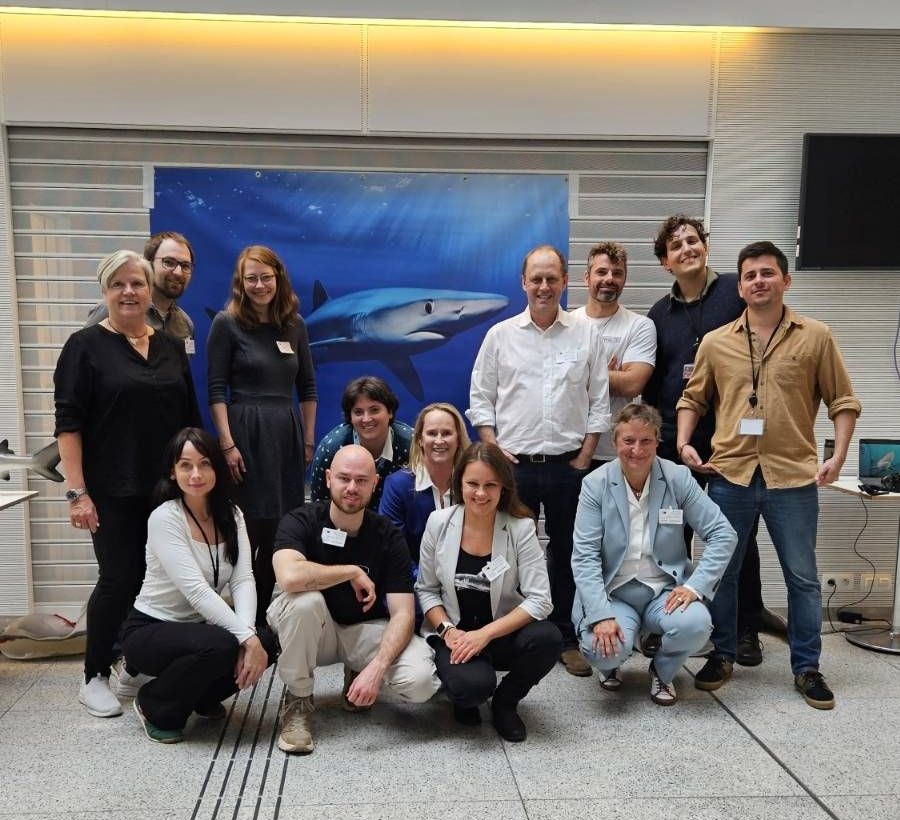
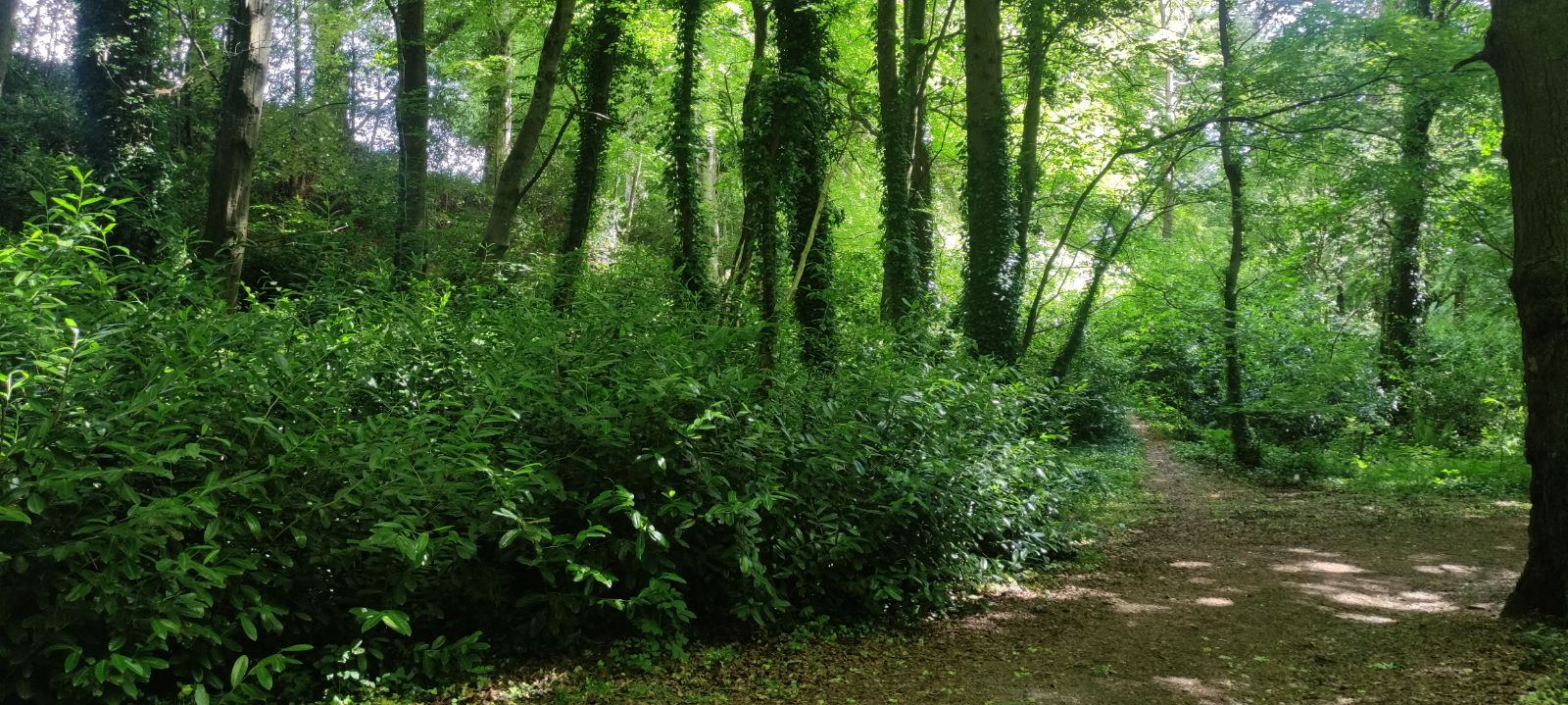
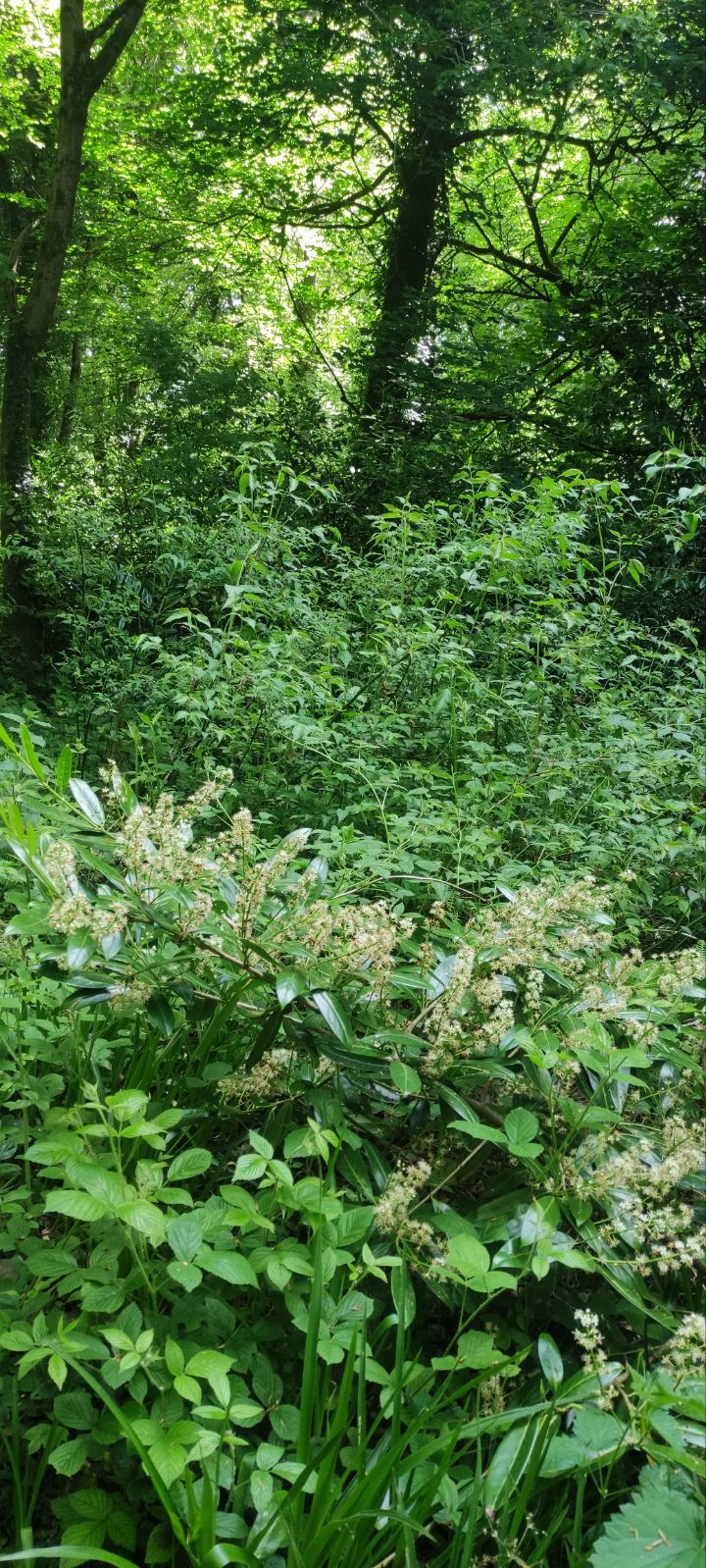
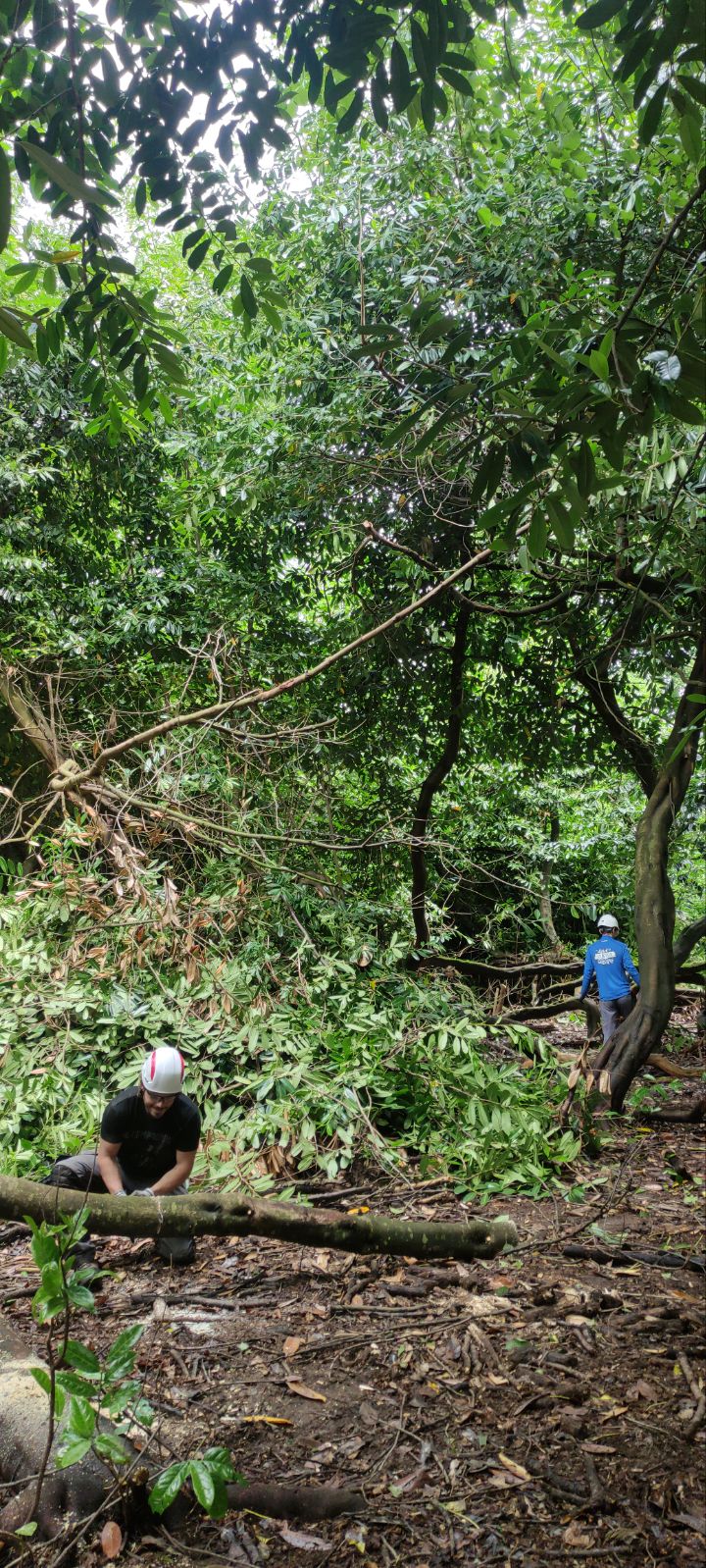
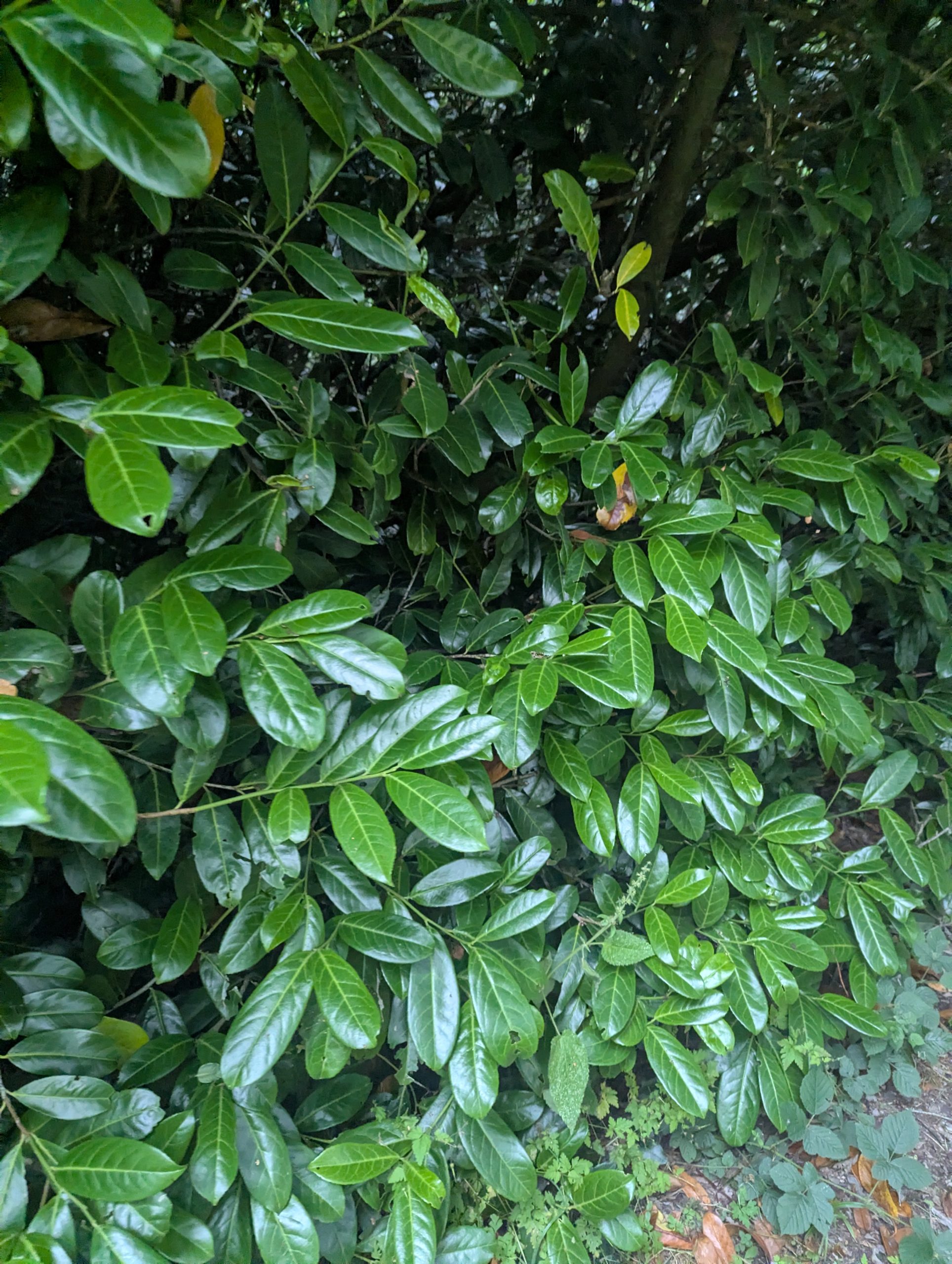
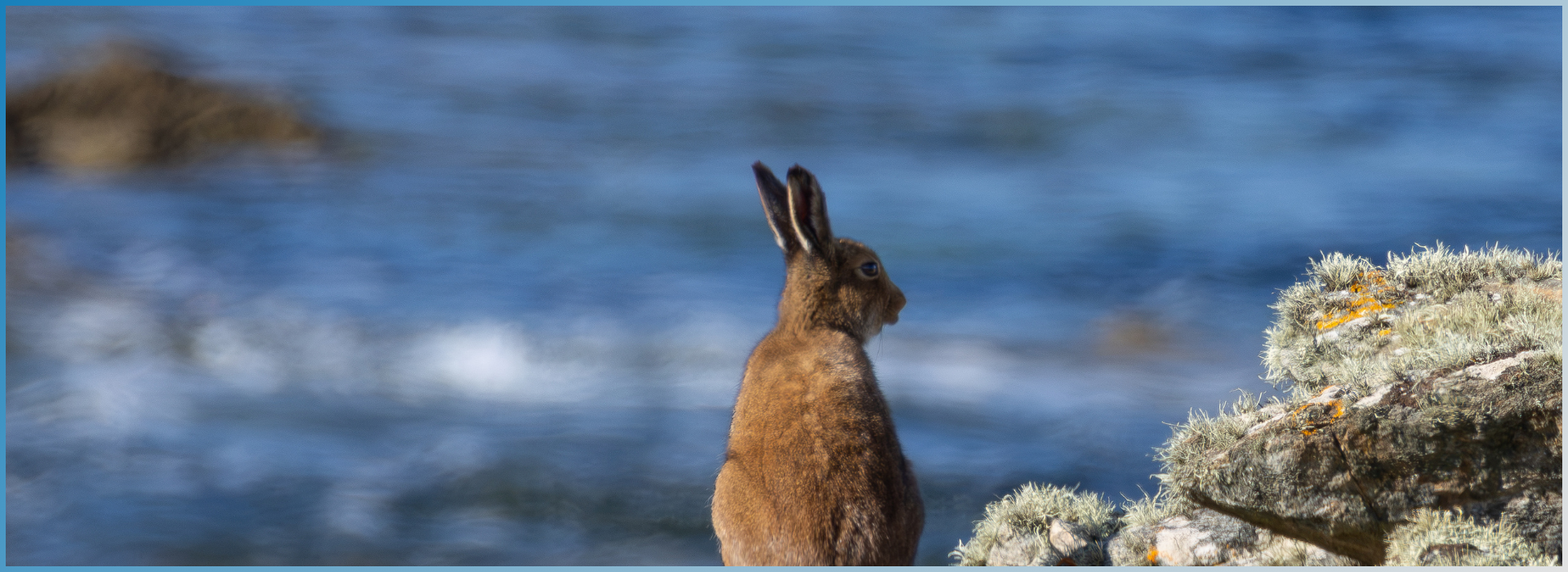

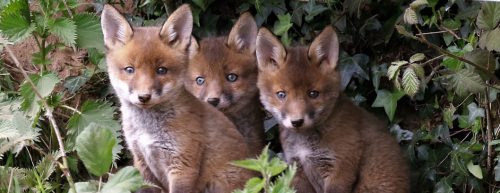
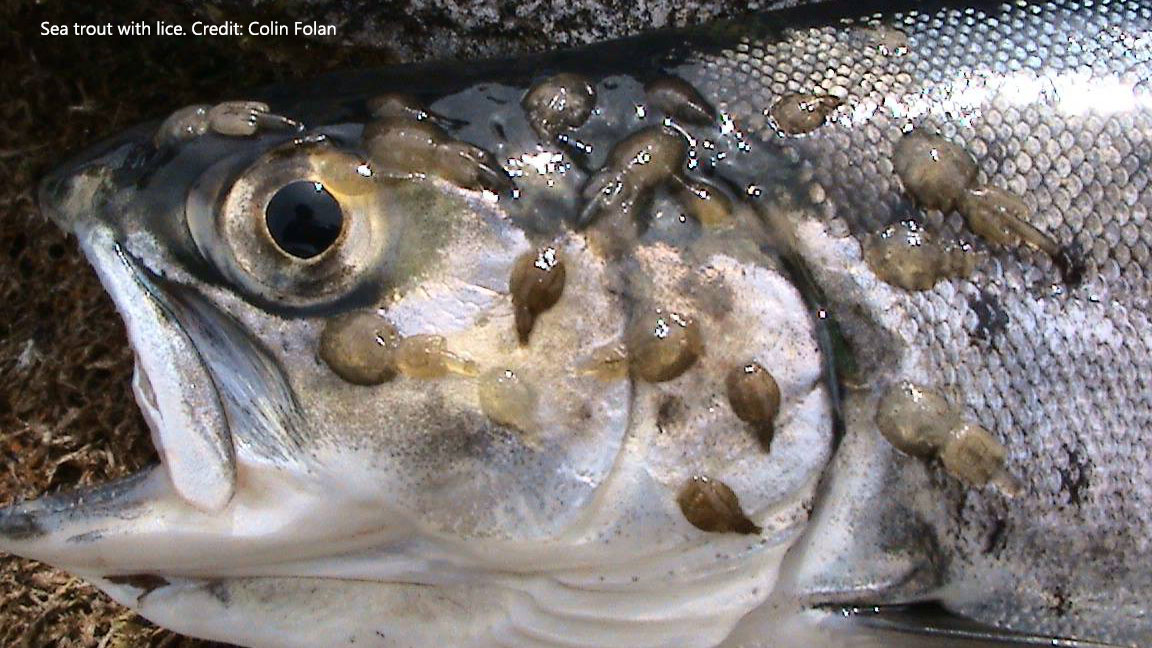
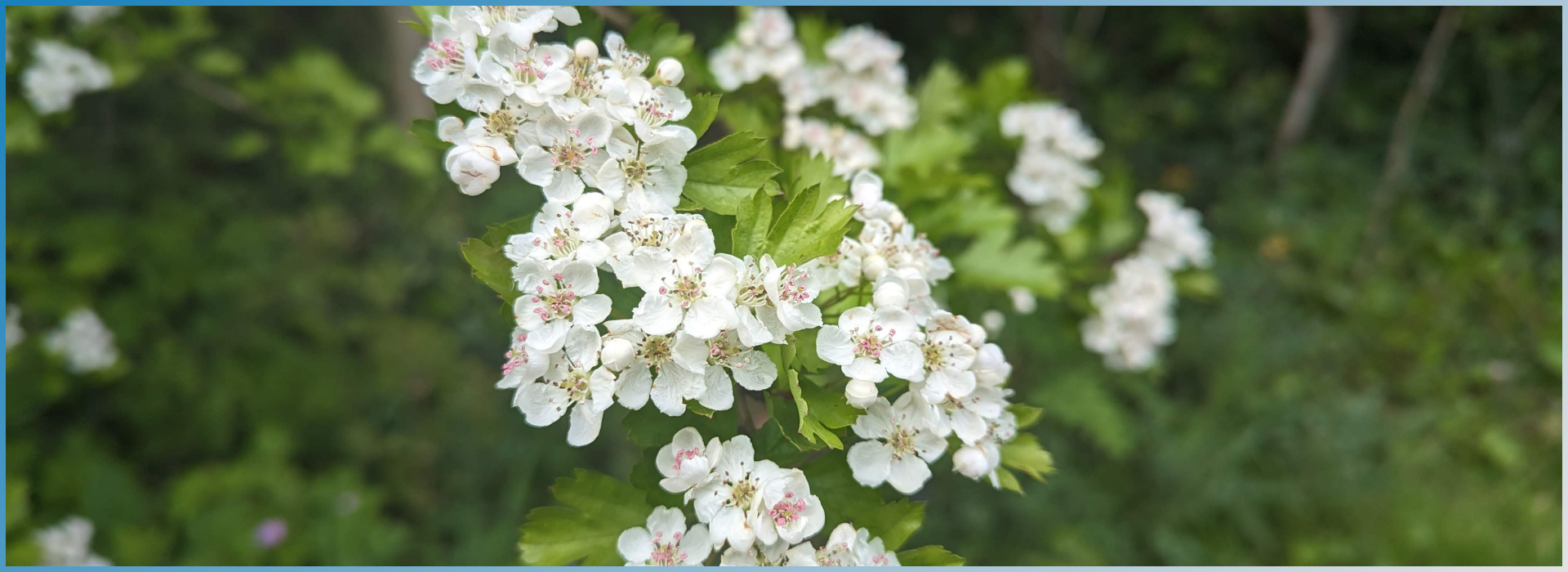
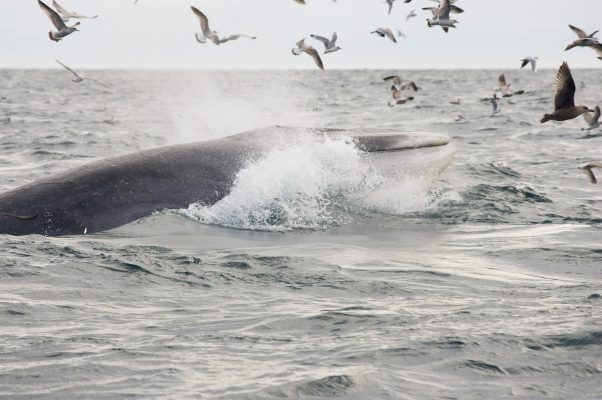
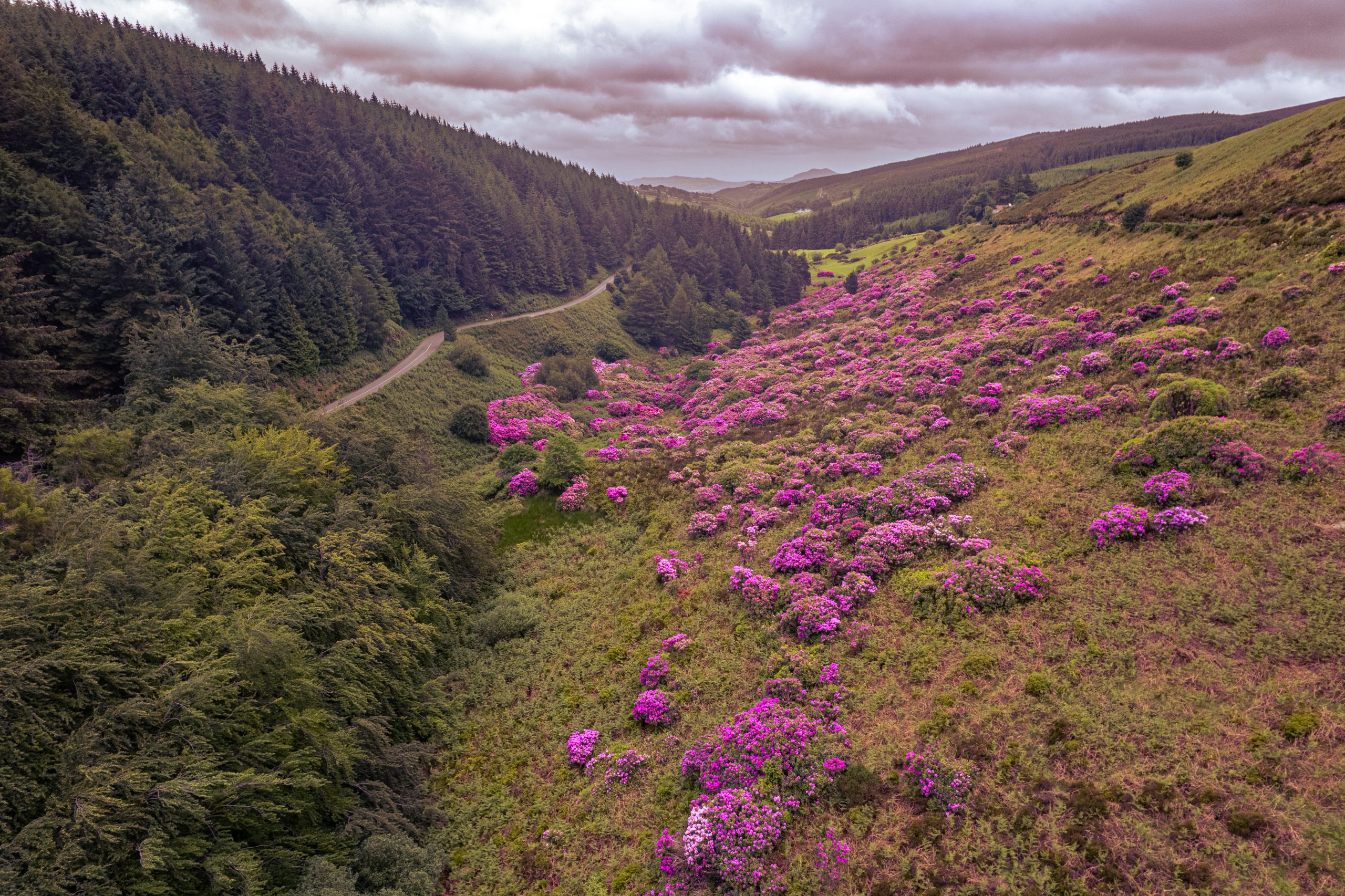
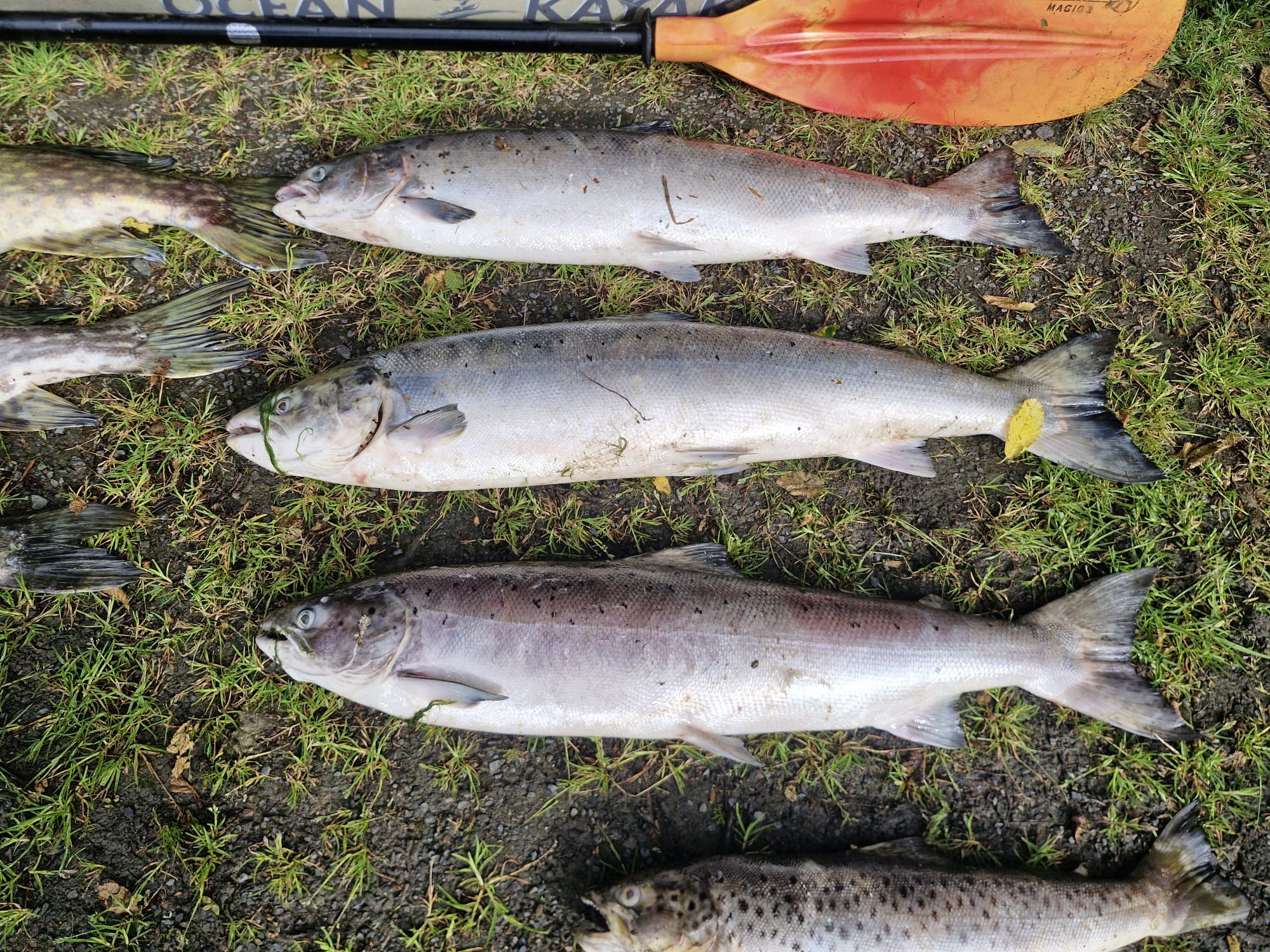
 John’s work stands as a testament to what one person’s passion can achieve for the wider community and for the generations yet to come. Every sapling he has nurtured, every seed he has sown, is a gift to our landscapes and to the species that depend on them. His example reminds us that biodiversity is not an abstract concept, but something deeply personal, local, and profoundly connected to our daily lives.
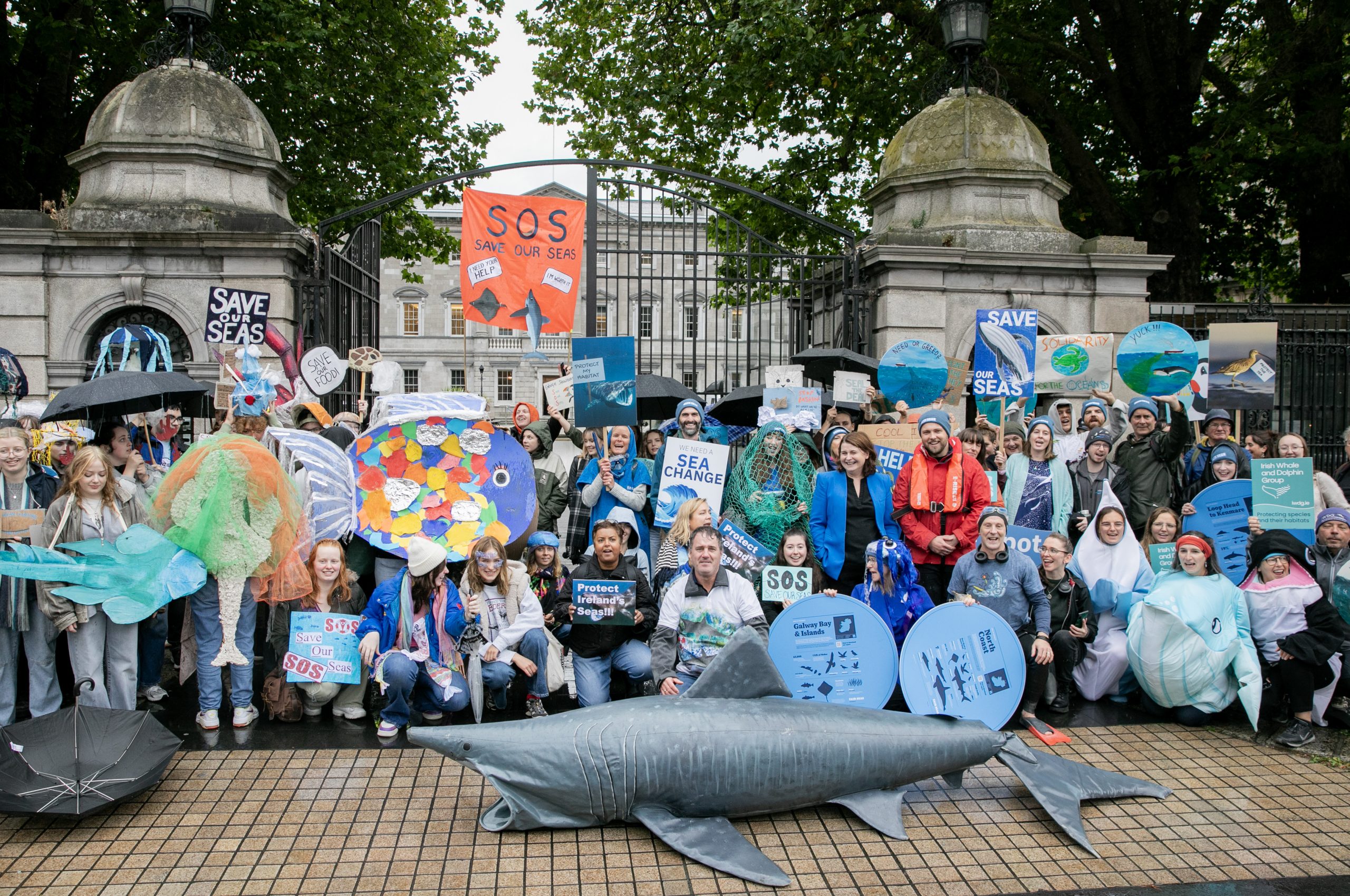
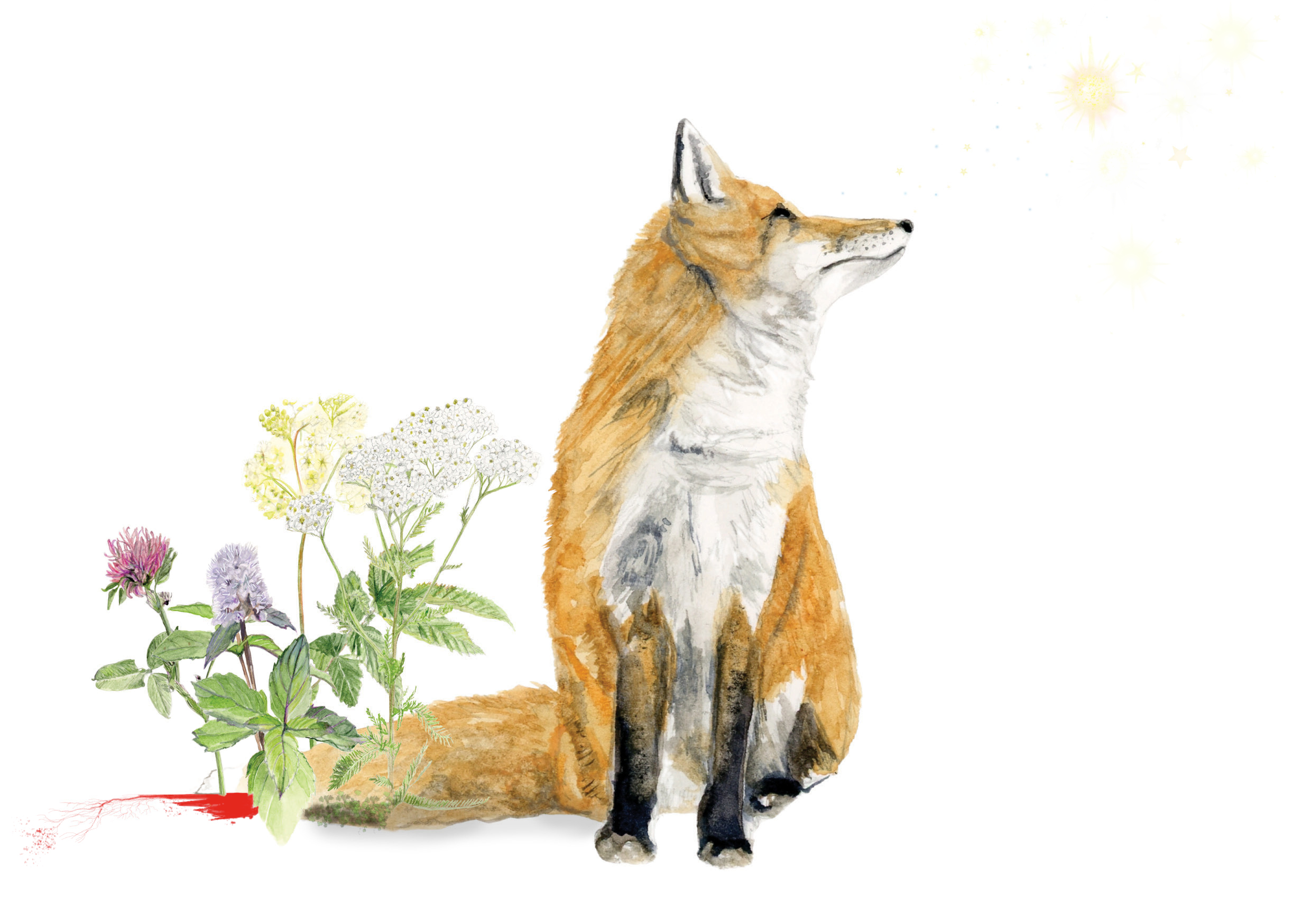
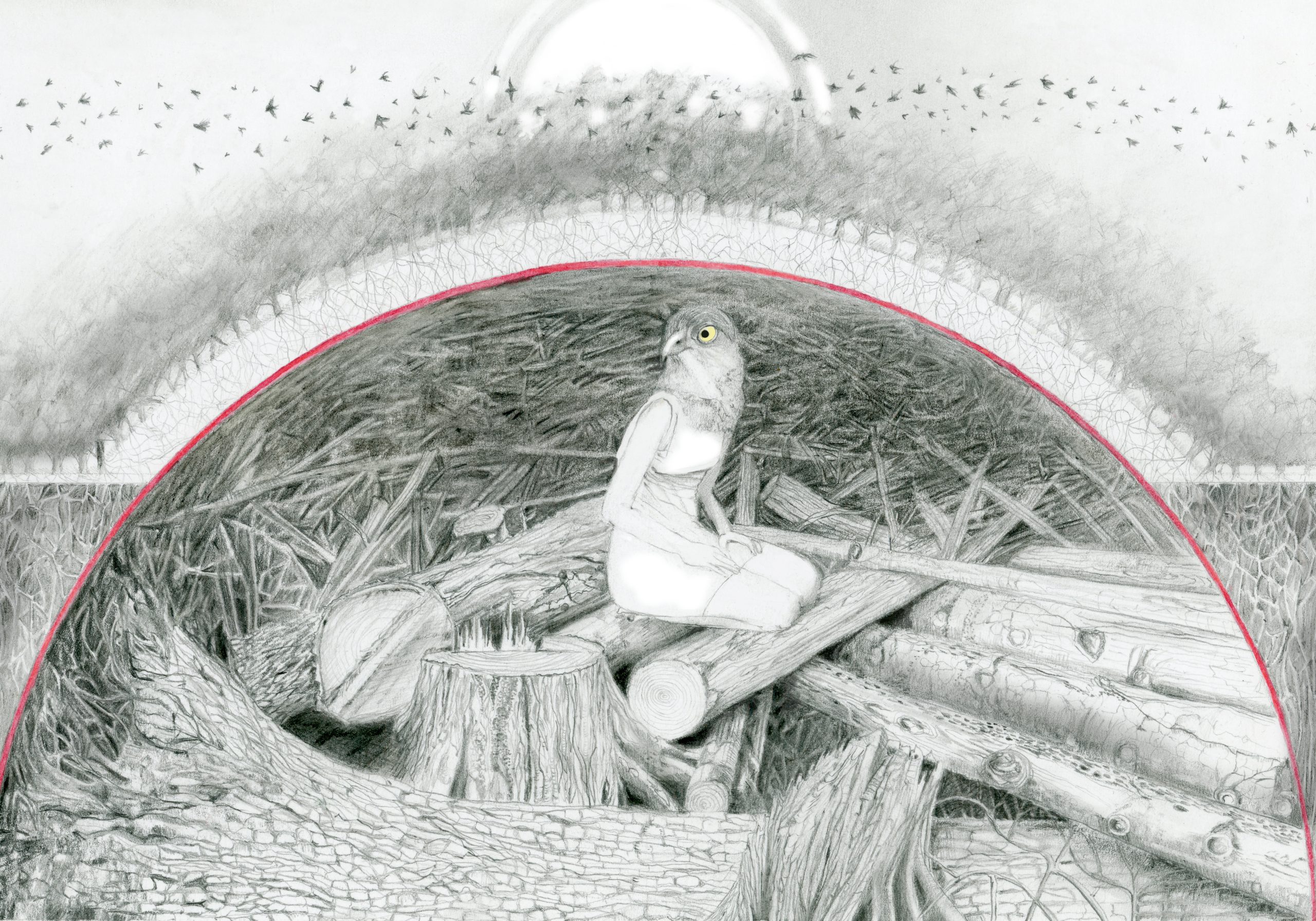
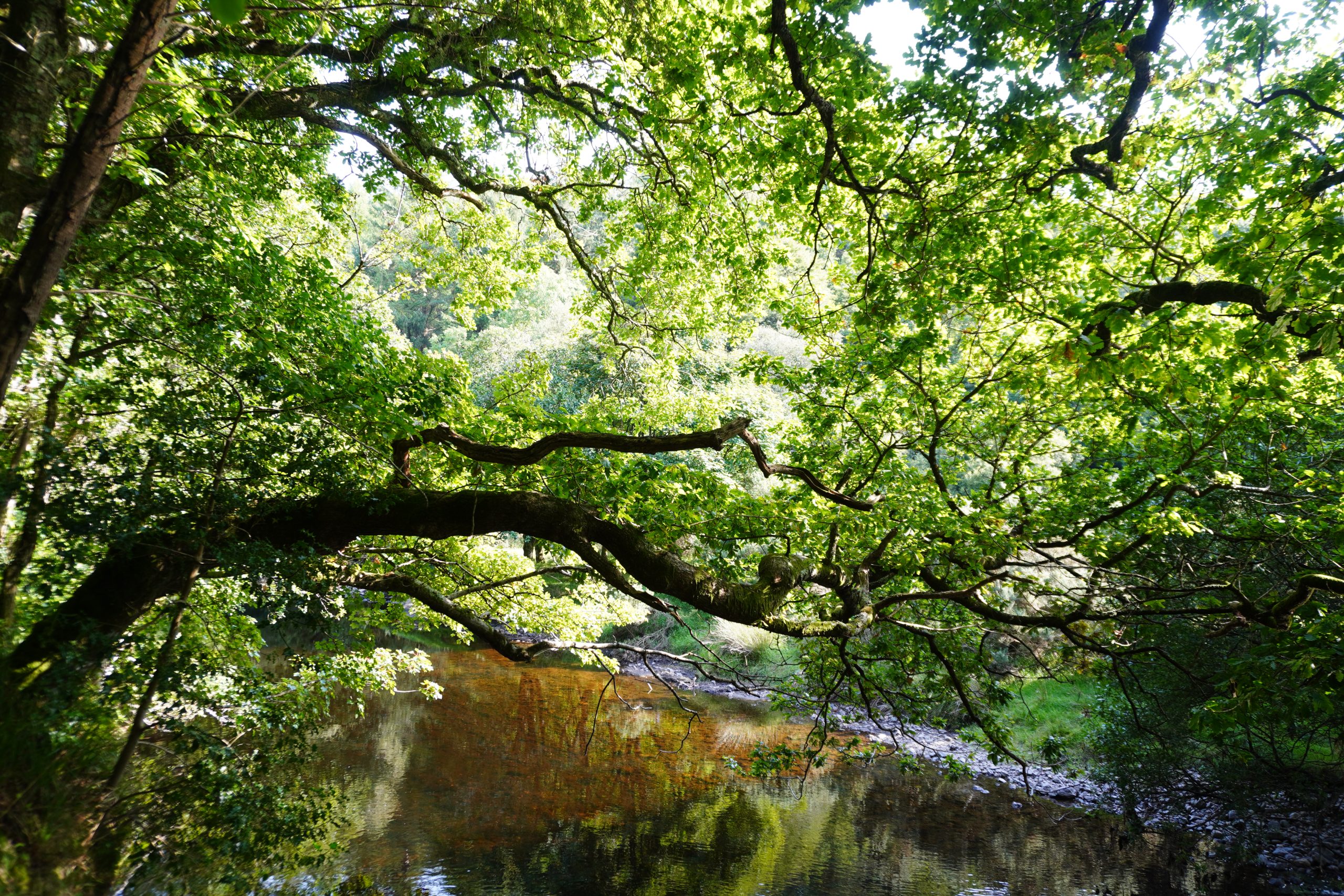
 Fraocháns, oak galls and fungi are all easily visible here. Fraocháns are wild blueberries that often grow in the understory of oak woodlands on the east coast. Oak galls are growths found on oak leaves and are the product of gall wasps that rely on oak trees to complete their lifecycle. The gall wasp larvae live inside the gall protected by its growth. Fungi, found through the woods, feed on and break down deadwood, releasing its nutrients and allowing for new plant growth.