Places to Connect: Vale of Clara Nature Reserve, Co. Wicklow
By Kieran Flood, IWT CEO
First published online: 21 January 2026
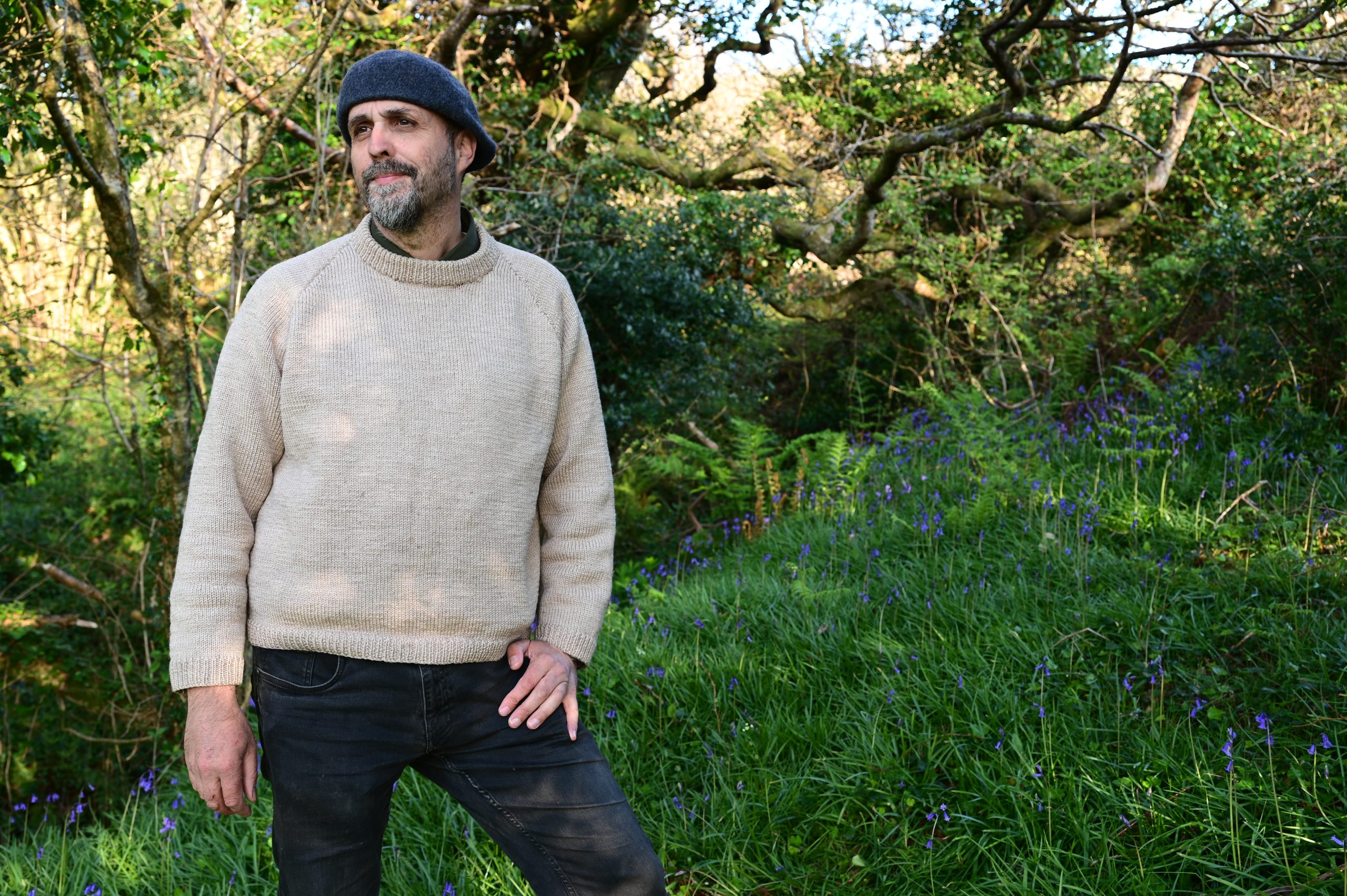
Twisted boughs of Oak overhang the Avonmore River.
In this new series of articles, we will share recommendations of nature reserves and wild areas where you can go to connect with nature. Spending time outdoors in wild, functioning ecosystems allows us to strengthen our relationship with the natural world, of which we are part. Modern human lifestyles force us to live disconnected from nature in sterile environments, often spending large amounts of time indoors, interacting with computers and other in-organic devices. Nature is made up of messy and complex systems; by spending time outdoors among the beautifully diverse and inter-related species found in a healthy ecosystem, you may find that you develop a sense of awe and wonder as you tune into the natural world. This reconnecting with nature can benefit your wellbeing and develop your understanding of your local landscape.
At the IWT we want to support our community to spend more time outdoors in nature and we hope this series of articles will inspire you to get out and reconnect.
Our Autumn Recommendation
We’ll cover all four provinces in this series, and we begin with a recommendation of a native woodland on the east coast – the Vale of Clara Nature Reserve, Co Wicklow. Clara Vale is a state-owned nature reserve established in 1983 and is described by the National Parks and Wildlife Service as “a large area of fragmented oak-wood. It contains the largest area of semi-natural woodland in Co. Wicklow and is potentially one of the largest stands of native hardwoods in the country. The area has been at least partially under woodland since the Ice Age. The oak-woods are also of high scenic value.”
“Clara Vale Nature Reserve is nestled in a wooded valley along the banks of the Avonmore River”
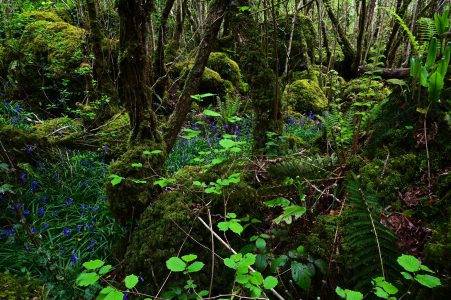
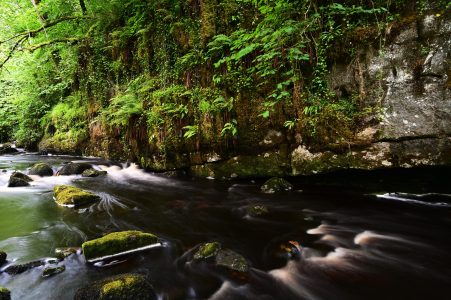
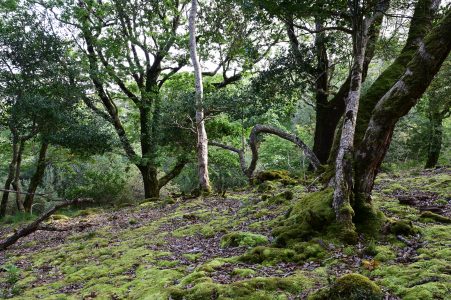
Clara Vale nature reserve is nestled in a wooded valley along the banks of the Avonmore River. The woodland stretches from just outside Rathdrum village north-west toward Clara Bridge. Within the nature reserve you can walk along the banks of a flowing river, under giant, awe inspiring oaks that tower above, clad in mosses, ferns and lichen. While some monoculture planting still remains, the site has large areas of old oak woodland, as well as younger emerging woodland and wet woodland. The main path follows the course of the Avonmore, allowing you to take in the sights and sounds of the river as well as the woodland. Species such as Red Squirrel (Sciurus vulgaris) and Jays (Garrulus glandarius) can be seen in the woodlands, Dippers (Cinclus cinclus) forage in the river, while rarer species such as Woodcock (Scolopax rusticola) have been recorded here.
Fraocháns, oak galls and fungi are all easily visible here. Fraocháns are wild blueberries that often grow in the understory of oak woodlands on the east coast. Oak galls are growths found on oak leaves and are the product of gall wasps that rely on oak trees to complete their lifecycle. The gall wasp larvae live inside the gall protected by its growth. Fungi, found through the woods, feed on and break down deadwood, releasing its nutrients and allowing for new plant growth.
“Woodland keystone species, supporting whole networks of life among their towering, twisting boughs.”
To visit the nature reserve in autumn is a beautiful experience – the mix of trees turn warm golds and reds and the smell of fallen leaves fills the air, while mushrooms can be seen popping up as symbols of the dynamic process at play under your feet. On a recent visit I encountered quite a number of oak seedlings pushing through the ground. Hopefully some will evade grazers and saws alike, to become the next generation of this woodland keystone species, supporting whole networks of life among their towering, twisting boughs.
Planning your trip
New footbridge at the southern end of the Nature Reserve
Thanks to a new footbridge on the Avonmore Way, near Ballygannon Woods, the nature reserve can now be easily accessed either by parking at Ballygannon Woods carpark or by walking the Avonmore Way directly from Rathdrum itself. There is also limited parking at the Clara Bridge end of the reserve. The nature reserve has a network of paths throughout. You can walk all the way from the new footbridge to the old Clara Bridge and back (8.5km) or cover more ground by looping up into the higher paths. With a train station in Rathdrum village, this walk is accessible by public transport on the Rosslare-Dublin line.
So, leave the dog at home, turn off the phone and allow yourself time to explore and connect with the natural world.
If you value our work, please consider supporting us by becoming a member
On Tuesday 13 January we attended the Joint Oireachtas Committee on Fisheries and Maritime Affairs. An Oireachtas committee is a group of TDs and Senators from all political parties that have responsibility to scrutinise and advise on particular matters. This Committee meeting was an opportunity for the members to ask expert stakeholders questions on marine protected areas. It’s important for us to attend these meetings as it gives us an opportunity to engage with representatives and highlight our key asks in a public forum. Some of the main points that we wanted to highlight was the need for all stakeholders to be involved early in the process and that we would like the draft legislation published as soon as possible with time factored in for pre-legislative scrutiny. We were joined with colleagues from Fair Seas, Sustainable Water Network, the Irish Environmental Network (representing Coalition 2030) and Birdwatch Ireland. Also in attendance were members from the Department of Climate, Communications and the Environment who are drafting the Marine Protected Area bill and representatives from the Seafood Ireland Alliance (SIA) which included the Irish South West Fish Producer Organisation and Irish South East Fish Producer Organisation.
Stakeholder engagement
Representatives gave their opening statement and it was clear that there were many shared goals and concerns across all the witnesses. Fair Seas have consistently called for early and ongoing stakeholder engagement which is fair and inclusive and this was echoed by Seafood Ireland Alliance. It was encouraging to hear that the Department ‘fully supports the principle of co-creation for marine protected areas. If we take a step back from the legislation, which I can speak to in a minute, we want this to work really well. The only way it can work well is by including everybody in the development, design, creation and management of marine protected areas. That is really clear. It is a fundamental principle underpinning how we are approaching this. Inclusivity is really important.’
The Department stated that there will be processes in the Designated Maritime Area Plan (DMAP) framework to allow for this although it may have to be strengthened for the MPA process. We would agree with this and the need for better engagement when designating MPAs through DMAPs. The Seafood Ireland Alliance said that development of the current Natura network and the DMAP process was not done in a fully transparent manner. They want to ensure that they are fully involved in the design and establishment of MPAs which they fully support if they are done in the right manner. We also must ensure that all scientific data is taken into account as well as traditional knowledge from fishing and coastal communities.
Management
Issues around the current management of Natura sites came up several times. The Department stated that this is the responsibility of NPWS and could not go into great detail. Representatives from the environmental sector made it clear that there has been a consistent lack of funding provided by the government to effectively manage and monitor existing protected areas on land and sea. We highlighted that a lot of mistrust has been bred in the process of designating and managing areas. People are being caught under layers of bureaucracy and yet are seeing none of the benefits that well managed MPAs should provide. Going forward we need to make sure we do things differently and ensure we have co-design and co-management of areas involving all stakeholders.
Funding
Funding to ensure the proper management of protected areas has not been provided by the Government. While NPWS funding increased, this was nowhere near enough of an increase to cover the responsibilities they have. A systemic change in how we protect our environment is needed going forward. We highlighted the upcoming nature restoration law requirements and this possible source of funding and how most of the conversation around the NRL has been focussed on the land based aspects of the law. We need to remember that funding must be made available for marine restoration activities as well as payments for those working at sea who could be affected or assist in managing an area.
Delays
It was nearly three years to the day that the Irish Wildlife Trust, Fair Seas and Birdwatch Ireland sat before the Joint Oireachtas Committee in 2023 to discuss the General Scheme of the MPA bill. At that point we were scrutinising the draft which had been released. Now we are in a different position and still waiting for the draft of the new amendment legislation. Fair Seas acknowledged that work has been done in the background since then in regards to the MPA Life project but publicly in regards to the legislation we are no further ahead. Minister of state Timmy Dooley has said that we should expect the General Scheme of this bill to be ready mid 2026. This legislation has been delayed long enough and we feel that this timeline is not acceptable. Our marine environment is deteriorating and the latest Article 17 report for the Habitats Directive painted a stark picture. Out of 14 marine and coastal habitats only two are in favourable condition, down from 3 in 2019. In 2019, 3 marine and coastal habitats were in bad condition and this has more than doubled to 7 in bad condition. The rest are still in inadequate condition. While there is no time to lose and the legislation must be completed as soon as possible, this must not come at the expense of pre-legislative scrutiny and in depth engagement with stakeholders. Pre-legislative scrutiny will allow us and other stakeholders to work constructively with the Department and ensure we get the best possible outcome for this complex piece of legislation.
Outcome
A positive outcome from the meeting was that the committee agreed to write to the Minister to urge him to ensure the legislation is published quickly, to ensure that stakeholder dialogue is central to it, and to present us with a clear timeline for delivery. Our marine life and marine communities cannot wait any longer. We need to start the process of getting our MPA legislation enacted as soon as possible and for that we need the General Scheme published.
By Charlotte Salter-Townshend, IWT Communications & Network Officer
First published online: 07 January 2026
IWT x BSBI New Year Plant Hunt on North Bull Island, 3 January 2026. Credit: Kim Lake.
Warmer winters may be changing the flowering times of plants, with a domino effect on all forms of wildlife. Since 2011, the Botanical Society of Britain and Ireland (BSBI) have collated data on what’s in bloom at the very end/very beginning of the year. The New Year Plant Hunt is the BSBI’s primary outreach activity, suitable for beginners and experts alike. This remarkable citizen science venture not only unveils winter’s floral secrets and sheds light on climate change, it is also a great opportunity to get out and discover your local flora while getting some (bracing!) fresh air.
This was the first year the IWT organised groups to take part, with outings in Dublin and Kerry. Here’s a summary of how it went, as well as a look at some of the broader results from the BSBI and what it tells us about biodiversity and climate change.
IWT New Year Plant Hunt on Bull Island
For our inaugural IWT New Year Plant Hunt, we explored North Bull Island in Dublin. We met up at the Tree of Life sculpture just outside St Annes Park, where we began recording. We walked down Causeway Road, surveying both sides of the road (without going into the sensitive saltmarshes) and finished up around the back of the Interpretive Centre.
Originating as a by-product of coastal engineering, Bull Island showcases a dynamic interaction between nature and human influence. In 1981 it was designated a UNESCO Biosphere Reserve (now part of Dublin Bay Biosphere) and has multiple other conservation designations. Over just under 15km2, it supports nine habitats and is notable for its uninterrupted sequence of plant communities ranging from intertidal mudflats to salt marshes, to sand dunes. Around 30% of Ireland’s flora may be found here, including flowering plant species protected under Irish law: Lesser Centaury (Centaurium pulchellum), Red Hemp-nettle (Galeopsis angustifolia), and Meadow Saxifrage (Saxifraga granulata). It is also noted for hosting several Orchid species, including the Bee Orchid (Ophrys apifera). None of these particular species were found in bloom in January, but our intrepid IWT group did find 26 species of plants in flower in just under two hours!
Botanists got the identification books out to identify Rapistrum rugosum (Bastard Cabbage)
Bull Island is always full of surprises and Saturday 3 January was no exception. While eight out of the top ten most frequently recorded species were logged, there were also some unusual finds. These include Rapistrum rugosum(known as Bastard Cabbage or Turnipweed). We were the only survey in both Ireland and Britain to record this species. An annual herb, found mainly on waste ground (we found it behind the Interpretive Centre toilets), Bastard Cabbage is now naturalised in a variety of habitats where it is sometimes invasive, such as in open grassland. Native to the Mediterranean region and south-western Asia, it is introduced with grain and birdseed. Though we don’t expect the plant to become widespread on Bull Island, other introduced plants have proven problematic. Both Sea Buckthorn (Hippophae rhamnoides) and Common Cordgrass (Spartina anglica) were introduced in the hopes that they would combat erosion of the dunes, but instead they threaten rare plants by forming dense thickets, altering the habitat. This is a prime example of how difficult it is to engineer ecological balance and the challenges inherent in managing conservation in a novel eco-system such as Bull Island.
We also found many of the usual suspects on the New Year Plant Hunt, including Winter Heliotrope (Petasites pyrenaicus). This plant was introduced to Ireland about 200 years ago (around the same time Bull Island formed) from the Mediterranean region. This winter-flowering plant has become invasive due to its spreading habit where it shades out other species. All of the known naturalised plants in Ireland and the UK are male plants which spread clonally! So the distinctively scented flowers (some say liquorice, others cherry or vanilla) are all male flowers and do not produce seed.
Flowers on the aptly named Winter Heliotrope (Petasites pyrenaicus). The flowers and leaves of this heliotropic plant gradually follow the sun from east to west and during the night turn back to the east to greet the next dawn.
While we didn’t expect Vicia sepium (Bush Vetch) and Smyrnium olusatrum (Alexanders) to be in bloom in January, 18 of the New Year Plant Hunts on the island of Ireland logged Bush Vetch and 7 logged Alexanders this year. Bush Vetch usually blooms April – October and Alexanders February – June.
Alexanders (Smyrnium olusatrum) and Bush Vetch (Vicia sepium) in full bloom (photos taken in April).
The Alexanders plant came to us from the Mediterranean. The name refers to Alexander the Great as the plant is thought to have been used by him and brought to Britain and Ireland by the Romans for use as a potherb. Many of our coastal plants are edible, e.g. Sea Beet (Beta vulgaris subsp. maritima) is the ancestor of beetroot and chard.
We would like to thank the 15 people who joined us on the IWT New Year Plant Hunt on Bull Island, especially Kim Lake (BSBI Botanical Skills Project Manager, Northern Ireland), Maria Long (NPWS Grasslands Ecologist), and Niall Mac Coitir (IWT Dublin Branch) who shared their expertise in plant identification and helped run the event. Keep an eye on our Events page for future outings on Bull Island, including Niall’s summer Wildflower Walks for the IWT Dublin Branch, featuring a few species of Orchids!
Kerry IWT plant hunt
Meanwhile, the IWT Kerry Branch joined forces with Tralee Tidy Towns on the Tralee to Fenit Greenway. They organised seven separate New Year Plant Hunts, with local community groups surveying a section each of the 13km Greenway route. As with on Bull Island, participants enjoyed fine crisp weather. The IWT Kerry Branch, led by Ger Scollard, took part on Friday 2 January. Over three days, a total of 31 people took part in the plant hunts along the Greenway. Almost 40 flowering species were recorded including the commonly recorded Gorse (Ulex europaeus) and Herb Robert (Geranium robertianum) as well as slightly more disconcertingly, Primrose (Primula vulgaris) and Knapweed (Centaurea nigra).
The Greenway New Year Plant Hunts formed part of the Community Foundation Ireland-funded project Dúlra Thrá Lí, a Community Biodiversity Action Plan for the Kingdom of Kerry Greenway – Tralee to Fenit route. The initiative was an opportunity to for community groups on the Greenway including Fenit Town Hall, Kerry FC, Fenit Coast Conservation, Spa Tidy Village, Tralee Bay Swimmers, and of course IWT Kerry Branch to connect with each other while making a valuable contribution to local biodiversity knowledge as well as to the wider BSBI project.
On Saturday 3 January, the industrious IWT Kerry Branch also surveyed Ballyseedy Wood, where they found eight species flowering, including Nipplewort (Lapsana communis) and Holly (Ilex aquifolium).
Getting serious on the plant hunt when the books come out (IWT Kerry Branch at Ballyseedy Woods). Credit: Ger Scollard
The BSBI New Year Plant Hunt and Climate Change
The UK Met Office has evaluated the New Year Plant Hunt data set from the past ten years. Using their detailed climate records, they showed a very strong linear relationship between the average (mean) number of plant species flowering during the new year and the average temperature during the preceding two months. The relationship suggests that for every 1°C warmer average temperature during November and December, there are about 2.5 more species of plants in flower.
Research by the Met Office using BSBI New Year Plant Hunt records shows linear relationship between rise in average temperature and number of plants in flower (UK data). Credit: BSBI LinkedIn
Early flowering plants such as Dandelions and Alexanders have their place as they are vital for pollinators that emerge in early spring (e.g. bumblebee queens). But the trends logged by the BSBI offer a clear indication that more and more plants are blooming out of season and hence out of sync with animal life.
The New Year Plant Hunt outings also show that although climate change is affecting our wildlife, communities can show up and take action. Through the simple act of recording biodiversity, we facilitate connections between communities and between people and nature. This builds awareness and appreciation, and through that, hope through advocacy and action for nature.
If you value our work, please consider supporting us by becoming a member
The Irish Wildlife Trust (IWT) is a non-governmental organisation and charity founded in 1979. Our vision is an Ireland where wild nature thrives, and society enjoys the benefits of coexisting with diverse, functioning ecosystems. Our mission is to protect and restore biodiversity in Ireland by motivating and supporting people to take action for nature. We achieve this through assertive advocacy, inspirational rewilding, and building empowered communities for nature. We have a small dedicated staff team and a network of volunteer run branches who engage IWT members at a county level. https://iwt.ie/about-us/
Nature Advocacy Officer Role
IWT Advocacy for Nature pillar: Our society and economy are supported by and reside within the natural world, however nature is often forgotten or overlooked in policy making and the legislative process. At the IWT, we act as a voice for nature, demanding action on the existential threats of biodiversity loss, pollution and climate breakdown. We advocate for ambitious legislation, policy change and implementation to protect and restore nature.
The Nature Advocacy Officer will be a key member of our team helping us to deliver on our Advocacy For Nature pillar of work. They will work alongside our Marine Advocacy Officer and will report directly to the IWT Chief Executive Officer. They will drive advocacy on legislation and policy affecting our woodland, freshwater, peatland and farmland ecosystems. This will include the implementation of the Wildlife Act, Nature Restoration Regulation, Habitats and Birds Directives and Water Framework Directive. The Nature Advocacy Officer will advocate for policies that recognise our fundamental connection with and reliance on the natural world and the need to shift from a system geared towards un-checked extraction and exponential economic growth to a system that recognises ecological connectedness and values nature and people’s wellbeing.
Duties
The IWT Nature Advocacy Officer will report directly to the IWT Chief Executive Officer. Duties will include:
Nature advocacy campaign delivery.
Researching and writing IWT submissions to key public consultations.
Representing IWT in meetings with relevant politicians and public servants.
Writing online articles and press releases communicating IWT policy positions.
Researching and writing IWT policy positions and papers.
Communicating IWT policy positions to the public and the media.
Coordination & collaboration with existing and new IWT advocacy networks e.g the Irish Environmental Pillar, Sustainable Water Network, European Environmental Bureau.
Skills, Experience & Attributes
Essential:
A passion for wildlife protection, nature advocacy and the IWT mission and vision.
Strong interpersonal skills. The role requires effective collaboration with IWT and network colleagues.
Experience working as part of a busy team.
Demonstrable knowledge of and interest in Ireland’s ecosystems and species.
Knowledge of Irish and EU nature / environmental legislation and policy.
An understanding of the stakeholders involved in nature restoration and land use in Ireland.
Demonstrable organisational, time management and workload prioritisation skills.
An ability to communicate effectively, both written and verbally.
A relevant third level qualification e.g. natural science, environment, policy, law.
Desirable:
Experience in nature or environmental campaigning.
Experience in media engagement.
Experience in political lobbying.
Experience in policy and public consultation submission writing.
Experience working for an environmental or advocacy organisation.
Experience in event organisation.
Knowledge of the Irish legislative process.
Conditions of Employment & Hybrid Working
The successful candidate is required to be resident in Ireland and eligible to work in Ireland.
This role allows for hybrid working in so far as is practicable. The post-holder will be expected to attend in-person internal meetings at our office on a minimum of two days a month as well as attendance of external advocacy events and meetings in Dublin and around Ireland as required.
The IWT office is located in the bustling neighbourhood of Smithfield in Dublin City. It is five minutes walk from the LUAS Green and Red line and close to Heuston train station.
The role requires occasional travel within Ireland and occasional weekend or evening work. All necessary expenses for work related travel and subsistence are reimbursed by IWT.
IWT offers employee training opportunities, company pension contributions, and the bike to work scheme.
The IWT is an equal opportunities employer. We are committed to building an inclusive and supportive environment for all employees.
A complete list of all terms and conditions and IWT internal policies will be made available to all staff members. For queries about this position or terms of employment email jobs@iwt.ie
How to apply
Please email your CV and a Cover Letter in pdf format to jobs@iwt.ie
Please put “Nature Advocacy Officer” in the email subject line.
Your cover letter should be a maximum of two pages in length. In your letter please outline your motivation for this position and why you feel you have the skills and experience to deliver on the responsibilities and duties of this role.
Applications for this position must be received by18:00 on 26th January 2026.
2025 has been a difficult year for environmental issues. Pressures are appearing from all sides and there have been many disappointing blows to contend with. Those in power nationally and internationally don’t seem to have safeguarding the environment on their agendas and deregulation in favor of economic growth and business as usual are popular topics. That being said, there have been some wins this year and it’s important to remember that now, more than ever, we must continue to push and use our collective power as a community to fight for what is right for people and planet. Read on for an overview of some key moments this year for the environment.
The new Programme for Government (PfG) was released in January and we were disappointed to see the majority of our key asks not included within it. There was no mention of a mandate reform for Coilte and Bord na Mona to manage forestry and protected bogs for nature. There was also no mention of a review of the outdated ‘Arterial Drainage Act 1945’, a key law which, as it stands, would prevent Ireland from meeting its targets within the Nature Restoration Regulation (NRR). Increasing marine protected area coverage was mentioned but there was no mention of the legislation which was included in the last PfG.
In June the UN Ocean Conference (UNOC) took place in Nice and the EU Ocean Pact was officially launched. The European Ocean Pact’s aims were to bring together the European Union’s policies and actions related to the ocean and create a unified and coordinated plan for managing the ocean. However many experts and NGOs were disappointed by its vague wording.The pact acknowledges the importance of ocean conservation but for it to be successful it must lead to the immediate implementation of the existing marine protection laws we have in place.There are no legally binding requirements in the pact but it does state that an EU Ocean Act, which will be legally binding, will be released in 2027. During UNOC there were announcements from some EU member states on planned conservation actions. Portugal took another step forward in the conservation of its marine natural heritage by declaring that the Gorringe seamount will see its conservation status reinforced, with an expansion of the total protected area and the designation of a portion as a fully protected area. In February the Danish government stated it would ban bottom trawling in over 17% of its waters and it reaffirmed this at UNOC as well as its commitment to having 8% of its waters designated as strictly protected by 2028. Not every country showed ambition in protecting and restoring its waters. The French president announced that trawling would be banned in 4% of French waters…in areas where zero trawling already occurs. This was a blatant attempt at green washing while all eyes were on France during the conference.
There was some good news in July with the announcement of the6nm trawling ban around Irish coasts. From the 1st of October 2026, trawling by vessels over 18m in the 6 nautical mile zone around Ireland’s coasts will be prohibited. From the 1st of October 2025, vessels over 18m fishing for sprat in the 6nm zone will require authorisation to do so and there will be a limited total allowable catch (TAC) of 2,000 tonnes of sprat for these vessels. This is a much needed measure to help protect the inshore fishing sector and have positive benefits for the marine environment. The Irish Wildlife Trust have advocated on this topic for many years, running campaigns to raise awareness and mobilize the public to take action and submit to consultations, so it was a relief to see action being taken. Just 12 days after the new quota came into force, the Sea Fisheries Protection Authority (SFPA) informed Fisheries Minister Timmy Dooley that licensed vessels had landed the allocated 2,000 tonne quota, and he closed the fishery to vessels over 18m. It’s important to continue monitoring the situation to ensure no sprat are being landed by the larger vessels as they continue to fish within the 6nm.
In August Global talks to develop a landmark treaty to end plastic pollution failed. The UN Plastics Treaty was envisioned as a historic, legally binding agreement, akin to the Paris Climate Agreement, but for plastic pollution. Its purpose was to address the entire lifecycle of plastic—from production by fossil fuels to disposal and pollution. The failure of these high level negotiations highlights how difficult it is to reach a consensus on the global stage. It’s therefore more important than ever for countries to show ambition and lead the charge in environmental protection nationally.
The same month, an ecological disaster occurred at the river Blackwater in county Cork when around 50,000 fish were reported dead on its shores. Fish species included protected species such as salmon, eels and lampreys. It’s believed this devastating fish kill occurred due to poisoning. Inland FIsheries Ireland continue to state that they cannot find out who the polluter is and so there has been no repercussions. This event not only caused the death of 10s of thousands of fish, it also had impacts on the entire river ecosystem and the species that rely on it. While this is the largest incident of this nature to happen in Ireland, it is by no means an isolated case. Read SWAN’s report to learn more about the broken system that allows this to continue happening.
Some good news from October was the successful release of four Norwegian White Tailed eagles in Killarney National Park. This year marks the end of an 18 year reintroduction programme to bring this beautiful bird species back to the island. White tailed eagles were once native to Ireland but unfortunately had not been seen for more than a century when the reintroduction programme started. The project was done in collaboration with Norway and the Irish population is now considered strong enough to reproduce and continue to grow without further help from Norwegian partners.
Some good news in November as the state announced that it purchased 100 acres of forestry land at Glen of the Downs. The Glen of the Downs is a national nature reserve which is hemmed in by monocultures. If the land which has been purchased is restored it could result in the expansion of this important woodland ecosystem. This was one of the only national good news for nature stories in Ireland this year and we hope to see the state build on this ambition going forward.
COP30 took place in Brazil during November. This global climate conference had a disappointing conclusion. The final text which was agreed had no reference to fossil fuels. No mention of oil, gas or coal, the biggest causes of climate change. Within the final text there were voluntary initiatives to speed up national climate action. Brazil intends to move forward with roadmaps for phasing out fossil fuels and ending deforestation. These roadmaps and future discussions will take place outside of the official UN COP talks. Again, these results have shown the importance of countries driving forward change nationally if we are to reach our goals at a global level.
In November, the Government announced movement towards the MPA Bill. It was officially announced that the legislation will go ahead as an amendment to the MMarine Area Planning Act instead of standalone legislation. The General Scheme (which highlights the main points to be contained within the Bill) will now be drafted and once that’s approved then the legislation can be written. No definitive timeline was given which is worrying as this legislation has been delayed time and time again, despite it being listed as a government priority. Fair Seas and partners will continue to advocate for the timely delivery of ambitious legislation which will effectively protect our marine environment.
Earlier this month the latest Habitats Directive Article 17 report was published for Ireland. This report is due every 6 years and looks at protected habitats and species designated under EU law. 90% of protected habitats were found to be in unfavorable condition with 51% of these showing ongoing deteriorating trends. This has increased since 2019 when 85% of protected habitats were in unfavorable condition. It highlights the systemic issues in Ireland’s governance and protection of nature. The draft national restoration plan will be completed early in 2026 which is supposed to document the measures which will be put in place to restore 30% of degraded habitats by 2030. This plan will have to contain incredibly ambitious actions if we are to reach this legally binding target. There has not been any announcement on how the NRP will be funded, despite repeated calls for ringfenced funding by NGOs, nature conservation experts, farmers and the wider community. It is clear what needs to be done, but the government continues to drag its heels.
Another blow this month was the approval for another three years of the nitrates derogation just two weeks after the European Court of Justice ruling that Ireland is failing to implement essential water protection legislation. From 2026, Ireland will be the only EU country still benefiting from a derogation. The derogation is only supposed to be applied if it doesn’t affect water quality, but it appears the evidence showing the downhill trend for Ireland’s water quality has been ignored. Prolonging this derogation will ultimately result in negative consequences for farmers here in Ireland as well as devastating consequences for the environment as we fail to move towards sustainable nature friendly farming. At the same time the EU has announced its plan to revise the Water Framework Directive. A law that’s main goal is to protect EU water. It has been included in the environmental omnibus which is a group of laws which will be opened for ‘simplification’ next year. The EU claims that this will reduce administrative burden and streamline legislation but so far it seems that it will also result in the dismantling of laws which have been built over many years to help protect and restore the environment.
It’s a worrying time for the world we live in. Pressures are appearing from all angles and those in power don’t seem to have much ambition when it comes to safeguarding our future by protecting the environment which protects us. It’s important now more than ever to continue standing up for nature and to continue using our voice and the power we have as a collective to push for greater environmental protections. Each new report which contains bad news for the natural world is another tool we can use to push back against lacklustre measures for the protection and restoration of habitats and species. Nearly 200,000 people signed a petition stating that they do not want to see EU environmental legislation weakened. Going into 2026, we must remember promising news like this and continue putting pressure on those in power to restore the natural world. Now is not the time to give up.
Two strong themes of our work at IWT are Connection with Nature and Hope through Action. This year we have been busy progressing our strategy in line with these themes through the three interconnected pillars of our work; Advocacy for Nature, Building Communities for Nature, and Rewilding In Ireland.
2025 was a year of intense advocacy and community building for the IWT. By collaborating with other ENGOs, we broadened our impact and empowered our members and followers to take action for nature.
This year, our actions focused on lobbying for marine protection, campaigning against the weakening of environmental laws, community engagement, nature connecting events and policy submissions. We also introduced a more cohesive identity with a visual rebrand and IWT branches all over the country organised a diverse array of events and local actions to enhance biodiversity.
Puffins by James Basset, Photo of the Month shortlist May 2025
Communities for Nature
Through our Communities for Nature pillar we work to build communities that are connected with the natural world and empowered to protect and restore it. These communities include our online followers, our IWT members and our network of IWT volunteers who run our local branches in Monaghan, Dublin, Waterford, Kerry and Limerick. Together we delivered over 50 free and fantastic nature events across Ireland in 2025.
National Biodiversity Week saw an exciting programme of IWT events across Ireland. Highlights included our perennially popular bee workshops and bat walks, a deep dive into the beauty below the surface at Carlingford Lough, a celebration of the Natterjack Toad in Castlegregory in Kerry, workshops on dragonflies, butterflies, and tree identification, and a collaborative exploration of the intertidal area with Coastwatch Ireland and the Environmental Forum.
This year the IWT Monaghan Branch continued their inspiring work empowering local conservation. They have initiated an innovative programme mapping the Dromore River Catchment, using citizen science (geographical mapping, biodiversity recording) to inform future nature restoration actions. In recognition of this, they were a finalist in the 2025 National Lottery Good Causes Awards. You can read more about their latest work in the winter issue of Irish Wildlife, our members’ magazine.
IWT Monaghan Branch Members at the Good Cause Awards
Our Limerick Branch continue to organise a diverse programme of events including a Fungi Foray in Cratloe Woods with expert Tom Harrington and their highly informative lecture series at Mary Immaculate College, featuring an eclectic line-up of speakers. This continues into the spring – check out our Events page for details. Across the county boundary, our Kerry branch works with Tidy Towns groups and the County Council to increase people’s understanding of local biodiversity such as hedgerows, wildflowers and woodlands. Our Waterford Branch runs monthly biodiversity walks to observe local flora and fauna. This may include a spot of stream dipping to look for interesting invertebrates, tree identification, and bat detection.
Meanwhile Green Drinks has returned thanks to the Dublin Branch. To kick off the new series, IWT CEO Kieran Flood discussed the importance of re-establishing our connection to the natural world and our work in this area. Green Drinks is an informal event, where we meet in pubs for casual talks and discussions on wildlife topics, fostering community and shared passion for the environment. We look forward to more in 2026.
Throughout the year, we ran educational webinars to share expertise on topics including hedgerow protection, wildlife photography, and the complex issues regarding inshore trawling. You can watch these back on our YouTube channel.
IWT Waterford Branch November walk in Mountain Grove, Co. Kilkenny
Advocacy for Nature
Having secured the passing of the EU Nature Restoration Law in 2024, the next step in the process is drafting national Nature Restoration Plans (NRP) for each EU country. This year the National Parks and Wildlife Service ran a Leaders Forum on nature restoration to inform this plan. We attended the inaugural Leader Forum on the National Restoration Plan (NRP) in March, with follow up sessions on specific areas later in the year. The Forum gave us an opportunity to speak up as policy makers draft the NRP, due in September 2026. The NRP must detail how Ireland plans to hit the targets within the EU Nature Restoration Law. Farmers, communities, NGOs and experts continue to ask for dedicated funding for the NRP. The results of the NPWS Report on the Status of EU Protected Habitats and Species inform our urgency. The State needs to properly fund and support nature restoration.
Grace Carr joined the Marine Leaders Forum
European Maritime Days took place on 22 and 23 May. This annual event for Europe’s maritime community is held in a different European city each year. This year, it took place in Castletownbere in Cork, offering us the opportunity to meet with Minister of State for Fisheries and the Marine, Timmy Dooley, and EU Commissioner for Fisheries and Oceans, Costas Kadís.It was encouraging that Commissioner Kadis agreed with us that the Common Fisheries Policy has the tools we need to help create healthy marine ecosystems and a sustainable economy. Article 17 (if implemented) should reward sustainable fishing and incentivise the fishing industry to move to less destructive practices. Ireland does not fully implement this article and its enforcement should be a priority. The best and quickest way to see real change on the ground is to effectively enact what we already have, rather than create new papers and reports.
In June, our Marine Advocacy Officer, Grace Carr, represented us at the UN Oceans Conference in Nice, France, with Fair Seas (of which IWT is a founding member). The IWT is also part of an EU wide Marine Protected Area project with Seas at Risk (a Brussels based marine ENGO). At the Conference, Gracespoke about the indiscriminate and unregulated fishing for sprat that has been happening in Irish inshore waters. In July, the government finally reintroduced a ban on larger fishing vessels trawling in our inshore waters. This was a rare win as we had been campaigning for an end to the pair trawling of our bays and estuaries for many years. While we welcome the ban we continue to highlight the issues with unsustainable fisheries in Ireland and the need to support smaller local fishing communities rather than industrial trawlers.
UN Oceans Conference Blue March protest in June 2025
Throughout the summer, we continued our in-depth work on fisheries, building relationships with fishing communities and working more on the issues surrounding marine conservation and fisheries in Ireland. This included the filming of a documentary called Trawling for Answers with Swimming Heads Productions which will be launched early next year – stay tuned for updates on screenings!
In October, we attended EU Ocean Week in Brussels. Grace spoke in the EU Parliament alongside Blue Marine Foundation and FishSec – The Fisheries Secretariat. She highlighted the underlying issues in achieving sustainable inshore fisheries in Irish waters. You can watch her presentation on Small Fish, Big Impact. We also co-organised events including a Focail na Farraige event which highlighted the connection between Ireland’s marine life, coastal communities, and the Irish language.
In November, there was good news for the Glen of the Downs in Wicklow as the NPWS purchased 100 acres of forestry land adjacent to the nature reserve. The IWT have been campaigning for this NPWS purchase as we want to see the state playing a lead role in protecting nature in Ireland for the benefit of all. Nature restoration protects our natural heritage, restores ecosystems and their wildlife, and helps fight climate change. It’s a win for wildlife, people and the planet.
In September, we joined the coalition of European ENGOs in the Hands Off Nature campaign. The European Commission’s proposed “simplification of administrative burdens” was identified as a threat to laws including the Nature Restoration Law and Water Framework Directive. Our coalition secured a massive response in just 10 days, with 200,000 submissions, sending a clear message to decision-makers that citizens demand stronger enforcement of environmental laws rather than dismantling them. However, the EU Commission has continued their plans for deregulation. Alongside the Environmental Pillar and other environmental groups, we will continue to campaign against the “Omnibus” packages and call on our followers to rally with us. Ní neart go cur le chéile. There is no strength without unity.
Rewilding in Ireland
Rewilding is an inspiring concept that is close to our heart at the IWT and with this in mind we organised an autumn seminar series on the topic, in collaboration with the Trinity College Dublin Centre for Environmental Humanities. The series explored rewilding in Ireland, Scotland and continental Europe and each event was very quickly booked out by our newsletter subscribers (who got first notification of the events).
Rewilding in Ireland seminar with Pádraic Fogarty, Mary Reynolds, Eoghan Daltun, and Kieran Flood at Trinity College Dublin in September 2025
We kicked off the series with Rewilding in Ireland where we heard from Eoghan Daltun, Mary Reynolds, and Pádraic Fogarty. Key topics included rewilding as a tool for tackling biodiversity loss, pollution, and climate change, and practical actions from local projects to large-scale habitat restoration.
For Rewilding in Scotland we welcomed experts Peter Cairns and Louise Ramsay (Bamff Estate), who focused on the economic potential of rewilding and challenges around land ownership and ecological blindness. We were treated to some stunning wildlife photography and footage of the incredible effect of beavers on the landscape.
We concluded the series with Rewilding in Europe, featuring a keynote presentation by Professor Jens-Christian Svenning, followed by a panel discussion with Irish ecologists and nature writers Pádraic Fogarty and Anja Murray. Professor Jens shared some fascinating research into the past, present, and future of rewilding on the continental scale before we dove into a bold discussion of what a wilder Ireland might look like.
Professor Jens-Christian Svenning, Anja Murray, and Pádraic Fogarty, panellists at the Rewilding in Europe seminar at Trinity College Dublin in November 2025
Organisational Resilience
Following months of thoughtful planning, we introduced our refreshed lookin April: a new logo and colour palette that better reflect who we are today, the breadth of our work, and our bold vision for nature restoration in Ireland. As our work continues to expand, spanning land and sea, so too has the need for an identity that keeps pace.
In April we also moved to our new office, which is closer to Dublin city centre and therefore easier to access for local and visiting volunteers.
In September Charlotte Salter-Townshend joined us as our Communications and Network Officer.Charlotte now plays a key role growing our community for nature and fostering hope by sharing our work to protect and restore biodiversity.
We’ve added some new columns to our magazine Irish Wildlife (Places to Connect and Inspired by Nature) and freshened our online presence to further connect people with nature and grow the IWT community. If you haven’t yet, consider joining usas a member, subscribing to our newsletter, and following us on Instagram, Facebook, Bluesky, LinkedIn.
IWT Kerry Branch listening for Natterjack toads at Castlegregory in May 2025
We conclude our yearly wrap by thanking our volunteers, members, collaborators, and friends for all your hard work and support! We look forward to a 2026 full of potential as we continue to work for a brighter, wilder future for us all.
2025’s Article 17 report results are as clear as day. Nature is declining in Ireland. The State needs to properly fund and support nature restoration.
Every 6 years countries in the EU have to report on the state of their protected habitats and species under the Habitats Directive. Ireland’s latest report, “The Status of EU Protected Habitats and Species in Ireland 2025” was released yesterday and the results paint a worrying picture for Irish nature.
Protected Habitats
The Article 17 report does not cover every species and habitat in Ireland, rather it focuses on the habitats and species listed for protection under the European Union Habitats Directive. Under the directive every member state is obliged to assess the status of these listed habitats and species and report their findings to the European Commission.
It’s more than disappointing to see the results of the 2025 Article 17 report on the status of Ireland’s protected habitats. Many habitats have declined since the last report in 2019. The report found that 90% of habitats are in unfavourable status, with half showing ongoing declines. This has increased from 85% in the last report. 51% of habitats show ongoing deteriorating trends.
The most frequent pressure recorded in habitats relates to agriculture pressures. 69% of habitats are impacted by agricultural practices, the most common being ‘intensive grazing or overgrazing by livestock’ followed by ‘drainage for use as agricultural land’. Alien and problematic species are recorded as the second most frequent pressure at 51%.
This report will help inform the measures needed in Ireland’s National Restoration Plan to restore 30% of degraded habitats by 2030. Clearly it should also highlight to the Government the drastic need for dedicated funding for nature restoration.Minister for nature, heritage and biodiversity, Christopher O’Sullivan said “We must also redouble our commitment to nature: continuing investment, strengthening collaboration and improving delivery as we strive to stop the loss of biodiversity and move towards a future where it is protected and restored.”
These words are welcome but they will ring false unless the Government follows through on its responsibilities and finally commits to creating a Nature Restoration Fund that can be used to support landowners to take urgent action to reverse these pressures on our habitats. Farmers, communities, NGOs and experts have all been asking for dedicated funding for the National Restoration Plan since before the Nature Restoration Regulation came into force in 2024.
Protected Species
On a slightly more positive note, the report showed that 58% of the protected plant and animal species assessed (excluding birds which are assessed in a separate report not yet released) were in favorable status. However, with ongoing declines in habitats, is it just a matter of time before this number goes down too? It’s worth noting that many endangered and critically endangered fish species are not included in these reports as they are not listed in the Habitats Directive. So while some of these results are promising, it doesn’t give a full picture on the true state of species in Ireland.
Conclusion
Reports come and go as do governments but what is clear is the need for a system change in how we care for nature in Ireland. There are many challenges to effective nature restoration, however people on the ground from farmers to community groups, to NGOs and individuals want to do their bit to save nature. We need to support these groups across Ireland through a state led response, and a Nature Restoration Fund is an essential step.
Appendix 1: Comparisons between the status and trends of habitats from the 2019 and the 2025 reports.
To thank our members (and perhaps attract a few new ones!) we are delighted to announce a members-only Nature Connection writing competition. First Place wins an eco stay at Native Ballydehob, in the wilds of West Cork.
A growing body of scientific studies show that we benefit physically, mentally, and socially from nature connection. Unfortunately, a recent analysis of 61 countries found Ireland to be one of the least nature-connected nations in the world. We must restore not only habitats, but also our relationship with the land and sea.
A powerful way to build communities for nature is through nature writing. We invite our members to submit their reflections under the theme “Nature Connection” in a short-essay format. You may wish to record your observations, reflect on a special moment or a place, or even write some creative prose inspired by the theme. We look forward to your interpretation of the theme and to sharing some of the entries with our community on our website and in the Irish Wildlife magazine early next year.
500 word limit. One entry per person. Only original and unpublished entries will be accepted. Enter by completing this form. Enter by midnight (IST) on Wednesday 7th January. We will short-list entries before a panel picks the winners. The winners will be announced before the end of January 2026. Plagiarised and AI-generated work will not be accepted. We will retain your personal data for a total of 7 years or until you withdraw your consent, whichever occurs first. A selection of entries will be added to iwt.ie
Judges: Anne Hannan (Chair of the Irish Wildlife Trust) and Charlotte Salter-Townshend (Communications & Network Officer for the Irish Wildlife Trust).
Your Rights: You can ask the Irish Wildlife Trust to stop using your writing at any time, in which case it will not be used in future publications. Note: this will not apply to material already published. We cannot control already published material or recall them.
Prizes: 1st prize is a voucher for a two night stay at Native in Ballydehob plus IWT 2026 calendar and a tote bag. 2nd + 3rd place each win a copy of Frog Routes, Polka-Dot Newts And Other Treasures Of Irish Nature by Anja Murray plus IWT 2026 calendar and a tote bag.
By Charlotte Salter-Townshend, IWT Communications & Network Officer
First published online: 04 December 2025
Red Fox (Vulpes vulpes). Image credit: Andrew Kelly
Background and Timeline
Fox hunting emerged as a topic during the presidential election debates. Most people were aghast at the description of this brutality as a “rural pursuit”. Ireland is now an outlier on this issue as it has been banned in the UK for twenty years.
This month, People Before Profit-Solidarity TD Ruth Coppinger isseeking to amend the Animal Health and Welfare Act (2013), which currently contains an exemption that allows fox hunting. The amendment to the Act would make fox hunting an illegal and unlawful activity. The bill would also ban trail hunting and the snaring and trapping of foxes.
Coppinger first introduced the Bill on 27 May 2025. Independent Ireland and Sinn Féin opposed this initial step. Fortunately, the Bill passed its First Stage vote the next day, and a Second Stage debate – a final vote – is now scheduled for Wednesday 17 December.
Last month, Ireland Thinks carried out an opinion poll across a sampling of 1,000 people. It found 72% believe foxhunting as a sport should be banned in Ireland, with 17% against the Bill and 11% unsure. This public support for the Bill is not reflected in the Dáil. At the time of writing, Fine Gael, Fianna Fáil and Sinn Féin TDs are set to vote against the Bill.
Although communications from individual Sinn Féin, Fine Gael and Fianna Fáil TDs have expressed some diverging views, at the moment it looks like the party whip will ensure members toe the party line when it reaches the next stage. TDs who would be in favour of the Bill to Ban Fox Hunting have to follow their party leadership and vote against it or risk being ejected from their party. Hence the campaigners in favour of the Bill are calling for a free vote on the Bill on 17 December.
Take Action for Foxes
One action you can take is to email your local TDs and show your support for the Bill. If the parties and TDs opposing the Bill feel enough public pressure, they may relax the whip. Below you will find a sample template that you can use to email TDs. You can find a list of contact details for all TDs on this website. You can also follow the Rural Ireland Against Fox Hunting campaign on Instagram and lend your support there.
Young foxes. Image credit: Mike Brown
Does fox hunting still happen in Ireland?
Fox hunting happens regularly in Ireland during the hunting season, which runs from November to April, with 42 registered packs often meeting two or three times a week. Hunts often start around 11.00am and follow a specific route through areas where foxes have been previously identified.
Established in 1845, the Irish Masters of Foxhounds Association (IMFHA) “represents the interests of foxhunting packs in Ireland.” Each Hunt Club has its own constitution and rules. Hunt Club committees have the power to appoint a Master or Joint-Masters. The function of a Master or Joint-Masters is to organise and run the Hunt and to part-finance the activities of the Hunt Club.
The IMFHA Code of Conduct focuses on care of foxhounds and horses, neat appearance, and not obstructing passage of motorists. “Accidental trespass cannot always be avoided but the wishes for all landowners, no matter how small, must be respected. Every effort must be made to prevent hounds and followers from hunting a fox into a “built-up” area or straying onto places where they are not welcome. Animal rights activists can be extremely irritating and may even break the law. Hunt followers must resist the temptation to retaliate in kind no matter what the provocation.”
“The dogs are sent into an area to scent out a fox and force it to break cover. With the fox in the open, the chase begins and can continue for an hour or more. This part of the hunt provides the “field” (i.e. the riders) with the excitement they crave as they hurdle fences, ditches and walls in pursuit of the fox. The fox will go anywhere to escape the hounds. He will try to go to earth down a fox-hole, drain or badger sett, but these escapes are likely to have been blocked the night before by hunt supporters. The fox will run among sheep and other livestock, the hounds following in pursuit, resulting in the livestock being scattered and put under stress. If he cannot escape, the fox is chased to exhaustion at which point he will be caught and savaged to death by the hounds. Foxhounds are bred for stamina, not speed, otherwise the fox would be caught too soon and spoil the hunters’ fun. Often a fox will succeed in finding an unblocked refuge. The hunt has several options; they can leave the fox if they are confident of finding others, they can dig him out with shovels, or they can send for the terrierman, who will either send down a terrier to bolt the fox, allowing the chase to continue, or they will dig the fox out later when the “field” has gone.”
Research on the effect of fox hunting
The pro-hunting lobby’s key argument is that foxes reduce livestock and have a negative impact on the livelihood of farmers. They also point to how fox control benefits ground-nesting birds. But habitat restoration should be the focus, not containment of natural predators. As with livestock, there are other measures, e.g. fencing, as used by RSPB NI and Breeding Waders EIP.
The Hunt is an ineffectual form of control of fox numbers. While there is a lack of research on this topic in Ireland, a case-study on the foxes and foxhunting on farms in the UK (Baker and McDonald, 2000) discredits the “pest-control” argument, with “…hunting being more likely to occur on farms reporting fewer foxes, less livestock farming and fewer fox pest problems. It is likely that these farms presented fewer incompatibilities with, or physical access problems for, the Hunt. Most farmers, even on farms where foxes were considered a pest, tolerated, rather than encouraged, hunting on their land. Evidence from hunting farmers suggests that hunting is considered primarily as recreation, and secondarily as a method of controlling foxes.”
Reasons to effect a Ban on Fox Hunting
It is a cruel blood-sport. The purpose of fox hunting is to chase the fox to exhaustion for an hour or more before the animal is torn to pieces by the hounds. Harrowing evidence that foxes and hares killed by dogs suffer painful deaths formed evidence during the debate leading to the banning of fox hunting in the UK.
Fox hunting with dogs was introduced to Ireland from the UK, where it has since been banned. It was banned in England and Wales in February 2005 following the passing of the Hunting Act 2004. A separate ban had already been implemented in Scotland in 2002.
Illegal hunting is still taking place in the UK, so some argue it will keep happening. However, the continuation in the UK is mostly down to loopholes: trail hunting is allowed (a controversial activity where hounds follow a man-made scent trail, typically made from fox urine, instead of a live fox). The Bill being proposed here in Ireland avoids this pitfall as it also bans trail hunting.
Foxes play an important part in our ecology as both omnivores and scavengers. As a predator, they help control numbers of rabbits and rodents. They also disperse seeds and remove carrion.
They are social and live in family units. They communicate with a range of sounds, including a high-pitched bark from males and a high-pitched scream from vixens during the mating season. They have whiskers not just on their face, but also on their legs to help them navigate in the dark. They are nocturnal but can also be active during the day and enjoy sunbathing.
The intellect and patience of the fox are recurring themes in Irish folklore. They are also said to be able to foresee events including the weather and the bark of a fox is said to be a sure sign of rain.
Previously it was believed that foxes were introduced by Neolithic people for their fur, but a recent genomic study shows that they naturally colonised Ireland in the early post-glacial period. They are a prime example of a highly-adaptable species responding to a rapidly changing environment. For thousands of years we have lived alongside these charismatic canines. If you would like to find out more about foxes visiting your garden, check out this blog post.
Sample Email to TDs
Re. The Animal Health and Welfare (Ban on Fox Hunting) Bill 2025
Dear Deputy,
I am asking you for your view on fox hunting and whether you will support the Bill to ban fox hunting, expected to be moved at second stage on 17 December by Deputy Ruth Coppinger.
Fox hunting emerged as an important issue during the presidential election debates. Most people were aghast at the description of this brutality as a rural pursuit. Ireland is now an outlier on this issue.
I call on all parties to remove the whip on this issue and allow a free vote. This will allow TDs to search their conscience and reflect on how best to represent their constituents. Polls show 77% want fox hunting banned, including a majority in rural and urban areas.
A fox getting chased by a pack of dogs and horses and torn limb from limb is not a rural pursuit or method of control on farms.
Commission highlights the need for fairer quota sharing across Member States
Article 17 of the Common Fisheries Policy states that quotas should be allocated in a fair and transparent manner taking into account social, environmental and economic criteria. Incentives should also be given for the use of more environmentally friendly fishing gear.
This all sounds good on paper, but unfortunately this article is extremely underutilised across the EU, including Ireland. Nearly 75% of all fishing vessels registered in the EU and nearly half of all employment in the fishing sector are small-scale, coastal fishing communities. So why are they not getting a fair share of the quota? Last week, the European Commission released the long awaited communication on guidance around Article 16 and 17 of the Common Fisheries Policy. Below we have highlighted some of the key points in the document.
Only around half of the Member States reported allocating fishing opportunities based on precise criteria and the most frequently applied criterion is the allocation based on historical catches. Member States are given a margin of discretion in choosing and designing allocation methods and this has been reported as a challenge. Many Member States, including Ireland, report using all criteria in allocation methods although it is unclear what the weighting is for each. Since there have been disparities across Member States on the reporting of quota allocation to the Commission they have included this template which should be followed.
Information to be included when informing the Commission of the methods and criteria used to allocate fishing opportunities.
– the form taken by fishing opportunities, be it quantified total allowable catches (TAC), quotas and fishing effort limits.
– the criteria applied to allocate those opportunities, including at least one environmental criterion, one social criterion and one economic criterion.
– how the criteria are weighted, including the existence of incentives provided, if any, as encouraged in Article 17.
– the instruments used to ensure transparency, including the involvement of stakeholders in setting allocation methods and the communication of the results to the wider public.
Article 17 states that criteria used must be transparent, however it doesn’t require the details to be made publicly available. Good governance relies on transparency and stakeholders need to have clear information on how fishing opportunities are managed and the Commission has highlighted this previously. The Commission encourages the improvement of good governance by strengthening fairness, transparency, communication and information sharing (as well as the accuracy of the information).
Unfortunately, Member States are not obliged to allocate fishing opportunities to the most sustainable fishing practices or to small-scale fishers, but the Commission continues to highlight the spirit of Article 17, ‘Member States should promote responsible fishing by providing incentives to those operators who fish in the least environmentally damaging way and who provide the greatest benefits for society.’ The leeway which is given due to the vast differences across the EU fishing fleets, allows Member States to interpret this how they wish. However, the Commission places special emphasis on small scale fishermen and women, emphasising their closer link with the social and economic fabric of fishing communities, their closer connection with the local environment, society and their important role in culture and heritage.
All Irish fish producer organisations sit on the Quota management Advisory Committee which meets regularly, and yet inshore and island fishing representatives in Ireland have stated that Article 17 is not being utilised and smaller vessels are not getting a fair share of the quota. It is not clear why this is the case but it is something that fishing communities, politicians and environmentalists have been highlighting for many years. There are 1950 registered fishing vessels in Ireland and over 1300 of these are under 10m in length. With marine ecosystem health and cultural heritage at stake, supporting the vast majority of the fleet should be the Government’s top priority.
COP30 came to its conclusion and it was a sobering and stark reminder of the huge issues happening within the UN Climate Change Conference process.
The final text which was agreed had NO reference to fossil fuels. No mention of oil, gas or coal, the biggest cause of climate change. The reason for this was the pressure from Saudi Arabia and other fossil fuel producing states including Russia. This group of nations who managed to shape the final text were in the minority and there were many nations who pushed back against this omission. Colombia was the main instigator and highlighted that the removal of references to fossil fuels was a failure to science and society. There can be no credible COP outcome if the phase out of fossil fuels is ignored.
The First International Conference for the Phase Out of Fossil Fuels
The Brazilian presidency tabled a roadmap proposal at the 11th hour to try and ensure the fossil fuel issue will be tackled, although not in the formal text. Brazil’s president stated at the closing plenary “We know some of you had greater ambition for some of the issues at hand, I will try not to disappoint you.” Drafting of this roadmap will begin at the First International Conference for the Phase Out of Fossil Fuels which is being convened by Colombia and the Netherlands in April 2026. This could be a way out of this situation. UN processes state that agreements on texts must be unanimous, but this new conference will be outside of the UN. It will enable countries (who want to) to progress on fossil fuel phaseout. It could also be an opportunity to create trading blocs and sanctions for those countries who choose not to participate.
On financing, it was agreed that climate adaptation finance would triple by 2035. This shone a light on the adaptation finance gap and the need for developed countries to increase their support to developing nations. But much like the biodiversity COP in Colombia last year, no finance mechanisms were identified. Who will pay and through what mechanisms?
Alarmingly, during COP (but at a different G20 summit), Ursula Von Der leyen, President of the European Commission made an announcement stating, “we are not fighting against fossil fuels, we are fighting against the emissions from fossil fuels.” This nonsensical statement coming from the Commission in the light of the current simplification agenda is extremely worrying and undermines EU negotiations at COP.
While the final result failed to acknowledge the extreme urgency of the climate crisis situation we are in, there was strong ambition from many countries to continue working together on a transition away from fossil fuels. There is growing pressure and momentum coming from different countries across the globe. Let’s hope it’s not too late
Irish Wildlife Trust welcomes good news for the Glen
The Irish Wildlife Trust has welcomed the news that the National Parks and Wildlife Service have purchased 100 acres of forestry land beside the Glen of the Downs nature reserve.
IWT Chief Executive, Kieran Flood commented, “It is very encouraging to learn of public funds being used to purchase land for nature restoration. We hope to see the NPWS resourcing an ambitious native woodland restoration project at this site, to help Ireland meet its nature restoration goals and to expand the precious old oak woodland habitat of the Glen of the Downs.”
The Glen of the Downs is a national nature reserve protecting rare native oak woodland; however, it is cut in half by the N11 dual carriageway and is hemmed in by monocultures. The restoration of this forestry site could potentially allow this important woodland and its wildlife to expand its range making it more resilient and increasing Ireland’s native woodland cover.
Kieran Flood added “At the Irish Wildlife Trust, we have been campaigning for this NPWS purchase as we want to see the state playing a lead role in protecting nature in Ireland for the benefit of all. Nature restoration protects our natural heritage, restores ecosystems and their wildlife and helps fight climate change. It’s a win for wildlife, people and the planet.”
Commission Guidance on Fishing in Natura 2000 sites and what Ireland is currently doing
New Commission guidance has been released to clarify issues around fishing activity in protected Natura 2000 sites. There are no new recommendations, the purpose of the document is to provide guidance to EU Member States on how to apply the Habitats Directive (Article 6) and Birds Directive (Article 4) to marine fishing activities. It aims to ensure fishing complies with conservation obligations in Natura 2000 marine sites. This document is not legally binding, although it explains the legally binding aspects of other regulations. Only 4% of Marine Protected Areas (MPAs) in the EU currently have all required conservation measures in place and effectively implemented. Below we look more in depth at the Articles, explaining some of the key terms (conservation objectives/measures, appropriate assessments, site deterioration) as well as highlighting key points made by the Commission and some issues around Ireland’s implementation of these EU laws.
In Ireland there appears to be regular confusion over whose jurisdiction it is to monitor protected areas in our waters. The Department of Housing has responsibility over the designation of Natura 2000 sites and the National Parks and Wildlife Service has responsibility to manage SACs (Special Areas of Conservation) and SPAs (Special Protection Areas). However, when it comes to regulating fishing activities in protected areas the NPWS has no responsibility here. The Department of Agriculture, Food and the Marine can issue Fisheries Natura Declarations (FNDs) to manage fishing activities in protected sites, however there are currently around 5 active FNDs in the whole of Ireland. It is also the Sea Fisheries Protection Agency’s job to ensure compliance with fishing regulations. Due to responsibility being split across departments and different bodies, confusion can arise and it can be difficult to get the correct information. Who is ensuring protected areas are effectively protected? Who is monitoring fishing activities in regards to the conservation objectives of protected sites? Natura sites at sea do not appear on nautical maps, so it’s extremely difficult for fishing vessels to even know when they are entering a protected area.
These are the sections of the Birds and Habitats Directive that the new Commission document gives guidance on.
Article 6(1) requires that Member States establish the necessary conservation measures.
Article 6(2) lays down the obligation to avoid habitat deterioration and significant disturbance of species.
Articles 6(3) and (4) contain specific rules which apply when plans and projects are proposed that are likely to have a significant effect on a Natura 2000 site. (N.B. fishing activities in Ireland are not considered plans or projects but an activity).
Article 4 of the Birds Directive contains similar rules to Article 6(1) of the Habitats Directive, and Article 7 of the Habitats Directive makes the rules in its Article 6(2), (3) and (4) applicable to SPAs under the Birds Directive.
The guidance first looks at applying these articles to fishing activities. It then looks at applying these articles in the context of the Common Fisheries Policy (one of the EU’s main pieces of legislation on fishing) and measures that can be adopted at a national level as well as measures under the Technical Measures Regulation. Finally, it looks at measures which can be adopted at an EU level and measures outside of the CFP which are still applicable to fishing vessels.
Commercial and recreational fishing activities can have a negative impact on habitats and species which are protected in Natura 2000 sites. The first step is to identify fishing activities that are likely to pose a risk of deterioration for the habitat types and species listed under the habitats directive. There are 9 marine habitat types, 16 marine species and 60 bird species listed under these laws. Member States should take appropriate steps to avoid the deterioration of habitats and significant disturbances to the species. Secondly, Member States should consider measures which go beyond preventing deterioration and actually result in achieving the conservation objectives for that site.
Delving deeper…
Article 6(1) – Member States must establish the necessary conservation measures. Site specific conservation objectives and site specific conservation measures
Conservation objectives define the site specific goals for maintaining or restoring the habitat and the conservation measures are the actions taken to achieve these goals. Appropriate assessments then assess any implications of plans or projects in terms of the site’s conservation objectives.
Site specific conservation objectives must be set based on the ecological requirements of the habitats and species and should define the desired condition using specific attributes and targets. Using historical data before industrial fishing occurred is useful here.
Establishing these objectives is an important step to ensure the correct conservation measures are then applied. The ecological requirements of habitats and species include both abiotic (non living components such as water quality, salinity, temperature, underwater noise etc) and biotic (living components such as predator/prey interactions etc) factors. These factors vary between species and even vary within a species depending on where it is in its life cycle and where it is found. Ecological requirements should be looked at on a case by case basis and this is the responsibility of each Member State.
Conservation measures not only need to be adopted they also above all, need to be implemented. In regards to fishing, conservation measures can include regulating catches or fishing effort or the application of technical measures such as, closures, gear adaptations, minimum sizes for species and the use of alternative gear. Wider regulation of fishing activities may have an impact on compliance with article 6(1) and these measures must be checked against the conservation objectives of a specific site. To ensure good practice, Member States should consult and involve stakeholders in defining these conservation measures and this requires timely and effective involvement and participation in the development and implementation of conservation measures. Socio economic impacts and benefits also need to be taken into account. To mitigate against any potential short term negative impacts, Member States can make use of financial supports and incentives such as the European Maritime, Fisheries and Aquaculture Fund (EMFAF) and the LIFE programme. However, the EU’s 2028 – 2034 Multiannual Financial Framework has allocated a minimum of 2 billion euros for fisheries. This is a drastic reduction compared to the 6 billion in the previous budget. In the next proposed Multiannual Financial Framework it states that the EU LIFE budget will no longer be standalone and will be absorbed between the European Competitiveness Fund and the EU Facility. The LIFE programme was the only dedicated funding for the environment and climate and so this proposal is extremely worrying.
Regular and effective monitoring of the condition of habitats and species must also be undertaken to check how the measures are working and to ensure the compliance and enforcement of them. In regards to fishing this includes, surveillance of activities in the site in accordance with the Control Regulation (another piece of fisheries legislation which requires CCTV on certain vessels and up to date log book reporting. Some of these measures will not be in place until 2026).
What is Ireland currently doing?
Ireland was taken to the EU Court of Justice over its failure to adopt site specific conservation objectives and measures across its protected sites on land and sea. There is no available timeline online as to when site specific conservation measures will be in place. Currently, they are ensuring that there are site specific conservation objectives in place for each site and measures will come after that. There are very few measures in place for marine SACs and SPAs aside from a list of Activities Requiring Consent from the Minister. There is evidence that some FNDs overlap with Natura sites and provide some form of management, however monitoring is lacking. Some FNDs prohibit high impact fishing (be it in very small areas) but others are less restrictive and only contain seasonal measures or the requirement of GPS.
What is an Appropriate Assessment (AA)?
If fishing activities are deemed to have an impact on the site and are not connected to the management of the site, they must be assessed by an appropriate assessment. It applies to activities that do not require authorisation but are likely to have a significant impact on a site including, recurring activities, intensification of an activity, modification of plans or projects and activities outside of the site likely to have an impact within the site. There is no restriction relating to the size of a project or activity. The law also states that there can be no general exemption of certain activities. As an example, sometimes fishing permits are issued or renewed by a Member State allowing specific fishing activities during a specified period in a given area or for a given fishery under specific conditions. If such fishing activities are likely to have a significant impact on Natura 2000 sites, those permits should be subject to an appropriate assessment
The focus of an appropriate assessment (AA) should be on the impact an activity could have on habitats or species listed under the Habitats and Birds Directives. In order to comply with the law, AAs need to –
Include complete and precise conclusions that are able to remove all scientific doubt on the effects to conservation objectives of a site
Focus on the implications of the plan or project on the sites conservation objectives
Implementing a holistic and ecosystem based approach is advised as it could lead to faster recovery and resilience of the area. Look at the effects on habitats and species as well as food web interactions.
AAs must be separate to other assessments such as Environmental Impact Assessments as the AA will determine the authorisation of an activity.
Plans or projects outside of Natura sites which may still cause an impact on the integrity of the site must also undergo an AA. In the case of fisheries, an example would be a fishing activity taking place outside a Natura 2000 site which causes sediment plumes that have a significant effect on the benthic communities protected in the site, or fishing activities outside the site which have a detrimental effect on the populations of species protected in the site because of their highly mobile nature.
Article 6(2) – Member States shall take appropriate steps to avoid the deterioration of natural habitats and the habitats of species as well as disturbance of the species for which the areas have been designated.
Potential impact of fishing activities must be assessed against the conservation objectives of the site. If there is not enough data to do this, then the precautionary principle should be applied until enough data are collected. Fishing activities within and outside the site may fall within the scope and be likely to cause deterioration of the site. Recreational and commercial activities are included regardless of permits, licences or lack thereof and whether any potential impact is intentional or unintentional.Data should also be collected on the biological, environmental, economic and social impacts of fishing and used to compile conflict matrices for each site. These matrices should describe whether each type of fishing gear poses a risk of impacting or causing deterioration of the site. Habitats should be broken down into the smallest scale possible (examples level 4 and 5 of EUNIS classification system) and the same may be necessary for fishing gear.
Figure 1. Methodology protocol for assessing the impact of fisheries on marine Natura 2000 sites taken from Commission Guidance
What has Ireland done so far?
The Marine Institute put together severaldocuments over 10 years ago looking at the risks of fishing in Marine Natura sites. However, since then site specific plans for measures addressing these issues haven’t materialised for the majority of marine sites. In these documents it states that a risk assessment will be undertaken and for each site the following outputs will be produced
Typology of fishing activity in the site
Lists of Gears, vessels, seasonality, target species
Maps of designated habitat and species information and conservation objectives
Maps showing overlap of fishing activities and designated features
Tabulated estimates of the overlap of activities and designated features
Qualitative conflict matrices for activities and designated features
Consequence and likelihood profiles (scores for each designated feature * activity combination) using the risk matrices described above
Tabular output of risk profile for the site
Tabulated description of identified potential risks including supporting information used to derive the risk score.
There does not appear to be any marine protected site that has all nine of these outputs analysed and only a handful of areas which have a few of the outputs looked at. In the Commission court case against Ireland it stated that Ireland had not yet carried out AAs for all fishing activities across its protected sites. Some AAs or risk assessments do exist in some sites but they are geared more towards aquaculture and are only partial for some fishing activities. Boats are issued with licences but are not tied to a particular SAC or SPA and so most fishing activities do not undergo AAs or risk assessments.However, EU guidance has made it clear that should not be the case. More information on Article 6(3) below showcases this.
Deterioration and Significant Disturbance
The ecological characteristics are not allowed to go below their reference level at the time of designation and if they improve, the higher level is the new reference. For habitats this could mean the area covered by the habitat is reduced or the structure or functions are reduced. Species significant disturbance is when an activity contributes to the long term decline of a population or a decline in its range or available habitat for the species. The deterioration and significant disturbance should be assessed in a dynamic way taking into account the evolution of the condition of the habitats and species.Preventative measures should be put in place in the site to prevent deterioration and this includes areas where fishing occurred before designation. When destructive fishing is removed from an area, the area will begin recovering immediately although this may not be immediately noticeable and Member States must ensure no damaging activities are allowed to occur again. The Habitats and Birds Directives are the main tools in achieving favourable conservation status of the environment and so it is against the law to allow habitats and species in protected sites to remain in ‘not good’ condition. Voluntary agreements such as a code of practice are likely to be insufficient and the EU Court found that a failure to adopt legally binding protective measures against activities causing deterioration is a breach of the Habitats Directive.
Article 6(3) of the Habitats Directive – Any plan or project not directly connected with or necessary to the management of the site but likely to have a significant effect thereon, either individually or in combination with other plans or projects, shall be subject to appropriate assessment of its implications for the site in view of the site’s conservation objectives.
This article is applicable to any fishing activity in Natura 2000 sites for which specific permits are issued or renewed or that do not require authorisation but are likely to have a significant effect on a site. ‘In the context of fishing, there are likely to be circumstances where there is insufficient scientific knowledge regarding the likely effects, for example in relation to new fishing methods, changing intensity of existing fishing activities, existing fishing gear which is used in novel ways, or in the case of less well-studied interactions. Under such circumstances, the CJEU has ruled that, in the event of doubt as to the absence of significant effects, an appropriate assessment in view of the site’s conservation objectives must be carried out, and that determination of effects must be based on the precautionary principle’
Figure – Commission guidance outlining when Article 6(3) applies
In combination effects also need to be accounted for as cumulative impacts from numerous projects or plans will all affect whether a site will deteriorate or not. Assessment of in combination effects also need to take on activities happening at different times (summer/winter fisheries), in different areas (sandbanks and adjacent reefs) or separated across the water column (sea bed and mid water trawling).
Fisheries are also transboundary by nature. The Espoo Convention which is implemented in the EU through Environmental Impact Assessments and Strategic Environmental Assessments Directives requires that transboundary effects must be taken into account and therefore under article 6(3) of the Habitats Directive must also be considered in AAs. Fishing in the waters of one Member State may have impacts in a Natura site of another Member State or a fishing fleet from one Member State may fish in the Natura site of another Member State
National authorities ‘cannot authorise interventions where there is a risk of lasting harm to the ecological characteristics of sites which host priority habitats types’. Furthermore, ‘the lasting and irreparable loss of the whole or part of a priority natural habitat type whose conservation was the objective that justified the designation of the site … will adversely affect the integrity of that site.’ The precautionary principle should be applied for the purposes of that appraisal. The logic of such an interpretation would also apply to non-priority habitat types and to habitats of species. An example of fishing activity affecting site integrity would be demersal towed gear (bottom trawling) reducing the structural integrity of soft sediment habitats and lead to changes in the typical species found there.
Article 6(4) – Exemptions to the rules above
This Article allows for exemptions if a plan or project must be carried out for imperative reasons of overriding public interest despite a negative assessment on its implications for the integrity of the site. When the site contains priority habitats/species the only exception to be considered must relate to human health or public safety, beneficial consequences of primary importance for the environment or another reason of overriding public interest if confirmed by the Commission. Three key requirements must be met to allow the activity to continue.
Alternatives have been considered and the original plan is the least damaging.
There are imperative reasons of overriding public interest (including those of a social and economic nature. In coastal communities it can be shown that fishing is the primary or exclusive source of employment)
All compensatory measures have been put in place to protect the overall coherence of the Natura 2000 network. These measures must attempt to offset the negative effects of the plan or project on the species or habitats. Examples are habitat creation, species reintroduction etc. Designations of new Natura2000 sites as part of compensatory measures can also occur and must be done before the project or plan is carried out.
For fishing it must be shown that the species being targeted cannot be caught elsewhere, it cannot be caught with other fishing gear and that a different species cannot replace this as a food provision.
The Habitats and Birds Directive and the Common Fisheries Policy
Measures for compliance with the Habitats Directive in regards to fishing activities must be adopted according to the rules and procedures of the CFP. In some cases, Member States are empowered to adopt national measures affecting fisheries. These measures must be non discriminatory and at least as stringent as measures under EU law. Article 11 of the CFP provides the framework for these measures to ensure compliance with the Habitats Directive. However, these measures must not affect other EU vessels. If other Member States will be affected, this must go through a process called Joint Recommendations and the EU is involved.
Article 20 of the CFP is a very under utilised article, where member states can put in measures to conserve and manage fish populations or improve the status of marine ecosystems within 12 nautical miles of its baselines. If these measures will affect other Member States fishing vessels they can only be adopted after consulting the Commission, the relevant Member States and Advisory Councils.
‘Article 13 of the CFP Regulation empowers Member States to adopt emergency measures, under certain conditions, on the basis of evidence of a serious threat to the conservation of marine biological resources or to the marine ecosystem that requires immediate action. For example, in January 2024, the French authorities adopted an ‘emergency measure’ under Article 13(1) of the CFP Regulation. The measure aimed at protecting small cetaceans by establishing a one-month ban on fishing with certain fishing gear in the French waters of the Bay of Biscay for all Member States’.
Has Ireland established any emergency measures?
Reports from the Marine Institute have shown that tangle nets have significant bycatch including critically endangered shark and ray species as well as seal species protected under the Habitats Directive. A shellfish stocks and fisheries review report from 2024 states, ‘Critically endangered species cannot sustain by-catch mortality caused by the tangle net fishery. Measures should be introduced to eliminate the by-catch of critically endangered species and to significantly reduce the by-catch of protected species.’ Emergency measures can last up to 3 months but it is clear, more significant measures are needed. The critically endangered Angel shark has been recorded as bycatch in these reports and under the EU Nature Restoration Law, it is legally required to ensure this species (and the habitats it relies upon) are protected and restored. Flapper skate has also been recorded as bycatch in tangle nets. This species is also critically endangered and ‘depleted populations of skate cannot sustain significant fishing mortality at local level (given high site fidelity) or over wider geographic areas given life history and in particular high age at maturity.’ There is information available for these critically endangered species and certain types of fishing that affect them and so more measures (including emergency measures) need to be undertaken to effectively protect them.
Joint Recommendations and the Nature Restoration Law
The Joint Recommendation process is widely known as being lengthy and not extremely clear to Member States. This document doesn’t focus on the process but does refer to it and links it to the new EU Nature Restoration Law. Member States have until August 2026 to submit their National Restoration Plans and Ireland has already begun the stakeholder engagement process with the public and with experts and industry through the Leader’s Forums and the Independent Advisory Committee. However, when it comes to the marine side of the plan, information is currently scarce and we were left feeling disheartened after the Marine Leader’s Forum as no concrete measures for how to restore marine habitats and species were being discussed.
What next…
While the recent EU guidance document has not given extra recommendations to effectively protect marine sites against methods of fishing that could affect the integrity of a protected area, it does highlight key aspects of different laws which need to be adhered to. It’s clear Ireland is lacking in many measures and this Commission document will be a quick and useful way for stakeholders to highlight the legal requirements that need to be met. There is a lack of information in regards to inshore fishing and this is something that needs to be rectified. The Marine Institutes documents detailing the risk assessment process around fisheries should also be adhered to. The Irish Government are letting down fishing communities and also not adhering to legal requirements around ensuring the protection of vital habitats and species. In order to improve the condition of habitats and species under the Nature Directives the Government must provide greater support to fishing communities around additional administrative burdens. Ensuring a fairer share of quota across all fishing vessels will also help to diversify fishing and lower the pressure on certain species which can have negative impacts on protected habitats and species. There are damaging fishing activities happening in (and out off) protected sites which will need to change and this will also require extra support from the Government to allow a sustainable transition away from them. Clear, consistent conversations with fishing communities ahead of assessments should be a top priority and this process should be built upon as we move forward with designating MPAs through upcoming national MPA legislation.
The European laws that have been safeguarding our forests, rivers, wildlife and clean air are being quietly dismantled – under the false promise of “simplification”. But what’s really being simplified is the path for those who want to profit from nature at everyone’s expense.
The European Commission quietly launched a so-called ‘Call for Evidence’ on this matter, inviting companies, organisations and citizens to have their say on whether or not EU environmental laws should be weakened.
We have just a few days toraise our voices . Tell the European Commission: Hands off Nature.
A simple easy to use email tool has been created so that you can respond to this call for evidence. All you need to do is fill in your name, email, country and you can write a message on how important nature and the laws that are in place to protect it are. If you’re not sure what to write you can use the generated text that’s supplied. Every voice counts at this stage and we must let decision makers know that we don’t want environmental laws weakened under the false pretence of ‘simplification’.
The Irish Wildlife Trust welcomes the announcement of large vessel trawling restrictions in Ireland’s 6nm zone
IWT Press Release
22rd July 2025
The Irish Wildlife Trust welcomes the announcement made today on the long overdue 6 nautical mile (nm) trawling ban. It has been announced that from the 1st of October 2026, trawling by vessels over 18m in the 6 nautical mile zone around Ireland’s coasts will be prohibited. From the 1st of October 2025, vessels over 18m fishing for sprat in the 6nm zone will require authorisation to do so and there will be a limited total allowable catch (TAC) of 2,000 tonnes of sprat for vessels over 18m in length.
Grace Carr, Marine Advocacy Officer for The Irish Wildlife Trust said,
‘It is vital that there are effective resources available to record catches of sprat. Unfortunately, current monitoring of landings falls below what is needed to ensure sustainable fisheries and if the Government is serious about listening to the public and putting in effective measures around the sprat fishery, they need to have more people on the ground monitoring the situation. We are happy to see that there is movement in the right direction on this issue and hope that this ban will not be overturned again. Aside from the ban, there needs to be effective management plans put in place for inshore fisheries, including sprat, to ensure a thriving marine environment and a sustainable livelihood for fishing communities.’
Map of 6nm zone
The Irish Wildlife Trust believes that there needs to be further clarity on how these measures will be implemented, specifically the total allowable catch limit proposed for larger boats from October this year. Greater monitoring of landings needs to occur as sprat could potentially be landed and declared as other species, such as anchovy. Observers from the Sea Fisheries Protection Authority (SFPA) should be there physically to record what is being landed. This will require greater resources to be given to the SFPA to achieve this, as without sufficient monitoring, there will be no way of ensuring that the 2,000 tonne limit is adhered to. ICES (International Council for the Exploration of the Sea) have said that no more than 2,000 tonnes of sprat should be taken from Irish waters, but for many years over 14,000 tonnes has been taken (aside from 2022 when just under 8,000 tonnes was taken when the previous ban was in place). Having a TAC of 2,000 tonnes for vessels over 18m means that Ireland will still be exceeding the recommended 2,000 limit as vessels under 18m will also be fishing for sprat.
The Irish Wildlife Trust have advocated on this issue for many years and submitted to the last public consultation at the beginning of 2024 when they called for the option of implementing a ban on vessels over 18m trawling within the baselines and 6 nautical miles around the Irish coast.
Grace Carr of IWT added that “there was huge engagement from the public on this issue during the 2024 consultation and we would like to thank everyone who has taken the time to support this conservation measure over the last few years.”
The IWT is dedicated to advocating for the protection and restoration of our marine life. To this end, we attended the recent UN Ocean Conference to monitor the proceedings and campaign for urgent marine protection actions from the Irish government and the EU. Below is a report from our Marine Advocacy Officer, Grace Carr, who represented the IWT at the conference
We attended the third UN Ocean Conference in Nice this month along with colleagues from Fair Seas, the Irish Environmental Network and the Irish Whale and Dolphin Group. The Irish Wildlife Trust is part of an EU wide Marine Protected Area project with Seas at Risk (a Brussels based marine eNGO) who helped organise a Blue March before the conference’s official start date. This was to show world leaders that the public believe there is no more time to lose and we need ambitious announcements leading to tangible actions at this year’s conference. Around 2,500 people marched through the streets of Nice, carrying banners and calling for an end to destructive activities in the ocean.
The conference officially kicked off with many world leaders attending the ‘Blue Zone’ and taking part in ocean action panels (discussing issues from unsustainable fishing to strict protection) and plenary sessions. Many governments made a speech including Taoiseach Micheál Martin. Unfortunately, despite stating he wants Ireland to be “a leader” when it comes to marine policy, the Taoiseach didn’t announce any new measures that he planned to take to help protect and restore biodiversity in Irish waters. We have just over 9% of our waters designated as MPAs with the majority of these areas having no site specific management plans and 0% managed under strict protection. We also have unsustainable and unregulated fishing of sprat (a vital forage fish) happening in our coastal bays which is having a huge negative impact on the marine food web and on other fisheries. We are disappointed that the Taoiseach didn’t take this opportunity on a world stage to really show Ireland as a leader in marine policy.
The EU Ocean Pact
The European Ocean Pact was officially released at the conference. Environmentalists were hoping that this pact would ensure countries would have to ACT to protect the ocean and that it wouldn’t be another EU report with vague wording. However, the pact falls short of delivering the binding actions needed to protect our ocean. The pact acknowledges the importance of ocean conservation but for it to be successful it must lead to the immediate implementation of the existing marine protection laws we have in place. Unfortunately, most countries are lagging behind implementation of laws such as the Habitats Directive and the Common Fisheries Policy and the Commission are slow to act on enforcement of these. The pact also fails to provide a clear roadmap to ensure compliance with existing targets and obligations. The Commission stated that 1 billion euro will be invested to support science, conservation and sustainable fishing. This number falls short of what would be needed to effectively support these issues.
Make Fishing Fair
We attended many events over the course of the conference and while political will to make ambitious announcements to protect the world’s oceans were lacking, the passion and expertise that was clear to see from civil society, researchers and conservationists was inspiring. One very informative event we attended was entitled ‘Make Fishing Fair’. Representatives from Low Impact Fishers Europe including Irish Islands Marine Resources Organisation spoke at this event. It was stated that small scale fishers do not get a fair share of a countries quota even though the Common Fisheries Policy has an Article stating that vessels which use less ecologically damaging fishing methods should be incentivised. The industry needs to be more balanced with quota sharing being respected and small scale fishers getting their fair share. Industrial fishing companies can unfortunately buy quotas from small scale fishers finding themselves in difficulty, which essentially privatises a shared resource. Seamus Bonner from IIMRO made some excellent points that low impact fishing needs to be the norm, not the exception. Access to the 12 nautical miles around our shores should also be prioritised for small scale fishers but unfortunately this is not the case in the majority of countries globally.
Make fishing fair event at UN Ocenas Conference
Our Marine Advocacy Officer Grace Carr got the chance to speak at the Ocean Base Camp at the conference and took this opportunity to speak about the unregulated and indiscriminate fishing of sprat in the 6nm zone around the Irish coast. You can watch her full talk on our Youtube channel or linkedIn.
Some countries took steps in the right direction but the urgency that’s needed to effectively protect the ocean is still missing. Portugal expanded its MPA network and the UK took another step to banning destructive bottom trawling from its offshore MPAs. A consultation on this will be undertaken before anything is finalised. Other countries reaffirmed promises they had already made such as Sweden (banning bottom trawling in some MPAs) and Denmark (designating further strictly protected MPAs and banning bottom trawling in others). Disappointedly, France, who hosted UNOC, announced they would ban bottom trawling in 4% of their waters – however it turned out this applied to areas where no bottom trawling occurs anyway. Lobbying from large industrial fishing interests seems to have won over many governments.
Some Good News
In better news, the High Seas Treaty (BBNJ) was ratified by further countries. Only 10 more ratifications are needed to reach the stage where there will officially be a law in place to protect waters that are outside countries’ jurisdictions. Ireland still has not ratified the Treaty, although they have said that they plan to when the EU releases its own directive through the BBNJ. 37 countries also called for a precautionary pause on deep sea mining. French Polynesia announced its plan to create the largest MPA in the world, which will be over 5 million square kilometres. Within this 1.1 million square kilometres will be designated as fully protected where only traditional coastal fishing, ecotourism and research will be permitted. Small island states are leading the way when it comes to marine conservation and the EU should follow their example. Several billion dollars were announced by different countries to help support ocean conservation and governance and while this is welcome, it falls short of the amount which is actually needed.
Over 90% of Europe’s marine area is under pressure from human activities. To effectively turn the tide and protect our seas, will require real action and not just words.
The Irish Wildlife Trust calls for progress at Third United Nations Ocean Conference
The Irish Wildlife Trust is calling on the Irish Government to take the opportunity of the Third United Nations Ocean Conference to announce the long awaited national MPA Bill with ambitious measures to effectively protect and restore Irish waters, rather than continue placating stakeholders with empty promises.
The Third United Nations Ocean Conference will take place from the 8th to the 13th of June in Nice, France. This conference is an opportunity to assess countries progress towards Sustainable Development Goal 14: Life under water and highlight issues and solutions which need to be implemented in order to reach this goal. It’s also a chance for countries to ambitiously commit to actions that will protect and restore the ocean.
This year the conference has three main priorities.
Working towards the completion of multilateral processes linked to the ocean.
Mobilising financial resources to support successful actions for Sustainable Development Goal 14: Life under water and supporting a sustainable blue economy.
Enhancing policymaking through better dissemination and strengthening of marine science.
The last UN Ocean Conference took place in Lisbon in 2022 and resulted in the high level political declaration entitled ‘Our Ocean, our future, our responsibility’ and covered many topics including the negative impacts of climate change, overfishing, ocean noise and plastic pollution.
Grace Carr, Marine Advocacy Officer for the Irish Wildlife trust said, ‘While sometimes it can be disheartening to see the lack of real ambitious actions being implemented in the years between these conferences, the event offers an opportunity to put some real pressure on Governments around the world to start putting into practice what they promise on paper. We hope to see a strong Irish delegation at the conference and some ambitious promises turned into legally binding actions as we are quickly running out of time to protect our marine environment.
While there has been some progress on issues discussed at the last UN Ocean Conference, we are still falling short of what needs to be done to effectively protect the ocean. Since the last conference there has been further support for the High Seas Treaty, a legally binding instrument to protect the high seas beyond national jurisdiction. The EU recently ratified the agreement however, 32 additional countries must ratify it before it can be brought into force.
It was noted at the last conference that we are running out of time to effectively protect the oceans and the need for urgent action is high. Progress has remained slow nationally as well as globally. Since 2022, Irish marine protected area coverage has increased from 2% to just over 9%. However, management plans for these areas are still not completed and therefore the areas are not effectively protected. We are still waiting for the Marine Protected Area Bill which The Irish Wildlife Trust and other members of Fair Seas advocated for at the last UN Ocean Conference. The Irish Wildlife Trust hopes that the Irish government will make the most of this opportunity to announce ambitious measures to protect and restore life in Irish waters.
To thank our loyal members, we’re thrilled to announce a fantastic members-only competition: 9 lucky IWT members will win a free spot on an exclusive Irish Sea Wildlife Tour!
This special tour, run by Goat Boat tours – a passionate local business dedicated to marine wildlife, coastal exploration, and local history – will depart from Dún Laoghaire, Co. Dublin on Saturday, June 15th (with a backup date of June 29th in case of bad weather).
Winners will enjoy:
A guided tour of local sea life and scenic coastal views.
All necessary gear provided by Goat Boat tours (they are fully insured too!).
A fun, informative experience with plenty of opportunities to spot wildlife.
How to Enter:
Simply fill out the short form we sent to your email by Friday, May 16th for your chance to win. Winners will be chosen at random and notified by email.
Bonus Offer:
Even if you don’t win, Goat Boat tours is offering all IWT members a special discount for direct bookings via their website. Just use the code: IWT at checkout! Visit: www.goatboat.ie
Not a member yet? Join us today and be part of a growing community making a real difference for Ireland’s wildlife. Membership gives you access to great opportunities like this—and much more! Join here
We hope you’ll take advantage of this exciting opportunity—and best of luck to everyone who enters!
The Irish Wildlife Trust is evolving and with it, our visual identity is changing too.
After months of thoughtful planning, we’re excited to introduce our refreshed look: a new logo and colour palette that better reflect who we are today, the breadth of our work, and our bold vision for nature restoration in Ireland.
Since our founding in 1979, the Irish Wildlife Trust has worked to protect and restore biodiversity across the country. But as our work continues to expand, spanning land and sea, from rewilding projects to national advocacy, so too has the need for an identity that keeps pace. While our previous logo, featuring a deer, served us well, it no longer captured the diversity of the species, habitats, and ecosystems we campaign for.
Our new logo takes its inspiration from the tail of a mammal, but it also echoes other forms found in nature such as the shape of a feather or a whale’s fluke. It’s intentionally abstract, designed to reflect the richness of Irish wildlife without being tied to a single species. Its flexibility allows it to be layered, adapted, and reimagined across campaigns, illustrations, and digital materials, creating a design system that can grow with us.
While our look may be changing, our mission remains the same. The Irish Wildlife Trust is still your independent voice for nature, working to protect and restore biodiversity in Ireland by motivating and supporting people to take action for nature. This rebrand isn’t about changing who we are, it’s about ensuring our identity supports clearer, more consistent communications in an increasingly fast paced digital landscape.
We’ve never before established a cohesive visual identity at this level. This marks an important step in how we present ourselves to the world, and it will help make design and content decisions more efficient and aligned across everything we do.
We’re immensely grateful to Brian at LANDS Studio for his creative insight and guidance throughout this process. The rebrand will roll out gradually across our website, social platforms, publications, merchandise and events. So if you still spot our old logo here and there, don’t worry. We’re moving forward step by step.
This is just the beginning. There’s much more to be revealed as we evolve our brand across all areas of our work, so stay tuned.
Together, we’re building a future where wild nature thrives.
Salary Rate:€30-35,000 per year (rate determined by level of experience)
Start date:As soon as possible
Closing date for application: 18:00 on 01st May 2025
About the Irish Wildlife Trust
The Irish Wildlife Trust (IWT) is a non-governmental organisation and charity founded in 1979. Our vision is an Ireland where wild nature thrives, and society enjoys the benefits of coexisting with diverse, functioning ecosystems. Our mission is to protect and restore biodiversity in Ireland by motivating and supporting people to take action for nature. We aim to achieve this through assertive advocacy, inspirational rewilding, and building empowered communities for nature. We have a small dedicated staff team and a network of volunteer run branches who engage IWT members at a county level. https://iwt.ie/about-us/
Communications & Network Officer Role
The Communications & Network Officer will report directly to the IWT General Manager. They will be a key member of the team helping us communicate our work to a large audience both within and outside of our membership. The key responsibilities of the role will be:
Lead on IWT external and internal communications.
Lead on the use of our digital communication channels for marketing and campaign messaging.
Lead on the growth of our IWT membership base.
Support the General Manager in the development of the IWT branch & volunteer network.
Duties
Digital marketing of IWT membership packages, fundraising campaigns, and events.
Management of the IWT visual branding across all our platforms.
Coordination of our email newsletter including content collation and creation.
Maintenance and upkeep of the IWT website including content collation / creation and updating.
Support the production of the IWT quarterly magazines “Irish Wildlife” and “ The Badger Club”.
Provide communications training and support to our network of IWT branches and volunteers.
Support the organisation and promotion of the IWT public engagement events schedule.
Support IWT advocacy staff with the communication of our advocacy campaigns and asks.
Carrying out in-house graphic design tasks to support the work of the IWT.
Managing and maintaining IWT social media accounts.
Conducting analysis of IWT digital engagement on our website, newsletter and social media.
Skills, Experience & Attributes
Essential:
A passion for wildlife conservation and nature advocacy.
Demonstrable experience of using a website management platform (e.g. WordPress).
Demonstrable experience of using email marketing and social media platforms.
Demonstrable ability to communicate effectively, both written and verbally.
Interpersonal skills (phone calls and meetings with IWT Network members is part of this role).
Demonstrable organisational and time management and workload prioritisation skills.
Enjoy working as part of a small dedicated team.
Relevant qualification e.g. communications or nature conservation.
Desirable:
Graphic design.
Audio and video recording and editing.
Event organisation.
Media outlet and journalist engagement.
Training delivery.
Experience in use of google analytics.
Conditions of Employment & Hybrid Working
The successful candidate is required to be resident in Ireland and eligible to work in Ireland.
This role allows for hybrid working in so far as is practicable. The post-holder will be expected to attend in-person meetings / workshops at our Dublin office on a minimum of two days a month. If desired, desk space will be provided to the post-holder in our Dublin office. The office is located in the bustling neighbourhood of Smithfield in Dublin City. It is five minutes walk from the LUAS Green and Red line and close to Heuston train station.
The role requires occasional travel within Ireland and occasional weekend or evening work.
IWT offers employee supports such as paid training opportunities and the bike to work scheme.
The IWT is an equal opportunities employer. We celebrate diversity and are committed to building an inclusive and supportive environment for all employees.
A complete list of all terms and conditions and IWT internal policies will be made available to all staff members.
How to apply
Please email your CV and a cover letter in pdf format to jobs@iwt.ie
Please put “Communications Officer” in the email subject line.
Your cover letter should be a maximum of two pages in length. In your letter please outline your motivation for this position and why you feel you have the skills and experience to deliver on the responsibilities and duties of this role.
For queries about this position or terms of employment email jobs@iwt.ie
Applications for this position must be received by 18:00 Irish time on 01st May 2025.
The Irish Wildlife Trust is calling for the Irish Government to submit their overdue national roadmap for phasing out destructive fishing in Marine Protected Areas.
A new study released today by Seas at Risk, Oceana and ClientEarth, environmental NGOs working on marine conservation issues, shows that, despite EU nature laws and international biodiversity commitments which bind Member States to protect their Marine Protected Areas (MPA), no EU country has submitted plans to phase out destructive fishing in these areas. (1)
Bottom trawling is a fishing method that involves one or more boats pulling heavy nets along the ocean floor in an effort to catch fish and other marine species. It is one of the most indiscriminate fishing methods, resulting in ecosystem loss, the release of carbon stored in the seabed and high levels of bycatch and fish discards. Bottom trawling still occurs in the majority of Irish MPAs. Last year an independent poll showed that 86% of Irish people support stricter protection of MPAs and 78% would support a ban on bottom trawling in these areas. Research shows that the EU is falling short of protecting their MPAs as destructive activities are still allowed in 80% of them (3)
It is one year since the deadline lapsed for countries to submit their roadmaps outlining how they plan to phase out bottom trawling in MPAs through the EU Marine Action Plan (2). Only 9 countries have submitted their roadmaps and Ireland is not included in this. The analysis shows that some countries have measures in place in some MPAs but many are still threatened by bottom trawling. This could be a possible breach of EU laws and several NGOs from France, Germany, the Netherlands, Spain and Sweden have filed lawsuits against national governments for their failure to protect their MPAs from destructive fishing.
The analysis looked at Bulgaria, Cyprus, Germany, Latvia, Lithuania, Poland, Romania, Slovenia and Spain as these are the only countries who have submitted their plans, while Estonia refused to disclose theirs. National measures in place in Natura 2000 MPAs designated to protect the seabed and marine species were examined in the study. None of the roadmaps provided a plan to phase out bottom trawling in MPAs by 2030 and only one country (Germany) has reported a fisheries joint recommendation. Joint recommendations are when more than one country which has fishing interests in an area put in a recommendation for protective measures through the Common Fisheries Policy. The plans were not strong on details on what national measures will be adopted.
Oceana, Seas at Risk and ClientEarth are making an urgent call for the European Commission to carry out the necessary follow-up on the Marine Action Plan, including:
– initiating legal action for failing to respect EU nature laws;
– closing MPAs to bottom trawling under the Common Fisheries Policy (in the absence of necessary regional fisheries measures – known as joint recommendations); and
– putting forward new legislation via the Ocean Pact to ensure that marine areas are truly protected from destructive activities like bottom trawling.
The Irish Wildlife Trust adds their support to the EU level calls to action and are also calling on the Irish government to submit their national roadmap. We contacted ministers responsible for this in the previous government several times on this issue. The roadmaps must include detailed plans on how they plan to phase out this destructive practice, including the compensation methods which will be necessary for small-scale fishers still using this method. The government must effectively manage its inshore fish populations and give fishers the options and tools they need to enable a just transition. Many habitats are in bad ecological condition in Ireland and there are new restoration thresholds in place through the NRL which will require stricter management of MPAs. Initiating Joint Recommendations through the Common Fisheries Policy and including this in their National Restoration Plans for the NRL will be vital in protecting offshore marine ecosystems which will in turn help to improve inshore fish populations.
Grace Carr, Marine Advocacy Officer with The Irish Wildlife Trust said, ‘It is really disappointing that the Irish government has not submitted their roadmap or detailed any actions in how they plan to effectively protect their seabed MPAs and phase out destructive fishing. It shows a great deal of apathy and a lack of ambition to truly protect and restore Irish waters. We hope to see ambitious measures included within the upcoming National Restoration Plans, including plans to initiate Joint Recommendations in order to effectively restore degraded marine ecosystems.’
NGOs obtained the roadmaps submitted by countries to the European Commission via an Access to Information Request, as most were not available publicly despite this being a requirement of the Marine Action Plan
The EU Ocean Pact was proposed by the European Commission and aims to bring coherence across any EU policies which are linked to the ocean. Some of the goals of the pact are to achieve healthy, resilient and thriving oceans and coastal communities and to promote a successful and sustainable blue economy.
At the end of January, the Commission launched a ‘Call for Evidence’ to allow EU citizens to have their opinions heard on what should be included and focussed on within the pact. While this pact is not legally binding, the EU Commissioner for Fisheries and Oceans, Costas Kadis, has stated that this does not mean that a series of legislation to enforce the pact cannot be formed.
The consultation period ended on the 17th February and on the 21st of February the first Fisheries and Ocean Dialogue was launched. This meeting was attended by Ministers holding the EU Council Presidency, Chair of the PECH (fisheries) Committee, Vice Chair from the European Parliaments SEARICA intergroup, as well as a diverse range of representatives from advisory councils, industry, NGOs and research institutes. They discussed issues around biodiversity, management, sustainable growth and how to support the resilience of coastal communities and cities in various EU sea basins.These Dialogues will continue and marks a significant step in shaping the EU Ocean Pact.
We submitted to the call for evidence as we believe it is important to ensure that NGOs have their issues addressed when it comes to shaping EU documents. We want to give a voice to nature and make sure that new policies are as ambitious as possible when it comes to nature protection and restoration. We are part of the Marine Protected Area group with Seas at Risk who are an environmental NGO based in Brussels. Seas at Risk (along with other NGOs working in the marine environment) released the Blue Manifesto when the new Parliament was elected at the end of 2024. Many of the points made within this document highlight what needs to be done to ensure healthy oceans and a sustainable blue economy.
Transparency
We asked for the Pact to be transparent and contain a clear roadmap of actions to be taken to reach the goals within it. This is to help ensure that enforcement and monitoring can be achieved. Unfortunately, the EU Marine Action Plan which was announced in 2022 and also didn’t have legal standing, seems to have lost traction across Member States (although some are doing better then others in regards to banning destructive bottom trawling etc). We don’t want a similar situation to occur with the Oceans Pact.
Just Transition for Sustainable Fisheries
Sustainability and ecological limits must take priority over economic growth for the underpinning framework for the Ocean Pact. A just transition away from destructive activities needs to be enabled, with communities affected provided with support to ensure this is a viable option. To do this an EU Ocean Fund needs to be established. Without ensuring sustainable fisheries are enacted, the viability of any blue economy will be precarious.
Coherence across Policies
It is necessary to create a framework to ensure coherence between the legally binding targets on ocean related EU Regulations. Alignment between policies such as the Marine Strategy Framework Directive and the Marine Spatial Planning Directive is crucial to ensure the sustainable use of the marine environment. With many industries evolving in the marine environment, climate change impacts proliferating and biodiversity declining, we must ensure sustainable marine spatial planning with an ecosystems approach is implemented. The use of an holistic approach has been mentioned so far in discussions around the Oceans Pact and we welcome that.
We asked for new legally binding legislations to effectively protect 30% of EU waters along with having 10% strictly protected. While there is a Commission document giving a definition of ‘Strict Protection’, this has not been legally defined and needs to be rectified to ensure Member States are able to comply. There also needs to be full implementation of ambitious National Restoration Plans under the EU Nature Restoration Law. This must include 30% of degraded marine habitats having measures in place to be restored by 2030.
The Common Fisheries Policy (CFP) has the means of ensuring sustainable fisheries but unfortunately, it has not been implemented effectively. Article 17 of the CFP states that precedence should be given when allocating quotes to boats using more sustainable and climate friendly fishing methods. This has not been undertaken and so does not incentivise fisheries to move away from harmful practices which destroy the ecosystem and deplete fish stocks with huge quantities of bycatch. Reopening the CFP will be a timely and resource heavy process and the marine environment does not have time to waste. Ensuring effective implementation of the current policy is enough to protect fish stocks and the wider ecosystem services that are provided.
What next?
We will continue advocating for the marine environment through our advocating and lobbying activities at national and EU level. The points we mentioned in our submission are points that ourselves and many other NGOs try to ensure are addressed across different legislative groups. There may be future consultations on the Oceans Pact which we will submit to and throughout the year there will be many opportunities, such as the UN Oceans Conference in July to advocate for healthy resilient oceans, fisheries and livelihoods.
Irish Wildlife Trust calls on an Taoiseach, Michaél Martin, to show leadership for nature and treat the climate and biodiversity crises as the emergencies they are.
The Irish Wildlife Trust looks forward to engaging with new Government Ministers on environmental issues and calls for the reinstatement of a Minister of State for Nature.
The Irish Wildlife Trust has expressed deep concern at the lack of ambition for nature shown by the new Government. Six years ago the Irish Government declared a climate and biodiversity emergency, but the new Programme for Government lacks any real targets and actions across many sectors. Reinstating a Minister of State for Nature would be a welcome addition and would be a good first step in showing leadership at tackling the climate and biodiversity crises
One particularly striking omission is the complete lack of commitment to ring fence funds from the infrastructure, climate and nature fund to enact the EUNature Restoration Law. The IWT contacted lead negotiators during the drafting of the programme and requested this to be made a priority.Without ambitious funding, farmers will be unable to enact any voluntary measures for the restoration of nature. Other aspects around the Nature Restoration Law were mentioned such as the progression of a National Restoration Plan (NRP) ‘in consultation and partnership with farmers and local communities’.Stakeholder engagement for the NRP is legally mandatory and is contained within the text of the NRL. The new Government also stated they would commit to clear targets within the National Biodiversity Plan and we feel it was a missed opportunity not to include and elaborate on these targets in the PfG.
Grace Carr, Marine Advocacy Officer for the IWT said, ‘The PfG was very disappointing as many points mentioned within it are actions which the Government is already legally obliged to undertake. The lack of ring fencing of funds for nature restoration is the most worrying omission and we hope that the allocation of the Infrastructure, Climate and Nature fund will take into account the critical need for nature restoration and the positive impacts this will have on climate change mitigation and adaptation.’
Despite their lands making up the largest proportion of areas suitable for nature restoration actions, there was no mention of a reform of mandates of Coillte and Bord na Monato allow these organisation focus more on nature restoration. This step is seen by the Irish Wildlife Trust as essential in delivering the Nature Restoration Plan. There was also no mention of a review of the outdated ‘Arterial Drainage Act 1945’, another key law which, as it stands, would prevent Ireland from meeting its targets within the NRL.
The Irish Wildlife Trust welcomes the promise of the re-establishment of a Minister for State for Fisheries and Marine. However, commitments for marine conservation were lacking in the programme. Disappointingly, there was no mention of the long awaited Marine Protected Areas Bill, despite a commitment to this in the last programme. This is another worrying omission. While there is a commitment to expanding Marine Protected Areas, currently, MPAs are designated under the EU Birds and Habitats Directive and public consultation before designation of areas is not mandatory within these laws. The enactment of an ambitious MPA Bill into law could help to rectify this and ensure coastal communities and those who rely on the sea have their views considered. There is also a mention of establishing wildlife sanctuaries but no definition of what this would entail. Other definitions of wildlife sanctuaries state that these areas are places where wildlife can exist without human pressures. Regardless, without a strong legal framework underpinning these designations, they won’t account for much.
There was a commitment included to ‘create new national parks and increase funding to the NPWS to support its operation and visitor experiences’, as well as promises to strengthen the NPWS in general. Investment into the NPWS is always welcomed, however, our current National Parks and nature reserves are not managed to effectively protect the biodiversity within them. This should be a priority before establishing any new parks.
Overall this Programme for Government shows a neglectful lack of ambition on nature protection and restoration and a lack of understanding about the opportunity that nature restoration offers for climate action and societal benefit.
2023 saw the publication of the “Report of the Citizens’ Assembly on Biodiversity Loss”. Many impactful solutions to biodiversity loss are found within the recommendations of the Citizens’ Assembly. It is vital that the Government of Ireland act on these recommendations. This series of articles explores ideas found within the Citizens’ Assembly recommendations. This article first appeared in 2024 Irish Wildlife magazine spring issue. Get your copy of the latest Irish Wildlife magazine by joining the IWT today.
In this article Pádraic Fogarty examines the Citizens’ Assembly’s recommendation that “the 1945 Arterial Drainage Act is no longer fit for purpose and must be reviewed and updated in order to take proper account of the biodiversity and the climate crisis”. The opinions expressed in this article represent those of the author and do not neccessarily represent the views of the Irish Wildlife Trust.
Let Our Rivers Run Free
By Padraic Fogarty
First published online: January 2025
Map showing the extent of river drainage in Ireland. Drainage Districts Channels (red) and Arterial Drainage Scheme Channels (purple) both sets of channels are maintained under the Arterial Drainage Act. Source www.floodinfo.ie
How many of us know what a river looks like? This may sound like a ridiculous question but on a trip to Albania last year I found myself looking at a river and thinking: we have nothing like this at home! In school we learned that rivers rise in the mountains, where they flow quickly and their waters are clear and full of oxygen. When reaching the lowlands they slow down, meandering and sometimes spilling out onto lateral plains. We learned about ox-bow lakes, where the meander in the river widens so much that the river cuts it off entirely. Flooding, meandering and an ever-shifting pattern of wetlands that lie away from the main channel of flowing water are natural features of rivers, but they have been virtually erased from the Irish landscape. I don’t think I’ve ever seen an ox bow lake in Ireland!
This is, in large part, due to the Arterial Drainage Act (ADA), a piece of legislation from 1945 that used public money for the straightening and deepening of rivers in order to create more productive farmland. The river I was looking at in the Theth National Park, in the north of Albania, was in the mountains. But here the path of the river was broad, with gravel islands and what is referred to as a braided channel: lots of little channels and standing water that interweave with one another. And trees, lots of trees. Leaning out over the edge of the river, piled up logs that have been swept downstream, masses of woody debris and emerging scrub of willows and other plants on the islands.
In lowlands too, river margins are naturally wooded and this is an integral component of river dynamics. Fallen trees divert the energy out of flowing water, creating pools which are sanctuaries for fish. The increased energy elsewhere helps to scour gravel beds which are needed for many fish to spawn in. The volume of woody material in natural rivers provides food for abundant invertebrates and so forms the foundation for levels higher up in the food chain. In Ireland, the extent of deforestation stretches right to the water’s edge; most rivers now have no, or very few trees, while trees in rivers are seen as a threat to life and property and so are quickly ‘cleaned’ away.
The result is that rivers in Ireland, whether in the uplands or lowlands, have been so physically altered that they are very, very far from their natural state (never mind the added burden of pollution). The physical condition of a river is referred to as its ‘hydromorphology’ and has been identified by the Environmental Protection Agency as one of the leading reasons why water bodies are failing to reach ‘good status’ as required under the EU’s Water Framework Directive. In essence, we don’t know what a natural river looks like because examples scarcely exist in Ireland.
A rare example of a tree (a willow) growing naturally on a river bank showing how it creates a network of sheltered pools. River Liffey. Photo by Pádriac Fogarty.
A river’s hydromorphology is severely affected by the imposition of dams and weirs which block the movement of water along its direction of flow. Where rivers have been subjected to deepening and widening, frequently using the excavated material to raise the height of the riverbank, the water is blocked from moving laterally, rather like a straightjacket. This is known as arterial drainage. It not only greatly diminishes the habitat diversity of the river, with knock on consequences for biodiversity, it also prevents the energy and water volume of the rivers from diffusing and so, at times of flood, the energy surges downstream, increasing the risk of flooding in those areas.
The ADA was passed at a time of food shortages across Europe, poverty at home and little to no appreciation of ecology or the damage that it was causing. Nearly 80 years on, priorities and our understanding of river dynamics have greatly increased. So too has the threat to communities from extreme weather events, whether heavy and violent rainfall, or drought. But the ADA remains largely unchanged, and the Office of Public Works is legally obliged to ‘maintain’ 11,500km of rivers that have been subjected to arterial drainage. This means periodically going back with diggers to clear out any accumulation of silt or remove trees and vegetation. While these works are subject to environmental assessment, the baseline against which impacts are measured is the already severely degraded river, and so the process usually sails through with no significant impacts predicted.
The River Boyne system showing straightening, deepening and total removal of riparian vegetation. Photo by Pádriac Fogarty.
Criticism of the ADA is not new. The damage to fisheries became apparent quite quickly and there were calls to minimise the environmental impacts. When the River Boyne in Co Meath was dredged in the 1980s one prominent ecologist pleaded with authorities to at least leave the vegetation intact on one side of the river. But to no avail. The approach today remains brutal and uncompromising.
In 2021, the Irish Wildlife Trust launched a campaign to reform the ADA. This included gathering over 5,000 signatures to a petition addressed to the then-minister in charge of the OPW, Patrick O’Donovan. The good news is that this work, and the work of other NGOs, including the Sustainable Water Network (SWAN), paid off.
In 2022, the Citizens’ Assembly on biodiversity loss said that “the 1945 Arterial Drainage Act is no longer fit for purpose and must be reviewed and updated in order to take proper account of the biodiversity and the climate crisis”. In December 2023, the Joint Oireachtas Committee on Environment and Climate Action, reflecting on the recommendation of the Citizens’ Assembly, demanded that “the Arterial Drainage Act 1945 be urgently reviewed and amended to align with national and EU laws and objectives to protect, promote and enhance biodiversity.” Earlier this year, the government published the Water Action Plan 2024, which is the third River Basin Management Plan that sets out to achieve the objectives of the Water Framework Directive. It’s far from a perfect plan but it does highlight the issues with the ADA and says that “A review of arterial drainage requirements and the underpinning Arterial Drainage Act will be undertaken in order to inform future land use policy decisions arising out of the Land Use Review and to support the preparations for the implementation of the new Nature Restoration Law and the Heavily Modified Water Body review process.”
So after years of campaigning, it is now official government policy to reform the ADA. This is an achievement. However, given the slow pace at which the government moves on these issues, not to mention that a new government in 2025 will inevitably lead to a shake up of priorities, we are still very far from seeing change on the ground. We have to hope that whatever the makeup of the new government, there will be individuals or parties willing to fight to include reform of the ADA in the next programme for government. If it’s not there, it won’t happen.
The reason why reform of the ADA is difficult is that it will require the return of farmland that benefited from drainage to the river. Rivers need space and that brings restoration into direct conflict with other land use priorities. Overcoming this should not be difficult, at least in theory. Farm payments need to be decoupled from food production. Some progress has been made on this during this government, in so far that farmers are no longer penalised for having land which is not in agricultural production. So, a farmer with a flooded field doesn’t lose a chunk of their direct payment, which was the case previously. However, a field underwater is a field that is not capable of feeding animals or producing crops, so the balance of costs is still against the farmers. This has to change.
Farmers that give land to nature are providing a service to the rest of us and so need to be rewarded and incentivised. The mechanisms for this are not yet in place and we may need to wait for another reform of the Common Agricultural Policy, or the appearance of a new pot of EU money solely dedicated to nature restoration (something that has been promised). The process as it stands is moving in the right direction but at such a slow pace that we are being overwhelmed with the rate of change in nature itself.
The River Nore showing the near absence of trees and natural vegetation along its banks. Photo by Pádriac Fogarty.
The work to restore rivers itself is not complicated. Dams and barriers need to be removed although those protecting towns and cities probably will have to stay. Skilled digger drivers can reprofile riverbanks to something more like their natural state, rather like what is being done for bog restoration programmes. Broad river corridors should be established where rewilding principals can be applied: let trees naturally regenerate, let hollows of standing water form, if trees fall over, so what? Introducing beavers would do the job even better than machines and likely at much lower cost. Ironically, resistance to this will mostly come from conservationists.
There has been progress in recent years. There is broad acknowledgment of what needs to be done but work is required on the social acceptance of these measures and developing the support structures, including financial. When we finally do get going, we’ll regret we didn’t start sooner.
Overall, 2024 has been a disappointing year for nature conservation. We haven’t seen the ambitious change that is needed to tackle both the biodiversity and climate crisis. New political climates at EU level have brought new challenges and we lost many nature positive politicians at a national level. Aside from this, there have been a few major wins over the year and now more than ever it’s important that we don’t get disheartened and that we continue to advocate for the protection and restoration of nature.
Biodiversity Action Plan
In January the 4th Biodiversity Action Plan was released. The foundation of the plan rests on a ‘whole of Government’ approach which is vital if we are to tackle biodiversity loss. The plan also has statutory footing for the first time which means state bodies can be legally held to account to implement the actions. However, many actions undertaken by other policies and legislation that are the root cause for declining biodiversity are not addressed in the plan and in that way, the plan contradicts itself. Structural changes within Coillte and Bord na Mona were not mentioned in the plan even though a review of the remits of these two bodies was within the programme for Government.
Hen Harrier Threat Response Plan
After a decade of work and a public consultation earlier this year, the new Hen Harrier Threat Response Plan was released in September. Civil society condemned the plan stating that it was vague as well as lacking in detail and ambition. The population of the Hen Harrier has plummeted to only 86-100 breeding pairs in the Republic of Ireland, a decrease in 30% since 2015. One of the main threats to the Hen Harrier is the loss of habitat in our uplands due to forestry, intensive agriculture and wind energy development. While this was acknowledged in the plan, no concrete actions to remedy this were mentioned. Coillte, the largest land owner, could drastically improve the Hen Harriers chances of survival by reducing reforestation and restoring peatlands. These actions would not only assist in the recovery of this iconic species but also ensure Ireland will hit its obligations under other legislation and policies such as the Climate Action Plan, National Land Use Review and The Nature Restoration Law.
The Nature Restoration Law
A major good news story to happen in 2024 was the historic passing of the EU Nature Restoration Law (NRL). This law aims to restore 20% of EU land and sea by 2030 and have all degraded habitats restored by 2050. Farmers in Ireland were concerned over the implications of this law and worried that they would not be compensated for any restoration undertaken on their land. NGO’s in Ireland and across Europe supported farmers’ calls to ensure that there would be sufficient funding ring fenced for restoration.The law went through years of negotiations as well as many misinformation campaigns spearheaded by right leaning groups in the EU and was nearly derailed before a final Council vote. Ireland played a vital role throughout this process and in the final weeks, Minister Ryan penned a letter to the EU Council calling for their support of the law. We’d like to take this opportunity again to thank everyone who took the time to sign the RestoreNature campaign calling on our representatives to enact this crucial piece of legislation. Ireland had the third highest number of signatures per capita in the EU and this show of public support is one of the reasons this law made it through.
EU weakens the environmental protection of the wolf
The EU agreed to weaken the conservation status of the wolf under the Bern convention. Conservationists were dismayed at this development as there is no scientific evidence to support this measure and the latest IUCN assessment shows that 6 out of 9 wolf populations in Europe are vulnerable or near threatened. After wolves nearly went extinct in Europe, reducing their protection now will considerably undermine their fragile recovery. Backtracking on the wolves protected status also goes against EU law such as the Habitats Directive which states that Member States must ensure the restoration and conservation of endangered species. The Commission’s in depth analysis failed to show evidence that a cull of these animals would prevent attacks on species kept as livestock and so downgrading the wolves status will not solve challenges in rural areas and risks setting a dangerous precedent that scientific evidence can be ignored for political gain.
Trawling in Ireland and the EU
In April this year a public consultation was held on the ban of trawling within the 6 nautical mile zone around Ireland’s coast. This ban was first put in place back in 2018 but has been called off over the years due to flaws in the designation process and not flaws in the actual policy. Over 5000 responses were submitted to the consultation and we are now at the end of the year with no information or timeline in place as to when this ban will be reinstated. All the while large trawlers have been allowed to ravage inshore bays, emptying them of vital forage fish which are one of the bases of marine food webs.
Unfortunately the rest of the EU backtracked on ambitions for marine conservation this year as well. Last year the European Commission released its Marine Action Plan and goals within that included a transition to more sustainable low impact fishing methods. The European Parliament rebuked the Commission’s plan early this year, stating that a more balanced approach is needed and that the phasing out of destructive fishing oversimplifies the issue.
Some good news is that the UK is doing better on this issue, banning bottom trawling in 13 MPAs this year and bringing their total marine area protected from bottom trawling to 12%. Court cases have also been launched in France, Spain and Germany against their Governments stating that they are violating national and EU conservation law by allowing bottom trawling to continue in protected areas. Greece announced they will ban bottom trawling in their national parks by 2026 and all MPA’s by 2030 and Sweden went one step further and announced that they plan to ban bottom trawling in their territorial waters.
Europe stalls vital Deforestation Regulation
A proposal by the European Commission to stall the implementation of the European Union Deforestation Regulation by one year was approved. This law aims to reduce the EU’s contribution to global deforestation by prohibiting products which were produced on deforested land from entering the EU market. The centre right group, European People’s Party, in the European Parliament tried to get the regulation reopened with the aim of weakening the text but this proposal was rejected earlier in December. The delay shows a disregard for the democratic processes which were undertaken last year, as well as the investment some responsible businesses already undertook to comply with the regulations.
LIFE funding for Marine Protected Areas (MPAs)
This year, Minister Noonan announced a 25 million investment in MPA’s in Ireland. 15 million of this is coming from the EU LIFE project and the Irish Government is matching this with 10 million. Minister Noonan said, “The new Marine Protected Areas LIFE project launched today involves a €25m investment which will be used to research and develop a comprehensive network of Marine Protected Areas in line with international best practices.”
Initiatives stemming from LIFE project need to have ambitious and effective legislation to back them up and while this money is a welcome development, we are still waiting on the national Marine Protected Area Bill. Securing the MPA Bill was in the previous Programme for Government and unfortunately this was not fulfilled.
‘Seas off Wexford’ Special Protection Area
Ireland’s largest Special Protection Area (SPA) was designated this year off the South coast of Ireland. This SPA, covering more than 305,000 hectares, was designated to protect the wide range of bird species which can be found there. Unfortunately, there was no stakeholder engagement in the run up to this designation. While this is not a legal requirement under the EU Birds Directive, Fair Seas are calling for better community engagement when it comes to protecting Ireland’s seas. Seeing the Government designate more areas for protection is always welcomed, however, for these areas to be effective there must be transparent and ambitious stakeholder engagement before designation and through the management and enforcement process.
Páirc Náisiúnta na Mara – Ireland’s first national marine park
Ireland’s largest National Park covering over 70,000 acres of land and sea was designated in April this year. It’s encouraging to see the Government using money to acquire land for nature but it will be vitally important that the park is managed effectively and enough resources are dedicated to ensure environmental protection. Killarney National Park is facing ecological threats from overgrazing as well as invasive plant species spreading through the park. One could argue that some of the money that was spent purchasing new land could have been put to better use through allocating more resources to protecting the biodiversity in existing National Parks and protected areas. The Government has released a public consultation on the Park to help shape the development and management of the area and it would be worthwhile for people to get involved and ensure that the protection and restoration of biodiversity is top priority.
EU and National Elections
While the results of the EU parliamentary election were not as bad for the environment as civil society originally feared they would be, we lost many strong Green MEPs and the far right gained some traction. The main pushback on the Green Deal agenda is coming from the far right and the centre right party EPP so this is a worrying development. Things are not as positive as they were in 2019 when the Parliament declared a climate emergency and asked the Commission to adapt all proposals to adhere with the 1.5°C limit for global warming. However, the EU will face global scrutiny if it severely backtracks on its promises to restore biodiversity and mitigate against climate change. Unfortunately, we saw a loss of the ‘progressive’ majority (who in general supported environmental legislation) which we had in the last Parliament. EPP was the biggest winner out of all the groups and remains the group with the most seats in the Parliament. Far right groups gained more seats, but not as many as was initially predicted while the far right group Identity and Democracy ended up splitting into two separate groups, Patriots for Europe and Europe of Sovereign Nations. There was a rise in the numbers of non-attached members and these MEPs will have a range of priorities and beliefs, therefore it will be important to analyse each one of these to identify allies for the environment.
Ursula Von Der Leyen was re-elected as the leader of the European Commission and released her Political Guidelines for the coming mandate in July. In this statement, the Green Deal is mentioned early on, ‘A stronger Europe that delivers social fairness and supports people. A stronger Europe that implements what it agrees in a fair way. And that sticks to the targets of the European Green Deal with pragmatism, technology-neutrality and innovation.’ This was a relief for many environmental organisations to see, however the first priority within the guidelines remains sustainable prosperity and competitiveness.
Budget 2025 was announced before the national election with some welcome funds for upgrading water infrastructure as well as the electricity grid. However, some key opportunities were missed to create a sustainable taxation system, such as a plan to remove harmful subsidies. Money must also be ring fenced within the Climate and Nature fund to ensure nature restoration is adequately funded.
In the national General election, Fianna Fail and Fine Gael received the most votes and this election saw the loss of every Green TD bar one. It is yet to be seen who will join Fianna Fail and Fine Gael in a coalition Government and whether there will be any champions for nature in the next Government. Ahead of this, plenty of advocacy is taking place behind the scenes to ensure important environmental issues are included within the next Programme for Government.
Ireland’s first Designated Maritime Area Plan (DMAP)
Ireland’s first Designated Maritime Area Plan (DMAP) for Offshore Renewable Energy (ORE) went through public consultation and was passed through both houses of the Oireachtas in October. An environmental constraints analysis was undertaken and these issues were considered ahead of technical constraints which was a good step in the right direction. However, some areas overlap with spawning grounds of certain fish species and the impacts of this will have to be closely monitored and any negative impacts mitigated promptly.
While we think that the DMAP process was, in general, better than other plans, unfortunately this process hasn’t been repeated in other parts of the country. Several ORE planning applications have been going through on the east coast of Ireland which have failed to go through similar environmental constraints analysis. This is extremely worrying as placing ORE in areas that will damage biodiversity will have a negative impact on the climate crisis.
Annual Climate Change Advisory Council Report
The Climate Change Advisory Council (CCAC) published the 5th part of their Annual Review of agriculture and land use, land use change and forestry (LULUCF). The report states that sectors will need to implement the measures within the Climate Action Plan if they are to reach their emission reduction targets by 2030. The review made several recommendations including calling for an ambitious National Restoration Plan (through the Nature Restoration Law), funding for biodiversity, incentives for farmers, nature based solutions and an integrated land use strategy which takes into account climate, biodiversity and water targets.
Convention on Biological Diversity COP16
The 16th Conference of Parties (COP16 ) took place in Colombia this year. The Irish Wildlife Trust along with the Irish Environmental Network attended and it was promising to see a large presence of Irish civil servants and Ministers in attendance. The aim of this COP was to put in place concrete actions to fund the ambitious targets agreed upon at the last Biodiversity COP (reaching 30% protected areas on land and sea by 2030). Unfortunately, countries failed to agree on financing and monitoring mechanisms for these actions. Thankfully countries are due to resume crucial talks in Rome in February 2025. Some positive results to come from COP16 included an agreement for a permanent body to be created for Indigenous peoples to ensure their effective consultation during UN negotiations. Another win was that companies that gain financial benefit from using natural resources (in products like drugs and cosmetics) must pay a percentage of their revenue to countries to protect nature.
Environmental Protection Agency (EPA) State of the Environment Report 2024
The 8th State of the Environment Report was released this year by the EPA and a chapter dedicated to nature highlights the alarming rate of biodiversity decline. 85% of protected habitats in Ireland are considered to be in unfavourable status and more than 50% of native plant species are declining. The main drivers of the decline are human activities.
The report looked at several topics including air, environmental noise, climate change, soil, the marine environment and agriculture. For agriculture, it states that there are many programmes in place and positive actions are being undertaken at a farm scale but there is no clear evidence that the actions being taken will achieve the level of environmental outcomes that are needed. Our food systems are currently not meeting our sustainability targets and a shared vision (including clear actions and adequate supports to achieve them) for 2050 for land use is urgently required.
In the marine chapter, it states that there have been many changes in marine policy resulting in a need for greater coherence and coordination to avoid further damage to the marine environment. Some key pressures such as fishing at unsustainable levels and coastal nutrient enrichment need to be addressed to ensure the health and productivity of the marine environment. The lack of a vital national marine protected area bill was also highlighted, stating that this is an essential component of the marine spatial planning approach.
Marine Protected Areas
Fair Seas and partners continued working hard all year to get the Marine Protected Area (MPA) Bill over the line. Unfortunately, despite the Bill being promised in early 2023, this still hasn’t happened.
Fair Seas have worked closely with a number of stakeholders throughout the year, including the wind industry and have held events across the country highlighting the views of different groups. Public support has been strong, with nearly 2000 people sending emails to the relevant Minister’s using the Fair Seas contact your minister tool and over 70,000 people signing the petition asking the Government to enact the legislation without delay. We have held events in the Dáil as well as a rally for Ireland’s seas at the front gates of Leinster house.The Irish Wildlife Trust and other partners of Fair Seas will continue working on this vital piece of legislation in 2025 so keep an eye out for news in our newsletter and social media.
We’d like to thank all our members and followers for their support in 2024. While the year had many ups and downs, we will continue working hard as a community to ensure our natural environment gets the protection it deserves.
Reflecting on 2024: A Year of Nature Wins and Community Action
Written by Emily Nolan
Published 19th December 2024
As we close the chapter on 2024, it’s clear that this has been a standout year for the Irish Wildlife Trust. In a time of growing environmental challenges and occasional political uncertainty, we’ve come together as a community to make meaningful strides in protecting Ireland’s wildlife and wild spaces.
From advocating for policy changes at home and in Brussels to hosting creative events that connected people to nature, every step we’ve taken has been driven by our shared passion for nature protection and restoration.
This year has shown us that every action, no matter how small, plays a vital role in the bigger picture. Whether it was learning to tell your Common Carder Bee from your Buff-Tailed Bumblebee, gaining new insights into Ireland’s native woodlands at our Heritage Week events, or raising your voice in support of our advocacy campaigns, these moments of engagement have been the building blocks of our collective impact. Nature protection and restoration is not just about the headline wins—it’s about the individual connections to nature that inspire us to keep going.
One note from our Tree of Wishes at Bloom 2024 this year. This is a wish that is well on it’s way to being realised!
We’ve seen the incredible impact we can achieve when we work together. As we reflect on the past year, let’s celebrate our shared achievements—every win, big and small—that have brought us closer to a future where Ireland’s wild nature thrives.
GROWING THE TEAM
We’ve strengthened our foundations by welcoming incredible new talent to the Irish Wildlife Trust team. Rupert Butler joined us as our Finance & Compliance Officer earlier this year bringing essential expertise to improve our financial governance and to make our charity more resilient. While Emily Nolan, joining the team at the end of last year as our Communications Officer has bolstered our ability to connect with our community. Across our branches, we recently welcomed new volunteers and committee members whose energy and contributions are already making a difference. These additions reflect our commitment to building a strong, dedicated team that can drive even greater impact for Ireland’s wild spaces in the year ahead.
ADVOCACY AND POLICY
25/09/2024 Fair Seas Rally Photo: Gareth Chaney
In 2024, we ramped up our advocacy efforts to drive meaningful policy change. Led by our dedicated Marine Advocacy Officer, Grace Carr, we championed the Nature Restoration Law (NRL) through lobbying trips to Brussels in February and September, meeting with MEPs to ensure Ireland’s voice for nature was heard on a European stage. The NRL finally became law in 2024 marking a big win for nature.
Collaboration has been key to our success. As active members of the Irish Environmental Network, the Environmental Pillar, and Seas At Risk, we’ve worked alongside advocates and experts across Ireland and Europe. In a time of environmental urgency, cross-organisation collaboration—locally, nationally, and globally—remains essential to securing a brighter, more resilient future for our wildlife.
EVENTS THAT BROUGHT US TOGETHER
Attendees at Louch Muckno. Led by ecologist Billy Flynn
Our vibrant network of branches is truly the lifeblood of the Irish Wildlife Trust. In 2024, five active branches—Kerry, Limerick, Waterford, Monaghan, and Dublin—played a central role in connecting communities and building resilience in the face of Ireland’s biodiversity crisis. If you haven’t already joined your nearest branch, we encourage you to get involved—new members are always welcome!By bringing people together through events and shared experiences, our branches inspire action, strengthen community connections, and ensure society benefits from coexisting with diverse, functioning ecosystems.
This year, we hosted an incredible variety of events that brought people closer to nature and deepened their connection to Ireland’s wildlife. From local biodiversity workshops to national advocacy campaigns, 2024 was filled with memorable moments. Thanks to the tireless dedication of our volunteers, we delivered 46 nature events across the country, reaching communities in Donegal, Down, Dublin, Kerry, Limerick, Monaghan, Waterford, Wexford, and Wicklow. We were also proud to participate in major festivals like Bloom, the Rose Festival, Nature Fest, and Wild Mind, engaging with even more people passionate about Ireland’s natural heritage.
None of this would have been possible without our volunteers. Whether guiding nature walks, setting up events, or sharing their knowledge, their time, energy, and enthusiasm are the backbone of our work. A heartfelt thank you to everyone who contributed this year—you make everything we do possible.
Photograph of Oleandar Hawkmoth taken at the discovery site.
One recent highlight perfectly illustrates the power of community to spark curiosity and a love for nature. In September, a rare Oleander Hawk-Moth (Daphnis nerii) was spotted in Limerick City—the first confirmed sighting in Ireland since 1997. Local resident Noel Curtin made the discovery and shared it with the IWT Limerick Branch, where it was quickly identified and celebrated by the BDBD group (Butterflies, Damselflies, Bees, and Dragonflies). Moments like this remind us of the exciting discoveries that can come from engaged communities working together.
Collaboration remains central to our branches’ success. A great example is our Kerry branch, which contributed to several research projects this year in partnership with groups like the Shannon Dolphin Group, Irish Elasmobranch Group, Tralee Tidy Towns, Life Beneath the Waves, and River Stories. These partnerships highlight the power of working together to achieve meaningful conservation outcomes. We will undoubtedly see more collaboration like this as we grow from strength to strength in 2025.
HERITAGE WEEK
Attendee at the public presentation of the Dromore Mapping Project
Heritage Week was an inspiring celebration of Ireland’s natural and cultural heritage, bringing people together to connect with the landscapes and wildlife that make our country so special. One of the standout events was the first public presentation of the Dromore Mapping Project, which brought together community action and innovation. IWT Monaghan branch showcased an interactive database and 3D model that mapped the Dromore river catchment, highlighting its potential as a biodiversity corridor. This project grew out of community action to protect the Dromore River, which flows through a beautiful network of rivers and lakes between Ballybay, Co. Monaghan, and Cootehill, Co. Cavan. For many participants, it was an eye-opening experience to see how these waterways form vital lifelines for wildlife—and how much potential there is to restore and preserve them. We are excited to see where this project goes. More exciting updates on this project will be announced next year, so make sure you don’t miss out by joining our newsletter.
Materials used during nature workshop at Connecting The Dots
Another favourite from Heritage Week was Connecting the Dots, a unique event that blended art and ecology in the peaceful woodlands of Lisnavagh House. Walking among old native trees like oak, ash, and wych elm, participants learned about the intricate relationships that keep our native woodlands thriving. But it didn’t stop there. With artists and eco-educators Gareth Kennedyand Mairead Holohan, we set up a woodland encampment where everyone got hands-on—crafting with natural materials, exploring their history, and discovering new ways to connect with nature. The experience was a wonderful reminder of how art and ecology can come together to deepen our appreciation of the wild places we’re working to protect.
BIODIVERSITY WEEK
Attendees at People for Bees workshop in the National Botanic Gardens
Biodiversity Week was a standout moment of the year, shining a spotlight on pollinators and other vital species that contribute to Ireland’s ecosystems. On World Bee Day, we teamed up with the NPWS at Knocksink Wood Nature Reserve for a People for Bees event, where participants learned to identify Irish bee species and discovered practical ways to create bee-friendly habitats. At the National Botanic Gardens, another People for Bees session offered attendees an interactive opportunity to refine their identification skills and explore pollinator-friendly gardening through a guided garden walk. Meanwhile, at Curraghchase Forest Park, participants joined a biodiversity recording event, documenting dragonflies, butterflies, and woodland plants in collaboration with Kilcornan Tidy Towns. These hands-on events celebrated the power of citizen science and underscored the critical role each of us can play in protecting Ireland’s biodiversity.
ENGAGING OUR COMMUNITY
This year, we made significant strides in strengthening how we connect with our members and the wider community.
Thanks to the dedication and hard work of Fabiola Vieira, our Administration Assistant we successfully launched a new membership system. This upgrade makes it easier for members to manage their membership and stay connected with our work, ensuring a smoother, more user-friendly experience. Fabiola’s commitment to this project has been invaluable, and we’re excited to see more members benefiting from these improvements.
We also expanded our online shop, adding a fantastic range of new book titles for wildlife enthusiasts of all ages. Whether you’re looking to deepen your knowledge of Ireland’s nature or find the perfect gift for someone who loves the wild, there’s something for everyone. You can browse the collection here.
We recently had the rare and special opportunity to bring together our board members, staff, and committee members for a weekend of connection and collaboration. Hosted by the IWT Monaghan Branch at the Ballybay Wetlands Centre, the gathering offered an inspiring look at their incredible Dromore River Catchment Project, launched earlier this year. Moments like these—where our diverse team from across the country can come together to share ideas and experiences—are invaluable. We hope to make this kind of gathering a regular tradition, with plans to do it again in 2025.
LOOKING AHEAD
As we celebrate the successes of 2024, we’re already looking ahead to a year of growth, action, and deeper connections. In 2025, we’ll expand our advocacy efforts, host even more community events, and build on our creative education initiatives to inspire and engage people across Ireland.
To strengthen our community ties, we’re planning more in-person meet-ups where nature enthusiasts can come together, share ideas, and build vibrant local networks dedicated to protecting wildlife.
We’re also excited to continue exploring the intersection of creativity and nature through our new magazine column Inspired by Nature, which will feature inspiring work rooted in Ireland’s natural world. Building on this theme, we plan to host more events that highlight this powerful and important crossover.
With a focus on action, collaboration, and restoration, 2025 promises to be a year of bold steps forward. We can’t wait for you to be part of it—stay involved,volunteer, and join us at upcoming events as we work toward a brighter, wilder future for Ireland’s wildlife.
Talks at COP16 in Colombia suspended without decision on financing
Press Release
02nd Novmeber 2024
After an intense 2 weeks of negotiations at COP16, talks have been suspended at the final hurdle around the topic of resource mobilisation and financing.
Talks carried on through the final night of the conference and were suspended this morning with a number of delegates leaving to return to their home countries. Many countries voiced their frustration at important financing and resource mobilisation issues being left until the final moment. COP16 has now concluded with no clear way forward to address the financing gap to reverse biodiversity loss at a global level. Only 12 governments have voluntarily contributed to the global biodiversity fund which amounts to 396 million dollars, a far cry from the 700 billion needed to effectively implement the goals of the Kunming-Montreal Global Biodiversity Framework and effectively restore biodiversity.
There has been an impasse due to developed countries wanting text agreed on the monitoring and reporting aspects of the agreement and developing countries needing sufficient funds for conservation actions to occur as well as resources to put together monitoring and reporting plans. The next COP will be held in Armenia in 2026 when Ireland holds the presidency in the EU Council. This means Ireland will be a key voice of the EU during negotiations. A huge amount of work will be needed to make progress on the issues not addressed at this COP.
Sufficient progress has not been achieved on other key elements of the Kunming-Montreal Global Biodiversity Framework, including the adoption of National Biodiversity Strategies and Action Plans (NBSAPs) and tackling harmful subsidies. As extreme weather events increase in frequency and biodiversity loss is at an unprecedented level, this delay is something we can’t afford.
Grace Carr, Marine Advocacy Officer with the Irish Wildlife Trust stated , ‘It’s extremely disappointing that the transformative change needed to address biodiversity loss has not been achieved and discussions on how to close the financing gap will still be ongoing 4 years after the initial decision to protect 30% of land and sea by 2030. Why was one of the most important issues around this COP left until the final hour to discuss? Other agreements have been reached over the past 2 weeks, but without ambitious funding and resource mobilisation mechanisms, how can countries achieve these goals?’
2023 saw the publication of the “Report of the Citizens’ Assembly on Biodiversity Loss”. Many impactful solutions to biodiversity loss are found within the recommendations of the Citizens’ Assembly. It is vital that the Government of Ireland act on these recommendations. This series of articles explores ideas found within the Citizens’ Assembly recommendations. This article first appeared in 2024 Irish Wildlife magazine spring issue. Get your copy of the latest Irish Wildlife magazine by joining the IWT today.
Here Katie Smirnova of Hedgerows Ireland explores the need to reviewing, strengthening and improved enforcement of legislation protectine hedgerows in Ireland. The opinions expressed in this article represent those of the author and do not neccessarily represent the views of the Irish Wildlife Trust.
Strengthening Hedgerow Protection
Written by Katie Smirnova
Published online October 23rd 2024
If asked to imagine the Irish landscape, we might picture our rugged coastline, hills painted purple with heather, or a countryside criss-crossed with trees and shrubs. Ireland’s distinctive countryside mosaic is shaped by hedgerows; they capture carbon, slow the flow of water over land, buffer pollution, and help wildlife. The predator protection, nest sites, and food that hedgerows offer to wildlife is vital during the breeding season, when they are used by 55 of the 110 bird species regularly recorded in our Countryside Bird Survey. Healthy hedgerows also speed up water infiltration into the soil, trap pollutants from surface runoff, and are a barrier against strong wind, rain, and sun.
Unfortunately, it’s not all good news. Hedgerows are being mismanaged and removed for reasons such as convenience, construction, agricultural intensification, and aesthetic values. We can protect our hedgerows with nature-friendly management such as lighter A-shape trimming and rejuvenation through hedge laying. To prevent their removal, we could identify existing hedgerows in Local Area Plans so they are considered as part of the green space in developments. We could also enforce a mitigation hierarchy which emphasises opportunities for translocation where keeping hedgerows in-situ is not possible. To do this, we must change attitudes and strengthen policy and legislation. The latter point was recommended by the Citizens’ Assembly on Biodiversity Loss, which noted that “Existing legislation and regulations regarding hedgerows must be reviewed, strengthened and fully enforced, with due regard to public safety.” These may include the Wildlife Acts, 1976 and 2000, EU Habitats Directive 92/43/EEC, Common Agricultural Policy Conditionality, Environmental Impact Assessment (EIA) (Agriculture) Regulations 2011, and more recently, the Nature Restoration Law 2024 and proposed Protection of Hedgerows Bill 2024.
The Wildlife Acts, 1976 and 2000, and EU Habitats Directive 92/43/EEC legally protect hedgerows if they contain a bat roost, meaning that a licence from the National Parks & Wildlife Service (NPWS) is required for any disturbance. Section 40 of the Wildlife Act 1976 should also be familiar to anyone managing hedgerows as it prohibits cutting, burning, or otherwise destroying vegetation between 1st March to 31st August to protect nesting birds. However, work is exempt if carried out in the “ordinary course of agriculture or forestry”, which includes horticulture and garden hedges. Exemptions also apply to construction or road safety, based on Section 70 of the Roads Act 1993. Hedgerows are a human-made habitat planted to delineate field boundaries, as a physical barrier, and for aesthetic or biodiversity purposes. By this logic, all hedgerows fall under the agricultural and horticultural exemption. There needs to be greater clarity on which hedgerows are actually protected outside of the exemptions. The NPWS is currently reviewing Ireland’s wildlife legislation and must address these faults to adequately protect hedgerows and nesting birds. Maintaining safe sightlines on roadside hedgerows is necessary, but we must cease the out-of-season cutting of internal hedgerows in gardens, parks, and farms.
Speaking of farms, a positive development under the Common Agricultural Policy 2023-2027 is that at least 4% of eligible land must be devoted to biodiversity in order to receive the single farm payment. The ‘Space for Nature’ requirement falls under Conditionality and the Good Agricultural and Environmental Condition (GAEC) 8. The direct financial value placed on hedgerows is positive because farmers were previously penalised for these non-productive areas. As a result, hedgerows were removed or managed more int
ensively to maximise the area eligible for payments. Farm hedgerows can still be removed under exceptional circumstances for building work or safety issues; though this does not include removing boundaries dividing two fields. Under GAEC 8, hedgerow removal falls under the EIA (Agriculture) Regulations 2011 and requires replanting with double the original length. However, this does not offer sufficient protection as the Regulations’ screening thresholds are too high and a newly planted hedgerow will take many years to become a functioning habitat.
The Regulations apply to farmers and involve an initial screening process followed by an EIA if deemed necessary. The mandatory thresholds for screening are either 500m of hedgerow or the restructuring of 5ha of land. For EIA, these increase to 4km or 50ha, respectively. The Regulations Guide to Farmers specifies that sub-threshold works must still go through screening if they “may have a significant effect on the environment” or if the hedgerows are “important commuting routes or feeding habitats for bat species”. Since all hedgerows are vital for bats, it would seem that any work should be screened by default. However, the thresholds mean that a lot of removal is not screened, and if it is, the applications are usually approved. Fortunately, the Depart
ment of Agriculture, Food and the Marine is currently reviewing the EIA (Agriculture) Regulations 2011. Hopefully, they will integrate recommendations from the consultation and reduce these exceedingly high thresholds. Submissions also requested a clear, standard methodology for assessing applications and more reviews of approved works to improve the system’s credibility.
A positive development in legislation affecting hedgerows was the adoption of the EU Nature Restoration Law in June 2024. Article 11 sets out targets for Member States to achieve increasing trends in the grassland butterfly index, stock of organic carbon in cropland mineral soils, and share of agricultural land with high-diversity landscape features, such as hedgerows. There are other targets for forestry, aquatic ecosystems, and urban areas. Measures for individual landowners will be voluntary and financially incentivised through various schemes. However, the new law is mandatory for Ireland as an EU Member State, meaning that as a country we have a legal obligation to meet the targets for nature restoration.
Another new initiative is the Protection of Hedgerows Bill 2024, brought before the Dáil by members of the Climate Bar Association in collaboration with Dr Alan Moore and other hedgerow advocates in Co. Tipperary. The Bill proposes additional restrictions on the removal of significant hedgerows, guided by factors from the Hedgerow Appraisal System 2013. For example, historical and cultural elements, species diversity, structural features, habitat connectivity, and ecosystem services. The Bill is currently before Dáil Éireann at the Second Stage, so stay tuned!
As it currently stands, the extent of hedgerow mismanagement and removal is failing both people and our nature. Nevertheless, reviews of the wildlife legislation and EIA (Agriculture) Regulations 2011 indicate that there is an openness to change. It is vital that we all respond to consultations and play our part in strengthening the legislation and regulations that protect hedgerows. By promoting nature-friendly hedgerow management, we can also shift societal norms and people’s attitudes towards this integral part of our landscape, which will eventually reduce the underlying need for enforcement of legislation.
In 2009, I sold my small house in Kilmainham, Dublin, and used the proceeds to buy a 73-acre farm near Eyeries on the north side of the Beara Peninsula, West Cork. It was the start of a fantastic journey, and a deep dive into wild nature that has never stopped since.
Many things attracted me to this particular piece of land: the stunning views, looking out over the open Atlantic, Deenish and Scarrif islands, the Skelligs, the Iveragh Peninsula, and the MacGillycuddy Reeks mountains, including Ireland’s highest, Carrauntoohil. The terrain is hugely complex, with towering escarpments, deep gorges, massive erratic boulders, ‘knife-edge slabs’, and many other markers of deep, geological time. All this is traversed by a weave of streams, which become rushing, foaming torrents after heavy rain.
But the most outstanding feature of all is the extensive covering of wild temperate rainforest. In the years after moving to the area, I was able to piece together how this ecological wonderland came to be. Essentially, the family that lived here in the past, the Crowleys, had mostly emigrated to the United States in the early 20th century, leaving the land largely unfarmed.
Eoghan’s woodland at Bofickil overlooking the Atlantic, photo from The Magic of an Irish Rainforest.
The general absence of grazing livestock allowed surviving pockets of wild native trees to seed themselves back out, recolonising patches of ground in between: a mixture of sessile oak, downy birch, holly, grey and eared willow, hawthorn, rowan, hazel, blackthorn, alder, ash, and wild apple. Equally importantly, the rest of the ecosystem was able to follow: the flowers, ferns, mosses, insects, lichens, microbes, mycorrhizal fungi, and so on.
The first time I saw the place, I was in complete awe of its beauty and wonder, almost to the point of feeling overwhelmed. But I was also aware that something was deeply wrong. The forest floor was stripped entirely bare, as if an army equipped with petrol-driven strimmers was constantly moving through the forest, obliterating all vegetation below head height. In addition, Rhododendron ponticum and many other alien invasive plants were running rampant.
The root cause of the problems wasn’t long in revealing itself: a mob of feral goats, whose central hangout was the forest on the farm. The International Union for the Conservation of Nature (IUCN) has a list of the world’s 100 worst alien invasive species, and it’s for very good reason that goats feature on it. They devour almost all native vegetation, including tree seedlings and other important flora, but leave most non-natives like rhododendrons alone.
The result is that ecosystems are unable to regenerate, so over time they simply die away with no younger trees to replace aging elders. The goats had also been peeling the bark from many of the tree trunks, leaving the forest littered with dead trees. Another invasive herbivore, sika deer, brought to Ireland from far east Asia in the 1860s, was also making a significant contribution to this ongoing ecological meltdown. And the severe overgrazing caused by these two species was creating the ideal conditions for a host of invasive plants like Rhododendron ponticum to spread rapidly.
To rectify the situation, I applied for a grant under the Native Woodland Scheme (Conservation element) to fence out the goats and sika from around 21.5 acres where most of the forest was. Meanwhile, in my spare time I set to work eliminating the rhododendron and about 8 other invasive plant species. After 18 months, the grant was approved and contractors spent a couple of weeks putting up a 2m-high fence, an extremely arduous job given the rough terrain.
Native woodland diversity with bluebells and Hart’s-tongue ferns, photo from The Magic of an Irish Rainforest.
These efforts paid off spectacularly. Over the following months and years, I was witness to the most wonderful explosion of life in all its diversity and abundance, as the ecosystem responded to the lifting of artificial grazing pressure.
Native tree seedlings began to pop up everywhere, and were able to carry on growing into what has since become new rainforest. The existing forest erupted with wildflowers and other flora that I had presumed wasn’t present at all: wood anemone, bluebells, herb Robert, primrose, sanicle, yellow pimpernel, dog violet, bugle, and scores of others.
All this floral flourishing created a veritable boom in insect and bird life, and several previously absent relatively rare native mammals have since moved in or started to come by: lesser horseshoe bats, pine martens, and otters in the streams. It has been pure joy to play a part in this renaissance, a process which, over 12 years later still goes on, and which has changed my life profoundly alongside the ecosystem itself. However, it has also brought me deep pain. Why, you may ask?
Lesser horseshoe bats are part of Atlantic rainforests biodiversity, photo by Mike Brown.
Experiencing firsthand how rich nature can be in Ireland, means that now, virtually everywhere else I look, I see only empty, biological deserts. From one end of the island to the other, we have turned Ireland into one big farm, predominantly filled with cattle, sheep, or tree plantations. Monocultures of the associated perennial ryegrass, purple moorgrass, or Sitka spruce now dominate where rich, diverse, natural ecosystems once thrived.
Even those few, tiny places whose primary purpose should be to offer sanctuary to wild nature – our national parks – are wrecked. Visit Killarney National Park near me, for example, our most extensive remaining fragment of rainforest (or native forest of any sort), and you’ll find a dying ecosystem, being killed by exactly the same factors that were afflicting my place: sika, goats, and rhododendron. Ecologists have been calling out the situation in the park for over half a century now, yet little changes, even under the current coalition government that includes the Green Party. It’s simply outrageous, not to mention maddeningly frustrating and depressing.
Visit other national parks and pieces of wild habitat across the country, and you’ll generally find the very same scenario. In 2018, the Natural History Museum of London compiled what was called a ‘Global Biodiversity Intactness Index’, which looked at all 240 nations and states on the planet, ranking them according to how nature is faring. Ireland came in thirteenth from the bottom (Northern Ireland is worse, at twelfth). All the other data we have is screaming the very same message: Irish nature is in a desperate state, and getting worse.
But now, having thoroughly depressed the reader, I want to tell you I sense that things are starting to shift radically. In September 2022 my book telling the story of moving to Beara and restoring the forest was published. Sales of ‘An Irish Atlantic Rainforest: A Personal Journey into the Magic of Rewilding’ exceeded my wildest expectations, becoming a national bestseller and selling copies all over the world. It also won an An Post book award, and has been shortlisted for the Royal Irish Academy’s Michel Déon Prize (the winner of which will be announced in late October). A documentary film is being shot in the forest, for showing to Irish and international audiences.
The sum of our planet’s natural ecosystem is known as the biosphere. River and woodland ecosystem at Cladagh Glen Fermanagh, photo from The Magic of an Irish Rainforest.
I’m convinced none of this would have been possible without a real hunger on the part of Irish people for a new relationship with the natural world. There is an increasing awareness that the bare hills of Wicklow, Kerry, Down, and Mayo are not a natural state. That native forest now only accounts for only around 1% of overall land area, down from an estimated pre-farming original of 80%. That most of those surviving bits are in the same dying state as my place was when I arrived. That the invasive sika deer, which are making such a major contribution to the death of our last forests, are still protected by law. That our rivers have been turned from pristine arteries bursting with life into mere open sewers for carrying away excess water and pollution, mostly from farms. And so on, ad infinitum.
I feel a deep shift in consciousness is taking place, with ever fewer people prepared to simply stand by while what’s left of Irish nature continues to be flushed down the tube as though it were worthless. There is a palpable awakening in the form of curiosity about our natural heritage, and huge anger at how it has, and is being, annihilated, mostly to line the pockets of an already rich few. Is this change happening fast enough? I don’t know. All I can say is that this is the most important fight in human history, perhaps in the history of Earth itself: to preserve the communities of life – ecosystems – that have taken hundreds of millions of years (billions, in a sense) to evolve.
Overgrazed native woodland without regeneration, Killarney National Park, photo from The Magic of an Irish Rainforest.
All the scientific knowledge we have now tells us the same thing: our planet is only habitable because the sum of its natural ecosystems, known as the biosphere, make it so. By frenziedly killing off nature, we have been killing off a future for our own children and theirs, to say nothing of the millions of other species with every bit as much right as us to live out their lives without being driven to extinction, to continue their evolutionary paths.
Yet I am hopeful. Despite all the vested interests that are fighting tooth and nail to be permitted to continue to get rich by plundering nature. Despite all the remaining public ignorance and inbuilt aversion to change, I am hopeful. I believe the majority of people are waking up to what’s at stake, to the fact that we live in a miracle world of breathtaking beauty and wonder, and that it’s being annihilated, fast. There’s a rapidly increasing understanding of the need to start valuing and protecting nature, and allowing it to return through mass rewilding. My prediction is that in five or ten years, this new awareness will be starting to assume physical form, with a wilder Ireland taking shape.
But perhaps the thing that gives me the greatest hope is seeing, over the last 15 years, the sheer power of nature to heal itself of the damage we have done to it, with only a little human help. I experience this every day in my patch of wild Atlantic rainforest.
And as I have also found, in healing nature, we heal ourselves.
About the Author:
Eoghan Daltun is a sculpture conservator, a farmer, an author and, above all, a rewilder. Eoghan is a Trustee of the Irish Wildlife Trust and a leading advocate for rewilding in Ireland
Eoghan’s second book, ‘The Magic of an Irish Rainforest: A Visual Journey’ (Hachette), a photographic exploration and celebration of rainforests across Ireland, from west Cork to north Antrim, was published this September.
Heritage Week: Connecting The Dots: Native Woodlands and Your Creative Response
24 August, 1:45pm – 5pm
Lisnavagh House, Co. Carlow
Join the Irish Wildlife Trust for a special heritage week event where you will connect with nature in beautiful broadleaf woodland. Led by an Irish Wildlife Trust guide, you will learn about oak, ash, wych elm and more and the complex ecological processes supporting our native trees. Alongside our woodland walk artist and lecturer Gareth Kennedy of NCAD FIELD and the postgraduate diploma in Art and Ecology, will set up a woodland encampment. Here participants will handle, craft and work with woodland materials, exploring their histories, potentials and using them to gently connect their head, their hands and their hearts with the woodland habitat.
This event is open to all ages. Children are welcome but must be accompanied by a parent or guardian.
Please dress appropriately for an outdoors event in the woods. And please be aware that we will be walking on uneven woodland surfaces. To have less impact on the woodland, dogs and other pets are not permitted at this event.
Booking is essential for this event. Please use the link below to book.
We use cookies to ensure that we give you the best experience on our website. If you continue to use this site we will assume that you are happy with it.
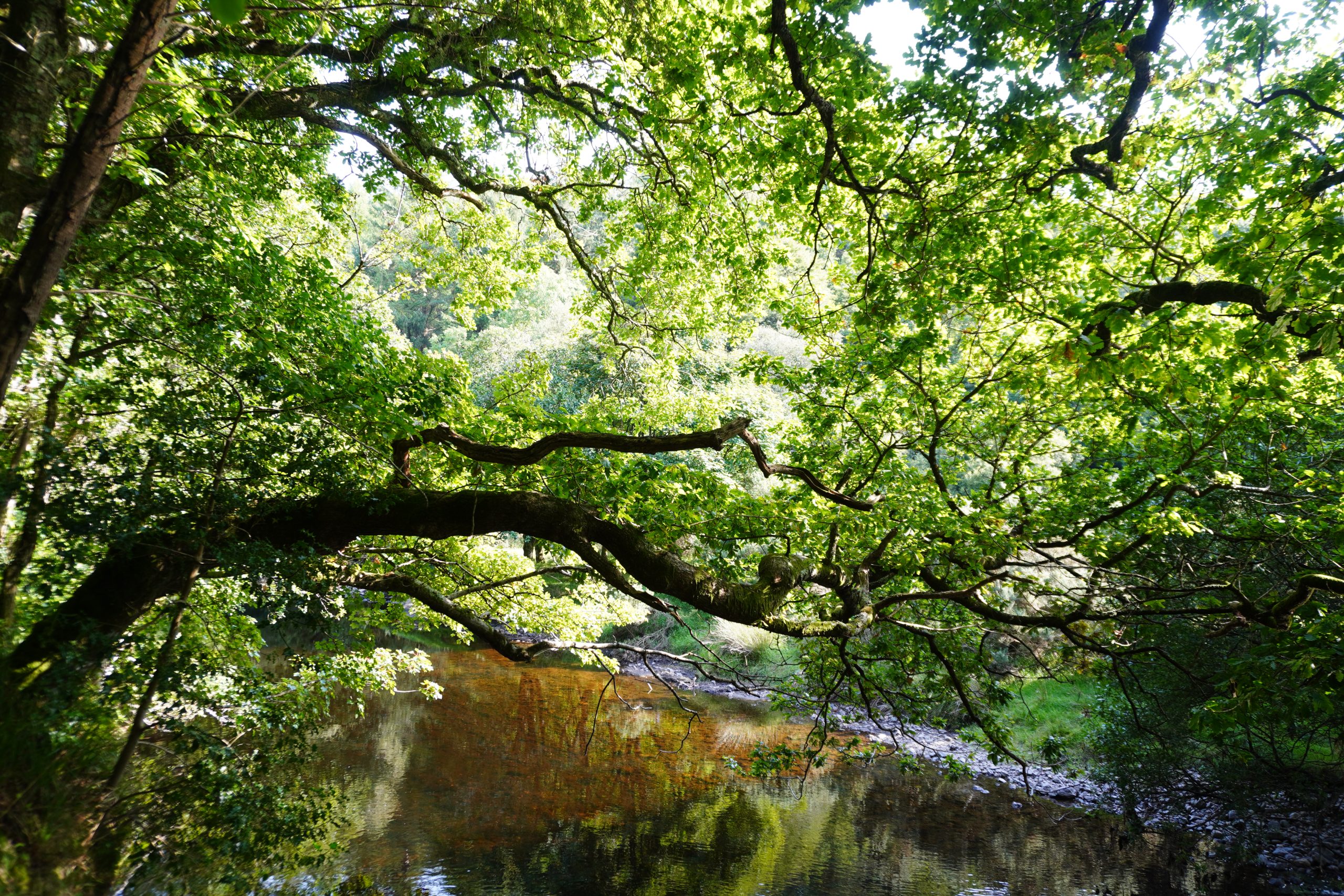
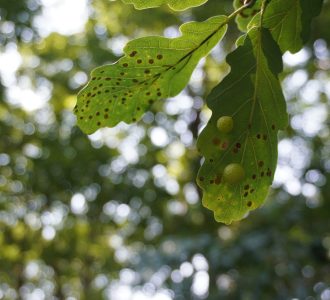 Fraocháns, oak galls and fungi are all easily visible here. Fraocháns are wild blueberries that often grow in the understory of oak woodlands on the east coast. Oak galls are growths found on oak leaves and are the product of gall wasps that rely on oak trees to complete their lifecycle. The gall wasp larvae live inside the gall protected by its growth. Fungi, found through the woods, feed on and break down deadwood, releasing its nutrients and allowing for new plant growth.
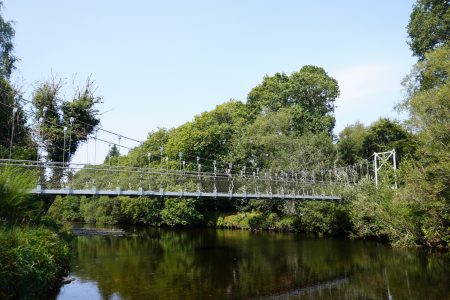
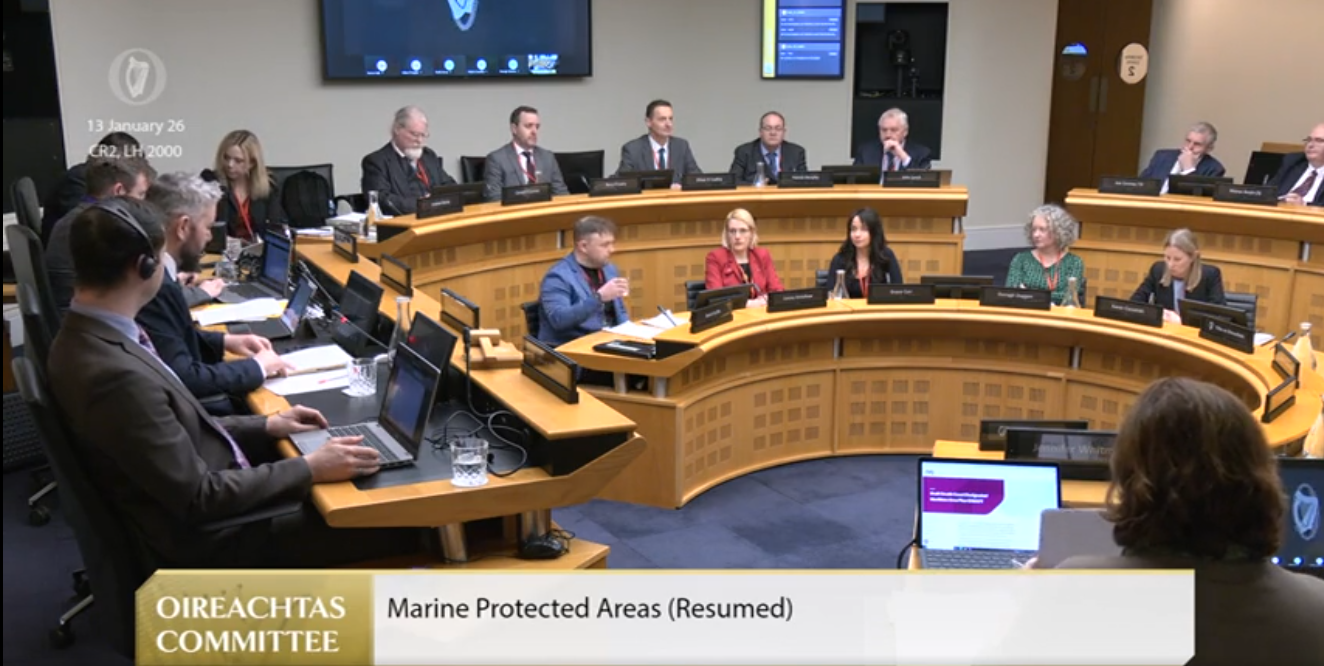
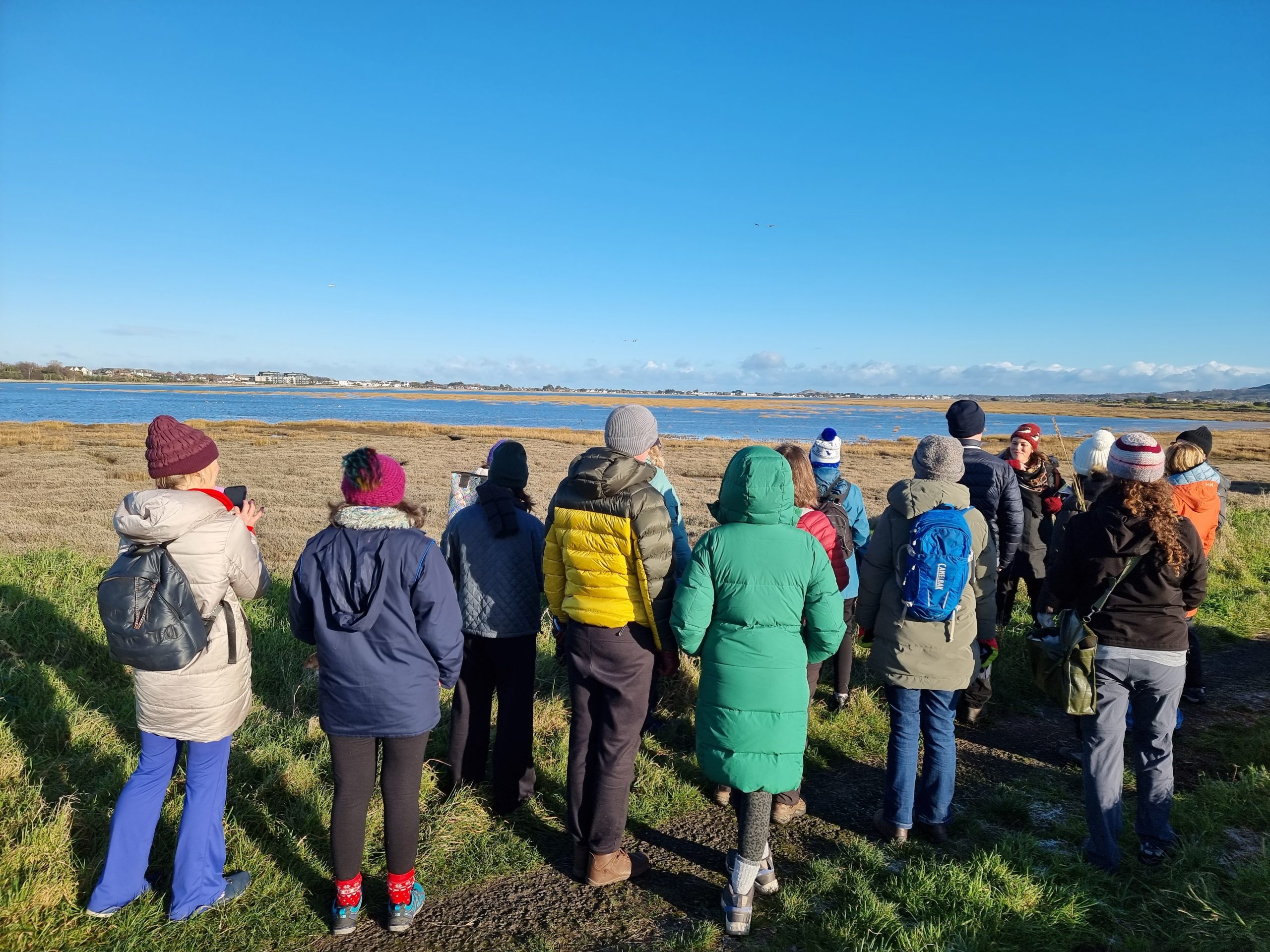
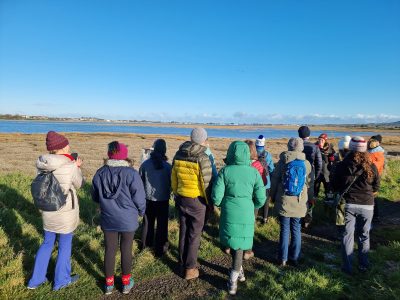
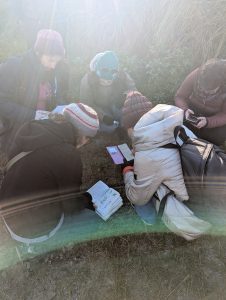
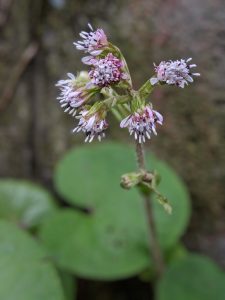
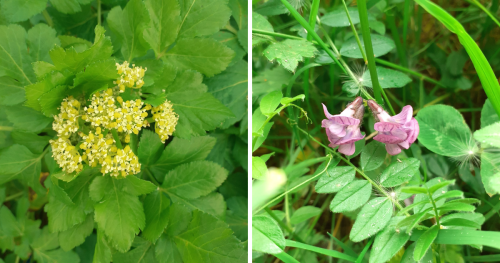

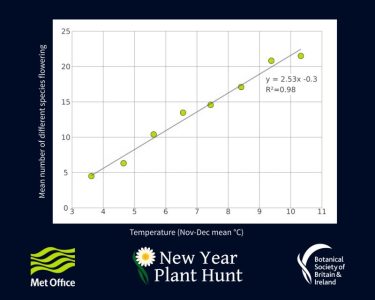
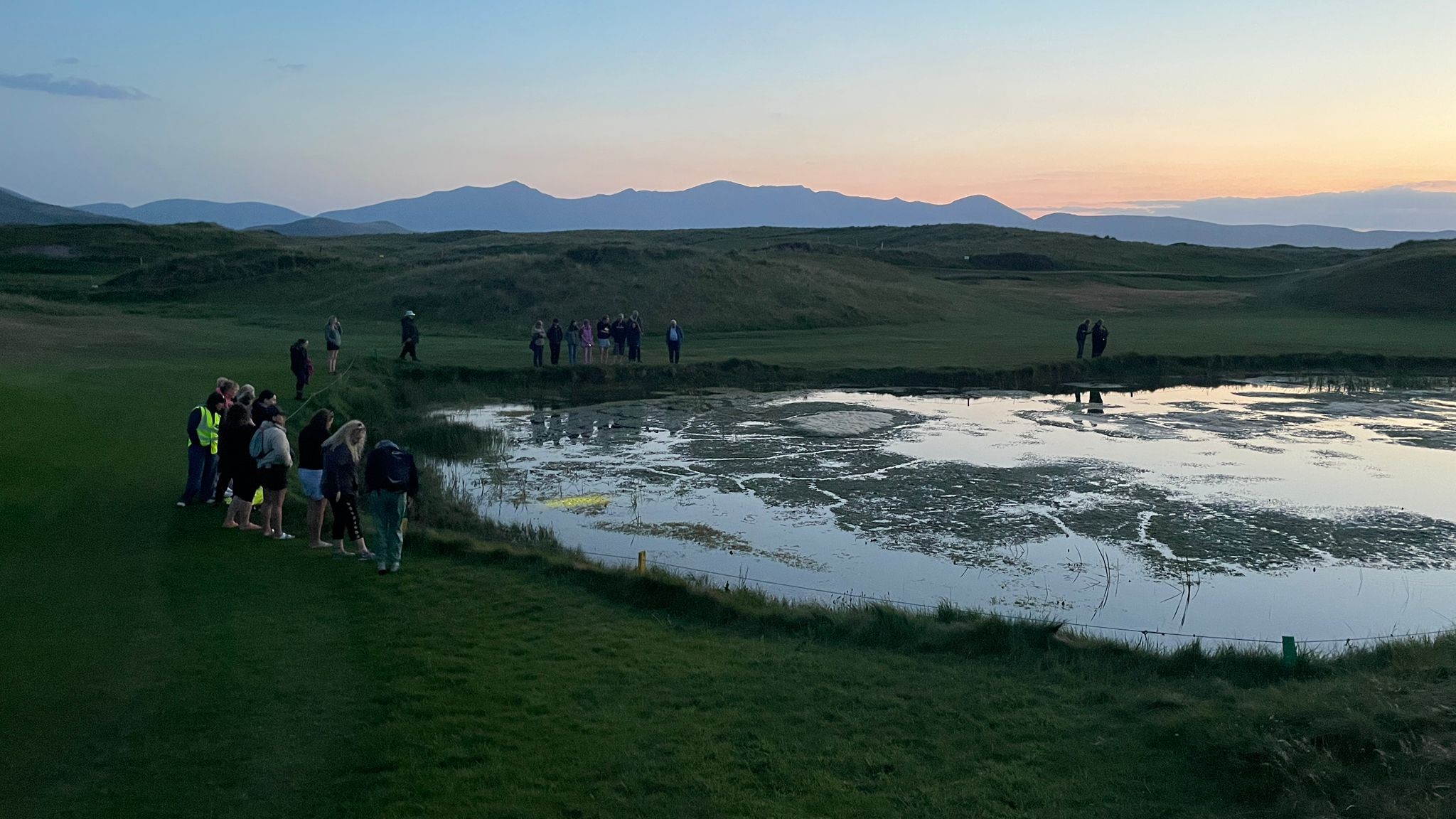
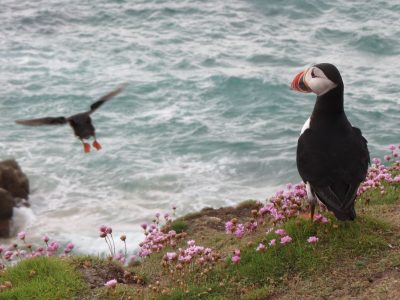
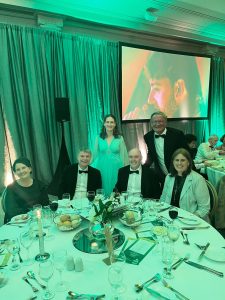
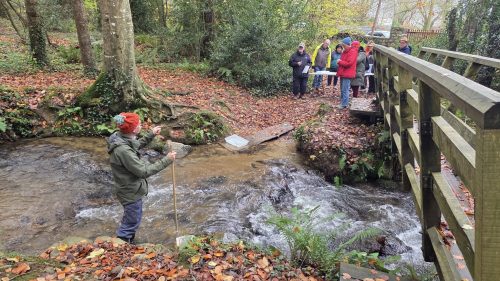
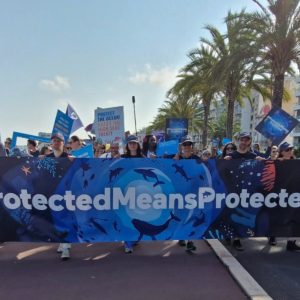
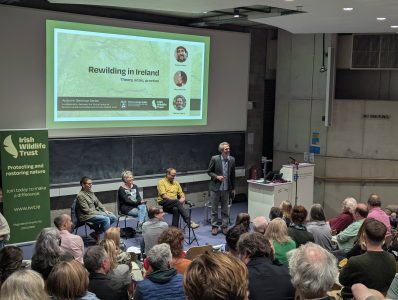
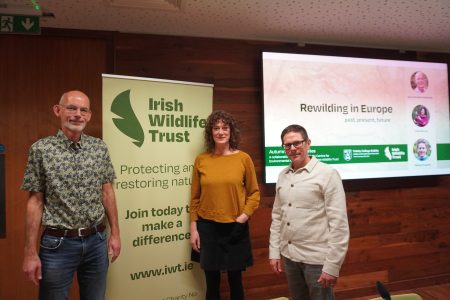
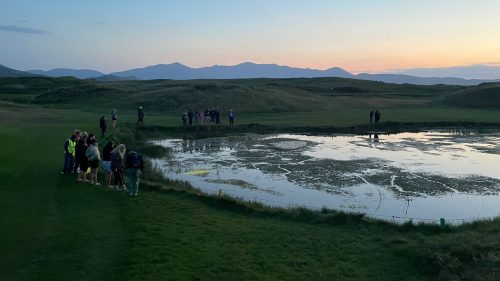
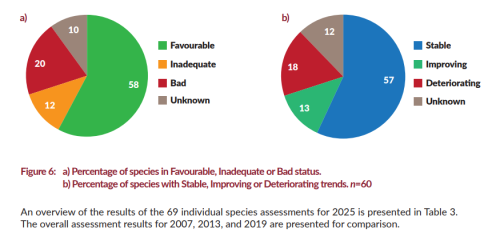
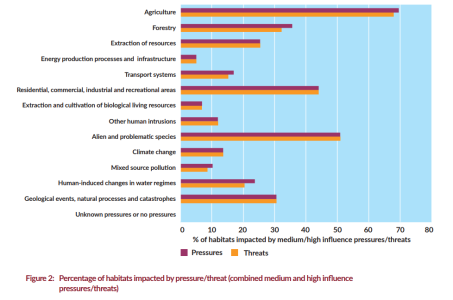
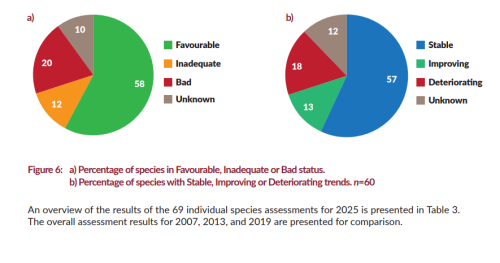

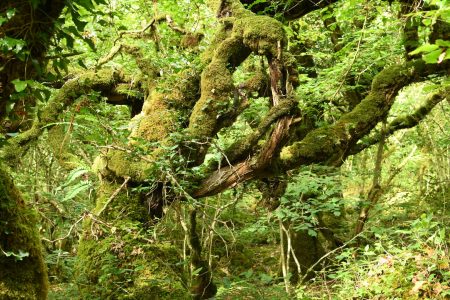
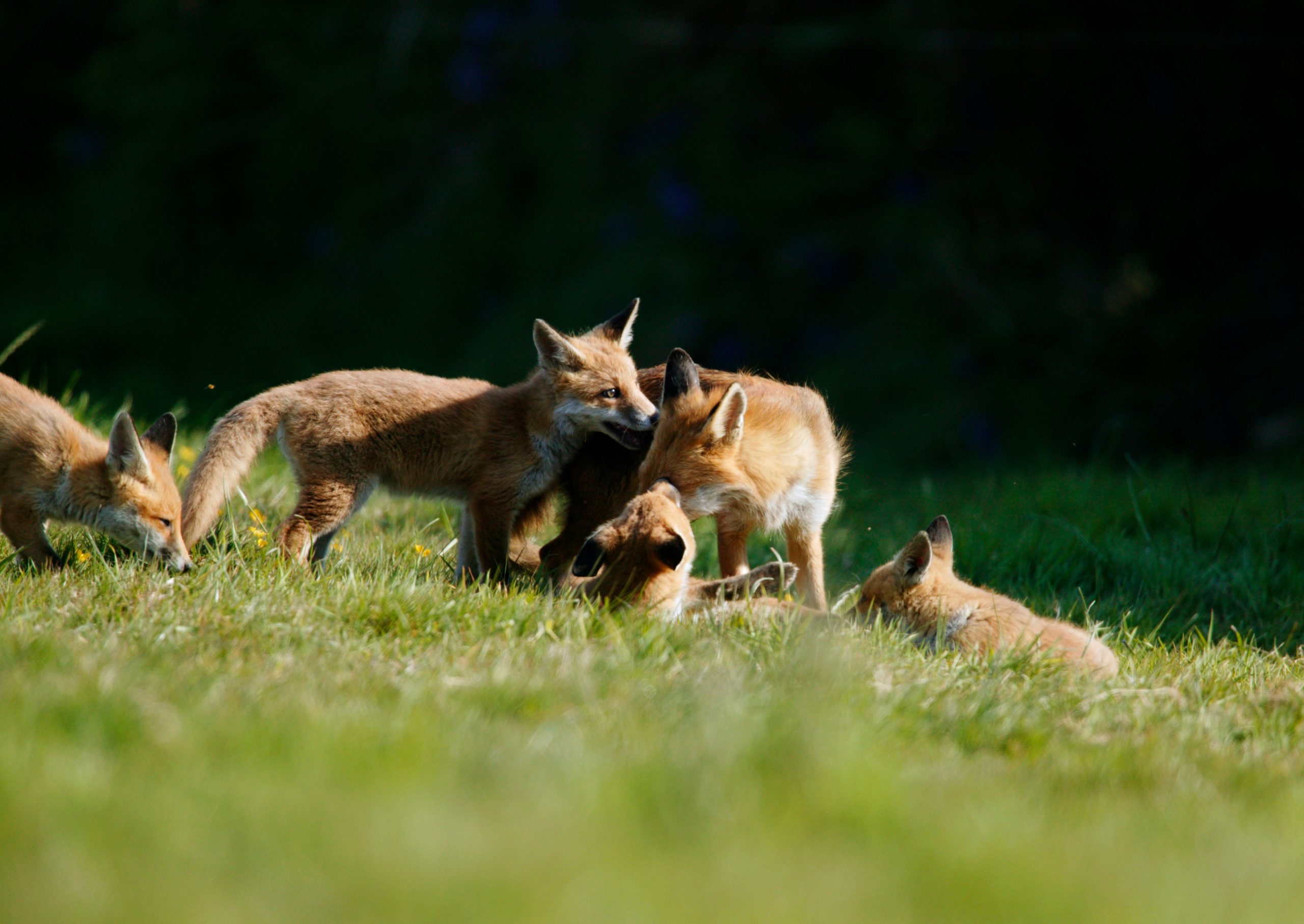
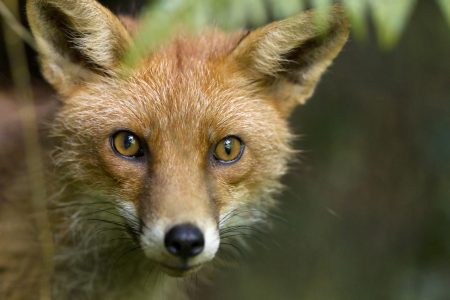
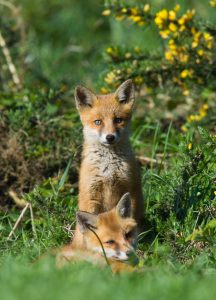
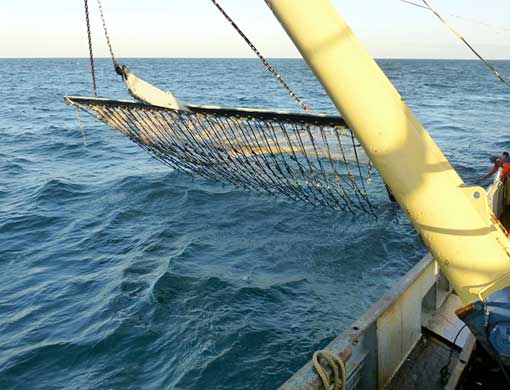

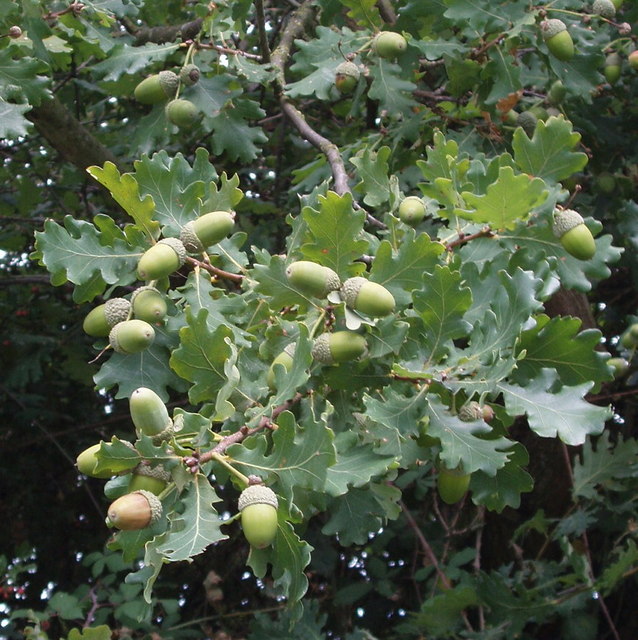



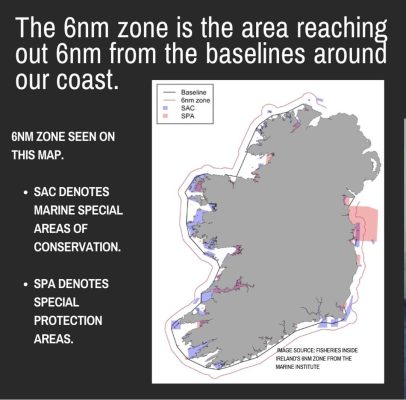
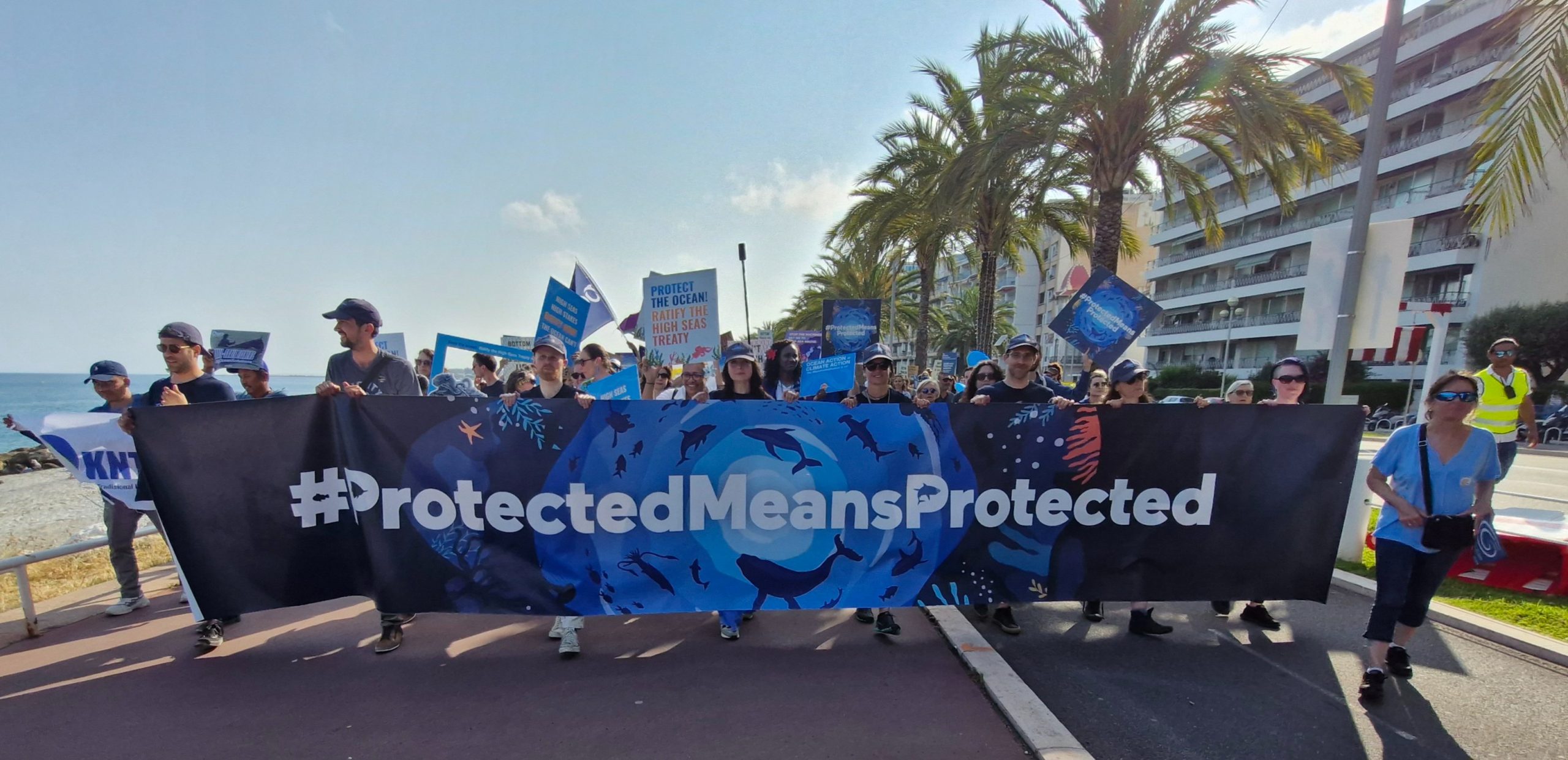
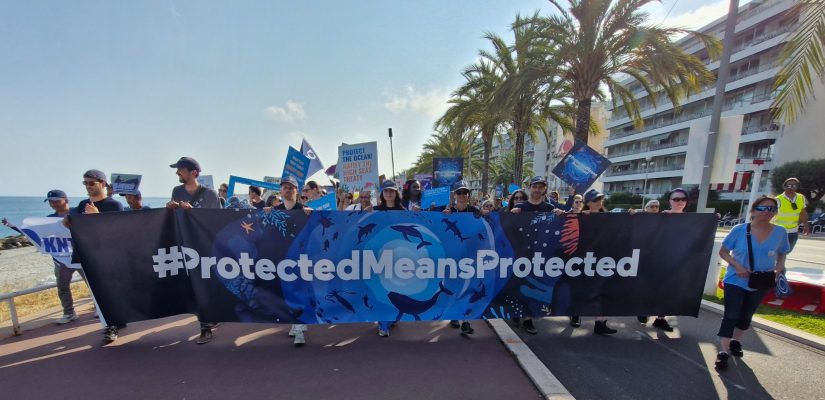
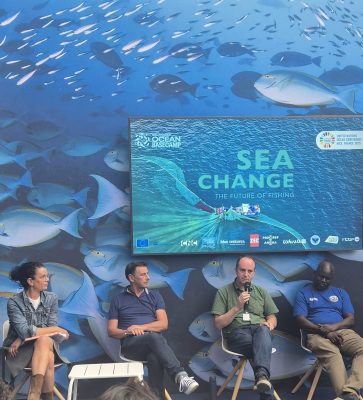

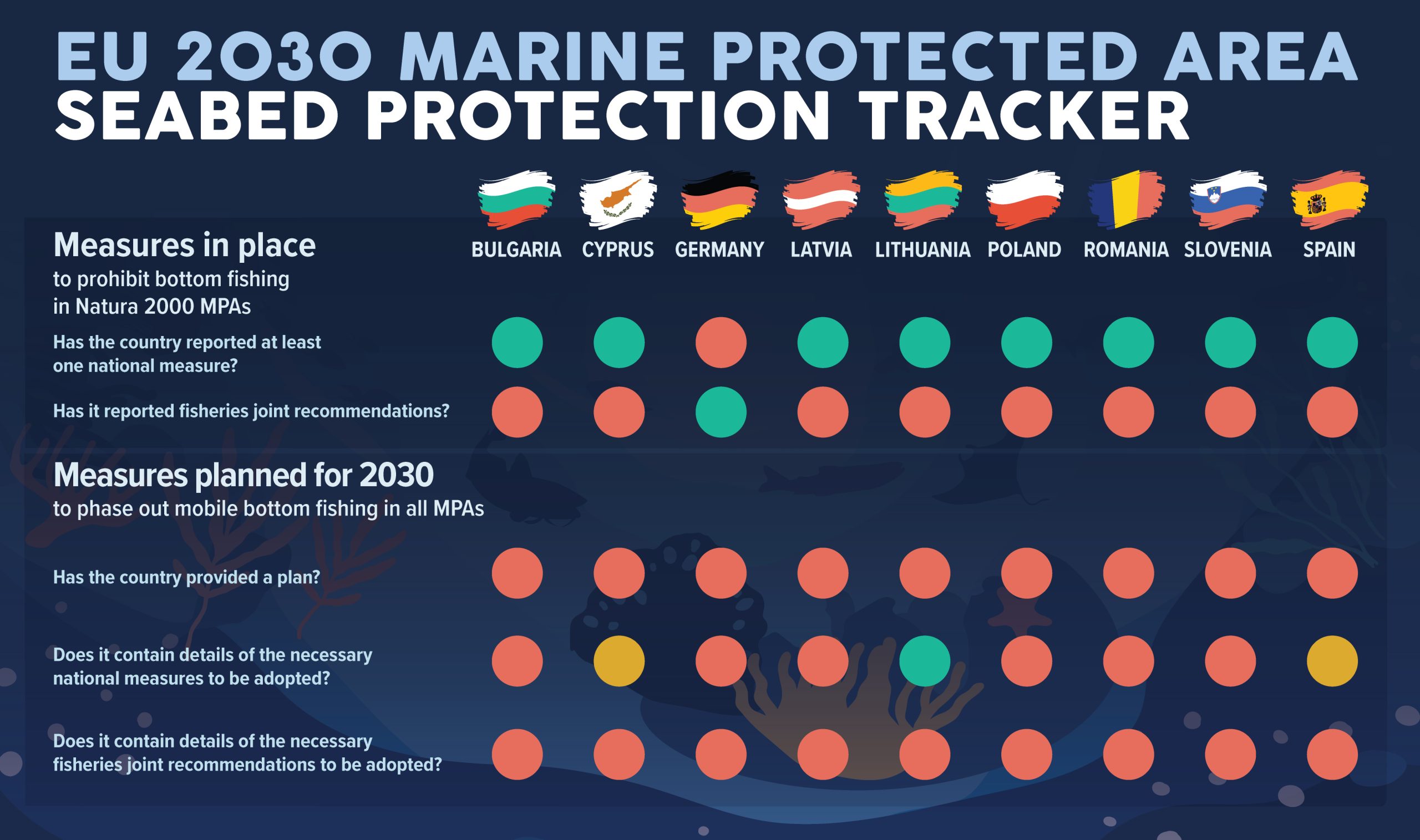
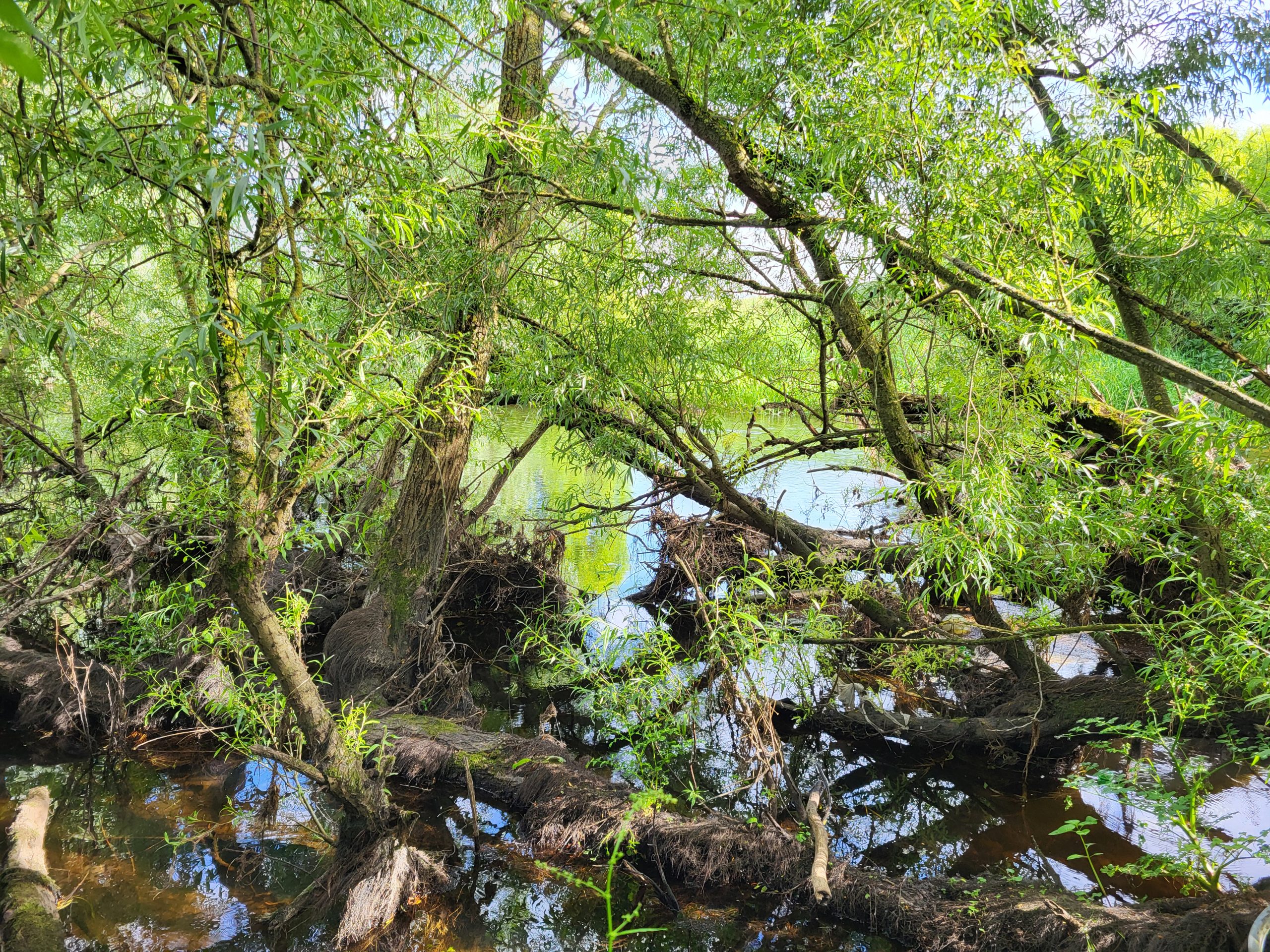
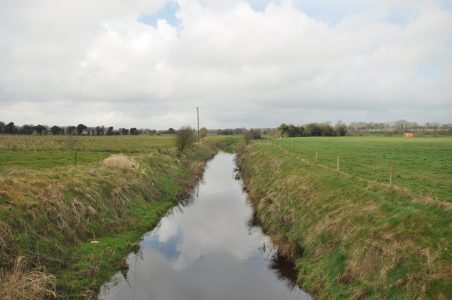
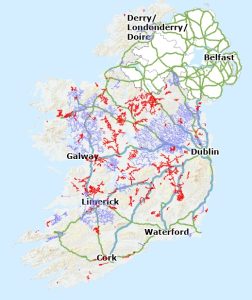 The reason why reform of the ADA is difficult is that it will require the return of farmland that benefited from drainage to the river. Rivers need space and that brings restoration into direct conflict with other land use priorities. Overcoming this should not be difficult, at least in theory. Farm payments need to be decoupled from food production. Some progress has been made on this during this government, in so far that farmers are no longer penalised for having land which is not in agricultural production. So, a farmer with a flooded field doesn’t lose a chunk of their direct payment, which was the case previously. However, a field underwater is a field that is not capable of feeding animals or producing crops, so the balance of costs is still against the farmers. This has to change.
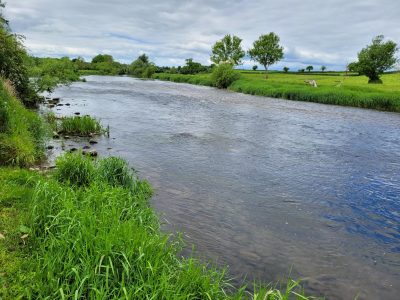
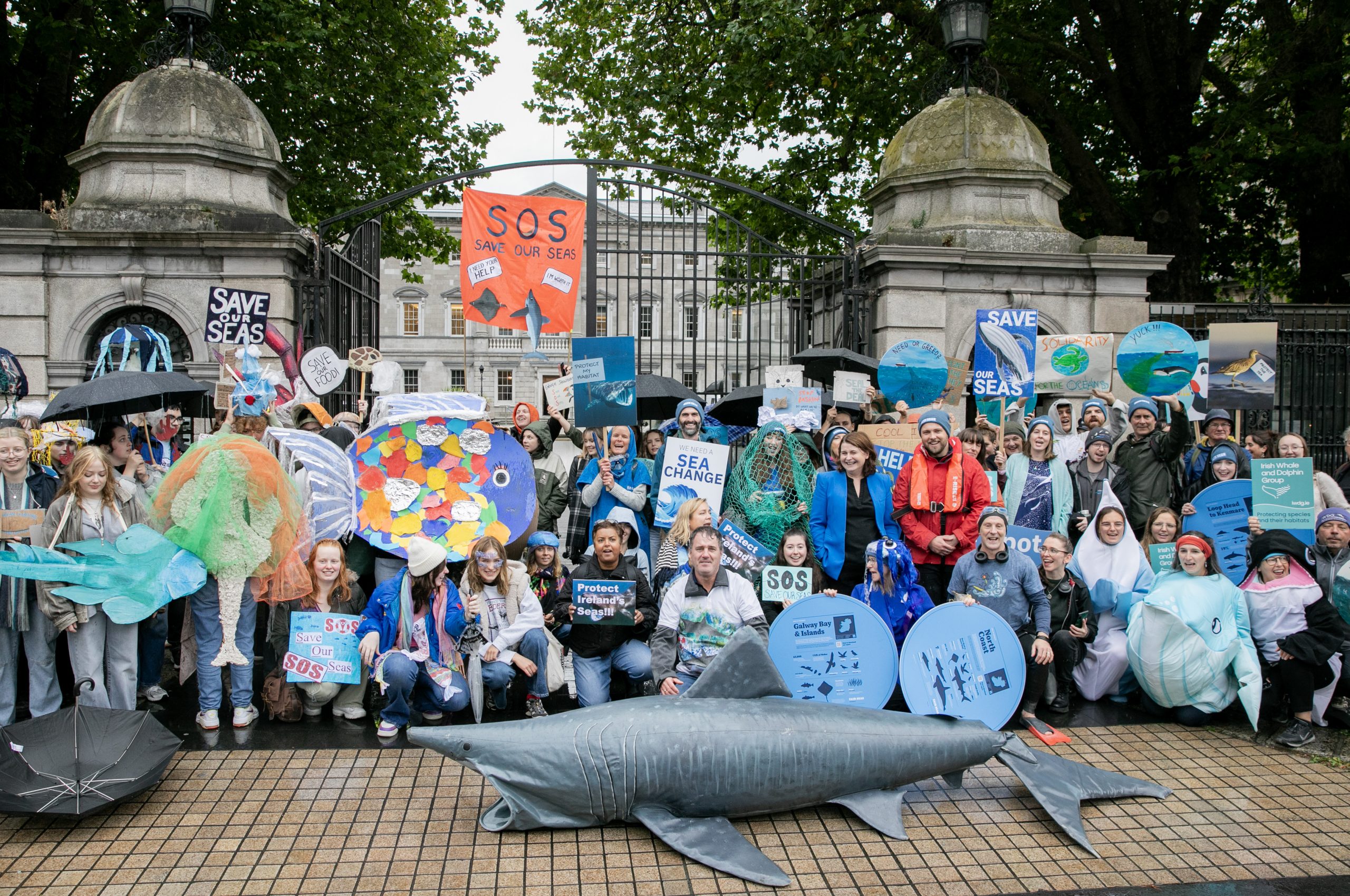
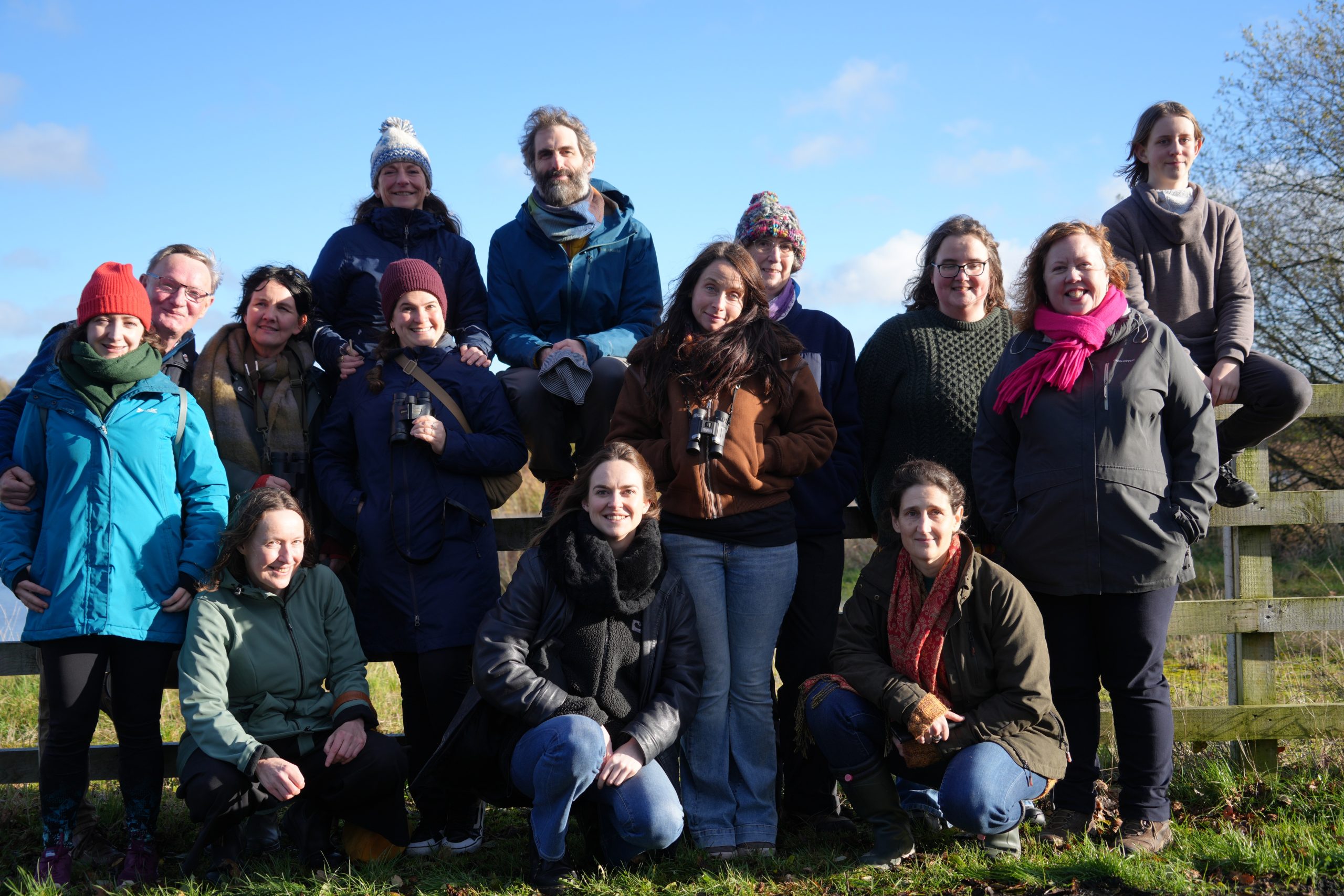
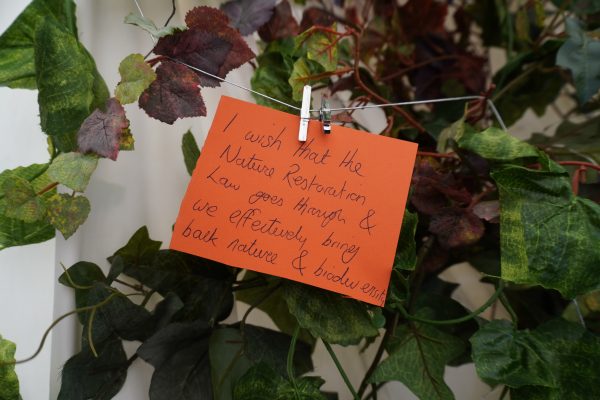
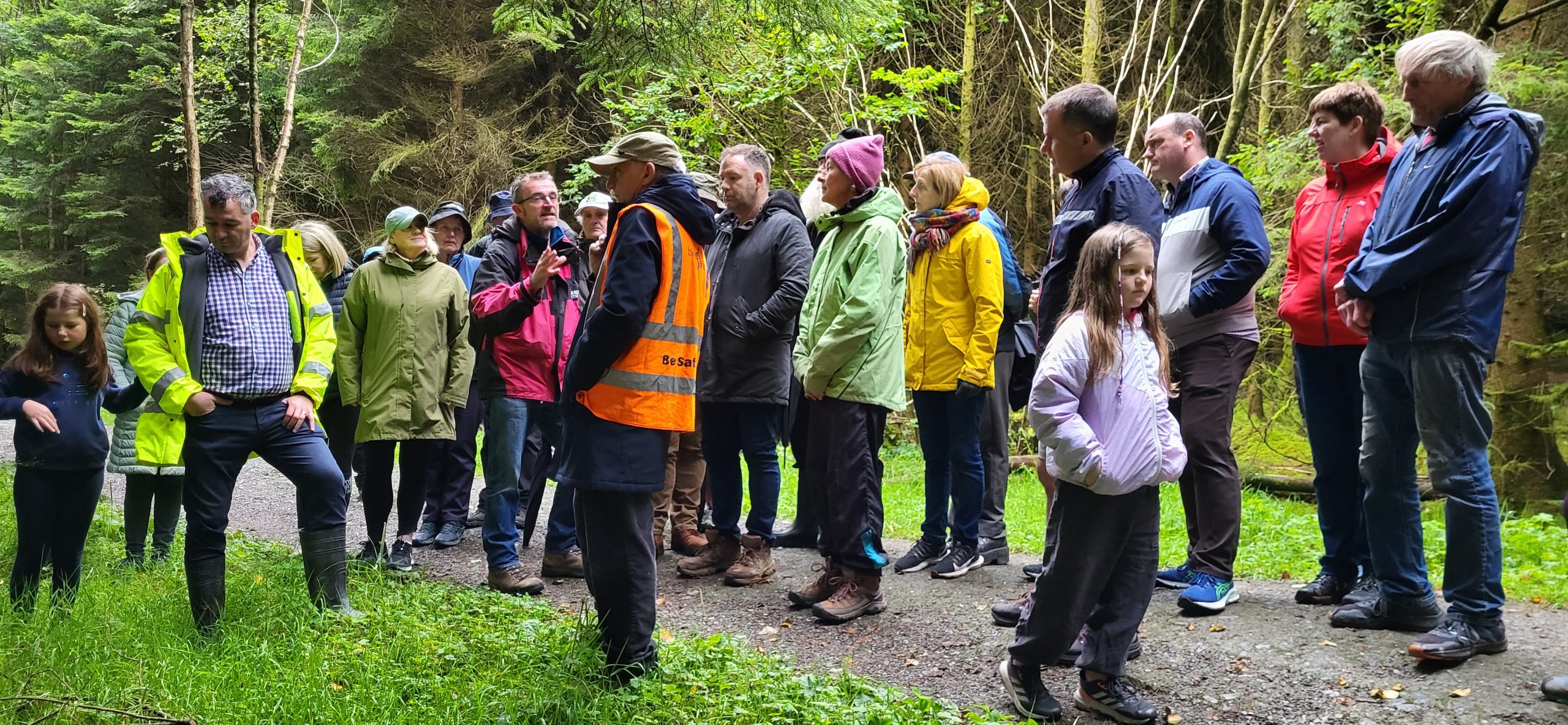
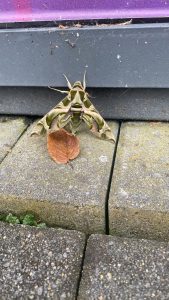

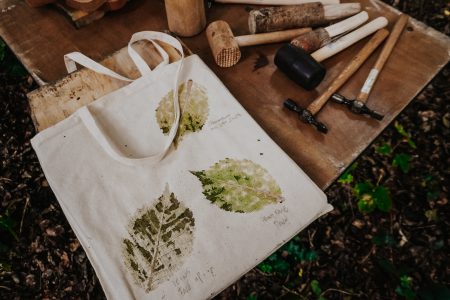
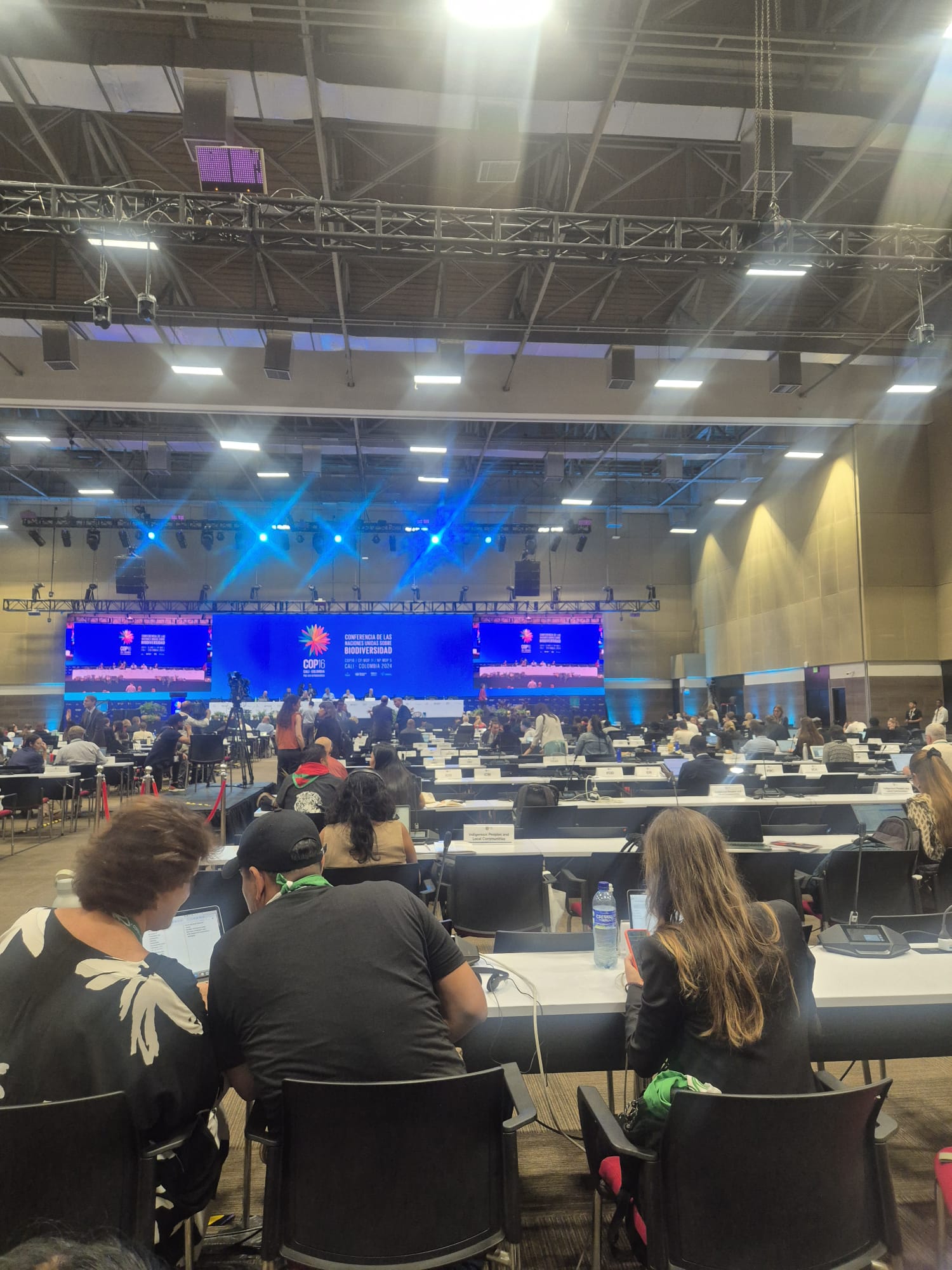

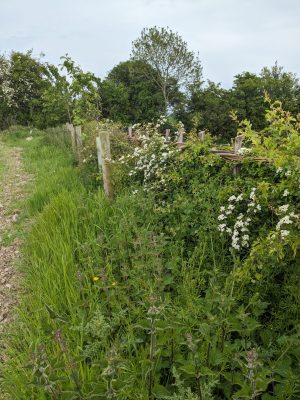
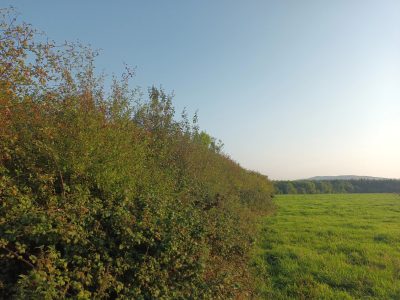
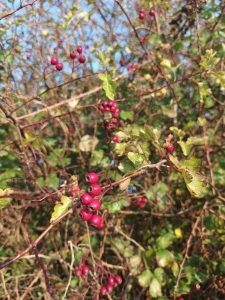 Another new initiative is the Protection of Hedgerows Bill 2024, brought before the Dáil by members of the Climate Bar Association in collaboration with Dr Alan Moore and other hedgerow advocates in Co. Tipperary. The Bill proposes additional restrictions on the removal of significant hedgerows, guided by factors from the Hedgerow Appraisal System 2013. For example, historical and cultural elements, species diversity, structural features, habitat connectivity, and ecosystem services. The Bill is currently before Dáil Éireann at the Second Stage, so stay tuned!