Solitary bees are much more common in Ireland than bumble or honey bees. They don’t live in big colonies or have a social system with a queen.
Where do They Live?
They simply make their own nests inn hollow stems or they make tiny holes in soil, sand or peat and live underground.
What do They Eat?
Solitary bees are very picky about what they will eat as they can’t fly as far as honey bees to find food because of their size. They mostly eat the nectar of wildflowers or and fruit trees. This is why it is important to let the wildflowers in your garden grow.
How to Identify Them
The ashy mining bee is the same size as a honey bee, with black and grey or white hairs. They sometimes look like an ant with wings because of the shape of their b0dy.
Make a Bee Hotel!
You will need:
-wooden box
-bamboo canes or dried, hollow flower stems
Fill your wooden box with the stems or bamboo horizontally , making sure they are tightly packed together. Place your hotel in the sunniest spot of your garden, and you’re done! You will know they’re being used if the holes are being covered by a small circle cut out of a leaf.
Honeybees can recognize and remember human faces, to them we look like strange flowers. They can build respect and trust with people they remember! Bees are also very capable of showing love and affection.
Bees are also self-aware animals, meaning they are aware that they are bees, which not all animals are intelligent enough to know. They can also have emotions! For example, when a bee escapes a spiders web “her demeanor changes, for days after she will be scared of every flower” says Lars Chittka, a German Zoologist. In other words they can go through emotional distress, just like humans.
Why Do We Need Bees?
Bees are essential to our everyday lives. Without them the majority of our plants could not be pollinated, meaning plants could not reproduce and we would not be able to grow crops. Although bees seem like such a small part of our world, and you probably don’t think about them all that much, without them we could not survive.
How Do We Save Them!
The two biggest reason our bee numbers are struggling are habitat loss and pesticides. To combat this we can stop using pesticides, in our own gardens at home and on farmland. We can also plant pollinator friendly flowers like lavender, foxgloves, sunflowers, rosemary and crocuses, but most importantly let the wildflowers in your garden grow.
Ancient Beliefs
The Celts believed that bees were messengers between this world and the afterlife. A bee seen after a death signified that the soul had left the body. Overall seeing a bee was a good omen and some believed that it meant good news was on the way.
There is an ancient Celtic tradition of “telling the bees” which meant the beekeeper families had to tell their hives when there was a major changes in the family like a death or birth, this showed a sign of respect to the bees and you would stay on their good side.
These honey bees live in hollow trees or inside the rooves of houses. They can be found all across Northern Europe. The strain we have here in Ireland is a native species. A large amount of them also live in manmade bee hives as most of the Irish honey bee population are owned by beekeepers.
What do They Eat?
Like most bees, honey bees eat the nectar of lots of different flowers like foxgloves, hydrangeas and poppies.
Remember never to feed a sick bee honey as it could be harmful to them. Instead give them a mix of sugar and water to munch on.
How to Identify Them
Honeybees are a lot smaller than bumblebees, making them easy to tell apart. They also are much less fuzzy from a distance, although, up close you will see that they have lots of tiny hairs in their body.
Give Bees a Helping Hand!
Bees are very vulnerable to extinction due to habitat loss and pesticide use. To help their numbers come back up, plant bee friendly flowers in your garden and encourage the adults around you to stop using pesticides. If we all work together we can make a difference.
These fuzzy friends tend to live in farmlands, fields, a garden, or anywhere where they have access to flowers to feed on. You can find them all across Europe and even Japan.
They find old abandoned mice nests to create their own underground nest that can house up to 400 bees!
What do They Eat?
Bumblebees munch on all different types of flowers such as poppies, roses and foxgloves.
If you ever find a sick bee in need of food, do not give them honey as it could contain harmful ingredients and diseases to bees. Instead, mix sugar and water and leave it out.
How to Identify Them
White tailed bumblebees have an obvious and bright white tail, making them easy to identify.
Give Bees a Helping Hand!
Bees are very vulnerable to extinction due to habitat loss and pesticide use. To help their numbers come back up, plant bee friendly flowers in your garden and encourage the adults around you to stop using pesticides. If we all work together we can make a difference.
It has been a dramatic week in the history of our long and tortured relationship with trees in Ireland. The protests, the outrage among opposition politicians, the people sending emails to their TDs, even the government ministers admitting things need to change, including the State buying land for rewilding “at its most basic”, tells me that biodiversity, and the realisation of what we’ve done to our landscape have landed as mainstream issues.
Yet, despite all of this, there seems to be strong resistance in the government to implementing change where it’s needed most. While forestry can be a complex and sprawling issue, the controversy over the last weeks surrounding Coillte and a private investment fund has thrown light on where we need to see the changes happen. These can be looked at under four headings:
the ‘legacy problem’,
protecting biodiversity from forestry,
restoring our native forests,
transforming the production forests of the future.
Dáil protest 26/1/23
The Legacy Problem
The country has been saddled with a tree cover that extends to c.12% of the land area however our native forests constitute only a tiny fraction of this. Many of the plantations established in the early days when Coillte was the principle actor in this area have been ecologically and economically disastrous. While it is hard to get an accurate figure, Coillte themselves say that 232,000 ha of their 440,000 ha (so about half their estate) is on peatlands which is a major source of greenhouse gases from the decaying peat. Whatever about today’s standards, these early plantations had zero regard for habitats or water quality, with aerial fertilisation using rock phosphate and planting right up to the edge of water courses.
In Coillte’s recently published ‘strategic vision’, the state agency proposes rewetting or rewilding 30,000 ha of this, an entirely inadequate 13% of the total.
The new Forest Strategy has next to nothing to say about this issue, merely saying that “Legacy impacts associated with forests on peat will be assessed and management decisions will be implemented informed by best available science”.
We also know that when these forests are clear-felled, many are being replanted with 100% Sitka spruce even though it is known that this is exacerbating the problems. The Strategy does have some proposed schemes for making these plantations ‘resilient’, i.e. converting them to native or continuous cover woodland however these are set to be mere pilot projects with a very small extent. There is nothing about removing forests altogether to restore open blanket bogs.
In short, we still have no plan for dealing with our legacy problem.
Protecting Biodiversity from Forestry
Some of the most important habitats and species in Ireland are dependent upon open or farmed landscapes. These include, old flower-rich meadows, peat bogs and nesting sites for a range of birds such as hen harrier, curlew, redshank and lapwing, which are all threatened with extinction.
In 2015 the European Commission (EC) stipulated that in order to qualify for state aid “the inappropriate afforestation of sensitive habitats such as peat lands and wetlands will be avoided, as well as the negative effects on areas of high ecological value including areas under high natural value farming [HNV].”
However, the Department of Agriculture still has no working definition of HNV farmland. They say that planting on ‘deep peat’ has stopped but they decided that planting on ‘shallow peat’ was ok, something they decided was anything less than 50cm in depth. I am not aware of any scientific basis for this distinction.
In November last year, in a letter that was published this week on the website of People Before Profit, the EC tore into our new Forest Strategy for “continued extensive planting on peat soils under the current forestry programme”, “the piecemeal encroachment of forestry plantations and roads into open landscapes under high natural value farming and relied upon by open habitat birds, notably the Hen Harrier and the breeding Curlew” and noting that “afforestation has been impacting negatively on rare grassland habitats”. They said that forest planning continues to be “haphazard”, dominated by Sitka spruce and that there is no environmental impact assessment of afforestation.
In data released this week, BirdWatch Ireland accused the government forestry programme of not being compliant with the Bird Directive and noted that 14% of afforestation or replanting since 2014, i.e. since the EC warning, has taken place in “hotspots for six of our most threatened breeding waders” including curlew, lapwing, redshank and snipe.
The current Forest Strategy has no proposals for addressing this on-ongoing destruction, much of which has occurred under the new government and since the Dáil declared a climate and biodiversity emergency in 2019. Much hope is placed on a forthcoming ‘land use review’ and discussion about what the ‘right tree in the right place for the right reasons’ actually means. Two years into Minister Pippa Hackett’s ‘Project Woodland’ this overused slogan remains a hazy concept.
Restoring our Native Forests
The restoration of a functioning, native forest ecosystem across Ireland is one of the most effective measures we could take for biodiversity, climate, water and people. It should be the project of the century to bring the people of our island together. The best way to achieve this is through the managed natural regeneration/rewilding of land, the control of grazing deer and sheep to allow existing pockets of native forest to expand and the use of river corridors to join up these pockets to establish a coherent ecosystem.
On the plus side, a landowner looking for native forest options will find that the premiums are generous: €1,103 per ha per annum for 15 years, or 20 years if you’re a farmer. However, the government’s targets are only for 1,150ha per year out of the 8,000ha total annual target. This, even when you add other nature-based schemes such as forests for water and rewilding, amount to only 14% of proposed new afforestation.
This was described by the National Parks and Wildlife Service in their submission to the draft Strategy as “inadequate”. They calculated that just meeting the (soon-to-be legally binding) target for restoring old oak woodlands under the EU’s Nature Restoration Law, will require 1,271ha/p.a. of just this type of forest (we also have targets for alluvial woodland). They also noted that the incentive for natural regeneration/rewilding, for which a landowner will receive €350/ha/p.a. is actually a perverse incentive to clear away scrub and emergent woodland as he/she will get three times the income to have it planted with saplings.
So, we need native woodland expansion and restoration to be much more ambitious. It should represent at least half the total targets which would send a signal that the government believes that this task is at least as important as keeping the timber industry on its feet. And while it was welcome to see a mention of rewilding, it would be better if this separate target was scrapped. Instead, it should be made clear that all new native woodland should prioritise rewilding/natural regeneration and only resort to tree-planting where this is deemed ecologically appropriate.
Transforming Production Forests
In 2019 the Dáil voted to “make a fundamental change in forestry policy away from a narrow vision of 30 year cycle to a permanent woodland approach”. The motion was initiated by the Green Party. Late last year, the Oireachtas cross-party committee on Environment and Climate Action published a report on biodiversity recommending “that priority be given to implementing the Continuous Cover Forestry, CCF system on a broader basis for greater sustainable forest management”. This reflects the findings of extensive public consultation since the end of 2021 and even a statement from Minister for the Environment, Eamon Ryan, who wrote on Twitter in January that “We must move away from upland, mono-culture & clear-fell plantations to allowing trees re-seed naturally in ‘continuous cover’ forests”.
Yet, despite all of this we are seeing an attempt to gaslight people by claiming that the new Forest Programme will not have any monoculture planting all.
For years now there has been a requirement for stands of Sitka spruce to be hidden behind a trim of native trees, amounting to 10% of the total forest stand, while there has also been a requirement for 15% ‘space for nature’. Under the new programme the trim of native trees is set to increase to 20%, so the move from monoculture to ‘not monoculture’ for some amounts to an increase of 10% in the area for native trees. 65% will continue to be blocks of single-species.
The ‘space for nature’ requirement meanwhile has been heavily criticised as under the existing Forest Standards Manual these ‘Areas for Biodiversity Enhancement’ can include setbacks from public roads, railway lines, internal roads, houses and other buildings or “other features, if deemed appropriate by the Forest Service”. Once again, we see that nature is left with the leftovers whereas a real ‘transformation’ would see nature as fundamental to the future of forestry. Nature needs landscapes, not the dregs.
These monocultures will continue to be planted for future clear-fell so it’s very hard to see how anyone can defend this very minor adjustment as somehow moving away from the dominant model of forestry practiced on this island to-date.
As pointed out by TD Richard Boyd-Barrett in the Dáil this week, this entire approach is only one beetle away from ruination. Ireland has so far escaped the infestation of the eight-toothed spruce bark beetle Ips typographus, which has ravaged plantations across continental Europe and has been in the south of England since 2018. How the wet-loving conifers of the Pacific north-west will cope with a drought-prone future climate also gives reasons to doubt even the commercial viability of such a single-species focus.
The new Forest Programme has the potential to deliver €1.3 billion to rural Ireland. This in itself is a significant achievement for Minister Hackett. That politicians are ready to reform the mandate of Coillte and to start using public money to buy land for rewilding is positive. From this year, farmers are no longer penalised for having native vegetation on their land and up to a half of any farm can be rewilded without losing payments. I am hearing that farmers are keen themselves to plant native trees or switch to a continuous cover approach. This is all very positive.
But because the Forest Programme is 100% funded by the taxpayer, it places the government in a unique position to steer the future of the sector. We should not be providing any premiums to monocultures of any kind but instead invest in new training and sylvicultural practices that bring real long-term benefits.
We now need some political bravery to listen to what is being said outside of the industry bubble and do what is right and in the public interest. It is not too late, but we’ll find out soon if that bravery exists.
Irish Wildlife Trust welcomes comments from Tánaiste that the State should buy land for rewilding
24th January 2023
The Irish Wildlife Trust (IWT) welcomes the comments from Tánaiste Micheál Martin, which were reported in today’s Irish Independent newspaper (24/1/23), that the State “must purchase land for native woodlands and for simple rewilding at its most basic because the biodiversity challenge is so crucial”. His comments come amid recent controversy surrounding the decision by State-owned forester Coillte to work with a private investment fund to create more plantations of non-native conifers.
The IWT believes that we cannot leave it to private, for-profit interests to address the climate and biodiversity crisis and that changes to land use can only deliver long-term benefits if they have the support of local communities. This means using public money to buy land for the creation of new nature reserves or the expansion of national parks. Local communities could then be empowered to help manage these areas for their ecological, educational and amenity benefits.
The IWT will take part in a protest at the Dáil this Thursday in relation to forestry. Despite the Dáil calling for a “fundamental change” to our approach to forests in October 2019, and the Oireachtas Committee on Environment and Climate Action calling for a “transition away from the practice of monocultural forestry” in November 2022, the latest draft of the Forest Strategy and €1.3 billion Implementation Plan indicates that the majority of new forests will be dominated by single-species stands of trees, particularly Sitka spruce. These are bad for climate, bad for biodiversity and water and are bad for the communities that are forced to live with them.
We need to move to a system where forest establishment is based upon natural regeneration, where native forests are at least as much a priority as commercial timber production, and where forests for commercial production are based upon a diversity of species, ages and a ‘continuous cover’ of trees.
The ‘Save Our Forests, Save Our Land’ protest will take place from 12:30pm outside the Dáil on Kildare Street this Thursday, January 26th.
I have written before about the need for rewilding the Phoenix Park, Dublin’s largest urban green space. I bemoan the intensive level of management by the Office of Public Works which minimises it’s biodiversity value: dead or fallen trees cleared away, poor management of woodland areas and a continued emphasis on replanting non-native trees. I also criticised the very low diversity of flowers in the expansive meadows which in turn leads to nearly no flying insects, even in high summer.
I had long wondered why this was; the meadows are old and have never been fertilised or sprayed with herbicides. If they were on a farm anywhere else they would be full of orchids, bees, wild flowers and butterflies. Yet, they are practically barren. I had thought that perhaps the isolation of the Park – being surrounded by concrete and tarmac – meant there was no source of seeds for plants to colonise the grasslands. I therefore thought that seeding the grasslands with native wildflowers would be the solution, an idea I put to the Park superintendent a few years back. The response was that there would be no point in doing this as the deer would eat them, an idea I dismissed at the time but which I have to admit now is correct.
There are few areas of the Park which are out of bounds to the fallow deer, which were brought from Britain in the 1600s by the Duke of Ormond for his hunting pleasure. Where they exist, such as near the visitor centre with its popular café and children’s playground, grassy areas are dominated in summer by tall stands of cow parsley and hogweed, along with vetches and buttercups. Hogweed and cow parsley are among Ireland’s commonest meadow flowers and are wonderful for insects but their names also hint at their nutritional value for livestock. And they are all but absent on the vast plains of the Park which are dominated by a handful of grasses with low biodiversity. It is now clear to me that is not due to a lack of seeds but because the deer are eating them, just as the superintendent had said.
Expanses of near-barren grassland should be full of flowers and insects
The fallow deer are not a native species. Their original range was around the Mediterranean basin and present-day Turkey but were introduced widely across Western Europe by the Romans and later in the Middle Ages to populate royal hunting parks, including in Ireland and Britain.
Today there are about 600 deer in the Park, a number that is managed through culling every autumn. They are immensely popular, the herds of deer are frequently ringed with people, many getting too close. Against the warnings of the Park staff, people feed them carrots and crisps and have even taken to leaving their post-Halloween pumpkins for them. But far from being an important part of our biodiversity the deer are, in fact, a major pressure on it and are holding the Park back from reaching its potential. I think it’s now time to get rid of them.
Deer across Ireland are increasingly a problem. Although there is still no data to estimate their numbers, it is clear that these are increasing. In the 1970s deer were rare but legal protection under the Wildlife Act, along with perhaps a decline in hunting and no natural predators, has meant there are now few areas of Ireland without a significant population. With the exception of the red deer in Killarney, which has been in Ireland at least since the Neolithic Age 5,000 years ago (although there are studies suggesting it was also introduced by people) all of these deer are alien species. These are mostly Sika deer, brought from Japan in the 1860s, and which are a routine sight on the Dublin or Wicklow hills but the fallow deer are also abundant in parts of the Midlands, while red deer from Scottish stock are found in Donegal and parts of the eastern lowlands, such as Co. Meath.
Prominent foresters in Ireland decry the abundance of deer which inhibit, or prevent completely, the growth of trees, whether that is planted saplings, which need to be protected with plastic tubes or high fences, or seedlings that have naturally generated. Along with the hundreds of thousands of sheep which crowd the hills, the deer are a serious limiting factor in meeting our ambition to drastically expand forest cover – regardless of whether that is for purely nature or commercial purposes.
This can be seen in the Phoenix Park where trees are unable to seed themselves as tasty new leaves are quickly sought out by the hungry ungulates. Leaves are more nutritious than grass, which explains why the grasslands do not appear overgrazed (they still look quite tussocky even in winter) and why the canopies of trees form a near perfect straight line approximately two metres above the ground – the maximum height to which the deer can reach. Every shoot and bud within access is quickly devoured.
Fallow deer – time to go
But while the impacts of deer on tree regeneration have been acknowledged, the impacts on grassland biodiversity are much less so. But in seeking out tasty broadleaves the alien deer have left the Park a near-dead zone for plant and insect life.
Removing the deer from the Park would not be popular, at least at first. But I think few Dubliners realise the price that we pay for having them. They are the reason you can’t walk on a summer’s day through a flower rich meadow humming with bees, grasshoppers and butterflies. They are, at least partly, the reason why there is no new native woodland in the Park. They are the reason why the Park is surprisingly poor for nesting song birds (too much grazing means too little scrub meaning to few nesting places).
We don’t need to get rid of deer entirely. However it is clear that 600 is too high a number. And maybe the Park could support a small herd of native red deer instead of the alien fallow? Celebrating the fallow deer is hardly any different to saying we should keep the rhododendron in Killarney because they are pretty. In fact, the deer contribute to a Disneyfication of nature that has little to do with biodiversity.
Urban green spaces need to be a part of our response to the biodiversity and climate emergency. This includes their role in educating people as to what biodiversity is, why it is important and the joy in reconnecting with that – rather than the potted and stunted version we get in places like the Phoenix Park. Getting rid of the fallow deer in the Park would be an important step on this road.
Pádraic Fogarty
There is a public consultation on deer management in Ireland which is open until February 10th:
EU Nature Restoration Law – What does it mean for marine conservation?
What’s happening?
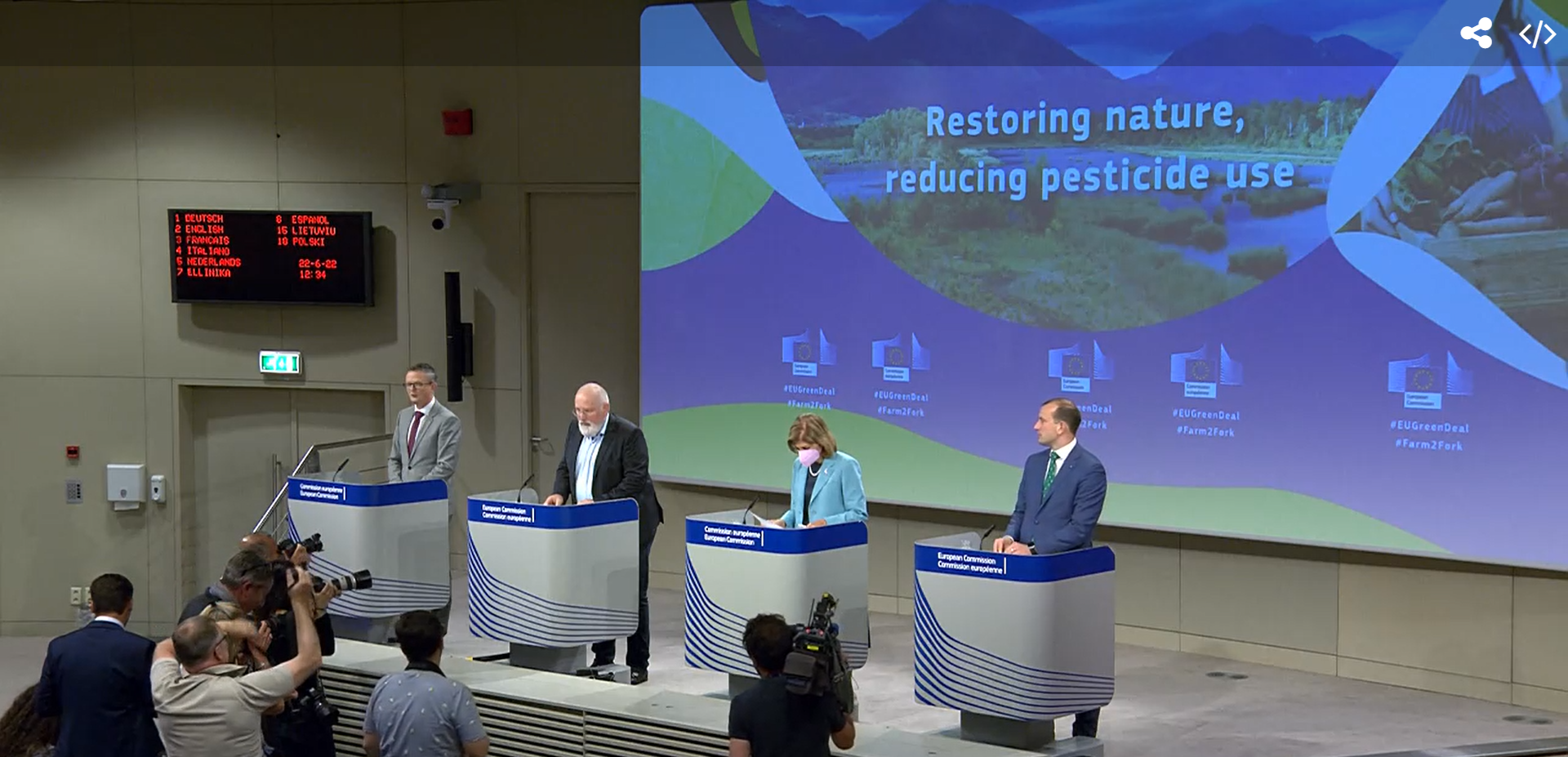
In June 2022 the European Commission proposed the Nature Restoration Law (NRL) to bring nature back to Europe. This law has legally binding restoration targets for marine, freshwater and terrestrial ecosystems. The goal is to have 20% of land and sea ecosystems restored in Europe by 2030, and once the law is in place member states are expected to submit National Restoration Plans to the commission within 2 years. Over 80% of EU habitats have poor or bad conservation status and are in decline, so Europe can no longer afford to sit back and allow the degradation of its ecosystems by destructive practices.
Why is it important?
Habitats and species are subject to devastating biodiversity loss for a myriad of reasons including agriculture, overfishing and pollution. Restoring biodiversity is a major action which can be taken to mitigate climate change and the devastating consequences it will bring on, such as increased extreme weather events. Just some of the benefits that healthy ecosystems provide include clean air and water, as well as crop pollination, and these ‘ecosystem services’ will no longer occur if nature is not protected and restored from damaging human activities and behaviour. Restoring nature will also benefit the economy. Every €1 which is invested into nature restoration will bring about €8 – €38 in socio-economic benefits.
What’s next?
On the 20th December, ministers of the EU’s Environmental Council had their first chance to discuss the proposal for the EU Nature Restoration Law. The tone of these initial talks paved the way for the upcoming negotiations in 2023. Support from member states for a robust and timely Nature Restoration Law is crucial. Several member states reacted positively to the proposed law with some even calling for more ambitious targets to restore nature.
However, Ireland’s reaction was not so positive. Ireland stated a lack of data for certain ecosystems and species which will constrain the ability to set restoration targets, and noted a lack of funding to conduct research in these areas.
Another issue raised was the need to produce food that will be affordable to consumers. It also called for more flexibility given the different member states circumstances, which will weaken the robustness needed for a successful NRL at a pan European level.
Some of these points raised are notable, but worrying about financial impacts and wanting flexibility seems redundant when there will be intense negative financial and human impacts if inadequate action is taken.
These comments also directly conflict with the positive responses at COP15 to restore 30% of degraded habitats by 2030. A robust and ambitious NRL is a key element in starting action towards this and would be an important component to the EU Biodiversity Strategy. The ENVI committee (which is made up of Members of the European Parliament from member states) is meeting today, on the 12th of January, to present the draft report. We hope they will have acknowledged and taken into account some key asks from Marine NGO’s joint position paper.
What Marine NGO’s are calling for
It is key that Member States agree to the overarching target of restoring at least 20% of the land, and at least 20% of the seas in the EU by 2030.
Protecting nature is no longer enough, large-scale areas of restoration and effective protection are needed to ensure a halt to biodiversity loss and will result in a world that is more resilient to the effects of climate change.
The relationship between the Common Fisheries Policy and the NRL needs to be clarified to ensure that areas are managed and protected after they are restored. The NRL must not end up powerless to prevent destructive industrial fishing activities within the boundaries of restored areas. This will be difficult due to member states sharing fishing rights in waters but it is imperative for the success of the NRL in marine areas. Member states should be able to regulate any destructive fishing practices in its waters without a blockage from other member states who have a short term economic interest in the area but no long term social and environmental interests.
The involvement of EU citizens is crucial for each member state creating its restoration plans. Transparency of these plans and effective stakeholder engagement is necessary to give the best possible chance of success to restoration areas.
There must also be solid financing available for the NRL and the following monitoring and enforcement needed. Member states should assess the budgets needed for restoration plans and there should be an obligation for the Commission to also assess any existing EU funding support.
What are the benefits of a robust Nature Restoration Law?
Seas at Risk, a coalition of European marine NGO’s, state in a report that ‘Restoring EU seas can bring back the sea’s abundant web of life, allowing marine and coastal ecosystems to perform their natural functions and support life on Earth.’ The benefits of nature restoration take time to show so it must be agreed that these targets will be met in a timely manner. Restoring habitats and nature will not only benefit biodiversity, it will also benefit the EU’s contribution to the 2050 climate neutrality target. Science shows that we need to tackle the biodiversity crisis now before it is too late.
Fair Seas are working to create an ecologically coherent network of Marine Protected Areas (MPA’s) in Ireland which ties in with the goals of the NRL and the work of several European Marine NGO’s. A main goal is to get a legal definition of a ‘Marine Protected Area’ into Irish law as there is currently none. The Irish government published the general scheme of the MPA legislation in December 2022 and Fair Seas has produced a white paper outlining the asks of the campaign to ensure this new legislation provides effective marine protection.
Many of the areas of interest in Irish waters noted in the recent report Revitalising Our Seas , have ecosystems which will directly impact climate change positively if they are protected. Many of these areas are also home to several species which fall under Annex IV of the Habitats Directive and are meant to be protected in their natural ranges. Restoring and protecting these areas through a NRL would get Ireland well on the way to hitting the biodiversity targets which they have promised to meet.
Are we turning a corner? Or are we stuck in a dead end? Here’s a round up of what happened, and what didn’t, in 2022.
February saw the launch of ‘Fair Seas’, a coalition of groups, including the Irish Wildlife Trust, dedicated to the protection of 30% of our marine waters by 2030. Ireland has globally important ocean habitat yet this enjoys miserably low levels of protection. Fair Seas marks a significant increase in focus on the sea and, in their report ‘Revitalising Our Seas’, they have identified where the best current scientific data suggests our Marine Protected Areas (MPA) should be, a first for Ireland.
The government meanwhile is on track for passing legislation that would allow for the designation of MPAs and they published their draft law just before Christmas. We started 2022 with a shade over 2% of our seas within designated areas (Special Areas of Conservation and Special Protection Areas which do not provide the full level of protection a proper MPA would) but ended with a substantial increase, to approximately 8.3%, and, according to Minister for State Malcolm Noonan, we’re on track to exceed 10% in 2023.
These are hugely welcome developments but we mustn’t lose sight of the fact that designation does not mean protection. We have yet to properly protect even the few marine areas we have designated so much remains to be done. In some good news, EU countries and the UK agreed this year to actual protection measures within MPAs in the North Sea which has seen a 98% reduction in bottom trawling on the Dogger Bank. Also, in October, the basking shark became the first marine fish to enjoy protected species status in Irish waters. Hopefully it will be the first of many.
In fisheries, the member states of the EU continue to show little inclination to abide by the environmental targets of the Common Fisheries Policy, which mandated that all overfishing was to end in 2020. In March, environmental group Client Earth announced that it was bringing legal proceedings against the EU for allowing overfishing to persist. It seems that politicians are content for the fishing industry to be abruptly shutdown (should this case be successful) rather than abide by the law and transition to low-impact fisheries.
The long-awaited reform of the National Parks and Wildlife Service (NPWS) was announced in May. Change has been underway since 2021 with increases in funding and staff as well as internal restructuring. Minister Noonan also announced that six local authorities will be hiring biodiversity officers with more to follow. However, despite a welcome slew of successful prosecutions from the NPWS, there is still no sign of the much-needed Wildlife Crime Unit. The Office of Public Works seems to have dodged prosecution for unlicenced works to a nationally important bat roost at Emo Court, Co. Laois, showing that public bodies are held to a different standard to private individuals. The independent reviewers of the NPWS recommended that the NPWS should become new, semi-independent agency with a dedicated CEO, however progress on this has stalled.
The Citizens’ Assembly on Biodiversity Loss got underway in April but was unable to conclude its work due to the high number of recommendations which need to be voted on. It will meet again in January but has already shown that a strong desire exists among people to see radical action in this area. The assembly has already recommended that the Constitution be amended to include reference to biodiversity, opening the door to including rights to a healthy environment, or even rights for nature itself.
Radical action was also a hallmark of a cross-party Oireachtas committee on biodiversity which reported in November and included calls to end monoculture forestry, curtail bottom trawling, reform the Arterial Drainage Act and more. This report should feed into the creation of our forthcoming, and fourth, National Biodiversity Action Plan, which needs to also incorporate the recommendations from the Citizens’ Assembly.
At the National Biodiversity Conference in June, the IWT protested with Extinction Rebellion, calling for the creation of a Biodiversity Act which would put this plan on a legal footing, on a par with our Climate Act. In December, Minister Noonan announced that such a Bill would be brought forward in 2023. This is a vital step to break the cycle of publishing pointless plans that never get implemented.
On the ground however, the same old battles are being fought. April saw the reignition of ‘turf wars’ with proposals to limit the sale of turf. It ended in a meek compromise among the government parties that will probably do little to address the issues of pollution and habitat destruction at a time when we need to be keeping turf in the ground.
The long-overdue reform of the Common Agricultural Policy (CAP) proved to be a missed opportunity for transitioning agriculture to a nature and climate-friendly model. Environmental groups estimate that only 2-5% of the €9.8 billion of taxpayers money going to Irish farmers for the 2023-2028 period will actually result in positive impacts for the environment. The new ACRES agri-environmental scheme is still mostly ‘action based’ rather than ‘result-based’ although the areas where ‘results-based’ schemes will apply are a lot bigger than previously. On the plus side, from January 2023, a farmer can claim payments for up to half their land which has ‘non-productive features’ (e.g. wetlands, ponds, scrub or trees), thereby removing a significant driver of habitat destruction.
Water quality continued to deteriorate in 2022, largely driven by dairy expansion in the south and east, something that is not being tackled by the CAP. In June, An Taisce said it would take legal action against the proposed new Nitrates Action Plan while the third River Basin Management Plan, supposed to be the roadmap to get all of our waters to ‘good status’ by 2027 was not published as expected and is now due early in 2023.
A lot of work went into ‘Project Woodland’ in 2022, an initiative from Minister Pippa Hackett to address current problems in forestry as well as forging a path for a new scheme that will actually see tree cover increase over the coming decade. In November, she announced a significant boost in payments for those switching to forestry but, with the focus still firmly on monocultures and clear-felling, there is little sign that that major change is afoot. Extensive public consultation throughout 2022 showed people want their money to be spent on native forests, or nature-friendly commercial forestry, but despite 100% public funding, industry is showing no signs of reform. A new strategy from state-forester Coillte will deliver some rewilding but overall is not up to the task ahead.
With greenhouse gas emissions still increasing, we are on track for up to 2.6 degrees of warming by the end of the century.
The EU wants greater ambition and in June it proposed a new Nature Restoration Law which would place a legal obligation on member states to restore 20% of habitats by the end of the decade. The block has also adopted a new regulation to ban the importation of products arising from illegal deforestation.
Assertiveness from the EU can be viewed alongside the defeat of climate-criminal governments in Brazil and Australia in 2022, the loss of the far-right in France, and the passing in the US of the Inflation Reduction Act which proposes massive spending on clean energy.
Nevertheless, it was a high point upon which to end 2022. ‘The Environment’ is now a mainstream element of political discussion, even if the media is 5-10 years behind on its coverage of biodiversity issues (RTÉ barely covered the COP15 event despite its huge importance). Even so, the link between climate and biodiversity is ever more established.
2022 saw some important movement on the nature agenda both in Ireland and internationally. Yet, on the big issues of farming, forestry, peat and fisheries – the movement is not so much on the political side but the increasing evidence that these industries are losing their social contract to operate (commercial peat extraction has already fallen; forestry and fishing are crippled; dairying is looking increasingly precarious).
For those looking for hope, look at the shift in public opinion. The Citizens’ Assembly shows that people are now far ahead of politicians in seeing the need for action.
Irish Wildlife Trust welcomes agreement at COP15 but warns there is an urgent need for implementation
The Irish Wildlife Trust (IWT) welcomes the announcement this morning (December 19th) that the signatories to the Convention on Biological Diversity have concluded a new deal to reverse biodiversity loss and stabilise global ecosystems.
The deal includes the protection of 30% of land and sea by 2030, ensuring that farming, fishing & forestry is sustainable, reducing the subsidies that are directed to harming nature and substantially reducing pollution from nutrients and pesticides. The deal provides targets which are equivalent to those for climate agreed in Paris in 2015 and so provides a framework for the transformation to a nature-friendly economy and society.
The deal leaves Ireland with a lot of catching up to do and in particular the government has not signed up to meeting the 30% land target (though it has signed up to protecting 30% of seas). Ireland is now markedly out of step with international efforts in this regard.
IWT campaign officer, Pádraic Fogarty, who attended most of the COP15 conference in Montreal, says “Finally we have a global deal for ending the war on nature. But we urgently need to move from making promises to actually implementing these measures. Despite some signs that we are beginning to get to grips with the biodiversity emergency at home, we have an enormous amount of work to do, particularly in transforming our farming, fishing and forestry sectors. We also need to sign up to protect 30% of our land for nature, not only out of solidarity with the countries where most of the biodiversity is located, but also because it would help to address the climate, water pollution and biodiversity crisis here at home.”
Ireland will be required to incorporate the aims of the new ‘Global Biodiversity Framework’ agreed in Montreal into our own National Biodiversity Action Plan (NBAP), due for publication in 2023. This will also take into account the findings of the Citizens’ Assembly on Biodiversity Loss, which will be finalised in January. This work is already showing that society is far ahead of politicians and certain sectoral lobby groups in seeing the need for drastic action. With the global policy framework in place and public support for action ever more apparent, the government and the lobby groups are looking ever more isolated in their defense of business as usual.
We are on our fourth NBAP and still nature is losing the fight for survival in Ireland. We particularly need to see the Department of Agriculture, Food and the Marine get on board with reversing this trend. The time for prioritising financial interests over the health of our country has passed.
Ireland should aim to protect 30% of our land and sea as part of global efforts to reverse biodiversity loss at COP15
The Irish Wildlife Trust (IWT) is calling on the Irish government, represented at the COP15 meeting in Montreal, Canada by Minister for State Malcolm Noonan, to commit Ireland to protecting 30% of land by the end of the decade.
The so-called ‘30×30’ target to protect at least 30% of land and sea by 2030 is among the key aims being debated as part of a hoped-for ‘Paris Agreement’ for nature. Minister Noonan addresses the COP during his stay in Montreal today (Thursday, 15th). Ireland negotiates as part of the EU delegation which has already committed to the 30×30 target but Ireland, which has signed up to a ‘High Ambition Coalition’ led by France and Costa Rica, has yet to sign up to the land-based target (the 30% protection of seas is a goal in the Programme for Government). This is not high ambition in practice.
While 30×30 is only one of a range of targets being agreed in Montreal as part of a ‘Global Biodiversity Framework’, it is a crucially important one – indeed many scientists and activists believe the figure needs to be nearer 50%. Healthy natural ecosystems are essential if we are to stabilise the climate and biodiversity crisis and must be part of a solution alongside farming, fishing and forestry that works with nature.
IWT campaign officer, speaking from Montreal where the IWT is an observer organisation, says “Committing to protecting 30% of land as well as sea could be an enormously popular goal at an all-island level. While we understand that there is nervousness among landowners about new ‘land designations’ this can be countered by the government leading by example – i.e. using public land for new nature reserves – as well as by creating incentives for private landowners and community groups to be chief managers of such areas.
The community-led initiative of Abbeyleix Bog in Co. Laois is an example of what can be achieved. Protected areas are essential tools for reaching our climate and biodiversity goals, e.g. through the protection of peat bogs and native forests as well as coastal and ocean habitats.” However, they must work for people.
Respecting human rights and empowering local landowners and communities is an essential component of the transition to a low-carbon and nature-friendly society. This is reflected in the recent biodiversity report from the Oireachtas Committee on the Environment and Climate Action, which called for Ireland to meet the 30% land target and which also called for “the Irish government to ensure that the achievement of biodiversity targets is done in a way which recognises and protects collective and customary land tenure systems, adopts strong enforceable safeguards for Indigenous Peoples and their human rights and prevents poor practice such as land grabs.”
The IWT fully supports this position. Reaching an agreement to protect the future of life on earth is absolutely critical and we welcome the engagement of Minister Noonan and his team at this conference.
Press Release: Irish Wildlife Trust welcomes moves to better protect the marine environment
14th December 2022
The Irish Wildlife Trust (IWT) warmly welcomes the announcement yesterday (December 13th) from Minister of State Malcolm Noonan that there will be new designations of Special Areas of Conservation (SAC) in the waters off Ireland as well as the approval by cabinet of draft legislation for the creation of Marine Protected Areas (MPAs). These are significant steps forward to meeting our national and international obligations (from covering 2.3% of sea area to 8.3%) and, more importantly, restoring abundance and diversity to our seas.
However, designations do not mean actual protection measures so, important as these steps are, we must maintain momentum so that we see real effects where it matters.
Speaking from the COP15 conference in Montreal, Canada, where negotiations for a ‘Paris Agreement’ for nature are underway, IWT campaign officer, Pádraic Fogarty says “This is a very important announcement that signals that we are starting to get serious about restoring the life in our seas and congratulations to the minister and his team for getting this far. But this is only the start of a process. We know that marine ecosystems are under threat of collapse, with grave consequences for all life on earth. The principal pressure on the ocean is fishing, with pollution and climate change also posing important threats. We need to be using these designations to drastically curtail the footprint of industrial fishing that would in turn restore the bounty of life for people and nature. “
Ireland has a long way to go to reach the goal agreed in the Programme for Government of protecting 30% of seas by 2030. Many scientists believe this figure needs to be closer to 50%. But unless these areas are managed, particularly to exclude industrial fishing and other extractive activities such as mining, they won’t deliver for biodiversity. While SAC designations are a step forward, they are limited to protecting narrowly defined features rather than the whole ecosystem. This is why MPA legislation is vitally important so we can take a “whole site approach”.
The announcement of forthcoming Special Protection Areas (for birds) along the east coast is significant for the development of offshore wind energy developments. The IWT and our partners have long campaigned for a planned approach to offshore wind development that would allow for decarbonisation of our energy grid without harming biodiversity.
COP15, being held in Montreal, Canada, is the biggest, most important event for biodiversity in over a decade. The previous one of this magnitude, held in Aichi Prefecture, Japan, was the last to produce an overarching agreement among the world’s countries to stop the loss of species and habitats. Not a single one of the goals agreed at that meeting were achieved.
We are now running out of time. Merely stopping the loss of biodiversity is no longer sufficient, we must move to full restoration mode. An optimistic outcome for the deal, to be agreed by December 19th, will see stronger targets in place on everything from the size of protected areas, nutrient run-off and pesticide use, sustainable land use and the ownership of genetic resources. It would give us a goal (or a series of goals) that we can aim for, along the lines of the 1.5˚C temperature limit for climate, thereby giving us a ‘Paris Agreement’ for nature.
But the omens are not good. Repeated delays, a change of venue, political animosity between China (chairing the event) and the Canadian hosts, no world leaders and still so many areas of agreement to be ironed out that the text has been described as “a mess”. Outside the conference hall, nature – the life support system upon which we all depend – struggles to get a hearing. But succeed we must.
For the first time in 20 years the Irish government will be represented at a biodiversity COP by a minister, the Green Party’s Malcolm Noonan. But here too the omens are poor. His attendance in the Dáil is needed on Saturday the 17th to vote in Leo Varadkar as taoiseach, thereby missing the final (and critical) days of the conference. Then, a non-confidence motion tabled by People Before Profit, and scheduled for the evening of Tuesday 13th, means the minister’s visit is truncated further, giving him no more than 36 hours at the event. That this motion was timed to coincide with COP shows how far removed many politicians are from the biodiversity emergency.
High Ambition?
Noonan will lead a team of officials here in Montreal that has spring in its step. Many of the officials are reinvigorated by ministerial support, something that’s vital for credibility in negotiating rooms. While Ireland is small, we have shown in other arenas that we can make a difference on the world stage. We have an excellent international reputation and a long history of engagement with the UN.
Yet, this cannot mask a growing credibility gap. Ireland, along with a hundred other countries, has signed up to a ‘High Ambition Coalition’, spearheaded by Costa Rica and France, which aims to champion “a global deal for nature and people with the central goal of protecting at least 30 percent of the world’s land and ocean by 2030”. Yet, we have somehow managed to sign up to this group despite having not, in fact, committed to this goal. While protecting 30% of sea by 2030 is government policy, there has been no commitment to protect 30% of land – the minimum scientists say is needed if we are to prevent the global collapse of natural ecosystems. When this is pointed out the defence is that the EU has signed up to the 30×30 target, as it’s known, not necessarily individual countries.
But this approach is beginning to look like a pattern. In 2015, then-taoiseach Enda Kenny, went to the Paris climate COP where he told the world that “Ireland is prepared to play its part”, before later briefing Irish media that reducing greenhouse gas emissions was “unrealistic”. Then we have current taoiseach, Micheál Martin, attending the climate COP in Glasgow in 2021, and signing up to an agreement to cut methane emissions by 30%. This week, The Sunday Business Post reported that government sources believe this is “not feasible”.
And who knew that Ireland is a signed-up member of the ‘Agro-Ecology Coalition’? It describes itself as “A coalition for food systems’ transformation through agroecology”. Among the commitments the signatories make are: “strengthening the consistency of the various sectoral policies aiming at the agroecological transformation of food systems, including agricultural, forestry, fisheries, environmental, water, energy, health and trade policies”.
Yes, Ireland, where extinction and pollution from agriculture are increasing has put its name to this document. Does Minister for Agriculture, Charlie McConalogue, know we’re a member? McConalogue has also cast doubt on Ireland’s support for the EU’s proposed Nature Restoration Law and recently opposed the banning of bottom trawling in protected areas in the Atlantic. Yes, the same minister who announced in 2021 that Ireland would be a “world leader” in sustainable food production.
It’s not only Ireland. At the opening ceremony for COP15, Canadian prime minister Justin Trudeau was heckled by indigenous peoples who are dealing with toxic waste from oil sands extraction in Alberta while, incredibly, logging of old growth forests in British Columbia still takes place. At an event here on Thursday, on Marine Protected Areas (MPAs) in the EU, I challenged a Spanish minister who was telling the audience that Spain strictly follows science when it comes to managing MPAs and that the country is on target to meet marine conservation goals. Only in September, the Spanish minister, Luis Planes, strongly objected to the EU measure banning bottom trawling in MPAs (as per McConalogue) in the North Atlantic, including some in Irish waters. The hypocrisy and double speak are rife.
Ireland s should not focus on being a world leader in nature conservation, or sustainable food production for that matter. Couch potatoes don’t get to say they’re training for Olympic gold. Malcom Noonan’s presence in Montreal for COP15 is welcome and can make a difference to negotiations on the ground. But please don’t sign Ireland up for promises we have no intention of keeping.
Press Release: Irish Wildlife Trust attends COP15, the most important event for biodiversity in over a decade
06th December 2022
The Irish Wildlife Trust (IWT) will be in Montreal, Canada from Wednesday (7/12) to attend the COP15 meeting, hailed as the biggest meeting for biodiversity in over a decade. COP15 is held under the Convention on Biological Diversity, agreed in Rio de Janeiro, Brazil in 1992 and to which Ireland is a signatory. The COP comes at a time of unprecedented biodiversity loss across the globe which threatens to end human civilisation as we know it.
The COP will attempt to agree a ‘Global Biodiversity Framework’ to stabilise and restore natural ecosystems along the lines of the Paris Agreement on climate, agreed in 2015.
IWT campaign officer, Pádraic Fogarty, who will be representing the organisation as an observer in Montreal, says “It’s really important that we recognise the threat that is posed by biodiversity collapse as distinct from the climate crisis. While there are important interactions between the two issues we must recognise the different drivers – specifically habitat loss, over exploitation, pollution and alien invasive species, all of which are significant problems in Ireland as well as globally. There is a tendency to think that climate change is driving the extinction of species in Ireland but this is not the case. Our over-exploitative use of land, water and sea is the cause. If we are to get a handle on this issue it’s vital that these distinctions are fully recognised.”
The IWT will be working in Montreal to highlight the biodiversity crisis and how it relates to Ireland. We will be hoping for a strong agreement, backed by science and with a high level of ambition.
Ireland needs to be a part of this solution and targets that are agreed must be applied to Ireland. We believe that biodiversity recovery in Ireland is not only vitally important for our future but is a hugely positive endeavour that can improve livelihoods. To that end, we need to ensure that solutions are equitable and recognise the central role that people play in the wider ecosystem.
Press Release: Irish Wildlife Trust welcomes recommendations from the Citizens’ Assembly on Biodiversity Loss
28th November 2022
The Irish Wildlife Trust (IWT) warmly welcomes the recommendation from the Citizens’ Assembly on Biodiversity Loss that the constitution should be amended to better protect biodiversity. The IWT had asked in our submission that the rights of nature be enshrined in our Constitution as well as recognising the rights of people to a safe and healthy environment. Currently there is no reference to nature or biodiversity in the Constitution which leaves little recourse to hold the government of the day to account for their neglect of this issue.
The Assembly also denounced the State for having “comprehensively failed to adequately fund, implement, and enforce existing national legislation, national policies, EU biodiversity- related laws and directives.”. The State can no longer shirk its responsibilities and must start immediately to right these wrongs.
IWT campaigns officer, Pádraic Fogarty, says: “Recognising that nature has a right to exist, that species have a right to live and thrive in Ireland and that people depend upon nature for health and prosperity would mark a radical but necessary shift in our ethics. It would signal that we no longer see it as acceptable to destroy nature at every turn for the sake of convenience or short-term gains. Our dysfunctional relationship with the rest of the natural world is at the heart of the climate and biodiversity emergency and amending the Constitution would signal that Irish people are ready to re-evaluate that relationship”.
Granting rights to nature has been done in other countries and has very practical benefits as well as symbolic ones. It would give nature the right to represent itself in court, just as corporations can today, and assert its right to exist, thrive and evolve.
The IWT wants to acknowledge the enormous contribution of the participating citizen’s in arriving at these recommendations (notwithstanding that more work is to be done in the new year) as well as the chair of the Assembly, Aoibhinn Ní Shúilleabháin, and the expert group that provided support.
Democracy requires a lot of talking. Too much talking many might say, and certainly when it comes to the biodiversity and climate emergency we have heard far too much talk accompanied by precious little action. As I write, the Citizens’ Assembly on Biodiversity Loss has just voted to pass a resolution stating that “The State has comprehensively failed to adequately fund, implement, and enforce existing national legislation, national policies, EU biodiversity-related laws and directives. This must change.” This body of policy and laws stretches back to the late 1970s so it might seem futile to be continuing to add to it. Yet, that is exactly what the European Commission (EC) is proposing.
In June of this year, the EC published its proposed Nature Restoration Law. It acknowledges that approaches to biodiversity conservation have failed, that conservation on its own is no longer sufficient, i.e. that restoration is required, that the EU continues to lose biodiversity and that while existing laws, such as the Habitats Directive, have been of value, these have lacked time-bound targets. Additionally, the new Law will be a regulation rather than a directive, meaning that once it is passed it immediately becomes law in the 27 member states (whereas a directive needs to be transposed into national laws in each country).
The Nature Restoration Law proposes that restoration measures will cover 20% of land and 20% of EU seas by 2030. There are defined targets for both species and habitats in the marine and terrestrial environments including for rare and threatened species which are not covered by existing legislation. It has targets for restoration of pollinators, birds and peatlands on agricultural land, urban ecosystems, forests and the opening of 25,000km of free-flowing rivers both by removing dams and connecting rivers with their natural floodplains. The law will complement the EU Biodiversity Strategy which appeared in 2020 and commits to protecting 30% of land and sea for nature with 10% of that ‘strictly protected’. It is hoped that the Law will be passed by early 2024 and then national governments will be given two years to develop Nature Restoration Plans which must have concrete and measurable targets.
However, there is no additional funding stream for the implementation of restoration measures. The EC has suggested that sufficient funds are already available in the Common Agricultural Policy (CAP) and other streams which have not been well utilised. However, this seems unrealistic. Farming organisations have fought for the past five years to ensure that CAP funding would remain targeted towards production rather than meeting climate or biodiversity objectives and have been largely successful in that aim. Asking farmers in particular to go the extra mile for nature, by reducing production or perhaps by ending farming altogether in certain areas, will require a leap of faith on their part. The least we can do is say that we are willing to pay them well for it.
The Nature Restoration Law has not been reported much beyond the farming press. In the Oireachtas, the Committee on Agriculture, Food and the Marine last month held a hearing to a packed chamber where the law was roundly denounced. Reporting by agriculture journalists has been overwhelmingly reflective of this negative tone. The usual rhetoric of bureaucrats in Brussels wanting to hollow out rural Ireland has been getting a good airing. The government, meanwhile, has been guilty of creating an information vacuum, with Minister for the Environment Eamon Ryan saying the Ireland supports the law, but then with no follow up from him or his colleagues on how it will be implemented. Communication has not been good.
However, there is an enormous opportunity here that we can’t afford to miss. The prize is not just the restoration of nature but a transformation of the conversation around nature and land use, particularly in rural areas. Nature conservation has so far been viewed as a burden and farmers have good reason to be wary of new designations that affect their land because this has not brought them any advantages. But were the government to set up a dedicated Nature Restoration Fund it could quickly be seen as a stream of money for the revitalisation of swathes of rural Ireland.
We’d be taking about a substantial injection of money for farmers, local communities and social enterprises that are, by the very nature of nature restoration, tied to the land or coastal area. It would not only employ local people but would attract new people and families and provide viable futures for a generation that today only sees migration to cities as a career option. It would be a ‘Marshall Plan’ for rural Ireland and would help to replace the greenwashing surrounding tourism and food production with genuine ‘green’ credentials.
The Citizen’s Assembly has also asserted that “the ambition of the State needs to be significantly increased to reflect the scale of Ireland’s biodiversity crisis. Adequate funding must be made available to address this crisis. This is likely to require substantial and sustained increases in expenditure, which should be made available immediately and guaranteed in the long term.” Politicians from rural Ireland should be seizing this golden moment. But will they?
The Irish Wildlife Trust held a webinar with representatives of the EC last week about the new law and I asked what would be different this time. Member states have become adept at avoiding implementation of EU laws and if medals were handed out Ireland would be on the podium every time. But there was no direct answer to my question as to whether the EC will be investing more resources in enforcement measures; it was instead suggested that Member States will need to want to implement the new law.
There is a point in that. The formula whereby the Commission harangues reluctant governments into protecting the public good has failed. It has been effectively impossible to force countries to do things they don’t want to do. For 30 years, Ireland hasn’t wanted to protect nature or the wider environment. It has been seen as a bothersome obstacle to economic growth and monetary wealth. We have a chance now to change that.
But if we want people on the ground to want it, we have to appeal to more than just their sense of what is right. We must put money on the table so that bringing back nature also works for people.
Irish Wildlife Trust welcomes Oireachtas committee recommendations to reverse biodiversity loss
The Irish Wildlife Trust (IWT) welcomes the report from the Joint Committee on Environment and Climate Action on Biodiversity published today (17/11/22). The IWT gave a presentation to committee members during the hearings which took place in 2021. We welcome the overarching conclusion that it is “clear that biodiversity and climate are inextricably linked, and that biodiversity and healthy ecosystems and habitats play a significant role in tackling carbon emissions and slowing climate change”. The report acknowledges the significant loss of biodiversity that Ireland has experienced and in particular we welcome how the pressures on biodiversity loss at sea have been given equal recognition to that on land in their report.
We would particularly like to highlight the following recommendations from the report which the IWT has been campaigning for some time including:
· Reform of the Arterial Drainage Act which severely affects river systems
· Reduction in bottom trawling and a prohibition on bottom trawling in Marine Protected Areas (MPAs)
· MPAs should be designated without delay and management plans should be implemented for existing Special Areas of Conservation (SACs) in the marine environment. New MPAs should include ‘highly protected’ areas, i.e. no fishing zones.
· Protection measures for threatened sharks and marine species
· Designation of all old oak woodlands as SACs
· A transition away from monoculture forestry and towards continuous-cover commercial forests
· The protection of biodiversity feature in forestry plans, such as high nature value farmland, species-rich grassland etc.
· A review of the impacts of Ireland’s derogation to the Nitrates Regulation to protect water quality
The report recommendations now need to be acted on by the Oireachtas. It is essential that we see these recommendations passed into the next National Biodiversity Action Plan which is to be published in 2023. We also need to see the Irish government commit to international efforts to restore biodiversity at the COP15 meeting in Montreal, Canada in December, particularly with regard to protecting 30% of land and sea by 2030.
IWT campaign officer Pádraic Fogarty says “We would like to thank the committee chair, Brian Leddin, as well as the committee members, for such clear and strong recommendations. They are extremely timely and relevant in light of the finalisation of a number of plans including the next Forest Strategy, the third River Basin Management Plan and the National Biodiversity Action Plan. We hope the findings of the Citizens’ Assembly on Biodiversity Loss will add to and strengthen these recommendations so that we can finally turn the corner on biodiversity loss in Ireland and begin the work of restoration.
“We want to hear your views”: six words that make hardened environmental activists want to take up smoking.
Much time is devoted by NGOs and local community groups to making submissions to ‘public consultations’. This is where the government or one of its agencies asks ‘the public’ for its views on a plan or project. Asking for the views of third parties has been a mainstay of planning decisions at least since the first directive on Environmental Impact Assessment was transposed into law in the early 1990s. In 2001, the Aarhus Convention entered into force which enshrined not only the right of the public to make their views known but to participate in decisions affecting the local, national and transboundary (international) environment. Since December 2013 Ireland has been subject to nine complaints and was found to be non-compliant by the Aarhus Convention Compliance Committee in 2021. A public consultation on this Plan was launched earlier this year.
So, when you go to the effort of reading sometimes dense and lengthy documents and making a submission to a public consultation, what happens? What influence does it have on the actual outcome? The answer is, very little.
In 2017, then EU Commissioner for Agriculture, Phil Hogan, launched a public consultation across the trading block in relation to the Common Agricultural Policy (CAP). It saw 322,000 citizens make a response, one of the largest the Commission had ever seen, and the overwhelming message was that people wanted their tax money to support greater ambition on biodiversity and climate action. Yet that is not what the European public got. In Ireland, the new CAP comes into effect early in 2023 and will spend €9.8 billion on farmers over its five-year lifespan. Yet Oonagh Duggan of BirdWatch Ireland, who has been a member of the CAP consultative committee, noted that “only 2-5% of this funding will actually result in positive impacts for the environment”.
These days there’s hardly a week that passes that doesn’t involve some organ of the State launching a ‘public consultation’, sometimes with fanfare, others more on the QT. A recent tweet from Minister of State Malcolm Noonan was encouraging people to respond to a public consultation on our national Biodiversity Action Plan (BAP) stating that “we need your input to make it as strong and ambitious as it can be”. He was referring to the process whereby signatories to the Convention on Biological Diversity are expected to produce periodic plans which aim to meet local, national and international biodiversity goals. Ireland has produced three such plans (all subject to public consultation), none of which has been effective, and is currently preparing the fourth for publication.
The Irish Wildlife Trust makes submissions, as many of our colleagues in other NGOs do, in the knowledge that they will have little impact. A recent submission we made on the third cycle of the Water Framework Directive was pretty much based upon our submission for the second cycle that we made in 2018.
While taking part in this charade may seem pointless, we continue to so because not taking part will give an advantage to those who would not act in the interests of nature. We also use the exercise to communicate with our members on the issues and at least try to put those with responsibility under pressure. But I’d be the first to acknowledge that this approach has borne little fruit.
There is, however, a mounting risk for the government in continuing on this path and I can’t think of a more blatant example than what has been happening in forestry. In early 2021 Minister for Land Use and Biodiversity, Pippa Hackett, launched ‘Project Woodland’ to address existing problems in forestry licencing as well as to set a path for the sector for the upcoming Forestry Programme. This involved an extensive public consultation consisting of:
A public attitudes survey where 1,000 people were interviewed;
6,000 questionnaires sent to members of Irish Rural Link including seven focus group sessions;
A Youth Forum;
An online survey which received 3,148 responses;
A ‘deliberative dialogue’, held over two days with 100 randomly selected citizens and which was addressed by an Taoiseach Micheál Martin;
28 bilateral meetings between officials of the Department of Agriculture, Food and the Marine and ‘key stakeholders’ (including industry and environmental NGOs).
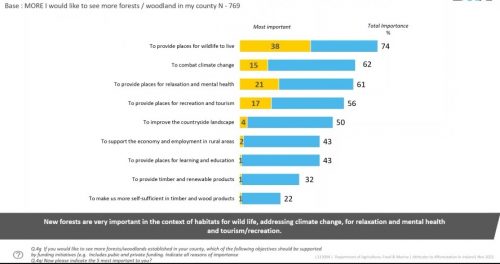
What did all of this find? Overwhelmingly, despite the problems in the sector, people want more forests but this comes with a crucial caveat: these should prioritise climate and nature over production. The online survey found that over 98.2% of respondents thinks forests for nature are ‘very important’ or ‘important’, the figure for climate was 97.9%. Only 44.1% thought forests for wood were ‘very important’. Irish Rural Link, which is an umbrella group that campaigns for sustainable rural development, received 557 responses to their questionnaire which concluded that people want to see more native woodland, a greater diversity of tree species in planting schemes and asked that alternatives to clear-felling be found. In fact, the findings of the public consultation were so clear that it means the current model of planting monocultures and clear-felling them is now thoroughly discredited and has no public mandate.
What people want
Yet, incredibly, the Forest Strategy Implementation Plan envisages maintaining the status quo, with the vast majority of new forest establishment going to – you guessed it – planting monocultures which will be later clear-felled.
Minister Hackett has recently announced a significantly beefed-up forestry budget which will be fully-funded by Irish taxpayers to the tune of €1.3 billion over the coming five-year period. If the current targets are maintained, this will represent a substantial transfer of public wealth to the private sector with no reform in return and grossly inadequate protections for nature, never mind the urgent need to restore our native forest ecosystem for the benefit of people, climate, biodiversity and water.
The Plan is not yet a done deal, it is open to yet more public consultation until the end of November, but the department has already signaled that this won’t make a jot of a difference as they are quite prepared to ignore any submissions that might be made.
This is no longer only a crisis of ecology but a crisis of democracy. It is a crisis of legitimacy. The government is happy to blame ‘NIMBYs’ for objecting to poor planning proposals, is content to under-resource planning authorities and is prepared to restrict access to environmental justice through the courts. Yet when they show such disdain for the views outside their circle they leave environmental defenders with no other option, something that in turn leads to rancour and divisiveness in public discussion.
The next time you hear a minister saying that they “want to hear your views”, the truth is, they don’t.
Irish Wildlife Trust welcomes €1.3 billion funding for new forest programme but warns that money alone will not address problems
The Irish Wildlife Trust (IWT) welcomes the additional funding for forestry schemes announced last week (3/11/22) by Minister for Land Use and Biodiversity, Pippa Hackett. The increased grant and premium rates, as well as an increased duration of payments, will help to resolve problems in expanding Ireland’s forest cover. We particularly welcome the high rates of payment for native forests, forests for protection of water courses and the introduction of a new ‘rewilding’ payment that will incentivise ‘emergent forests’ (although unfortunately the payments are much lower than for other schemes that require planting of trees).
However, the IWT has serious concerns that this significant transfer of public funds to private industry will not come with reforms to a sector that has lost public faith and which remains burdened with unresolved legacy issues that are detrimental to biodiversity, water quality and climate.
Public consultation on Ireland’s forthcoming Forest Strategy has shown that people overwhelmingly want forests that are for nature and climate. However, currently our best guess is that native woodland covers less than 2% of the country – among the lowest in the world – and much of this is in poor condition due to over-grazing and alien invasive species. Dramatically increasing the extent and the ecological quality of Irish forests has to be the main priority if we are to meet biodiversity and climate goals.
Rewilding, i.e. the natural regeneration of forest ecosystems through the self-seeding of trees, is the quickest, cheapest and most effective way of restoring forests. Yet, our approach to forests in Ireland remains predominantly commercially-focussed and based upon planting trees. This has led us to the many mistakes, including from diseases and loss of biodiversity, that hampers forestry to this day.
However, the draft ‘Forest Strategy Implementation Plan’, currently out for public consultation, contains a table of targets, buried deep within the 165-page document that suggest there will be no significant change to how forests are to be managed and that rewilding will be limited to a tokenistic 50 hectares per annum (compared to 4,645ha of Sitka spruce monocultures). This is not what the public, who will be paying for this plan, wants.
Our new Forest Strategy must:
· Protect important biodiversity features such as bogs, sites of ground-nesting birds or species-rich grasslands.
· Control grazing, particularly from sheep, goats and deer, that is preventing the natural regeneration of native forests.
· Restore habitats where plantations were wrongly planted, particularly on peatlands.
· Move away from the destructive cycle of planting monocultures which are then clear-felled, to the detriment of soil, water, carbon storage and biodiversity.
· Ensure that regenerating native forests are protected over the long-term.
· Ensure that perverse incentives are not encouraging forests to be grown for biofuel.
Forest creation is a long-term project but even under the new regime, payments are only guaranteed for 20 years. There is an urgent need to incentivise landowners to not only create, but to pass on to the next generation, healthy forests that will continue to provide biodiversity habitat, clean water and store carbon in perpetuity. The IWT calls on Minister Hackett to ensure that the new Forestry Programme delivers real change to how trees are managed and to break with the detrimental business as usual approach.
Figure: Targets for afforestation proposed under the draft Forest Strategy Implementation Plan
Loss of biodiversity is a sad feature of humanity since our earliest ancestors first left the plains of Africa, but it was the arrival of Christopher Columbus in the Americas in 1492 that unleashed an assault on the natural world unlike anything seen in human history.
The spread of European colonialism had dire consequences for human populations but it also spelt disaster for the non-humans. The colonists slaughtered animals with a frenzied zeal, sometimes for food or fashion (think of the trade in furs or feathers that exterminated animals across the Northern hemisphere) but frequently it was just for fun. British administrators in India and East Africa spent their weekends shooting tigers and lions and anything else they could aim their guns at. In the late 1700s, shipwrecked Russian explorers in the North Pacific shot the herds of sea cows for food and hides and the great beasts (females grew to over eight metres in length) were extirpated within 27 years of their discovery. There are many stories like it.
The slaughter of the great whales is the stuff of legends but when he published Moby-Dick in 1851, Herman Melville pondered whether the behemoths could sustain “so remorseless a havoc”. “Does the whales magnitude diminish? – Will he perish?” Melville thought they wouldn’t, and he was right.
The worst of the havoc had yet to come but despite an industrial onslaught during the 20th Century, and from which the ocean has not fully recovered, the whales did not perish. No species of whale went extinct and whaling more or less came to an end in 1982. This was because of a sustained campaign among ordinary people that saw whales as worthy of existence, possessing intelligence and emotion not unlike our own.
In fact, long before this, attitudes to the non-human world had shifted decisively. The Royal Society for the Protection of Birds was established in the UK in 1889 in protest at the use of bird skins and feathers in the fashion industry. In 1960s Ireland, the Tourist Board was encouraging visitors to fish for sharks around the coast, all of which were killed, brought ashore to be weighed and measured, before being dumped back in the sea to be eaten by crabs. But by 2009, when a Swiss tourist caught a giant six-gill shark off the coast of Clare and brought it ashore to be hoisted onto a forklift truck, there was an outcry. Catch and release is the norm among anglers today, not because of any legislation or conservation effort (because, trust me, there has been none) but because the ethic in the sport has flipped in favour of the fish.
In evolutionary terms, this makes no sense. While humans are the only animal known to directly cause the extinction of another species, we can also be set apart from the rest of the animal world by how we voluntarily restrain our activities expressly to prevent the extinction of another species. This has allowed for the recovery (albeit tentative in many cases) of numerous species, from beavers and wolves to tigers and Iberian lynx. In Ireland, a prohibition on hunting of seals and pine martens in the 1970s led to a recovery in numbers.
This is nothing less than a revolution in our relationship with the non-human world but one which has nonetheless been insufficient to stop what UN secretary general António Guterres has repeatedly referred to as “the war on nature”. But look closely and you will see that another revolution is underway.
The Taoiseach is not alone. In the last five years there has been an explosion in grassroots action in Ireland in the face of the biodiversity crisis. The Farming for Nature initiative, the all-Ireland Pollinator Plan, the campaign to save Ardee Bog, Co. Louth from a road development, the coming together of inshore fishers to protest at on-going pair trawling of the bays and estuaries, the Save Leitrim group objecting to plantation forestry in their county, the community of Bantry Bay in Cork fighting a proposal for mechanical extraction of seaweed are just a few of the notable demonstrations by local people that are signalling how attitudes towards nature in Ireland are changing fast.
In May of this year, the Citizens’ Assembly on biodiversity loss got underway to address, among other things, “opportunities to promote greater public understanding of, and support for, urgent action in response to the biodiversity emergency”. It is the first exercise of its kind in the world. Already the citizens are asking the big questions, not only about how we have been landed with this mess but how an ethical shift in the debate is needed to get us out of it. They have been given presentations from legal experts, who have highlighted how the Irish constitution currently contains no mention of nature or biodiversity and no over-arching right for people to a healthy environment.
Rights for nature would acknowledge that nature has a right to exist, that we don’t have a right to drive any species to extinction, indeed that plants, animals, fungi and even whole ecosystems (bogs, rivers, forests, off-shore reefs etc.) have a right to flourish and evolve. The recent granting of ‘legal personhood’ to the near-dead Mar Menor (a marine lagoon) in Spain was highlighted.
Like recent referendums in Ireland on marriage equality or abortion, a change to our constitution would mark a radical shift in our acceptance of heretofore ignored or marginalised groups (in this case the non-human world). It would also have a practical consequence as nature would have recourse to the courts to uphold its rights (just like companies, countries and corporate entities have enjoyed for decades). Can we imagine such a dramatic transformation in our thinking?
I think we can because it’s already happening.
You can make a submission to the Citizens’ Assembly on biodiversity loss by emailing submissions@citizensassembly.ie or see here for more details.
Denial remains a prevailing feature of the faltering approach to our collapsing biosphere. Outright climate denial has ceased to be a standard feature of debates even if it hasn’t completely disappeared. Extinction denial hasn’t been so noticeable but that is likely due to the fact that biodiversity loss has not received nearly as much attention as climate change. Now that is changing as pressure builds on politicians to move from talking about these problems to actually doing something about them.
Take marine protected areas (MPAs) for instance. Recent years have seen the publication of an expert report, a public consultation which showed near unanimous support for the idea and political commitments to reach 30% of our territorial seas designated as MPAs by 2030. Taoiseach Micheál Martin was even happy to be photographed with the Fair Seas team at the Fianna Fáil Ard Fheis recently to show his support.
While there has still been no progress on publishing actual legislation that is needed to progress this goal, delay is getting harder. Indeed, a recent report[1] presented to Minister for Agriculture, Food and the Marine, Charlie McConalogue, contains a robust section on MPAs. Meanwhile the fishing industry, which had been fairly quiet about MPAs up to now, are responding. Needless to say, they’re not supportive. What’s more, their opposition is rooted in a general denial of facts.
For instance, CEO of the Irish South and West Fish Producers Organisation, Patrick Murphy, wrote recently for the magazine of the Irish Whale and Dolphin Group that the industry was “wrongfully accused of “overfishing” ” (inserting his own inverted commas to suggest overfishing is not even a real thing) adding that they are “unfairly compared with the entire aviation industry on the basis that their fishing activities release carbon sediment from the sea floor, when, in fact, all such sediment gradually resettles on the sea floor”. Murphy was referring to the scientific study published in 2021 which showed that bottom trawling releases the same amount of greenhouse gases as the aviation industry (recent scientific evidence shows that overfishing remains a prevalent feature of fishing in the north-east Atlantic, affecting around 40% of commercial fish populations).
But Murphy’s industry colleague, chairman of the Irish Fishing and Seafood Alliance, Cormac Burke, went even further, telling the Marine Times this month that creating a network of MPA’s in Irish waters was “far from logical” and that “the operations of the Irish fishing industry, not now or ever, has been a threat to sharks, seabirds or animals threatened with extinction”. Burke should look at what ICES says about the seas around Ireland, including that:
Several species have been depleted by fishing in the past and are now on the OSPAR list of threatened and declining species, including spurdog (Squalus acanthias), the common skate complex (Dipturus spp.), angel shark (Squatina squatina), porbeagle (Lamna nasus), and some deep-water shark
ICES also details how fishing activity results in bycatch of dolphins, seals and seabirds including puffins and guillemots.
Toxic denialism is increasingly evident within some of the farming organisations. Over the summer I took part in a debate with representatives of the Irish Farmers’ Association and the Irish Natura and Hill Farmers’ Association (INHFA) on the theme of upland management. I didn’t expect them to agree with me that free-roaming sheep should be removed from the hills, but I was quite shocked at their unwillingness to accept the dire state of our uplands.
Over-grazing, I was told, was not a widespread problem and ‘under-grazing’ was a greater threat to biodiversity. This is despite the fact that the National Parks and Wildlife Service (NPWS), in their 2019 assessment of habitats listed for protection under the Habitats Directive, has assessed all of the upland habitats as in ‘poor’ or ‘bad’ condition with overgrazing being identified as a significant pressure on all of them. Under-grazing was not considered by the NPWS to be a threat on any of the bog or heath habitats.
This week the Irish Independent ran a particularly incendiary article on upland farming which lashed out at people from Dublin, ecologists and people with PhDs for wanting to “cleanse the whole countryside” and included a quote from one Connemara farmer which accused the NPWS of “tightening that noose” around his neck. “When I ask Joe”, the article went on, “after a lifetime of looking at his hills, how he would rate their environmental condition, he says they are “in good shape”. “In fact, in a few places, it could take extra sheep”.”
This article, and others like it, reflect a sense of betrayal among farmers with designated land for the dire communication, the mapping of their land without their consent and the failure of the State to meaningfully reward them for protecting our most important biodiversity sites. This is something for which there is a lot of sympathy.
It is also something that is being addressed by a multi-million euro programme in the new Common Agriculture Policy which gives preferential treatment to farmers along the western seaboard as well as other upland areas – something that didn’t get a mention in the Irish Independent article.
The on-going denialism among fishing and farming groups is bad enough, but actually it reflects government policy. The biggest denier of them all is the minister for agriculture himself. Despite the fact that indicators continue to point in the wrong direction McConalogue travelled to the Far East last month where he said his key message was that “Irish suckler, beef and sheep farmers produce a world class, sustainable and healthy product”. He delivered this message while standing in front of a lectern emblazoned with the phrase: “Ireland, working with nature”. He has also photographed himself for his Twitter feed guzzling a glass of milk and hailing “our safe, sustainable and nutritious dairy products.
In recent weeks he opposed moves by the European Commission to close sensitive deep sea areas off the Irish coast to harmful fishing methods, including bottom trawling. I was told his excuse was that he wanted to wait for new data on fishing activity in these areas, despite the fact that the closures were first agreed in 2018. This is denialism in action, not to mention an afront to public opinion and his own government’s policy.
Refusing to accept that we have a problem, or refusing to accept the scale of the problem, or that now is the time to act, or that we are the ones that need to act, remains the greatest barrier to meaningful progress. Farm and fishing interests don’t do themselves any favours by sticking with this course, but to see senior ministers like McConalogue at it goes a long way to explaining why we are not getting a grip on this crisis.
[1] The Irish Wildlife Trust and Coastwatch represented the Environmental Pillar on the review group
Brazil’s national election and the fate of the Amazon
Fabiola Gomes Vieira
October 1st 2022
Once again Brazil is preparing for a presidential election, only this time the date is surrounded by even more attention and tension than normal. After four years of the government of Jair Bolsonaro, champion of the loosening of environmental protection laws and of the expansion of agribusiness and mining in the Amazon region, the outlook can appear bleak to lovers of nature and of Brazil’s stunning natural wonders in particular. However, many Brazilian voters are keen to see some light at the end of the tunnel and awareness of the importance of the protection of the Amazon is growing among the electorate.
Recent research carried out in Brazil by the Climate and Society Institute (Instituto Clima e Sociedade) shows that awareness of the importance of protecting the Amazon grew in the final stretch of the 2022 election campaign, as did the degree of information possessed by Brazilians on the subject. The survey found that not only are Brazilians paying more and more attention to the plight of the Amazon, but that they are increasingly inclined to take the issue into consideration when voting. The vast majority said that the likelihood of them voting for one of the candidates would be increased if they presented a specific plan to protect the Amazon. Furthermore, a slim majority (51%), classed the work of the Federal Government to-date to protect the Amazon as bad or terrible.
This is hardly surprising given that during his term Bolsonaro has dismantled and even sabotaged the work of Brazil’s own environmental inspection bodies. One non-governmental organization (NGO), the Articulation of Indigenous Peoples of Brazil, highlighted that the Brazilian President has weakened the application of environmental laws, facilitating the actions of criminal networks that engage in illegal deforestation in the Amazon and use intimidation and violence against forest defenders. The terrible fate of Bruno Pereira and Dom Phillips only three months ago provides further proof, if it were needed, of the dangers faced by these communities in defending their lands. Furthermore, Bolsonaro has accused indigenous people and NGOs, without any proof whatsoever, of being responsible for the destruction of the forest.
All the while, the devastation of the Brazilian Amazon continues apace. August 2022 confirmed the accelerating trend observed throughout the year, with more than 1,660 km² of forest felled. This is the worst monthly aggregate in 2022 and the third worst in the Deter-BO (1) historical series, a tool launched in 2004 to help with the work of Ibama and other environmental and protection agencies through the issuance of deforestation alerts. August’s alarming deforestation numbers are also reflected in an increase in the number of illegal fires detected. According to Greenpeace the number of fires in August was up 18% on the previous year to a staggering 33,116 fire hotspots, the highest number since 2010.
The close link between deforestation and illegal fires points to a major culprit behind Brazil’s environmental problems: agriculture, or specifically the extremely intensive agricultural practices geared towards increasing the area under cultivation for a number of key products, particularly soybeans and beef (Brazil was the largest exporter of both in 2021). Events on the ground often follow the simple pattern: an environmental crime starts with the cutting down of the forest. After the deforestation comes the fire, clearing the ground for the arrival of pasture. Deforested, burned and cleared, the area is now free for agriculture. This cycle is one of the major causes of devastation in the Amazon and one of the main reasons illegal fire rates track those of deforestation so closely. “In the Amazon, fire basically happens for two main reasons: ‘cleaning up’ deforested areas and renewing agricultural land, such as pasture and agriculture, be it family or large-scale. So when there is an increase in deforestation, more fires automatically occur in the region” says Sonaira Silva, professor and researcher at the Federal University of Acre (Ufac).
The successive records of fires and deforestation that have occurred throughout the Amazon and the Pantanal during the Bolsonaro administration, in addition to the weakening capabilities of environmental inspections and the agencies responsible for the forest’s protection, have however ended up alerting the population to the problem and the pressing nature of the subject. Deforestation in Brazil tends to attract most media attention and for good reason: it harbours by far the largest share of the Amazon on its territory (60%) and although it boasts strong legislation theoretically protecting the rainforest, in recent years it has seen its environmental law enforcement agencies undermined and weakened. That this is in no small part due to the actions of its own elected head of state attracts further commentary. Regardless, deforestation numbers continue to increase, as do the number of fires in deforested areas.
Large-scale deforestation in the Amazon accelerated and reached a fifteen-year high in 2021. According to the Brazilian Institute of Geography and Statistics (IBGE), Rondônia, for example, has almost tripled the area used to plant soybeans in the last decade (2009-2019). As seen in unpublished data from the PlenaMata Forest Monitor, an initiative to end deforestation by MapBiomas, InfoAmazonia, Natura and Hacklab, more than 400 million trees were felled in the Brazilian Amazon between January 1 and September 15 this year. Faced with this escalation in tree felling, research from Datafolha show that many Brazilians consider forest restoration as the most effective measure to combat deforestation, in addition to field inspection, with the application of fines and seizure of equipment.
It’s no secret that Jair Bolsonaro has strong support from the powerful agriculture lobby, which finances his re-election campaign. Since taking office in 2019 he always made it clear that he defends the economic exploitation of the Amazon. He even presented and defended a law that regulates the exploration of ores, hydrocarbons and the hydroelectric potential in Indigenous Lands. If approved and implemented, not only will the environment be destroyed, but the livelihoods of Indigenous people will also be harmed and the Amazon’s ability to store and emit carbon will be jeopardized.
However, this strategy is high-risk (in more ways than one) and must be very well calculated to succeed, as some large countries that import products from Brazil are already beginning to be influenced by a changed attitude on the part of their population. Recently, for example, the European Union demanded that Brazil provide certificates of origin for certain products so that they can be traced, forcing companies to ensure that goods sold in the EU do not contribute to forest destruction. The government is under international pressure to take stronger measures to protect the Amazon region.
During an election year, candidates for the presidency of the Republic publish a plan with their proposals for the country. The document includes the presidential candidate’s ideas and objectives for one of the most important issues on the planet today: protection of the environment. A survey coordinated by Ecoa and Greenpeace evaluated the government plans of the four candidates with the highest voting intention numbers in 2022 (Lula, Bolsonaro, Ciro Gomes and Simone Tebet). Even though the four government plans analyzed included sections on the environment, climate, deforestation, human and indigenous rights, as well as mentions of democracy, much more is needed. A real commitment to and implementation of environmental policies is necessary.
There are a series of solutions that are highlighted and several projects that could be developed geared towards protecting the Amazon and nature as a whole. Projects that aim to unite the private sector, public organisations, and civil society, mainly local organisations that are often anchored in riverside and indigenous and rural populations such as small or family farmers, which should be part of this linked business bioeconomy scenario allied to nature conservation.
The fate of the Amazon depends on Brazil’s national election on Sunday. Therefore, as Brazil goes to the polls for the first round of elections, nature lovers everywhere will be hoping that Brazilian voters will keep in mind their commitment to the Amazon and to all of us.
In 1992, by signing up to the EU’s Habitats Directive, Ireland agreed to protect some raised and blanket bog ecosystems in Special Areas of Conservation (SAC). This was transposed into Irish law in the late 1990s and, after a protracted battle, it was agreed that all turf-cutting on raised bog SACs would end in 2011. It was also agreed that management measures for the control of turf-cutting and the restoration of habitats on blanket bogs would come into force.
In 2020, following a Freedom of Information request, the IWT learned that illegal turf-cutting had been underway that year on half of the 57 SACs. In 2021 about a third of these areas were targeted by turf-cutters while the total number of plots which were cut in SACs was similar across the two years. No enforcement action has been taken by the State to stop this damage.
Meanwhile, on blanket bogs, the EC has highlighted that there is still no regime in place to control turf-cutting operations that are leading to a deterioration of these SACs, in contravention of EU law.
The IWT has been highlighting the on-going destruction of raised bogs to the EC and Minister of State for Heritage & Electoral Reform, Malcolm Noonan and while we welcome today’s intervention by the EC we feel this is inadequate. The lethargic response of the Commission will mean by the time any action is taken there will be little left worth protecting.
IWT’s campaign officer, Pádraic Fogarty says “It’s hard to believe that we are still seeing the destruction of vitally important habitats decades after we committed to protecting them and over a decade since compensation packages were agreed with turf-cutters when the practice on raised bog SACs became illegal. We now have the farcical situation that EU money is being spent to restore raised bogs in some areas, while down the road the State is turning a blind eye to the illegal destruction of others.”
The information received by the IWT shows that the State has been closely monitoring turf-cutting on raised bogs but has done nothing to stop illegal activity. At a time when we should be investing heavily in restoring peatlands as biodiversity and climate champions, instead we continue to see these areas being wilfully excavated because the State cannot muster an appropriate response.
The IWT is awaiting an FoI response which will detail the extent of illegal turf-cutting on raised bog SACs in 2022.
Irish Wildlife Trust calls for strong new law in submission to the Citizens’ Assembly on Biodiversity Loss
The Irish Wildlife Trust (IWT) has made a submission to the Citizens’ Assembly on Biodiversity Loss which calls for a strong new Biodiversity Act that will put the protection and restoration of biodiversity on a par with addressing climate change. We have also called for the independent Biodiversity Forum to be beefed up so that it can help to hold the government to account for its commitments. These actions are part of a number of high-level recommendations which we believe are critical if we are to address the biodiversity crisis in a timely and meaningful manner.
Other recommendations include:
· Committing to protecting 30% of land by 2030 as part of the ‘Global Deal for Nature’ which is due to be agreed at COP15 in December of this year.
· Reforming state bodies, particularly Coillte, the Office of Public Works and Bord naMóna so that they are mandated to address the biodiversity crisis.
· Changing our Constitution to provide for the Rights of Nature.
· Launching a broad and deep education campaign to reconnect us with the wonders of nature around us and to explain why the biodiversity crisis matters.
IWT campaigns officer Pádraic Fogarty says: “the work of the Citizens’ Assembly on Biodiversity Loss over the coming months is vitally important in shaping our response to the crisis. As we see it, it boils downs to two main issues: 1. Leadership from the State to implement commitments already made as well as to increase the ambition needed to restore ecosystems; and 2. Reconnecting people with the inherent value of nature through education and a change to our Constitution. The members of the Assembly have a unique opportunity to transform the foundations of our relationship with nature which we hope they will seize.”
The full text of our submission can be found at this link
Will Ireland’s new Forest Strategy prove to be the acorn that went on to be a mighty oak? Or will it be a seed in the wind, destined to land on stony ground? It’s hard to get excited about new strategies, given our long history of producing plans that are subsequently ignored. But, on the other hand, we can’t undertake long-term reform without a solid strategy. In this case, at least, a lot of time and effort has gone into developing this document as part of Minister Pippa Hackett’s ‘Project Woodland’ (the Irish Wildlife Trust has been a part of this and have had a seat on the sub-group which developed the Strategy). This week, in advance of its publication, a ‘Shared National Vision’ has been produced along with a summary of the many and various public consultations which have been undertaken in the last year.
This week has also seen the publication of Eoghan Daltun’s wonderful book ‘An Irish Atlantic Rainforest’. Eoghan’s twitter feed has captivated thousands with the unfolding of his sylvan idyl on Cork’s Beara peninsula. His book is a love letter to the forest that captures its beauty and drama but there is a simultaneous plea for us to unleash nature’s self-restorative powers at a wider level. He recently exhorted that “rewilding – on a mass scale – is the primary solution to the collapse of biodiversity in Ireland”. Controlling grazing, as well as other invasive species, is the key to kick starting the restoration of Ireland’s forest ecosystem. So, will our new Forest Strategy tap into the power of rewilding for this purpose? We’ll have to wait until the final version is published but I have a number of reasons to be concerned.
The work to develop the Strategy over the past 18 months or so has been a happily collegial affair with our small group of ecologists, foresters and staff from the Department of Agriculture having many open and respectful discussions. I have got to know them and have learned from their perspectives. We visited native forests, production forests of different types and a sawmill where wood products are made. We all agree that Ireland needs a lot more forests and we should do this quickly. We all agree that timber and wood products can and should play a role in a decarbonised future. There is acceptance across the board that our native forests are in a pitiful state and need urgent and dedicated intervention. But my worry is that this level of accord masks deeper differences in what forests are for.
My first red flag went up when I noticed that the draft Strategy failed to fully endorse the EU’s own Forest Strategy. I wrote about this important document last year as it aims to bring an end to the industrialised monoculture/clear-fell model of timber production. When I asked Minister for the Environment and Green Party leader Eamon Ryan on twitter last year if the Government backed the EU Forest Strategy, he replied “yes”. So why is the Department of Agriculture reluctant to state this clearly?
My next red flag went up when the draft refused to acknowledge the need for restoration of forest ecosystems. In my view, this is the most important thing we need to do. It does not mean returning to 80% native forest cover but it does mean restoring the scale and health of forests so that they provide habitat for all its species, is resilient to environmental changes and is capable of regenerating itself over time. This is, after all, the UN decade of ecosystem restoration while the European Commission is pressing ahead with its own Nature Restoration Law. So why is there a reluctance to use these words and engage with these ideas?
The final red flag is in relation to the use of biomass as a substitute for fossil fuels, which the Strategy is set to ‘promote and support’. This is a terrible mistake. While the burning of wood pellets can be a useful by-product from sawmill leftovers, it should not be supported with public money as the risk of perverse outcomes is too great. See here for more background on this, but essentially biomass is not a sustainable fuel at scale. Burning wood, just like burning fossil fuels and peat, needs to stop.
And what of the scope for rewilding? Using natural forest restoration wherever possible is internationally accepted as the cheapest, quickest and most effective way of creating new forests – so will this be front and centre in our approach? So far, it doesn’t look like it.
Forests are complex natural ecosystems that can deliver multiple benefits, including commercial products. But my feeling is that the sector has not let go of its production-centred, commercial mindset. It sees climate change, or more accurately, climate targets, as an opportunity for expansion without any fundamental change to its business model (more monocultures and clear-felling). It has one eager eye on future carbon markets that would funnel significant revenues into the sector.
But it continues to overlook two critical points. The first is that monocultures are inherently vulnerable to present and future climate shocks (maybe the industry’s models have discounted yields in the second half of this century so that this is not of great concern to them once establishment subsidies and carbon credits have been drawn down). The second though is a more fatal blow to their plans: public opinion.
There is simply no public support for a continuation of business-as-usual in forestry. The result of the Department’s extensive consultations (including public surveys, a citizens’ ‘deliberative dialogue’ and a dedicated study by Irish Rural Link members which included the ‘Save Leitrim’ group) has shown clearly that people want more diverse forests, more native forests and, primarily, forests that will deliver for climate and biodiversity. There is no acceptance of more blankets of non-native conifers that shut out people and nature. The social contract that allowed for the ploughing of our bogs and hillsides and the
replacement of small farms with ‘dead zones’ is itself dead.
Extract from public forest survey
An alternative is what Eoghan Daltun has done on his patch of land jutting into the Atlantic Ocean: to work with nature. To give it time and space to heal and to take only what it is capable of giving. So far, I don’t see this fundamental shift in thinking about our forests within the industry or state bodies. He should send them all a copy of his book.
Emissions reductions deal a dreadful failure of leadership
The deal reached by the government, which fails to meet even the minimum legal requirement of reducing greenhouse gas emissions by 51% by 2030, has demonstrated a dreadful lack of leadership.
The Irish Wildlife Trust (IWT) is particularly disappointed that more was not done to reach the higher level of ambition for reducing the impact of agriculture on our environment. While agriculture had already been given special status, and a lower ambition level, to see this reduced even further is disappointing.
Achieving higher levels of emissions reductions in agriculture would not only have helped to reach climate targets but would have contributed to the easing of our biodiversity and water crises. Agriculture is the largest emitter of greenhouse gases but the greatest pressure on water quality and the greatest driver of species extinction. Only transformational change in our food system will be sufficient to drive change in these areas.
As pointed out by the Climate Change Advisory Council (CCAC), yesterday’s deal did not include emissions from land use despite our land being a net emitter of carbon. We agree with the CCAC that this “needs to be addressed urgently”. This principally arises from drained peatlands and emissions are projected to increase due to a failed forestry strategy that will see a reduction in tree cover in the coming years. This points to the urgent need for a rewilding strategy that can simultaneously reduce emissions, protect and restore waters and provide essential habitat for biodiversity. Specifically, we suggest:
While methane emissions from the nearly four million sheep in Ireland are relatively small (c.4% of the total), we estimate that the removal of free roaming sheep from uplands would shave a percentage point off total agricultural emissions (and every percentage point matters). More significantly this would allow for the restoration of native woodlands and peat bogs which would not only reduce emissions from land but remove carbon from the air.
The restoration of native forests across the country, primarily through the natural regeneration of trees is the quickest, easiest and cheapest way to achieve environmental goals. Rewilding requires no licensing procedures and so has minimal bureaucratic burden for landowners (although requiring the protection of habitats and species which are sensitive to forest establishment). Our forthcoming forest strategy must prioritise ecosystem restoration over a failed industrial model of tree growing.
A programme for the rewetting of peatland soils needs to be rolled out as a matter of priority. This would not only stop emissions from the soil (calculated as 7,566ktCO2eq in 2021) but would lead to a reduction in livestock numbers.
Peatlands across the country need to be restored and rewilded. The remit of Coillte needs to change from being purely commercial to one of land restoration. As they own c.8% of the entire country they should be leading the charge in this field. Similarly, Bord naMóna should be rewetting all of their peatlands. The active pumping of degraded peat at the site of the proposed Shannon Wilderness Park in Co. Longford needs to cease.
The IWT believes that redirecting farming subsidies towards rewilding could be the single most effective means of storing carbon, mitigating droughts, floods and fires, cleaning water and bringing back wildlife populations.
Ultimately, people need to demand more of our politicians, particularly of the three big parties, to stand up against narrow sectoral interests and prioritise a safe future for all.
Hundreds of records released to Coastal Concern Alliance, a citizens’ group, under Freedom of Information and Access to Information on the Environment rules raise serious questions for habitat protection and wind farm development in the Irish Sea
Was there political interference in designating sites for nature conservation in 2012 when under EU rules only scientific evidence should have been considered?
Why did offshore wind energy interests seem to have so much influence in this process?
Did the NPWS designate Special Areas of Conservation with the scientific integrity we should expect?
What can we expect from an investigation which is now underway by the European Commission?
How will these findings affect proposed planning applications for wind energy developments in the Irish Sea?
Sandbanks are an important habitat which are listed under Annex I of the EU Habitats Directive. They are defined by the EU as “elevated, elongated, rounded or irregular topographic features, permanently submerged and predominantly surrounded by deeper water. They consist mainly of sandy sediments, but larger grain sizes, including boulders and cobbles, or smaller grain sizes including mud may also be present on a sandbank.”[1] The EU says they are “seldom more than 20m” below the water surface (technically, this is referred to as ‘chart datum’).
Sandbanks are listed for special protection for a number of reasons. According to the National Parks and Wildlife Service (NPWS), they contain unique communities of invertebrates while the sandy substrate is home to sand eels, a small sliver of a fish that gathers in shoals and which are an important food source for sea birds such as terns.
Like sand dunes on land, sandbanks are dynamic systems, constantly shifting with the waves and currents. In this way the sand on the sandbanks is connected to the sand on the shore and the dunes behind the shore. The wind and water are constantly moving this sand around, blowing particles inland, dumping sand from the sea onto the shore and washing sand from the shore back out to sea.
So, sandbanks are important for wildlife but also serve a very practical purpose in protecting our coastal infrastructure. The vast majority of sand banks around the Irish coast are located in the Irish Sea and this is perhaps not surprising given the expanses of sandy beaches that can be seen to stretch from County Wexford in the south to County Down in the north.
When the Habitats Directive became law in Ireland in the late 1990s, Ireland had an obligation to designate a representative sample of our sandbanks within Special Areas of Conservation (SAC).
Sandbanks are important feeding areas for birds such as Arctic tern (c. Mike Brown)
Habitats Directive – based on science
By 2012 the EU required that the area of sandbank to be designated should be somewhere in the range of 20-60% of the national resource while also making sure that there was a good geographical spread. There is a very clear stipulation in the Habitats Directive that the designation process must be based only on science. Objections to the designation must, similarly, only be based on scientific grounds; socio-economic concerns were not to be entertained, even though socio-economic activities could be undertaken so long as they didn’t affect the long-term integrity of the habitat or species for which the SAC was designated.
This is relevant to our story because, following on from the EU Biogeographic Seminar held in Galway in March 2009, the EU was pressing Ireland to designate more sandbanks as SACs in order to fulfil our legal requirements. At this time, wind energy companies were interested in developing offshore projects even though, to-date, the only offshore wind farm in Ireland is a seven-turbine facility on the Arklow Bank, off County Wicklow, which was commissioned in 2004.
In 2011 the total area of sandbanks off the Irish coast was calculated to be 519km2 and, although there were small areas of the habitat off County Donegal and in the mouth of the River Shannon, the vast bulk were strung out in a line from north County Dublin to Carnsore Point in County Wexford. Meeting the requirements of the Habitats Directive would have required designating many of these sandbanks as SACs. However, this is not what happened.
Today, there are just four SACs for sandbanks in Ireland: one in County Donegal (Hempton’s Turbot Bank), one off the north coast of County Kerry (a part of the Lower River Shannon SAC), and two off County Wexford (Long Bank SAC and Blackwater Bank SAC) which share a boundary and so are effectively the same area.
Despite a vast expanse of suitable habitat, there is not a single sandbank SAC north of Cahore Point in Gorey, County Wexford, where the Blackwater Bank SAC comes to an end. Why?
Citizen investigation
For the past two years, a citizens’ group, Coastal Concern Alliance, has retrieved hundreds of records through Freedom of Information and Access to Information on the Environment legislation from the Department of Housing, Local Government and Heritage and the Department of Agriculture, Food and the Marine. Having received an initial release of records, they appealed the decisions, initially, to a more senior level in the Department and, subsequently, to the Office of the Information Commissioner and the Office of the Commissioner for Environmental Information. The IWT has been given access to these records and has spent some time studying them.
What has been found to-date raises questions about the current level of protection for sandbanks in the Irish Sea and the future for wind energy developments in this area.
Serious questions are also raised for the two government departments about how they handled the designation (and non-designation) of SACs in the period from 2010 to 2013 and particularly whether there was political interference on behalf of the wind industry in what should have been a process based purely on scientific evidence.
Codling Bank
One of the largest sandbanks in the Irish Sea is the Greater Codling Bank off the northern coast of County Wicklow. Its area is given by the NPWS as 231km2, nearly half of the total area of sandbanks in the country. This is significant as, in order to meet the Habitats Directive requirement of protecting between 20-60% of the national resource, designations of SACs covering from 104-311km2 was needed.
The Greater Codling Bank
In order to achieve this, the NPWS proposed to designate the Kish/Bray Banks (which stretches north of the Greater Codling Bank), the Blackwater Bank off County Wexford and Hempton’s Turbot Bank off County Donegal, in addition to those which had already been designated.
A 2007 survey of these sandbanks found that both the Kish/Bray Bank and the Blackwater Bank sites met the criteria for designation and were “nationally important features”. It also found that the Kish/Bray Bank was a “richer habitat” than the Blackwater Bank[2]. This is not an incidental detail, as we’ll see later.
However, in January 2012, in a memo to Fine Gael Minister Jimmy Deenihan (who oversaw the NPWS at that time) it was highlighted that:
“The Irish Offshore Operators Association (who represents the offshore renewables industry) has previously expressed concern that too many sandbanks in the Irish Sea are being designated and this may impact on their industry”
Then, in March 2012 the NPWS gave a presentation to officials from the Department of Agriculture, Food and the Marine and the Marine Institute. The minutes from this meeting state that:
“Designation of SACs inshore or deep water is within the competence of a MS [Member State] and is subject to a 3 month national consultation process where objections can only be from a scientific perspective. NPWS intent [sic] to proceed with this in the next few weeks. […]
At a later stage when the broader management and conservation objectives are being set they then have to consult with all national and international stakeholders. […]
NPWS seem reluctant to bring this up at the Marine Co-ordination group despite the urgings of Peter Heffernan [then-director of the Marine Institute] – probably not wanting the political battle in advance of designation” [our emphasis].
The Marine Coordination Group was established as part of the ‘Harnessing Our Ocean Wealth’ Plan which was an initiative of then-Fine Gael Minister for Agriculture, Food and the Marine, Simon Coveney. The record suggests that, despite emphasising the requirement for a scientific basis, the NPWS somehow felt that designating SACs would be a “political battle”.
The following month, April of 2012, with Minister Coveney in the chair, the NPWS outlined the plans for new SAC designations, including the Kish/Bray Bank and the Blackwater Bank, to the Marine Coordination Group.
Then, in May of that year, a month after the presentation to Minister Coveney, a tender request was issued for a survey of the Greater Codling Bank.
The survey was completed over two days in July 2012 and the report, published in October of that year, stated that “the sediment sampled from the Greater Codling Bank was classified as sand, slightly gravelly sand, gravelly sand and sandy gravel”. It also reported that “a gravelly/cobbly seabed dominated the Greater Codling Bank”, which seems to contradict the first statement. The report made no assessment of, and drew no conclusions about, the habitat in terms of its quality or compliance with the EU definitions of sandbanks[3].
Nevertheless, the records released to Coastal Concern Alliance show that in November of 2012 a note from the Head of the NPWS Scientific and Biodiversity Unit stated that the Greater Codling Bank was no longer classified as a sandbank and so was to be removed from the overall calculation of the national sandbank resource. This record was not accompanied by an explanation as to why this should be the case.
The rationale for the removal of the Greater Codling Bank from the national resource of sandbanks is not explained in any of the records released to Coastal Concern Alliance, nor has any consistent, valid explanation been provided in response to questions put to the NPWS in writing and verbally.
Was it because the survey found that sea bottom was dominated by ‘gravelly/cobbly’ material? While this contradicts earlier statements in October 2012 report, it would not rule out identifying the habitat as sandbank according to the EU definition. Even so, if this was the rationale, there is no evidence that such an argument was put forward.
In June 2022, Coastal Concern Alliance commissioned a scuba diver to visit one of the points sampled for the Greater Codling Bank survey and found plenty of sand (the video is here). Indeed, the Greater Codling Bank is still listed on the NPWS website as a sandbank.
The significance of the removal of the Greater Codling Bank as a sandbank lies in the fact that, at a stroke of a pen, the total national resource of the habitat was slashed by 50%. Meaning that instead of having to designate between 104-311km2 as SAC, the state now only had to designate between 49.4-148.2km2.
A document seeking Ministerial approval to proceed with advertising the designation proposals in November 2012 states:
“A total of 7 sites[4] (comprising 343,562 hectares) were recommended initially for designation but this has now been reduced to 6 due to the findings of the recent Codling Bank survey (October 2012) which found that a considerable portion of the Codling Bank area does not fall within the definition of the Annex 1 habitat, sandbank. As a result, the estimated national area of sandbank has been revised downwards substantially.”
The site that had been removed was the Kish/Bray Bank.
The same document says that:
“The Kish Bank has now been removed from the areas proposed for designation… […] It is anticipated that the Kish Bank will be designated as a Special Protection Area [SPA] for birds in the future.”
An SPA is a separate type of designation, under the EU’s Birds Directive, and this statement acknowledges the importance of the Kish Bank for foraging sea birds. However, despite this, no SPA designation was forthcoming.
Hempton’s Turbot Bank
Records reveal:
“The proposed designation of Hempton’s Turbot Bank [Donegal] and the Blackwater/ Lucifer Banks [Wexford] will satisfy Ireland’s obligation to designate between 20-60% of its sandbank resources. These proposed sandbank habitats provide c 45% of Ireland’s overall sandbank resource, which will bring Ireland well within the 20-60% range required by the Commission.”
It is not clear how this 45% figure was derived. You’ll also note that Hempton’s Turbot Bank in Donegal is mentioned here, but surveys showed that this site was predominantly below the 20m depth needed to meet the EU definition for sandbank habitat. While there is an allowance for depths greater than 20m, this means that, at the least, Hempton’s Turbot Bank would be a poor example of sandbank habitat based on this criterion and probably did not warrant designation.
Indeed, in 2019, the NPWS went so far as to say:
“It is considered that the habitat within this SAC [Hempton’s Turbot Bank] is not fully characteristic of the Sandbanks which are slightly submerged by sea water all the time habitat [sic] as described in the EU Interpretation manual”.[5]
An internal email thread showed that this concern was raised within the department in 2013.
Furthermore, an agenda for an internal meeting of NPWS staff in February 2013 sought to raise the point: “Is Hempton’s Turbot Bank a valid sandbank site?” The minutes of this meeting have not been released to Coastal Concern Alliance. Nevertheless, the designation went ahead in spite of the doubts that had been raised.
Many of the NPWS records make reference to wind farms. One of these shows a table of all the sandbanks along with their areas and, significantly, those with wind turbine applications. Why was this relevant? Once again, we see wind energy interests highlighted in a process that should have been purely based upon scientific evidence. Both the Greater Codling Bank and the Kish/Bray Bank are marked on this table as having “turbine applications”.
A record releasee to Coastal Concern Alliance listing all the sandbanks, but also referencing those with wind turbine applications
Another record justifying the designation of the Blackwater Bank and the Hempton’s Turbot Bank describes them as “pristine”, despite the doubts that had been raised as to whether or not the latter site even qualified as a sandbank, and that:
“there are no operant or expected pressures at either site that would compromise the long-term sustainability of the habitat feature. (This is not true for Kish/Bray Bank as there is an option on a Foreshore Lease in relation to the Dublin Array Wind Park).”
Tensions over the designation of new marine SACs (not only for sandbanks but for other features such as bottle-nosed dolphins) are clear in the records. Bord Iascaigh Mhara, concerned over potential constraints on fishing activity in any of the new SACs, noted in 2012 that:
“The terms of the consultation indicate that adjustments to boundaries can only be made on scientific grounds. Without habitat maps or in the case of mammals, habitat usage/ residence data then it is nigh impossible to make any submission on scientific grounds. It is not a consultation if those being asked to submit are not in a position to influence the result; It is an information giving exercise. This applies to both the public and the state agencies submissions.”
However, it seems clear from the records that some were in a position to influence the result. It seems clear to us that the interests of the wind energy industry were taken into account when drawing boundaries, in particular in the removal of the Kish/Bray Bank SAC and the Greater Codling Bank altogether, in contravention of EU rules.
Wind Farms
There is a clear and urgent need to decarbonise our economy and the development of offshore wind can, and should, make a significant contribution to this.
However, in May 2019 the Dáil declared a climate and biodiversity emergency, so it is essential that in addressing one crisis we do not exacerbate another (see here for an IWT blog on this topic). Wind turbines can impact sandbanks both directly (through the removal of the habitat to make way for concrete plinths) and indirectly (through changing the currents around the plinths which in turn could affect how the sand is eroded or deposited elsewhere). They can also impact birds either directly (by collision with turbine blades) or indirectly, e.g. by forcing birds to avoid important feeding grounds.
The potential for wind turbines to impact sandbanks was acknowledged in 2007 when the NPWS delivered their first report to the European Commission on the status of protected habitats and species under Article 17 of the Habitats Directive, noting:
“The potential aggregate extraction, coal extraction and windfarm development remain a threat to the integrity of sandbanks.”
This report assessed Overall Future Prospects: “Unfavourable – Inadequate”.
Also:
“From the large number of sand banks that have been investigated for their suitability for wind farms and their potential as sites for aggregate extraction the future prospects are considered to be Unfavourable – Inadequate”[6].
However, in the third round of reporting, in 2019, the NPWS said there were “no pressures” and “no threats” to the status of sandbanks in Ireland although also stating that “the development of windfarms on shallow sandbanks has the potential to lead to an indirect impact on the habitat”.
Why the threat is now only ‘indirect’ is not clear. The NPWS went on to assess the status of sandbanks as “favourable” although adding that:
“The conservation status of this habitat is Favourable but it is vulnerable to the potential impacts of wind energy infrastructure in the vicinity of the habitat.”
Despite this, the NPWS said that ‘future prospects’ for the habitat were ‘good’[7]. No rationale is given for the reclassification of the future risk to sandbanks associated with wind turbines. Why did the NPWS change their assessment between 2007 and 2019? A satisfactory answer to this has not been forthcoming.
EU Compliance
Today, having excluded the Greater Codling Bank, the NPWS gives the total area of sandbank in Ireland as 247km2. The area of habitat within the four SACs is given at 68.68km2, which means c.28% of the resource is officially protected, thereby falling within the 20-60% band looked for by the EU, albeit at the lower end[8]. This is much lower than the 45% for the two proposed sites (Hempton’s Turbot Bank and Blackwater Bank) previously claimed by the NPWS.
The lack of any SACs north of Wexford has led to a gaping geographical gap in the distribution of SACs for sandbanks, one that would have been filled with the designation of the Kish/Bray Bank.
The dubious exclusion of the Greater Codling Bank and the equally dubious inclusion of Hempton’s Turbot Bank have dramatically skewed the figures meaning that the real level of protection is below the lower 20% threshold. Ireland is, therefore, unlikely to be compliant with the Habitats Directive and therefore needs to designate more sandbank SACs.
Based on all of the above, Coastal Concern Alliance has made a formal complaint to the European Commission. The Commission have acknowledged receipt of the complaint and have confirmed that an investigation in underway
A number of additional related issues became apparent during the course of the group’s investigation and more information will be released as soon as findings are verified.
Marine Protected Areas
Ireland has been hopelessly behind in the push to designate, and actually protect, areas of the marine environment within MPAs. The SACs and SPAs that have been designated fall within the mere 2.1% of our seas that today qualify as MPA (the target for 2020 was 10%, the target for 2030 is 30%).
Sandbank habitats are vitally important for the protection of marine biodiversity as well as for providing protection of the coast along the east of our island where erosion is already a serious issue. We haven’t begun to appreciate the value of these systems in the face of rising sea levels and more extreme, and frequent, weather events.
A number of records released to Coastal Concern Alliance reference wind turbine applications
Conclusions
That the NPWS has been weak and ineffective in protecting of our natural environment comes as no surprise. Despite this, many valiant souls within it have fought to retain their integrity in the teeth of pressure from outside forces. But this pressure has been intense and unrelenting.
Thanks to the persistence of Coastal Concern Alliance – a voluntary citizens’ group – an insight into this unhealthy dynamic has been revealed. While fishers and farmers where having designations imposed upon them with no account taken for their livelihoods (although, admittedly, this has barely impacted upon fishers due to the near absence of meaningful conservation measures in marine SACs and SPAs) the well-connected wind industry were in a position to exert influence. It seems that swift and creative measures ensured that designations for nature conservation would not impede their freedom of manoeuvre.
However, we also see here a dark side to the NPWS. The records suggest to us that there was a willingness to massage scientific data, or actively ‘find’ data in order to produce an outcome designed to relieve the outside pressure – as was shown with the removal of the Greater Codling Bank through the tendering of a hasty survey and its subsequent delisting as a sandbank at the stroke of a pen.
We also see the corresponding ‘upscaling’ of Hempton’s Turbot Bank to “pristine” despite concerns being raised that it didn’t even qualify as sandbank habitat. This places the credibility of the NPWS, heretofore trusted for its scientific integrity, in question.
The findings also impede our efforts to reduce greenhouse gas emissions as it will inevitably delay proposals to build wind farms on sensitive habitats in the Irish Sea. The government has already ignored pleas from conservation organisations for sensible marine spatial planning and, in particular, to identify locations of MPAs before, or at a minimum in parallel with, the planning of offshore wind (see here for an IWT blog on this subject).
The IWT, which is privileged to have been given access to the records released to Coastal Concern Alliance, is deeply concerned about the way in which concerns for the wind industry seem to have undermined nature conservation efforts. We are happy to learn that the European Commission is investigating the matter but we also know how the wheels of this bureaucracy move very slowly.
What next?
In light of these investigations, we are calling on the government, and in particular Minister Malcolm Noonan, who has responsibility for the NPWS within the Department of Housing, Local Government and Heritage, to launch an internal investigation into the matter. Most importantly, this must look at the adequacy of SAC designations for sandbanks in the Irish Sea.
In our view, there is a clear need for additional designations, particularly the Kish/Bray Bank, which is the best example of the habitat according to the NPWS’s own data.
We also need to have faith in the NPWS scientific and designations units. We need to know that the science is not going to be compromised by political or economic interests. To help to restore confidence, a review of all the data on sandbanks needs to be carried out in an open and transparent manner. In addition, fresh surveys need to be carried out, using reliable methodology, for example using underwater cameras, rather than relying solely on grab samples of sediment.
The protection and restoration of biodiversity must be done in tandem with decarbonisation. We do not accept that biodiversity should be sacrificed as part of our effort to reduce greenhouse gas emissions.
[1] Marine Habitat types definitions. Update of “Interpretation Manual of European Union Habitats”
[2] Roche, C., Lyons, D.O., Farinas Franco, J. & O’Connor, B. (2007) Benthic surveys of sandbanks in the Irish Sea. Irish Wildlife Manuals, No. 29. National Parks and Wildlife Service, Department of Environment, Heritage and Local Government, Dublin, Ireland.
[3] October 2012. Aquafact International Services Ltd. Subtidal Benthic Investigations of the Greater Codling Bank.
[4] Not all the proposed sites for designation were for sandbanks
[5] NPWS (2019). The Status of EU Protected Habitats and Species in Ireland. Volume 2: Habitat Assessments. Unpublished NPWS report. Edited by: Deirdre Lynn and Fionnuala O’Neill
[6] 2007. The Status of Protected Habitats and Species in Ireland. Backing Documents, Article 17 forms, Maps. Volume 1.
[7] NPWS (2019). The Status of EU Protected Habitats and Species in Ireland. Volume 2: Habitat Assessments. Unpublished NPWS report. Edited by: Deirdre Lynn and Fionnuala O’Neill
[8] This figure is calculated from the Conservation Objectives documents for each of the four SACs
EU nature law could be gamechanger for marine biodiversity, but will be meaningless if fisheries not properly addressed
NGOs react to the marine aspects of the law
Brussels – Today, the European Commission presented its legislative proposal on nature restoration, a new law with binding targets to restore degraded land and marine ecosystems across the EU. This is a major milestone to tackle the current biodiversity and climate crises and restore a healthy relationship between people and nature. We welcome the long-awaited publication of this proposal, which shows the European Commission’s commitment to its EU Green Deal and Biodiversity Strategy.
The restoration law can be a gamechanger to turn the tide for endangered marine ecosystems and species, which are under increasing pressure in Europe. However, some flaws in the proposal need to be addressed – otherwise it is set to fail in the marine environment, say marine NGOs. The restoration law must particularly address the shortcomings in the implementation of the Common Fisheries Policy, which so far has not succeeded in tackling the damaging impacts of fishing as required under EU environmental laws. NGOs urge EU co-legislators to ensure that fisheries, the biggest driver of biodiversity loss in our ocean[1], are effectively managed to deliver ocean restoration targets.
Vera Coelho, Oceana´s Senior Director, Advocacy in Europe: “Everyone recognizes the current approach to manage fisheries for nature conservation is defective and absurdly long, as it can take several years per area and enables EU Member States to block the adoption of meaningful measures. The European Commission’s proposal fails to properly address the elephant in the room, by not tackling the largest hurdle to ocean restoration – fisheries”.
Ocean restoration must be coupled with strict protection to be effective”, said Marc-Philip Buckhout, Marine Policy Officer, Seas At Risk, “Restoring degraded seagrass meadows play a vital role in both mitigating climate change and reversing biodiversity loss. However, there is no point restoring on the one hand, while bottom dredging through them and around them. We need to put in place strict protection measures to prevent these key areas from being destroyed by harmful human activities.”
John Condon, Wildlife and Habitats lawyer at ClientEarth: “If done right, this law is a win-win for nature and our fishing communities, because ambitious marine recovery also means replenishing our fish stocks for a more abundant ocean. The Council and the European Parliament have a duty to make that future possible by ensuring that destructive fishing for short-term gains does not jeopardise marine restoration.”
Regina Classen, Marine Policy and Research Officer at The Irish Wildlife Trust: “This law is a much-needed addition to existing EU environmental legislation, because it recognises that mere protection of our marine environment is no longer enough. Too much has been lost in Irish waters over decades of industrial fishing. We could rebuild the long-lost oyster reefs in the Irish Sea or strictly protect areas of Irish shelf sediments from bottom trawling, so that the carbon storage potential of these areas is not hindered. The potential for restoration is therefore vast.”
The legislative proposal requires Member States to detail in their national restoration plans the fisheries measures they intend to adopt under the Common Fisheries Policy, but it fails to include a safeguard mechanism to overcome eventual deadlocks among Member States, in order to ensure marine restoration happens by 2030.
The proposal will now be negotiated by the Council and the European Parliament, and NGOs urge them to step up their ambition to live up to the environmental crises of restoring nature and the ocean. We call on both institutions to particularly tackle unsustainable fishing, which is incompatible with restoration and which the European Commission did not properly address in its proposal.
What needs to improve
We will be working with the Parliament and Council to improve the proposal in the co-decision process. Some key elements for effective marine restoration include:
EU adopts a legally binding target to strictly protect at least 10% of its marine waters by 2030;
EU ensures that restoration measures will not be undermined by destructive fishing practices, such as active bottom-contacting fishing gears;
EU guarantees transparency in process and the outcome of the EU Member States’ national restoration plans, by ensuring involvement of all relevant stakeholders in the drafting and monitoring processes;
By failing to overcome the risk of deadlock posed by the Common Fisheries Policy’s ineffective procedure for managing destructive offshore fishing impacts, the marine restoration targets risk being unimplementable and empty in practice. A safeguard mechanism should be added so that the Commission can intervene if Member States cannot agree to the measures required to achieve the restoration targets, in order for restoration to happen by 2030.
The proposed Nature Restoration Law was announced in 2020 under the EU’s Biodiversity Strategy for 2030 and is a central part of the EU Green Deal. It is the only legislative response focused on nature from the Von der Leyen Commission, and it aims at both reversing the biodiversity loss in Europe and achieving the Union’s climate mitigation and climate adaptation objectives. It sets a framework to ensure that ecosystems across the EU are on the path to recovery by 2030 and restored to good condition by 2050.[3]
Under the Common Fisheries Policy, any change of fisheries rules in a given offshore marine area requires that all EU countries with a “direct management interest” in that area agree to a ‘joint recommendation’, which then has to be approved by the European Commission. This mechanism, set out under Articles 11 and 18 of the CFP Regulation No 1380/2013, is used for instance to manage fishing inside offshore marine protected areas. But it has been poorly implemented and largely failed to meet its objectives [2]. In 2020, the European Court of Auditors criticised this procedure for not being able to ensure timely protection from fishing for a large number of Natura 2000 MPAs [3]. The Nature Restoration Law foresees that these ineffective rules would be applied on any marine restoration measure outside the 12 nautical mile zone that possibly affects fisheries. If no mechanism is included in the law to overcome potential deadlock among Member States under the CFP rules, this will de facto translate into very little, or no marine restoration at all in those waters.
Marine NGOs signatories to this press release: Birdlife Europe and Central Asia, ClientEarth, Coastwatch, Danish Society for Nature Conservation, Deutsche Stiftung Meeresschutz, International Fund for Animal Welfare, Irish Wildlife Trust, Oceana, Sciaena, Sharkproject International, Seas at Risk, Whale and Dolphin Conservation and WWF.
As the summer starts to pick up speed, you might find yourself heading down to the beach to cool off. Keep an eye on the sea when you’re there, and you might spot a cormorant (Phalacrocorax carbo) out on a fishing trip.
Cormorants are common seabirds, although they’re often mixed up with the closely related shag, which is similar in appearance. The differences between shags and cormorants are almost completely arbitrary, as the birds are in the same family. The ‘distinction’ is simply based on whether or not the bird has a crest–shags do, cormorants don’t.
The name ‘cormorant’ is derived from the Latin word for ‘sea raven’, because people thought they were like aquatic crows. In reality, cormorants are more closely related to pelicans, and their overall body shape is a very ancient one. The oldest known fossil of a modern bird was most likely aquatic and resembles a cormorant (although it probably wasn’t actually one).
Being fish-eaters, cormorants are at home wherever the water is deep enough for them to hunt, whether saltwater or freshwater. In Ireland, if you see a long-necked black bird with webbed feet and short wings near inland bodies of water, it’s probably a cormorant. Our common shags tend to stick more to the coasts.
Regardless of where you find them, you’re more likely to see a cormorant swimming than flying. They’re adapted to dive in search of prey, with short wings that make flying take a lot of effort and energy. Thanks to their webbed feet and streamlined body plan, cormorants are good swimmers, capable of chasing fish down and grabbing them in their long, hooked beak.
One of the cormorant’s most well-known behaviours is its habit of standing by the water’s edge with its wings outstretched. This iconic posture is done to dry the wings out after swimming, since the oils covering the bird’s feathers can’t completely keep water out over extended dives. And cormorants certainly do make extended dives: around 6 metres deep for 30 seconds at a time.
Unlike other diving birds such as gannets, which dive by plunging into the water from the air, cormorants dive directly from the surface. Should you see a cormorant out fishing, you’ll likely see the bird go down, pop up somewhere else, and then go down again after a little break until they catch something. Since they’re so well-adapted for swimming and finding fish underwater, cormorants are very successful hunters.
This success has earned them the ire of humans in the past. Cormorants were thought of as competitors to fishermen, and hunted to the point that they were threatened with extinction. Nowadays, conservation efforts mean that the cormorant has bounced back, and the species is now thriving with a large population.
Of course, not everyone saw the cormorant’s fishing skill as a threat. In some places, mostly Japan and China, cormorants were trained to fish for humans by restricting their ability to swallow the largest fish they caught, so the fisherman could keep them instead. Nowadays, this practice is done more for tourism than as an industry, but cormorants still hold importance to those who fish alongside them.
Cormorants make frequent appearances in heraldry, where the iconic wing-drying posture is seen to represent the Christian cross and used as a symbol of sacrifice and nobility. They also feature in many cultures’ myths and legends, being seen as good omens in some Scandinavian countries and as the disguised souls of people lost at sea.
Cormorants may not be especially rare or flashy birds, but they’re very good at what they do, and something about them clearly captures the imagination. Next time you’re by the sea, keep an eye out for them, and you might be lucky enough to see one hauling up a catch.
The government is nearing its second birthday. At the end of this year, at the halfway point if the government goes to full term, Micheál Martin will be replaced as Taoiseach by Leo Varadkar. While Martin has backed a response to the biodiversity emergency, even addressing the National Biodiversity Conference this week, Varadkar’s indifference is well flagged. Meanwhile, waiting in the wings, is Sinn Féin’s Mary Lou McDonald, whose party is consistently topping opinion polls. It’s practically a certainty that they will be in the next government in some form or other. What will a Sinn Féin government mean for biodiversity?
The Sinn Féin website’s policy page gives 53 policy documents dating from October 2019, from housing, health and a united Ireland, to sports facilities, gambling and school buses but nothing explicitly titled ‘biodiversity’, or ‘environment’. Nor is there an explicit land use policy which might hint at their views on agriculture, peatlands or water. There is a policy from November 2019 titled ‘Climate Justice and a Just Transition’ which acknowledges the need to “confront global warming” and states that “ecological sustainability must be framed by principles of social justice and equality”. The actions in this plan are solid enough but the word ‘biodiversity’ does not appear and none of the actions relate to land or sea use.
There is another document, from July 2021, titled ‘Sinn Féin Commitments on Fisheries and the Marine’. This calls for a “clean slate” in fisheries policy which, as you might expect, is centred on allocating more fishing quotas for the Irish fishing fleet. It calls for a total ban on supertrawlers although doesn’t define the word. The term ‘industrial fishing’ is defined by the IUCN as any boat more than 12 metres in length, but my sense is that this is not what Pádraig Mac Lochlainn, marine spokesman and someone from Donegal, has in mind as it would wipe out the Killybegs open water fleet.
There is a call for “the introduction of a competent EU wide inspection process for all fishermen in domestic and EU governed waters that ensures regulated, reported and sustainable catches”, which is very welcome given the accusations of illegality that dog the Irish fishing industry.
However, the remainder of the document is very weak on environmental issues, there is no section on environmental protection, no reference to overfishing, no commitment to the environmental objectives of the Common Fisheries Policy (which is current government policy) and the only mention of Marine Protected Areas (MPAs) is where they stress a need “to minimise the impact on traditional fishing grounds as part of the development of Marine Protected Areas around the coast.”
The introduction to the document says that it “arises from extensive consultation with the Irish fishing industry, fisheries NGOs, academics and coastal communities by Sinn Féin Spokesperson on Fisheries and the Marine, Pádraig Mac Lochlainn” but I don’t know which NGOs were consulted. Certainly, it didn’t include the IWT and a request to discuss MPAs with Mac Lochlainn by us went unanswered in 2021. In May, Sinn Féin MEP Chris MacManus outdid even Fine Gael by voting against a ban on bottom trawling in MPAs, against a proposal to map seabed carbon and even against a ban on mining in MPAs!
More clues as to where Sinn Féin stands on biodiversity might be gleaned from their ‘Alternative Budget’ document which was published in October 2021. This has a clear ‘Climate’ section which states that “the latest IPCC and IPBES reports leaves us in no doubt about the twin climate and biodiversity crises we already face that will have even more devastating consequences if urgent action is not taken now”. It committed to “enhancing the National Parks and Wildlife Service so that it has the resources to make a real impact”, which was great until you see that they would have given this task a measly €5 million, a tiny fraction of what’s actually needed. It said it would set aside €176 million for what it said would be a “record level of spending on animal welfare measures and biodiversity”. For scale, the new Common Agricultural Policy (CAP) commits €300 million per annum for potentially results-based schemes but environmentalists think this is still way too little to tackle the biodiversity crisis (a total of €1,960 million will be given to farmers every year from 2023-2027).
So, from the Sinn Féin website we can conclude that the party has no biodiversity policy and from the little that is published which does fringe on biodiversity issues, the policies are entirely inadequate.
Twitter fans will be aware that senator Lynn Boylan is a keen biodiversity advocate while TD Eoin Ó Broin is the party’s spokesperson on housing, meaning he shadows the Department of Housing, Local Government and Heritage. This means he follows issues relating to the National Parks and Wildlife Service, the Water Framework Directive and marine planning, including Marine Protected Areas. Despite his main focus being on the housing crisis he has made time to engage with these issues and has been pro-active in reaching out to NGOs, including the IWT.
And these are not the only voices within Sinn Féin willing to speak for nature. We have dealt directly with Sorca Clarke, who has supported our campaign for the Shannon Wilderness Park in Longford, Réada Cronin from Kildare, who is on the Oireachtas climate committee and Martin Browne from Tipperary, who has spoken in the Dáil and on committees on this issue. So, unlike Fine Gael, there is a cohort of Sinn Féin parliamentarians clearly knowledgeable and engaged with biodiversity. However, it’s also clear that this is not permeating into their printed policies.
In fact, a search of the twitter accounts of Sinn Féin leader Mary Lou McDonald and finance spokesperson Pearse Doherty for the word ‘biodiversity’ yielded no results while the feeds of Matt Carthy and Darren O’Rourke, agriculture and climate spokesmen respectively, yielded a single mention each, one in relation to an article on the CAP (Carthy) and one on a recent proposal to protect the Irish honeybee (O’Rourke).
I have not heard Mary Lou McDonald use the word ‘biodiversity’ in any speeches but a search of Oireachtas debates does yield some results, including positive contributions on the National Biodiversity Data Centre and a welcome for the Citizens’ Assembly on biodiversity loss. Matt Carthy meanwhile stood out for me as he was part of a disgraceful parliamentary pile on that rounded on An Taisce when they appeared before the agriculture committee last year.
Sinn Féin’s support of the Climate Bill (now an Act) and their positive contributions in committees, the Dáil and the Seanad show that they are not as backward on environmental issues as is sometimes portrayed. Their response to the ‘turf wars’ controversy, including a weak performance by Darren O’Rourke on RTÉ’s Prime Time was perfectly in line with the other big parties – that is – in favour of climate action, just not now and not like this.
Their sometimes populist stances, whether it is saying they want to ban supertrawlers or designate sitka spruce an invasive species, is not unique to Sinn Féin, when both Fianna Fáil and Fine Gael also want it every way. It is more likely that they simply have not taken the time to direct their researchers in this area because it has not been a priority for them.
But this neglect is no longer good enough. We need to hear a speech from Mary Lou McDonald on the climate and biodiversity crisis and the party need to get some ideas on paper so we know where they actually stand.
Sinn Féin are far from a lost cause when it comes to biodiversity and their default position of supporting smaller farmers or small-scale fishers should align well with strong climate and nature-friendly policies.
If the current government sees its term through (and this is not a given), it will be early 2025 before there is an election. Sinn Féin have time to get their act together, but not much. They need to engage with NGOs, including the IWT. We are standing by.
We use cookies to ensure that we give you the best experience on our website. If you continue to use this site we will assume that you are happy with it.
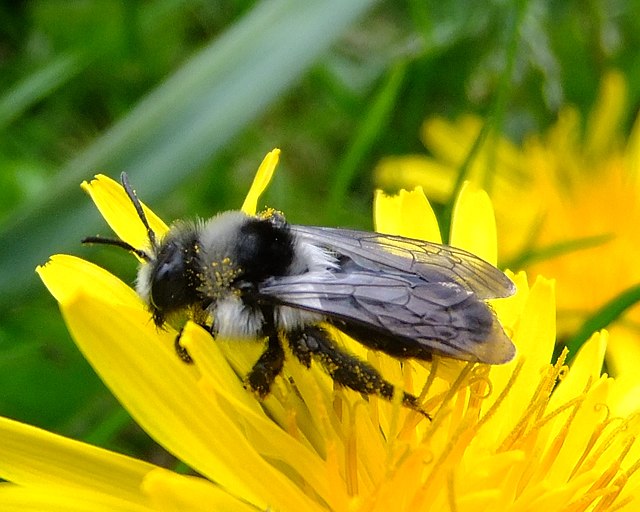
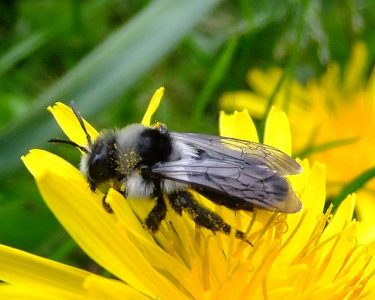
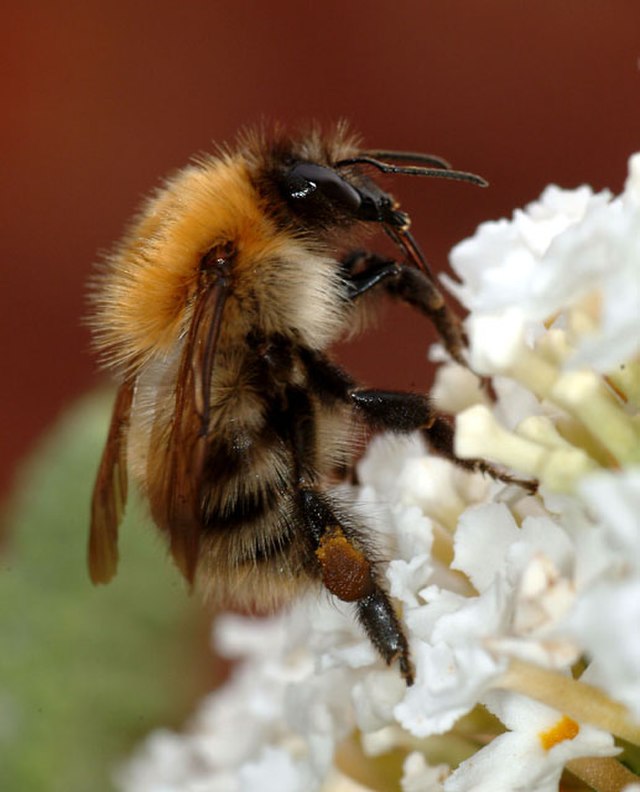

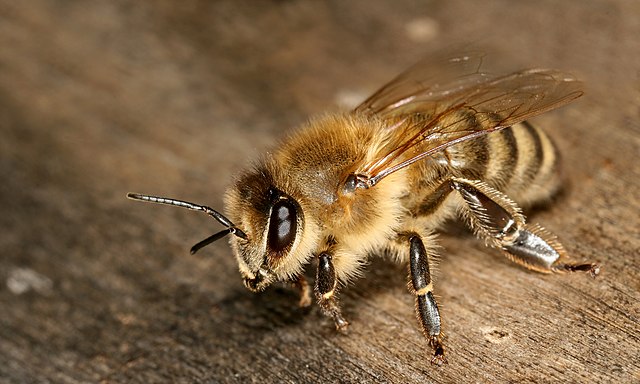
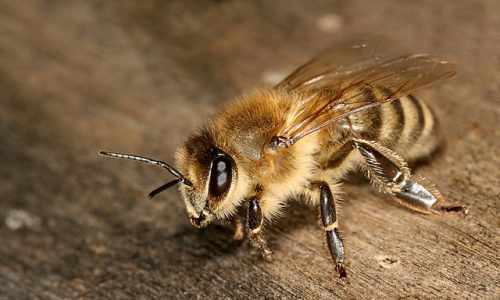

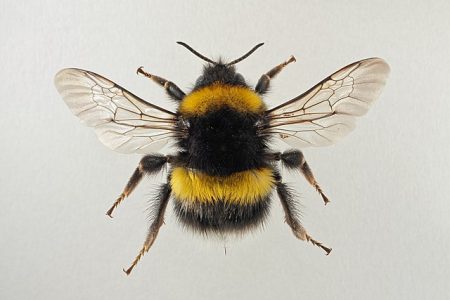
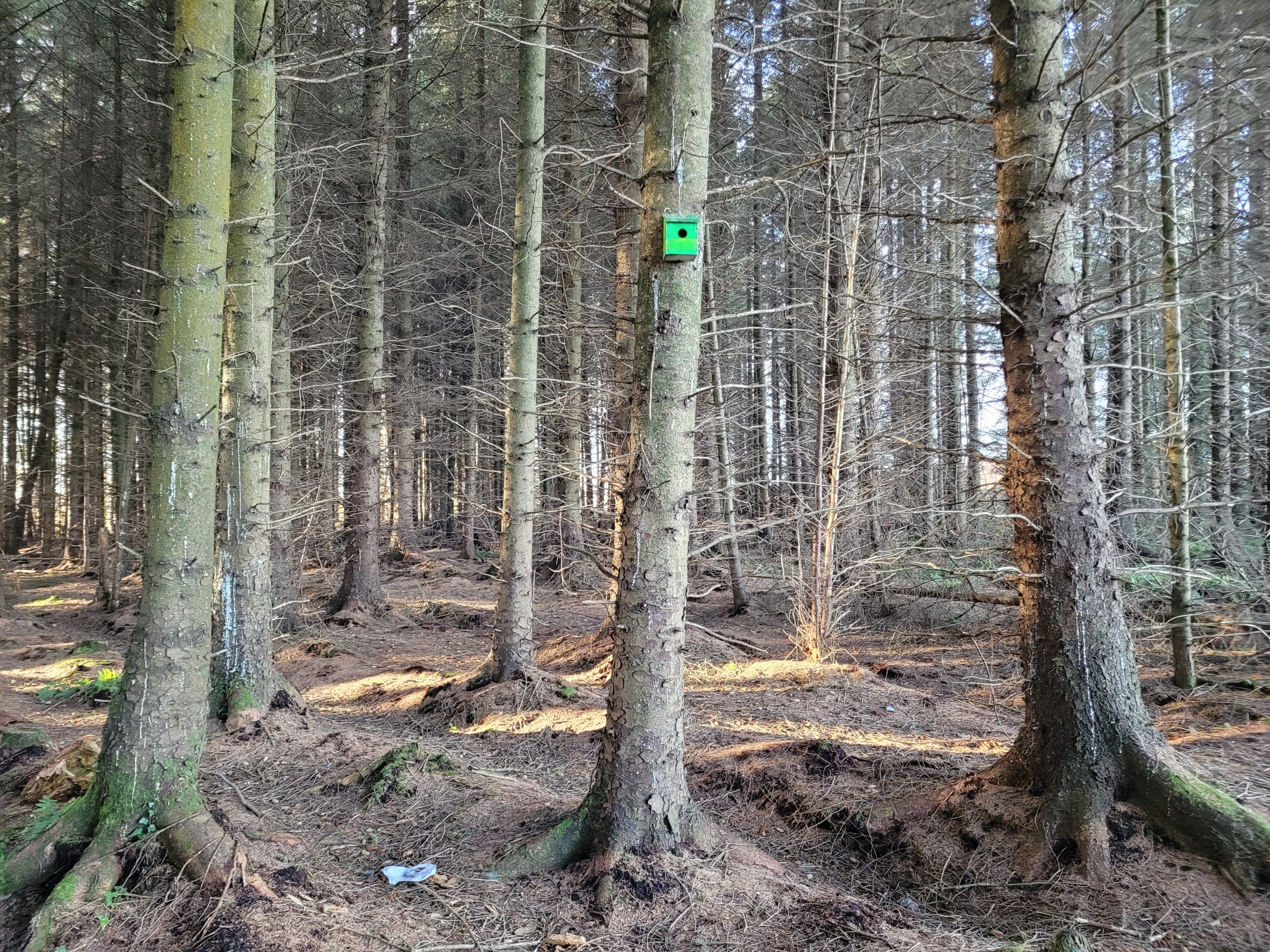
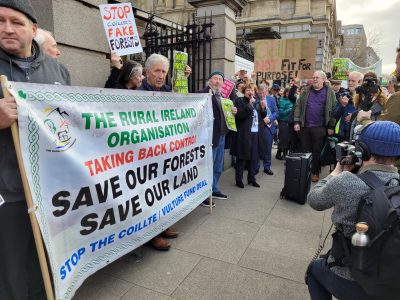
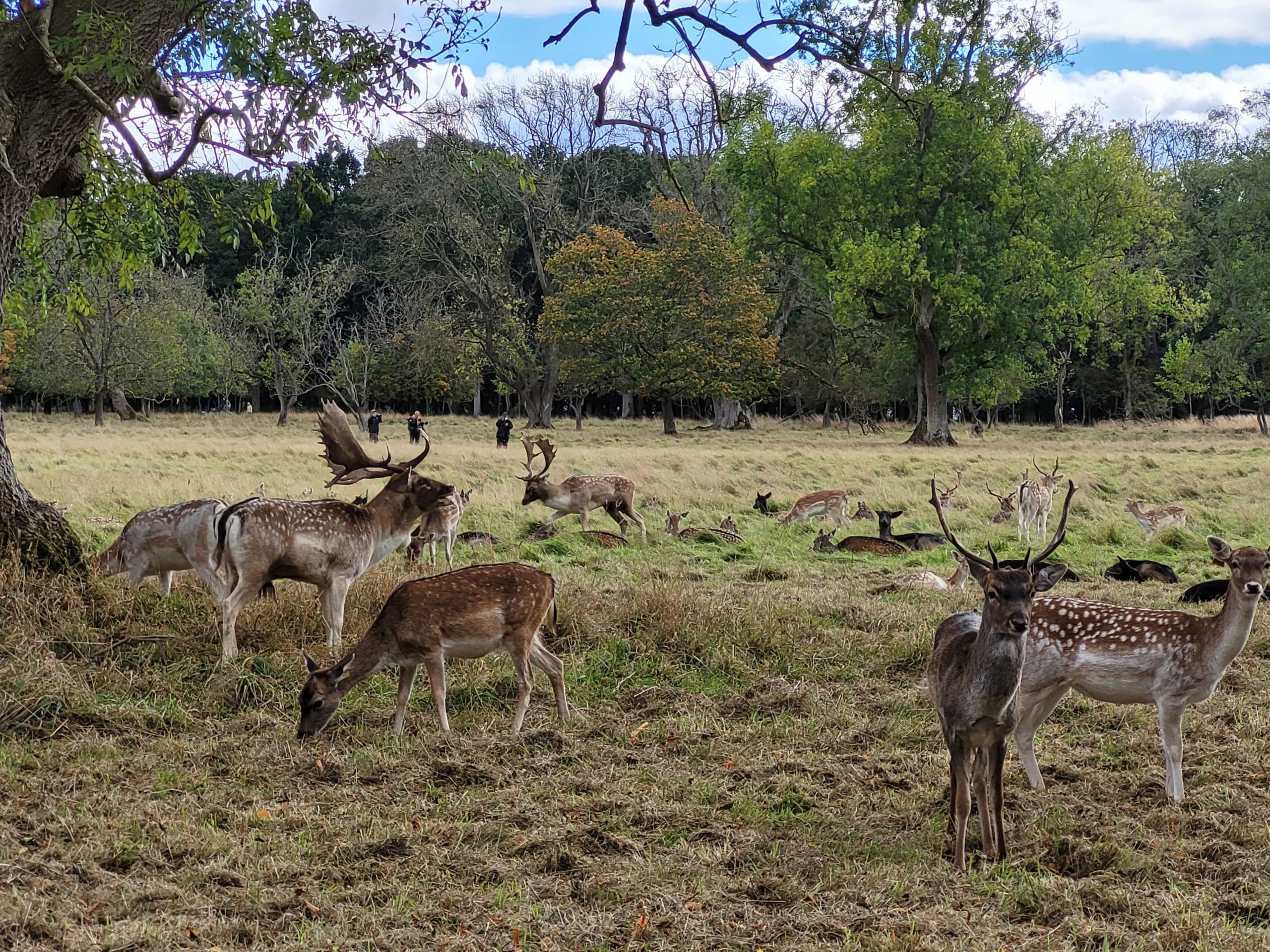
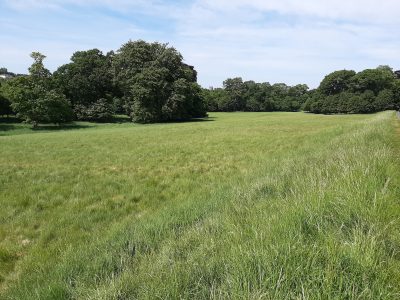

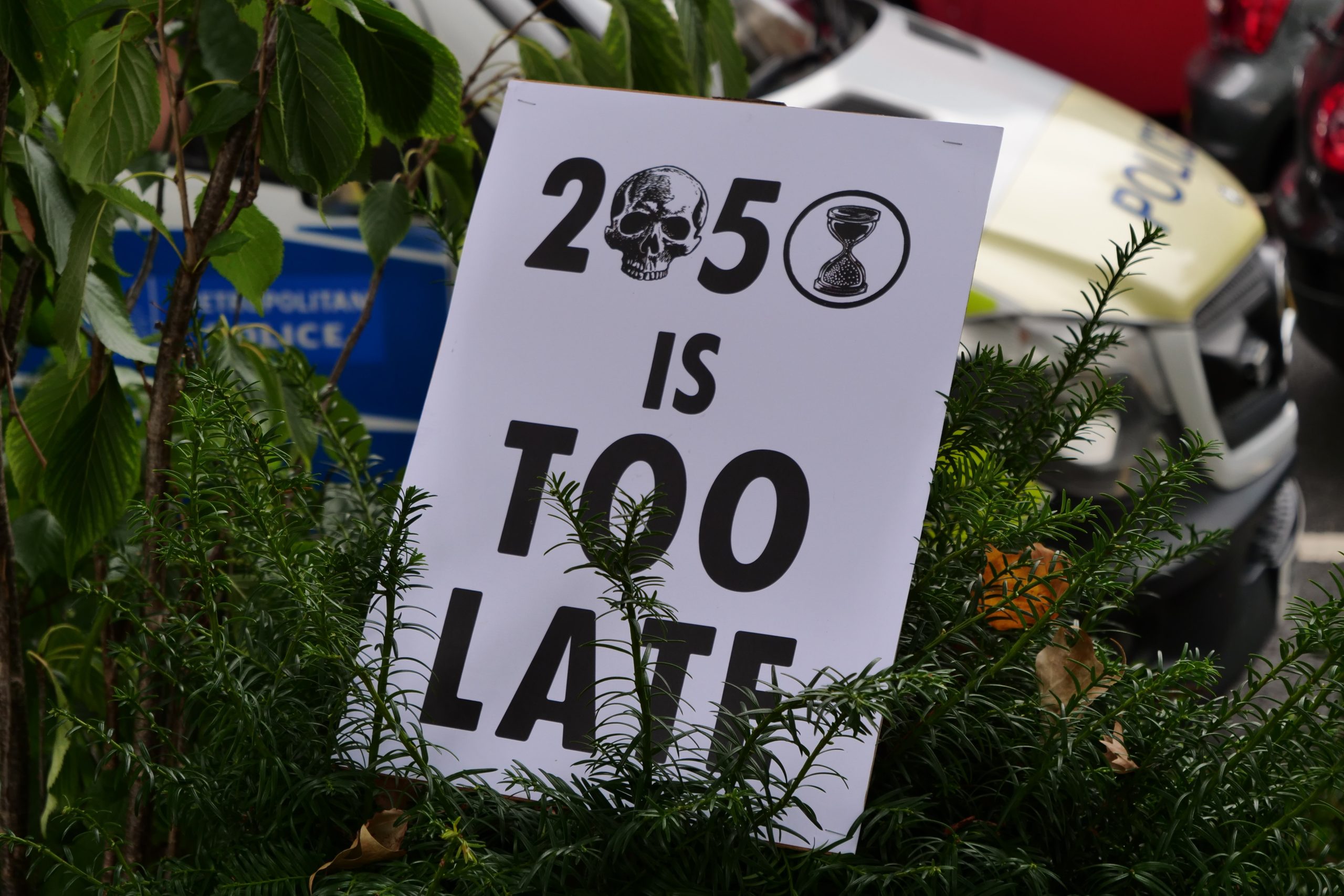
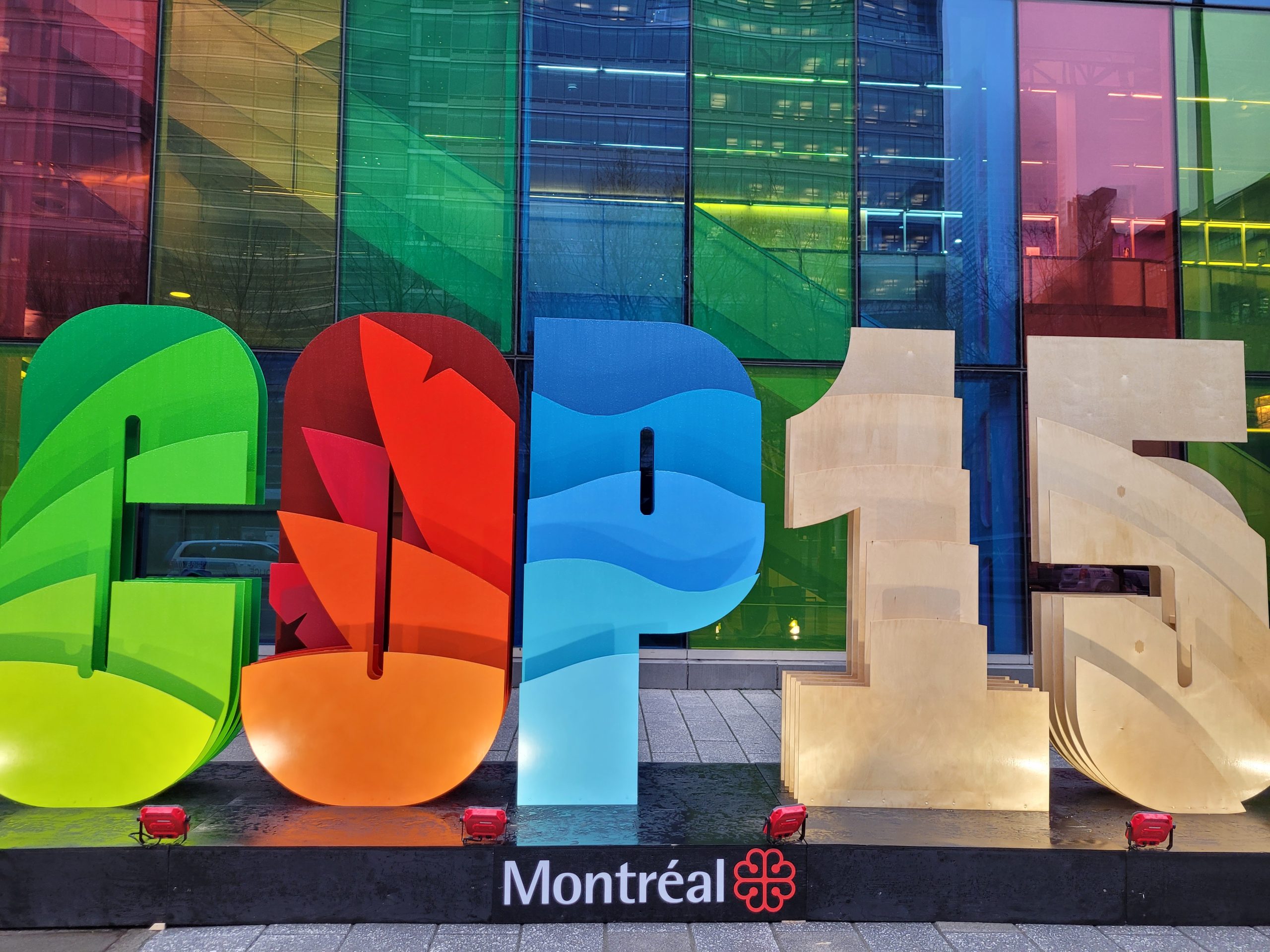
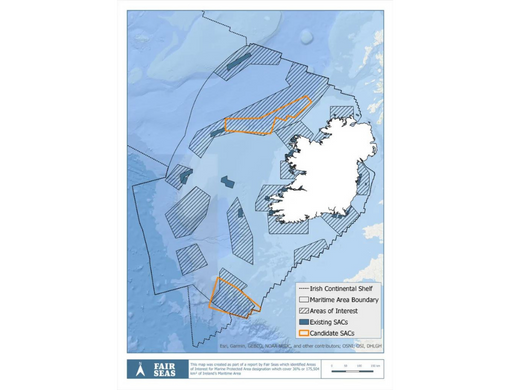
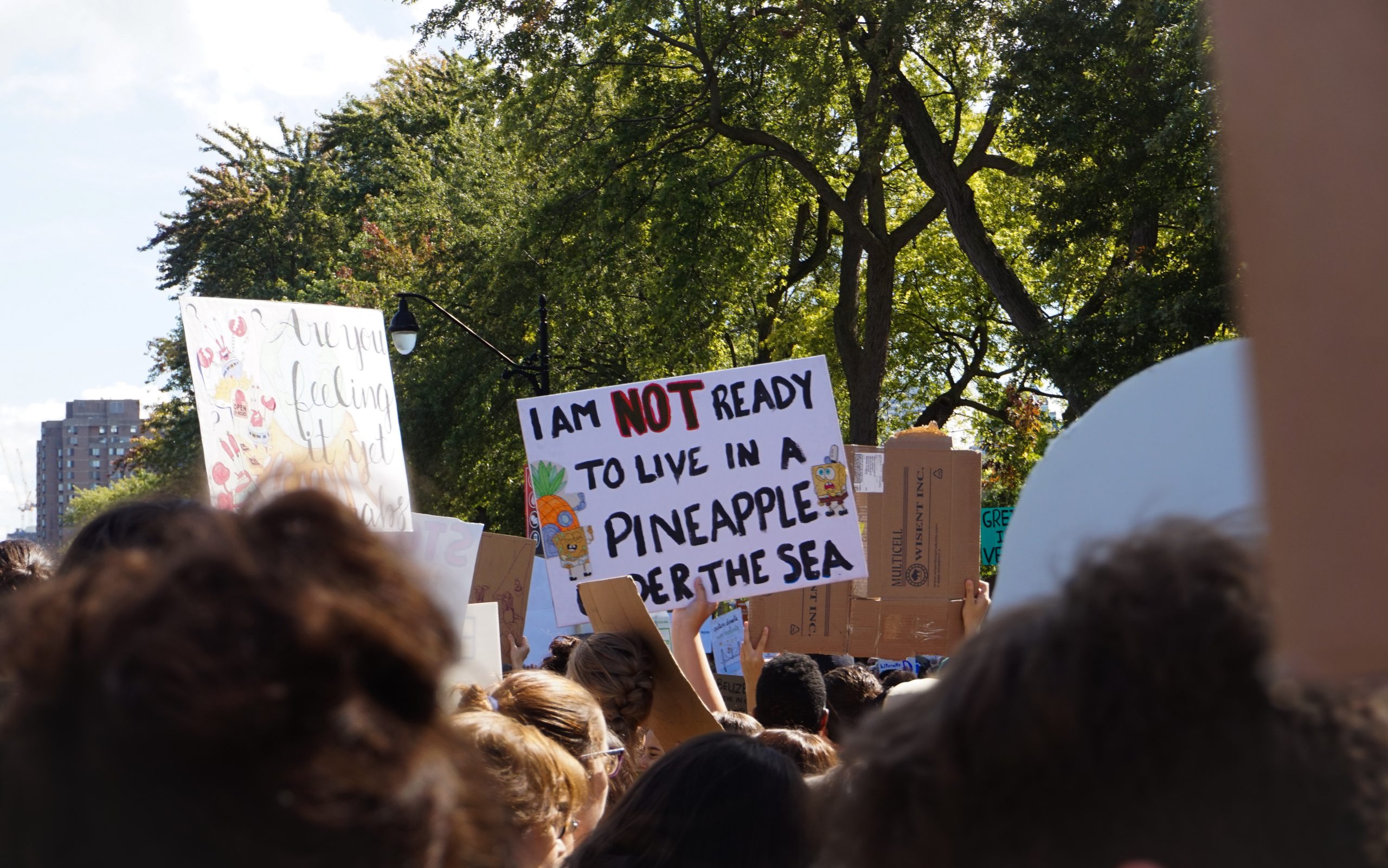
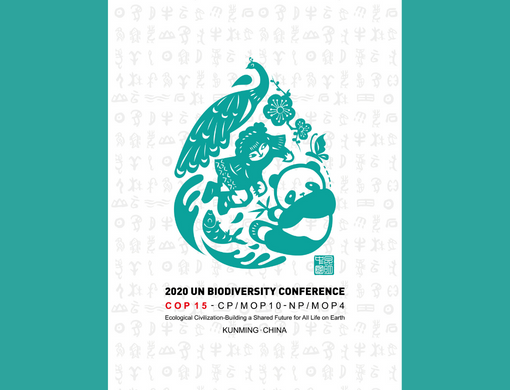


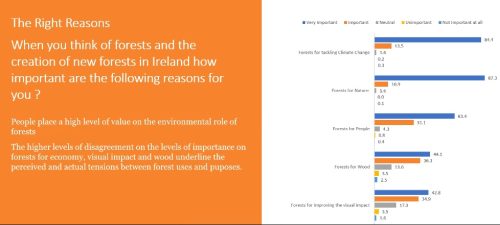

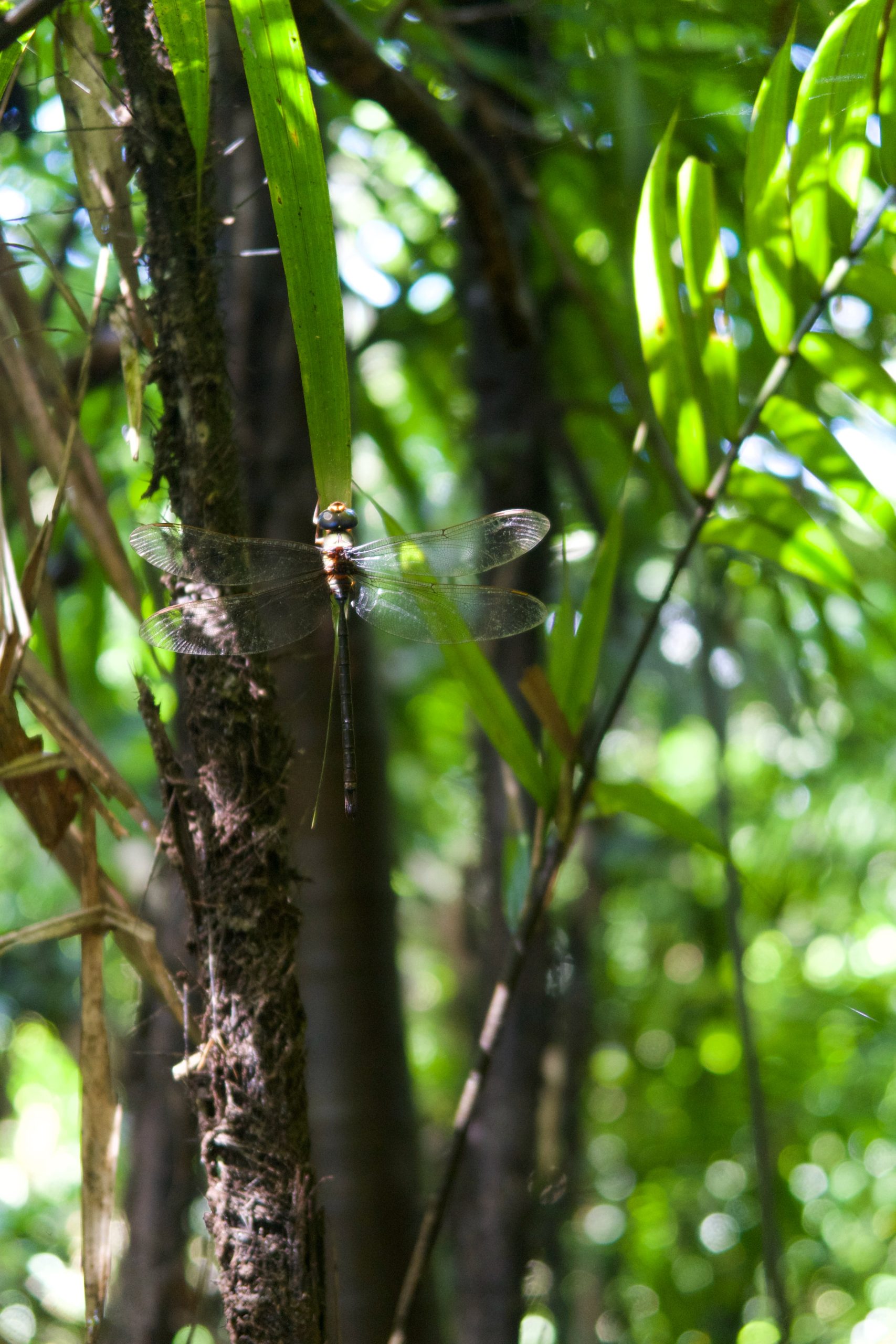
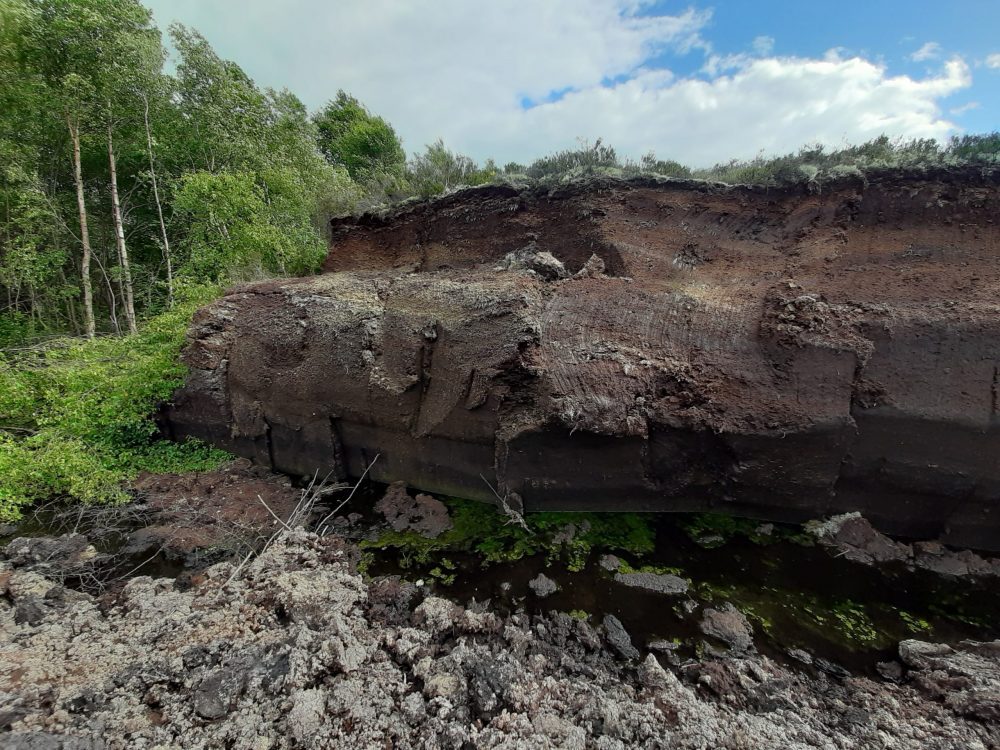
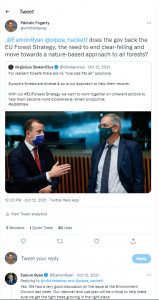 My first red flag went up when I noticed that the draft Strategy failed to fully endorse the EU’s own Forest Strategy.