Category: * All News

  • Amendment to Heritage Bill

    Amendment to Heritage Bill

    PRESS RELEASE: Amendment to Heritage Bill step in the right direction but does not answer the Burning Question

    Published on: 31 March 2017

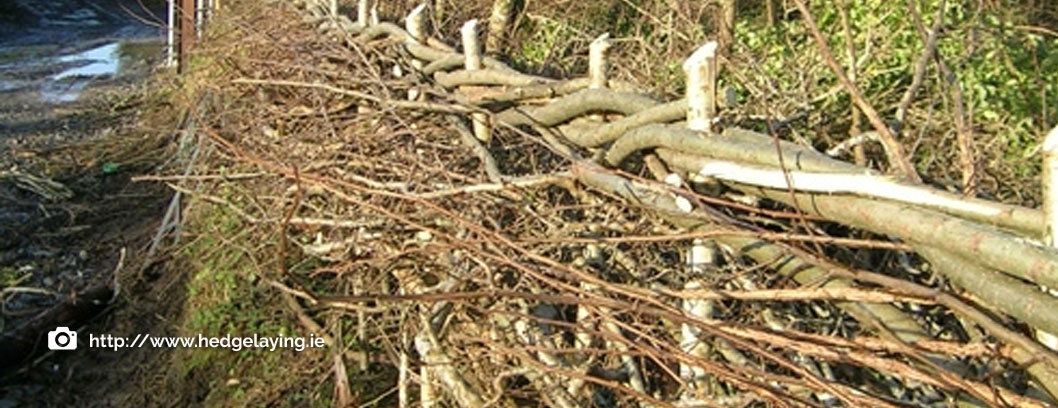
    The IWT reluctantly welcomes the outcome of the Seanad debate on the Heritage Bill. The outcome is not what we would have liked as we strongly felt that hedge-cutting for health and safety issues are clearly already provided for in the Wildlife Act. Nevertheless, Fianna Fáil’s amendment is a significant improvement on the blanket open season for hedge-cutting in August that had been proposed by Minister Heather Humphreys.

    We acknowledge the welcome move by Fianna Fáil in protecting our natural heritage however the real thanks must go to Senator Grace O’Sullivan of the Green Party, Senators David Norris, Alice Mary Higgins, Kevin Humphreys of the Labour Party and others who were vigorous in their opposition from the start. We also can say for sure that that 27,000 people who signed the ‘no to slash and burn’ petition and emailed senators to make their feelings known were instrumental in swinging the vote (and especially Fianna Fáil) in our favour.

    Unfortunately our work is not yet done as no decisions have been made on the proposed extension to burning dates into March. We simply cannot allow the destruction we saw to our countryside last weekend be legalised. The Bill therefore will be back in the Seanad on April 13th and we are urging people to once again have your voice heard by emailing your senator to let them know that destuctive burning must stop (and while you’re at it make sure to thank them for protecting our hedgerows). The IWT will continue to do our bit in raising awareness of this important issue.

    CONTACT:  Padraic Fogarty – IWT’s Campaigns Officer – irishwildlife@iwt.ie
  • Ireland’s vanishing nature

    Ireland’s vanishing nature

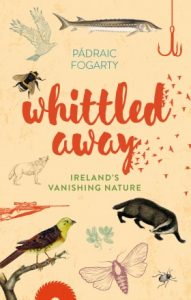
    New book charts Ireland’s vanishing nature and explores a future for people and wildlife
    Pádraic Fogarty has been Campaign Officer for the Irish Wildlife Trust (IWT) since 2013 and was its Chairman from 2009 to 2013. During this time he has also been Editor of the IWT’s quarterly ‘Irish Wildlife’ magazine.
    In his new book Whittled Away – Ireland’s Vanishing Nature (The Collins Press, price €19.99), Fogarty issues a provocative call to arms and presents an alternative path that could lead us all to a brighter future. The book charts how the grim failure to manage our natural resources has impoverished our country. In Ireland the model of nature protection follows the lines of ‘designation – procrastination –fulmination – compensation’. This formula has left nature being seen as a problem, not a solution. Overfishing, industrial-scale farming and pollution have decimated wildlife habitats and populations. In a single lifetime, vast shoals of herring, rivers bursting with salmon, and bogs alive with flocks of curlew and geese have all become folk memories. Coastal and rural communities are struggling to survive; the foundations of our tourism and agricultural sectors are being undermined. The lack of political engagement frequently sees the State in the European Court of Justice for breaches of environmental law.
    But the book also reveals the possibilities for the future, describing how we can fill our seas with fish, farm in tune with nature, and create forests that benefit both people and wildlife. It calls for the return of long lost species like wild boar, cranes and wolves, showing how nature and wildlife can recover hand in hand. Prioritising the natural world will benefit our health, wellbeing and livelihoods. Insightful and ultimately hopeful, Whittled Away explores our past and the opportunities for our future.
    ‘Whittled Away’ is available now from the IWT on-line shop here as well as www.amazon.co.uk or straight from www.collinspress.ie
    50% of all proceeds will be donated to the IWT.

    CONTACT:  Padraic Fogarty – IWT’s Campaigns Officer – irishwildlife@iwt.ie

  • Devastating weekend for wildfires

    Devastating weekend for wildfires

    PRESS RELEASE: Devastating weekend for wildfires across Ireland

     Published on: 23 March 2017

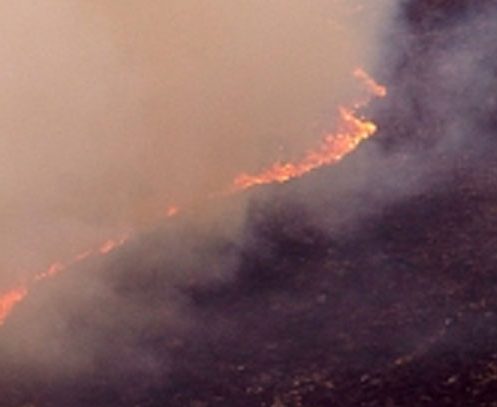
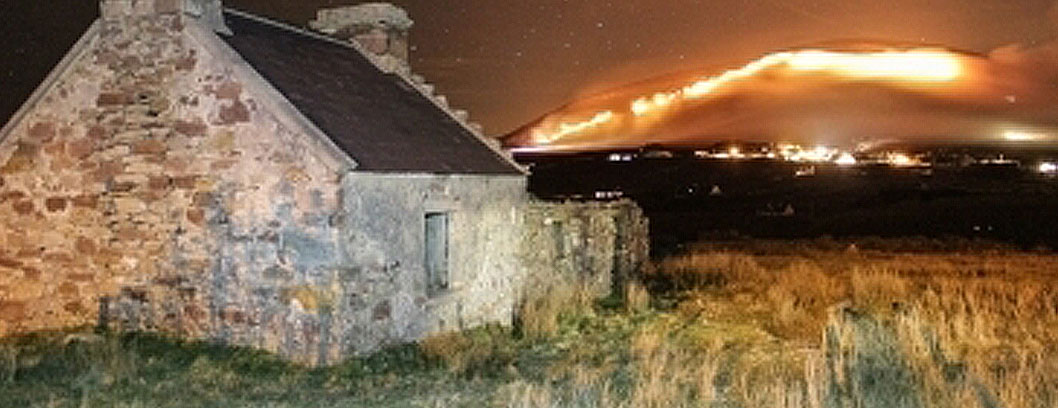
    With a grim predictability, the first dry spell of Spring has seen a surge of wildfires across Ireland. Since Friday the Irish Wildlife Trust (IWT) has recorded 15 wildfires from counties Cork, Kerry, Waterford, Galway, Donegal, Louth and Mayo. Eight of these were in areas protected for nature conservation – all are illegal as setting fire to vegetation is prohibited between March 1st and August 31st each year.
    IWT Campaigns Officer, Pádraic Fogarty, says “every year we see the same wildlife wipe-out as hillsides and bogs get torched. It’s devastating not only for the natural environment but for the people who live in these areas as their livelihoods and property are put at risk. We need to see greater coordination between the Gardaí, the National Parks and Wildlife Service and the Department of Agriculture to clamp down on this illegal activity”.
    The IWT wants to thank the fire services for the work they do in bringing blazes under control. We also want to thank the members of the public who have used social media and other means to let us know about fires in their areas. We are urging people to contact us at irishwildlife@iwt.ie with details so that we can log as many of these fires as possible.   END

    CONTACT:  Padraic Fogarty – IWT’s Campaigns Officer – irishwildlife@iwt.ie

  • Ruling on hedgerow destruction

    Ruling on hedgerow destruction

    PRESS RELEASE: Irish Wildlife Trust welcomes ruling on hedgerow destruction which costs Meath farmer €3,500

    Published on: 14 March 2017

    The Irish Wildlife Trust (IWT) welcomes the recent ruling from Judge Gráinne Malone at Navan District Court (13th January last) in which Mr. Richard Douglas, a cattle farmer from Rathmoylan, Co Meath, appeared on a summons relating to the destruction of 800 meters of hedgerows during the bird nesting season. The case was taken against Mr. Douglas by the National Parks & Wildlife Service (NPWS) Conservation Ranger Kieran Buckley. Mr. Douglas pleaded guilty to the offense and admitted that on the 22nd of April 2015 he destroyed hedgerows and part of a woodland during the bird nesting season. When passing sentence the judge told the defense solicitor she would be inclined to impose a criminal conviction on Mr. Douglas in view of the significance of the destruction and given the evidence presented to the court by the NPWS of the impact this destruction had on nesting birds. However based on his guilty plea she ordered that Mr. Douglas pay a total of €3,500 to two wildlife conservation charities – €2,000 to the Butterfly Conservation Ireland and €1,500 to the IWT. This is believed to be the largest fine imposed for such an offense.

    IWT Campaigns Officer Pádraic Fogarty says: “we would like to thank the NPWS for their work in securing this ruling which emphasises the importance of protecting wildlife during the breeding season. This is a significant fine and will hopefully send the message that regulations on the timing of hedge-cutting will be rigorously enforced.”
    END

    CONTACT:  Padraic Fogarty – IWT’s Campaigns Officer irishwildlife@iwt.ie

  • Saint Patrick and the Lizards

    Saint Patrick and the Lizards

    Saint Patrick may have gotten rid of Ireland’s snakes but it seems he spared our lizards

    Help put them on the map with the Irish Wildlife Trust.

    Saint Patrick may have gotten rid of Ireland’s snakes but it seems he spared our lizards. Ireland really is home to two fascinating lizard species and this Spring the Irish Wildlife Trust is calling on wildlife enthusiasts to get out lizard spotting to help map Ireland’s wild reptiles.
    The IWT National Reptile Survey is asking people to help by sending in any reptile sightings they come across this year or by attending surveyor training days and conducting lizard surveys from April to September. If you would you like to become an IWT citizen scientist, receive surveyor training and carry out reptile surveys in your local area, then register to attend one of the training workshops in counties Tipperary (25 March), Offaly (26 March) or Longford (01 April). To register for a workshop or send in a sighting email research@iwt.ie or see www.iwt.ie/reptile.
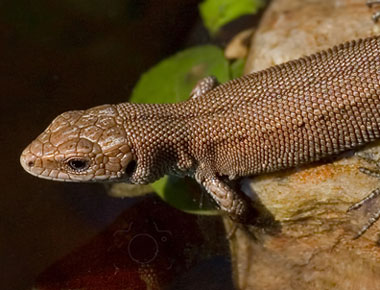
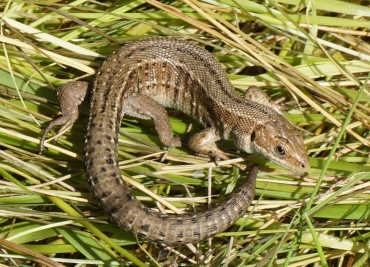
    Ireland is home to two species of land dwelling reptile, the viviparous lizard and the slow worm. The viviparous lizard, or common lizard, is a native Irish reptile. This elusive little creature is found throughout Ireland in habitats such as bogland, coastal dunes and the uplands. It is about 13cm long and feeds on small insects, spiders and slugs. This lizard has adapted to the cooler climate by giving birth to live young, a rarity in the reptile world, where most species lay eggs in order to reproduce. Our second wild reptile, the slow worm, is an even more peculiar creature, it look like a small snake but is in fact a legless lizard. Yes, a lizard that adapted to a life without legs, sliding through the undergrowth hunting slugs and slow moving insects. The slow worm is thought to have been introduced to Ireland in the 1970s in the Burren region where it is still found today.
    Both species can be seen from March onward basking on sunny rocks, stone walls and earth banks or you may come across them taking refuge under logs or stones. There is usually a peak in lizard sightings in April with a second peak in late August when the young are born and immediately start to fend for themselves hunting and basking just like their parents. If you come across one of these reptiles while out and about the IWT is asking you to get in touch with your reptile record to help them understand the distribution of these two species in Ireland. To report a sighting contact the IWT at research@iwt.ie with your name, the location and habitat of the sighting and a photo if possible.
    Through this citizen led survey the IWT hopes to determine the current distribution of these two reptile species. This knowledge will allow us to monitor any changes in the population of our native reptile to ensure that any decline does not go unnoticed. Our results should also shed light on any spread of the introduced slow worm and effects this might have on other wildlife. “Citizen science is both extremely engaging and informative. Through projects like this the public can help in the mapping of their own wildlife, thus helping important conservation efforts” says survey coordinator Kieran Flood.
    Anyone can volunteer as a surveyor and previous experience is not required. Volunteers on this project are asked to attend training workshops after which they choose an area in their locality to carry out a simple reptile survey, the results of which will be returned to the IWT to compile maps for these species. The workshops will cover Irish terrestrial reptile identification and species recording techniques. To book a place on a workshop or report a lizard sighting, contact us on research@iwt.ie or see our survey webpage www.iwt.ie/reptile

    We would like to thank Dublin Zoo for supporting this initiative.

  • Prohibition on burning vegetation

    Prohibition on burning vegetation

    Press Release: Prohibition on burning vegetation comes into effect on Wednesday (March 1st)

     Published on: 2 March 2017

    Press Release: Prohibition on burning vegetation comes into effect on Wednesday (March 1st)
    The Irish Wildlife Trust (IWT) is reminding landowners that from Wednesday (March 1st) it is prohibited under the Wildlife Act to burn vegetation for the duration of the bird nesting season (ending August 31st).
    Last year the IWT recorded 27 wild fires from the end of March right through to the middle of August, i.e. during the bird nesting season. 15 of these were in areas designated for wildlife conservation. All of these fires were illegal as information received from the National Parks and Wildlife Service show that only one fire in 2016 received the required permission. This year the IWT is once again calling on people to let us know of any wild fires in their area by emailing the date, precise location and, if possible, a photograph to irishwildlife@iwt.ie
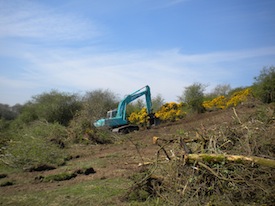
    Burning vegetation on hills results in appalling destruction of wildlife habitats and is a key factor in the decline of many of our upland birds. Proposals to extend the permitted burning dates in a Heritage Bill, to be presented by Minister Heather Humphreys to the Seanad this week, is an assault on our natural heritage and will do nothing to help farmers in upland areas.
    IWT Campaign Officer Pádraic Fogarty says: “The idea of extending the permitted burning dates is a joke considering that nearly all fires are illegal in any case. We need policies that can promote environmental protection in hand with upland farming and which bring an end to the annual bonfire of our hills.”
    Over 26,000 people have signed a petition urging politicians to scrap the changes to burning and hedge-cutting dates in the Heritage Bill [1].

  • Badgers continue to die in large numbers

    Badgers continue to die in large numbers

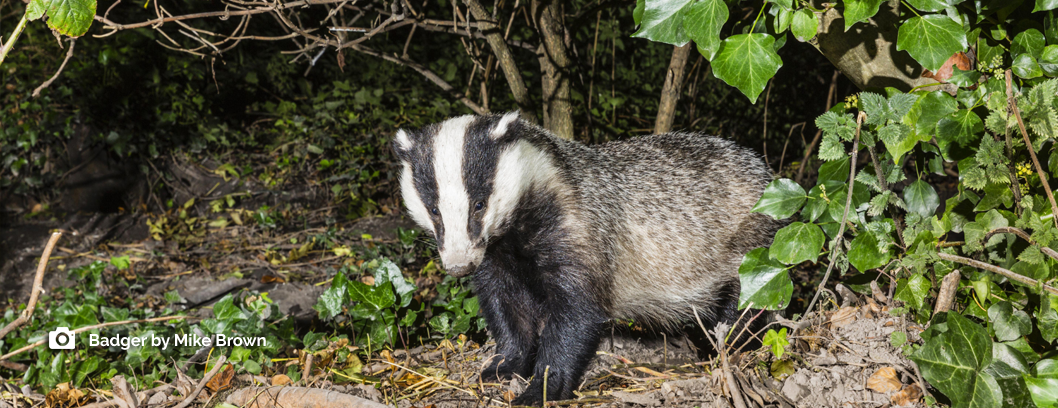
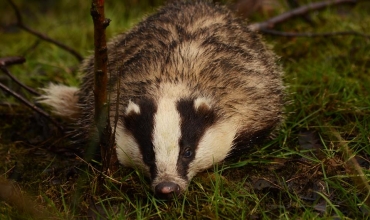
    Press Release: Nothing new in Creed’s badger vaccination ‘announcement’. Badgers continue to die in large numbers.

    Published on: 24 January 2017

    The Irish Wildlife Trust (IWT) welcomes the publication of research which shows that vaccinating badgers is effective in reducing levels of TB in badger [1]. However, yesterdays ‘announcement’ of the results by Minister for Agriculture, Food and the Marine (DAFM), Micheal Creed TD, was unsurprising given that the findings have been widely leaked for a number of years. Indeed vaccinating badgers, ostensibly in the fight to reduce TB levels in cattle, was first mooted in 1991 and this development is significant only for the fact that it is the first publication on the topic in these 25 years.
    The new research comes shortly after a paper published in the European Journal of Wildlife Research which showed that badgers tend to avoid farm buildings, and infected badgers avoid them even more [2]. Previous research from Trinity College, Dublin showed that badgers actively avoid pastures with cattle [3]. Indeed in three decades it has never been demonstrated how wild badgers transmit the disease to cattle. Figures from DAFM show that 6,116 badgers were snared and shot in 2015 – a pattern which has continued since culling was introduced in the late 1980s. To date no scientific evidence has been produced which shows that badgers are responsible for the high levels of TB to be found in Ireland and the main source of this disease in cattle is other cattle. This important fact seems to have been forgotten by policy makers in the nearly 30 years that culling has been going on.

    IWT Campaigns Officer Pádraic Fogarty says: “this culling programme has been going on for so long that it seems those at the top have forgotten what it was supposed to achieve. It’s incredible how a policy which has failed so miserably in its stated aim can be allowed to continue, never mind be considered a success.”

    The IWT acknowledges that TB is a serious disease which needs to be eradicated. However the emphasis on killing badgers has diverted attention from the principle causes of the disease while wasting large sums of tax payers money (over €33 million in 2014 excluding staff). Vaccinating badgers will not solve this problem. Indeed the IWT has serious concerns that the sustained slaughter of badgers is having a significant impact on this charismatic animal and may be leading to local extinctions.


    [2] Use of farm buildings by wild badgers: implications for the transmission of bovine tuberculosis Woodroffe et al.,February 2017.

    [3] Foraging Eurasian badgers Meles meles and the presence of cattle in pastures. Do badgers avoid cattle? Mullen et al. Applied Animal Behaviour Science Volume 144, Issues 3–4, March 2013, Pages 130–137

    END

    CONTACT:  Padraic Fogarty – IWT’s Campaigns Officer – irishwildlife@iwt.ie


    Photo Credit: In Touch with the Wild Photography

  • Minister Creed fails to act in the public interest

    Minister Creed fails to act in the public interest

    Press Release: Minister Creed fails to act in the public interest in failing to end overfishing

     Published on: 14 December 2016

    The Irish Wildlife Trust, which was in Brussels this week, is disappointed with the outcome of the latest round of fish quota negotiations which will do little for coastal communities or the protection of the marine environment. Despite the fact that there is a legal obligation to end overfishing by 2020 it was business as usual for Minister Creed and his team in fighting long-term scientific advice (produced by the Marine Institute at great public expense) in favour of short-term gain.
    The IWT Campaigns Officer, Pádraic Fogarty, says: “Minister Creed is doing no one any favours in his prioritisation of certain sections of the fishing industry over the public good. In abandoning the Irish and Celtic Seas to a state of ecological degradation he is contributing to the decline of coastal communities and denying future generations the opportunities which come with healthy oceans. There is now an urgent need to close off large sections of the sea to harmful trawling to allow the recovery of beleaguered marine life. This is the only hope if we are to restore nature’s bounty and heritage which was once the lifeblood of coastal areas.”
    ENDS

    CONTACT:  Padraic Fogarty – IWT’s Campaigns Officer – irishwildlife@iwt.ie  for further details
  • Action Plan must address lack of political will

    Action Plan must address lack of political will

    Press Release: National Biodiversity Action Plan must address lack of political will if we are to save our wildlife

     Published on: 14 December 2016

    The Irish Wildlife Trust (IWT) has called for greater prioritisation of wildlife protection in its submission to the draft National Biodiversity Action Plan. This is the third such plan and this is destined to fail, just like the previous two, if lack of political interest is not squarely addressed. It is welcome that the draft plan acknowledges the chronic decline in wildlife across our land and sea, leaving communities poorer as our natural heritage is degraded. However, generating yet another plan with broadly similar objectives and goals to those that preceded it, and with new, arbitrarily generated target dates is surely a meaningless exercise if we cannot get to the heart of why our beleaguered natural heritage continues to disappear before our eyes.

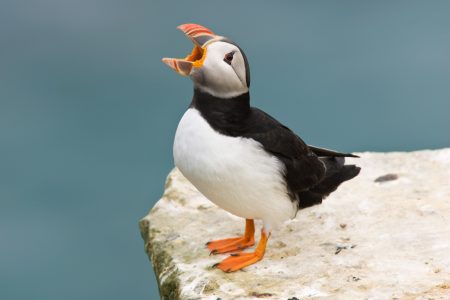
    The IWT suggests that it is a fundamental lack of political will which hampers progress, a feckless disinterest among politicians who routinely see our natural environment as little better than wallpaper or the backdrop to a photo opportunity. The case has yet to be made at a senior level that the declining fortunes of our wildlife coincides with the decline in rural and coastal communities and is leading to the degradation of the Irish landscape and environment, no doubt our most important assets. A case in point is the Hen Harrier (a bird of prey), where ample data on the bird’s status and ecology, and the availability of substantial funding from the Rural Development Plan to help landowners in protected areas have failed to prevent drastic declines in population – something which can be squarely blamed on a lack of engagement by successive ministers for agriculture and heritage.
    IWT campaigns officer Pádraic Fogarty says “we have to ask ourselves what is the point is spending time drafting more plans with randomly chosen targets if we are failing in the central task to stop the ongoing loss of nature in Ireland. Unless we can get politicians to speak about nature like it was just as important as health or education we will be destined to continue on our destructive path.”
    In our submission to the draft plan, the IWT has called for a smaller document, with fewer, more realistic targets. Among those should be the reform and adequate funding of the National Parks and Wildlife Service, a push against ‘greenwashing’ of agricultural and marine plans, and meaningful plans to reverse damage in our most protected areas, such as national parks.
    The full submission can be viewed on https://www.iwt.ie/about-us/iwt-policy

    ENDS

    CONTACT:  Padraic Fogarty – IWT’s Campaigns Officer – irishwildlife@iwt.ie
  • Prioritise recovery of fish stocks

    Prioritise recovery of fish stocks

    Press Release: Minister Creed urged to prioritise recovery of fish stocks to benefit fish and coastal communities

     Published on: 8 December 2016

    In advance of the annual Council of Ministers meeting in Brussels next Monday and Tuesday the Irish Wildlife Trust (IWT) is urging Minister Michael Creed to prioritise the recovery of fish populations – something that will benefit fishing communities as well as the environment. In the Irish Sea only half of the stocks which have been assessed are considered healthy. In all Irish waters cod is seriously overfished, monkfish is declining, while familiar dinner favourites such as whiting and haddock are depleted in most areas. Restoring the wealth of our seas is not only a legal requirement under the Common Fisheries Policy but holds enormous potential for boosting income for coastal communities. While this approach has dictated a degree of short term pain by the fishing industry, a report from the New Economics Foundation suggests that dramatic falls in fuel prices have resulted in record profits. This creates a unique opportunity to implement recovery measures without the attendant economic impacts [1].


    IWT Campaign Officer Pádraic Fogarty says: “Successive governments seem to have given up trying to repair the damage done to the marine environment. The Irish Sea in particular is a shadow of its former abundance. There is a clear legal and moral obligation on Minister Creed to restore the great wealth of our seas, something which has been squandered through decades of mismanagement. There is always a reason not to act – but now is a particularly good time to take the tough decisions”.


    The IWT will be in Brussels next week along with our eNGO partners to promote an end to overfishing and rebuilding fish stocks.


    [1]  http://neweconomics.org/low-fuel-prices-pain-free-fish-stock-recovery/?header=Latest


    ENDS


    CONTACT:  Padraic Fogarty – IWT’s Campaigns Officer – irishwildlife@iwt.ie  for further details


    Editors Notes: The Irish Wildlife Trust was founded in 1979 as a charitable conservation body. We provide the public with information about wildlife, run education and training programs like SAC Watch and the Badger Schools Programme, carry out habitat and species surveys like the IWT National Newt Survey, campaign and lobby around biodiversity issues, restore natural habitats, consult with industry, agriculture and Local Authorities to maintain our natural heritage and contribute to national and international forums for the protection of biodiversity. The IWT is a nationwide organisation with a strong membership base, staff and Board of Directors, with branches in Dublin, Longford/Westmeath, Galway, Kerry, Laois/Offaly, Waterford.


    MAKE A DIFFERENCE FOR IRISH WILDLIFE – JOIN THE IWT TODAY!

  • News

    Latest News

    Urgent Statement from Irish Wildlife Trust: European Parliament vote tomorrow (25/11/2026)

    Urgent: European Parliament vote tomorrow (25/11) on EU law which could open up vital nature protection law and allow for …

    We’re Hiring a Rewilding Network Officer

    We’re hiring a Rewilding Network Officer Job Title: Rewilding Network Officer Organisation: The Irish Wildlife Trust  Location: Coleraine House, Coleraine …

    Reflections from the UN Biodiversity Conference in Yerevan, Armenia

    Reflections from the UN Biodiversity Conference in Yerevan, Armenia by: Oisín Ó Néill, IWT Nature Advocacy Officer First Published 05th …
    / * Advocacy For Nature, * All News

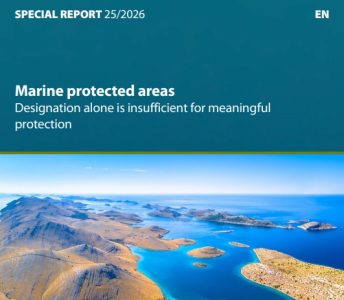
    Sinking ambition – new report from EU auditors shows Ireland’s failure to protect the marine environment

    Sinking ambition – new report from EU auditors shows Ireland’s failure to protect the marine environment by Grace Carr, IWT …

    Irish Wildlife Trust supports EU wide Rights for Nature campaign

    Press Release: Irish Wildlife Trust supports EU wide Rights for Nature campaign 13 October 2026 Irish campaign aims to gather …

    Ireland’s betrayal of the wolf in Europe

    Ireland’s betrayal of the wolf in Europe by Oisín Ó Néill, IWT Nature Advocacy Officer First published online: 30 September …

    Places to Connect: Dartrey forest, Co Monaghan

    Places to Connect: Dartrey Forest, Co Monaghan By Brian Mac Domhnaill, IWT Monaghan Branch First published online: 24 September 2026 …

    Heritage at Risk: A look back at National Heritage Week 2026

    Heritage at Risk: A look back at National Heritage Week 2026 First published: 05 August 2026 by Charlotte Salter-Townshend, IWT …

    IWT Statement on media misrepresentation of incident involving Blue Shark fishing

    IWT Statement on media misrepresentation of incident involving Blue Shark fishing  First published online: 13 August 2026 The IWT is …

    Cherry Laurel Assessed as High Risk Invasive: The Science Is Clear. Ireland Must Now Ban Its Sale.

    Cherry Laurel Assessed as High Risk Invasive: The Science is Clear. Ireland Must Now Ban Its Sale. by Oisín Ó …

    Press Release: Irish Wildlife Trust and Gaelic Woodland Project Call for Nationwide Cherry Laurel Sales Ban

    Press Release: Irish Wildlife Trust and Gaelic Woodland Project Call for Nationwide Cherry Laurel Sales Ban 12 August 2026 New …

    Press Release: Over 600,000 call on EU to defend nature laws as wildfires sweep across Europe

    Press Release: Over 600,000 call on EU to defend nature laws as wildfires sweep across Europe 10 August 2026 As …

    Leading by Example? The State’s Role in Wildlife Persecution

    Leading by Example? The State’s Role in Wildlife Persecution  First published: 05 August 2026 by Oisín Ó Néill, IWT Nature …

    Take Action: Ban Open Net Fish Farms

    First published online: 15 July 2026 Salmon aquaculture in Ireland is polluting coastal waters, contributing to the collapse of wild …

    A Living Land – Ambition and Opportunity

    A Living Land – Ambition and Opportunity by Oisín Ó Néill, IWT Nature Advocacy Officer First published: 13 July 2026 …

    Nature & Society Need More Ambitious Nature Restoration

    Nature & Society Need More Ambitious Nature Restoration First published online: 10 July 2026 The National Restoration Plan represents a …

    Be Plant Wise. Let nature lead. Plant native.

    Be Plant Wise. Let nature lead. Plant native. This Invasive Species Week, the Irish Wildlife Trust and Mary Reynolds are …