Category: * All News

  • Native Tree Giveaway Greens Co. Laois Woodlands

    Native Tree Giveaway Greens Co. Laois Woodlands

    Native Tree Giveaway Greens Co. Laois Woodlands

    Community Receives 12,000 Donated Trees and Shrubs

    24th February 2020

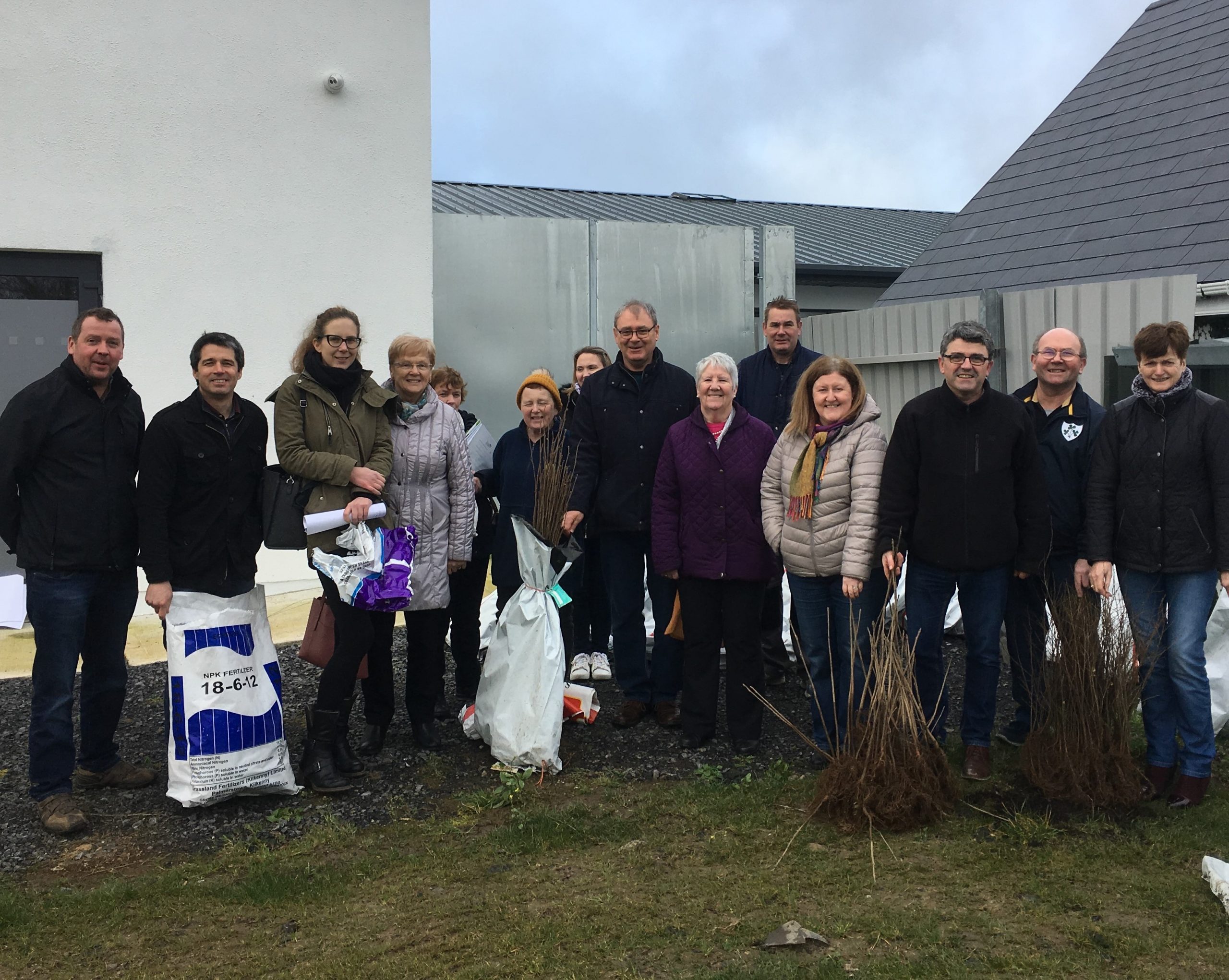
    Trees, hedgerows and parks in Co. Laois received a boost from a recent tree donation. Approximately 12,000 trees were donated by the Trees on the Land projects, and distributed by the Laois Offaly Branch of the Irish Wildlife Trust (IWT). The trees and shrubs were distributed to local community groups in the county to provide tree cover for public spaces and garden tree give aways. Recipient groups will hold tree plantings in February.

    Trees on the Land is a cross-border initiative that works to establish young native trees across the island. IWT Branch Chair Brian Gaynor noted, “For the last several years, IWT Laois Offaly has been very fortunate to receive trees from this amazing charity to contribute to our reforestation efforts.”

    Photo Caption: County Laois community groups received their share of the 12,000 trees distributed by Irish Wildlife Trust Laois Offaly. Trees were supplied by Trees on the Land.

    Twenty local community groups, including Tidy Towns groups including Camross TT and Laois GAA, received donated trees. The recipients will gather in mid-February to plant the bare root saplings. When planted, the 12,000 trees will create approximately 1.6km of new hedgerow and several small copses of woodland and will increase the numbers of native wildlife friendly trees in gardens throughout the county.

    When grown, these trees will provide valuable habitat for a range of native species, enhance the visual appearance of community green spaces, act as a source of wild food (e.g., berries, and nuts), and provide shelter and screening for wildlife. In addition, the project provides an opportunity to connect community members in the spirit of volunteerism through participation in tree planting days.

    The distribution was facilitated through a Laois Tidy Towns training programme, funded by Laois Partnership Company and LEADER, which is training 25 local Tidy Towns groups on actions they can take to enhance their local communities in areas such as biodiversity and sustainability.


    Contact:

    Branch Chairperson, Brian Gaynor, brian.iwtlaoisoffaly@gmail.com

    PRO: Anne Sundermann, asundermann@gmail.com

    About the Irish Wildlife Trust

    IWT Laois Offaly is the local branch of the national Irish Wildlife Trust, which aims to conserve wildlife and the habitats they depend on throughout Ireland while encouraging a greater understanding and appreciation of the natural world and the need to protect it.  The Irish Wildlife Trust was founded in 1979 as a non-governmental organisation and charity (Charity no: CHY 6264). Website: www.iwt.ie

    About Trees on the Land

    Based in Co. Cork, Trees on the Land is a project of the Green Economy Foundation, which uses an island-wide network of professionals, volunteers, landowners and business supporters to dispense “Irish grown trees on Irish lands,” particularly deciduous species such as oak, alder, rowan, willow, hawthorn and hazel. Native pine species are also distributed. Website: treesontheland.com

  • Press Release: The Irish Wildlife Trust’s Top-Tens Asks for Politicians in advance of the General Election

    Press Release: The Irish Wildlife Trust’s Top-Tens Asks for Politicians in advance of the General Election

    Press Release: The Irish Wildlife Trust’s Top-Tens Asks for Politicians in advance of the General Election

    28th January 2019


    The Irish Wildlife Trust (IWT) has written to the political parties with our top ten asks for the next government to avert ecological meltdown. The 2020s needs to be the decade for nature restoration if we are to address the biodiversity and climate crises and we want the next government to play a positive role in important international agreements to be negotiated this year. We urgently need a vision which revolves around restoring natural ecosystems in Ireland – something we believe will be of enormous benefit to people and nature. Our Top-Ten Asks centre on creating healthy oceans, rivers, wetlands, farms and forests. To do this, we need reform of governance structures and generous funding to allow agencies to do their job.


    IWT Campaigns Officer, Pádraic Fogarty says – “The collapse of nature in Ireland is reversable. We have the solutions to hand, what we have been missing is the political engagement to deliver that vision. This decade may be our last chance to avert ecological chaos and our political leaders have no time to lose”.


    Governance
    1.  Re-structure and properly fund the National Parks and Wildlife Service (NPWS). The NPWS should be independent (like the Environmental Protection Agency), allowing it to provide scientific advice, take enforcement action and run education programmes as well as the day-to-day work of protecting nature. Sufficient resources are required to implement the National Biodiversity Action Plan as well as to meet minimum legal requirements under the Habitats and Birds Directives, including drawing up and implementing management plans for all existing protected areas on land and in the sea. We also need legislation for our national parks which will allow for their management and expansion.There should be a long-term funding commitment to the National Biodiversity Data Centre, which is integral to this work.


    2. There should be a clear commitment to fully implement all existing environmental legislation.


    The 2020s need to be the decade of Nature
    3.  To convene the Citizens’ Assembly on biodiversity loss as committed to by the Dáil in their declaration of a climate and biodiversity emergency in May of 2019. This must be followed by a sustained, national education programme to inform people of the implications and solutions to the ecological crises.


    4.  Ireland should support the EU in committing to the forthcoming ‘Global Deal for Nature‘ to be agreed at COP15 in China later in 2020 to protect 30% of land and sea for biodiversity conservation. This is in line with the UN Decade on Ecosystem Restoration.


    5.  Nature-based solutions for climate. The Oireachtas Joint Committee on Climate Action Plan should be implemented, recognising that nature-based solutions could bring us one third of the way to meeting climate targets.


    6.  Agriculture. Payments under the Common Agricultural Policy should be based on measurable results/outcomes rather than actions. Payments under Pillar 1 should be given for land which is not farmed (abolishing current eligibility rules which require land to be in ‘good agricultural condition’). Allowing land to revert to woodland/wetland has multiple benefits to society.


    7.  Forests. Large areas of connected native woodlands should be created which will be set aside predominantly for nature, with no commercial extraction. Future commercial forestry should be ‘close to nature’ with ‘continuous cover’.


    8.  Oceans. Legislation should be introduced for the designation of large, effective and fully managed Marine Protected Areas. The network of protected sites should cover at least 30% of Ireland’s exclusive economic zone by 2030 and 50% of sites should be no-take-zones. The Wildlife Act should be amended to give legal protection to (non-mammal) marine species such as sharks.


    9.  Rivers. The Arterial Drainage Act of 1945 should be repealed/replaced to give priority to the restoration of river systems, water quality and natural flood prevention over heavy engineering.


    10.  Bogs and peatlands should be restored/rewetted where possible. Rewilding should be used to reforest areas of peatland where this is appropriate.


    ENDS


    CONTACT:  Padraic Fogarty  – IWT’s Campaigns Officer – irishwildlife@iwt.ie
  • Press Release: Irish Wildlife Trust welcomes action on vegetation destruction

    Press Release: Irish Wildlife Trust welcomes action on vegetation destruction

    Press Release: Irish Wildlife Trust welcomes action on vegetation destruction

     22nd January 2019


    The Irish Wildlife Trust welcomes the successful prosecution of two men for the destruction of 3 acres of scrub vegetation during the bird nesting season in 2018 (see statement below from the Department of Culture, Heritage and the Gaeltacht). We’d like to thank the National Parks and Wildlife Service staff for taking this case.
    It highlights on-going destruction of habitats on farming land throughout Ireland and the need to recognise the value of non-cultivated land. The IWT is campaigning for farmers to be paid for land which is not farmed under the Common Agricultural Policy to allow for rewilding.


    Statement from the Department of Culture, Heritage and the Gaeltacht received by IWT:
    “The National Parks and Wildlife Service (NPWS) of the Department of Culture, Heritage and the Gaeltacht brought a case under the Wildlife Acts before Judge Catherine Staines in Portlaoise District Court on 17 January 2020.
    Two people were prosecuted under Section 40 of the Wildlife Acts for the destruction of vegetation on lands not then cultivated during the bird nesting season, and under Section 69 for the procurement of the commission of an offence under the Wildlife Acts.
    The offences took place on lands at Ballydavis, Portlaoise, Co. Laois between 15 and 17 August 2018 and involved the destruction of over 3 acres of vegetation on lands not then cultivated during the bird nesting season.
    Both defendants pleaded guilty to the summonses.   NPWS Conservation Ranger, Kieran Buckley outlined the case and Judge Staines issued the Probation Act to both the accused.   Both men made a €500 contribution to the Irish Wildlife Trust Charity.
    It is an offence under Section 40 of the Wildlife Acts to destroy vegetation growing in any hedge or ditch or on lands not then cultivated during the bird nesting season that is from 1 March to 31 August each year.”


    END


    CONTACT: 
    Padraic Fogarty  – IWT’s Campaigns Officer – irishwildlife@iwt.ie
  • Press Release: Public invited to IWT and Regenerative Farming Ireland event to discuss the future of farming

    Press Release: Public invited to IWT and Regenerative Farming Ireland event to discuss the future of farming

    Press Release

    20th January 2019

    Public invited to Irish Wildlife Trust and Regenerative Farming Ireland event to discuss the future of farming

    What is the future for farming in an era of biodiversity and climate crises? Can farming be part of the solution to ecological breakdown while providing incomes for farmers? The Irish Wildlife Trust and Regenerative Farming Ireland will hold a public discussion on these questions on February 6th in Waterford.


    Regenerative Farming can be described as a range of techniques which are designed to improve and regenerate the health of the soil by restoring its carbon content, promoting plant health and productivity and mimicking processes found in nature. Intensive farming practices, using monoculture grass swards and artificial chemicals, is a carbon emitter. In Ireland, agriculture is the leading source of greenhouse gases and water pollution and the leading pressure on wild habitats and species. Regenerative Farming, on the other hand, draws carbon from the atmosphere and stores it in the soil. The Drawdown Project has ranked it as the 11th leading solution to addressing the climate challenge while resulting in net savings of nearly UD$2 trillion by 2050 [i]. It holds enormous potential to restore nature while delivering for farmers.

    Regenerative Farming Ireland was formed in 2019 and aims to encourage and support Ireland’s farming and food sectors to adopt systems that can generate better farm incomes, reduce their environmental impact, and restore the lost biodiversity to Irish farms [ii]. Their farmers are leading by example in adopting techniques which continue to produce healthy and delicious food while increasing their resilience and addressing wider ecological concerns.


    The free event to be held on February 6th will feature speakers with farming and environmental backgrounds. We hope it will help to start a positive conversation between farmers and environmentalists in dealing with the biodiversity and climate crises.
    IWT campaigns officer Pádraic Fogarty says “We’re very aware of the pressures that farmers are under right now and we’re keen to support those who are making real changes. Regenerative farming techniques offer great promise in fixing some of the serious ecological problems we face”
    “I’m a blanket designing shepherd who farms with and for nature. As I have learned about dung beetles, the more their importance becomes apparent to livestock, soil and environmental health. Dung beetles are as important as pollinators” said Suzanna Crampton, a sheep farmer from Co. Kilkenny.
    “The farm income crisis is now being overshadowed by the environmental crisis. Regenerative Farming I’ve discovered, can be a large part of the solutions for both” says dairy farmer James Foley.


    Event Details

    ‘Farming and the Environmental Crises’

    Thursday, February 6th from 6:30 to 8:30pm

    Greenway Manor Hotel, Kilotteran, Waterford, X91 X4RP

    Speakers include: James Foley (dairy farmer), Stuart Meikle (farming analyst), Sadhbh O’Neill (climate activist and UCD lecturer) and Pádraic Fogarty (IWT). The discussion will be moderated by Suzanna Crampton (sheep farmer).
    The even is free and no registration is required.
    About the speakers:
    Sadhbh O Neill is a PhD candidate at the School of Politics and International Relations at UCD, researching climate ethics and carbon markets. She teaches an undergraduate module in environmental politics and policy at UCD and DCU. She also works as a researcher for the Independents For Change group on the Joint Oireachtas Committee on Climate Action. With over 25 years’ experience in environmental advocacy, she was most recently a spokesperson for Climate Case Ireland, a legal action against the Irish government’s climate policies.
    Stuart Meikle is a farm business economist, a writer and a farming/food advisor, brought up in farming and studied at Wye College, University of London. He graduated with a First Class degree and joined the faculty at Wye. After academia he moved onto advising and working for governments, international development organizations, universities and private businesses in places as far afield as SE and Central Asia, the Caucuses, the Levant, Central Europe and the United Kingdom and now Ireland. In recent years he has worked on rural regeneration in agriculture-reliant, often remote-to-the-market, regions that are environmentally important and where it is about linking farming to high-value food products to enhance rural incomes and to preserve biodiversity-rich, farming-created landscapes. He has also been directly involved in building and managing integrated farm to food businesses. He lived for 12 years in Transylvania where he was the British Honorary Consul. Nowadays he resides in County Wexford.
    Suzanna Crampton is from a long-standing Kilkenny family and her farm is to be found in the beautiful Nore Valley. She has also spent many years stateside including her time at the highly progressive Sterling College in Vermont. Hence, she is very aware of the North American food and family-scale farming scene. The home farm has species-rich meadows and pastures and a traditional orchard, a showcase for both products and farming ideas. Pesticides and artificial fertilizers are avoided as “progressive farmers do not require them”. Her multi-species pastures feed the soil that feeds the plants that feed the livestock, promoting animal health and performance. Suzanna also provides a leading social media interfaces between Irish farming and local and international audiences. She is a best-selling author who writes to offer insights into farming and rural life and a public speaker who is passionate about bridging the gap between rural farm communities and their urban neighbours. She is a founder of Zwartbles Sheep Association’s Southern Ireland branch and Southeast Women in Farming Ireland.
    James Foley, a native of County Waterford, completed his degree in Agricultural Science at UCD in 2000. Continuing the family tradition, he has been farming full time since. He has established a new family farm focusing on dairying, but he also has significant experience in tillage and beef. Over the years he has become acutely aware of the threat to his farm’s viability from being a primary producer at the foot of a commodity-milk supply chain. He is now exploring the options to regain his business independence by adding value to his milk and by reducing the farm’s dependence on milk sales. He has also begun to convert the farm to herbal leys and to significantly broaden the species diversity in his pastures. His aims to reduce the farm’s need for purchased inputs and to improve animal and financial performance. The evolution of his own family farm has led to James becoming an advocate for regenerative farming and route to market reform and the need for new government policies to support both.
    Pádraic Fogarty is an ecologist and environmental scientist. He was chairman of the Irish Wildlife Trust from 2008-2012, editor of ‘Irish Wildlife’ magazine from 2009-2018 and has been their campaign officer since 2012. In 2017 his book, ‘Whittled Away – Ireland’s Vanishing Nature’ chartered the collapse of ecosystems in Ireland while identifying solutions to bringing nature back.
  • PRESS RELEASE: Minister’s no-show at important biodiversity meeting a poor reflection on Ireland

    PRESS RELEASE: Minister’s no-show at important biodiversity meeting a poor reflection on Ireland

    PRESS RELEASE: Minister’s no-show at important biodiversity meeting a poor reflection on Ireland


    Press Release: 19th December 2019


    The European Council of Ministers met today in Brussels to discuss the biodiversity emergency and the recently announced Green New Deal [i]. The meeting was to discuss the outcomes of the COP25 meeting in Madrid, the important links between the climate and biodiversity crises, and formulating strategies to restore natural ecosystems. However Ireland’s minister for Department of Culture, Heritage and the Gaeltacht Josepha Madigan, with responsibility for biodiversity, was nowhere to be seen.


    The absence of any senior figure representing Ireland at this important meeting reflects poorly on our country and perpetuates the belief that Ireland does not take the protection of the environment seriously. Despite the Dáil declaring a climate and biodiversity emergency earlier in 2019, we are failing in the fight to protect nature. Its not hard to see why when key figures with responsibility for this area fail to turn up for their job.


    ENDS
    CONTACT:  Padraic Fogarty  – IWT’s Campaigns Officer- irishwildlife@iwt.ie
  • PRESS RELEASE: Ministers fail to live up to talk of a ‘Green New Deal’ as overfishing set to continue

    PRESS RELEASE: Ministers fail to live up to talk of a ‘Green New Deal’ as overfishing set to continue

    Ministers fail to live up to talk of a ‘Green New Deal’ as overfishing set to continue

    Press Release 18th December 2019

    Despite a legal deadline of ending overfishing by 2020, and much hype from the new European Commission of a ‘Green New Deal’, Ministers, including Ireland’s Michael Creed, decided last night (December 17th) to defend the status quo and continue on the path of ecological collapse. Fishing for a number of fish, including cod in the Celtic Seas where scientists recommended that zero fish be caught, will continue.

    IWT Campaign Officer Pádraic Fogarty says “We have once again witnessed a failure of ambition, courage and vision and the continued capture of the political establishment by the fishing industry. There are very few people in Ireland who will cheer this result. As the climate and biodiversity emergency intensifies it is a cause of great concern that the European Commission and our national politicians cannot uphold the law which was written for the common good.”


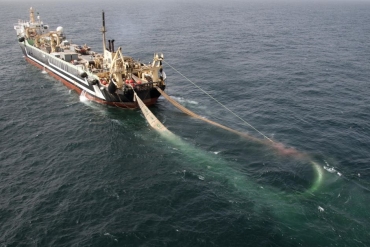
    The IWT reiterates its call for an end to the indiscriminate and ecologically destructive practice of bottom trawling, which results not only in overfishing but wasteful discarding of marine life and the destruction of habitats. We must also step up our efforts in the creation of a coherent and well managed network of marine protected areas (MPAs) which includes no-take marine reserves where fish stocks can recover.


    CONTACT:  Padraic Fogarty  – IWT’s Campaigns Officer – irishwildlife@iwt.ie

  • Press Release: No fishing in a dead ocean – Minister Creed must uphold the law and end overfishing

    Press Release: No fishing in a dead ocean – Minister Creed must uphold the law and end overfishing

    No fishing in a dead ocean – Minister Creed must uphold the law and end overfishing
    Press Release: 16th December 2019
    Minister for Agriculture, Food and the Marine, Michael Creed, travels to Brussels today for the annual negotiation of fishing quotas. It is the first such meeting since the Dáil declared a biodiversity and climate emergency in May and the last meeting before the legally binding deadline of 2020 to end all overfishing. To-date, with less than half of fish populations hunted at sustainable limits in Irish waters, there remains a challenge ahead if this target is to be met [i].


    Last week, the European Commission unveiled its ‘Green New Deal’ and this explicitly includes the protection of oceans and biodiversity. At a very minimum the level of ambition must be set at adhering to existing legislation. Unfortunately, with scientists advising that a number of catch limits be set at zero, this means closing certain fisheries.


    IWT Campaign Officer Pádraic Fogarty says, “The Minister has said that it is a ‘twin challenge’ to protect the fishing industry while simultaneously staying within sustainable limits [ii]. However there is no fishing in a dead ocean – the approach of trying to balance environmental protection with economic exploitation has led us to the crisis we are in with collapsing ocean ecosystems”.


    The IWT believes that fishing can only take place within the limits that nature provides. This will mean transforming how the industry operates, including phasing out bottom trawling, designating large and effective Marine Protected Areas and strictly managing all fishing activities so that livelihoods and marine life can be protected.


    CONTACT:  Padraic Fogarty  – IWT’s Campaigns Officer – irishwildlife@iwt.ie
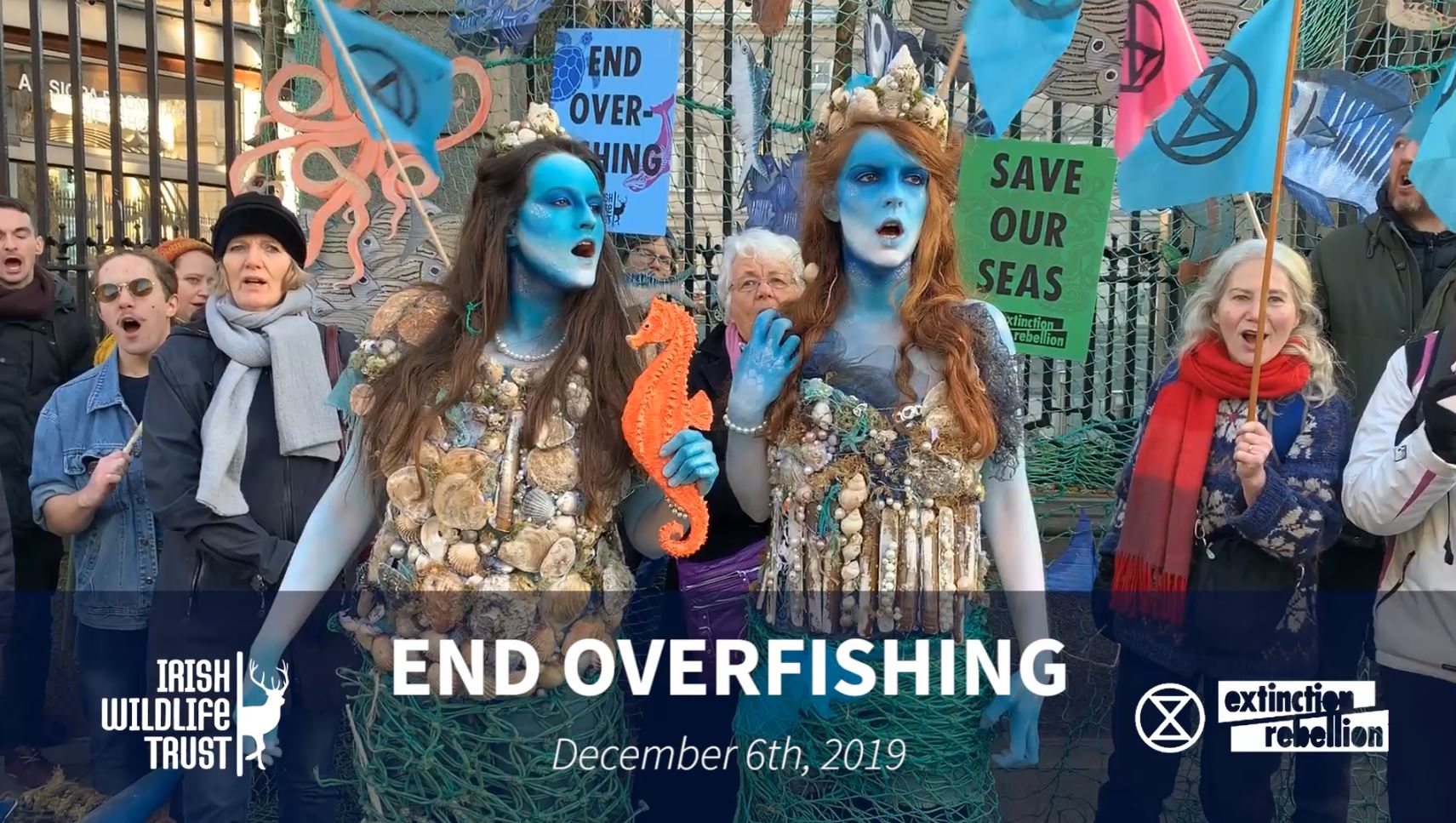
  • Video Report from Overfishing Protest 9th December

    Video Report from Overfishing Protest 9th December

    Video Report from Overfishing Protest 9th December


  • Species of the week: Long-eared Owl

    Species of the week: Long-eared Owl

    Long-eared Owl

    Asio otus
    Ceann cait

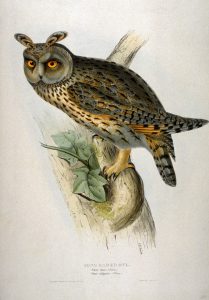
    John Gould creator QS:P170,Q313787, Asio otus by John Gould, marked as public domain, more details on Wikimedia Commons

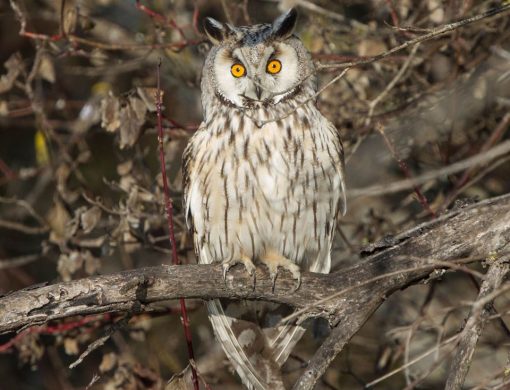
    The Long-eared Owl is distributed all across Ireland often found in coniferous woodlands with open grasslands nearby in order to hunt their prey. While they can be found distributed over most if the country except for the west, their range is somewhat scattered due to the low levels of forest in the countryside. Long-eared owls can be found across the globe and are widespread in Europe, Asia and North America. They get their name from the obvious two tufts of feathers on the top of its head which serve to make the owl look larger; these are for display purposes only have association with hearing. They are erect when it is alarmed or focussed and are flat when it is relaxed or flying.

    Long-eared Owls have evolved to be excellent nocturnal predators. Like other owls, they remain completely silent when flying. Their flight feathers don’t project sound and their soft downy feathers absorb it, so an owl can fly inches above their prey without being detected. The Long-eared Owls face is also shaped into two large disks that capture sound like radar dishes and their ears are positioned in different places on their head, one higher and one lower. This asymmetry helps them more precisely locate their prey in the darkness. Their prey consists of small mammals like mice, rats, shrews and voles. And other various small animals like frogs, insects and birds. They swallow their prey whole and then regurgitate the leftover indigestible pieces. These are knowns as pellets and can contain bones, fur, feathers, teeth and any other animal part that the owl can’t digest.

    Long-eared Owls don’t construct their own nests. They repurpose the abandoned old stick nests of ravens, magpies, sparrowhawks and sometimes squirrels’ dreys. A male and a female will breed between February and July with the female staying with the eggs and chicks all day and only taking a few breaks at night. The male hunts and brings food to the female and chicks until the brood are independent. The chicks still can’t fly when they leave the nest and instead walk out onto neighbouring branches. Their parents will provide for them until they become fledglings and learn to fly and fend for themselves.

    Featured image by Ron Knight from Seaford, East Sussex, United Kingdom (https://commons.wikimedia.org/wiki/File:Long-eared_Owl_(Asio_otus)_(8520159521).jpg), “Long-eared Owl (Asio otus) (8520159521)”, https://creativecommons.org/licenses/by/2.0/legalcode

  • Minister Creed must uphold the law and end overfishing

    Minister Creed must uphold the law and end overfishing

    Minister Creed must uphold the law and end overfishing

    Press Release 09th December


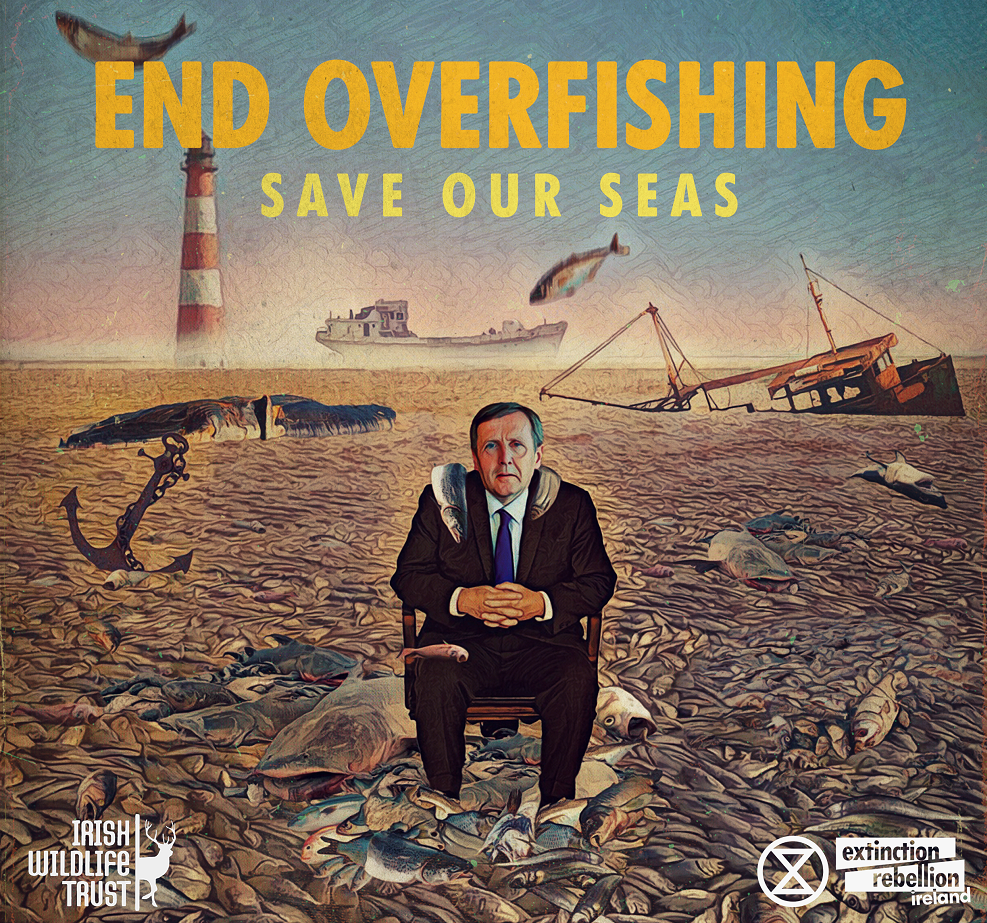
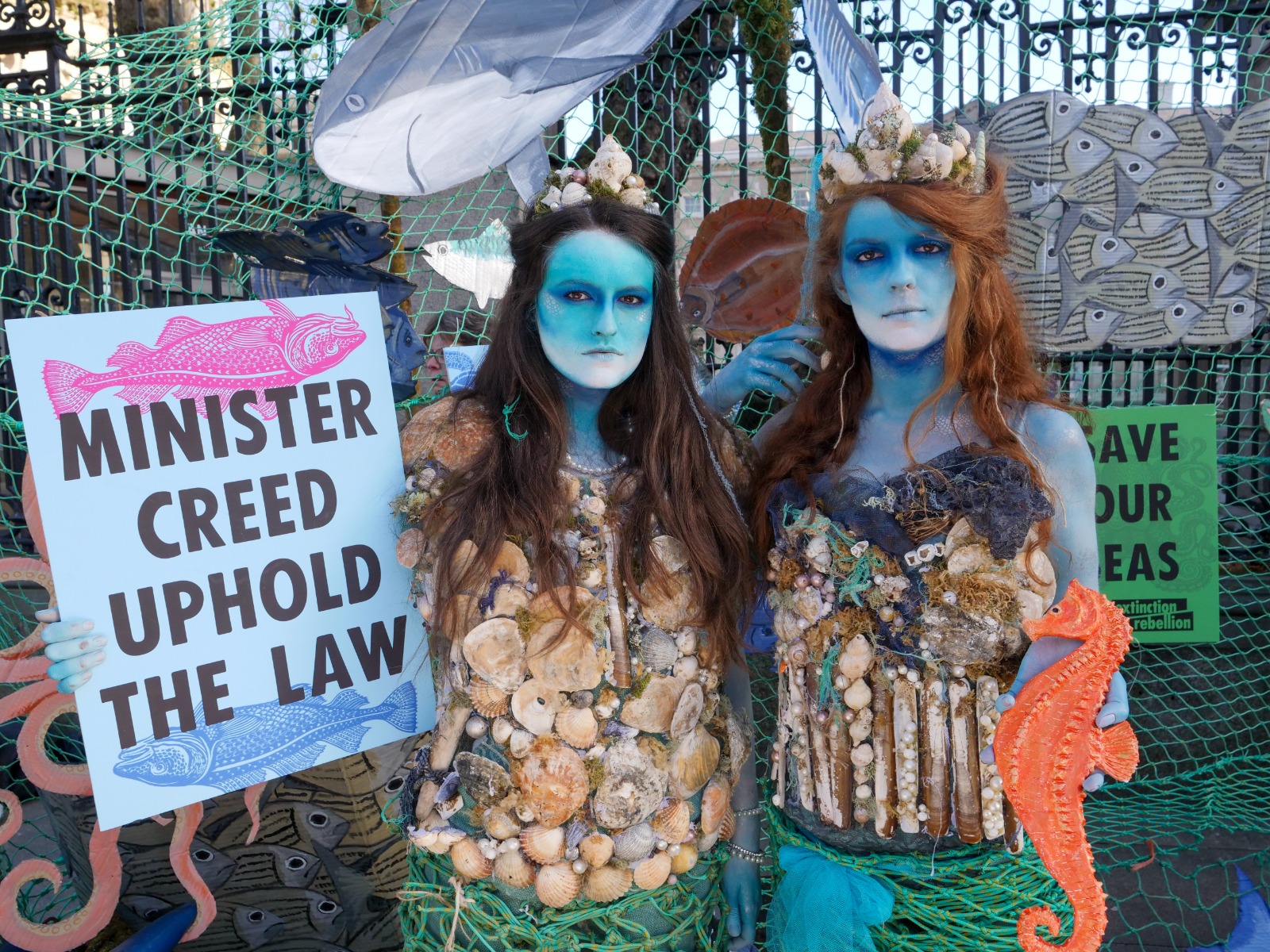
    The Irish Wildlife Trust (IWT) and Extinction Rebellion are calling on Minister for Agriculture, Food and the Marine, Michael Creed, to uphold the law in December by ending overfishing and averting catastrophe in our seas.

    In 2013, the Irish presidency of the European Council negotiated a reformed Common Fishery Policy (CFP) which promised to end all overfishing in EU waters by 2020. Yet, on the eve of this deadline Ireland is still being identified as among the worst nations for negotiating fish catches above scientific advice [i], [ii]. According to the Marine Institute, less than half of commercially exploited fish populations are hunted within limits which scientists consider to be sustainable while fully eight are recommended to be shut down completely (including for herring, cod, haddock and whiting in various parts of the seas around Ireland) [iii]. This December the minister will go to Brussels for the annual carve up of fishing quotas – this year must be different in recognition of the climate and biodiversity emergency declared by the Dáil in May of this year.

    The CFP also promised to end the atrociously wasteful practice of dumping dead marine life back into the sea (known as discarding) however this continues unabated. According to a submission to Minister Creed by the Irish Environmental Network, “there has been no measurable reduction in the levels of unwanted catch as Member States and the industry have focused their energy on maintaining the status quo”[iv].

    In addition to its reckless approach to overfishing, Ireland has been accused by the European Commission of “severe and significant weaknesses” in the control of fishing activity with a lack of “effective” enforcement and penalties [v]. Supertrawlers and factory fishing boats effectively sieve the seas without supervision. Meanwhile Ireland has failed in its legally binding target to create a network of Marine Protected Areas covering at least 10% of the seas (current ineffective protections cover only 2.3% [vi]) and 60% of the shark species in Irish waters are threatened with extinction or ‘near threatened’[vii].

    As oceans systems collapse, over-exploitation is not something that only affects marine life and it was recently reported that 25% of people illegally trafficked into Ireland are working in the fishing industry[viii]. Many small-scale fishers in coastal communities now do not have fish to catch, being left with crabs and lobsters.

    IWT Campaigns Officer Pádraic Fogarty says: “As an island nation we should be mortified at our deteriorating reputation for managing the seas around us. We should be world leaders, yet we allow our ocean to be pillaged by an industry that’s effectively out of control. If Michael Creed allows overfishing to continue in 2020 he will be responsible for violating an agreement that Ireland itself brokered. The oceans are dying before our eyes – we should be doing everything we can to reverse this situation before it is too late.”


    CONTACT:  Padraic Fogarty  – IWT’s Campaigns Officer: irishwildlife@iwt.ie
  • IWT to hold ‘Rewilding’ Discussion in Galway

    IWT to hold ‘Rewilding’ Discussion in Galway

    IWT to hold ‘Rewilding’ Discussion in Galway

    Press Release: 15th November


    The Irish Wildlife Trust (IWT) will hold a free event exploring ‘Rewilding for Ireland’ next Thursday (November 21st) in NUI Galway in association with the NUIG Environmental Society.

    Rewilding is an exciting concept which can help to restore natural ecosystems to Ireland and can be a part of our response to the climate and biodiversity crises. Nature-based solutions are seen by the UN as a ‘vital component’ to meeting targets under the Paris Agreement and could even provide a third of the emissions reductions required[i]. Rewilding has no agreed definition but typically promotes setting aside large areas of land and sea just for nature, reintroducing lost species (in Ireland over 120 species have gone extinct due to human pressures), or restoring natural ecological processes.


    This event will be hosted by the IWT and speakers will include local journalist and nature writer Lenny Antonelli and the IWT’s campaign officer Pádraic Fogarty. It will explore the meaning of the term, how it can define a new vision for the landscape in places like Connemara and the practical challenges to be overcome in order to achieve that vision.


    The event is free and no booking is required. Details –

    Date and time: November 21st at 6:30pm

    Location: Dillon Theatre, Concourse (Arts/Science Building, NUI Galway)

    Info Contact: irishwildlife@iwt.ie


  • Species of the week: White Fronted Goose

    Species of the week: White Fronted Goose

    White Fronted Goose
    Anser albifrons

    Brouwer, Gerrit Anton; Oort, Eduard Daniel van, Ornithologia neerlandica (PLAAT 46) (6940975936), CC BY 2.0

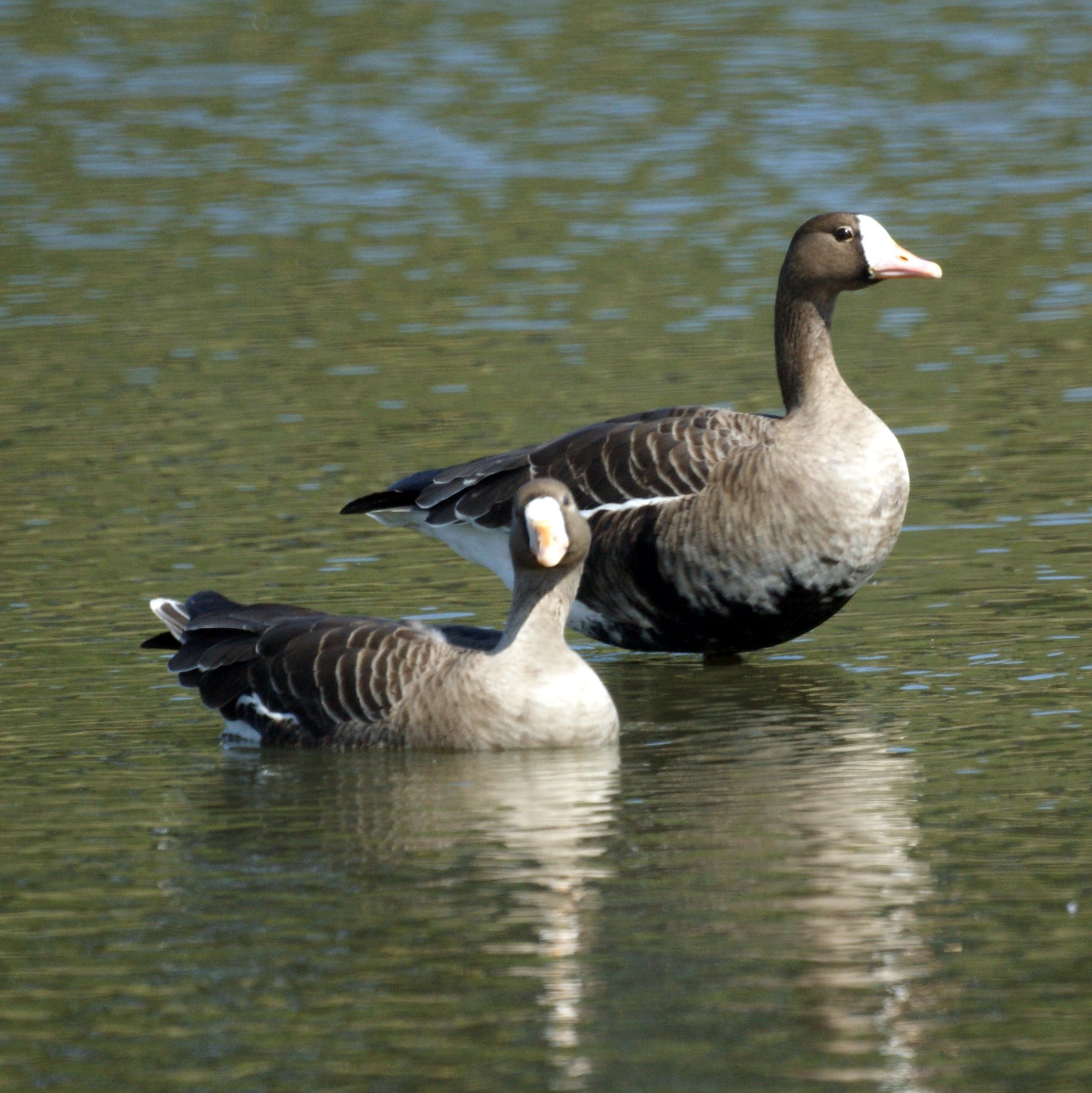
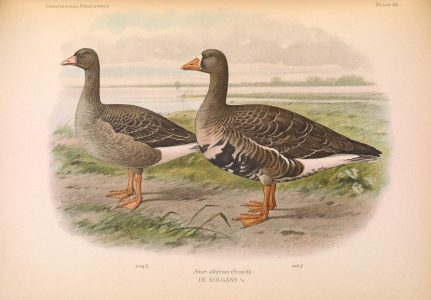
    The White Fronted Goose is named because of the characteristic white blaze across their foreheads, but this is absent in the juveniles. The birds breed in Greenland and Siberia typically on lowland tundra, often by lakes and rivers.

    They migrate to Ireland in October to April to enjoy our comparatively mild winters and are most commonly spotted in the wetlands of Wexford and Western Ireland.

    One of their most characteristic features is their orange-yellow bills. Although occasionally birds from Siberia are found in Ireland and these can be identified due to their pink bills. The Greenland population tend to visit Ireland and Scotland while the Russian population favour England and Wales.

    Astonishingly about half of the world’s population of Greenland White Fronted Goose overwinter in Ireland. Ireland’s wetlands are therefore very important for the conservation of this species and they are particularly threatened by the on-going drainage of Ireland’s wetlands.

    It is possible to see them in flocks of hundreds or even thousands grazing on a range of plant material including roots, tubers, shoots and leaves.

    Featured Image by Mike’s Birds from Riverside, CA, US (https://commons.wikimedia.org/wiki/File:Greater_White-fronted_Goose_(5049045733).jpg), “Greater White-fronted Goose (5049045733)”, https://creativecommons.org/licenses/by-sa/2.0/legalcode


  • Species of the week: Brown Long-eared Bat

    Species of the week: Brown Long-eared Bat

    Brown Long-eared Bat

    Plecotus auritus
    Ialtog fhad-chluasach

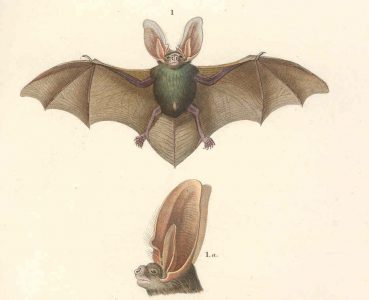
    Charles d’Orbigny author QS:P170,Q2959348, FMIB 46809 Orillard vulgaire, marked as public domain, more details on Wikimedia Commons

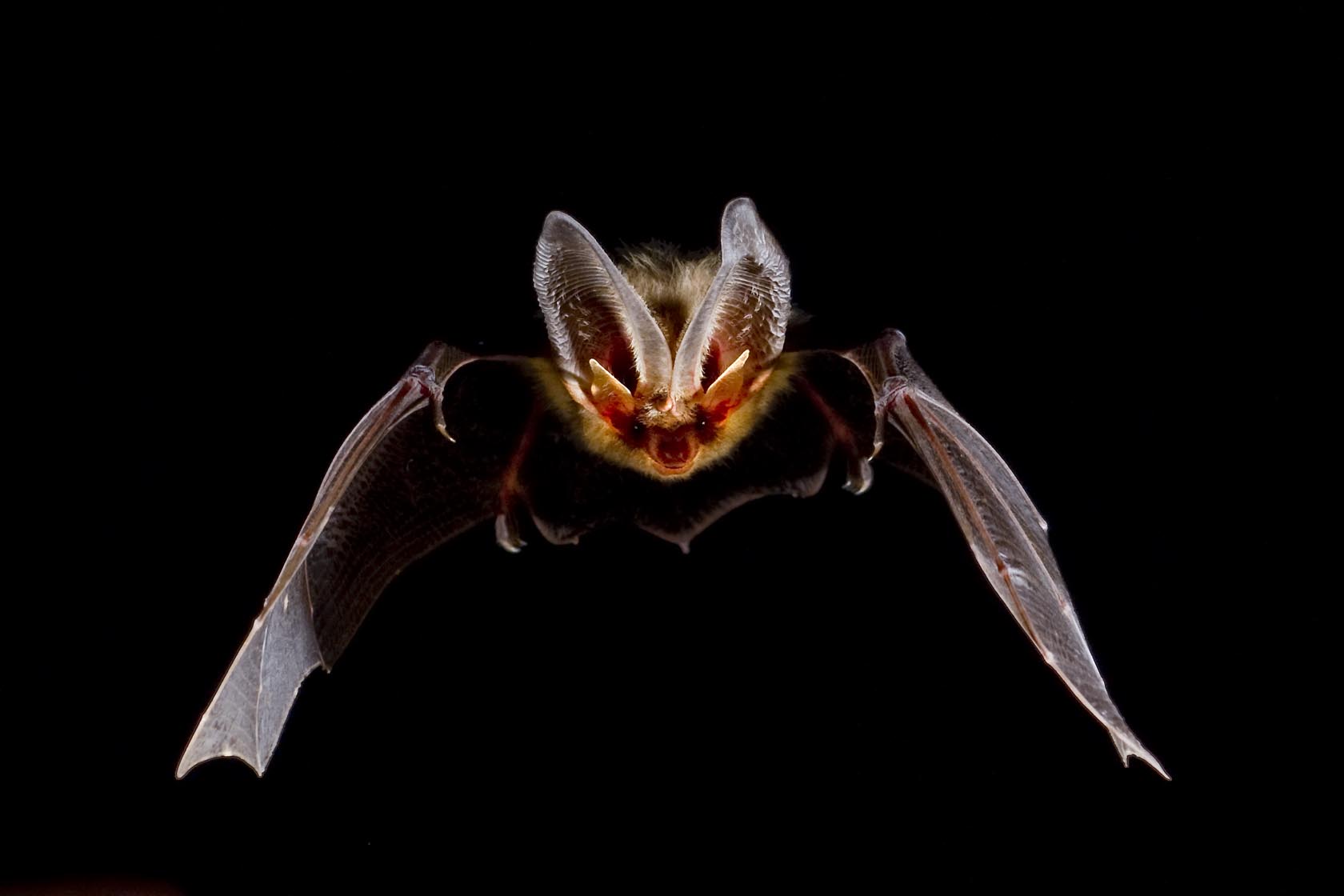
    The Brown long-eared bat is a medium sized Irish bat species, their extremely large ears in relation to body size makes them an easy species to identify. The ears are up to three quarters the size of the total head and body length measuring 2.5cm. Each ear has twenty-four distinctive folds on its surface believed to help funnel sounds more effectively. When resting the ears are folded or curled and held backwards, sometimes hidden behind the wings. The eyes are large and bright positioned above a bulging nose on its pinkish brown face.

    Fur colour on the back is light brown with a more yellowish to brown on the undersides, the fur is long and fluffy. Juveniles of the species are a paler grey all over. The wings are broad and have a pale grey to semi-transparent appearance measuring up to 30cm in length. Flight is slow and fluttering but highly maneuverable. Body length ranges from 3.7 to 5.3cm.

    Adults weigh 12 grams in autumn at their heaviest just before they begin hibernation in their winter roosts losing up to half of their body weight before emerging in Spring. They emit sharp clicks and chirps while hunting at the ultrasonic range of 25 – 50 kHz which is weak for bats, making them hard to hear with a bat detector.

    This bat species prefer habitats that are sheltered, fairly open deciduous and coniferous woodland and parkland or well-wooded gardens. Summer roosts which act as nurseries are established in tree holes, bird and bat boxes and in caves, they have adapted well to living in urban areas and are the most frequent species of Irish bats which can be found in attics and cracks in buildings. Summer roost colonies are large and can contain up to fifty individuals composed of a mixture of both male and females which is unusual for an Irish bat species. The brown long-eared bat will sometimes remain in the same roost year round but typically have a second roost site in winter found in more insulated areas such as within deep hollows of large trees or in underground caves. They are more resistant to colder conditions than other bat species found in Ireland so they will often be located at the entrance to caves. They have been known to share roost sites and habitats with the lesser horseshoe bat species.

    Brown long–eared bats are a nocturnal species generally emerging within an hour of sunset, they usually make a series of short flights within the roost before emerging to hunt for up to one hour with intermittent flights throughout the night. They generally forage within 2km of the roost site in woodlands, near mature trees or along stone walls in search of nocturnal insects. Brown long-eared bats use a hunting method known as foliage gleaning which means they pick up their prey directly from the leaves of trees and shrubs and in some cases off the ground. Their prey includes spiders, caterpillars, beetles, moths and earwigs which they locate with their sensitive ears and by sight. They can also catch flying insects on the wing using echolocation but are not as skilled at this hunting technique as other species of Irish bat due to their weak ultrasound pulses. When larger prey is caught the bat will carry it to a favorite feeding perch where it can be eaten while resting.

    Mixed-sex groups will start to form by the end of summer with the mating season beginning in September and often continuing throughout the winter period. By this time males are coming into breeding condition and often lose a lot of weight due to the development of their reproductive organs which need to be maintained with a high body temperature. Males establish harems which must be defended from other breeding males. Most females will not mate until they enter the hibernation roost delaying fertilization until after hibernation in Spring. Breeding females usually produce a single offspring which is born into the maternity roost in July. Newborn’s eyes will open after four days with their ears becoming fully erect after the second week. Fed exclusively on its mother’s milk for the first three weeks of life the young are left in the roost while the female hunts at night. Weaning is complete after six weeks by the start of Autumn. Regular practice flights within the roost allow the young bats to become expert flyers after only one month. As with all other Irish bat species parental care is given only by the mother. The average lifespan for a brown long-eared bat in Ireland is around 5 years on average, but some individuals have been recorded to have lived for 20 years.

    All bat species are legally protected under Irish, European and International legislation. It is illegal to handle, disturb or interfere with bats or their roosts.

    Featured image by Joxerra aihartza (https://commons.wikimedia.org/wiki/File:16.01a.JRA.jpg), “16.01a.JRA”, https://creativecommons.org/licenses/by-sa/3.0/legalcode

  • Species of the week – Chanterelle

    Species of the week – Chanterelle

    Chanterelle

    Cantharellus cibarius

    Chanterelle is probably one of the most desirable edible mushrooms found in Europe.

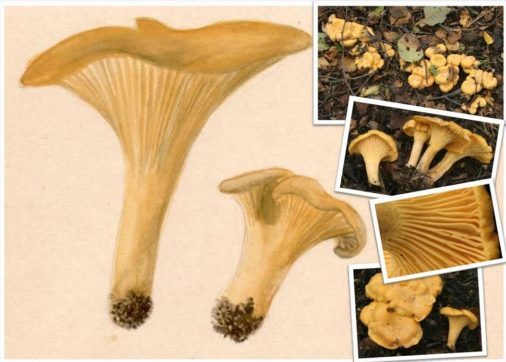
    It is orange or yellow, meaty and funnel-shaped and can be found in woodlands, growing from the ground or decaying wood. They will reappear in the same place every year, so if you find a good spot, you should be able to find them there in upcoming years as well. However, you should be careful when harvesting them and not disturb the ground in which the mycelium (the vegetative part of the mushroom) grows.
    Chanterelles can be quite easily recognised by amateurs as there’s only one other mushroom they can be mistaken for in Ireland – the False Chanterelle – an edible but not tasty species. They are similar in appearance, but true Chanterelle can be identified by distinctive fruity smell, reminiscent of apricots, and a mildly peppery taste.

    Unlike many other edible mushrooms, Chanterelles are usually found “healthy looking”, which might be one of many reasons for their popularity. They really are seldom invaded by insects and forest animals do not share our interest in them as food. Researchers have found that this mushroom has great insecticidal properties that are harmless to humans and yet protect the mushroom body against insects and other potentially harmful organisms.

    Chanterelles are also among the richest sources of vitamin D known, high in potassium and relatively high in vitamin C. They are not eaten raw as their rich flavour is best released when cooked and there are many recipes to choose from.

    Remember – do not eat any wild mushrooms unless you are absolutely sure that you identified the species correctly or consulted with an expert!

    –
    Main image by Zdenek Cvrcek, pencil and aquarelle, CC BY-NC 3.0
    Side images by Malcolm Storey, CC BY-NC-SA 3.0

  • Species of the week: Portuguese Man O’War

    Species of the week: Portuguese Man O’War

    Portuguese Man O’War

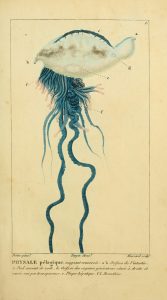
    Physalia physalis
    Smugairle an tseoil

    Blainville, H.-M. Ducrotay de, Manuel d’actinologie ou de zoophytologie (Plate I) (7138800195), CC BY 2.0

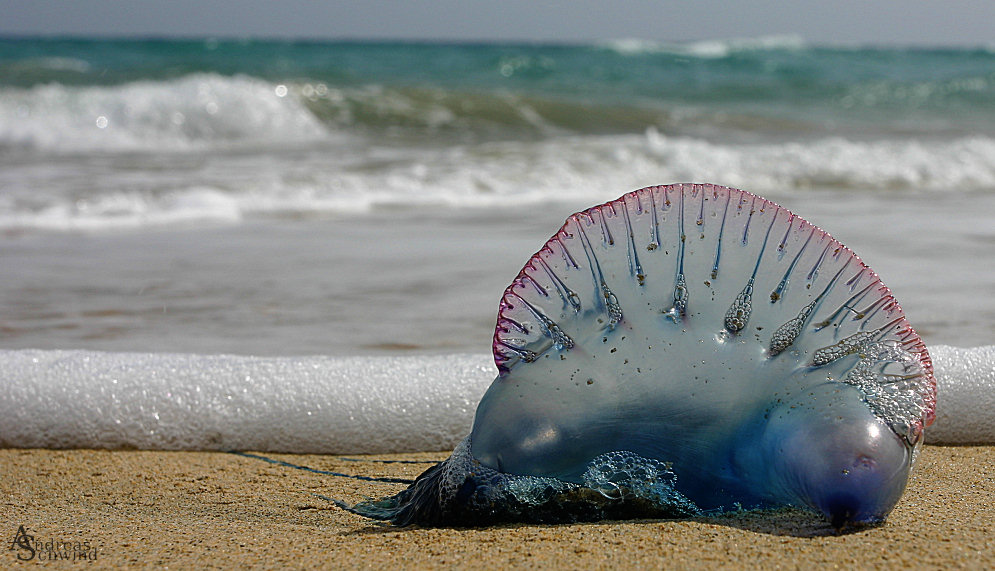
    An exotic visitor, these unusual creatures occasionally appear in Irish waters during summertime bouts of good weather. While they are often mistaken for a jellyfish they are in fact a siphonophore – a colony of small animals working together as one whole in order to survive. Well known for their size and stinging tentacles they are referred to colloquially by a variety of names including blue-bottle and the floating terror. They are unlikely to be mistaken for other species in Irish waters given their blue-purple colouring and general appearance.

    The Man O’ War lives at the surface of the sea, with only the inflated gas-bladder or pneumatophore being visible, however the tentacles below can be up to 50m long. They are carnivores and feed on smaller marine organisms that stray into the tentacles such as fish, jellyfish and plankton.
    They have no means of individual propulsion. Like the by-the-wind-sailor Velella velella they use their uppermost polyp to catch the wind and sail across the ocean surface. They often float in groups of up to 1000 and appear in Irish waters if south-westerly breezes prevail and carry them from their tropical habitats. They can be blown onto beaches and are still capable of stinging while beached and even while dead. Detached tentacles can also sting. The discovery of one Man O’ War usually means there are others in the vicinity. The stings are very painful and require medical treatment but are rarely fatal to humans.

    There are a few species of fish that can live in and around the Man O’ War. These include the shepherd fish, Nomeus gronovii, which has developed partial immunity to their stinging venom and can live amongst the tentacles. It feeds on the smaller tentacles near the gas bladder. Additionally some of the clown fish family, Amphiprioninae, can swim amongst the stinging tentacles unaffected owning to their thick coat of mucus. These relationships are thought to be symbiotic as the sight of these fish attracts others which the Man O’ War can then prey on.

    Despite their size and venom the Man O’ War is preyed upon by many organisms. The sunfish Mola mola is known to consume them as is the loggerhead turtle Caretta caretta. They are also preyed upon by the violet sea snail Janthina janthina. To avoid threats on the surface the Man O’ War can briefly deflate the bladder and sink.

    Featured image by Andreas Schwind (https://commons.wikimedia.org/wiki/File:Portugiesische_galeere.jpg), “Portugiesische galeere”, https://creativecommons.org/licenses/by/2.0/legalcode

  • Species of the week: Common puffball

    Species of the week: Common puffball

    Common puffball

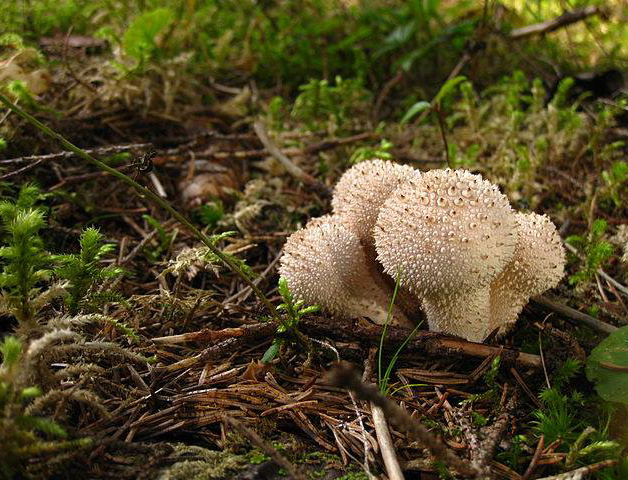
    Lycoperdon perlatum

    Anna Maria Hussey, file cropped and uploaded by Francisco Welter-Schultes, Illustrations of British mycology (Plate LIV) (8619423430)-cropped, marked as public domain, more details on Wikimedia Commons

    The fruit body ranges in shape from pear-like with a flattened top, to nearly spherical, and reaches dimensions of 1.5 to 6 cm wide by 3 to 7 cm tall. It has a stem-like base. The outer surface of the fruit body (the exoperidium) is covered in short cone-shaped spines that are interspersed with granular warts. The spines, which are whitish, gray, or brown, can be easily rubbed off, and leave reticulate pock marks or scars after they are removed. The base of the puffball is thick, and has internal chambers. It is initially white, but turns yellow, olive, or brownish in age. The reticulate pattern resulting from the rubbed-off spines is less evident on the base.

    In maturity, the exoperidium at the top of the puffball sloughs away, revealing a pre-formed hole (ostiole) in the endoperidium, through which the spores can escape. In young puffballs, the internal contents, the gleba, is white and firm, but turns brown and powdery as the spores mature. The gleba contains minute chambers that are lined with hymenium (the fertile, spore-bearing tissue); the chambers collapse when the spores mature. Mature puffballs release their powdery spores through the ostiole when they are compressed by touch or falling raindrops. A study of the spore release mechanism in L. pyriforme using high-speed schlieren photography determined that raindrops of 1 mm diameter or greater, including rain drips from nearby trees, were sufficient to cause spore discharge. The puffed spores are ejected from the ostiole at a velocity of about 100 cm/second to form a centimeter-tall cloud one-hundredth of a second after impact. A single puff like this can release over a million spores.

    The spores are spherical, thick-walled, covered with minute spines, and measure 3.5–4.5 μm in diameter. The capillitia (threadlike filaments in the gleba in which spores are embedded) are yellow-brown to brownish in color, lack septae, and measure 3–7.5 μm in diameter. The basidia (spore-bearing cells) are club-shaped, four-spored, and measure 7–9 by 4–5 μm. The basidia bear four slender sterigmata of unequal length ranging from 5–10 μm long. The surface spines are made of chains of pseudoparenchymatous hyphae (resembling the parenchyma of higher plants), in which the individual hyphal cells are spherical to elliptical in shape, thick-walled (up to 1 μm), and measure 13–40 by 9–35 μm.

    The puffball grows in fields, gardens, and along roadsides, as well as in grassy clearings in woods. It is edible when young and the internal flesh is completely white, although care must be taken to avoid confusion with immature fruit bodies of poisonous Amanita species. L. perlatum can usually be distinguished from other similar puffballs by differences in surface texture.

    Several chemical compounds have been isolated and identified from the fruit bodies of L. perlatum, including sterol derivatives, volatile compounds that give the puffball its flavor and odour, and the unusual amino acid lycoperdic acid. Laboratory tests indicate that extracts of the puffball have antimicrobial and antifungal activities.

    Featured image by Marko Vainu (https://commons.wikimedia.org/wiki/File:Lycoperdon_perlatum11.JPG), “Lycoperdon perlatum11”, https://creativecommons.org/licenses/by-sa/3.0/legalcode

  • Species of the week: Black Slug

    Species of the week: Black Slug

    Black Slug, also known as Black Arion

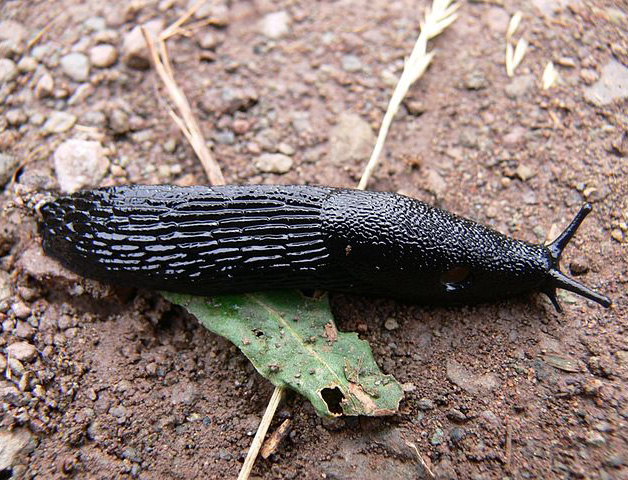
    Arion ater
    Seilide Dubh

    The black slug, also known as black arion, is a species of large land slug, a terrestrial slug in the family Arionidae, the roundback slugs. The size of the slug varies from 10 to 15 cm. Maturity is reached at about 2.5 cm

    The color of the black slug is generally deep black, but the colouration is variable and this slug can even be white. Juveniles are ivory whitish with black head, but soon become greyish, half-grown animals are often black like adults. The foot-fringe is black. The tubercles large and elongate. The sole is blackish grey.

    Like other members of the family Arionidae, the black slug has a pneumostome (breathing hole) on the right side of its mantle through which it breathes. This mantle is the part which in snails secrete a shell, and in this species of slug the mantle contains a resilient protective structure of calcareous granules

    Like all other species of the Arionidae family, the black slug is a hermaphrodite, meaning it can fertilize itself if needed, although a mate is preferred. After mating, the slug lays 20-50 eggs about 5 mm in diameter. The favoured location for eggs is a dark, cold, damp place such as a compost heap. The eggs typically hatch in six weeks.

    The slug covers itself in a thick foul-tasting mucus which serves as protection against predators and as a measure to keep moist. It is somewhat difficult to wash off. The mucus is highly distasteful to many animals. However, this slug does have some natural predators, including the hedgehog, badger, shrew, mouse, frog, toad, carnivorous beetle, and some birds. When picked up or touched, the black slug will contract to a hemispherical shape and begin to rock from side to side. This defensive behaviour confuses predators, and is unique in the Arionidae family.

    The black slug is mainly nocturnal and avoids exposure to sunlight. It is omnivorous, eating carrion, fungi, and vegetation (living and decaying). The slug prefers moist conditions, such as lawns. This moist environment is essential for the terrestrial locomotion of the slug to function.

    Featured image by Prashanthns (https://commons.wikimedia.org/wiki/File:Black_Slug.jpg), “Black Slug”, https://creativecommons.org/licenses/by-sa/3.0/legalcode

  • Species of the week: Yellow brain fungus

    Species of the week: Yellow brain fungus

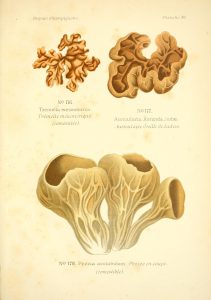
    Yellow Brain Fungus

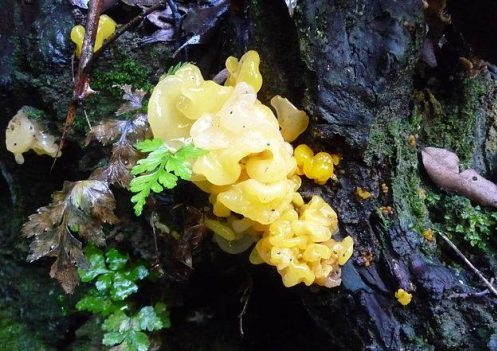
    Tremella mesenterica

    Dufour, L., Atlas des champignons comestibles et vénéneux (Planche 76) BHL3270624, marked as public domain, more details on Wikimedia Commons

    Tremella mesenterica is usually golden yellow and gelatinous but tough when damp, turning orange and shrivelling to a tiny fraction of its former size during very dry weather. Initially disc-like, the fruitbody soon develops irregular contortions only very vaguely resembling the structure of a brain. Individual fruitbodies grow to between 20 and 80mm across.

    The spore print is white. Sexual reproduction is by basidiospores. The basidia are broadly ellipsoidal, smooth, cruciately septate (divided by walls into four compartments so that seen from the top they look rather like ‘hot cross buns’). The basidiospores are 7-16 x 6-10µm

    Conidia (asexual spores) are spherical, ovoid or broadly ellipsoidal, 2-3 x 2-2.5µm.

    Yellow Brain Fungus, is mainly seen in winter, when it appears on fallen branches of deciduous trees. It grows on dead timber from all kinds of broad-leaf trees, but it is particularly common on fallen branches of birch and hazel. Very often (although easily overlooked) this colourful jelly fungus occurs also on decaying gorse wood.

    It is not the dead timber that Tremella mesenterica feeds upon but crust fungi that themselves have been feeding on the wood. Yellow Brain must therefore be classed as a parasitic rather than saprobic species.

    Featured image by Lucarelli (https://commons.wikimedia.org/wiki/File:Tremella_mesenterica.JPG), “Tremella mesenterica”, https://creativecommons.org/licenses/by-sa/3.0/legalcode

  • PRESS RELEASE: Moves to open up protected peatlands must be reversed

    PRESS RELEASE: Moves to open up protected peatlands must be reversed

    PRESS RELEASE: Moves to open up protected peatlands must be reversed


    24th September 2019


    The Irish Wildlife Trust is calling on the government to reverse proposals to open up protected peatland conservation areas for turf-cutting which are proposed in the Wildlife Bill. The bill is being discussed in the Seanad this week. This is a retrograde step and is exactly the wrong direction in which we should be headed.


    The proposal, which has been in the Oireachtas since 2016, will open up bogland Natural Heritage Areas by removing legal protections to allow turf-cutting. The IWT believes that this is yet another backward step for our wildlife and biodiversity, while simultaneously providing for more burning of fossil fuels at a time when peat should be kept in the ground. We are particularly disappointed in an amendment from Fianna Fail which would expand the number of protected sites which could be ‘de-designated. This approach is contrary to their previous statements in favour of taking serious action in favour of greater biodiversity protection.


    IWT Campaigns Officer Pádraic Fogarty says “It is totally insane to think that at a time of our climate and biodiversity emergency that we should be talking about rolling back the few protections we have in place for our precious bogs. Peatlands are our most important carbon sinks and are essential ecosystems for wildlife; instead of trying to destroy them we should be putting all our efforts into repairing and restoring them.”


    The move to pass the changes to the Wildlife Act come as the International Union for the Conservation of Nature (IUCN) published a new report on the value of ‘nature based solutions’ to the climate crisis [i]. They have highlighted how restoring natural ecosystems can provide up to 30% of the mitigation required by 2030 to stay within 2 degrees of warming. Indeed, if we are to keep warming to within 1.5 degrees (a stated aim of the Paris Climate Accord), then nature will be essential for drawing down carbon dioxide from the atmosphere. ‘Nature-based solutions’ are sometimes referred to as ‘no regrets’ solutions as restoring nature provides a range of other benefits (water regulation and purification, soil regeneration, amenity etc), as well as being a worthy goal in its own right. In Ireland such measures would include creating new native woodlands, restoring and rewilding peatlands and wetlands, and creating marine reserves.

    [i] https://www.iucn.org/news/climate-change/201909/countries-must-use-nature-more-their-climate-commitments-iucn-report

    CONTACT:  Padraic Fogarty  – IWT’s Campaigns Officer – irishwildlife@iwt.ie

  • Species of the week: Marmalade Hoverfly

    Species of the week: Marmalade Hoverfly

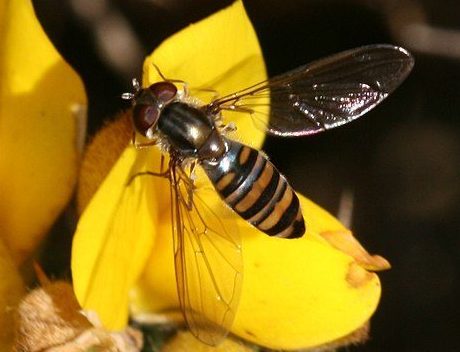
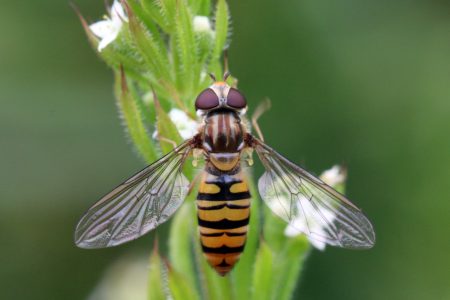
    Marmalade Hoverfly
    Episyrphus balteatus

    Charles J Sharp creator QS:P170,Q54800218, Marmalade hoverfly (Episyrphus balteatus) female, CC BY-SA 3.0

    E. balteatus is a relatively small hoverfly (9–12 mm) of the Syrphidae family. The upper side of the abdomen is patterned with orange and black bands. Two further identification characters are the presence of secondary black bands on the third and fourth dorsal plates and faint greyish longitudinal stripes on the thorax. Some specimens also show white bands on the abdomen, whilst other forms are quite dark.

    As in most other hoverflies, males can be easily identified by their holoptic eyes, i.e., left and right compound eyes touching at the top of their heads.

    Adult Marmalade Flies feed on pollen and nectar. It is among the very few species of flies capable of crushing pollen grains and feeding on them.

    The larva is terrestrial and feeds on aphids.

    The Marmalade fly can be seen from January to December in a wide range of habitats. Adult flies hibernate during the winter, but emerge on mild days to forage. Numbers peak in August and can be boosted by an influx of migrants. They often form dense migratory swarms.

    Featured image by S. Rae from Scotland, UK (https://commons.wikimedia.org/wiki/File:Episyrphus_balteatus_(female)_-_Marmalade_Hoverfly_-_Flickr_-_S._Rae.jpg), “Episyrphus balteatus (female) – Marmalade Hoverfly – Flickr – S. Rae”, https://creativecommons.org/licenses/by/2.0/legalcode

  • Species of the week: Oak Moss

    Species of the week: Oak Moss

    Oak Moss
    Evernia prunastri

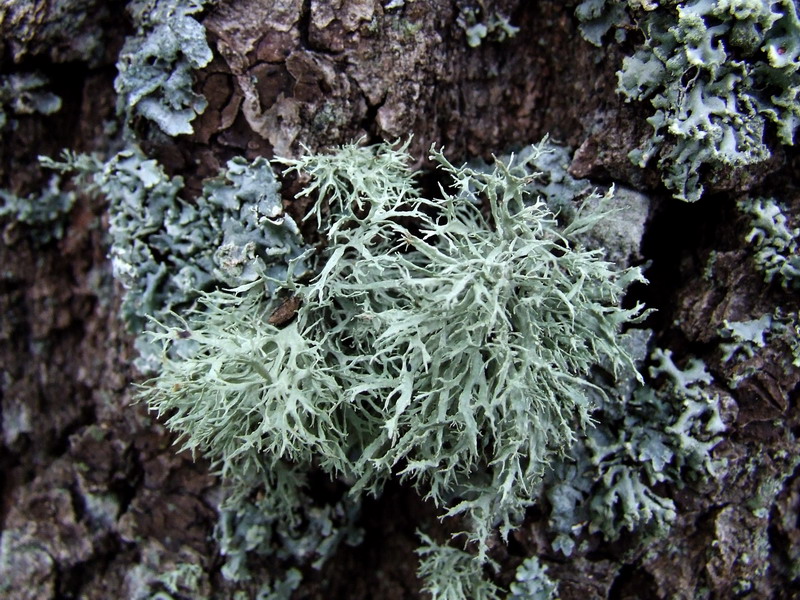
    Evernia prunastri is a species of lichen, it has no official English name but is known as Oak Moss. Lichens that are attached only at the base are called fruticose and E. prunastri is the commonest in this group.

    It has a strap-shaped body, with fork-like branches hanging down from the basal attachment. The upper surface of the branches is grey-green but the undersides are white. Oak moss grows primarily on the trunk and branches of oak trees, but is also found on the bark of other deciduous trees and conifers such as fir and pine.

    It is commercially harvested in south-central Europe and exported to France where its fragrant compounds are extracted and used as perfume fixatives and form the base notes of many fragrances. The lichen has a distinct odour, described as woody, sharp and slightly sweet. Oak moss growing on pines has a turpentine odour that is valued in certain perfume compositions.

    Oak moss had many uses in the past. It was once ground-up with rose petals to make a hair powder to whiten wigs and kill off head lice!

    Featured image by Tomas Čekanavičius (https://commons.wikimedia.org/wiki/File:Evernia_prunastri1.jpg), “Evernia prunastri1”, https://creativecommons.org/licenses/by-sa/3.0/legalcode

  • Species of the week: Spindle

    Species of the week: Spindle

    Spindle tree

    Euonymus europaeus
    Feoras

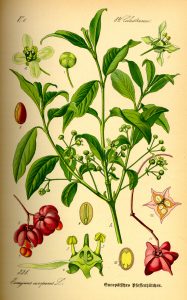
    Original book source: Prof. Dr. Otto Wilhelm Thomé Flora von Deutschland, Österreich und der Schweiz 1885, Gera, Germany, Illustration Euonymus europaea0, marked as public domain, more details on Wikimedia Commons

    Spindle is found throughout Ireland in woodland, scrub and hedgerows on limestone. It is often planted in gardens and parks. A deciduous shrub or small tree which grows 3–6 m tall, rarely 10 m, with a stem up to 20 cm in diameter.

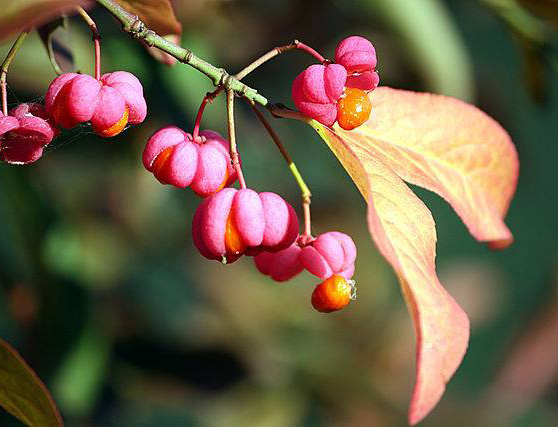
    The leaves are opposite, lanceolate to elliptical, 3-8 cm long and 1-3 cm broad, with a finely serrated edge. Leaves are dark green in summer. Autumn colour ranges from yellow-green to reddish-purple, depending on environmental conditions.

    The hermaphrodite flowers are produced in late spring and are insect-pollinated. They are rather inconspicuous, small, yellowish green, with 4 well separated petals and 4 sepals. They grow in small, branched clusters in leaf axils on square-sided twigs on much-branched, upright stems.

    The capsular fruit ripens in autumn, and is coral pink in colour and approximately 1-1.5 cm wide. It is four-lobed, with fleshy, orange, succulent covering over the seeds. When ripe, September to November, the four lobes split open to reveal the bright orange seeds. The fruit is poisonous.

    Spindle wood is very hard, and can be cut to a sharp point; it was used in the past for making wool spindles.


    Featured image by Hedwig Storch (https://commons.wikimedia.org/wiki/File:Gewöhnlicher_Spindelstrauch_(Euonymus_europaeus)_IMG_7940.JPG), “Gewöhnlicher Spindelstrauch (Euonymus europaeus) IMG 7940”, https://creativecommons.org/licenses/by-sa/3.0/legalcode

  • Press release: Radical overhaul of Forestry Policy is urgently required.

    Press release: Radical overhaul of Forestry Policy is urgently required.

    Press release: Radical overhaul of Forestry Policy is urgently required.
    The Irish Wildlife Trust is calling for a radical overhaul of our forestry sector in response to the climate and biodiversity emergency. On nearly every measure our current forestry model is failing and in particular is driving extinction, water pollution and rural decline.
    The IWT would like to see ambitious targets set for woodland cover to approach the European average (30-40%). This should be a combination of vast restoration of native woodlands through rewilding, a commercial forestry sector based on ‘continuous cover’ close-to-nature sylviculture which would eliminate use of chemicals and the practice of clear-felling. The announcement this week that millions of trees are to be planted by the government does not reflect a change of policy and has been clearly designed merely to grab headlines.
    IWT campaign officer Pádraic Fogarty says: “Our forestry policy right now is a mess. Only recently the National Parks and Wildlife Service reported that the few fragments of native woodland which remain continues to deteriorate [1] while vast sums of taxpayers money are pumped into an industrial system of tree planting which offers nothing to our wildlife and is despised by local communities. There is another way which can provide jobs while at the same time restoring collapsed ecosystems and providing a landscape for people to enjoy.”
    Please see below the IWT’s policy on forestry and tree cover:

    END

    CONTACT:  Padraic Fogarty  – IWT’s Campaigns Officer – irishwildlife@iwt.ie

  • Press Release: Bigger and Better Marine Protected Area Conference in Trinity College Dublin

    Press Release: Bigger and Better Marine Protected Area Conference in Trinity College Dublin

    Press Release: Bigger and Better Marine Protected Area Conference in Trinity College Dublin

    30th August 2019
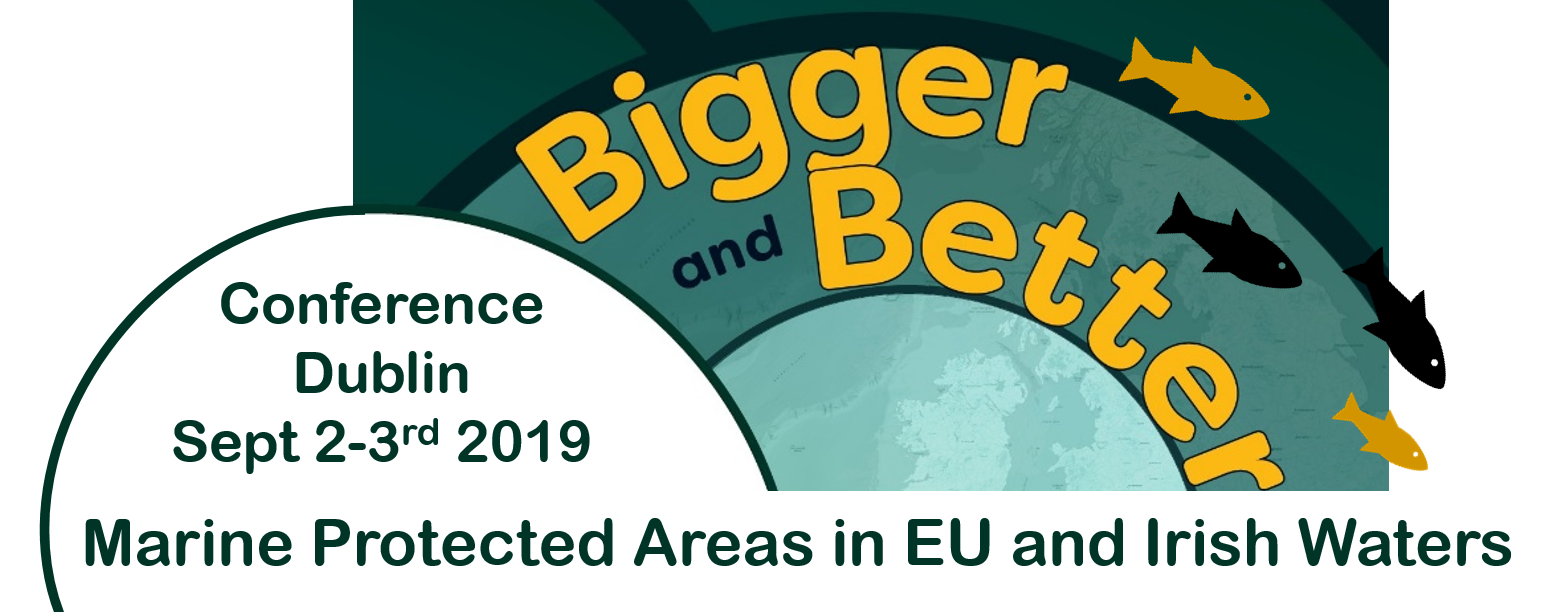
    Coastwatch and the Irish Wildlife Trust are the Irish partners in an international MPA project coordinated by European NGO Seas at Risk. Together we are hosting a conference on the 2nd and 3rd of September in Trinity College Dublin to discuss the climate and biodiversity crisis and how this is connected to ocean protection.


    IWT Campaign Officer, Pádraic Fogarty says: “Ireland is a laggard in providing the protections required to restore our ocean’s health. MPAs are now widely applied across the world as a tool in protecting biodiversity and ocean ecosystems. As an island nation we really should be at the forefront of this effort – not at the back of the class”.


    Coastwatch Coordinator Karin Dubsky says: “We need a radical review on how our great marine commons are used.  Citizens are calling for a new approach to nature protection with public participation and transparency. ”


    Conference Background
    Ireland, along with many other countries, has committed to designate 10% of its seas as MPAs by 2020 and 30% by 2030. Yet so far, we have protected only 2.3 %. Our ~400,000 km² EEZ is one of the biggest in Europe and with this comes a great responsibility to safeguard and indeed restore precious habitats and species within this region. One proven way of doing this is by establishing well designed and managed marine protected areas (MPAs). The recent six-yearly report by the NPWS to the European Commission, the so called ‘Art 17 report’, indicates that Ireland is failing in this task, with most marine habitats in inadequate or even bad condition.


    Conference Aims:
    This conference is organised to bore into reasons for our poor performance and present ways to improve marine biodiversity protection and the wise use of our marine resources with public participation. It includes:
    • International speakers with legal and science backgrounds to give an outside view.
    • High ranking Irish government officials who can instigate change.
    • Panel discussion with public representatives of all parties invited,as the election is coming closer and we need commitments for change.
    • Case studies from right around Ireland presented by local people who haveachieved some improvements and are sharing their experience to make changes elsewhere.
    • Break-out sessions for small group discussions and drafting of recommendations.
    • Fieldtrips to see coastal beauty, richness mobility, problems and actions first hand.


    MEDIA CONTACTS: 
    Karin Dubsky – Coastwatch –  kdubsky@coastwatch.org
    Padraic Fogarty  – IWT’s Campaigns Officer – irishwildlife@iwt.ie
  • Species of the week: Raft Spider

    Species of the week: Raft Spider

    Raft Spider

    Dolomedes fimbriatus


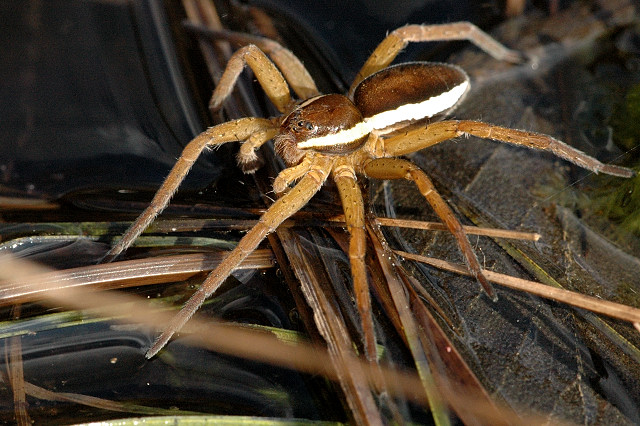
    Ireland’s largest spider, the Raft Spider, lives within our bogs and fens. The female (remember female spiders are larger than male spiders) spider’s body measures up to 22 millimetres long and leg span up to about 70 millimetres.

    Tragopogon (https://commons.wikimedia.org/wiki/File:Dolomedes_fimbriatus_Teuffen.JPG), “Dolomedes fimbriatus Teuffen”, https://creativecommons.org/licenses/by-sa/3.0/legalcode

    We associate spiders with dry land but the Raft spider is semi-aquatic. When alarmed it can dive under water and remain submerged for several minutes, hidden from the predator.

    Their European name, fishing spider, is more suitable as like other Dolomedes they do not build webs to feed but hunt. A raft spider often waits motionless on the water’s edge or on floating vegetation with two feet in the water. When it feels ripples from the prey, it runs across the water to attack. Air bubbles get trapped on the spider’s hairy body and legs. These help it to float on water. Raft spiders are big enough to catch small fish e.g. stickleback, water insects, snails, tadpoles and even small frogs and then race back to land to eat.

    Between May and August is the best time to spot this amazing spider. Chunky, heavyset spider is dark brown in colour (sometimes greenish) with a conspicuous cream/white strip along each side. Air trapped under its body hair makes the spider appear silver under water.
    In Ireland it is believed it takes raft spider two years to mature. Courtship must be a frightening experience for the male spider. He cautiously glides across the water. Should he inadvertently trigger the female’s instinctive predatory response he could become her next meal. Up close both spiders bob their bodies up and down in a dance. Mating itself only lasts a few seconds before the male makes a quick exit.

    Then, the female spider spins an egg sack, laying several hundred eggs. For about 3 weeks she carries the egg sack about on her back. She dips it frequently into the water to keep the eggs moist. Just before the eggs hatch she spins a nursery web close to the water edge and will protect her spiderlings for about ten days before they disperse to colonize in damp vegetation nearby.
    The female spider dies shortly after her spiderlings leave in Autumn. The male spider dies much earlier in the year. Spiderlings hibernate through the winter months and emerge the following Spring.

    Featured image by James Lindsey at Ecology of Commanster (https://commons.wikimedia.org/wiki/File:Dolomedes.fimbriatus2.-.lindsey.jpg), “Dolomedes.fimbriatus2.-.lindsey”, https://creativecommons.org/licenses/by-sa/3.0/legalcode

  • Press Release: New Report highlights the extent of the Irish extinction crisis

    Press Release: New Report highlights the extent of the Irish extinction crisis

    Press Release: New Report highlights the extent of the Irish extinction crisis

    22 August 2019

    A new report from the Department of Culture Heritage and the Gaeltacht on the status of our most valuable habitats and species paints a dire picture for biodiversity in Ireland and once again stresses the depth of the extinction crisis here[i].

    The report, presented to the European Commission, shows that 85% of our habitats are in ‘unfavourable’ condition and that there have effectively been no improvements since the last report was published in 2013. It shows that our native woodlands, sand dunes, bogs, uplands, lakes, rivers and marine habitats continue to be in poor condition while a massive 45% are considered to be deteriorating – something which is unacceptable and in contravention of EU law. While the picture is somewhat better for species, with 57% of those assessed at ‘favourable’ status, there continues to be no improvement in status for species such as Atlantic Salmon, the Freshwater Pearl Mussel or the White-clawed Crayfish which are all threatened with extinction. Despite signing up to the EU’s Habitats Directive in the 1990s there has been no improvement in the status of biodiversity over this period and this represents a devastating failure of conservation efforts here.


    In May the Dáil declared a climate and biodiversity emergency yet the reality of the extinction crisis has yet to sink in among most of our lawmakers. While we watch the collapse of global ecosystems on the internet – including the Amazon rainforest, the Arctic and coral reefs – the collapse of our ecosystems here at home is now complete.


    IWT Campaign Officer, Pádraic Fogarty, says “This report represents a colossal failure by repeated governments to take the implosion of our natural heritage seriously. Conservation has failed because the resources have not been given to state agencies (especially the National Parks and Wildlife Service) to implement management measures which are so urgently needed. Meanwhile vast amounts of public money is spent on sectors which continue to drive extinction, pollution and climate change – especially agriculture, industrial fishing, forestry and peat extraction. It is clear we need a new approach to move towards nature-friendly farming, rewilding to creating large native woodlands and restore boglands, and effective marine protected areas.”


    The IWT wishes to acknowledge the excellent work of scientists working for state bodies which has gone into these latest reports. It is thanks to their work that we have a very good picture of the state of nature in Ireland – sadly we are still waiting on the motivation from those in authority to act on this evidence.

    ENDS

    [i] https://www.chg.gov.ie/status-report-finds-eu-protected-habitats-in-ireland-unfavourable-with-majority-of-species-stable-or-improving/

    CONTACT:  Padraic Fogarty  – IWT’s Campaigns Officer – irishwildlife@iwt.ie

  • Species of the week: Pedunculate Oak

    Species of the week: Pedunculate Oak

    Pedunculate Oak

    Quercus robur
    Dair ghallda

    Prof. Dr. Otto Wilhelm Thomé Flora von Deutschland, Österreich und der Schweiz 1885, Gera, Germany, Illustration Quercus robur0, marked as public domain, more details on Wikimedia Commons

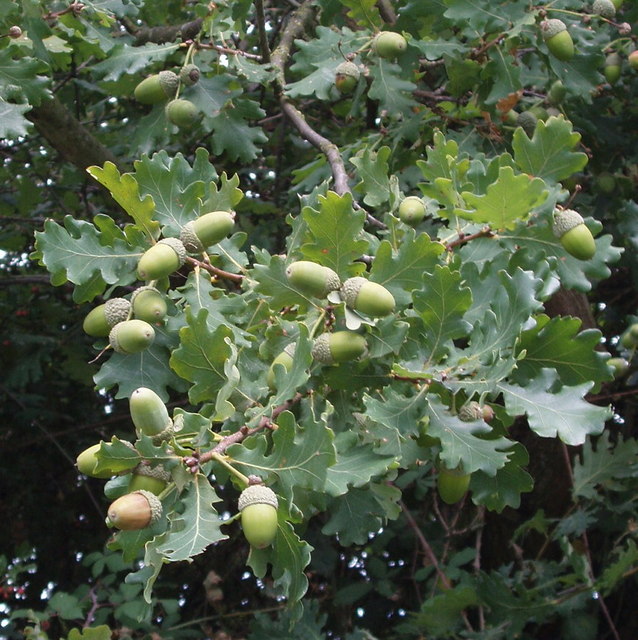
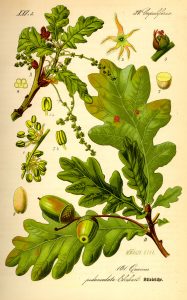
    Pedunculate Oak is the less common of the two native Irish oak species. You can distinguish it from Sessile oak by looking at its acorns – pedunculate oak produces acorns on stalks.

    The oak is one of our largest and longest lived trees – specimens typically live for up to 500 years, the oldest know Pedunculate Oak in Europe grows in Lithuania and is 1500 years old! They grow very quickly at first, but after reaching 100-200 years of age their growth rate slows down.

    Native oak woods are important habitat for hundreds of invertebrates as well as many birds and mammals. The acorns are very rich in starch and tannins and are a great food source for all kinds of wildlife. Jays and squirrels are extremely important in dispersing acorns away from the parent tree – they bury them for later consumption and many of these acorns later germinate.

    Featured image by David Hawgood (https://commons.wikimedia.org/wiki/File:Acorns_and_oak_leaves,_near_Thame_-_geograph.org.uk_-_228229.jpg), “Acorns and oak leaves, near Thame – geograph.org.uk – 228229”, https://creativecommons.org/licenses/by-sa/2.0/legalcode

  • Species of the week: Common Green Grasshopper

    Species of the week: Common Green Grasshopper

    Common Green Grasshopper

    Omocestus viridulus
    Dreoilín teaspaigh

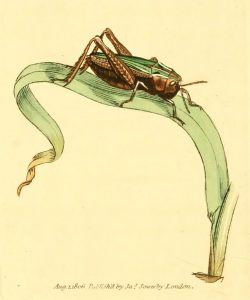
    The British miscellany
    London: Printed by R. Taylor & Co., and sold by the author, J. Sowerby by White, Johnson, Symonds, and all other booksellers,1806.
    http://biodiversitylibrary.org/item/91785

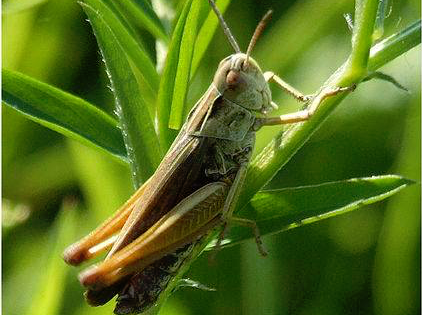
    The common green grasshopper is a grasshopper of the Acrididae family. It is found in moderately wet regions of Europe and is distributed widely across Britain. Its range extends as far as Siberia and Mongolia. In Ireland it tends to be found in areas with long grass, such as farmland, grassland, heathland and upland.

    The common green grasshopper is usually green all over, but some may have brown colouration on their sides. The eyes are either brown or yellow. The typical body length of the insect is 17 – 20 mm.

    The life cycle of the common green grasshopper begins with the females laying their eggs in the top layer of soil, or near the root of grass stalks. The young (nymphs) emerge in April. Nymphs resemble their parents but have immature wings. After about a month of moulting their exoskeleton several times, the nymphs mature into adults with functional wings. The insects are usually seen between April and October.

    The common green grasshopper can be identified by its song. The grasshopper’s characteristic loud, long song, which resembles “ticking”, lasts 20 seconds or more. During mating season, males may also make a “churring” noise, which is made by the grasshopper rubbing its legs against its wings. This is to attract and find a mate. Females which are ready to mate may also “sing” in response.
    Common green grasshoppers are a food source for many animals, including bats, birds and amphibians.

    Featured image by G.-U. Tolkiehn (https://commons.wikimedia.org/wiki/File:Omocestus_viridulus_m_080723-30.jpg), “Omocestus viridulus m 080723-30”, https://creativecommons.org/licenses/by-sa/3.0/legalcode

  • Species of the week: Fairy Flax

    Species of the week: Fairy Flax

    Fairy Flax

    Linum catharticum
    Lus na mban sí

    Carl Axel Magnus Lindman creator QS:P170,Q719778, 220 Linum catharticum, marked as public domain, more details on Wikimedia Commons

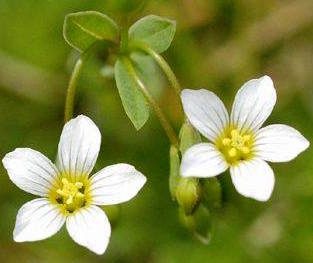
    Fairy Flax is an annual or biennial herb found in seashore meadows, dry fields, or rocky outcrops or limestone pavement. The 5 petals of the plant are small (4mm), white with light veins and a yellow centre. It flowers from May to September. The flowers droop noticeably when in bloom. The leaves of the Fairy Flax are narrow and oblong and are in opposite pairs that are held upwards close towards the stem.

    Fairy Flax can be found across Eurasia from Iceland and Scandinavia to Morocco and has been introduced to North America and New Zealand.

    Fairy flax is also known as the “Purging Flax” as it was used as a laxative in the past and as a cure for rheumatism. Fairy Flax contains the toxin Linamarin.

    In Irish the name means the “Fairies Herb”, although “Bean sí” is also the female spirt that calls the death of a family member.

    In English fairy tales, fairy flax was spun by fairies to make their clothes. Flax is an important resource used in the making of clothes and the linseed has been used for fodder for cattle and also to make poultice for treating boils and respiratory issues.

    Featured image by Zoë Devlin


  • PRESS RELEASE: Dramatic new research shows the power of trees in addressing global climate breakdown.

    PRESS RELEASE: Dramatic new research shows the power of trees in addressing global climate breakdown.

    PRESS RELEASE: Dramatic new research shows the power of trees in addressing global climate breakdown.

    08th July 2019

    Dramatic new research, published in the journal ‘Science’ demonstrates the incredible powers of trees to drawdown carbon dioxide from the atmosphere. The researchers suggested this should be among the priority actions in dealing with climate breakdown. The paper highlighted the enormous potential in Ireland in particular for new tree cover, something which could also address our crises in extinction, flooding and pollution.
    IWT campaigns officer Pádraic Fogarty says: “It’s now blindingly obvious that we need a programme to bring trees back to our landscapes on a vast scale. However we need to be strategic about how this is done. Planting monoculture plantations of conifers willy-nilly is not the solution and will only add to problems. We need a combination of approaches, based on native trees and ecological processes, to grow more trees in towns, cities and on farms. We can create large, permanent forests on public land, on uplands and along river corridors. We can have a commercial timber sector based on close-to-nature techniques and ‘continuous cover’. We should give more community say in the development of these woodlands to foster ownership and stewardship.”
    While there is a place for planting trees, in most instances a process of natural generation of scrub should be encouraged. This is more effective and slashes costs while minimising the need for plastic tubes, herbicides etc. In most instances control of herbivores is all that’s needed to allow woodland to emerge. In this way trees are the cheapest, most popular and most effective tools in addressing our biodiversity and climate emergencies.
    END
    CONTACT:  Padraic Fogarty  – IWT’s Campaigns Officer – irishwildlife@iwt.ie